The North Carolina Village Where America’s Wealthiest Go to Fly Under the Radar
Home to at least four billionaires, the low-key, ‘no frills’ enclave of Cashiers has one of the country’s highest concentrations of wealth.

 7 min
7 min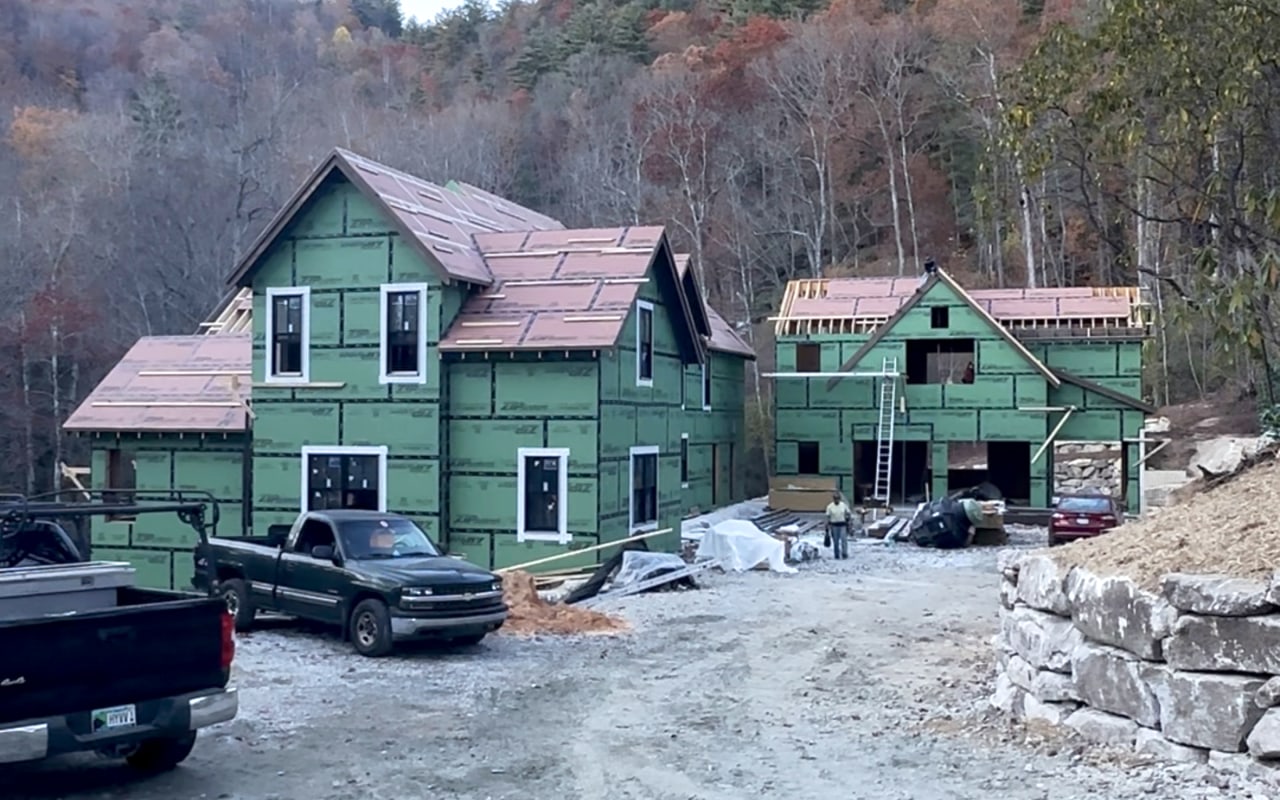
CASHIERS, N. C.—Shortly before 4 p.m. on a recent November afternoon, Buck’s Coffee Cafe was buzzing with a steady stream of customers that included a local chef, the scion of a hot-sauce empire, a real-estate developer and others.
Two Porsches and a pickup truck were parked in front of the shop, which serves as a de facto town hall at the intersection of North Carolina Highway 107 and U.S. Route 64.
If Cashiers had a town centre, this would be it: a crossroads surrounded by a smattering of retail.
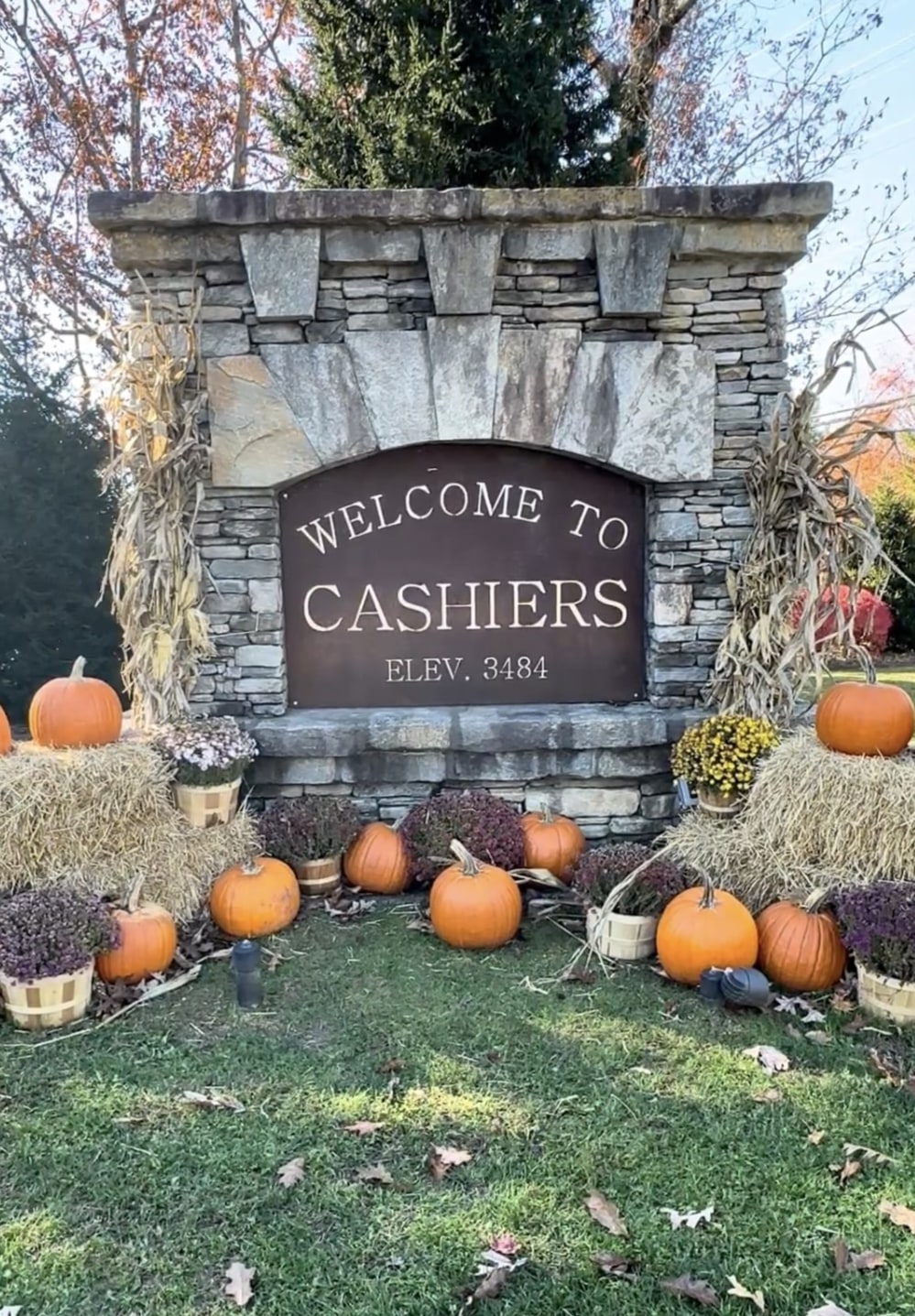
In the Blue Ridge Mountains, the unincorporated village has no mayor, no local police force and no central public water supply. There is a limited public sewer system, just a handful of sidewalks and one Ingles supermarket, affectionately known as “Mingles” because it is where locals tend to socialise.
But what Cashiers does have is lots of uber-wealthy homeowners who have been coming to the area for more than a century.
With a full-time population of just 825—and at least four billionaires with homes—Cashiers has one of the highest concentrations of wealth in the country, according to data from Altrata, a wealth-intelligence firm.
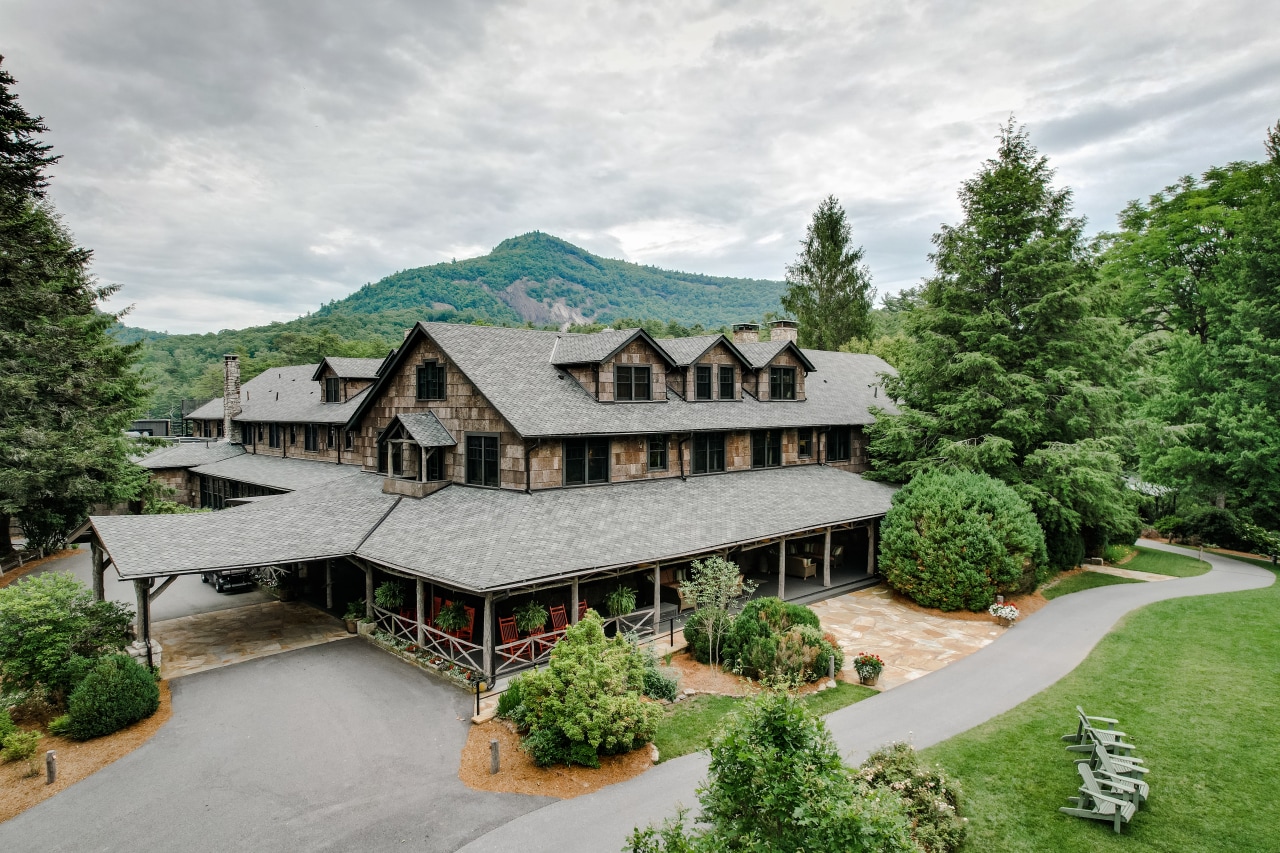
Drawn to the area’s climate and natural beauty, most deep-pocketed homeowners, including billionaires like Ken Langone, a co-founder of Home Depot, and members of Nashville’s Ingram family, own property in a half-dozen private golf communities fanning out from the main intersection.
Even as real-estate values in Cashiers (pronounced Cash-ERS) nearly doubled over the past five years, locals have resisted overdevelopment in favour of retaining its small-town character, which provides relative anonymity to its wealthiest residents.
A September article in The Wall Street Journal, disclosing the presence of four billionaire families, got the community talking.
“People said, ‘Four? What an insult. We’ve got more than that,’” said Ann McKee Austin, who summered in Cashiers as a child and who co-developed, with her brother William McKee, the Wade Hampton Golf Club in the 1980s. “It attracts low-key people, not jet-set people,” said Austin.
South Carolina politician Wade Hampton III, a Confederate general, was among the first to build a summer lodge in Cashiers in the 1800s.
By the 1980s, golf communities with courses designed by Tom Fazio, Arnold Palmer and others began sprouting up in the area.
Today, there are at least 15 clubs on the Highlands-Cashiers Plateau, a roughly 25-mile area that includes Cashiers and its sister town of Highlands, a quaint tourist destination with high-end shops, restaurants and hotels.
By contrast, Cashiers has no Main Street and is “no frills,” said real-estate agent Kati Miller of Caliber Fine Property, comparing it to the fictional town of Mayberry. “You’re not going to see Prada or any sort of chain. It’s hard to get to—the closest airport is 45 minutes away on windy one-lane roads.”
Life in both places largely revolves around the clubs, where the average home-sale price was roughly $5.4 million over the past three months, said Ali Moody of Caliber.
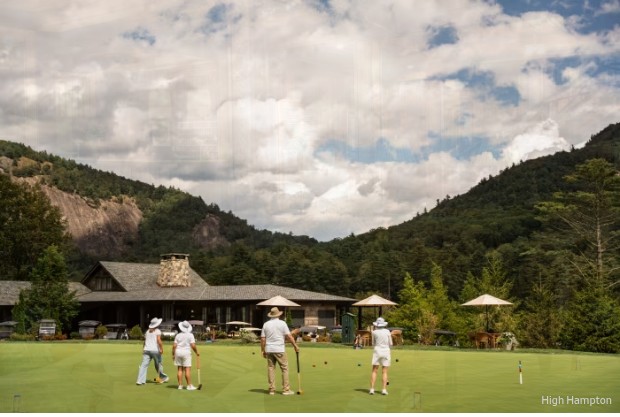
Owning property is often a prerequisite to membership, which costs upward of $100,000 plus annual dues. Besides amenities like golf, tennis, croquet and dining, clubs also provide infrastructure like roads, water and sewer systems, making construction of luxury homes possible.
“Clubs are like mini-cities, quite frankly,” said Jody Lovell of Highlands-Cashiers Sotheby’s International Realty. Some clubs even provide workforce housing.
Over the years, the ranks of wealthy residents have swelled to include Langone, who paid less than $1 million combined to buy 5.77 acres at Wade Hampton in the 1990s, records show. (For many years, the late Bernie Marcus, another co-founder of Home Depot, also had a place there.) Martha Ingram, who succeeded her late husband as chairman of the billionaire family’s conglomerate Ingram Industries ,bought at the Chattooga Club more than three decades ago.
Langone said he was visiting a friend for the weekend when he toured Wade Hampton and was “blown away” by the newly-built golf course. He bought land before he left and built a four-bedroom home that he has added to over the years.
He said people in Cashiers are civic-minded, hard-working, and kind. “I go there, and they treat me like I’m just anybody else,” he said, “which is the way it should be. ”
Martha’s son, David Ingram, and his wife, Sarah, own several properties at Chattooga—and they recently purchased the club from his uncle (and Martha’s brother) John Rivers, who developed it in the 1980s.
Members of the McIlhenny family, which has been making Tabasco in Louisiana since the 1800s, also own in Cashiers, as does billionaire Scott Hardman Ward, a scion of Russell Stover candies, and Treasury Secretary Scott Bessent , who spent $4.6 million in 2022. He is now looking to sell his property for $5.25 million.
Billionaire energy mogul William Doré owns two homes in Wade Hampton, which he purchased for about $3 million combined in 2016 and 2019. And Ric Elias, the billionaire CEO of Red Ventures, recently sold a roughly 2.6-acre lot at the Club at High Hampton for $2.5 million, after paying $2.25 million in 2023. Elias and Bessent didn’t comment. Ward, Doré and the McIlhenny family didn’t respond to requests for comment.
Year-round residents say wealthy “summer people” don’t get any special attention. Pro golfers with homes in the area regularly grab a slice at Slab Town Pizza, said restaurant manager Scott Mulchay. No one bats an eye.
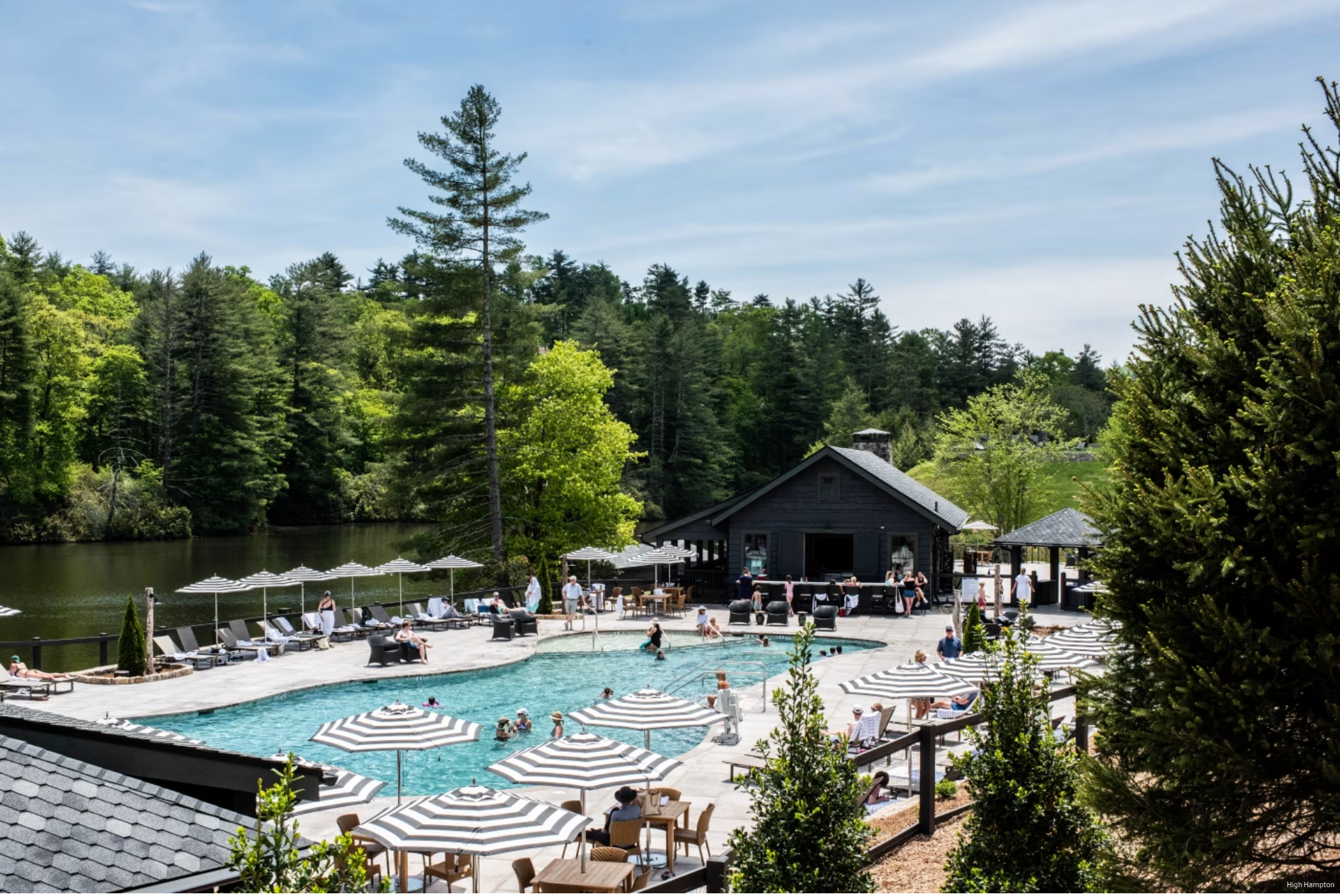
Langone said one of his favourite events is a July Fourth get-together hosted by a family at High Hampton, who serve barbecue; people dress in Americana, sing patriotic songs and fire off a mini-cannon, he said.
“We don’t need to prove what we have or show what we have,” he said. “We just enjoy everyone’s company.”
It’s been discovered
Despite its unpretentiousness, a turning point for the Cashiers luxury market came in the early 2000s, when Discovery Land Co., the developer behind Montana’s Yellowstone Club, opened Mountaintop Golf & Lake Club, drawing more well-heeled buyers not just from the Southeast, but other parts of the country. The McKee family’s sale of the High Hampton Inn in 2017 to the operator of Tennessee’s popular Blackberry Farm, which renovated the historic property, had a similar effect. undefined
Rob Palumbo, who works in the financial services industry in Atlanta, fell in love with Cashiers’ tranquillity 25 years ago, and for years he owned a log cabin on the Tuckasegee River. In 2013, he and his wife, Melanie Palumbo, paid $800,000 for a 2.3-acre lot at Mountaintop and built a six-bedroom house.
Like other resort areas, Cashiers experienced a Covid boom that turbocharged home prices.
Between 2020 and 2024, the average home sale price jumped 88.8% from $1.05 million to $1.98 million, according to data from the multiple listing service. Despite economic uncertainty that has slowed the luxury market nationwide, Cashiers recently had a string of sales above $7 million—a once-untouchable price point.
“For the longest time, $6 million was the ceiling,” said Caliber’s Miller, who said prices are rising as new homes sell for the first time.
The record in Cashiers was set in July, when a house at Mountaintop with a glass-and-steel facade sold for $11.11 million, said listing agent Liz Harris of Cashiers Sotheby’s International Realty. The prior owner paid $600,000 for the 1.85-acre lot in 2020, records show. “What kept [the market] down before, honestly, was people didn’t know about it,” Harris said. The buyer couldn’t be determined.
Chasing higher prices
Earlier this month, a 6.5-acre estate at Cullasaja Club—halfway between Cashiers and Highlands—sold for $12 million.
Some real-estate insiders say the market, as it currently exists, can only grow so much.
Cashiers has six months’ worth of world-class golf between May and October, but there is less to draw people there during the “shoulder” seasons, said developer Sam Lupas.
A bigger issue is inventory. Many of the clubs have waiting lists, Miller said, even Mountaintop, where the initiation fee will be $275,000 starting January 1. “I hate to say it, but we need another club up here,” she said. “They’re all full.”
Growing pains
In 2003, locals voted against incorporation out of fear of paying higher taxes or ceding autonomy to government bureaucracy. Instead, local philanthropists have supported a local charter school, library, boys and girls club and volunteer fire department.
Two decades ago, when a hotel developer tried to build an Econo Lodge near the main intersection, residents swooped in to purchase the land. They designed a Village Green that is encircled with a low stone wall, and a hard-to-find entrance in the rear. “It was meant to be for the people that live here, and you access it from behind the scenes, rather than ‘Stop here and have a picnic lunch,’” said Austin.
Over the past few years, Cashiers has experienced growing pains amid its newfound popularity. During the summer months, traffic can back up for miles, said the Rev. Steve Hines, a retired clergyman who is a member of the Chattooga Club. “There were wealthy people here before, but not at this level,” he said. The growth “has gotten a little out of hand.”
Affordable housing is also an issue, said Jackie Hooper Hernandez, a clerk at Lulu & You clothing boutique, who said she is lucky to live with a relative about 8 miles from the shop. Other family members drive more than 30 minutes to work. But she puts up with the inconveniences of the summer influx because her livelihood depends on it. “We might hate the traffic,” she said, “but you know, if we didn’t have that, I wouldn’t have a job,” she said.
Some people think Cashiers would be better off incorporating, so that it could benefit from having its own tax base and public infrastructure.
But others believe there is reason to fear overdevelopment. “I’ve witnessed an overbuilding [at other clubs], where going to dinner or getting a tee time for golf almost became a lottery system,” said Hufstetler, who just bought the $12 million house in Cullasaja. He previously owned homes in Destin, Fla., and on Lake Oconee, Ga., that he sold when those areas became too crowded.
Lupas said he and his partners are working on an effort to bring hospitality, retail and housing to Cashiers in a way that is both appropriate and “authentic” to the community. “Some people think I’m an evil developer,” but he said the opposite is true. He believes a certain amount of growth is good for Cashiers, if not necessary. “Everybody wants it to stay like it was in 1950, but it’s not possible.”
 Copyright 2020, Dow Jones & Company, Inc. All Rights Reserved Worldwide. LEARN MORE





From making unpopular decisions to learning when to listen, leaders from five businesses reveal what nobody prepared them for — and how running a company has challenged their expectations.

Technology and semiconductor shares fell sharply as investors questioned the debt financing the AI infrastructure boom and confronted higher rates and Chinese competition.

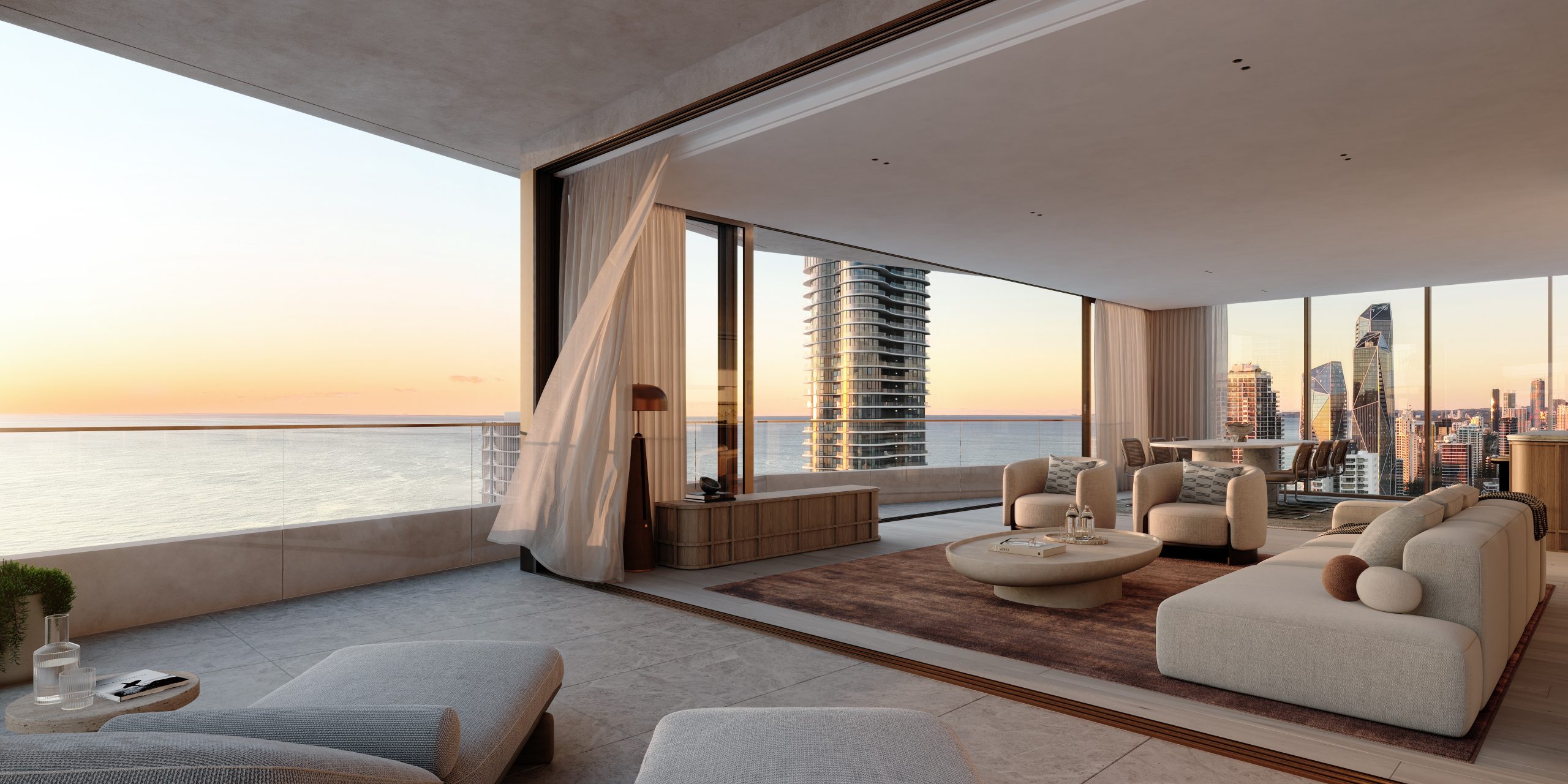
Mirvac’s 45-level Trielle has topped out at Yarra’s Edge, pairing riverfront apartments with wellness facilities, private dining and resident services.
3 min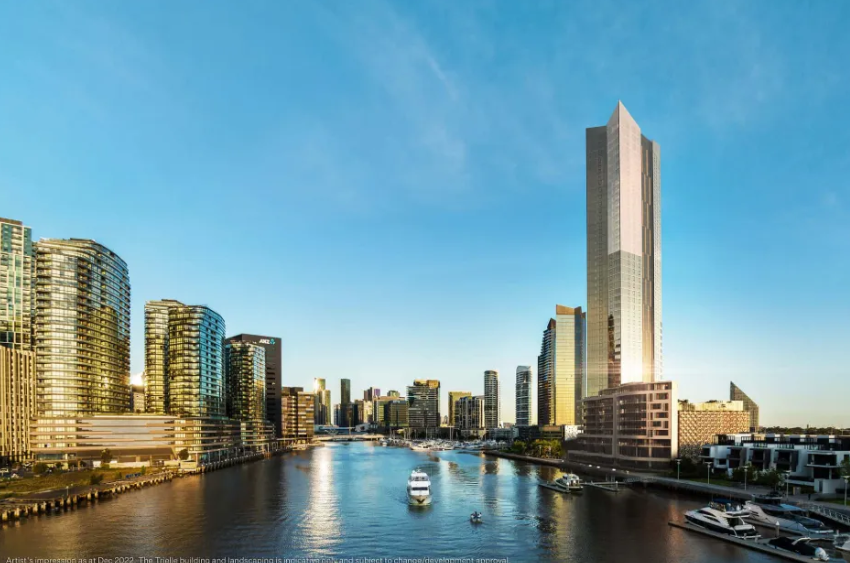
Mirvac has topped out Trielle at Melbourne’s Yarra’s Edge, with more than 70 per cent of the riverfront development sold and approximately 80 per cent of purchasers intending to make their apartment a home.
The figures, released on September 22, point to an owner-occupier audience for one of the precinct’s final residential towers. Mirvac began developing Yarra’s Edge in 2003, and its latest addition occupies one of the remaining absolute riverfront sites.
Mirvac CEO of Development Stuart Penklis said existing residents were among those moving up within the neighbourhood.
“Many purchasers already have a connection to Yarra’s Edge,” Mr Penklis said, describing buyers whose changing needs were encouraging an upgrade within the precinct.
“As one of the final residential towers within Yarra’s Edge, Trielle represents the culmination of more than two decades of creating one of Melbourne’s most established and sought-after waterfront communities,” Penklis said.
“Positioned on the Collins Street axis with absolute river frontage, Trielle offers residents a rare opportunity to enjoy sweeping views across the Yarra River, Melbourne skyline and Port Phillip Bay, while remaining seamlessly connected to the CBD. With Trielle now more than 70 per cent sold, we’re continuing to see strong demand from buyers seeking quality homes in established locations.”
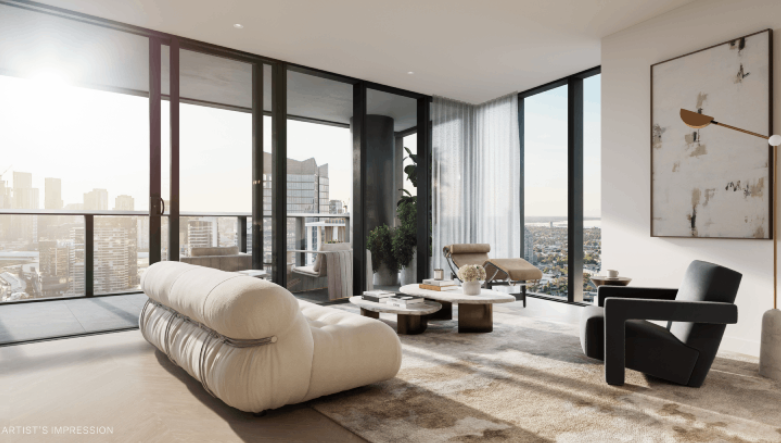
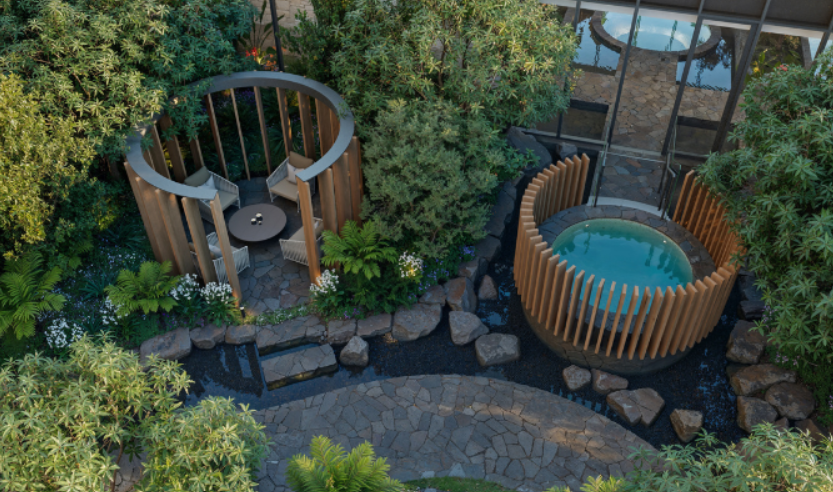
The developer also flagged a penthouse and sub-penthouse collection with larger layouts, premium finishes and broad outlooks. The planned wellness centrepiece, The Oasis, encompasses a 900-square-metre elevated urban rainforest.
Mirvac General Manager Residential Development Victoria Elysa Anderson said Trielle had resonated strongly with buyers seeking a rare lifestyle offering in Melbourne.
“Opportunities to secure a new luxury residence on a riverfront site of this calibre are incredibly rare, particularly within a community like Yarra’s Edge,” Anderson said.
“What makes Trielle unique is the combination of exceptional views, world-class residential facilities and the lifestyle that already exists around it. Residents are buying into a mature waterfront community with parks, promenades, dining, wellness and strong community connections already in place.”
The 45-level tower brings a substantial new presence to that waterfront. Its residential offering spans one-, two-, three- and four-bedroom apartments, with Signature, Prestige and Sub-Penthouse collections accommodating different household sizes. The north-facing position connects the apartments visually to the river and city beyond.
Seven storeys above the promenade, the planned Oasis combines planting and a running stream with a Scandinavian-inspired wellness club developed with spa specialist Naomi Gregory. Facilities include a 25-metre lap pool, hot magnesium pool, sauna, hydrotherapy, a gym, yoga and Pilates room, and treatment spaces.
The amenity extends beyond exercise. Residents will have access to The Biblioteca library and workspaces, ground-floor work pods, and The Salone piano lounge. A private Chef’s Table dining room offers a setting for larger gatherings, while a cinema, games room and sports lounge broaden the entertaining options. Concierge services and a dog-wash area support everyday routines.
Trielle comprises a collection of one, two, three and four-bedroom residences. Reflecting strong demand from owner occupiers, approximately 80 per cent of purchasers to date intend to live in their homes, highlighting the project’s appeal to those seeking a long-term waterfront lifestyle.
Mirvac has recently delivered The Albertine, a premium apartment development on the edge of Melbourne’s CBD, and is nearing completion of Prince & Parade in Brunswick, further strengthening its portfolio of thoughtfully designed apartment communities in some of Melbourne’s most sought-after urban locations.

Limited to 630 units, Lamborghini’s latest Urus Capsule pushes personalisation further than ever, blending hybrid performance with over 70 bespoke design combinations.

Wealthy Aussies are swapping large family homes for high-end apartments, with sales of prestige units tripling over the past decade.