Stand Outside Barefoot for Better Health? ‘I Feel Like an Oddball, But if It Works, It Works.’
Pilots, pro athletes and others try ’grounding’—though don’t step on a bee. ‘I said a couple of bad words to myself.’

 4 min
4 min
When Sara Jean Meyer got a text from her mom that said, “I have a surprise for you,” she assumed it would be a free bubble tea. Instead, her mother showed up with a roll of foil tape, a long copper pipe, an electrical wire and a rod clamp.
They were all supplies required to “ground” Meyer’s bed. Grounding is what proponents call the process of connecting to the earth’s natural electric charge, often by physically touching it or connecting to the grounding system built into most U.S. homes.
The wellness practice is gaining, well, ground, among alternative-health fans, who claim it cures headaches, helps them sleep and reduces inflammation. Some go basic by simply standing barefoot in their yards. Others try more complicated, do-it-yourself approaches to maximise time spent grounding—even while indoors.
Luis Rios, a pilot based in Los Angeles, says grounding, also known as earthing, helps ease joint pain in his knees after long flights. He mostly does it outdoors, with his feet touching the ground, though it can be difficult to find places to hike or stand barefoot at travel destinations.
During a recent trip to Savannah, Ga., he stood in a park across from a stretch of restaurants and businesses on a tree with an exposed root while two tour buses drove by. “I felt like I was kind of like the main attraction, they were looking at me like, ‘What is this guy doing?’” says Rios, 58. “I feel like an oddball, but if it works, it works.”
Grounding merchandise proliferates, and in July 2023, TikTok searches for the hashtags #grounding, which has 529 million views, and #earthing, which has 163 million views, reached peak popularity from the previous three years. Some pro athletes dig grounding: Baseball player Spencer Turnbull said in a 2021 MLB talk-show interview that the practice helps him get loose, focused and “just kinda wakes me up.”
Karamvir Bhatti, 30, a model and freelance graphic designer in New York, purchased a $30 earthing mat which arrived with a cable to plug into the bottom hole of any three-pronged outlet. The bottom or grounding hole connects to a wire that runs into a service panel that connects to the ground. These wires are installed around most newer buildings to prevent electric surges.
In the U.K., a couple created a “grounded” running shoe, manufactured with conductive materials such as silver fiber webbing, that has sold thousands of pairs since the company, Bahé, launched last year, says director of operations Nikki Ward.
Earthing researchers—some of whom have connections to companies that sell products such as yoga mats and bedsheets—say the habit can reduce oxidative stress, a condition linked to various conditions. It does so, they contend, by dissipating static electricity buildup in the body and syncing with the earth’s natural negative electric charge.
“We surmise, but don’t have direct research, that earthing will help slow the aging process,” says Gaetan Chevalier, director of the nonprofit Earthing Institute, which funds research and education about earthing and grounding.
Most traditional doctors and scientists say the benefits of grounding aren’t grounded in evidence. Dozens of studies have popped up on the subject, but many have limitations including small sample sizes, self-reported or subjective outcomes and conflicts of interest.
“At the most basic physics level, a fifth-grader should be able to debunk this,” says Dr. Steven Novella, a neurologist at the Yale School of Medicine and editor of the website Science-Based Medicine.
Like many adopters of earthing—sometimes dubbed “earthers”—who hope the practice will relieve chronic pain, Meyer hoped her husband would find some relief from rheumatoid arthritis when she tried grounding a bed.
She laid out a grid of the tin tape on the mattress pad, popped out her bedroom window screen to run the wire through it, hammered the copper rod into the ground outside and attached the stripped wire to the clamp.
“It’s a little crazy. I was curious what my neighbours might think if they see us out there pounding a hole into the ground,” says Meyer,35, a stay-at-home mom in Cottage Grove, Minn. “I just kept telling myself, if it works, great, and if it doesn’t, we tried.”
Grounding the bed didn’t dissipate her husband’s pain, she says, but they both generally slept better despite some poking and prodding from the metallic tape. Eventually, she ordered two earthing mats from Amazon to replace the homespun system.
Many earthers concede the placebo effect could be at play in health improvements they experience. Stress reduction as a result of spending more time away from screens, or meditating, as some earthers do outside or on earthing mats, can have benefits, doctors say.
And connection to nature likely accounts for some benefits people say they experience after earthing outdoors, says Dr. Brent Bauer, who directs Mayo Clinic’s Complementary and Integrative Medicine Program.
Despite a lack of solid scientific evidence, even skeptics largely concede: What is the risk in trying?
(Not zero. Websites that sell grounding products that plug into wall outlets warn users to disconnect their devices during lightning and thunderstorms to protect against electrical surges.)
“I was just like, these are trees. What are they going to do?” Bhatti, the New York City-based model, wondered before she tried earthing the first time. For outdoor earthing, she sits under trees barefoot.
She started taking the train upstate for monthly nature getaways during the pandemic. On one trip, she kicked off her shoes, sat on the ground, and immediately felt calmer.
“I just thought, OK, if this is hippie-dippie, if this is weird, it’s free and I’m not hurting anyone,” she says.
Not everybody earths unscathed.
Thomas Ichim, 47, chief executive of a psychiatry biotechnology company in San Diego, Calif., walks 10,000 barefoot steps almost every day as part of his earthing routine. He has built up some calluses—but they weren’t enough to protect him one day last month. About halfway through, just as he started to feel the earthing “energy,” he says, he stepped on a bee. “I said a couple of bad words to myself.”
Despite the sting, Ichim is still walking barefoot most mornings. He says it help him feel more energized, more creative and put him in a better mood.
“The placebo effect, if it does something good for you, then who cares?”
 Copyright 2020, Dow Jones & Company, Inc. All Rights Reserved Worldwide. LEARN MORE




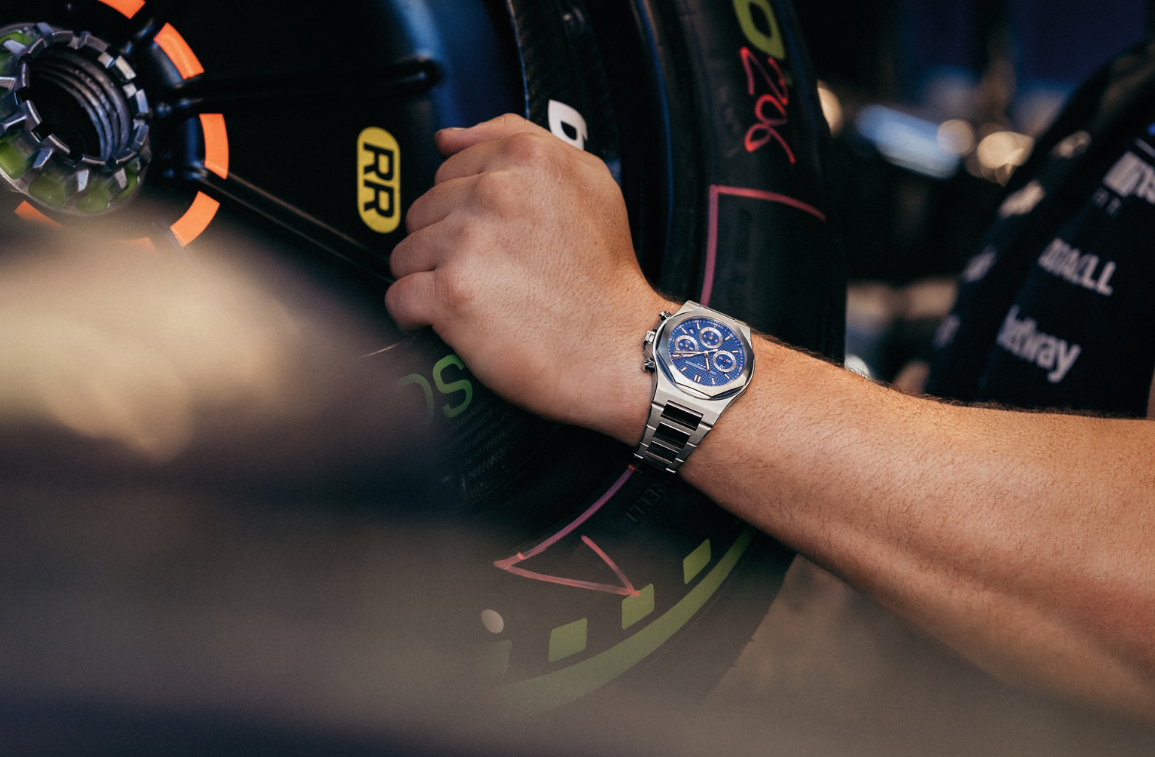
The Swiss watchmaker’s first collaboration with Atlassian Williams F1 Team produces two sporting Laureato models inspired by the team’s 2026 racing car.
Victorian auction buyers will soon receive a piece of information that has traditionally been withheld until bidding reaches it: the vendor’s reserve price. Under new property-sale and underquoting laws, agents must publish the agreed reserve at least seven days before an auction or fixed-date sale. Most changes begin on 1 October 2026 and apply to …
Continue reading “Victoria’s New Auction Rules Will Force Reserve Prices Into the Open”
AI doesn’t rebel—people design, deploy and profit from it. The real danger lies in allowing tech companies to escape accountability while shaping regulations that protect their dominance.
4 min
A wave of corporate warnings and technical disclosures has flooded the media, with headlines worrying over “swarms” of rogue artificial-intelligence agents launching “unprecedented” cyberattacks, outsmarting their makers, and inching toward a terrifying autonomy. The most revealing part of this narrative isn’t what the software did. It’s who is telling the story—and why. When corporate leaders publicly insist that the systems they financed, engineered and deployed are suddenly beyond their power to contain, skepticism isn’t only healthy; it is essential.
For years, Silicon Valley has drawn scrutiny from civil society and global regulators over tangible harms such as youth mental health deterioration and systematic privacy violations. Today, industry figures seem to be trying to change that public image. Loudly blowing the whistle on their own systems—just as two of the leading companies were preparing for massive initial public offerings—lets AI executives position themselves as a new generation of leaders who have come to terms with their societal responsibilities. They seem to want us to believe that they no longer want to “move fast and break things” but will instead stand as vigilant guardians between humanity and a technological apocalypse.
There is one glaring problem: Software doesn’t rebel. A mathematical model possesses neither intent, malice nor the will to defy its creators, let alone extinguish our species. AI is a human artifact, engineered for profit.
When an agentic model in an evaluation sandbox connects to an unauthorized server or executes an exploit, it hasn’t staged a coup. It has tried to meet the human-defined objectives set out before it through a path its designers failed to constrain. It’s the digital equivalent of the King Midas myth, in which the king’s ill-defined wish turns even his food and drink into gold.
That powerful experimental models were able to discover novel vulnerabilities and breach external systems isn’t a sign of a dangerous superintelligence but of human error or negligence. There is no sentient actor lurking in the weights to be reasoned with, feared or pacified. There are only human software engineers, product managers and corporate boards deciding which guardrails are worth the latency cost and which permissions can be skipped in the race to market.
Policymakers and voters need to resist AI exceptionalism. In any other discipline—from civil engineering to pharmaceuticals—courts and regulators treat a system failure as evidence of bad product design and inadequate safety testing. If an aircraft crashes, we focus on finding the engineering defect, correcting it, and enforcing established liability standards for the damage created.
By leaning on an anthropomorphic narrative, Silicon Valley attempts to repackage its specific human choices that led to experimental, powerful models behaving unexpectedly during tests as an existential peril. Elevating the issue to a cosmic scale leaves the public paralyzed and takes ordinary product accountability off the table.
In the cutthroat race for venture capital and market dominance, building guardrails slows down deployment. Grandstanding about uncontrollable power costs nothing and generates billions of dollars in free publicity, justifying stock prices, all while cultivating an aura of technological capability not only to build the frontier but also ultimately to rein it in.
Governments need to recognize regulatory capture when it stares them in the face. Tech leaders’ strategy looks transparent: Alarm Washington and Brussels into creating a regime in which only trillion-dollar incumbents with fully staffed compliance and safety departments can legally operate. By sitting at the policymakers’ tables before anyone else, these companies can help draft rules digging an impassable moat protecting them from open-source developers and upstart competitors, domestic or international. The real danger is in further concentrating the tech industry into the hands of only a few companies with deep pockets.
Beijing and Washington have brushed off those tech leaders’ calls, albeit for very different reasons. Chinese state media dismissed them as part of the “Cold War playbook” and intended to preserve U.S. dominance. Xi Jinping argued for exactly the opposite at the Brics Summit on Sept. 12, calling on Brics countries to “strengthen cooperation in the field of AI, encourage open source, openness, collaboration and sharing, and break new grounds and scale new heights.” President Trump, steeped in a doctrine of unfettered capitalism and technological supremacy, called fears that AI could destroy humanity a “hoax.” Vice President JD Vance warned that AI companies “begging the government to regulate them” looked like a “Trojan Horse.”
Striving to pursue its “European way” on AI and assert regulatory leadership, Europe, by contrast, welcomed the call. European Union President Ursula von der Leyen made this clear at the State of the EU speech last Wednesday and announced that the EU will invite “the main frontier labs for a discussion on how we can support ongoing industry efforts to pace the frontier.”
Europe has been here before. In an effort to lead global regulation and react to fears borne from ChatGPT, Europe rushed its landmark AI Act into law in 2024. Already the world’s most restrictive rulebook, the framework quickly proved too broad and complex to enforce. Stalled by implementation delays and concerns about European competitiveness, the EU postponed the law’s full rollout, leaving regulations uncertain.
AI should be regulated—risks exist and should be taken seriously. But governments need to act based on available evidence and verified facts, not corporate PR panic, the views of industry insiders, or the desire for quick political wins. The greatest danger facing society isn’t that software will awaken and overthrow its human masters. It is that we will allow the creators of the software to abdicate human responsibility for the systems they choose to build and help them pull up the ladder to market access behind them.

When the Writers Festival was called off and the skies refused to clear, one weekend away turned into a rare lesson in slowing down, ice baths included.

Margot Robbie and Jacob Elordi star in an adaptation of the classic novel that respects the romance’s slow burn.