The travel initiative touching lives across 27 countries
As travellers increasingly seek purpose alongside experience, Abercrombie & Kent Philanthropy says its projects have now positively impacted almost 550,000 people across 27 countries.
 2 min
2 min
Luxury travel has long been associated with extraordinary experiences, remote destinations and exclusive access.
Increasingly, however, it is also being measured by something less visible: the impact it leaves behind.
New figures released by Abercrombie & Kent Philanthropy (AKP), the charitable arm of luxury travel company Abercrombie & Kent, reveal the organisation raised a record $3.3 million in 2025, supporting 80 projects across 27 countries and reaching almost 550,000 beneficiaries since its inception.
The result marks the philanthropy group’s largest year to date and reflects a broader shift within the luxury travel sector towards community development, conservation and long-term local partnerships.
Keith Sproule, Executive Director of A&K Philanthropy, said the organisation’s focus remained on creating lasting change within communities visited by travellers.
“From feeding thousands of students each day to expanding access to clean water, healthcare and economic opportunity, 2025 was a landmark year for A&K Philanthropy,” he said.
A changing definition of luxury
The growing focus on social impact comes as affluent travellers increasingly seek deeper connections with the destinations they visit.
Across Africa, Asia, the Middle East and South America, AKP’s projects span education, healthcare, conservation and enterprise development, often in remote regions where tourism can provide an important economic lifeline.
Among the year’s milestones was the delivery of approximately $800,000 worth of medical equipment to healthcare facilities in Uganda and Zambia, while more than 6,400 students gained access to clean drinking water through school-based initiatives.
The organisation also expanded school feeding programs in Kenya, Namibia, Uganda and Zambia, providing daily meals to more than 7,200 children.
Investing in communities
Several projects highlighted in the report focus on helping communities generate sustainable income rather than relying solely on aid.
In the Peruvian Amazon, AKP partnered with the Nueva Arica community to develop businesses centred on punga fibre, aguaje fruit and honey production, creating economic opportunities while supporting environmental conservation in one of the world’s most biodiverse regions.
Elsewhere, near Petra in Jordan, 40 young women completed a vocational mosaic-training program designed to help participants establish businesses and generate independent income.
Education also remained a priority, with a new library opening at Pusanki Primary School in Kenya’s Maasai Mara. The project included the delivery of more than 1,100 books for 440 students living near important wildlife conservation areas.
Tourism’s broader legacy
While luxury travel remains centred on exceptional experiences, reports such as AKP’s highlight the growing expectation that tourism should deliver benefits beyond the visitor experience alone.
The organisation now employs 17 Impact Managers who work directly within local communities, helping oversee projects and maintain long-term partnerships in some of the world’s most isolated regions.
As travellers become increasingly conscious of where their money flows, the concept of luxury is continuing to evolve, with many high-end operators placing greater emphasis on the legacy their journeys leave behind.

From making unpopular decisions to learning when to listen, leaders from five businesses reveal what nobody prepared them for — and how running a company has challenged their expectations.

Technology and semiconductor shares fell sharply as investors questioned the debt financing the AI infrastructure boom and confronted higher rates and Chinese competition.
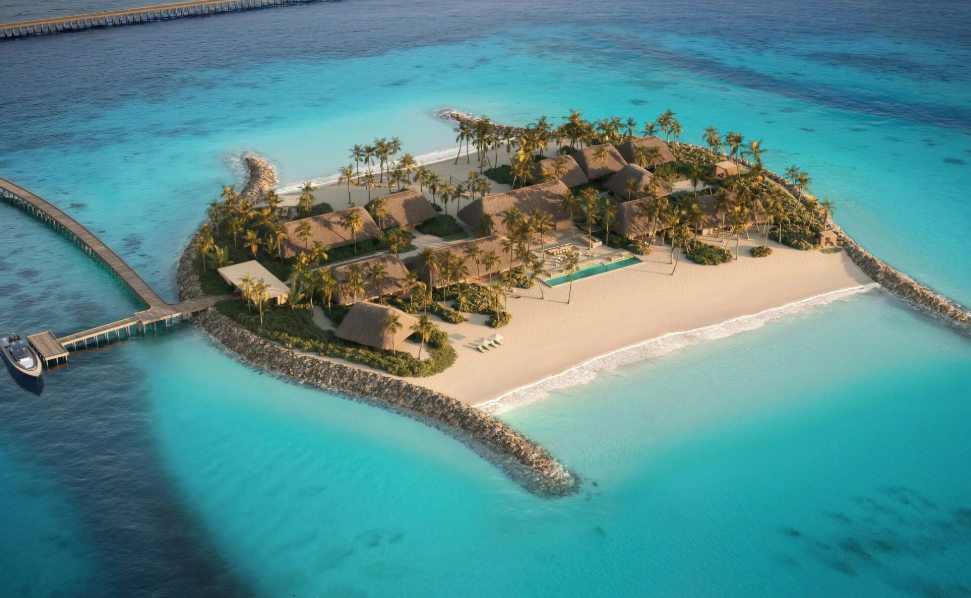

Waldorf Astoria Kuala Lumpur is scheduled to open on 30 October, introducing the Hilton luxury brand to Malaysia with an all-suite hotel in the city’s Golden Triangle.
4 min
Kuala Lumpur will welcome a significant new luxury address this month when Waldorf Astoria opens its first hotel in Malaysia.
Scheduled to receive its first guests on 30 October, Waldorf Astoria Kuala Lumpur is an all-suite hotel occupying a reimagined address in the capital’s Golden Triangle district.
Its position at 73 Jalan Raja Chulan places it close to Bukit Bintang, Pavilion Kuala Lumpur and the Petronas Twin Towers. For international visitors, that means many of the city’s principal shopping, dining and business destinations will be within easy reach.
The property will contain 268 suites, with even its entry accommodation conceived on a scale more readily associated with serviced residences.
One-bedroom suites begin at approximately 80sqm, providing separate living and sleeping areas suitable for both short visits and extended stays. At the top of the collection is the 745sqm Waldorf Astoria Suite, which will rank among Kuala Lumpur’s largest hotel accommodations.
Floor-to-ceiling windows will bring the city into the rooms, while the interiors combine generous living spaces, subdued textures and a contemporary interpretation of Malaysian design.
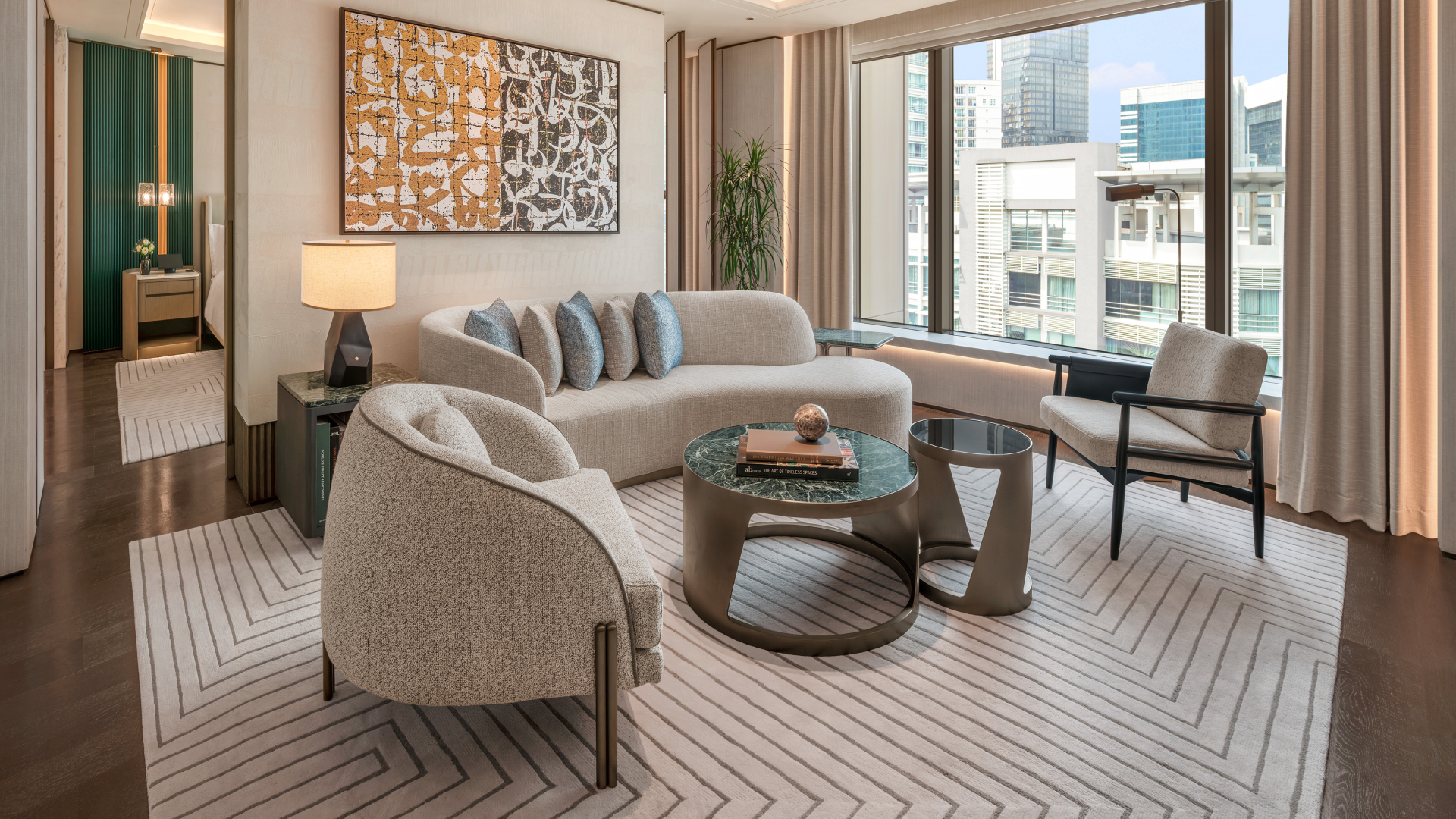
The all-suite model is an important distinction. Luxury city hotels increasingly compete not only on service and location but on the amount of private space they give guests. For travellers accustomed to villas, residences and apartment-style accommodation, a conventional hotel room can feel restrictive regardless of how beautifully it is finished.
Waldorf Astoria Kuala Lumpur is responding with rooms intended to function as private urban retreats rather than simply places to sleep.
The hotel’s approach to service will be shaped around what it calls Layan Tetamu, a reinterpretation of the Malaysian tradition of welcoming and caring for guests. Hilton describes the philosophy as sincere, intuitive and highly personalised.
Food and beverage will be central to the hotel’s ambitions to become a destination for Kuala Lumpur residents as well as international guests.
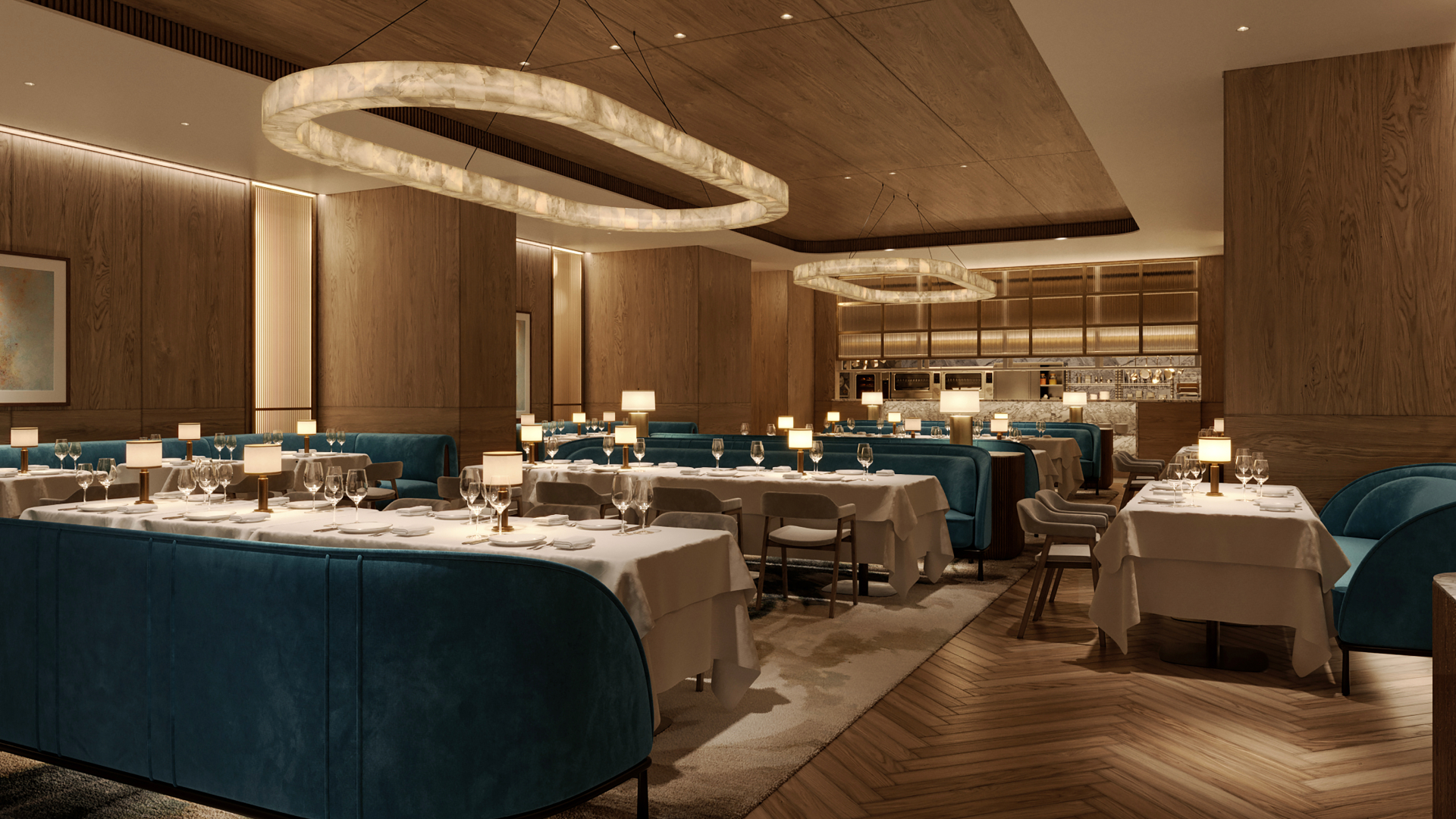
The dining program includes collaborations with Garima Arora and Jean-Georges Vongerichten.
Arora became the first Indian woman to receive a Michelin star and is known for using modern techniques to explore ingredients and culinary traditions from across Asia. Vongerichten oversees an international collection of restaurants and is recognised for combining French technique with influences drawn from Asia and other parts of the world.
One of the hotel’s principal venues will be JG KL by Jean-Georges Vongerichten. The wider collection will encompass formal destination restaurants and more intimate social spaces, each intended to have its own identity rather than operate as a generic hotel outlet.
Wellness will be anchored by the Waldorf Astoria Spa and a separate wellness centre. The announced program includes personalised rituals, advanced treatments and facilities dedicated to exercise and recovery.

An outdoor swimming pool provides another retreat from the surrounding city, while the hotel will include event spaces designed for weddings, celebrations and major social occasions.
The result is intended to be more than a base for tourists. By combining large suites, restaurants led by internationally recognised chefs, wellness facilities and event venues, Waldorf Astoria is positioning the hotel as part of Kuala Lumpur’s social and dining landscape.
The opening also highlights the growing depth of luxury hospitality in the Malaysian capital.
Kuala Lumpur has traditionally provided compelling value compared with cities such as Singapore, Hong Kong and Tokyo. Room sizes are often more generous, while dining, spa treatments and private transport can remain comparatively accessible to Australian travellers.
The arrival of Waldorf Astoria adds another top-tier international brand to that equation. It also brings the brand’s residential style of hospitality to a city well positioned for stopovers, business trips and longer Southeast Asian itineraries.
Reservations are already open. The introductory Waldorf Astoria Indulgence Escape includes breakfast and 15,000 Hilton Honors points for members booking a minimum stay of two nights.
As with any newly opened hotel, early guests should confirm which restaurants, treatments and facilities will be operating during their stay. Major luxury properties often open in stages, with parts of the dining or wellness program introduced over the months that follow.
If the experience matches the scale of its suites and the strength of its culinary partnerships, Waldorf Astoria Kuala Lumpur could establish itself quickly as one of the city’s most important luxury hotels.
Hotel summary
Hotel: Waldorf Astoria Kuala Lumpur
Opening: 30 October 2026
Address: 73 Jalan Raja Chulan, Bukit Bintang, Kuala Lumpur
Accommodation: 268 suites
Suite sizes: From approximately 80sqm
Largest accommodation: The 745sqm Waldorf Astoria Suite
Dining collaborators: Garima Arora and Jean-Georges Vongerichten
Facilities: Waldorf Astoria Spa, wellness centre, outdoor pool, restaurants and event spaces
Opening offer: Breakfast and 15,000 Hilton Honors points for qualifying two-night stays

The era of the gorgeous golden retriever is over. Today’s most coveted pooches have frightful faces bred to tug at our hearts.

French luxury-goods giant’s results are a sign that shoppers weren’t splurging on its collections of high-end garments in the run-up to the holiday season.