Among The Scent Of Eucalyptus
It’s what hasn’t changed on this site that makes this residence so exceptional
 5 min
5 min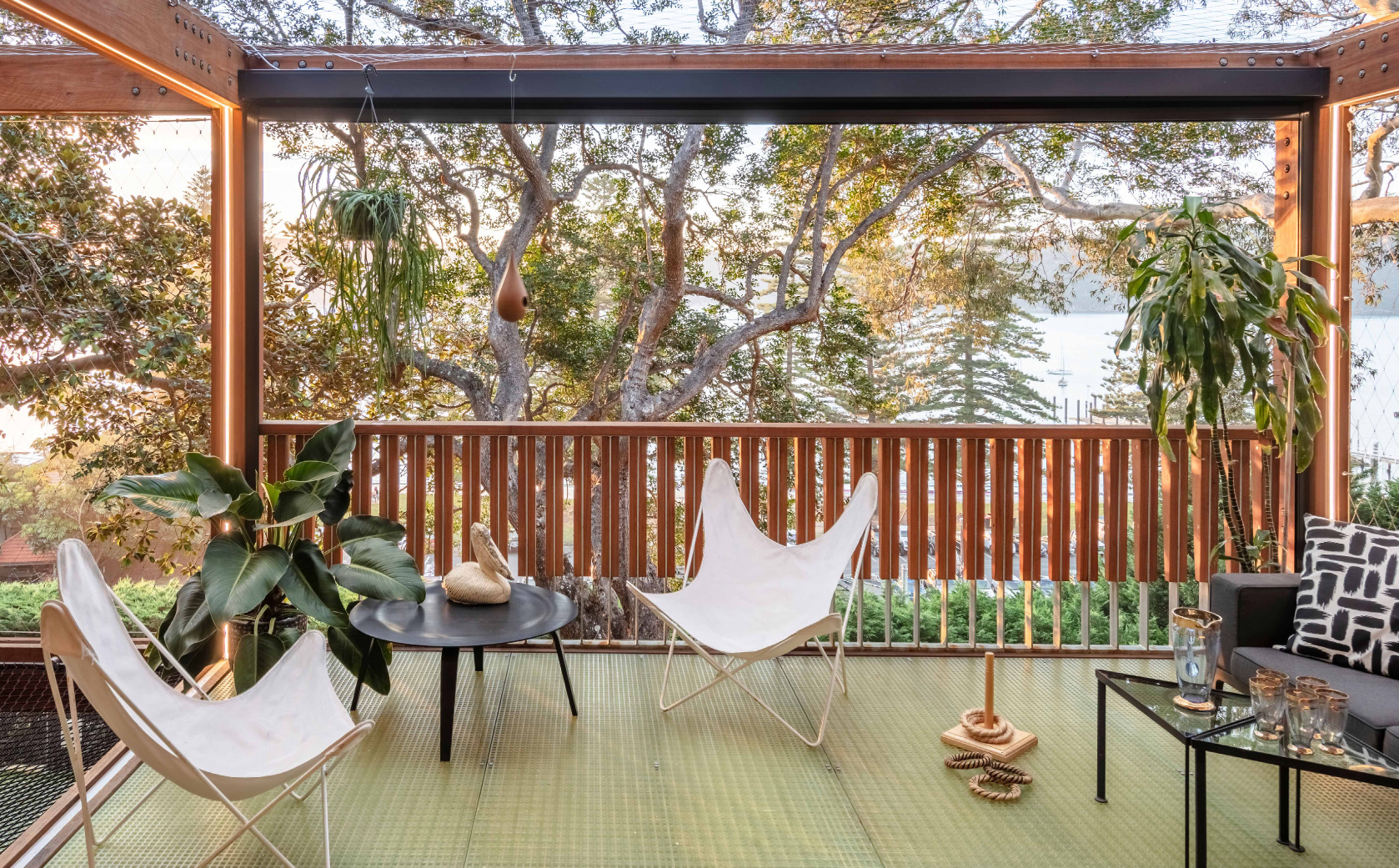
When talk turns to sustainability in residential construction, certain aspects spring to mind. Solar panels tend to feature heavily, as do rainwater tanks and heat pumps. In fact it’s often the things that are added onto a project that tend to garner the most attention.
But there’s another way of viewing sustainable design and construction which has more in common with the ‘touch the earth lightly’ approach to architecture than some might think.
As both an architect and builder, Clinton Cole understands how to find that sweet spot between elegant, functional residential design and efficient, waste-less building practices.
By the time he was invited to design this property at Palm Beach, he had already worked with the owners to design and build their family home on Sydney’s lower north shore. Nicknamed Iron Maiden, that house is defined by an open air corridor running through its heart, turning the house on a corner site back in on itself and keeping the inhabitants consistently connected to changing weather conditions while creating a variety of common living spaces and private sleeping quarters.
So when they had the opportunity to design and build a holiday home on this idyllic coastal site on the fringe of Sydney’s Northern Beaches, it was no surprise that connection to the natural world would be at its heart. Having trusted him to build their permanent family residence, the owners asked Cole to help them select the right block from a choice of three possible options.

“Someone had bought the land 20 or 30 years ago as a superannuation plan and divided the site into three parts and my clients bought the middle one, so it’s a greenfield site,” he says.
“This was the one with the most natural beauty.”
With five mature trees and a large sandstone boulder on site, it was never in doubt that this project would work with the landscape rather than attempting to bend it to the designer’s will.
Instead of excavating, Cole designed a single level house on stilts that would connect with the tree canopy as much as possible.

“Carving the house into the hill wasn’t an option – why excavate the very landscape we’re celebrating? So we decided to plant it in the ground on bored concrete piers,” he says.
“The idea was to have the house feel like a cubby house. With five trees on the site we had to get (the house) to a certain level to get to the canopy. Then we 3D scaled each tree and each leaf so we could carefully place the building and every tree would be safe.”
The digitised version of the trees, including a Port Jackson fig that was subject to a conservation order, formed part of the approval process with council and meant that when the house was complete, the residents could immediately enjoy the benefits of living in close proximity to mature trees.
The house itself is a simple design — “it took 10 minutes to design” says Cole — which is in keeping with the lifestyle the owners were hoping to capture. There’s not even space wasted on an internal corridor, so that a trip to the bathroom requires guests to momentarily step onto the deck before going back indoors. A spiral staircase is the only sculptural element to compete with the natural beauty of the site.
“It wasn’t about making a statement,” he says. “You don’t see it from the street so that was a low priority. It was designed so that you could walk around barefoot or have a shower at the back of the stairs after walking back from the beach.”
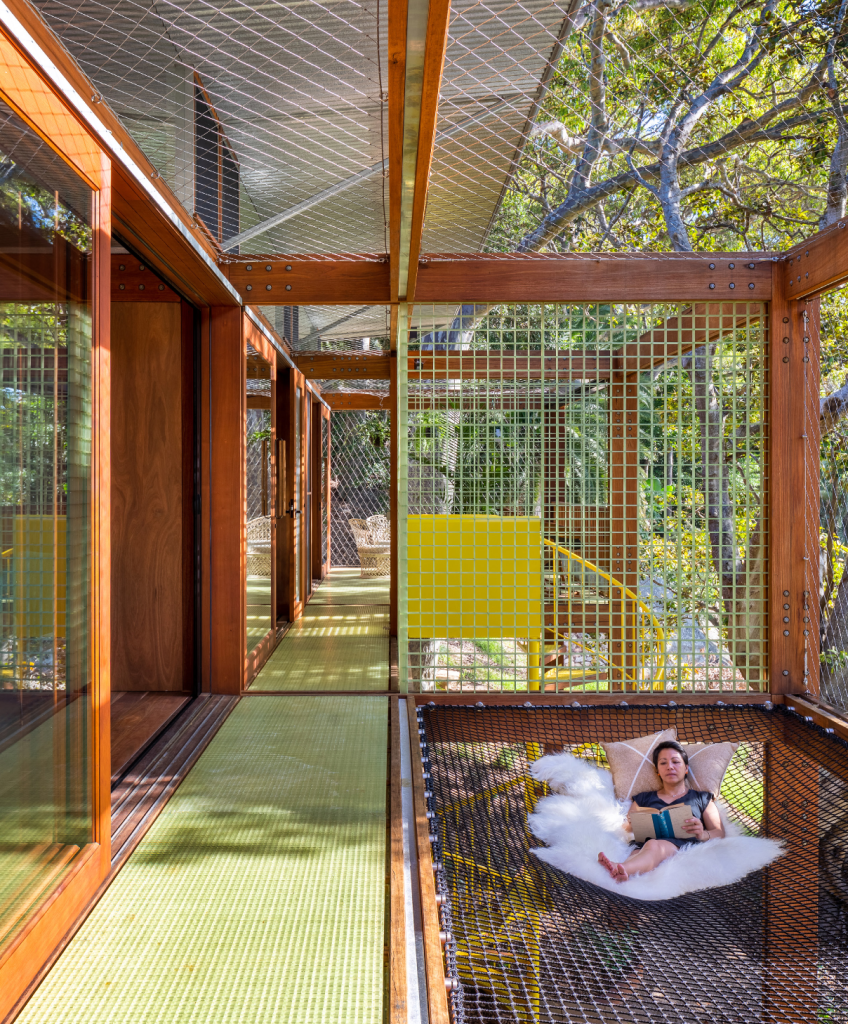
Materials are simple but have nonetheless been chosen with care. The framework consists of kiln dried Australian blackbutt and steel flitch beams with spotted gum lining the internal walls. The ceiling and roof are made up of lightweight galvanised iron sheeting while the outdoor flooring is fibre reinforced plastic (FRP). Cole says all materials, including the FRP, have been chosen for longevity.

“FRP is used on oil rigs and marine environments because it’s bulletproof,” he says. “That’s one of the higher embodied energy materials we used here but compared with timber decking, this comes out way ahead. It lasts about four times as long as timber.”
Heavy netting has also been used as an unconventional flooring/ seating option as well as ‘screening’ to add to the sense of living amongst the trees.
“The netting kept the terrace area really light,” says Cole. “I got the idea when I was at indoor cricket sitting behind the net. After a couple of minutes the netting disappears visually.”
In keeping with its summertime vibes, the outdoor areas are almost the same size as the indoor spaces, with large, timber framed sliding doors retracting to maximise the living area. Meant for hosting visiting family, the house has a holiday feel with built-in double bunk beds in the secondary bedroom ideal for sleepovers.
Keeping in mind the amount of waste typically generated on building sites, Cole designed the house ‘like a Meccano set’.
“Because of the distance in terms of travel time from the (inner city) office and I am usually on site once or twice a week, I designed it to be built without supervision, like a Meccano set, shaping bits
of timber, cutting to length and drilling the holes and putting bits into holes,” he says.
It was just as well, given the lockdown periods Sydney — and the Northern Beaches — went through when the house was being built. As a result, he only visited the site twice in the six months it took to build.
“Normally you wouldn’t be able to build a basement in that time if you were dealing with excavation,”
Cole says. “It was appropriate for the site, as well as the budget.”
Relying on passive design principles such as cross ventilation and the thermal chimney effect where rising hot air is released from the house via strategically placed louvred vents, the only obvious concessions to conventional cooling methods are ceiling fans in the living room and bedrooms.
Because the trees have been retained, solar panels were not considered suitable for this house — ‘it’s too overshadowed’ — so its sustainable credentials are not obvious.
“It’s not the most prevalent sustainability project,” says Cole. “There are no solar panels or heat pumps, it has none of those things.
“But half the carbon in a building is not in the life cycle of the building, it’s in the resources that go into building it. We worked on the embodied energy being as low as possible. It’s something we’re doing more and more.”
From making unpopular decisions to learning when to listen, leaders from five businesses reveal what nobody prepared them for — and how running a company has challenged their expectations.

Technology and semiconductor shares fell sharply as investors questioned the debt financing the AI infrastructure boom and confronted higher rates and Chinese competition.
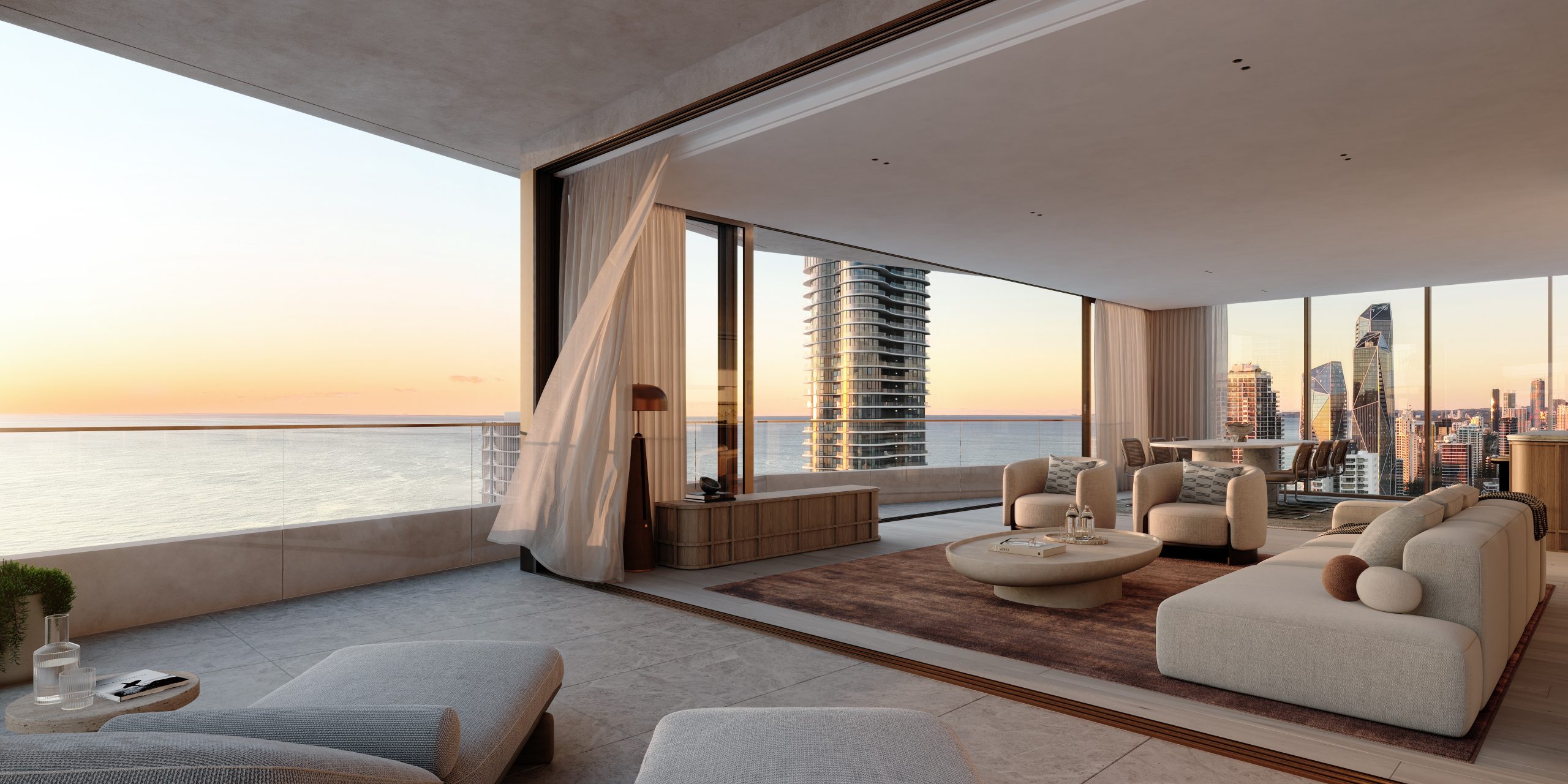
Mirvac’s 45-level Trielle has topped out at Yarra’s Edge, pairing riverfront apartments with wellness facilities, private dining and resident services.
3 min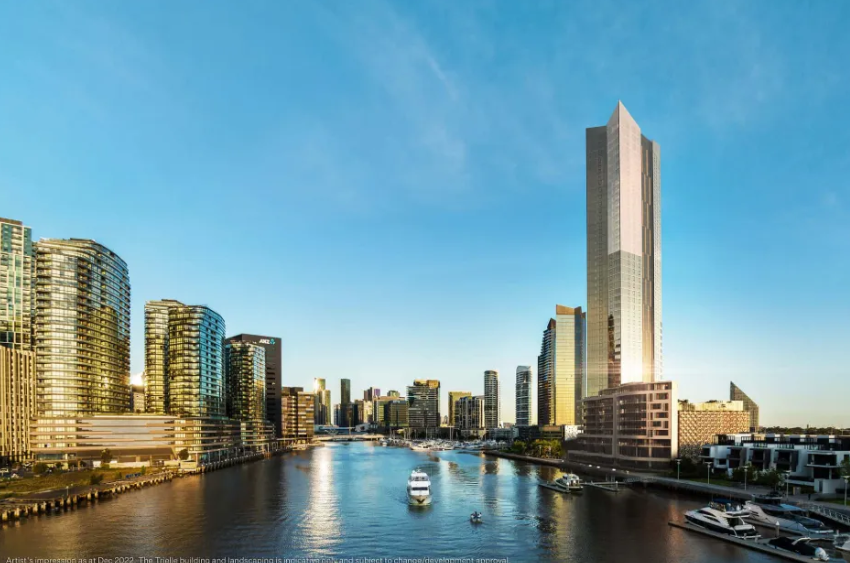
Mirvac has topped out Trielle at Melbourne’s Yarra’s Edge, with more than 70 per cent of the riverfront development sold and approximately 80 per cent of purchasers intending to make their apartment a home.
The figures, released on September 22, point to an owner-occupier audience for one of the precinct’s final residential towers. Mirvac began developing Yarra’s Edge in 2003, and its latest addition occupies one of the remaining absolute riverfront sites.
Mirvac CEO of Development Stuart Penklis said existing residents were among those moving up within the neighbourhood.
“Many purchasers already have a connection to Yarra’s Edge,” Mr Penklis said, describing buyers whose changing needs were encouraging an upgrade within the precinct.
“As one of the final residential towers within Yarra’s Edge, Trielle represents the culmination of more than two decades of creating one of Melbourne’s most established and sought-after waterfront communities,” Penklis said.
“Positioned on the Collins Street axis with absolute river frontage, Trielle offers residents a rare opportunity to enjoy sweeping views across the Yarra River, Melbourne skyline and Port Phillip Bay, while remaining seamlessly connected to the CBD. With Trielle now more than 70 per cent sold, we’re continuing to see strong demand from buyers seeking quality homes in established locations.”
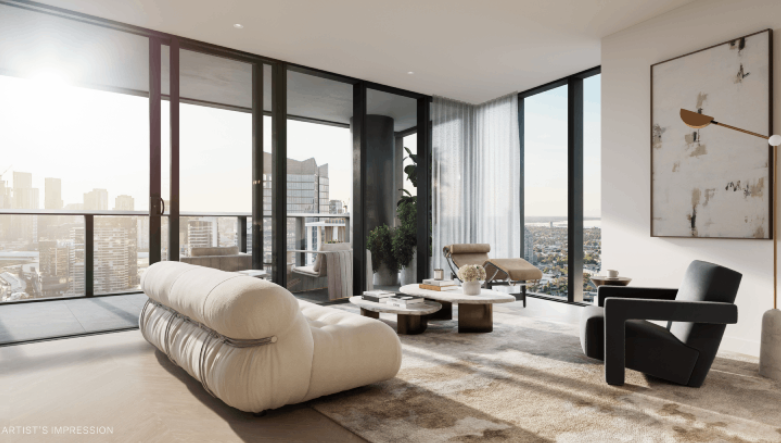
The developer also flagged a penthouse and sub-penthouse collection with larger layouts, premium finishes and broad outlooks. The planned wellness centrepiece, The Oasis, encompasses a 900-square-metre elevated urban rainforest.
Mirvac General Manager Residential Development Victoria Elysa Anderson said Trielle had resonated strongly with buyers seeking a rare lifestyle offering in Melbourne.
“Opportunities to secure a new luxury residence on a riverfront site of this calibre are incredibly rare, particularly within a community like Yarra’s Edge,” Anderson said.
“What makes Trielle unique is the combination of exceptional views, world-class residential facilities and the lifestyle that already exists around it. Residents are buying into a mature waterfront community with parks, promenades, dining, wellness and strong community connections already in place.”
The 45-level tower brings a substantial new presence to that waterfront. Its residential offering spans one-, two-, three- and four-bedroom apartments, with Signature, Prestige and Sub-Penthouse collections accommodating different household sizes. The north-facing position connects the apartments visually to the river and city beyond.
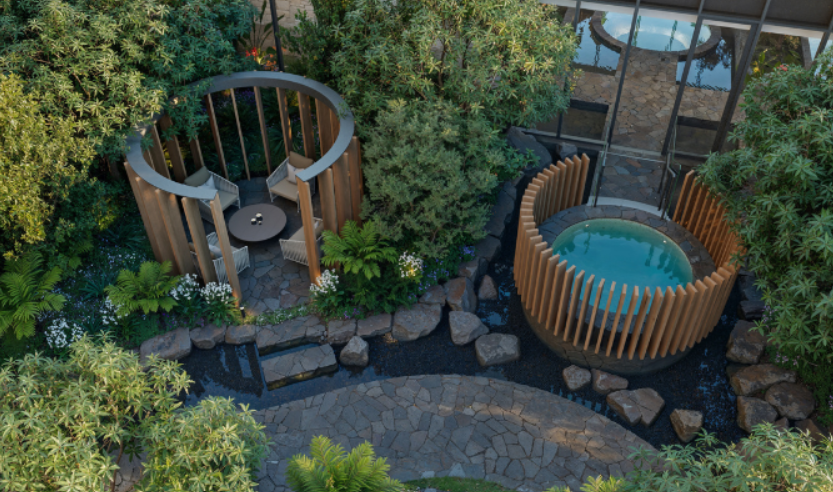
Seven storeys above the promenade, the planned Oasis combines planting and a running stream with a Scandinavian-inspired wellness club developed with spa specialist Naomi Gregory. Facilities include a 25-metre lap pool, hot magnesium pool, sauna, hydrotherapy, a gym, yoga and Pilates room, and treatment spaces.
The amenity extends beyond exercise. Residents will have access to The Biblioteca library and workspaces, ground-floor work pods, and The Salone piano lounge. A private Chef’s Table dining room offers a setting for larger gatherings, while a cinema, games room and sports lounge broaden the entertaining options. Concierge services and a dog-wash area support everyday routines.
Trielle comprises a collection of one, two, three and four-bedroom residences. Reflecting strong demand from owner occupiers, approximately 80 per cent of purchasers to date intend to live in their homes, highlighting the project’s appeal to those seeking a long-term waterfront lifestyle.
Mirvac has recently delivered The Albertine, a premium apartment development on the edge of Melbourne’s CBD, and is nearing completion of Prince & Parade in Brunswick, further strengthening its portfolio of thoughtfully designed apartment communities in some of Melbourne’s most sought-after urban locations.

Warmer minimalism, tactile materials and wellness focused layouts are redefining luxury interiors as homeowners design for comfort, connection and lasting appeal.

Pure Amazon has begun journeys deep into Peru’s Pacaya-Samiria National Reserve, combining contemporary design, Indigenous craftsmanship and intimate wildlife encounters in one of the richest ecosystems on Earth.