The top 7 trends for 2024 borrowers
The clouds are starting to clear for mortgage holders and first homebuyers but the sun hasn’t quite come out yet
 4 min
4 min
After a turbulent 12 months, 2024 is shaping up to be another challenging year for Aussies looking to obtain a mortgage and those already servicing one. Despite 12 rate rises, inflation remains stubborn and isn’t expected to fall to the RBA’s intended range of 2-3% until 2025. Parts of the housing market remain as robust as ever, with prices for standalone homes steadily increasing due to fierce competition and low stock levels.
This scarcity of housing combined with a construction industry in distress are major factors that are pushing more first home buyers into making the jump. However, tightened lending means these buyers are more restricted in their options than they were a few years ago.
With that in mind, here are some of the key trends to watch for in the mortgage industry in 2024:
First home buyers head for the fringes
Sydney’s property market continues to soar to new heights, with house and unit prices growing further out of reach for most first home buyers. Even with a healthy budget of $800,000 – the price cap for buyers taking advantage of the government’s first home loan deposit scheme – buyers are priced out of most of Sydney’s suburbs. Currently figures show the median price of a unit in Sydney is $817,059 while median house prices sit at an eye-watering $1,333,985. To stay within budget, first home buyers would need to search for properties on the city’s fringes on the west, south-west and as far as the Blue Mountains.

Singles are being hit hard
Singles in Sydney are facing formidable challenges when it comes to entering the property market. For the most part, property prices in Sydney show no sign of falling which presents a major barrier for those on a single income. Limited housing affordability coupled with stringent lending criteria and the high cost of living further compounds the issue.
Many singles find themselves struggling to save for a substantial deposit, and even with the Federal government’s first home loan deposit scheme and the NSW government’s waiving of stamp duty among other concessions, buying property as a single is still difficult thanks to most properties exceeding the price cap for government assistance.
Female homeowners on the rise
The rise of female homeownership reflects the country’s rapidly changing economic and social dynamics. According to census data, 35% of all households in NSW are single households. Single parent households have reached unprecedented highs. Empowered by increased financial independence and the growing emphasis on gender equality, women are no longer solely reliant on men when it comes to property ownership. CoreLogic reports that women currently own 26.8% of Australian property, with 35.7% of apartments in the hands of female owners.
Divorce trends also play a role in this change as women increasingly have the means and motivation to buy out their male partner’s share in marital property settlements. Additionally, more women are pursuing homeownership independently, heralding a broader transformation of the property market as greater numbers of women aspire to invest in real estate.
Second marriages’ effect on home ownership
Second marriages often bring complex issues regarding home ownership, especially when safeguarding assets is a priority. For individuals entering into second marriages, protecting investments or previous family homes for their existing children is a major consideration. In these cases, it’s common for couples to keep ownership of such properties separate to ensure they are inherited by their respective children rather than being factored into the new marital union.
When it comes to purchasing new marital homes, couples often enter the property market with clear financial agreements in place. These agreements ensure that the financial contributions of both partners are explicitly recognised, adequately reflect the financial realities and priorities of their second union and ensure that the new home is equitably shared. In the context of mortgages and property ownership, the importance of effective financial planning and communication when blending households in second marriages can’t be understated.
Appetite for new builds remains dampened
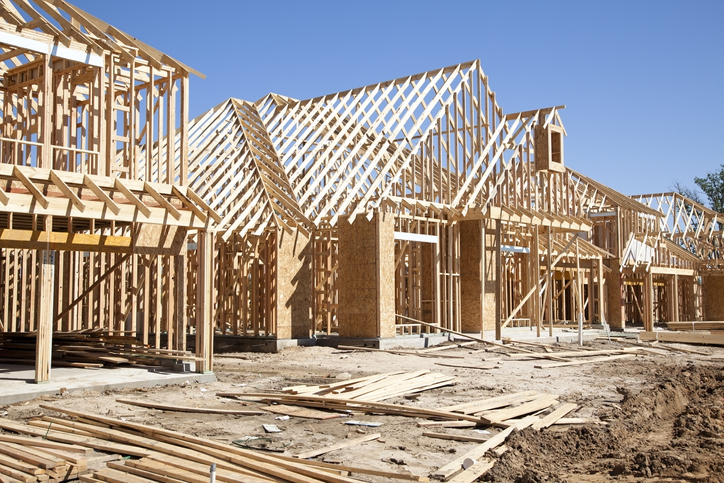
The appetite for new builds in Australia continues to be subdued primarily due to a variety of factors that have left many prospective homeowners cautious about embarking on new construction projects. With construction companies folding left, right, and centre, potential homeowners are understandably apprehensive about building their new home.
With uncertain timelines, cost overruns due to the rising price of building materials, and labour shortages to contend with, many Aussies are instead opting for existing properties or considering alternative measures like renovating as a more secure and predictable pathway to homeownership.
Cash is king
Whether they accumulated cash through savings during the pandemic or are sitting on extra dough through the sales of investment properties, an increasing number of Australians are poised to buy into the market in cash. Data shows that 1 in 4 property purchases in Australia’s three most populous states are cash purchases.
Undeterred by high interest rates, these buyers are a formidable force in the property market. Consisting of downsizing Boomers and international buyers, this cohort could potentially price out buyers who rely on mortgage financing, intensifying competition for the most desirable properties and possibly driving property prices even higher.
Mortgage sideliners
A growing group of individuals often referred to as “mortgage sideliners” are sitting in the wings for longer and longer as they await more favourable market conditions. For these potential homebuyers the increasing unaffordability of homes coupled with tighter lending requirements is a major barrier to entry. Mortgage sideliners hope for a market correction and for interest rates to fall before making their move. While they continue to monitor the market for the right opportunity, mortgage sideliners risk the current market spiralling even further out of reach as a low interest rate period is sure to spark more competition for desirable properties.

Rebecca Jarrett-Dalton is founder of mortgage broker, Two Red Shoes

The Swiss watchmaker’s first collaboration with Atlassian Williams F1 Team produces two sporting Laureato models inspired by the team’s 2026 racing car.
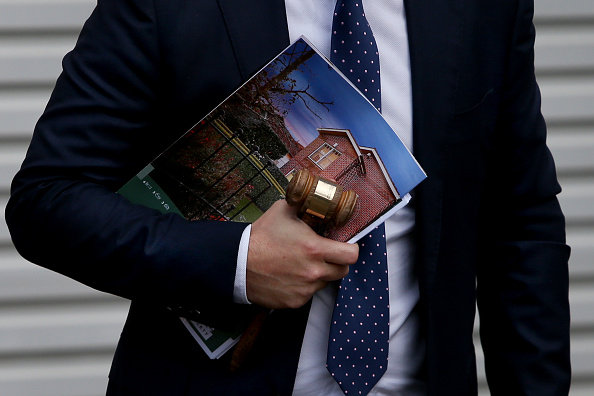
Victorian auction buyers will soon receive a piece of information that has traditionally been withheld until bidding reaches it: the vendor’s reserve price. Under new property-sale and underquoting laws, agents must publish the agreed reserve at least seven days before an auction or fixed-date sale. Most changes begin on 1 October 2026 and apply to …
Continue reading “Victoria’s New Auction Rules Will Force Reserve Prices Into the Open”
Paramount and California’s attorney general are in advanced settlement talks over the company’s proposed $81 billion merger with Warner Bros. Discovery. Potential concessions include investing $1.5 billion in California production, retaining both studio lots and introducing safeguards for CNN’s editorial independence.
3 min
California’s attorney general and Paramount PSKY -3.86%decrease; down pointing triangle have discussed a series of potential concessions as part of advanced settlement negotiations, including a $1.5 billion investment by the company in production in California, according to people familiar with the discussions.
Paramount executives and a coalition of states that sued to block its $81 billion merger with Warner Bros. Discovery WBD -1.56%decrease; down pointing triangle spent the weekend hashing out the details of a possible settlement. Such an agreement would clear the way for a deal that would bring HBO, CBS, CNN, streaming services and famed movie studios under one owner.
Among the concessions the parties have discussed beyond the sizable production investment: a promise not to sell either studio lot and to stay in the state of California, the people said. The company had explored moving out of the state as the deal faced opposition.
The parties have also considered potential penalties if Paramount doesn’t make good on an earlier pledge to make 30 movies a year after the merger, including having to sell its stake in Miramax, known for such classic movies as “No Country for Old Men” and “Pulp Fiction,” the people familiar with the matter said.
Other measures the sides have explored include the sale of some cable channels and the creation of a board to ensure that CNN retains editorial independence, people with knowledge of the talks said. The network has been a political flashpoint throughout Paramount CEO David Ellison’s fight for Warner. Paramount had been discussing creating such an editorial board before the lawsuit.
A final deal hasn’t been reached, and it is unclear what terms the parties may ultimately agree to.
Ellison has spent the past year fighting to buy Warner in a megadeal that would expand his entertainment empire, but that has drawn opposition from some political and Hollywood figures.
A dozen Democratic-led states led by California Attorney General Rob Bonta sued in July to block the deal on antitrust grounds, arguing that the combination of Paramount and Warner would create too much concentration in the markets for theatrical films and cable television channels.
The Writers Guild of America sued over the merger, saying that the deal would eliminate jobs and career opportunities for Hollywood screenwriters.
About two dozen demonstrators gathered in front of the Elihu M. Harris State Office Building in downtown Oakland on Sunday evening to protest a potential settlement. Holding signs reading “Bonta: Don’t You Dare” and “Block the Megamerger,” they took turns giving speeches urging the attorney general to continue pressing the suit.
“Nothing has changed since he filed the case,” said Annie Leonard, co-founder of the nonprofit Committee for the First Amendment, which advocates for free expression. “He needs to stay as strong as he was in filing it.”
The two sides had come under pressure to settle the matter in recent months, including from California Gov. Gavin Newsom, Los Angeles Mayor Karen Bass, gubernatorial candidate Xavier Becerra, movie theater chains and some Hollywood labor unions.
Paramount’s agreement with Warner also included a “ticking fee” with payments to Warner shareholders of roughly $650 million a quarter, or $7 million a day, beginning next month, until the transaction closes.
Paramount had asked a federal judge to require the states and the Writers Guild to put up a nearly $1.9 billion bond for challenging the acquisition, money that would go to the company if it ultimately won the case.

The megamansion was built for Tony Pritzker, heir to the Hyatt Hotel fortune and brother of Illinois Gov. JB Pritzker.

From snow-dusted valleys to festival-filled autumns, Bhutan reveals itself as a rare destination where culture, nature and spirituality unfold year-round.