Home Sales on Track for Worst Year Since 1995
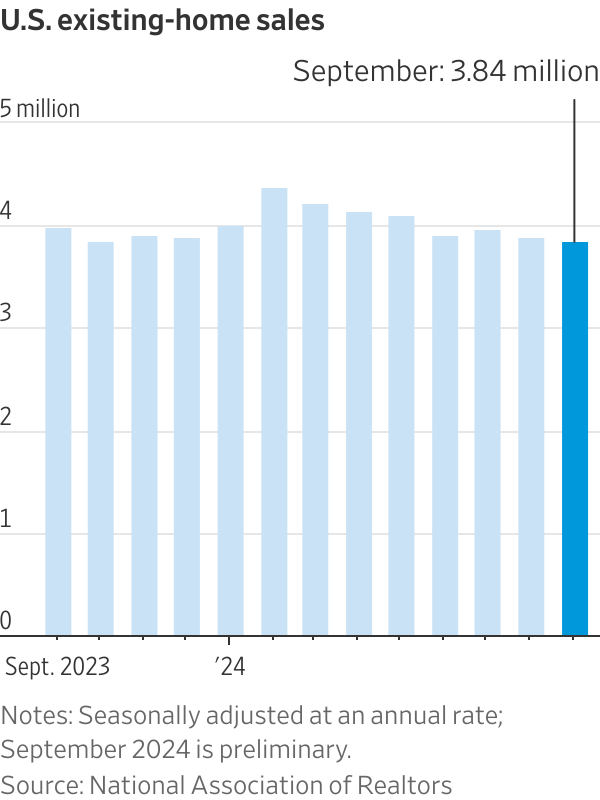
September sales fell 3.5% from a year earlier. In 2023, home sales hit their lowest point in 30 years.

 5 min
5 min
Sales of existing homes in the U.S. are on track for the worst year since 1995— for the second year in a row.
Persistently high home prices and elevated mortgage rates are keeping potential home buyers on the sidelines. Sales of previously owned homes in the first nine months of the year were lower than the same period last year, the National Association of Realtors said Wednesday.
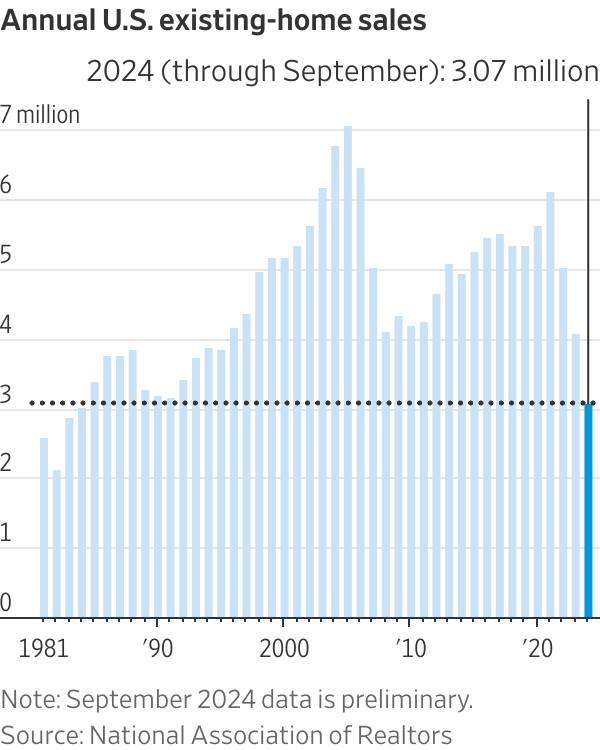
Existing-home sales in September fell 1% from the prior month to a seasonally adjusted annual rate of 3.84 million, NAR said, the lowest monthly rate since October 2010. Economists surveyed by The Wall Street Journal had estimated a monthly decrease of 0.5%.
September sales fell 3.5% from a year earlier.
After a sluggish 2023, economists and real-estate executives widely expected activity to pick up in 2024.
But mortgage rates have stayed higher throughout the year than some had forecast, including in recent weeks after the Federal Reserve’s interest-rate cut last month. That has kept home-buying affordability low .
Home prices have continued to rise, as inventory in many parts of the country is still below normal historical levels. Climbing home insurance costs and a coming election are also adding to buyers’ uncertainty.
“Home sales are stuck at low levels,” said Lawrence Yun , NAR’s chief economist. “Americans are really not moving.” Yun said he forecasts that existing-home sales for 2024 as a whole could match or be slightly below last year’s level.
Expectations that the Fed would cut rates this year caused mortgage rates to drop to 6.08% in September, a two-year low. But the move came too late in the year to lure buyers, real-estate agents say. Many families prefer to purchase in the spring and move houses between school years.
The reprieve in rates also didn’t last long. Mortgage rates have risen for three straight weeks to the highest level since August.
“That trickle up in rates, to right back where we were, just sucked the air out,” said Michael Read, owner of Bridgeway Mortgage & Real Estate Services in Morristown, N.J.
Mortgage rates tend to loosely follow the yield on the 10-year Treasury note, which has been above 4%. But the spread between mortgage rates and the 10-year has widened to above historical norms in recent years, which can push up borrowing costs.
Lenders often sell mortgages to investors. Those investors demand a bigger return, particularly when rate volatility is higher than normal, because mortgages are riskier than ultrasafe government bonds.
Uncertainty around the presidential election and “murkiness” around recent labor and inflation data haven’t helped, said Mike Fratantoni , chief economist at the Mortgage Bankers Association.
Mortgage applications have fallen for four straight weeks as rates have risen.
“It’s tough in this business,” said Alex Elezaj , chief strategy officer at United Wholesale Mortgage. “Once you think it’s going one way, it goes another.”
A drop in mortgage rates later this year or next would make home purchases more affordable, but that benefit could be offset if home prices continue to rise. In September, 42% of more than 1,000 people surveyed said they expect mortgage rates to fall in the next 12 months, but 39% said they expect home prices to rise over the same period, according to Fannie Mae .
The national median existing-home price in September was $404,500, a 3% increase from a year earlier, NAR said. While that is down from the recent high, it is the highest median home price for any September, Yun said. Prices aren’t adjusted for inflation.
Widespread frustration with the housing market has made affordability an important campaign topic . Both parties have offered proposals to bring down housing costs. Vice President Kamala Harris has rolled out plans for building more housing, for example, and offering help with down payments. Former President Donald Trump has proposed cutting regulations and allowing more building on federal land.
For the buyers who are able to jump into the market now, there is less competition and more room to negotiate. The typical home sold in September was on the market for 28 days, up from 21 days a year earlier, NAR said.
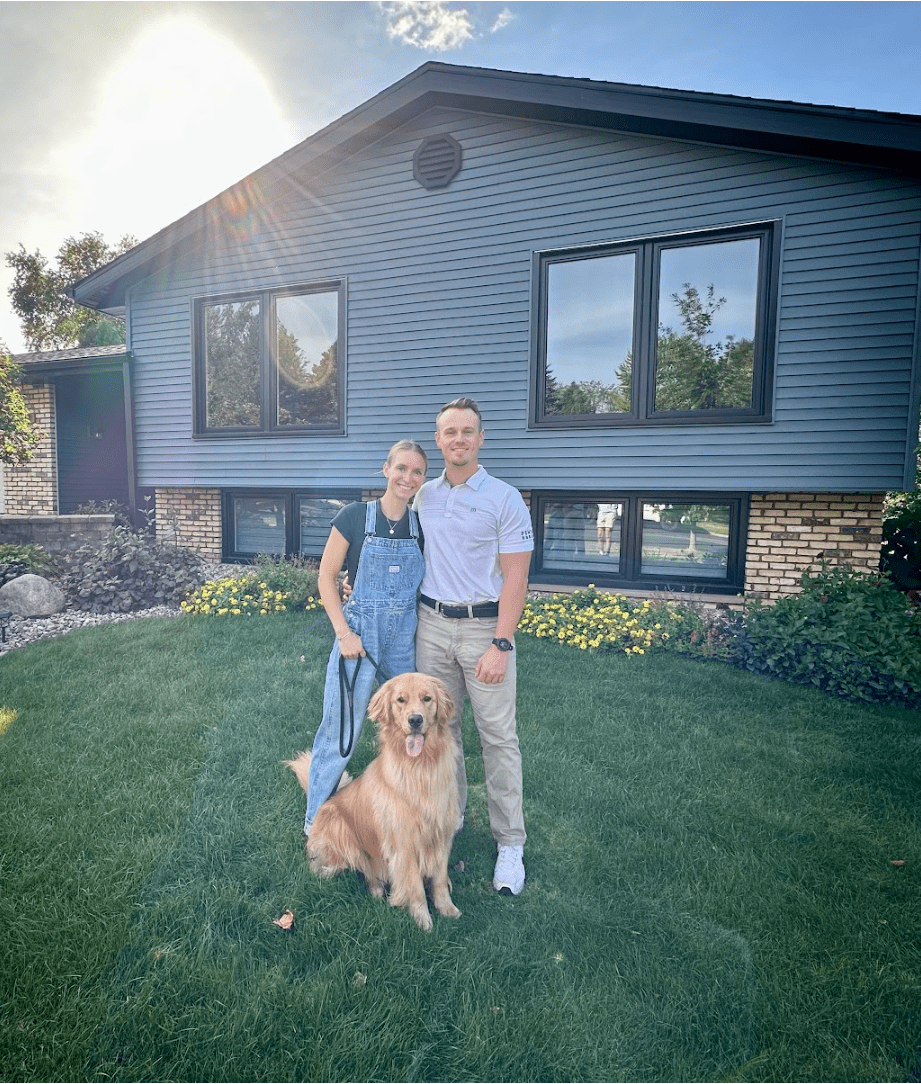
Lucy and Graham Schroeder tried buying a house in the suburbs of Madison, Wis., in 2023 and again this past spring, but they got outbid by other buyers. When they re-entered the market this summer, “it felt like something kind of shifted,” Graham Schroeder said. “Houses were kind of sitting a little bit.”
The couple bought a five-bedroom home in August for $585,000, about 5% below the listing price, and sold their smaller home for $330,000.
The number of homes for sale or under contract rose 23% in September from a year earlier, NAR said, but it remains below normal levels in many markets. Many homeowners who locked in low rates on their current mortgages a few years ago are staying put, because they are reluctant to take on a new loan at a higher rate.
At the current sales pace, there was a 4.3-month supply of homes on the market at the end of September. That is at the low end of what is considered a balanced market between buyers and sellers.
David Schlichter
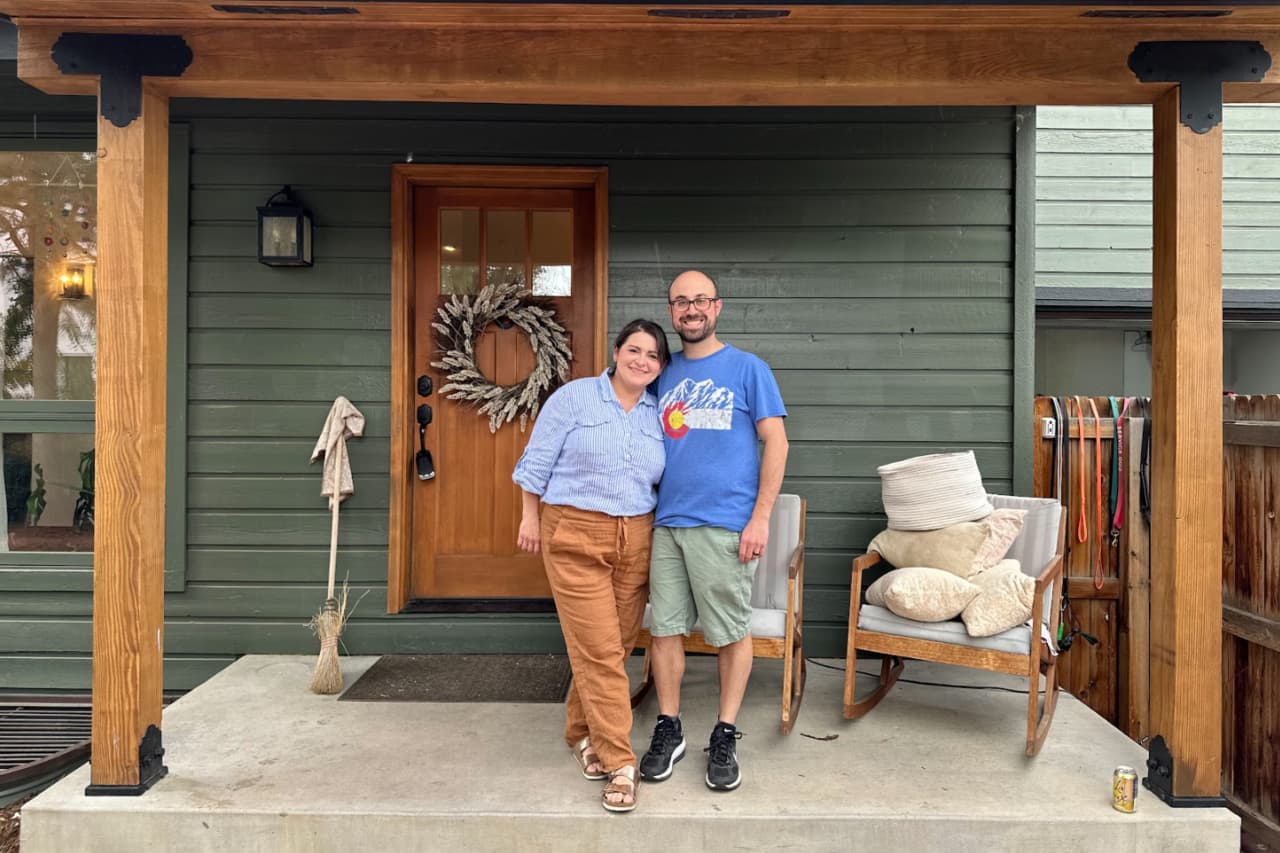
Kaitlin Skilken and Matt Adler experienced the cool-down in the market firsthand. The couple competed against other buyers to purchase a house this spring in Wheat Ridge, Colo. But when they listed their townhouse in a nearby city for sale in June, it sat for almost two months.
Other units in the community were also sitting on the market, and the homeowner association’s insurance policy didn’t comply with every lender’s requirements, making it more difficult for buyers to get a mortgage, Adler said. “‘You only need one buyer,’ is what I kept saying,” Skilken said.
The couple sold the townhouse in September for the $475,000 asking price, and they paid a $12,000 credit to the buyers for some home repairs and to help lower the buyers’ interest rate.
Home-buying activity typically slows during the holiday season. Some real-estate agents say they expect sidelined buyers to re-enter the market in early 2025.
“It’s not like all of a sudden people have stopped needing to buy houses,” said David Schlichter, a real-estate agent in Denver. “You can only defer for so long.”
News Corp , owner of the Journal, also operates Realtor.com under license from NAR.
 Copyright 2020, Dow Jones & Company, Inc. All Rights Reserved Worldwide. LEARN MORE





From making unpopular decisions to learning when to listen, leaders from five businesses reveal what nobody prepared them for — and how running a company has challenged their expectations.

Technology and semiconductor shares fell sharply as investors questioned the debt financing the AI infrastructure boom and confronted higher rates and Chinese competition.

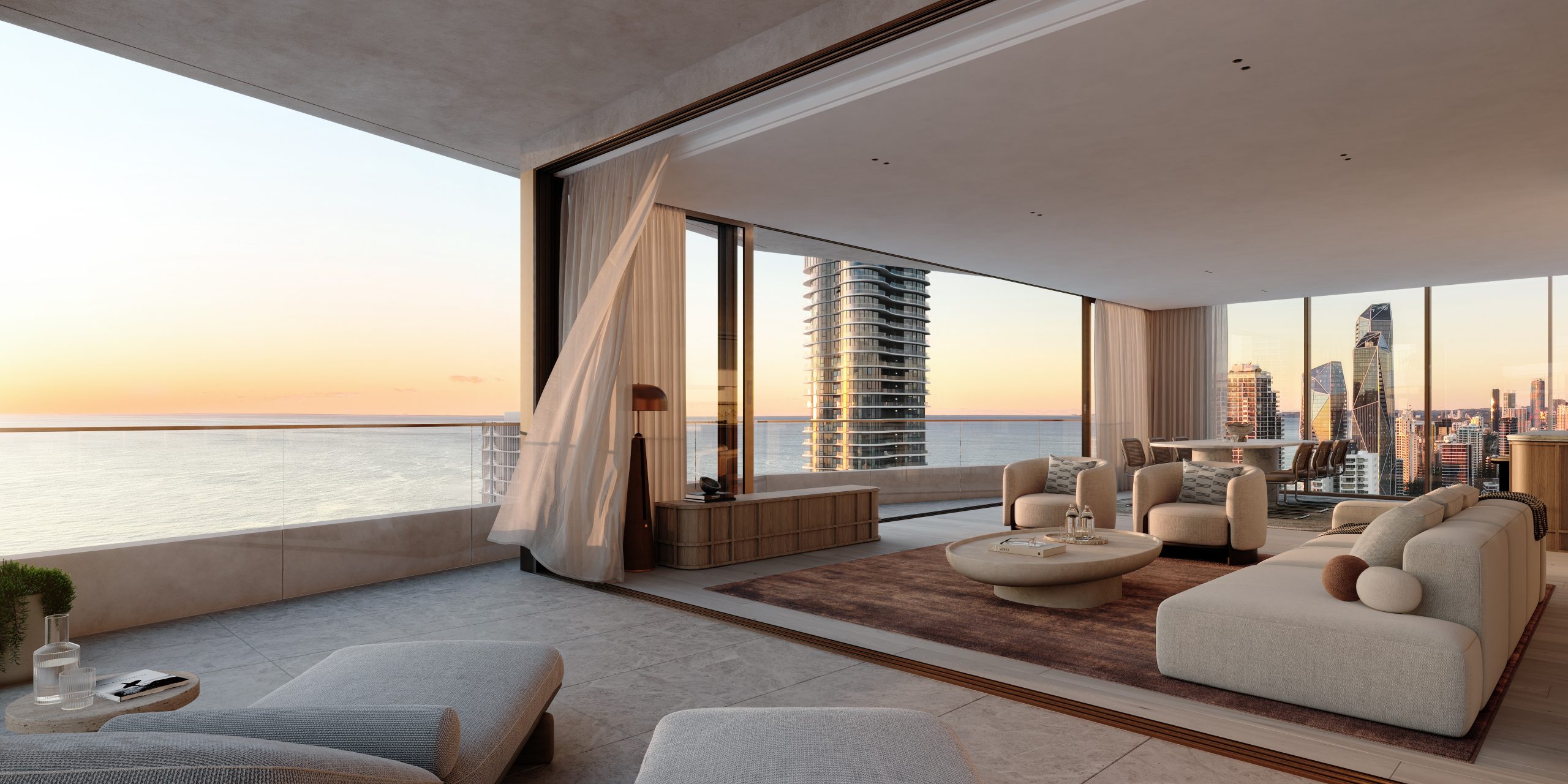
Mirvac’s 45-level Trielle has topped out at Yarra’s Edge, pairing riverfront apartments with wellness facilities, private dining and resident services.
3 min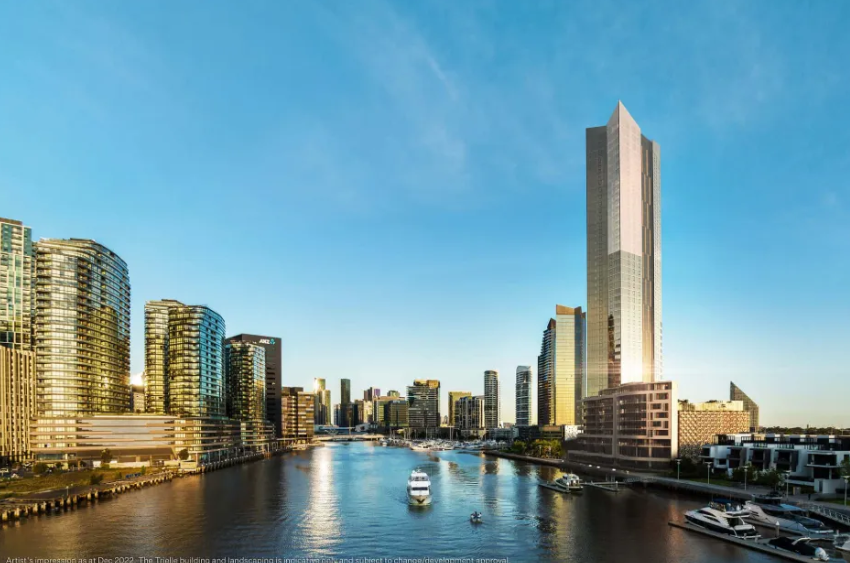
Mirvac has topped out Trielle at Melbourne’s Yarra’s Edge, with more than 70 per cent of the riverfront development sold and approximately 80 per cent of purchasers intending to make their apartment a home.
The figures, released on September 22, point to an owner-occupier audience for one of the precinct’s final residential towers. Mirvac began developing Yarra’s Edge in 2003, and its latest addition occupies one of the remaining absolute riverfront sites.
Mirvac CEO of Development Stuart Penklis said existing residents were among those moving up within the neighbourhood.
“Many purchasers already have a connection to Yarra’s Edge,” Mr Penklis said, describing buyers whose changing needs were encouraging an upgrade within the precinct.
“As one of the final residential towers within Yarra’s Edge, Trielle represents the culmination of more than two decades of creating one of Melbourne’s most established and sought-after waterfront communities,” Penklis said.
“Positioned on the Collins Street axis with absolute river frontage, Trielle offers residents a rare opportunity to enjoy sweeping views across the Yarra River, Melbourne skyline and Port Phillip Bay, while remaining seamlessly connected to the CBD. With Trielle now more than 70 per cent sold, we’re continuing to see strong demand from buyers seeking quality homes in established locations.”
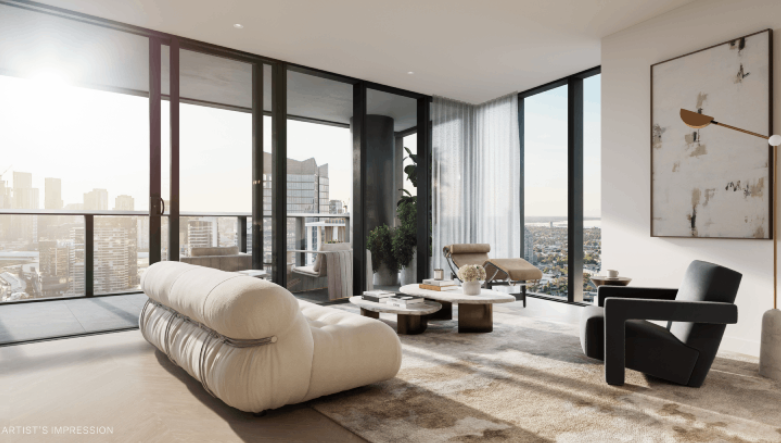
The developer also flagged a penthouse and sub-penthouse collection with larger layouts, premium finishes and broad outlooks. The planned wellness centrepiece, The Oasis, encompasses a 900-square-metre elevated urban rainforest.
Mirvac General Manager Residential Development Victoria Elysa Anderson said Trielle had resonated strongly with buyers seeking a rare lifestyle offering in Melbourne.
“Opportunities to secure a new luxury residence on a riverfront site of this calibre are incredibly rare, particularly within a community like Yarra’s Edge,” Anderson said.
“What makes Trielle unique is the combination of exceptional views, world-class residential facilities and the lifestyle that already exists around it. Residents are buying into a mature waterfront community with parks, promenades, dining, wellness and strong community connections already in place.”
The 45-level tower brings a substantial new presence to that waterfront. Its residential offering spans one-, two-, three- and four-bedroom apartments, with Signature, Prestige and Sub-Penthouse collections accommodating different household sizes. The north-facing position connects the apartments visually to the river and city beyond.
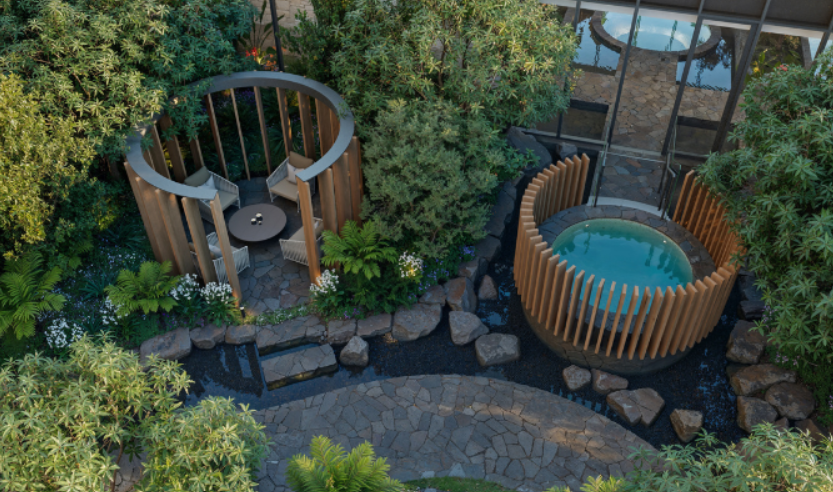
Seven storeys above the promenade, the planned Oasis combines planting and a running stream with a Scandinavian-inspired wellness club developed with spa specialist Naomi Gregory. Facilities include a 25-metre lap pool, hot magnesium pool, sauna, hydrotherapy, a gym, yoga and Pilates room, and treatment spaces.
The amenity extends beyond exercise. Residents will have access to The Biblioteca library and workspaces, ground-floor work pods, and The Salone piano lounge. A private Chef’s Table dining room offers a setting for larger gatherings, while a cinema, games room and sports lounge broaden the entertaining options. Concierge services and a dog-wash area support everyday routines.
Trielle comprises a collection of one, two, three and four-bedroom residences. Reflecting strong demand from owner occupiers, approximately 80 per cent of purchasers to date intend to live in their homes, highlighting the project’s appeal to those seeking a long-term waterfront lifestyle.
Mirvac has recently delivered The Albertine, a premium apartment development on the edge of Melbourne’s CBD, and is nearing completion of Prince & Parade in Brunswick, further strengthening its portfolio of thoughtfully designed apartment communities in some of Melbourne’s most sought-after urban locations.

Limited to 630 units, Lamborghini’s latest Urus Capsule pushes personalisation further than ever, blending hybrid performance with over 70 bespoke design combinations.

Odd Culture Group brings a new kind of after-dark energy to the CBD, where daiquiris, disco and design collide beneath the city streets.