Meta PR Goes Back to Playing Offense
Meta is betting on a human-first AI future, but growing legal battles and declining public trust are putting Mark Zuckerberg’s vision to the test.

 3 min
3 min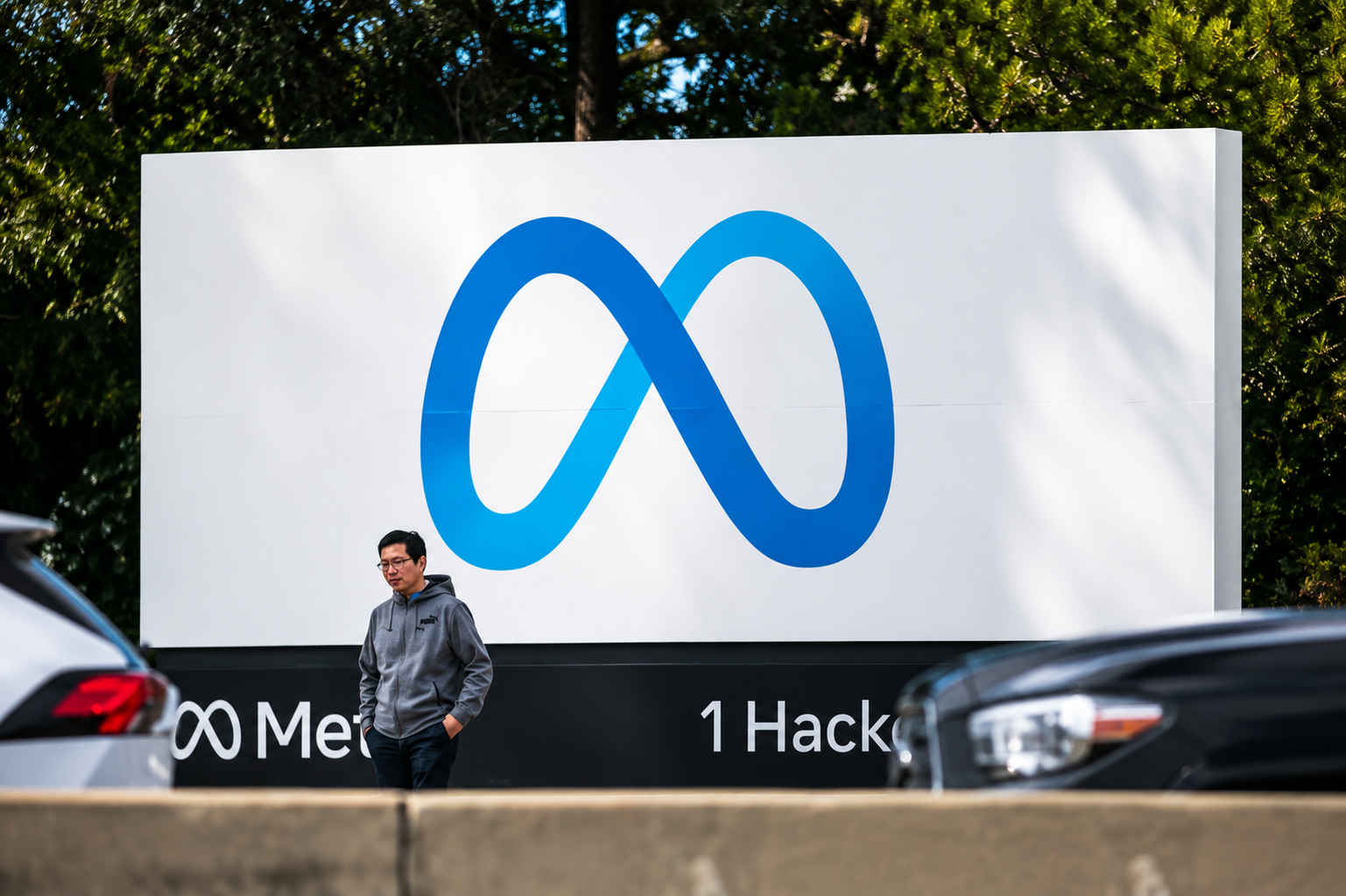
“Call us optimists. Call us dreamers. Call us whatever the hell you want, but we’re betting on people, and we like those odds. The future is for everyone.”
That ad copy is from the voice-over of a July Meta Platforms META -3.38%.
spot that’s been part of a public-relations blitz to position Meta as the humanist AI company. The message was undercut by the ad’s inclusion of David Bowie’s “Five Years,” a brooding 1972 song about an impending apocalypse. But this week CEO Mark Zuckerberg left no ambiguity, publishing a 6,500-word manifesto—about 10 times the length of this newsletter—with a title that echoed the ad: “The Future is for Everyone.”
That seems to be Meta’s new tagline. In light of sinking public opinion and the company’s thousands of lawsuits from states, school districts, parents, and users, Meta’s public relations have been defensive. This push represents a return to offense, with a chance to distinguish Meta’s approach to AI from other labs like OpenAI, Anthropic, or SpaceX SPCX +9.65%.
“It is surprising that the discourse from many developing AI is so filled with doom,” Zuckerberg wrote. “I do not understand why anyone who believes that AI will eliminate most jobs and much of humanity’s relevance would rush to build that future.”
Zuckerberg frames what sort of future we build with AI as the central issue of our time. “We believe that delivering superintelligence to everyone is the way to answer this question,” he says. “This has the potential to begin a new era of personal empowerment where individuals can use this powerful new capability to reach their full potential, pursue their interests, and improve their lives and the world more than ever before.”
The flood of words belies the situation on the ground in mid-2026. Americans, at least, have a love-hate affair with social media. A November Pew Research Center poll reported that 71% of U.S. adults used Facebook, and 51% used Instagram. Worldwide, 3.6 billion people use at least one Meta app every day.
But in a Reuters/Ipsos poll conducted in July and August, 61% of respondents said they wanted more government oversight of social media, and two-thirds supported laws to keep children under 16 years old off the platforms. When it comes to Meta in particular, in the 2026 Axios Harris 100, an annual poll about corporate reputation, Meta placed 96th out of 100. It’s only above two other social media companies, Chinese ultracheap retailer Temu, and Spirit Airlines, a defunct air carrier. Regarding ethics, Meta came in last, and it was only ahead of TikTok in trust.
The steady drip of headlines in the teen social media trials isn’t helping. Last week, Meta lost a judgment in New Mexico state court that raised their liability in that relatively small jurisdiction to nearly $1 billion dollars. On Wednesday, jury selection began for a federal case with four states suing Meta over addictive product design, and false marketing that said its platforms were safe for teenagers. In July, Meta claimed that the states are asking for a total of $1.4 trillion in damages, in addition to design changes in the apps. This is part of a multidistrict litigation, where thousands of federal trials with social media defendants are coordinated in Judge Yvonne Gonzalez Rogers’ district courthouse in Oakland, Calif.
There is a separate such group of thousands of cases in California state court, mostly with individual plaintiffs. The steady drip of bad headlines from the courts will continue unless Meta decides to settle en masse.
Meanwhile, in the second quarter, Meta booked “$2.40 billion of charges related to legal proceedings,” according to its quarterly filing. That may be just the beginning.
Zuckerberg spent 6,500 words getting his utopian message out, but I can sum it up in two: Trust us. The evidence is that Meta has a long way to go to win back that trust.
 Copyright 2020, Dow Jones & Company, Inc. All Rights Reserved Worldwide. LEARN MORE





Technology and semiconductor shares fell sharply as investors questioned the debt financing the AI infrastructure boom and confronted higher rates and Chinese competition.

Waldorf Astoria Kuala Lumpur is scheduled to open on 30 October, introducing the Hilton luxury brand to Malaysia with an all-suite hotel in the city’s Golden Triangle.

LEGO is expanding beyond its traditional audience by tapping into people’s passions, from flowers and gaming to music and Formula One, through creative products, immersive experiences and social-first marketing. The strategy is paying off, with revenue rising 21% in the first half of the year to a record DKK 41.9 billion.
5 min
Lego’s core audience was once young boys. But in recent years the world’s largest toy maker has expanded its reach, attracting more adults, teenagers and girls.
At the center of this expansion has been a strategy to tap in to people’s interests and hobbies—the Danish toy-brick maker calls them “passions”—many of which cross demographic boundaries. These include personal preoccupations like bonsai trees and golden retrievers, celebrities such as pop star Olivia Rodrigo and mega events like Formula One and the World Cup.
That has led to new types of building sets, including more sophisticated models that adults can display on their coffee tables, and a shift in marketing strategy, with Lego pouring money into experiences and social-media skits aimed at fans.
For Formula One watchers, Lego built life-size, drivable replicas of the teams’ race cars, which drivers took around the circuit at last year’s Miami Grand Prix. To reach gaming fans, Lego in August showed up at the Gamescom trade event in Cologne, Germany, with a giant Minecraft Lego chicken that visitors could sit on.
“We go not just for the people who are there, but because the types of things that we create become big social-media engagement,” says Julia Goldin, Lego’s chief product and marketing officer.
The strategy has helped spur growth. In the first half of this year, privately held Lego’s revenue rose 21% from the year-earlier period to a record 41.9 billion Danish kroner ($6.27 billion), while net profit climbed 32% to 8.6 billion kroner.
The Wall Street Journal spoke to Goldin about how the company researches people’s passions and turns these into products and marketing campaigns.
Edited excerpts follow:
Beyond demographics
WSJ: Adults have become a big focus for Lego—what’s behind that?
JULIA GOLDIN: Over the past eight years, we said there was a bigger opportunity with adults—not just people who are super-high-affinity fans, but people who maybe built a long time ago or had never built with bricks before—by giving them the things they would love to build now.
We approached adults from a passion-point perspective from the very beginning. We said we need to understand what they’re into. So, we looked at men, we looked at women, we looked at what their big interests were, what types of things they like to collect, what types of things they wanted to display in their rooms, etc. Now you can put Gustav Klimt’s “The Kiss” on your wall, or if you’re into animals, some cute floating sea otters. And then gamers who love a bit of ’80s or ’90s nostalgia can build and display the Game Boy.
We are now seeing strong growth with both adults and kids.
WSJ: How do you find out about people’s interests?
GOLDIN: We do a lot of trend-seeking and social listening. We look at viewership of various programs, behaviors, what’s trending socially. Then we dive quite deeply into these interests through primary research, ethnographic research and interviews.
AI has helped us ramp this up. There are tools where you can ask, with the right prompts: “People who are passionate about F1, what are they talking about? What are the latest conversations on Reddit?”
WSJ: Lego flower bouquets and trees are among the company’s most popular sets. How and when did that come about?
GOLDIN: When we started to talk seriously about adults, we could see that some people were into gardening and flowers. We launched the first flower bouquet in 2021 and completely underestimated how successful it would be. We started with the 18-plus age group because we thought that’s where the sweet spot is. But we realized that younger girls, especially teens, really love to build Lego flowers so we expanded the range.
You might think botanicals are women and F1 cars are men. But that’s why we talk about interests and not just gender and demographics. Yes, botanicals have a huge following among women and teenage girls, but bonsai trees are one of the top 10 products for men and teen boys. Speed Champions F1 cars show up in the top 10 for teen girls. I thought most of Olivia Rodrigo’s following would be girls, but my 16-year-old son asked me for two sets because his friends are massively into her.
That’s why we don’t market to a demographic. You can never be assumptive about how that breaks down in terms of gender.
WSJ: How has this shift in thinking changed your products and marketing?
GOLDIN: F1 is a great example. In the past, we might have started with a partnership with a team and a great Lego car for people to build. But we understand that it’s a multigenerational passion and different people are in it for different things. Some people love the cars, some collect, some follow the actual sport of racing, and some have tremendous passion for the drivers and their teams. That is why our F1 portfolio spans everything from Duplo [bricks] for toddlers to detailed display models and driver helmets for older fans.
But then we ask ourselves: What can we do to go beyond the products, to give fans Lego brand experiences that they would never expect? That’s why in Miami last year we built 10 full-size Lego Formula One cars, with nearly 400,000 bricks in each, and put all 20 drivers in them for the driver’s parade. Everyone assumed they were static models, until the drivers started lapping the circuit and we saw a tremendous amount of excitement and social media buzz. We generated something like two, three billion views.
WSJ: Do social-media views of a marketing event translate into significant sales of Lego sets tied to these campaigns?
GOLDIN: Yeah, of course. We don’t share data, but I can tell you they’re some of our most successful products.
‘She Built That’
WSJ: You say Lego is growing particularly strongly with girls. What is driving that?
GOLDIN: We used to have only Lego Friends as the one big line for girls, and some Disney products like “Frozen.” But rather than looking at toy categories that were selling to girls, like dolls, and trying to replicate that, we really worked to understand what girls are into.
We realized girls are super into pets and creatures, nature and flowers, socializing and music. We expanded significantly around those areas with botanicals, animals, K-pop and Olivia Rodrigo.
We also did the “She Built That” campaign, very strongly saying girls can build just as well as boys. I’ve heard for a long time that “girls don’t like to build because moms don’t,” but that’s just not true. We’re showing them things they really love to build, and that’s why it works.
WSJ: Why do you think adults, teens and others are turning to Lego more nowadays?
GOLDIN: There’s an overriding sense of lack of purposefulness and this drowning in content that you’re constantly being fed. Three hours have gone by and you’ve just been scrolling through feeds of reels. People are getting really tired. They want to actively do something that’s more purposeful and lasting.
When they build with Lego sets, they say they feel creative. They want to do something they can be proud of—where they can say, “Wow, I did this.”

Australian shares finished higher on Tuesday, September 22, as a technology rally and lower oil prices outweighed weakness in energy companies and continued anxiety about domestic interest rates. The S&P/ASX 200 closed 25.9 points, or 0.30 per cent, higher at 8,757.8. The All Ordinaries gained 0.36 per cent to 8,951.0, while the All Technology index …
Continue reading “ASX Wrap: Technology lifts the ASX as falling oil relieves inflation pressure”

Set on one of the city’s last absolute riverfront sites, The Riversdale by Mosaic combines irreplaceable waterfront ownership with one of Brisbane’s most significant residential opportunities.