Defining Moments in TV History You’ve Probably Never Heard About
Many of the most-important events have slipped from our collective memories. But their impacts live on.

 7 min
7 min
After roughly 85 years of television in American homes, viewers have collectively shared historical triumphs and unthinkable tragedies, from Neil Armstrong’s moonwalk in 1969 to the 9/11 terrorist attacks in 2001.
But lesser-known events in the world of television have also reshaped America’s cultural landscape in lasting ways.
From redefining suppertime to digitising games to symbolising sex, drugs and rock ’n’ roll, here are six examples of TV’s impact on the American psyche.
1950: Birth of the couch potato
In the late 1930s and early 1940s, television sets marched into American living rooms.
But like the venerable radios they replaced, TVs were incredibly inconvenient. Many viewers had to actually stand up and walk across the room just to change the channel.
In 1950, Zenith Radio addressed this gross shortcoming with its release of a remote control, albeit one with a long cord and only two buttons—one to change channels and the other to power the TV on and off. Zenith aptly dubbed its remote Lazy Bones.
Taking lazy to the next level, Swanson & Sons in 1953 introduced TV dinners, convenient bake-and-eat frozen meals in aluminum trays.
Clearly, suppertime had moved to the sofa, because in 1954, the first full year of production, Swanson sold 10 million TV dinners. We were becoming a nation of “couch potatoes.”
Of course, nobody knew it at the time because the term couch potato didn’t exist yet.
In 1976, a man named Tom Iacino called his friend’s house and flippantly asked the person who answered the phone if he could speak to “the couch potato.”
Another friend, cartoonist Robert Armstrong, later heard about the mocking moniker and went on to trademark it (with Iacino’s permission).
Armstrong co-wrote “The Official Couch Potato Handbook: A Guide to Prolonged Television Viewing,” and the term couch potato entered the nation’s vocabulary.
Sept. 9, 1950: Forced laughter
The name Hank McCune may be lost to history, but his short-lived television sitcom will forever be remembered for its chuckles, chortles, giggles and guffaws. All of it canned.
Woven throughout the show’s jokes and sight gags was a laugh track—a first in American television—to “sweeten” the material and cue viewers at home when something was funny.
Countless other shows went on to use the technique, with Charlie Douglass soon becoming the undisputed “master of laughter.”
Douglass, formerly a technical director for various live shows, incorporated prerecorded laughter into shows that were filmed both with and without studio audiences.
To do this, Douglass built what he called the “Laff Box” and operated it somewhat like an organ. The upper keys were pressed to combine different types of laughter, from titters to belly laughs, and the foot pedals controlled the timing and duration of the laughter.
TV Guide published a two-part series on the Laff Box in 1966 in which industry executives explained why they went for the easy laffs: “Live audiences in from the street are tense and nervous and you don’t get their true reactions,” explained producer Don McGuire.
Arthur Julian, a writer on “F Troop,” noted that “real audiences sound phonier than the laugh track. Sometimes they freeze up and act unnatural.”
Today, television shows have mostly done away with laugh tracks. But Douglass still gets the last laugh—even though he died in 2003.
A recent study confirmed what previous research has already determined: Laugh tracks get people to laugh. In 2021, researchers concluded that a laugh track “may socially facilitate viewers’ responses and succeed in increasing the perceived humor and enjoyability of a television comedic sitcom.”
1959: Fired for being Black
At his first job in TV in 1959, Max Robinson was a voice without a face. As he delivered the latest headlines on WTOV in Portsmouth, Va., viewers at home merely saw a slide that read “News” on their TV screens.
Then one day before his broadcast, Robinson instructed the cameraman to remove the slide.
“I thought it would be good for all my folks and friends to see me rather than this dumb ‘News’ sign up there. Vanity got the better of me,” Robinson told the Washington Post in 1988.
When the slide was removed, viewers at home discovered that Robinson was Black.
The next day, the owner called him and apologetically fired him, Robinson told the Post. “He’d gotten these calls from some irate whites who’d found out that one of ‘those people’ was working there,” Robinson said.
Nonetheless, even though he lost his job, Robinson made history as the first African-American nightly news television anchor.
After his WTOV stint, Robinson went on to report the news and sit in the anchor’s chair at various stations until his big break came on July 10, 1978. ABC-TV premiered “World News Tonight” with three anchors: Frank Reynolds, Peter Jennings and Max Robinson.
Despite his success, Robinson continued to decry what he saw as racial inequities in both the media and in media coverage.
In a 1981 address at Smith College, he called the news media “a crooked mirror” through which “white America views itself,” the New York Times reported. “Only by talking about racism, by taking a professional risk, will I take myself out of the mean, racist trap all Black Americans find themselves in.”
Robinson was one of the founders of the National Association of Black Journalists and advocated for the cause until his death in 1988.
Oct. 18, 1979: A flood of BUDs
To encourage the expansion of satellite TV, the FCC voted to drop its costly and complicated licensing requirement for owning a satellite dish.
Now, cable and premium channels could more readily install giant satellite dishes to transmit and receive signals.
But the rule change also meant that Joe Schmo could install a behemoth satellite dish in his backyard and scoop up signals from cable and premium channels—all without having to pay monthly subscription fees.
Even so, Joe Schmo soon learned that saving money came at a price: All the neighbours hated him.
Some early models of the satellite dishes measured 16 feet in diameter, and hundreds of thousands of them sprouted up across the country. Technically, they were referred to as C-band satellite dishes after the range of wireless frequencies they received.
But they were better known throughout neighbourhoods as BUDs, or Big Ugly Dishes.
BUDs could capture premium programming at no cost because initially the analog-TV signals weren’t encrypted by broadcasters.
Still, even if homeowners got free programming, the upfront costs of buying and installing a satellite dish ran into hundreds, if not thousands, of dollars.
The backyard BUDs shot up just as cable and satellite programming was just getting off the ground. Home Box Office was a pioneer on both fronts.
In 1972 it was the first pay-cable network, and in 1975, it became the first TV network to transmit programming via satellite.
Ted Turner in 1976 turned WTCG, a small, independent TV station into a national cable network and later rebranded it WTBS, for Turner Broadcasting System.
Other networks that were early to the cable game include the Entertainment and Sports Programming Network (ESPN) in 1979, and Music Television—MTV—in 1981.
In 1986, broadcasters began scrambling their signals in hopes of nipping their losses in the BUDs.
Some companies, including HBO, said homeowners could continue to use their backyard dishes, but in order for them to work, they would have to also buy a $395 descrambler and pay monthly subscription fee.
Needless to say, as more channels encrypted their signals, BUD sales withered.
1972: A whole new game in town
In September 1972, the world’s first home video game console made its debut, giving the words “What’s on TV?” a literal new meaning.
Named the Magnavox Odyssey, the console setup included translucent overlays that players stuck on the TV screen to create colourful game boards, such as table tennis, roulette and haunted house.
The underlying gaming technology itself was crude by today’s standards: Three white dots and a vertical line on a black background. Two of the dots were manipulated by players using hand-held controllers, the third by the system itself.
The console had dials that adjusted the placement of the vertical line and the speed of one of the dots.
With six game cartridges and plastic overlays, the Odyssey setup offered 12 different games when it first retailed for $100—or about $770 in today’s dollars.
While rudimentary, the Odyssey broke a barrier in the world of television. It changed the medium from a passive activity with a scripted outcome into an interactive pursuit controlled by users at home.
Today, the U.S. ranks No. 1 in the world videogame market, with revenue projected to exceed $140 billion in 2025, according to Statista Market Insights.
That figure includes the creation, publishing, distribution and monetization of PC, mobile and online games, as well as spending on related hardware and accessories. China holds the No. 2 spot, with a projected $137.8 billion in revenue in 2025.
1970s: Rock stars vs. TV sets
In the late 1960s, a peculiar new synergy emerged between rock ’n’ roll music and television: Put a rock star in a hotel room with a TV, and the TV wouldn’t come out alive.
Many in the music world trace the genesis of this phenomenon to Keith Moon, who was legendary both as a drummer for the Who and for trashing hotel rooms, including TVs.
A 1972 film recording documents Keith Richards of the Rolling Stones and saxophonist Bobby Keys throwing a TV off the 10th-floor balcony of Continental Hyatt House Los Angeles.
In the recording, one of them is kindly heard saying, “Let’s make sure there ain’t nobody down there,” before dropping the TV.
Not to be outdone, members of Led Zeppelin threw televisions from the windows of Seattle’s Edgewater Hotel into the waters of Elliot Bay.
The Brits weren’t the only bad boys. While visiting Asheville, N.C., for a show in July 1975, Elvis Presley reportedly shot to death the TV set in his motel room because the vertical hold setting wasn’t working properly, according to local historian Jon Elliston.
It didn’t take long for trashing hotel property to become a hallmark of the rock ’n’ roll mythology, with television sets seemingly taking the brunt of the abuse.
Still, destroying them was an expensive thrill, since the band was expected to reimburse hotels for the ravaged TVs and other damage to the rooms when checking out.
It could also be dangerous. After a night of heavy drinking, Black Sabbath’s former frontman Ozzy Osbourne and guitarist Zakk Wylde hurled a TV out of a sixth-floor window at the Four Seasons in Prague
Wylde, who recalled the incident in a 2024 interview, said it happened after Osbourne mentioned that he had never done it before.
Describing the TV drop in a 2019 interview, which has been edited for TV, Osbourne said, “I ripped the window open, picked it up and threw it out of the BLEEP window. It landed on the floor and BLEEP exploded. It went like a bomb. Little did I know that there was a guy smoking a cigarette, and I shudder to think if that had hit him on the head. I would have killed him stone BLEEP dead.”
Osbourne, who famously bit the head off a bat that was tossed onto the stage at a concert in Iowa (he said later he thought it was fake), died in July of 2025 of a heart attack at age 76.
On the opposite end of the safety scale: Guitarist Kelley Deal of the Breeders and Nirvana’s Krist Novoselic.
On tour in the early 1990s, the two musicians decided to toss a TV out of a hotel window, Deal told the Guardian.
Novoselic “called down to the front desk, got permission, paid for the TV and asked security to make sure nobody was below. This is the kind of sweet band they were. Then we shoved it through the window. It was fun, but the funniest bit was all the planning and anticipation.”
Today, rock ’n’ roll is past its heyday, and many icons of the genre are fading as well. But legends still have a soft spot for the old days.
Asked about artificial intelligence creeping into music, rocker Joe Walsh dismissed concerns in a 2023 video clip, saying: AI “can’t destroy a hotel room.
It can’t throw a TV off the fifth floor into the pool and get it right in the middle. When AI knows how to destroy a hotel room, then I’ll pay attention to it.”
 Copyright 2020, Dow Jones & Company, Inc. All Rights Reserved Worldwide. LEARN MORE





From making unpopular decisions to learning when to listen, leaders from five businesses reveal what nobody prepared them for — and how running a company has challenged their expectations.

Technology and semiconductor shares fell sharply as investors questioned the debt financing the AI infrastructure boom and confronted higher rates and Chinese competition.

From making unpopular decisions to learning when to listen, leaders from five businesses reveal what nobody prepared them for — and how running a company has challenged their expectations.
8 minLeaders from five businesses share what running a company has taught them — and why the reality hasn’t always matched their expectations.
Leadership can look very different from the outside. Behind the title are difficult decisions, competing demands and the challenge of knowing when to speak, when to listen and when to change course.
From digital marketing and wearable technology to property, pool care and dental technology, these business leaders share the lessons nobody prepared them for.
Sabri Suby, King Kong
Sabri Suby launched digital marketing agency King Kong in 2014 with $50 and a laptop, working from his home in Byron Bay. A regular on the Australian Financial Review’s Young Rich List, he is also a bestselling author, a former Shark Tank Australia investor and a father of three.

“The biggest misconception about being a CEO is that you won’t have a boss. People think, ‘I want to start my own company so I can be the CEO and be my own boss.’ Little do they know that you start working for 10, 20, sometimes hundreds of bosses. Nothing is more important than delivering for your client, and you’re held accountable to them every single day.
“With my team members, I never refer to them as employees. They don’t work for me; they work with me. The whole idea of the CEO as the big boss at the top is completely false.
“Company building is one of the most creative endeavours there is. If you’re a builder, and you love building systems, teams, products and services — all the things I love to do — then it’s the ultimate canvas.
“Great leaders think of their company as a living organism. You have to do what’s best for the whole organisation. That means making the hard, unpopular decisions. As a leader, you have to zoom out and optimise for the overall health of the organisation, and then sometimes carry the weight of being misunderstood while you do it.
“The lid on any organisation is the founder’s ability to think big. You can point to countless businesses in the smallest, boring niches that became enormous, billion-dollar companies purely because the founder was able to conceive it before they could achieve it.
“Early in my career, I had a bad case of shiny object syndrome. I was under the false belief that the more opportunities I pursued and said yes to, the more I’d increase my surface area of luck. It’s actually the opposite. Focus is what increases your luck: your ability to concentrate on the few things that really matter and say no to everything else.”
Nicky Zhu, Dymesty
Growing up, Nicky Zhu wanted to be an archaeologist. Instead, her career in wearable AI has involved digging through layers of technological complexity. At smart-glasses company Dymesty, she has learned that leadership requires conviction, honest feedback and the courage to be challenged.
“Nobody tells you that leadership at a startup means making decisions with conviction while privately questioning every single one of them. The hardest part of leadership isn’t the technology, the fundraising or the competition. It’s the loneliness of being the person who has to project certainty when certainty doesn’t exist.
“Your team doesn’t need you to be right. They need you to be decisive. I’ve made calls that turned out wrong — killing a product feature three weeks before launch, restructuring our supply chain partnership mid-production — and the team recovered. What they couldn’t recover from was the quarter I hesitated.
“I delayed a critical hiring decision for six weeks because I wasn’t sure we could afford the role. That hesitation cost us a product development cycle and sent a signal to the team that I didn’t trust our own trajectory. The damage from indecision was worse than any bad decision I’ve made.
“As CEO, you will often be the last person to hear the truth. The day you take on that role, the quality of honest feedback you receive drops by half. People filter. They soften. They tell you what’s working and route around what isn’t.
“I learned to build what I call ‘truth channels’ — one-on-one check-ins where I explicitly ask each team member to tell me one thing that’s broken and one thing I’m wrong about. The first two months, I got polite deflections. By month four, I was getting the kind of direct feedback that saved us from shipping a product with a critical UX flaw nobody had escalated.
“Your job isn’t to be the smartest person in the room. It’s to make the room safe enough for the smartest person to speak up. I’ve watched technically brilliant engineers sit silent in meetings because the culture rewarded agreement over dissent.
“The moment I started publicly rewarding the person who challenged my thinking — not just tolerating it, but thanking them in front of the team — the quality of our product decisions improved measurably.
“Leadership isn’t a skill you develop and then possess. It’s a practice you repeat daily while constantly discovering new ways you’re getting it wrong. I genuinely love that there’s no finish line. It keeps the work alive.”
Nic Brill, Poolwerx
Nic Brill began competitive swimming at six in his home country of South Africa. Perhaps fittingly, his career eventually led him to Poolwerx, the pool and spa maintenance business founded in Queensland. He became its Australia and New Zealand CEO in 2022 and global CEO in October 2025.
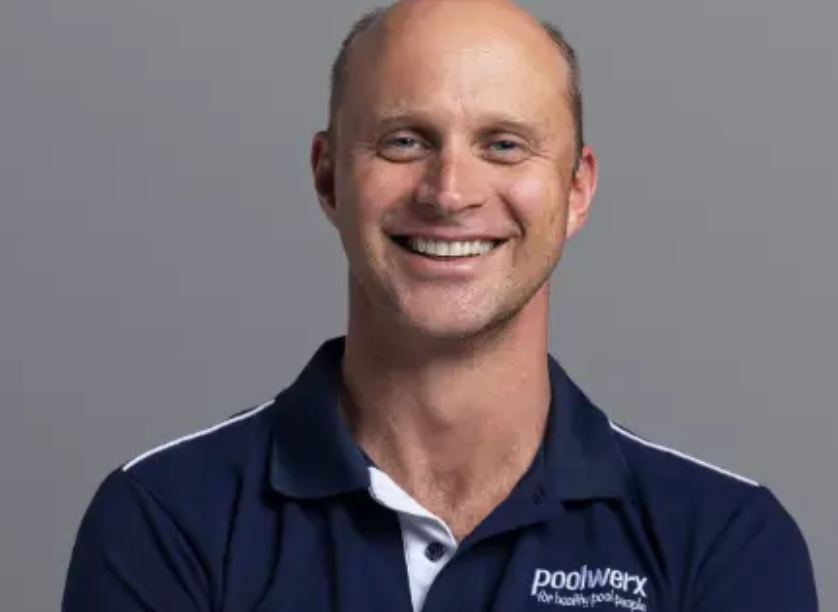
“My background in swimming meant I learned early on that while individual discipline and pushing beyond your limits are essential, you cannot achieve sustainable global scale alone. One of the toughest lessons I’ve learned in business is that you can have the most brilliant strategy in the world, but if you don’t cultivate the right culture and build a capable, resilient team around you, execution will falter.
“Resilience isn’t just about enduring tough times — such as navigating pandemics or economic downturns — it’s about having the humility to listen to your network and the agility to pivot when necessary.
“People often assume a CEO has all the answers and makes every important decision. The reality is very different. My role isn’t to have all the answers. Leadership is about listening, learning and continually adapting, not having all the answers from day one.
“As a leader, particularly within a franchise model, my job is to clear the path for others to succeed. At Poolwerx, our number one KPI is franchisee profitability. The biggest misconception is that the CEO is at the centre of the business, when in truth, our franchise partners and clients are at the centre.
“I’ve never felt that people work for me — people work with me. And because they work with me, that doesn’t mean that I’m ultimately the person who makes the call. I genuinely want to hear their views because I do believe that if we’re in it together, everyone’s combined input will make for a better outcome.
“What I love most about what I do is the impact we get to have on people’s lives. On one hand, I get to see our franchise partners build thriving businesses, and on the other, we help families everywhere safely enjoy their backyards and create lifelong poolside memories together.
“Understanding your purpose in life — not just work — and genuinely knowing you’re not the star of the show are things I try to value every day.”
Nat Gordon, Propoholic
Nat Gordon co-founded her first real estate agency at 21 and owned and operated a boutique Sydney agency for two decades. Today, as founder and CEO of independent property advocacy business Propoholic, she guides clients through buying, selling and renovating.

“I’ve owned real estate and construction businesses for 30 years, and I still make decisions every day without knowing how people will respond. In property, nothing is guaranteed, so you consider everything you know, trust your instinct and make the best decision you can.
“The hardest part of leading people is that no two people are wired the same way, so your approach is constantly changing. Every person — whether a team member or a client — is going through something different, even if the situation on paper looks the same. Listening well and genuinely caring change the quality of every conversation and always improve the outcome.
“The ideas that come to me in the peace of the night are often far better than those from the noise of the day. Our clients are trusting us with their biggest financial asset, and I don’t take that lightly. If lying awake thinking through another scenario helps them achieve a better outcome, I don’t see that as a bad thing.
“One lesson I’ve learned is that you won’t make everyone happy, and trying to do so will make you unhappy. Early on, I wanted every client to leave the conversation happy. Now I understand the right advice is sometimes advice nobody wants to hear.
“I think good leaders don’t pretend to know everything. It’s OK to admit that you aren’t sure about something, and people respect you more for acknowledging that. You have to seek answers and be willing to learn, often from the smart people you surround yourself with.”
Alexis and Luke Withers, Aalto
Husband-and-wife team Alexis and Luke Withers are co-CEOs of Australian dental technology company Aalto, whose clear aligners are manufactured in Sydney. They set out to make orthodontic treatment simpler and more accessible — and along the way discovered what it takes to lead a business together.

Alexis: “Nobody ever told me that leadership often means walking away from things that are working. One of the biggest decisions we made as founders was to step away from a successful business model despite achieving 312% revenue growth between 2020 and 2025.
“On paper, it made very little sense. But after thousands of patient interactions, we could see where customer expectations and the industry were heading. Leadership isn’t just protecting what you’ve built; sometimes it’s having the conviction to disrupt yourself before somebody else does.
“Another thing no one tells you is that being right matters less than listening. Some of our biggest strategic decisions came directly from customer feedback. Founders can become attached to their original vision, but customers often spot changes in the market before you do. Leadership is having the humility to listen when the evidence tells you your assumptions are wrong.”
Luke: “The traditional sole-CEO structure dominates the corporate landscape, so there weren’t many places to look for examples. What I have come to realise is that your co-founder should challenge you, not validate you.
“On paper, we probably shouldn’t work as founders. Alexis is analytical, methodical and naturally risk-aware. I am instinctive, ambitious and like to move quickly. We rarely approach problems the same way, but over time we’ve realised that tension is one of our biggest strengths. The best decisions usually happen somewhere in the middle of our opposing viewpoints.
“And nobody tells you that running a company with your spouse means there is no off switch! People love the idea of building a business with their partner, but nobody talks about the fact that board meetings happen over dinner and strategy conversations happen on holidays.
“We’ve had to become very intentional about separating founder time from husband-and-wife time, which we still struggle with to the detriment of our friends and family!”

From reworked homes to remote retreats, designers are prioritising warmth and a deeper connection to landscape.
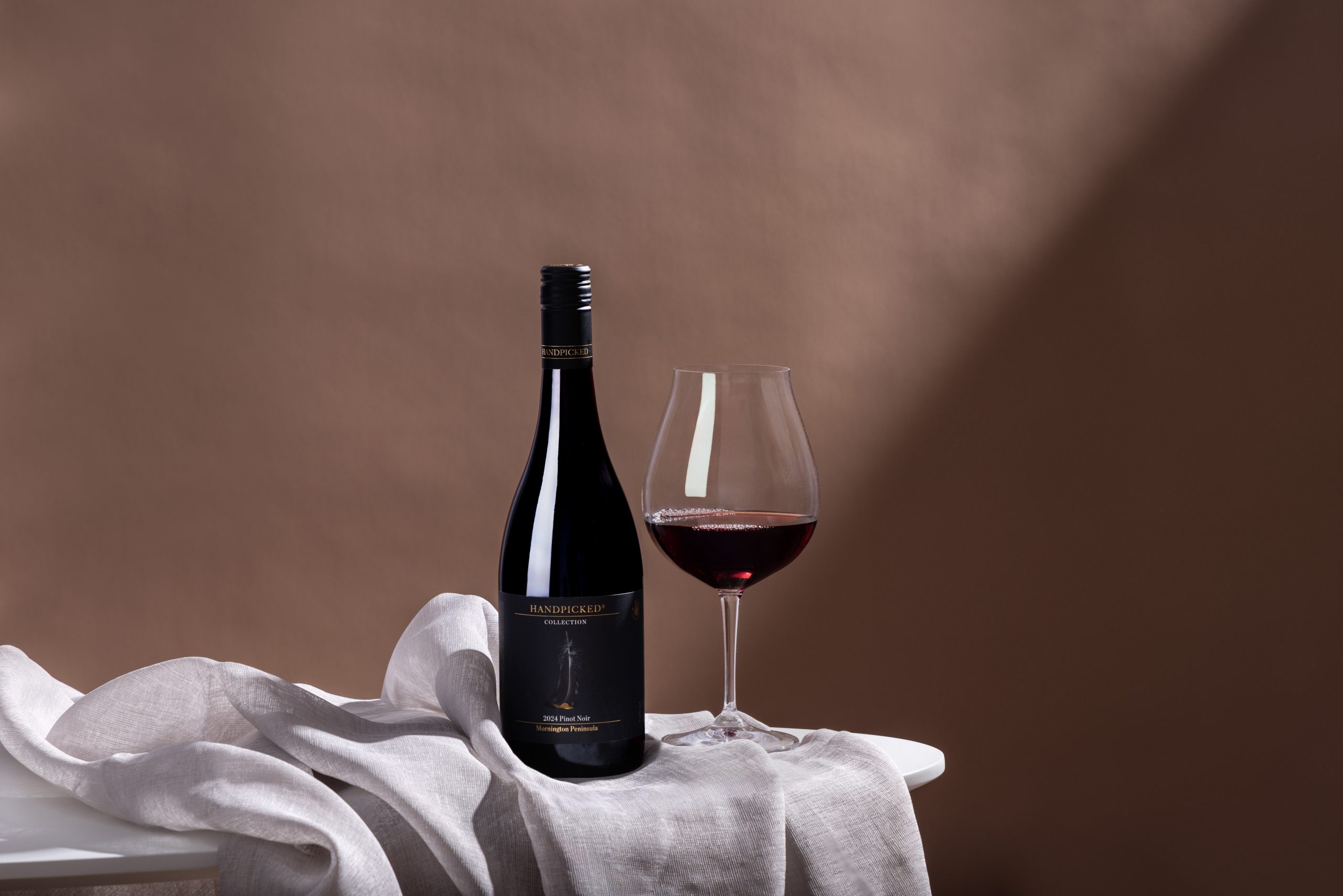
As the season turns, Handpicked Wines’ latest Pinot Noir and Chardonnay releases reveal how subtle shifts in place shape what ends up in the glass.