For one unforgettable evening, Brisbane will play host to a dining event that is set to capture the imagination of food lovers across Australia.
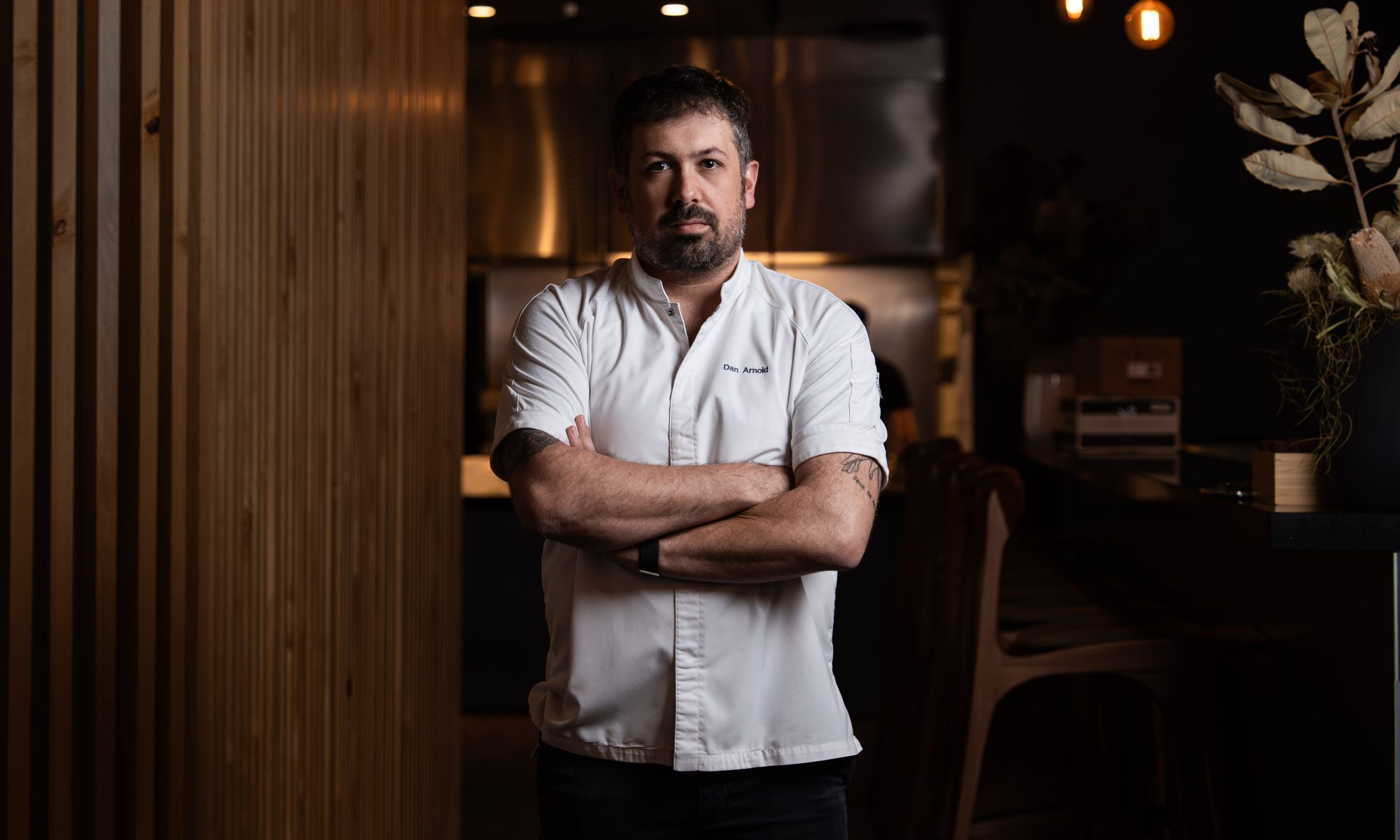
Culinary Masters 2025 brings acclaimed chef Dan Arnold into the spotlight, offering guests a rare opportunity to experience his Michelin-inspired cuisine in an intimate and immersive setting.
The event, presented by Robb Report Australia & New Zealand, will take place on Thursday, October 2, from 6:30pm to 10pm at Arnold’s renowned Restaurant Dan in Fortitude Valley.
Known for its refined approach that blends modern Australian produce with French precision, the restaurant has become a must-visit destination for gourmands seeking a truly elevated dining experience.
What sets this night apart is not only the menu, but the chance to go behind the curtain of Arnold’s creative process.
Each dish will come alive as the chef himself reveals the inspiration, the history and the techniques behind it.
Guests will discover the stories that have shaped his culinary journey, from training in Europe’s Michelin-starred kitchens to establishing one of Australia’s most celebrated restaurants.
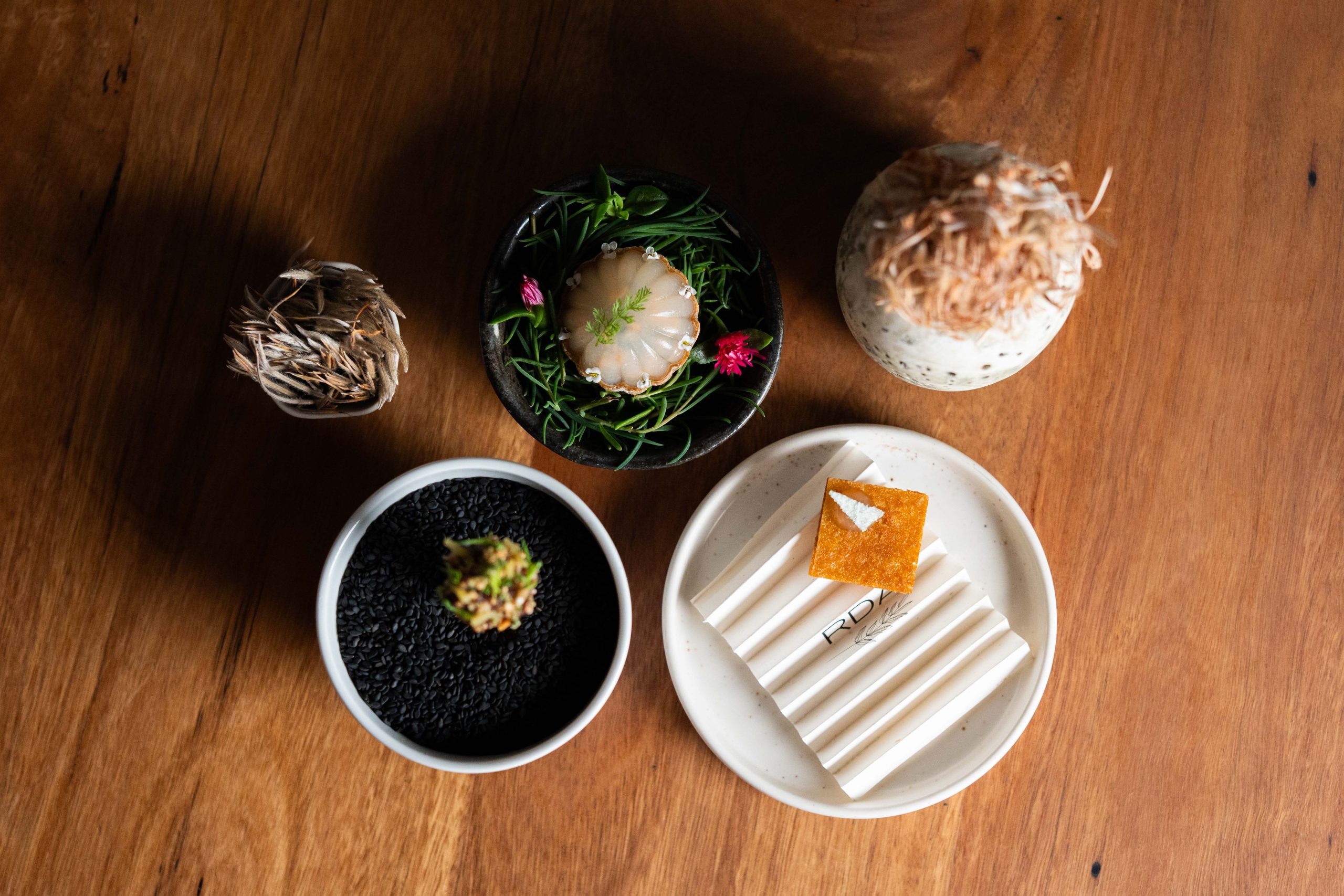
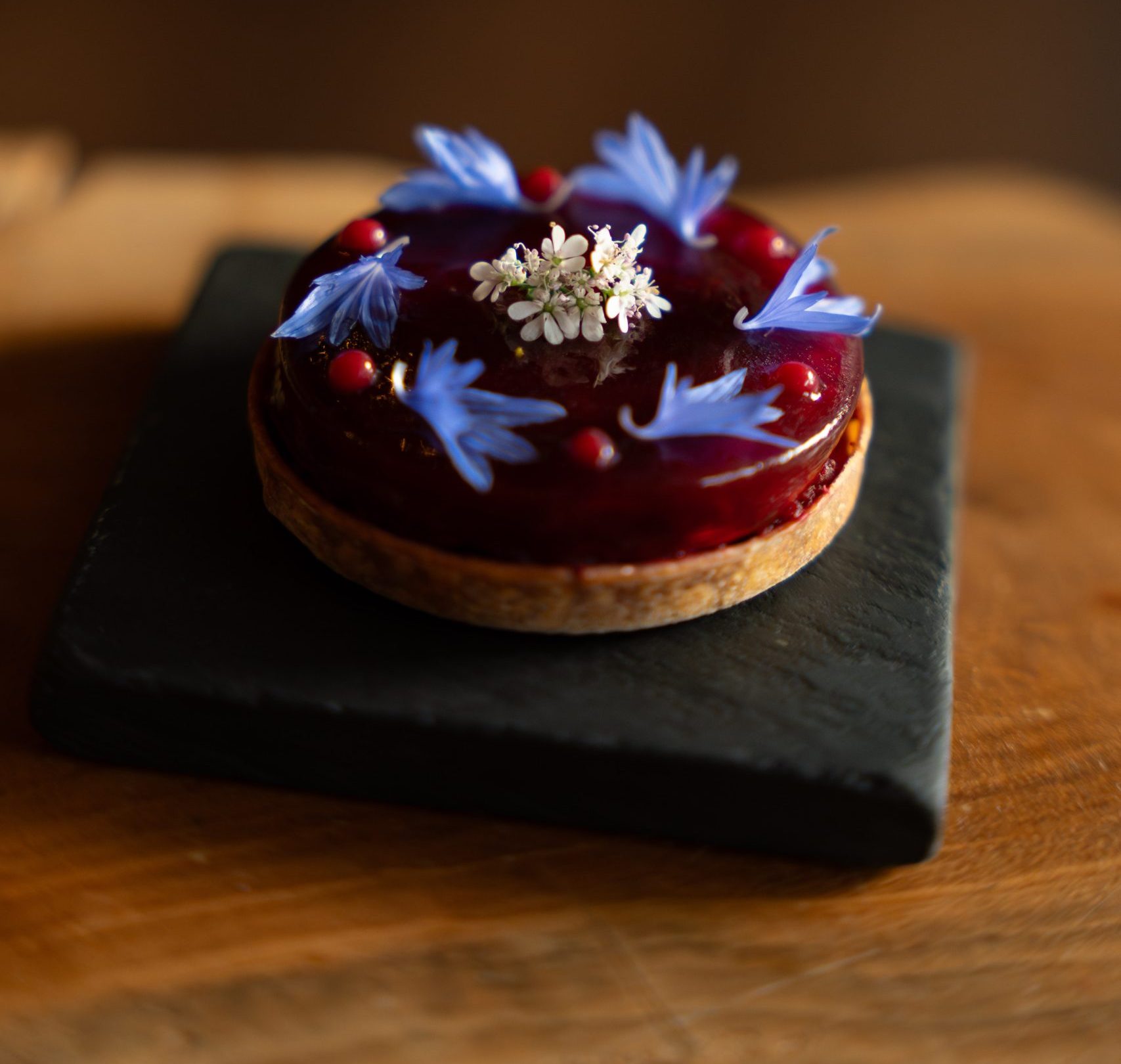
The menu will showcase seasonal produce sourced from boutique local farms, with every course carefully designed to highlight the ingredients at their peak.
Rare wine and whiskey pairings, curated specifically for the event, will elevate the dishes further, creating combinations that surprise and delight.
This is not simply a dinner. It is a masterclass in flavour, craft and storytelling. An evening where food is not just eaten, but experienced. A night where the chef’s personal philosophy and artistry unfold at the table.
Culinary Masters is designed for those who crave more than just a meal; it is for anyone who wants to understand the secrets of one of Australia’s most talked-about chefs, and to savour dishes that reflect both global influence and local character.
Seats are strictly limited, ensuring an atmosphere of intimacy and exclusivity. For food lovers, it represents exactly what the headline promises: one night, one chef, one chance to experience something extraordinary.
Bookings are essential, and with numbers capped, this exclusive evening is expected to sell out quickly. Book your ticket here.
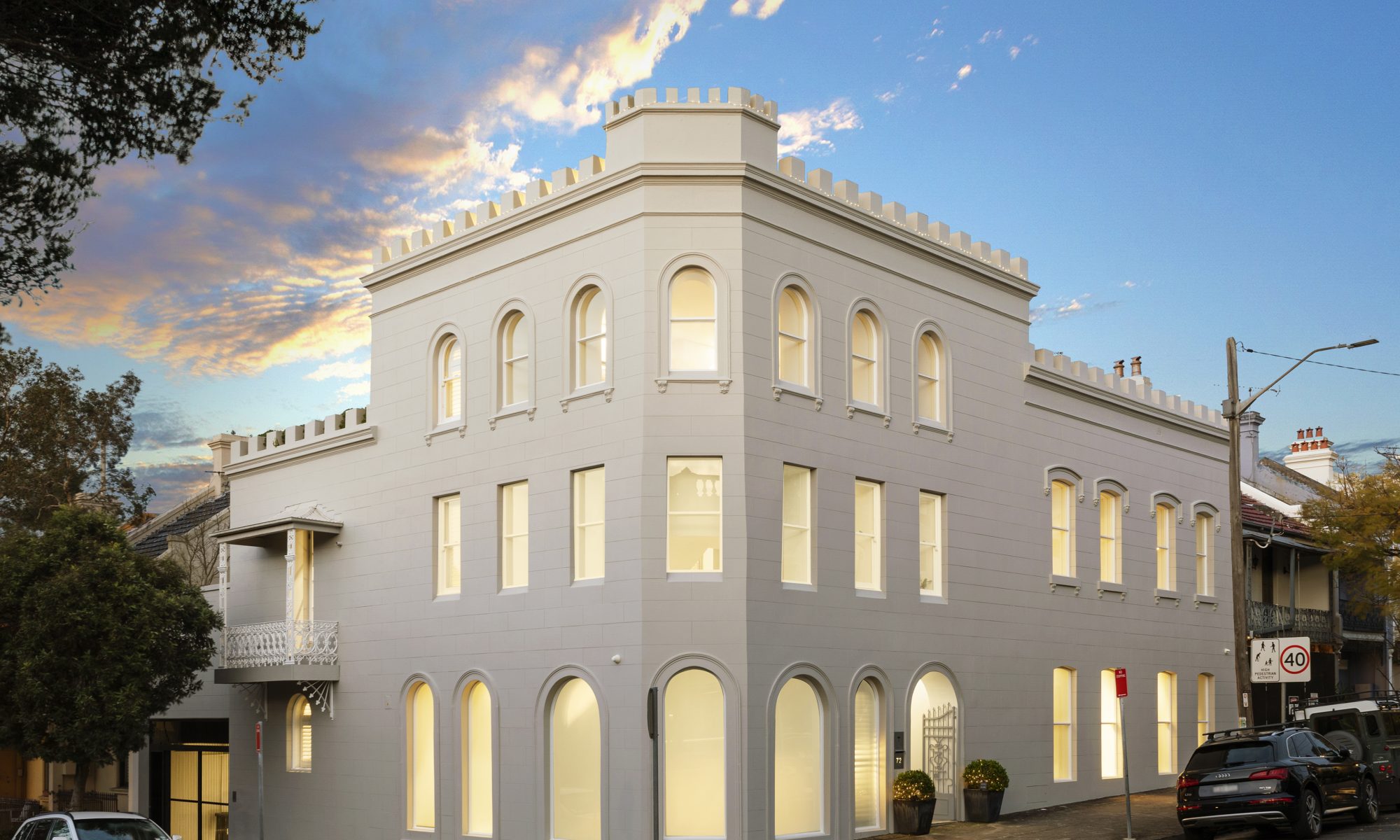
Windsor Castle in Paddington may be of a very different calibre of real estate than the prestigious pile of the same name in England. Still, the former Sydney pub is nonetheless impressive in its own right.
Once a popular watering hole known as the Windsor Castle Hotel, the landmark corner building was transformed 13 years ago into a luxury five-bedroom residence with a $25 million price tag.
If the converted bar achieves its expected price point, it would break the Paddington price record, which currently stands at $20 million. That benchmark was set in 2023 with the sale of a penthouse crowning the residential apartments at the historic Royal Hospital for Women site on nearby Flinton Street.
This time around, the house is due to go under the hammer on October 11 through Luke Hogan and William Manning of McGrath Double Bay.
Built in the 1870s, the Victorian structure with a charming castellated roofline was one of Sydney’s premier hotels in its heyday, affectionately called The Castle.
Anita Nolan and former Goldman Sachs executive David Nolan bought the home in 2016 for $11.85 million, after the initial transformation by XPACE Design Group.
Before that, it traded in 2009 for $4.3 million when the hotel was sold by hotelier Marcus Levy, his wife Vanessa Sanchez-Levy and her brother, developer Chris Sanchez.
The couple of empty nesters are now looking to downsize.
Since purchasing the property nine years ago, the pair have made additional improvements, installing a grand 187-inch CinemaScope screen, Barco projection and 10 electric leather recliners in the home cinema, a 1700-bottle wine cellar, as well as a marble and white dolomite kitchen with a large butler’s pantry.
The state-of-the-art kitchen has a Sub-Zero fridge and freezer, an integrated wine fridge, two Miele dishwashers, a V-Zug induction cooktop, and Gaggenau self-cleaning steam ovens.
On a 770sq m block on leafy Windsor St, the unique house has 1000sq m of internal and outdoor living space. It features a four-person lift to four levels, plus a spiral staircase up to a private rooftop terrace with panoramic views to the CBD and Harbour Bridge.
Other alfresco areas include the north-facing ground floor courtyard with a heated pool and barbecue area. This secluded outdoor space flows seamlessly from the kitchen and dining zones, for all-weather entertaining.
Created as a personal retreat on the second floor, the main bedroom features a vast, hotel-inspired en-suite, a dressing room, a private sitting room, and a large terrace. On the first floor, there are three more bedrooms, a home office and a library. Each of the three bedrooms has a limestone ensuite, Juliette balcony and built-ins.
Down on the lower ground level, there is a rare five-car garage with a turntable beside the wine cellar and cinema, and the house features smart home automation throughout.
A castle without a rolling estate to maintain, this Paddington property is within walking distance of inner Sydney’s most popular eateries, boutiques along Oxford St and Centennial Park.
Windsor Castle is set to go to auction on October 11, at 12.34 pm with Luke Hogan and William Manning of McGrath Double Bay, with a price guide $25 million.
Luxury fashion’s next great icon has arrived, and it doesn’t come from the ateliers of Paris or Milan.
Eight years after reimagining the humble phone case as a luxury object, Australian disruptor MAISON de SABRÉ has unveiled its most ambitious creation yet: The Palais.
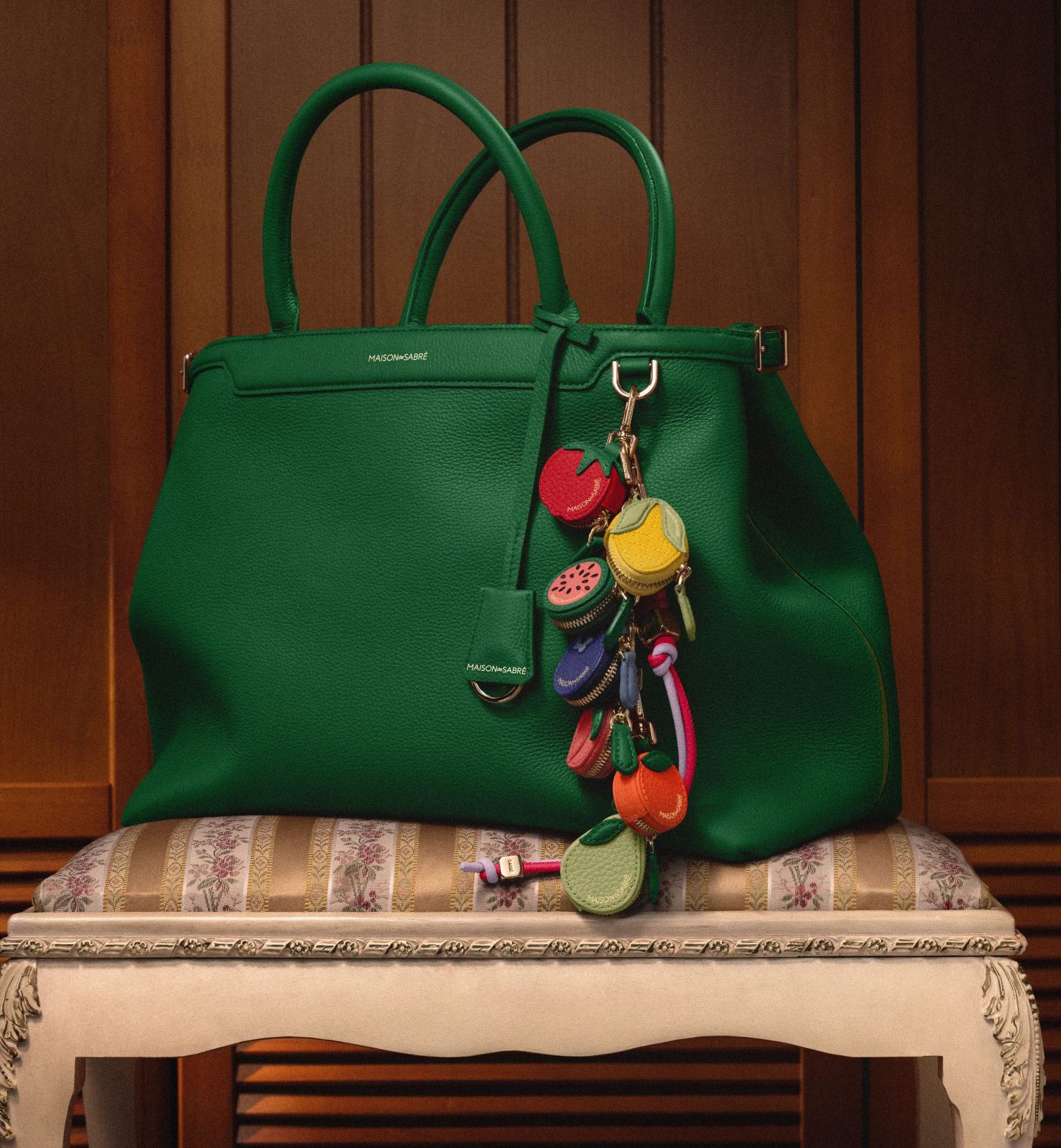
The Palais is the brand’s first flagship handbag, a permanent house signature that distils nine of its design codes into a single silhouette. According to Co-Founder and Creative Director Omar Sabré, it is “the most significant milestone in our craft language – an icon of the unconventional.”
Craft, Redefined
Sixteen months of design and six more of material development have delivered a handbag that sets a new standard for contemporary luxury. Each detail, from its sculptural teardrop gusset, first carved in wood, to its floating seam edged with suede, has been engineered with precision.
The bag is crafted from 100% LWG Gold-Rated DriTan™ calf leather, the most premium material the brand has used to date, and lined entirely in sueded leather. MAISON de SABRÉ has committed to a zero-waste ethos, incorporating upcycled accents and trims that marry indulgence with responsibility.
An Investment in Permanence
In a market defined by seasonal trends, The Palais is positioned as a piece of permanence. Built to endure, it has been designed to evolve through attachable charms, eyewear cases, and tech accessories, making it both timeless and adaptive.
The line debuts in two sizes:
Large ($949 AUD) in Cashmere Clay, Pecan Brown, Black Caviar, and Emerald Green
Medium ($749 AUD) in Cashmere Clay, Plum Red, Emerald Green, Black Caviar, Sandstone Brown, and Manhattan Orange
More Than a Bag
Alongside The Palais comes a suite of playful, functional accessories. The Petite Palais Charm, a miniature handbag for your handbag, holds everything from an Apple AirTag to AirPods Pro.
SABRÉMOJI™ Garden Bugs, handcrafted from leather offcuts, nod to nostalgic childhood discoveries, while the Sunglass Sling Case offers sleek utility with its detachable leather sling.
Global Stage, Australian Confidence
MAISON de SABRÉ has built a $100M luxury powerhouse without relying on traditional fashion gatekeeping, and more than 80% of its sales now come from international markets. This September, the brand debuted The Palais at Tokyo’s Miyashita Park alongside Louis Vuitton, Gucci, and Prada, followed by a residency at Paris’s legendary Le Bon Marché.
Co-Founder Zane Sabré puts it bluntly: “Heritage doesn’t guarantee relevance. The Palais proves you don’t need a century of history to create something iconic — you need conviction, execution, and a brand people actually believe in.”
Or, as Omar Sabré quips, “Hermès has the Birkin. We have The Palais. It’s not a comparison, it’s a challenge.”
A Versailles-style chateau in Alpine, New Jersey, has just been sold for US$17.7 million, the state’s highest home sale in the past three years.
The sale of the custom megamansion, which closed Tuesday, is also the highest-priced in the affluent town and in the Rio Vista neighbourhood since January 2022.
David and Mindy Kwon bought the vacant Bergen County land in 2011 for $3.95 million, according to records on Property Shark. They declined to comment on the sale.
The Kwons spent four years building their dream house, which they christened Chateau de la Roche for the boulder that had to be blasted out of the ground before the project could commence.
Designed by Zampolin & Associates Architects, the cast stone, limestone and travertine residence presides over 2 acres.
The interiors are by Denise Albanese, who, in her dual role as realtor associate at the Christie’s Mahwah-Saddle River Sales Gallery, also represented the Kwons in the sale.
“Among the luxury homes in Rio Vista, Chateau de la Roche is the cream of the crop,” she said. “It’s one of the most elegant—there’s a general feeling of grandeur and luxury.”
The seven-bedroom, 10.5-bath house, which was completed in 2017, is palatial enough to suit royalty.
The 25,700-square-foot house, which is about a half hour from Manhattan, has a 15-seat theatre, an elevator, a gas fireplace, a billiards room, two bars, a wine cellar, two indoor plunge pools, a sauna, a steam room, a conservatory and a central-vacuuming system.
Other features include a grand central staircase illuminated by a massive crystal chandelier, a great room warmed by a mammoth fireplace, a conservatory, a mezzanine and an ornately wood-panelled library with a fireplace. The garage can accommodate four vehicles.
On the left, palatial windows define the conservatory. While in the wood-panelled library, on the right, a fireplace adds atmosphere and warmth. David Heald Photography
Outside, there’s a resort-style swimming pool and a spa.
It’s the details, Albanese said, that set the chateau apart.
“It has soaring ceilings, custom fireplaces and bridal staircases,” she said. “In one of the powder rooms, there is glass-beaded wallpaper.”
Mansion Global could not immediately confirm the identity of the buyer, who was represented by Richard Orlando and Jason Pierce of Prominent Properties Sotheby’s International Realty and Taylor Lucyk of Christie’s International Real Estate Group
Albanese said that the Kwons, who own several other homes, are downsizing.
The transaction, she said, was a “full-circle moment for me as an interior designer and real estate agent. It’s a little sad to see the chateau go, but I’m already working with the sellers on their next interior design and real estate venture.”
Kwon is the corporate vice president and chief legal officer of ADP (Automatic Data Processing), a Roseland, New Jersey., company that provides human resources management software services. And he’s a trustee on the board of SEEDS, a New Jersey-based nonprofit that helps high-achieving students from low-income families.
Chateau de la Roche was originally put up for sale in 2021 for $25 million. Since 2023, the asking price has been $22.49 million.
Few names in glassware carry the same weight as RIEDEL, the Austrian family company renowned for transforming the way the world experiences wine.
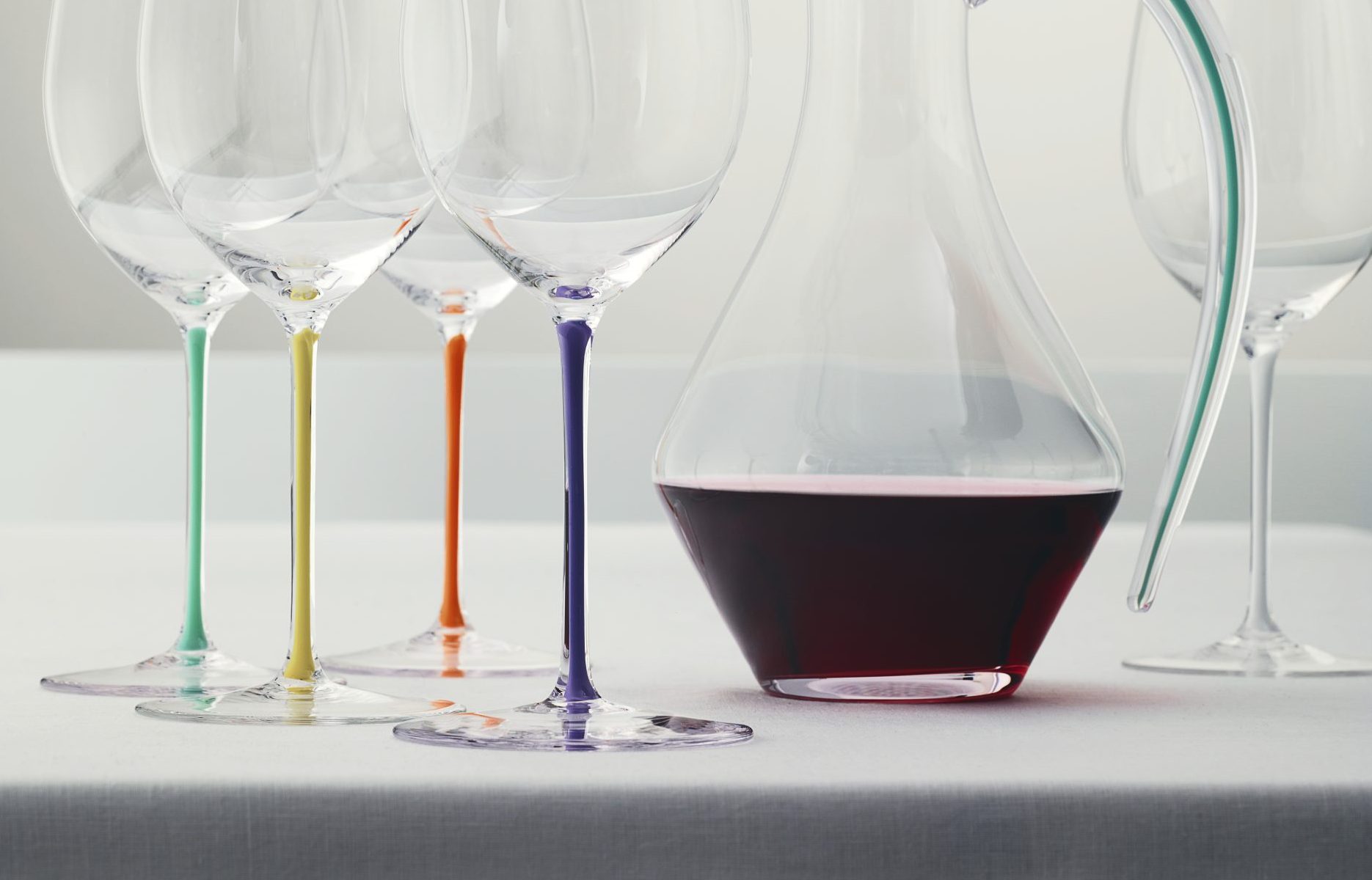
In 2025, the brand has turned heads again with the launch of the Cobra Magnum Decanter, a bold, sculptural piece that is as much an art object as it is a wine tool.
The limited-edition decanter features a striking optic design and is available in two eye-catching colourways, blue/black and yellow/black.
With its sweeping curves and generous size, the Cobra Magnum is designed not only to enhance wine aeration but also to act as the centrepiece of the table. For anyone who loves to entertain at home, it delivers both conversation-starting design and the functionality RIEDEL is known for.
The Cobra Magnum’s arrival comes as part of a season of innovation across the wider RIEDEL portfolio.
The Cobra Magnum decanter.
The company’s much-loved Fatto a Mano collection, celebrated for its vibrant colour stems and blend of craftsmanship with machine precision, now includes a new decanter.
This latest design pairs a machine-blown Cabernet body with a hand-applied ergonomic handle in four options: clear crystal, yellow, black or mint.
The handle has been extensively tested for a comfortable and elegant pour, reinforcing the Fatto a Mano philosophy of everyday luxury.
RIEDEL has also expanded the Fatto a Mano range with the new Black Tie series. This collection combines the lightness of the Superleggero goblets with a hand-applied transparent stem and a bold black crystal base.
The result is glassware that is both delicate in form and striking in appearance, perfectly suited for festive occasions and collectors who want to elevate their table setting.
Meanwhile, sister brand SPIEGELAU has introduced the Hi-Lite collection, a feather-light yet durable series of Bordeaux, Burgundy, Champagne and Universal glasses.
Engineered with the elegance of handblown glass but created using the precision of modern technology, Hi-Lite offers wine lovers a refined tasting experience in everyday use.
The collection reflects SPIEGELAU’s centuries-long tradition of innovation, marrying functionality with beauty.
What ties all of these launches together is the ongoing conversation between heritage and innovation. RIEDEL and SPIEGELAU continue to push the boundaries of machine-made glass, crafting pieces that are light, elegant, and durable, yet still infused with the character and individuality of craftsmanship.
For those who love to entertain, the Cobra Magnum Decanter sits firmly at the centre of this narrative. It is not just another wine accessory; it is a piece designed to embody RIEDEL’s design DNA: functional, elegant, and impossible to ignore.
As wine culture increasingly becomes part of how people entertain at home, pieces like this aren’t simply tools; they are lifestyle statements.
Whether it’s the bold drama of the Cobra Magnum, the colourful ergonomics of the Fatto a Mano decanter, the black-crystal glamour of the Black Tie range, or the feather-light refinement of SPIEGELAU’s Hi-Lite, this new season of glassware has one clear message: wine deserves more than a glass – it deserves an experience.
The Murdoch family has reached a deal to end its yearslong battle over control of its media empire.
Lachlan Murdoch is set to take control of his father’s media assets as part of an agreement announced Monday between the patriarch and his children. Lachlan will control all the votes in a new trust that will hold sizable stakes in Fox Corp. and News Corp once the deal is completed.
The Murdoch trust, which currently holds roughly 40% voting stakes in Fox and Wall Street Journal parent News Corp, was initially designed to give each of his four oldest children an equal voting share.
As part of the settlement announced Monday, Rupert Murdoch’s children James, Elisabeth and Prudence will give up their claims to the existing trust. They will instead receive new trusts with cash funded in part by sales of some of the existing trust’s Fox and News Corp stock.
The three children will also be subject to a long-term agreement preventing them from buying shares in the companies.
Fox and News Corp shares fell slightly in after market trading.
The new agreement caps a tumultuous succession drama atop media companies whose holdings include cable giant Fox News, major newspapers in the U.S., U.K. and Australia; digital real-estate companies and HarperCollins Publishers. It also brings to a close a conflict that potentially threatened the futures of both News Corp and Fox Corp.
Murdoch, 94 years old, had sought to amend the family trust to put control in the hands of Lachlan. James, Elisabeth and Prudence opposed the change.
Clockwise from top left: Lachlan Murdoch, James Murdoch, Prudence MacLeod and Elisabeth Murdoch arriving for a hearing in Nevada in September 2024. Fred Greaves/Reuters
An acrimonious family battle has played out largely behind closed doors and in sealed court proceedings in recent years. Last December, a Nevada probate commissioner ruled against Murdoch’s efforts to amend terms of the trust and give control to Lachlan.
Murdoch sought the change, in part , because Lachlan is the one most aligned with his conservative political views as well as the best manager to run the companies.
New trusts will also be created for Lachlan, who is executive chair and chief executive officer of Fox Corp. and chair of News Corp, as well as the two children that Rupert Murdoch had with Wendi Deng. Grace and Chloe Murdoch are beneficiaries of the original trust .
A holding company owned by Lachlan, Grace and Chloe Murdoch’s new trusts will control about 36% of Fox and 33% of News Corp.
Rupert and Lachlan Murdoch had no comment beyond the announcement. A spokesman for Elisabeth Murdoch and Prudence MacLeod declined to comment. Deng and a representative for James Murdoch couldn’t be reached for comment.
A spokesman for Anna dePeyster, mother of Elisabeth, James and Lachlan, declined to comment.
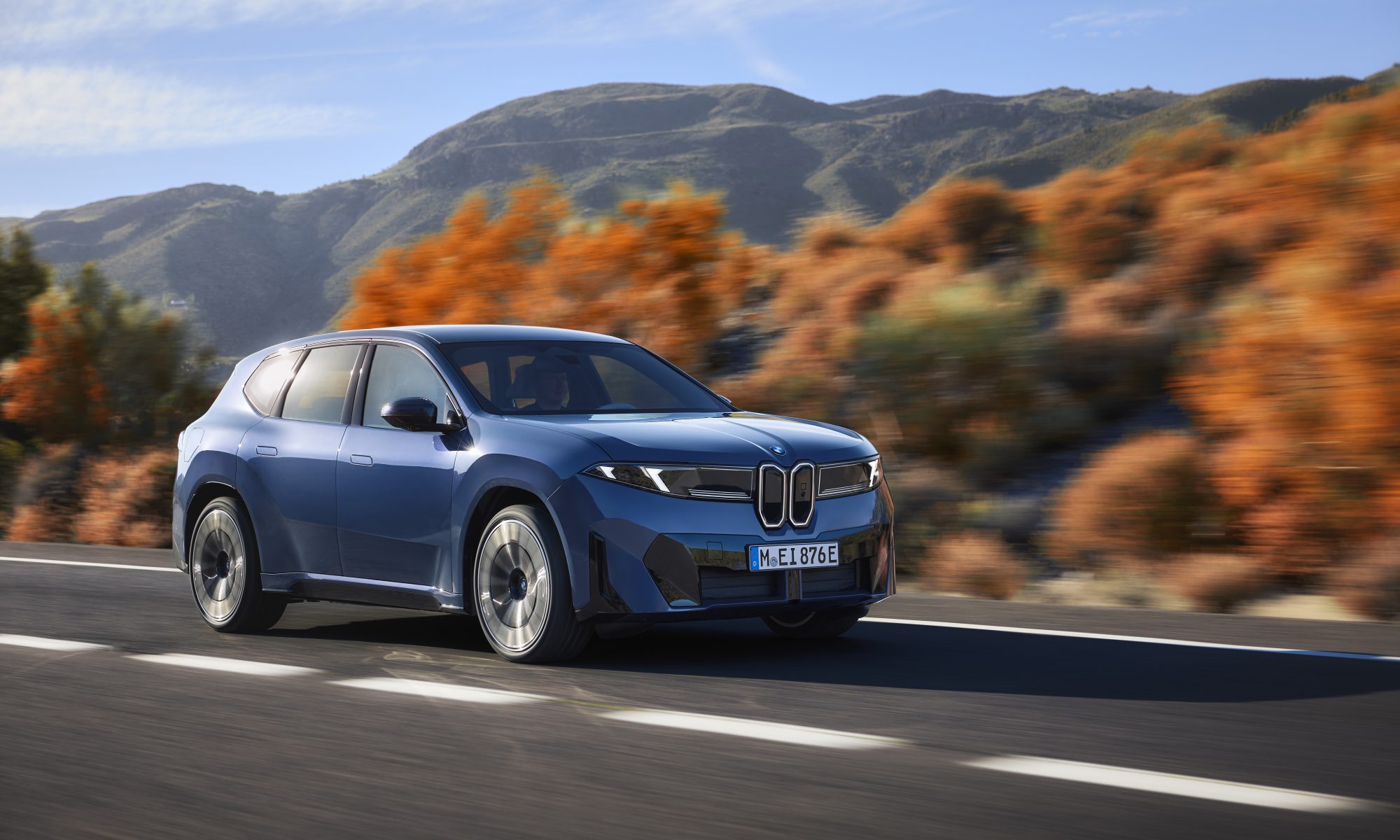
BMW has launched a new brand era with the global debut of its Neue Klasse in Munich, laying the foundation for the company’s future in electrification, digitalisation and circularity.
The Neue Klasse represents BMW’s largest-ever investment and applies not only to an all-new generation of vehicles arriving from late 2025 into 2026, but also to technologies, manufacturing processes and operations across the company’s value chain.
The name evokes the pivotal 1961 launch of the original Neue Klasse, which introduced the 1500 sedan and helped re-establish BMW as a global automotive force.
At the heart of the 2025 debut is the fully electric iX3 Sports Activity Vehicle, one of six models to be launched with Neue Klasse DNA over the next two years.
The iX3 integrates BMW’s latest electric drive system with a driving range of up to 805 kilometres (WLTP) and high-speed charging capability. Its design references BMW heritage with monolithic surfaces, precise lines and a new light signature.
Inside, the cabin is bright and expansive, showcasing innovations such as the Panoramic iDrive, which projects key information across the windscreen on a specially developed 43.3-inch surface.
Other features include a 17.9-inch Central Display in free-cut design, a floating instrument panel with backlit fabric, large window surfaces and a panoramic sunroof. Sustainability has been a core focus, with BMW citing a 42 per cent smaller carbon footprint in the supply chain compared with the previous model.
The iX3 also introduces new computing power, including the “Heart of Joy” system that manages the drive system to deliver greater efficiency and driving pleasure.
Oliver Zipse, Chairman of the Board of Management of BMW AG, said the Neue Klasse represents a landmark transformation for the brand.
“The Neue Klasse is our biggest future-focused project and marks a huge leap forward in terms of technologies, driving experience and design,” he said.
“Practically everything about it is new, yet it is also more BMW than ever. What started as a bold vision has now become reality: the BMW iX3 is the first Neue Klasse model to go into series production.”
Production of the iX3 will begin at BMW’s new plant in Debrecen, Hungary, later this year. Vehicles for the Australian market will enter production from March 2026, with local deliveries expected by mid-2026.
The first variant for Australia will be the BMW iX3 50 xDrive.
From Italy’s $93,000-a-night villas to a $20,000 Bowral château, a new global ranking showcases the priciest Airbnbs available in 2026.
Airbnb is one of the most recognisable companies in the global hospitality and travel sector.
What started off as a home-swapping (or rather, air-mattress-and-breakfast) platform for travellers in 2007–2008 has evolved into one of the most lucrative short-stay accommodation marketplaces in the world.
Founded in 2008 by Brian Chesky, Joe Gebbia, and Nathan Blecharczyk, the short-stay letting platform now boasts over 8 million active listings across more than 220 countries and regions, and facilitates hundreds of millions of bookings every year.
Whereas homes were previously swapped in a spirit of sharing, many properties now on the short-stay letting market are effectively holiday homes for their owners—residences that are never fully lived in.
While expensive stays are nothing new, have you ever wondered what the most expensive homes on Airbnb are?
A new report from Tradingplatforms has collated listings across the world’s most visited countries, providing a snapshot of the priciest stays available for January 2026.
To compile the ranking, researchers analysed 86 countries with the highest inbound visitor numbers, identifying each nation’s most expensive Airbnb during the period of January 14–17, 2026.
Prices were carefully gathered inclusive of taxes and fees, with any unrealistic or inauthentic listings removed. The study produced a global leaderboard, along with regional breakdowns, and included details on property type, total cost, bedroom and bathroom count, guest capacity, reviews, and premium amenities.
The findings reveal that luxury is spread across multiple continents, with Europe dominating the list.
Italy tops the global ranking with a property priced at €51,921 (AU$92,783) per night, while the second most expensive listing, in Mexico, comes in at €27,474 (AU$49,096) per night.
La Gemme Estate, Bowral. Photo: Airbnb
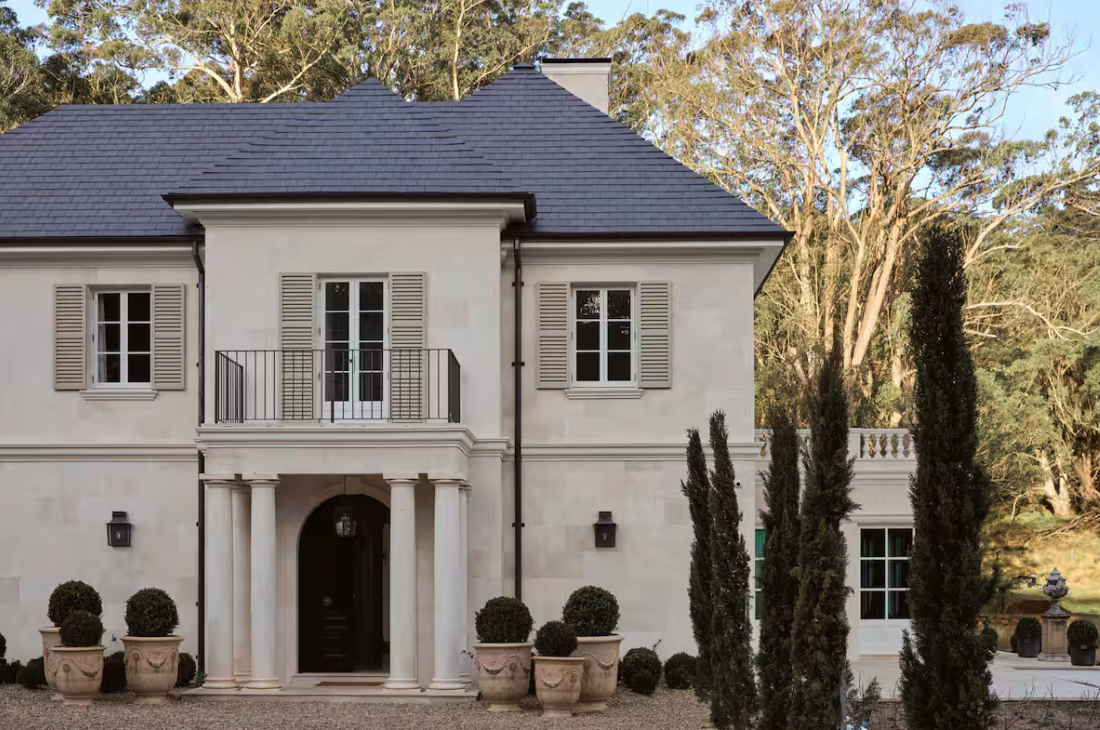
Australia doesn’t make the top 10 list, but a home in Bowral in the Southern Highlands of NSW comes in at number 14. La Gemme Estate, a French château set on 100 acres of private grounds, costs €11,351 a night, or just over $20,000 based on the exchange rate at the time of publication.
The home, at the end of a long, tree-lined driveway which meanders past a private pond with a fountain feature and a bridge, has eight bedrooms, seven bathrooms, a heated swimming pool, steam room, outdoor hot tub, and a library. The property can also host small weddings.
It is owned by Clayton Larcombe, the financial adviser turned fund manager, and his wife Kyara, who bought the “European Palladian style country estate” for $7.4 million in 2021, before undertaking a lavish renovation.
The World’s 10 Most Expensive Airbnbs for January 2026
Lake Garda View Resort, Gardone Riviera, Italy. Photo: Airbnb
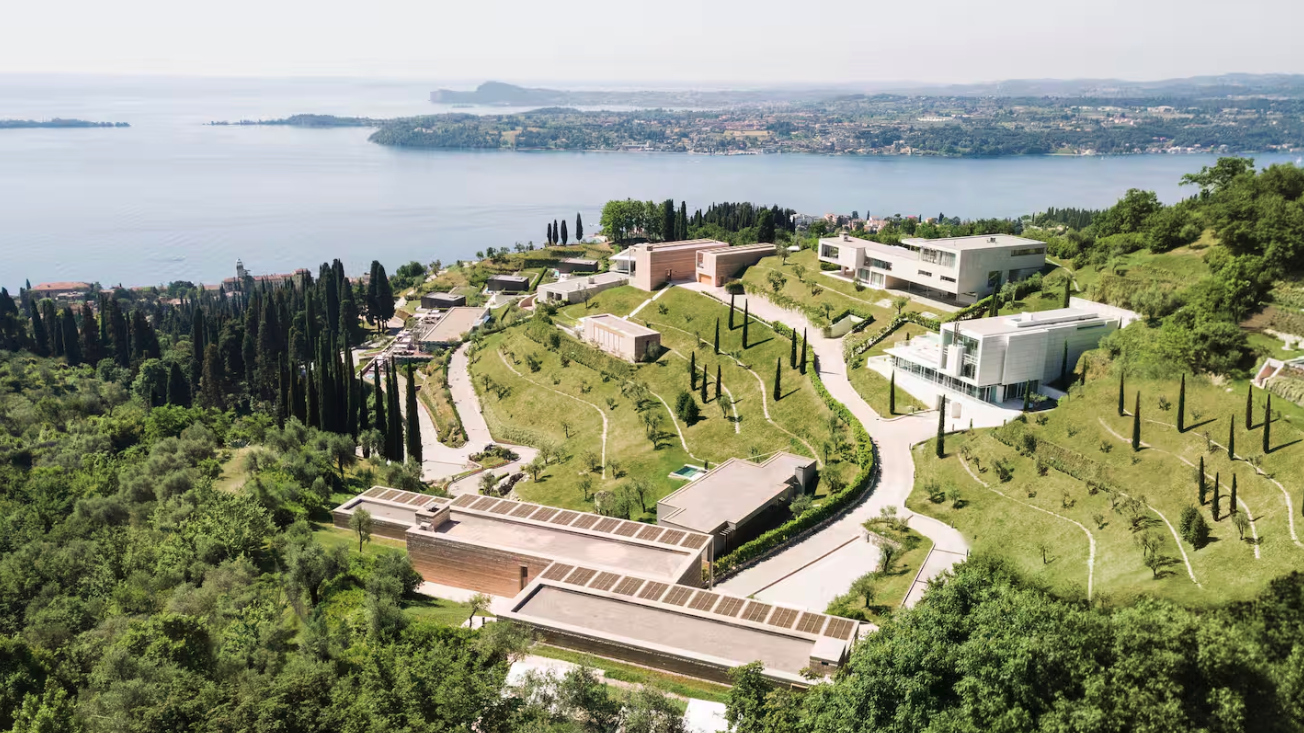
Luxury Lake Garda View Resort, Gardone Riviera, Italy Price per night: €51,921 (AU$92,783)
The priciest Airbnb in the world is the Lake Garda View Resort in Italy’s Gardone Riviera. The five villas, designed by internationally renowned architects such as David Chipperfield, Richard Meier and Marc Mark, can accommodate 84 guests. There’s even an internal hotel with high-end apartments pitched as being ideal for operational staff, productions, or guests.
Casa Tau: A Luxury Villa, Punta de Mita, Mexico Price per night: €27,474 (AU$49,096)
Casa Tau is the second priciest Airbnb in the world for January. The 12-bedroom villa, on the beachfront of the prestigious Punta Mita Community in Los Ranchos, Mexico, can host 27 guests across five buildings. The focal point is the central swimming pool and hot tub with adjoining alfresco terrace. Casa Tau comes with twice-daily housekeeping, chef and laundry services, a 12-hour butler, and preference membership to the resort’s golf and beach clubs.
7-Bedroom Ultra-Luxury Villa, Dubai, UAE Price per night: €25,728 (AU$45,976)
A new villa in Dubai, furnished with iconic pieces from the world’s most prestigious luxury brands like Fendi Casa, Versace Home, Bentley Home, and Roche Bobois, is the priciest in the UAE.
The seven-bedroom home features two private swimming pools — one infinity-edge, one indoor — and a fully equipped private lounge and entertainment club, complete with a bar, high-end audio-visual systems, and ambient lighting.
Country House, La Romana, Dominican Republic, Villa Cahey Price per night: €25,055 (AU$44,773)
A private beach and a private chef, butler, bartender, and maids are just some of the inclusions at Country House in the Dominican Republic. The exclusive home, with uninterrupted views over the water, can host 24 guests across 12 bedrooms. Guests also have access to Casa de Campo amenities, including golf courses, dining, Minitas Beach Club, tennis courts, equestrian and shooting centres, and water sports.
Villa Riviera Serenity, Mae Nam, Thailand Price per night: €24,536 (AU$43,846)
Thailand doesn’t have to be cheap. Villa Riviera on the popular island of Koh Samui is the country’s most expensive Airbnb. The five-bedroom villa is tucked into a jungle setting, but just 10 minutes from Bang Por Beach.
Villa Mirasol, Mali Lošinj, Croatia Price per night: €20,305 (AU$36,285)
Villa Mirasol is an elegant Art Nouveau property boasting a spectacular location on the island of Lošinj, with a distinctive tower overlooking the idyllic Čikat Bay. The gated villa features five bedrooms and a spacious three-bedroom apartment with a separate entrance, as well as a secluded garden with terraces, ocean views, a private swimming pool, and a jacuzzi.
Luttrellstown Castle, Dublin, Ireland Price per night: €19,090 (AU$34,114)
One of the oldest homes on this list is Luttrellstown Castle, which dates back to the 15th century. The 567-acre property has its own 18-hole championship golf course and a state-of-the-art alpine lodge-style clubhouse, alongside the iconic castle that takes its name from the Luttrell family, who held the estate for more than three centuries until 1811. It is another property well suited for large weddings—it’s where David and Victoria Beckham tied the knot in 1999.
Fantasia Villas, Katastari, Greece, The Imperial Spa Villa Price per night: €18,880 (AU$33,739)
The Imperial Spa Villa in Katastari, near the island of Kefalonia, has its own private spot on the Greek coastline. The four-bedroom villa spans more than 2,000 sqm of living space and includes three heated swimming pools set among private tropical gardens.
Middle Cay, North Eleuthera, Bahamas. Photo: Airbnb
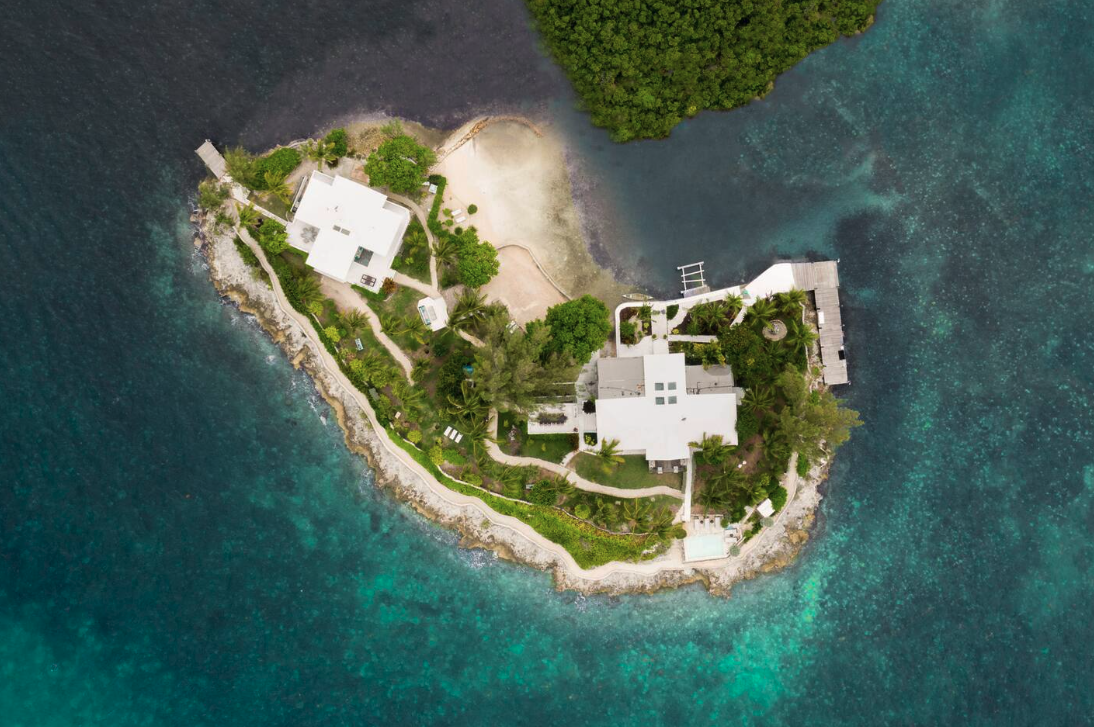
Middle Cay, North Eleuthera, Bahamas Price per night: €18,040 (AU$32,237)
A private two-acre island in the Bahamas makes the top 10 list of most expensive Airbnbs. The island is home to coconut tree groves, two private docks, a natural island swimming spot, and two open-concept villas that can sleep 19 guests. Guests can also use three underwater sea scooters, with likely sightings of bright tropical fish or a sea turtle or two.
Villa Tomazo, Marrakesh, Morocco Price per night: €14,978 (AU$26,766)
Villa Tomazo in Marrakesh rounds out the list. The 10-bedroom villa features a large swimming pool, a hot tub, an outdoor fireplace, and a massage service.
Australia’s industrial property market is shifting gears after five years of record-breaking growth in demand, rents and construction.
Vacancy levels have climbed from historic lows, bringing the sector back into more balanced territory, according to Knight Frank’s latest research, From Surge to Stabilisation.
Vacancy rates normalise
Blended vacancy across the East Coast now sits at 3.2 per cent. While still considered tight, that represents a significant change from the 0.6 per cent recorded in the first quarter of 2023. The post-COVID surge in tenant demand had driven unprecedented leasing take-up and fuelled a wave of new construction, but that momentum has since cooled.
The report suggests that effective rental growth will remain subdued in the short term, although the picture is far from uniform. Vacancy is expected to concentrate in emerging precincts with a large pipeline of new projects, while more established markets are likely to prove resilient.
Diverging rental outlook
Sydney’s South West and Outer South, Melbourne’s North and Brisbane’s South and South West are flagged as more exposed, with lower prospects for rental growth. By contrast, Sydney’s Inner South, Melbourne’s South East and East, and Brisbane’s Trade Coast are expected to deliver stronger outcomes thanks to lower construction and tighter vacancy.
Knight Frank Partner, Research and Consulting, Queensland, Jennelle Wilson, said tenants in some markets will still face higher costs even as more space becomes available.
“It is expected that face rents will be defended with a corresponding increase in incentives to impact effective rents,” she said. “Tenants on leases negotiated prior to 2021 will still face significant rental reversion on renegotiation or relocation, despite having greater choice in the market, to bring them into line with current market rents resulting from significant growth over the boom.”
According to Wilson, prime industrial rents rose by between 30 and 60 per cent on the East Coast over the past three years, underscoring just how intense the recent surge was.
Supply pipeline rebalances
The report found that the supply side will correct relatively quickly, with speculative development slowing and more reliance on pre-commitments. Lower levels of speculative projects and a greater focus on pre-leased space are expected to ease new supply through the second half of 2025 and into 2026.
Wilson said occupiers will continue to look for operational efficiency and upgrades. “Over time, there will be a lift in pre-commitment activity as upgrading and unlocking operational efficiency remains key for large occupiers,” she said. “A more conservative development environment will limit speculative supply in 2026, diverting demand back to pre-commitments to tenants seeking a technology and building fabric upgrade.”
She added that the market would increasingly split between businesses willing to pay for high-efficiency, tech-enabled facilities and those seeking to minimise rental costs, even if it means compromising on optimisation.
Land values remain firm
One of the strongest findings from the research is that serviced industrial land values are expected to hold firm, even as demand eases. Over the past five years, land values across the East Coast have climbed sharply — by 46 to 118 per cent for smaller blocks and 46 to 131 per cent for lots of one to five hectares.
While prices have plateaued recently in Sydney and Melbourne, Wilson said the most significant bottleneck has been the time taken to service land.
“In contrast to building construction timeframes, recent years have proven that the timeline for industrial land servicing and development is the most critical step in the development process,” she said. Lessons from markets such as Western Sydney, and to a lesser extent Brisbane and Melbourne, around the delivery of power and water are expected to continue supporting values.
Looking ahead
The industrial market is settling into a new rhythm. Rental growth will be patchy, depending on location and level of development.
Pre-commitments are expected to dominate new supply, while speculative activity is expected to recede. And despite a cooling in overall tenant demand, the value of well-serviced land is likely to remain robust.
For investors, developers and occupiers alike, the message is clear: the frenzy of the boom years is over, but fundamentals remain strong for quality assets in the right locations.
The former Melbourne home of Australia’s kitchenware container king has been transformed by a Byron Bay design doyen and is now on the market with a very stylish $15 million to $16.5 million price guide.
Alex Schiavo, James Driver and Jia Teresa Wizel of Kay & Burton Bayside, have listed the contemporary Brighton residence and are asking for expressions of interest by 5pm on September 16.
Brian Davis, founder of the Decor Corporation, lived at the Wolseley Grove home until his passing in 2021. Davis built his humble homewares company from the ground up in the late 1950s, eventually securing lucrative contracts with Coles and Woolworths.
He then went on to sell his award-winning designs around the world and was inducted into the Design Institute of Australia’s Hall of Fame in 1996.
After his estate was sold in 2022 for $8 million, the current owners engaged Frank Macchia of Macchia Design Studio to inject some Byron Bay je ne sais quoi into the then four-bedroom mid century modern house.
Today, the reimagined five-bedroom home on a grand 1630sq m is a private retreat with all the mod cons expected of a 21st century beachside home.
Beyond the double entry doors, the expansive ground floor has been created for quiet contemplation and meaningful gatherings.
The open plan footprint flows via seamless bi-folds to the outdoors, with the layout centred around a reading and conversation space featuring integrated seating and inspired planting.
There is also a fireside sitting area, window seats and a banquette dining zone next to the unique limestone kitchen with its vast island bench, Wolf appliances and large butler’s pantry.
Macchia’s modern touch has introduced Tongue & Groove oak floors, sand-laced wall render, fluted windows, custom made concrete basins, designer lighting and bespoke joinery throughout.
Additional entertainment areas on the lower level include a separate media room and the north-facing landscaped backyard complete with a family-friendly heated pool and spa. There is also a decadent outdoor spa, self-contained poolside pavilion and gym with a space for a sauna.
While four bedrooms with ensuites and a dedicated study space sit on the entry level, the first floor is home to a palatial suite with a lounge area and bedroom featuring a yard-facing balcony, walk-in wardrobe and a twin-basin ensuite with multiple skylights.
The new-look Brighton residence also has a big wine cellar with tasting table, a large laundry, an attic storage space, reverse-cycle heating and cooling, comprehensive camera security, bore-water irrigation, a substantial wine cellar, a lower-level powder room, and undercover parking for at up to three cars.
A unique Brighton property, the Wolseley Grove house is close to Church and Hampton streets, sought after schools, Sandbelt fairways, city trains, the Bay Trail, and Brighton Beach.
Listed with Kay & Burton Bayside, 3 Wolseley Grove is on the market via an expressions of interest campaign closing on September 16.
“Billionaire” evokes tech founders such as Jeff Bezos or Bill Gates , but there is a large and growing group of people worth at least $1 billion in small towns and big cities that rarely make the headlines.
There were 1,135 billionaires in the U.S. as of 2024—up from 927 in 2020, according to data from Altrata, a wealth-intelligence firm. The biggest concentration, 255 of them, is in California. But the super rich are also behind businesses in places such as Ridgeland, Miss., and Waunakee, Wisc.
Collectively, these people are worth about $5.7 trillion, according to Altrata’s estimates. That’s enough wealth to buy…
While many of these individuals own properties in upscale communities such as Palm Beach, Fla., they also congregate in destinations such as Cashiers, N.C.—a town in the Blue Ridge Mountains where four billionaire families have residences. The smallest town where a billionaire owns property? Winifred, Mont., population 172.
The list of billionaires includes some familiar dynasties, such as the Walmart Waltons and Hyatt Pritzkers. There are also lesser known members of this elite club, such as Diane Hendricks , co-founder of roofing-products distributor ABC Supply, and the heirs to the Russell Stover Chocolates fortune.
The billionaire border can be fuzzy. Markets fluctuate, the value of private companies can be uncertain and big donations dent fortunes, meaning dozens of individuals—even stars such as LeBron James and Beyoncé—can move on or off the list.
The 100 richest billionaires account for nearly $3.86 trillion in wealth—more than half the total. Just three men— Elon Musk , Bezos and Mark Zuckerberg —account for almost $1 trillion of it.
Despite those outsize Silicon Valley fortunes , most U.S.-based billionaires didn’t make their wealth in tech. About 300 came from banking and finance, compared with roughly 110 from the tech sector. Another 75 came from real estate.
A third of billionaires inherited much or all of their wealth, Altrata said. There is just one Rockefeller on the list, but 50 billionaire heirs of five companies hold roughly $830 billion total. These individuals account for nearly 15% of all the billionaires’ wealth. undefined
Billionaires have publicly donated or pledged to give about $185 billion since 2015, according to Altrata. Mostly, they support causes such as education and medical research—they gave $90 billion to those two in the past 10 years. That has given them sway in ongoing campus debates over freedom of speech and antisemitism.
While some billionaires such as Gates and Warren Buffett have openly pledged to give away much of their wealth , others have donated little so far. About a quarter of the billionaires in the list have known donations of less than $1 million in the past decade.
Some give more to organizations they’re tied to. Hedge-fund manager Bill Ackman gave about $120 million to multiple causes, but he gave $1.36 billion to a foundation where he and his wife serve as trustees, which supports medical research and other causes.
Among the top recipients of donations tracked by Altrata are global charities such as the Gates Foundation and Gavi, the Vaccine Alliance.
One of the most popular recipients is the Central Park Conservancy in New York, which received donations from 89 billionaires worth about $100 million.
Johns Hopkins University received $7.5 billion from close to 30 billionaires, but most of it came from Michael Bloomberg , who gave more than $5 billion.
Methodology
The Wall Street Journal analysed data on more than 1,100 individuals provided by Altrata, which estimates net worth by assessing privately and publicly held businesses and investible assets. Altrata’s data on properties includes residences, land parcels and other properties owned in the person’s name. It uses primary business address to determine a billionaire’s location and assigns each billionaire to a primary industry based on their current roles. Altrata adjusts totals to account for shifts in asset values that could push some individuals over or under $1 billion in wealth.
A life of luxury in Australia costs more than it used to in Australia. Inflationary pressures have pushed everything from the price of real estate, extravagant dining experiences and lavish weekends away up higher than they’ve ever been before.
The price tag for luxury homes across Australia now starts at $2.52 million, up an eye watering 72 per cent from a decade ago.
But what counts as luxury varies significantly depending on location. Sydney remains Australia’s most expensive market, where luxury begins at $4 million. The Gold Coast has now taken second place at $2.6 million, pushing ahead of Melbourne’s $2.49 million entry point.
That’s according to Luxury Report, produced by real estate firm Ray White, analysed what defines luxury today.
Global comparison
Housing affordability continues to hover at crisis levels in Australia, but how does a luxury lifestyle in Australia compare with the rest of the world?
A look at real estate markets abroad quickly reveals that where you choose to live can have a huge impact on what it costs to put a roof over your head.
For example, in Monaco, a small apartment can set you back more than $38,800 per square metre. Here, more than 40 per cent of the nation’s residents are millionaires: the highest proportion of any city in the world.
According to the ninth edition of a report that offers a snapshot of how global cities compare on cost of living, quality of life and income and affordability, Sydney and Melbourne isn’t anywhere near as expensive as other cities around the world.
Which puts it perspective for the wealthy trying to grapple with whether or not they can afford to keep the holiday house, or whether to list it for sale.
The Mapping the World’s Prices 2025 report ranked the cheapest and most expensive cities around the world, with the Deutsche Bank Research Institute assessing global cost and quality of life indicators.
The report tracks what it costs to enjoy a luxurious lifestyle. This includes the prices of everything from groceries, wine, buying a city apartment, salaries and general measures of the quality of life. Other factors measured include the cost of a summer dress, a carton of cigarettes, internet data and what it costs to dine out in some of the best restaurants.
Produced by the Deutsche Bank Research Institute, the report points out that inflation making a roaring comeback over the last five years, currency swings are influencing purchasing power and the world’s cost of living leaderboard is therefore shifting quickly.
Researchers focused on the 69 cities that matter most to global financial markets, and therefore your investment portfolio.
Here’s a breakdown of the most expensive places to live around the world:
Quality of life
If you’re seeking a good quality life, the top five cities for a quality lifestyle listed in the report are Luxembourg, Copenhagen, Amsterdam, Vienna and Helsinki.
Meanwhile, Zurich and Geneva have slipped out of the top five because cost of living pressures have continued to skyrocket, making these cities now the most expensive in the world to live in.
Buying an apartment
Prices for an apartment have fallen by 20 per cent in Hong Kong over the last five years, but still top the list, followed by Zurich, Singapore, Seoul and Geneve.
London and New York are just outside the top five, while Beijing comes in at ninth place, highlighting the elevated property prices in China. If you’re looking to buy an apartment, unit or townhouse in Australia, the median price in July 2025 was $686,399.
Utility bills
Electricity bills cost around $350 to $420 per quarter in most states of Australia, which is much cheaper than what Germans are forking out. Munich, Frankfurt and Berlin have the highest energy bills in the world, while Warsaw, Vienna and Prague also make the top 10, highlighting that Eastern European cities are counting the costs of the lack of cheap Russian gas.
iPhone
If you want to pick up a smartphone to keep in touch with loved ones while travelling, you’re going to pay a lot more for one in Turkey, Brazil, Egypt, India and Sweden. Seoul is the cheapest as competition with Samsung makes it even cheaper than in US cities.
Groceries
Geneva, San Francisco, Zurich, New York and Boston are the top five costly places to stock up on groceries. Even by Swiss standards, groceries in Geneva are generally expensive, while groceries in Sydney are 39.41 per cent lower than in Geneva.
Wine
Picking up a bottle of wine will set you back if you’re in Singapore, where you’ll pay more than anywhere else in the 69 countries surveyed. Jakarta, Seoul, New York and Oslo are also expensive. It’s much cheaper to purchase wine in some other lovely cities, including Rome, Johannesburg, Cape Town, Budapest and Lisbon.
Cigarettes
Incredible, Australia tops the list anywhere in the world for the price of cigarettes. Government taxes and duties applied to cigarettes aim to dissuade consumption mean that Melbourne and Sydney have been ranked as the most expensive place for cigarettes, along with New Zealand.
Restaurants
Eating out in a swanky restaurant in Australia can set you back up to $300 per person. That might sound expensive if you’re trying to feed a family of four, it’s going to be more in Zurich, Geneva, New York, San Francisco and Boston.
Buying a car
Singapore and Copenhagen actively discourage the purchase of cars and are the most expensive cities to purchase a set of wheels. In fact, the cheapest possible car will set you back around $150,000 in Singapore Dollars. That’s for a basic car like a Honda Jazz, which is the same price as a Porche in any other part of the world.
The reason cars are so expensive in Singapore is the huge population in a limited space meaning the government prioritises a clean environment and less traffic. The next most expensive places to purchase a car are Tel Aviv, Istanbul and Abu Dhabi.
Designer Esha Soni, whose sculptural purses and accessories are sold at stores like New York’s Bergdorf Goodman, bought and renovated this four-bedroom, four-bathroom house in Montauk, New York, 10 years ago.
The hilltop home enjoys “breathtaking views and spectacular sunsets,” according to Zachary Tunick of Douglas Elliman, one of the listing agents.
Its location overlooking Block Island Sound “also means you get 180-degree views,” he said. “And you hardly need air conditioning because the ocean breezes are so spectacular.”
The home’s location “on a quiet cul-de-sac ensures there is absolutely no road noise or drive-by traffic,” Tunick said. “But there are trendy restaurants and terrific seasonal shops within walking distance.”
With a designer’s touch from Soni, the home is “beautifully renovated,” Tunick said. “It can be taken to the next level, but it’s already very livable.”
Open-plan living, dining and kitchen spaces anchor the home’s main level, with water views from walls of windows. There is a wood-burning brick fireplace in the living room.
The kitchen, with a granite-topped island at its center, features Wolf appliances. The primary suite includes two closets, a foyer, a large bathroom and walkouts to the home’s broad wooden terrace. The main floor includes a second bedroom, office, pantry and mudroom.
The lower level—“which is not subterranean, because of the topography,” Tunick said—includes two more bedrooms, a bathroom, a living room and storage space.
“I love my house because the view of the water and the sunset, the wide-open space, and the lush, old trees create a deep sense of calm,” Soni told Mansion Global in an e-mail. “In the evenings, the white walls and floors reflect the colors of the sunset in a simple, beautiful way.”
Before launching her eponymous handbag line in 2022, Mumbai-born Soni designed accessories for labels including Ghurka, Michael Kors Collection, Ralph Lauren and Proenza Schouler. “
The bags feel like they could easily double as home decor,” enthused fashion blog WhoWhatWear in August.
Furniture is available by separate negotiation.
Stats
With four bedrooms and four bathrooms, this 3,400-square-foot house occupies a 0.88-acre lot.
Amenities
The large wooden deck, about 15 feet deep by 80 feet wide, features a mechanical canopy.
Talking Points
The 3,400-square-foot house “could easily get expanded to 6,000 square feet,” Tunick said. While there is no pool, the property is permitted for one; because of the home’s large legal setback, a new owner could also add a garage, Tunick said.
Neighborhood Notes
Montauk is on the eastern tip of Long Island’s South Shore, overlooking the Atlantic Ocean and the Block Island Sound.
While Montauk has a reputation for nightlife—the village is home to more than 50 bars—“there is a community within the community of very successful, sophisticated parents with kids in the incredible schools here,” Tunick said. “These are people at the top of their fields, but down-to-earth. Montauk is about a laid-back lifestyle.”
Celebrity residents have included Julianne Moore, Robert De Niro and Bad Company drummer Simon Kirke. A-listers like Taylor Swift and Leonardo DiCaprio have also reportedly hung out at local hotspots like The Surf Lodge.
Private airports nearby include East Hampton Airport, about 20 miles west, and Francis S. Gabreski Airport in Westhampton Beach, about 40 miles west. Midtown Manhattan is about 117 miles west.
Agents: Zachary Tunick, Nicole Tunick, Douglas Elliman
Six Senses Fiji is adding a new dimension to its luxury escape on Malolo Island, inviting guests to swap poolside cocktails for coral planting with the launch of its ‘Become a Coral Gardener’ program.
Created in partnership with the global NGO Coral Gardeners, the initiative lets travellers take part in reef restoration alongside marine biologists, without compromising the resort’s signature barefoot elegance.
Since joining forces with Coral Gardeners in late 2023, the resort has planted over 20,000 coral fragments in its surrounding waters. Now, visitors can take part in every stage of the process, from collecting fragments on nearby reefs during the cooler season to tending nurseries in the summer months.
This immersive approach balances science with island charm. Guests might spend the morning snorkelling thriving reefs before gently cleaning ropes in the underwater nursery, or watch hand-woven coconut leaf canopies shading fragile corals as they sip sunset cocktails later in the day.
A custom-built monitoring app tracks coral health in real time, ensuring that only the strongest specimens are returned to the reef – where they attract turtles and a rainbow of marine life.
“Our partnership with Coral Gardeners reflects a shared commitment to regeneration,” said Mark Kitchen, General Manager of Six Senses Fiji. “Through Become a Coral Gardener, guests aren’t just learning about reef resilience – they’re becoming an essential part of it”.
As the first international base for Coral Gardeners, Six Senses Fiji offers something rare: the chance to pair world-class villas, private pools and fine dining with the unforgettable experience of helping the South Pacific’s reefs bounce back.
LONDON: For the first time, populist or far-right parties are leading the polls in the U.K., France and Germany, the latest sign of growing voter discontent in much of the continent following years of high immigration and inflation.
Far-right and anti-immigration parties have already entered government in countries such as Italy, Finland and the Netherlands.
But this year marks the first time that they have been ahead in Europe’s biggest economies at the same time. That could provoke a period of political turbulence in all three countries, even if national elections are likely still a few years away.
“It’s significant. Leaders in all three countries are grappling with an ascendant far right that looks on the cusp of power unless politicians can address what’s fuelling the rise, which is immigration and cost of living,” said Mujtaba Rahman , head of Europe for risk consulting firm Eurasia.
France’s anti-immigration National Rally has had a consistent lead in polls this year. An Elabe poll last month showed Jordan Bardella, the young protégé of the far-right leader Marine Le Pen , was the most popular with an approval rating of 36%.
Polling for the next presidential vote also suggests National Rally’s candidate—whether it is Bardella or Le Pen—would lead the first round.
In the U.K., the anti-immigration Reform UK, led by the former Brexiteer Nigel Farage , has surged in the past six months and is now comfortably ahead in opinion polls of the ruling Labour Party and the opposition Conservatives, the political duopoly that has dominated British politics for the past century.
In Germany, the far-right Alternative for Germany, or AfD, has been neck-and-neck with the ruling centre-right Christian Democratic Union in polls since the start of the year. The AfD has pulled slightly ahead in recent weeks, the first time it has done so since April, according to Forsa, one of the country’s leading pollsters.
Like the U.S., much of Europe has experienced two things at the same time since the pandemic: record levels of immigration that have caused a voter backlash, and a surge in inflation that has now eased but left prices for many goods much higher than before—leaving many voters feeling worse off. Social media has also polarised opinions.
Unlike the U.S., however, much of Europe has almost no economic growth, fuelling a widespread sense that the continent faces years of drift , as well as political gridlock.
The sense of economic decline together with rapid immigration is a toxic combination that has turned many voters against established political parties, said Jérémie Gallon, a former French diplomat and head of Europe for consulting firm McLarty Associates.
“It’s the same story from smaller English cities to the French countryside to German towns, where many people feel like the traditional elites look down on them or ignore their concerns,” he said.
Bardella and National Rally have tapped into widespread anxiety that France’s Muslim minority, one of the largest in Europe, is encroaching on the secular values of the French Republic, and into a perceived decline of living standards among working-class and middle-class families.
In recent years, National Rally has evolved from a fringe protest movement to the country’s largest single party in the National Assembly, France’s lower house of Parliament.
That hasn’t proved enough yet for the far-right party to take the reins of government, but it has made the country increasingly difficult to govern. France’s government is again on the brink of collapse , less than nine months after conservative French Prime Minister Michel Barnier was ousted from office.
This past week, National Rally pledged to vote against the government again on Sept. 8, when centrist Prime Minister François Bayrou plans to hold a confidence vote in the National Assembly ahead of what are expected to be difficult negotiations for a new budget. On Tuesday, Bardella called on President Emmanuel Macron to hold new parliamentary elections or resign.
In recent years, Germany and the U.K. both saw the biggest surges in immigration in their history, even if the numbers have begun to fall this year. In Germany, the share of residents born outside the country surged from just over 15% in 2017 to a record high of 22% in 2024, according to government data. That compares with about 16% in the U.S.
The U.K., meanwhile, has grappled with a record rise in legal and illegal immigration. Some 4.5 million people arrived legally between 2021 and 2024, primarily from India, Nigeria and China. That is slightly more than those who legally entered the U.S.—which has about five times the population of the U.K.—over that time. In addition, tens of thousands of people have illegally crossed the English Channel on flimsy boats each year to claim asylum.
So far this year, record numbers of people—29,000 through the end of August—have made the crossing, sparking growing pressure on Prime Minister Keir Starmer , who came to power last year vowing to “smash the gangs” that control migrant smuggling and reduce the crossings.
Adding to the pressure on Starmer, protests flared this summer in some English towns over the use of local hotels where the government is paying for migrants to stay until their asylum cases are resolved.
In Germany, a surprising feature of the AfD’s latest surge is that it has coincided with a drop in immigration numbers under the current government. In the midst of tougher border controls, new asylum requests fell more than a third in the first half of the year compared with the same period last year.
Friedrich Merz , the conservative chancellor, has also done away with some of his predecessor’s green policies, often criticised as excessive by the AfD.
A raft of growth-supporting measures, from corporate tax cuts to rising infrastructure investments, have yet to show any effect, however. The economy contracted by 0.3% in the most recent quarter, extending a two-year recession.
This, said Manfred Güllner, head of Forsa, was one of the factors for the AfD’s recent surge. “Voters are seeing a lot of action, but they’re not feeling any effect,” he said, pointing to the mismatch—or at least the time lag—between promises and results.
The AfD has campaigned for the deportations of immigrants in the country illegally; for Germany to leave the European Union and the euro currency; and for the country to rethink its culture of Holocaust remembrance.
It rejects the notion of man-made climate change. Its economic polices are similar to those of Merz’s Christian Democratic Union, but it also wants to increase pension benefits and limit noncitizens’ access to welfare benefits.
Some of its leaders and lawmakers have drawn scrutiny for their sympathies toward Russia and China —the party has called for Germany to resume energy deals with Moscow—while economists have said its push to leave the EU could damage the country’s export industries.
But the party has also enjoyed the support of people close to President Trump, in particular Vice President JD Vance and tech billionaire Elon Musk .
The AfD has tapped into economic frustration to buttress its appeal. Its program in the lead-up to February’s federal election focused on economic proposals, ahead of topics such as security and immigration.
This has helped it gather support among blue-collar voters in economically depressed regions far away from the party’s historical strongholds in former East Germany, such as the Ruhr, the industrial Rust Belt region east of the Rhine Valley.















 The kitchen, with a granite-topped island at its center, features Wolf appliances. The primary suite includes two closets, a foyer, a large bathroom and walkouts to the home’s broad wooden terrace. The main floor includes a second bedroom, office, pantry and mudroom.