From Desert Dunes to the Digital Age: The Remarkable Evolution of Lamborghini’s Super SUV

There is a photograph of the LM002 that tells you everything you need to know about Lamborghini’s ambition.

A powder-blue behemoth, all muscle and menace, blasting through forest tracks at speed. It looks like nothing else on earth – because in 1986, it wasn’t.

That vehicle, the world’s first Super SUV, was the unlikely starting point for one of motoring’s great dynasties.

Nearly 40 years later, its spiritual successor, the Urus SE, will hit 312km/h and travel more than 60 kilometres on electric power alone.

The distance between those two facts is the story of Lamborghini’s most improbable, most spectacular achievement.

The journey began not with glamour but with grit. In 1977, Lamborghini unveiled the Cheetah at the Geneva Motor Show, an all-wheel-drive prototype built for military applications, featuring a rear-mounted Chrysler V8, a tubular steel chassis and a fibreglass body.

The US government contract it was designed to win never materialised. Neither did its follow-up, the LM001, which retained the V12 from the Countach but struggled with weight distribution in desert conditions.

It took engineer Giulio Alfieri to crack the problem. By relocating the engine to the front, a move that sounds obvious only in retrospect, he produced the LM002, debuted at the 1986 Brussels Motor Show.

Powered by a 5.2-litre V12 producing 450CV, it could propel its 2.7-tonne body beyond 200km/h. Pirelli developed bespoke Scorpion BK tyres just to handle it. Inside, leather upholstery, wood trim and air conditioning made it as sybaritic as it was savage. Just 301 were built before production ended in 1992.

Twenty-five years passed before Lamborghini returned to the segment.

The Urus, unveiled in production form in 2017, was not merely a new car — it was a reinvention of the brand.

To build it, Lamborghini doubled its Sant’Agata Bolognese facility from 80,000 to 160,000 square metres. Its 4.0-litre twin-turbo V8, the company’s first turbocharged engine in its modern era, produced 650CV and 850Nm of torque, reaching 100km/h in 3.6 seconds. Its carbon-ceramic front discs, at 440mm, were the largest fitted to any production vehicle at launch.

The range has evolved rapidly since. The Urus Performante lifted output to 666CV, swapped air suspension for steel springs for sharper dynamics, and in 2022 set the production SUV record at Pikes Peak — 10:32.064. The Urus S, launched the same year, matched that power figure while prioritising luxury and adaptability over lap times.

Now comes the Urus SE, and with it, a genuine inflection point. Unveiled in 2024, it pairs the twin-turbo V8 with a 141kW electric motor for a combined 800CV and 950Nm, making it the most powerful Urus ever produced. A 25.9kWh battery enables over 60km of fully electric driving.

Top speed is 312km/h. The aerodynamics have been entirely redesigned, the infotainment system gains dedicated hybrid management displays, and buyers can choose from more than 100 exterior colours.

None of which would have seemed remotely plausible in 1977, when Lamborghini was trying, and failing, to sell a fibreglass truck to the US military. Sometimes the greatest stories begin in failure.

Aman Unveils Major Wellness Upgrades at Two Bhutan Lodges

Luxury hospitality brand Aman is preparing to unveil a new chapter for its Bhutan circuit, with two of its signature lodges set to reopen following a significant wellness-focused refurbishment.

The renovations at Amankora Paro and Amankora Punakha mark one of the most substantial upgrades to the collection in recent years, reinforcing Bhutan’s growing appeal as a destination for travellers seeking immersive wellness experiences alongside cultural discovery.

Aman first entered Bhutan more than two decades ago as the country’s first international luxury hospitality brand, establishing a network of lodges across five valleys that has become one of the kingdom’s most exclusive travel experiences.

Among the most notable additions is a new Aman Signature Spa House at Amankora Paro, designed by Kerry Hill Architects and set within the property’s pine forest.

The standalone wellness retreat features a private hammam steam room, treatment rooms, relaxation areas, hot and cold bathing facilities and an outdoor pool designed to create a secluded spa experience for individuals and couples.

The Paro lodge has also introduced a riverside banya sauna inspired by Eastern European and Scandinavian traditions. Surrounded by forest and overlooking the river, the experience combines heat therapy, cold-water immersion and traditional venik massage rituals.

Further wellness enhancements include upgraded treatment rooms, refreshed spa facilities and a new yoga pavilion overlooking the valley landscape.

Guest accommodation has also been comprehensively updated.

All 24 suites at Amankora Paro have undergone refurbishment, including new timber finishes, upgraded climate-control systems, enhanced lighting, and elevated in-room amenities. Communal spaces, including the lounge, dining room and library, have also been redesigned.

In Punakha Valley, Amankora’s lodge, centred around a restored 300-year-old farmhouse, has similarly received extensive upgrades. The property’s 12 suites have been refreshed with new interiors and technology while preserving the building’s historic character.

The spa has been expanded to include hydrotherapy facilities such as a steam room, Jacuzzi, cold plunge, bucket shower and relaxation lounge, alongside upgraded treatment rooms and yoga spaces.

Additional changes include a new private dining room within the historic farmhouse and redesigned communal areas intended to offer greater privacy and a stronger connection to the property’s heritage. The farmhouse’s original altar room remains intact, with a resident monk continuing to perform traditional Buddhist ceremonies and blessings.

The renewed lodges are scheduled to reopen on 15 September 2026, further strengthening Bhutan’s reputation as one of the world’s most sought-after luxury wellness destinations.


HOUSING CRISIS WON’T BE SOLVED BY DEMAND-SIDE POLICIES, PROPERTY EXPERTS WARN

Australia’s housing crisis will not be solved by first-home buyer incentives or tax changes alone, with leading property figures warning governments must tackle supply constraints if affordability is to improve.

Speaking at the Kanebridge Quarterly Property Leadership Summit in Sydney last week, expert project marketing specialist Sam Elbanna, property investor and fund manager Paul Miron and property consultant Karla McNeice said that a lack of housing supply remained the central issue facing the market.

Elbanna, Director of CPM Realty with more than 30 years’ experience in project sales,  argued that successive governments had focused too heavily on stimulating demand rather than addressing the barriers preventing new housing from being delivered.

“The misconception is that politicians think the way to solve the housing crisis is to drive demand,” he said.

“The reality is that’s not the way. This is a supply-side problem, and it needs to be solved on the supply side.”

Drawing on his experience in project sales, Elbanna said policies designed to help first-home buyers often had unintended consequences, pointing to previous grants that ultimately flowed through to higher property prices.

Instead, he said developers were facing increasing red tape, approval delays and rising costs, which were discouraging new housing supply.

“In the absence of stock, demand exceeds supply,” he said.

Miron, a Co-Founder and Fund Manager of Msquared Capital, said the housing debate had become overly focused on tax policy while overlooking broader structural issues.

He argued that affordability challenges stemmed from a combination of factors, including planning constraints, supply shortages, migration levels and interest rates.

“No-one can be 100 per cent certain on the real reason for property prices is going up,” he said.

“The reason why property prices are higher is a combination of interest rates, lack of supply, migration, vacancy rates and maybe taxes play a role.”

Miron was critical of recent federal housing policy changes, warning they could reduce the number of new homes being built and further constrain supply that was even highlighted in the budget.

He also highlighted the importance of the property sector to the broader economy, noting that residential real estate and related industries employed more than one million Australians.

McNeice, who advises developers on sales strategy and market intelligence, said understanding buyers had become increasingly important as affordability pressures intensified.

While affordability remained a major consideration, she said today’s buyers were focused on value rather than simply price.

“People are looking for value for money,” she said.

She said buyers were increasingly evaluating factors such as transport connections, walkability, nearby amenities and flexible living spaces that could accommodate changing family needs.

“What infrastructure is going on? Can I walk to the shops? Can I meet people at the local cafe?” she said.

The panel also discussed the mounting pressures facing developers, with Elbanna arguing that many projects become financially unviable from the moment a site is purchased.

“The viability of a development happens at the moment the site is bought,” he said.

He said rising construction costs, higher interest rates and overly optimistic feasibility assumptions had left some developers exposed as market conditions changed.

While acknowledging the growing number of smaller and first-time developers entering the market, Elbanna said property development required expertise across finance, construction, marketing and legal disciplines.

“It is actually a business that requires a level of expertise,” he said.

Looking ahead, the panel agreed opportunities remained in the market despite current challenges.

Miron said property should continue to be viewed as a long-term investment and cautioned against trying to time short-term market movements.

McNeice said success would increasingly depend on identifying projects that genuinely met changing buyer expectations.

Elbanna said affordable housing remained achievable, but developers needed to deliver more than just homes.

“We can provide affordable housing in this country,” he said.

“But we’ve got to wrap that affordable housing with the things that people want.”

As Australia’s housing affordability debate intensifies, the panellists agreed on one point: without a meaningful increase in housing supply, demand-side measures alone are unlikely to solve the nation’s property challenges.

The Budget Wake-Up Call for Wealthy Australians

For many Australians, the 2026 Federal Budget initially felt like a direct challenge to the way wealth is created, held and transferred between generations.

The headlines were immediate: changes to capital gains tax, reforms to discretionary trusts, restrictions on negative gearing and increased scrutiny of investment structures. Unsurprisingly, affluent families, business owners and investors began asking the same question:

Is the way we hold our wealth still fit for purpose?

In recent days, the government has announced several significant amendments following industry consultation and public feedback, including exempting testamentary trusts from the proposed 30 per cent minimum tax and expanding capital gains tax concessions for small businesses.

The backdown is welcome. But it also highlights something much bigger.

This Budget has accelerated a conversation that many Australian families have been postponing for years.

The conversation is not really about tax. It is about wealth stewardship.

For decades, Australians have built wealth through businesses, property, investments and careful long-term planning. Yet many families have not revisited the legal structures surrounding those assets in years, sometimes decades.

We often see clients who have spent years building significant wealth, only to discover their legal arrangements no longer reflect their current circumstances.

Their children are now adults. They may own multiple properties.

They may have sold a business, entered a second marriage, become grandparents or accumulated digital assets that did not exist when their original estate plans were prepared.

The trust that distributes income may need to be reconsidered. The bucket company may no longer be so attractive.

The Budget has simply exposed a reality that already existed: wealth structures cannot remain static while life continues to evolve.

Importantly, trusts themselves are not the issue.

Trusts are legitimate planning tools that provide flexibility, protection and continuity. When used appropriately, they allow families to adapt to changing circumstances over time.

And neither is tax the issue, really. Getting the fundamentals right is more important for long-term, sustainable wealth than a few favourable tax treatments around the edges.

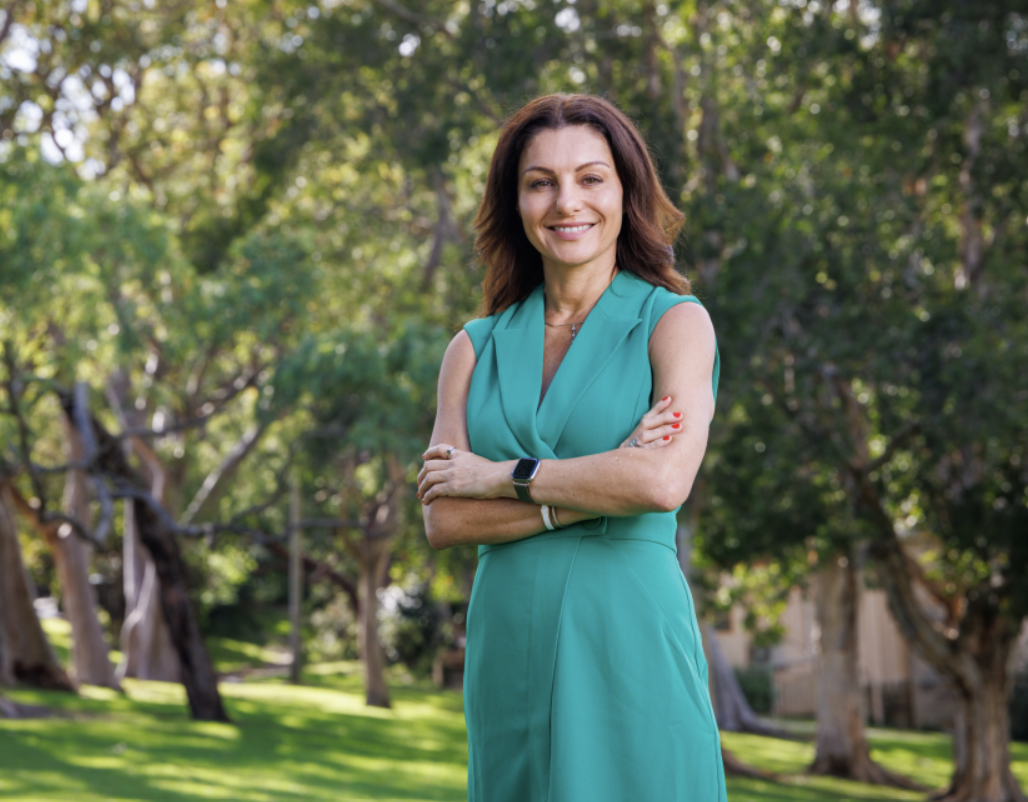
Anthony Hunt

The real issue is complacency.

Too often, families create structures and assume the job is done. It isn’t.

Estate planning is no longer a document you sign once and file away in a drawer. It is an ongoing process that should evolve alongside your life.

We are also seeing a broader shift in how Australians define wealth itself. It is no longer just the family home and an investment portfolio.

Modern wealth includes businesses, digital assets, cryptocurrency, intellectual property, frequent flyer points and increasingly complex family arrangements.

At the same time, Australians are living longer than ever before, meaning wealth may need to support multiple generations simultaneously. This creates new responsibilities and new risks.

How do you help your children enter the property market without exposing family wealth to relationship breakdowns?

How do you structure wealth so that it remains a source of opportunity rather than future conflict?

These are the questions families should be asking now.

The recent debate surrounding testamentary trusts also serves as an important reminder that policy decisions can have unintended consequences for vulnerable Australians. It is encouraging that the government has listened to feedback and clarified its position.

But the lesson remains: the wealth landscape is changing.

Increasingly, governments, regulators and tax authorities are paying closer attention to how wealth is held and transferred. That means families cannot afford to adopt a “set-and-forget” approach to their structures.

The families who will be best placed for the future are not necessarily those with the greatest wealth.

They are the families with the greatest clarity. Clarity around ownership, succession and governance. And clarity around how wealth will transition from one generation to the next.

Ultimately, preserving wealth is not about avoiding change.

It is about preparing for it.

Because the greatest risk is not change itself.

It is losing the ability to respond to it.

Anthony Hunt is Co-Founder of Wealth Lawyers and former COO of Westpac Private Bank. He advises business owners, investors and affluent Australian families on wealth protection, succession planning and intergenerational wealth transfer

ROLLS-ROYCE UNVEILS A NEW ERA OF BESPOKE LUXURY IN SYDNEY

Rolls-Royce has opened a new chapter in its Australian story, unveiling a reimagined Sydney showroom designed to cater to a new generation of wealthy clients who view luxury not as a product, but as a personal expression of identity.

Located on O’Riordan Street in Alexandria, the showroom is the first in Australia to embody the marque’s latest global retail design language and reflects the growing importance of the local market for Rolls-Royce’s highly bespoke commissions.

The unveiling comes as demand for personalised luxury experiences continues to grow among affluent Australians, with Rolls-Royce reporting increasing interest in highly customised vehicles featuring unique materials, finishes and design elements.

Julian Jenkins, Director of Sales & Brand at Rolls-Royce Motor Cars, said Australia has been part of the marque’s story since its earliest days.

“Australia has been part of the Rolls-Royce story from the very beginning, with only the 54th Rolls-Royce to be made ordered by Australian Archibald Black in 1906, and today we are proud to write its next chapter,” Jenkins said.

More than just a showroom, the new space has been conceived as an immersive luxury environment where clients can begin commissioning a vehicle tailored to their tastes.

At its heart is the Bespoke Commissioning Atelier, a dedicated space where prospective owners can explore an extensive range of materials, finishes and detailing options, from rare wood veneers to embroidery threads, allowing them to create a vehicle that is uniquely their own.

The showroom also features a “Cabinet of Curiosities” that showcases objects and references inspired by the Australian landscape and creative culture, designed to spark ideas for future commissions.

Nick Pagent, CEO and Managing Director of Autosports Group, which operates Rolls-Royce Motor Cars Sydney, said today’s luxury buyers are increasingly seeking products that reflect their individuality.

“Our clients are among Australia’s most dynamic and creative individuals; they don’t simply want a motor car, they want to commission a statement of who they are,” Pagent said.

The opening also signals Rolls-Royce’s confidence in the Australian luxury market, which the company describes as one of the most vibrant in the Asia-Pacific region. The Sydney showroom follows the opening of a new Rolls-Royce showroom in Auckland in 2025, strengthening the brand’s presence across Australia and New Zealand.

For Rolls-Royce, the investment is about far more than displaying motor cars. It reflects a broader shift in luxury consumption, where affluent buyers increasingly seek experiences, craftsmanship and personalisation over standardised products.

In that sense, the new Sydney showroom is less a dealership and more a luxury atelier, one designed to help clients transform an idea into a one-of-one Rolls-Royce.

Country Compound with a $30m Price Tag

When an estate has been carefully curated by its wealthy owners for more than a decade, the next custodian knows they’re in for a treat of a retreat.

Food-packaging entrepreneur Ted Nathan and his wife, Jenny, purchased the original 25ha Ravensdale Farm in Yarramalong Valley for $1.35 million 12 years ago according to title records.

Since then, the pair have reportedly invested more than $5.5 million to acquire several neighbouring parcels in order to create a contemporary compound now measuring more than 49ha.

Today’s Ravensdale Farm and Retreat, about 24kms from Wyong, is now a dual-estate 12-bedroom, 11-bathroom luxury landholding.

The property is expected to sell for about $30 million via an expressions of interest campaign with Cullen & Royle agents Deborah Cullen and Richard Royle.

Alongside the modern three-storey five-bedroom farmhouse, there is a long list of “must have” resort-style amenities and productive farmland primed to produce a passive income.

Framed by a 4m wraparound veranda, the sophisticated main residence has several outdoor spaces for homeowners and their guests to soak up the bucolic backdrop, lush paddocks and established gardens.

Inside, the homestead features multiple living spaces for grand scale entertaining inside and out, a library, a home office, private cinema, games room and accommodation designed for large families or a steady stream of weekend guests.

Custom made for hosting year round, the expansive estate also includes a sports bar with a commercial-grade kitchen, a championship size tennis court which can be transformed into an alfresco cinema when the mood strikes.

Additional spaces designed for fun include a sunken fire pit, a hidden garden with a European-inspired pétanque court, a pickle ball court and a private paddock dedicated to major events and functions.

There is also a separate second residence, Ravensdale Retreat, devoted to guest stays or potential short-term accommodation.

The bonus residence is set up to provide a fully self-contained experience outside of the main home when needed. It has a choice of bedrooms, a spacious living area, an outdoor pavilion, pizza deck, and its own pool.

Beyond its weekender credentials, Ravensdale Farm lives up to its name. A working farm, the estate has cattle infrastructure, fertile pastures featuring Kikuyu and Rhodes grasses complemented by high end irrigation and water systems, as well as land management systems designed for efficiency and long-term resilience.

The land can comfortably support cattle and horses – currently home to approximately 40 cows and calves, plus horses – and has productive fruit orchards, vegetable gardens, a chicken coop and a restored century-old barn.

Surrounded by the rolling green hills of the Yarramalong Valley, Ravensdale Farm and Retreat is approximately a 25-minute drive from Wyong and around 90 minutes from Sydney with coastal hotspots like Terrigal and The Entrance are within easy reach.

Ravensdale Farm and Retreat is on the market with a price guide of $30m via an expressions of interest campaign with Cullen & Royle.

$11m sale breaks Bondi Junction apartment record

The Centennial Collection, the new apartment development on the edge of Centennial Park in Bondi Junction, continues to break local residential property records.

A local Eastern suburbs buyer has splashed $11 million on a three-bedroom, sub-penthouse on level 10 of the development, topping the previous record within the same development.

At 266 sqm, including internal and external space, the north-facing residence achieved more than $55,000 per sqm, making it one of the most expensive apartment transactions ever recorded in Sydney’s eastern suburbs outside the harbourfront enclaves of Double Bay and Darling Point.

The buyer had originally purchased a three-bedroom apartment in The Centennial Collection in 2025 for $6.5 million before deciding to secure the larger half-floor sub-penthouse.

Ray White Projects Director of Sales Marcello Bo, who is managing sales for the project, said the transaction highlighted the continued strength of demand for premium apartments in Sydney’s eastern suburbs.

“This sale is a clear indication of buoyancy in the upper end of the market and reinforces the strong demand and appetite for primely located, larger-sized apartments with all the luxurious inclusions you would expect with a development of this calibre,” Bo said.

“It also demonstrates that superbly-designed, lifestyle-driven residences in tightly held locations continue to outperform, particularly when they deliver scale, privacy, rarity and long-term liveability that aligns with how buyers want to live today.”

The Centennial Collection occupies a prominent gateway site overlooking Centennial Park at the junction of Bondi Junction, Woollahra and Paddington. Following recent State Significant Development approval, the project now comprises 79 apartments across two adjoining towers rising 13 and 16 storeys.

The development has been designed to target owner-occupiers seeking larger-format apartments, with residences featuring inclusions more commonly associated with standalone homes, including private rooftop pools, bedroom fireplaces, wet bars, butler’s pantries and full-sized wine fridges.

The record-setting residence was originally designed as one of the project’s penthouses before the approval process allowed additional levels to be added to the scheme.

Positioned on Level 10, the apartment occupies half a floor and has no common walls. It offers 270-degree views spanning Sydney Harbour, the Harbour Bridge, Opera House, Centennial Park and both the northern and southern headlands.

The purchaser said that proximity to Centennial Park, transport connectivity, and the surrounding lifestyle amenities ultimately drove his decision.

“I’m constantly looking at developments everywhere in the east, from Darling Point to Rushcutters Bay, Double Bay, all the beaches, Bondi, Bronte, Tamarama, Woollahra. I wanted something new,” he said.

“Everywhere you go, there’s a trade-off. It might have a great floor plan, but it doesn’t have a view. Working in the city, your daily commute impacts everything, so Bondi Junction train station was a huge factor in my decision.”

The buyer, an avid cyclist who rides regularly in Centennial Park, said his view of the location changed significantly as he spent more time assessing the eastern suburbs market.

“At first, I thought, who would want to live there? It’s one of the busiest intersections in the eastern suburbs. But when you peel it all back, it’s one of the best locations in Sydney. You’re close to everything, you can walk to everything, the amenity is incredible, and the views are amazing.”

Bondi Junction is slated to look materially different in the coming decades, with a draft 100-page masterplan proposing a regeneration of the suburb which would include thousands more apartments as well as a revitalised commercial, retail, and dining precinct.

Why I Will Drive My 2005 Pontiac Vibe Into the Ground

The terrible news began with a knock on my front door: My neighbour, doing his best hat-in-hand routine while holding a driver’s side mirror, kept on apologising.

Moments earlier, he’d somehow managed to back his vehicle out of his driveway and directly into the side of my 2005 Pontiac Vibe. This past winter in Michigan was rough. Things happen. I get it.

But the damage was a concern. With a two-decade-old car, I was sure the Vibe would be declared a total loss, and thus force me into the melee that is the new and used car market .

The typical age of U.S. vehicles on the road today keeps getting older, pushed upward by aging cars like my Vibe hatchback.

For many drivers, the average new-vehicle price of around $50,000 is enough to keep them on the sidelines . That’s partially why I felt a sense of dread when I saw my neighbor had done more than give the Vibe a love tap.

I also feared I would lose a vehicle I adore, which I amplified in a frantic series of messages to my co-workers.

My wife and I had bought the Vibe in the fall of 2020, while living in Brooklyn. We knew eventually a move back home to our native Michigan was in the cards, and therefore a car would be needed.

At the time, the used-car market had been upended by the pandemic , and a light at the end of the tunnel was hard to see.

I spent countless hours poring over Reddit posts and old car reviews for what my then-employer Consumer Reports then ranked as the best used vehicles under $5,000, which, believe it or not, was a thing not that long ago. The 2005 Vibe stood out.

The Vibe is a product of a once-groundbreaking joint venture between General Motors’ Pontiac brand and Toyota Motor.

The automakers co-owned a company that assembled the Vibe, essentially a rebadged variant of Toyota’s Matrix hatchback, at a factory in California. The Matrix and the Vibe rolled off the line together starting in 2002.

The car has its enjoyable quirks: The hatch glass opens up with the press of a key fob button. There’s a sweet AC outlet connection, too—a prescient feature from the pre-USB era that’s great for charging my gadgets.

Much about this car now feels like a collection of footnotes in a history book. The Pontiac brand is no more, closed in GM’s bankruptcy a few years later.

The GM-Toyota joint venture has also been dissolved. The factory that built it now belongs to Tesla , cranking out electric vehicles. And small, affordable cars like the Vibe are a rarity in today’s automotive landscape.

But once, it got plenty of hype as a genre-defying machine.

“Although Vibe ultimately defies traditional vehicle classification, it plays comfortably in nearly every automotive category, while fitting neatly into none,” GM gushed in a press release around the time the Vibe was introduced.

“It offers the handling and performance of a sports car, the utility and rugged, go-anywhere range of an SUV.”

We weren’t seeking sports-car performance. We only wanted to get out of our neighbourhood—and the Vibe did more than I could’ve imagined.

A Brooklyn dealer had a 2005 Vibe in stock with only about 60,000 miles on it. The car’s history included one owner who, according to the salesman, lived nearby and mainly drove it around the borough. For us, it was perfect.

The day after we bought the car for roughly $6,300 all-in, we drove upstate with my American Eskimo-Shih Tzu mix to go on a hike at some park. I don’t remember exactly where we went or why, but I was happy to leave New York during pandemic lockdowns.

Looking at photos from the day, that much is obvious: The image of my dog peacefully snoozing in the back seat as we puttered north, the serene emptiness of the landscape, the cheerful selfie we took with masks pulled down around our necks.

We make memories in our cars, and I didn’t waste any time making good ones in the Vibe.

The Vibe’s cargo space astounded us at times. I once needed to drive an old 1958 hi-fi console to a repair shop an hour away. A truck would surely be needed, I thought. Nope—the hulking piece of furniture neatly fit inside the Vibe’s trunk.

And for a small car with a small engine and an automatic transmission, it’s fun—I swear—to drive. I feel like I understand the Vibe when I’m at the wheel, something I can’t say about the much newer compact SUV we bought to tow my family around in.

The Vibe draws random remarks of praise all the time: Shortly after we moved, a construction worker in Ann Arbor waved me down as I idled at a stoplight. He let me know how much he loved his own Vibe, which by then had been running for over 250,000 miles. “Hell yeah,” I said. He gave me a thumbs-up.

To give you a sense of how attached I am to the Vibe, my wife and I have repeatedly remarked—only half kidding—about how we hoped it could one day be the car our kid learned to drive in.

So, faced with the damage caused by my neighbor, I told my colleagues: “The best outcomes in order are: 1) repairable; 2) an absolutely comical settlement payoff; 3) it’s totaled and I get enough money for a bulls— lease.”

Then, when the onslaught of worry and annoyance over my Vibe’s abrupt damage subsided, I started to crunch the numbers.

Perhaps it would be fine to take a check from the insurer and get into something new. Since buying the Vibe, I’ve kept track of every repair made. All told, we’ve put about $10,400 into it until now.

I feel ridiculous when I read that number, but it works out to about $150 a month on average. Sure, I could get a lease on a small, modern car.

But until I’m paying more on average for repairs, setting aside money for those fixes each month feels like the better trade-off than dumping the Vibe.

In the end, my neighbour’s insurance company said the Vibe was valued at about $4,500, which comfortably exceeded the cost of repairs that included a new mirror and door. I was relieved, as I conveyed the news to my colleagues later.

Over time, I plan to freshen up the Vibe and give it some much-needed love. A new tire rim to replace one lost when I needed a new wheel would be a nice start. Replacement floor mats and an intense detailing could go a long way to boosting its curb appeal.

The Vibe lacks modern creature comforts and safety equipment that come standard in new vehicles sold today. I don’t care. “That’s dada’s car,” my kid would sometimes shout.

It is, and it will be as long as I can keep it alive.


ROBIN HOOD POLITICS RISKS MAKING AUSTRALIA’S HOUSING CRISIS WORSE

For months, I have been one of the few commentators openly stating what the data was already showing: property prices had begun to fall.

The latest figures confirm it. Cotality’s June 1 Home Value Index showed Sydney values down 0.9 per cent in May and Melbourne down 0.8 per cent. ANZ has cut its national capital city forecast to 2.8 per cent growth this year, down from 4.8 per cent in April. CBA has also downgraded its outlook.

So the Federal Budget arrived at the worst possible time, with the wrong prescription, to treat a problem it fundamentally misunderstands.

Treasurer Jim Chalmers has suggested that making it easier for first-home buyers to get a fair crack at auctions is a good thing. The reality is more complicated.

Driving property prices down does not simply hand a discount to first-home buyers. It affects the 1.4 million Australians employed by the property sector, the 67 per cent of household wealth tied to housing, and the state government revenues that fund schools, hospitals and roads.

The government had a choice: tackle supply constraints, link migration growth to housing completions and reduce spending, or increase taxes on property investors. It chose the latter.

Property is an economic pillar

Property is not simply another investment class. It contributes about 10.6 per cent of GDP directly, up to 15 per cent when flow-on effects are included, and employs more than 1.4 million Australians. It also generates more tax revenue than mining and underpins consumer confidence through the wealth effect.

Against that backdrop, the Budget removed negative gearing from established residential properties purchased after Budget night and replaced the 50 per cent capital gains tax discount with cost-base indexation and a 30 per cent minimum tax from July 1, 2027.

The government calls this fairness. I call it a misdiagnosis.

The grandfathering trap

The policy is also internally contradictory.

Properties purchased before Budget night are grandfathered, allowing existing investors to retain full negative gearing and capital gains tax benefits until they sell. The logical response is simple: hold.

That means fewer properties coming onto the market, fewer rental listings and reduced transaction volumes.

The result is likely to be higher rents, reduced stamp duty revenue and further inflationary pressure at a time when the Reserve Bank remains focused on bringing inflation under control.
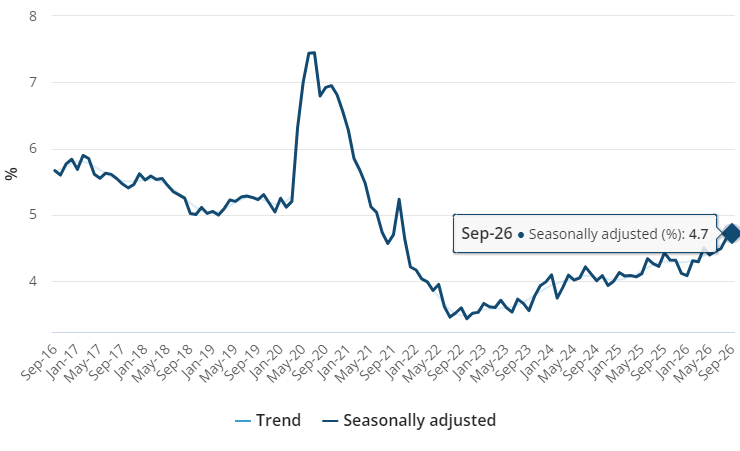
The government is attempting to fight inflation with one hand while fuelling it with the other.

Who really owns investment properties?

What is often lost in this debate is who Australia’s property investors actually are.

According to ATO data, 71 per cent of investors own just one investment property. They are not wealthy property moguls.

They are teachers, nurses, police officers and small business owners who have purchased an investment property as part of their retirement strategy.

For many Australians, property remains the most tangible and trusted pathway to building long-term wealth.

Removing the incentives that supported that investment does not hurt a billionaire developer. It hurts ordinary Australians trying to secure their financial future.

Investors aren’t the affordability problem

It is true that housing affordability has deteriorated significantly over the past two decades. However, negative gearing is not the primary cause.

Research by economists Ross Kendall and Peter Tulip found planning and zoning restrictions significantly increase housing costs.

Their work showed zoning lifted detached house prices well above marginal construction costs in Sydney, Melbourne, Brisbane and Perth.

Low interest rates, strong population growth, chronic under-supply and restricted access to development-ready land have all played a much larger role in pushing prices higher.

Punishing private investors does nothing to address these structural issues.

The Build-to-Rent advantage

At the same time the government is reducing incentives for Australian investors, it has created a more attractive tax environment for foreign institutional capital through Build-to-Rent projects.

Under current arrangements, foreign institutional investors can access a 15 per cent withholding tax rate through Managed Investment Trusts, accelerated depreciation benefits and exemptions from the new negative gearing restrictions.

State governments have added further concessions, including land tax reductions and exemptions from foreign investor surcharges.

Australian mum-and-dad investors receive none of these advantages.

The cumulative effect is striking. Foreign institutions can access a range of tax benefits unavailable to Australian private investors, while local investors lose concessions they have relied upon for decades.

This is not solving the housing crisis. It risks transferring ownership of Australia’s rental housing stock from local investors to offshore institutions.

Why state governments should worry

There are already signs these changes are affecting the credit cycle.

Major banks are removing negative gearing benefits from serviceability calculations for investment loans.

As market conditions soften, lenders become more cautious and investors find it harder to secure finance.

That matters because property transactions are a major source of state government revenue.

In NSW alone, transfer duty generates more than $12 billion annually. If transaction volumes fall significantly, the impact on state budgets will be substantial.
The consequences extend beyond stamp duty to GST collections, payroll tax receipts and land tax revenue.
The 95 per cent loan trap

There is another aspect of the Budget that concerns me.

The government has expanded first-home buyer deposit guarantee schemes, allowing eligible purchasers to buy with a five per cent deposit backed by the Commonwealth.

The intention is admirable. The timing may not be.

If prices in Sydney and Melbourne fall further, buyers entering the market with 95 per cent loan-to-value mortgages could quickly find themselves in negative equity.

They become trapped. They cannot sell without crystallising a loss, while the taxpayer guarantees the loan and the bank remains protected.

That is not wealth creation. It is a debt obligation.

After three decades working with debt and investment, I would never encourage my own children to borrow at a 95 per cent loan-to-value ratio.

A policy built on politics

The government had an opportunity to address the housing crisis by encouraging supply, reforming planning systems and reducing development costs.

Instead, it chose Robin Hood politics.

The optics may be appealing, but the economics are not.

Australians may ultimately pay the price through higher rents, weaker investment and a future in which an increasing share of the nation’s housing stock is owned by offshore institutions rather than local investors.

Paul Miron is the Co-Founder & Fund Manager of Msquared Capital.

WHY COMING HOME CAN BE MORE FINANCIALLY COMPLICATED THAN LEAVING

Every year, thousands of Australians make the decision to pack up life overseas and come home.

After years, sometimes decades, building careers, accumulating assets, and growing families in places like Dubai, London, Singapore, or Hong Kong, the pull back is understandable.

What most don’t appreciate until it’s too late is that the return journey is often far more financially complex than the departure.

Leaving Australia is, financially speaking, a relatively clean event.

You depart, you potentially become a non-resident for tax purposes, and a new set of rules applies.

Coming back, however, means reconciling everything you’ve accumulated offshore with an Australian tax system that hasn’t been standing still waiting for you.

The Tax Residency Trap

The first and most costly mistake is misunderstanding when Australian tax residency resumes.

Many returning expats assume residency only kicks in once they’ve formally re-established themselves, signed a lease, updated their address, started a job. The ATO doesn’t see it that way.

Under Australian tax law, residency can recommence the moment you land with the intention of remaining. That means any taxable events, investment income, asset disposals, foreign account distributions that occur after that point are potentially assessable in Australia, even if they’re sitting in offshore accounts you haven’t touched.

Superannuation: The Clock Doesn’t Stop

One of the most underappreciated issues for returning expats is what’s been happening inside their superannuation fund while they’ve been away.

Contributions may have paused, but fees, insurance premiums, and investment volatility haven’t. Some returning clients are genuinely shocked by how much ground their super has lost to fees during periods of lower balances or inappropriate investment settings.

The more strategic issue is what to do on the way back. If you hold foreign pension arrangements, a UK SIPP or QROPS, a 401(k), and international savings schemes, the question of whether and how to repatriate those funds requires careful planning before you return.

Once you’re a tax resident again, distributions from certain foreign structures can be assessable as ordinary income, and the window to manage that exposure closes.

Offshore Investments Don’t Disappear

Returning to Australia doesn’t sever your obligations in the countries where you’ve been living.

Foreign-held shares, managed funds, or investment accounts will be picked up by Australian tax reporting requirements from the moment residency resumes.

The Foreign Investment Fund rules, transferor trust provisions, and the reporting obligations under Australia’s tax information exchange agreements mean these holdings need to be declared and, in some cases, restructured.

Leaving investments sitting offshore in structures that made sense as a non-resident but create compliance headaches as a resident is one of the most common and expensive mistakes we see.

The restructuring cost, if it’s even possible post-return, typically dwarfs what it would have cost to plan properly in advance.

Property: Both Sides of the Balance Sheet

There are two distinct property problems for returning expats.

The first is what they’ve held while away, an Australian property rented out during the absence.

Depending on how long the property was the main residence and how it was treated during the rental period, the CGT calculation on eventual sale can be complex.

The six-year absence rule provides some relief, but it’s not automatic and has conditions that are frequently misunderstood.

The second is re-entry into the Australian property market.

After years of asset accumulation offshore, many returnees assume they’re well-positioned to buy.

The challenge is that their financial picture, including foreign income history, offshore assets and currency, doesn’t translate neatly into Australian mortgage serviceability.

Lenders read foreign income conservatively, and what looks like a strong balance sheet can create unexpected borrowing capacity issues.

The Fix: Plan Before You Land

The single most effective thing an expat can do is start planning the return 12 to 18 months before departure.

That timeline allows for managed asset disposals under non-resident rules where advantageous, superannuation catch-up strategies, foreign structure rationalisation, and property decisions that aren’t being made under time pressure.

The irony is that most Australians sought financial advice before they left on how to exit cleanly.

Far fewer seek the same rigour on the way back in. Given the complexity involved, that’s an expensive oversight.

Coming home should be a financial clean slate. With the right planning, it can be. Without it, you’ll spend the first few years back unwinding decisions that didn’t have to be problems at all.

Brett Evans is the founder of Atlas Wealth and the author of The Expat’s Handbook.

Everything You Need to Know About the SpaceX Trading Debut

Elon Musk’s   SpaceX is set to make its stock-market debut Friday in the largest IPO ever—and perhaps the most closely watched. The company sold an outsized portion of the offering to individuals. Its performance on Friday will be a crucial gauge of investor appetite for mega-offerings from OpenAI and Anthropic expected later this year.

The rocket maker, which derives most of its revenue from its satellite internet unit and has a nascent artificial-intelligence business, will trade under the ticker “SPCX.” It sold 555.6 million shares at $135 each, raising about $75 billion in a deal that valued the company at roughly $1.77 trillion.

When will shares open for trading?

SpaceX executives are set to ring the Nasdaq’s opening bell in New York, but shares in buzzy initial public offerings don’t tend to start trading until later in the day.

Bankers leading an IPO typically want to match buyers and sellers for about 10% of the shares sold before opening trading to lessen volatility. For SpaceX, that would be about 55 million shares, or roughly $7.5 billion worth.

Because pre-IPO investors are restricted from selling shares for a while, it can take time to find willing sellers among those who bought shares in a high-demand IPO.

Shares of Alibaba , the largest U.S. IPO until SpaceX, opened for trading a little before noon in its 2014 offering. Last year, one of the highest-profile offerings was that of software maker Figma , whose shares started trading just before 2 p.m.

It is possible that SpaceX’s bankers will decide to start trading without matching the typical portion of orders to ensure the shares have several hours of trading on their first day, people familiar with the matter say.

How volatile will the stock be?

Bankers and traders expect SpaceX’s share price could be volatile in initial trading, thanks in part to the large portion of its shares expected to be held by individual investors. Some who anticipate individuals will rush into the shares worry they could just as easily get spooked and rush out.

Any sharp movement in stock price could trigger so-called circuit breakers that could pause trading. For most newly listed companies, a 10% swing in either direction prompts a five-minute pause. Companies that had their shares halted include Figma and Cerebras Systems , the chip company whose shares soared in its May debut.

These forced timeouts applied to single stocks came after the so-called flash crash in 2010, when the Dow Jones Industrial Average fell 700 points in eight minutes before recouping much of the loss.

What is all the talk about the ‘green-shoe’ option?

If the stock starts trading erratically, bankers have a secret weapon to attempt to calm things down.

Underwriters typically sell more shares to investors than an IPO’s total offer size, colloquially called the green shoe. In SpaceX’s case, they sold about 15% more shares than the stated offering size.

Because this means they technically allocated more than the offering amount, the so-called stabilisation agent, in this case, Morgan Stanley , needs to buy back the excess number of shares to deliver them. If the stock starts to fall, the bank will buy the shares in the open market, which helps buoy the stock price. If the stock isn’t faltering, the stabilisation agent can buy the additional shares they need to deliver to investors directly from the company.

The term “green shoe” comes from the first company to employ a version of this method years ago, a shoemaker that was a predecessor to Stride Rite. When Meta Platforms , then known as Facebook, went public in 2012, its shares started dropping and its bankers stepped in to buy more shares.

How will Elon Musk’s take-it-or-leave-it pricing fare?

Like all things Musk, SpaceX’s IPO bucked the norms. Instead of approaching prospective investors with a possible price range for shares ahead of the IPO and incorporating their feedback, the company set an exact share price from the beginning: $135.

The idea was to limit drama for what is already the biggest IPO of all time. It did, however, remove what many see as an important step along the way: price discovery. The success of this approach will partly be judged by how SpaceX’s shares trade Friday. If the stock surges, critics will say SpaceX left money on the table by not pricing shares higher. If the stock falls or trades flat, there will likely be critiques that SpaceX and its advisers overestimated demand.

Will the machinery hold up—and what will be the wider market impact?

The sheer size of SpaceX’s IPO will test the trading infrastructure at Nasdaq and could have ripple effects in the broader market.

Nasdaq has practiced with mock openings to make sure its trading platform is prepared. When Facebook went public, some investors who tried to change or cancel orders ahead of trading didn’t get confirmations because of a technology malfunction. The confusion contributed to Facebook shares dropping on the first day of trading. They didn’t return back above their IPO price for more than a year.

Meanwhile, some market watchers expect added activity Friday in stocks that individual investors might sell to buy SpaceX shares, such as those of technology companies and Musk’s electric-car maker Tesla . Such sales already appeared to be under way earlier in the week, when individual investors dumped single-stock holdings on a net basis for two days in a row, according to Vanda Research. (To be sure, those sales came on days that were poor showings for tech stocks broadly.)

It will take several days for SpaceX shares to show up in any major index funds , so the offering’s wider impact on the market could play out over the next several weeks or longer.

This 900-Year-Old Castle Is the Priciest Home Ever Listed for Sale in Luxembourg

An almost 900-year-old castle in Luxembourg has hit the market for €37.5 million (US$43.3 million), making it the most expensive residential property ever offered for sale in the small European country.

The listing comprises the ancient Château d’Ansembourg and the adjacent Domaine du Presbytère d’Ansembourg, which are within central Luxembourg’s Valley of the Seven Castles.

Château d’Ansembourg is one of the seven castles the valley is named for and is regarded as one of the country’s most important privately owned châteaus, according to Ignace Meuwissen, the founder of Whisper Auctions, who is handling the sale.

The castle sits at the heart of an almost 500-acre estate overlooking the picturesque village of Ansembourg, and records of its existence date to 1135.

Domaine du Presbytère d’Ansembourg, meanwhile, is a more than 110-acre estate comprising a former presbytery, a chapel dating to 1678, a historic school site, forests and meadows.

“Properties of this calibre rarely become available,” Meuwissen said.

“What is being offered today is far more than a chateau. The combination of nearly nine centuries of documented history, 245 hectares of land and a unique location in the Valley of the Seven Castles creates an opportunity that is exceptionally rare within Europe. Opportunities of this scale and heritage value are seldom brought to market and are often preserved within families for generations.”

The properties are being marketed through a “semi-off-market sales process,” with limited information and marketing materials publicly available, and access to the properties is reserved for a small number of pre-qualified candidates, according to Meuwissen.

Both estates have been privately occupied by the same owner, whom Meuwissen declined to identify. Mansion Global could not confirm who the seller is.

REVEALED: WHAT EVERY PROPERTY INVESTOR GETS WRONG

When markets become volatile, many property investors make the same mistake: they allow emotion to drive decisions that should be guided by strategy.

According to Melbourne buyers’ advocate and Mecca Property Group founder, Abdullah Nouh, periods of uncertainty often reveal the difference between investors who build long-term wealth and those who become distracted by short-term market noise.

In an environment where news travels faster than ever before, sentiment can shift rapidly. A single interest rate decision, inflation update or alarming headline can trigger uncertainty among buyers and investors, even when the underlying fundamentals remain largely unchanged.

Nouh argues that market panic is rarely driven by hard data alone.

Instead, uncertainty creates a psychological response that can lead buyers to delay decisions, investors to hesitate, and vendors to become unrealistic or desperate.

The danger, he says, is that these reactions are often expensive.

A buyer who pauses because the market feels uncertain may find themselves paying more for less months later after conditions improve. Waiting for perfect clarity can be a costly strategy because markets rarely provide it.

The distinction between reacting and making a considered decision becomes even more important during periods of volatility, when the pressure to respond quickly is at its greatest.

OPPORTUNITY OFTEN HIDES IN UNCERTAINTY

While many investors see volatility as a threat, Nouh believes it can also create opportunities.

In strong rising markets, momentum often carries deals forward, and confidence becomes self-reinforcing. In more challenging conditions, however, the quality of an asset becomes far more important.

Properties that are well located, appropriately priced and supported by strong fundamentals tend to hold their value. Assets buoyed largely by market sentiment often struggle when conditions soften.

Periods of uncertainty can also create opportunities for buyers willing to remain disciplined.

Motivated sellers may emerge, competition can ease, and negotiation becomes easier. These opportunities are not always obvious, but they can provide significant advantages for investors who remain focused on long-term objectives rather than short-term headlines.

LOOKING BEYOND THE HEADLINES

A key theme in Nouh’s analysis is the need to separate market sentiment from market reality.

While investor confidence may fluctuate, many of the structural forces supporting Australian property remain in place.

Rental markets remain tight across most major cities, vacancy rates are low, and population growth continues to place pressure on housing supply.

These factors have not disappeared because of a shift in market mood.

What has changed is affordability.

Higher interest rates have increased borrowing costs and put pressure on the cash flow of investors carrying debt. While this represents a genuine challenge, Nouh argues it should not be confused with evidence that the broader property market is fundamentally broken.

Understanding that distinction is critical for investors seeking to make rational decisions.

STICKING TO THE PLAN

Ultimately, Nouh believes investors should revisit the goals that informed their strategy before market sentiment changed.

If an investment strategy was sound before a negative headline appeared, it may remain sound afterwards.

For many investors, periods of volatility simply expose weaknesses that already existed in their approach.

The investors who build wealth across multiple property cycles are rarely those who perfectly time the market. Instead, they are the ones who maintain a clear strategy and continue executing it while others become distracted by short-term uncertainty.

Markets will continue to fluctuate, sentiment will rise and fall, and economic conditions will change.

But for investors focused on long-term wealth creation, the greatest risk may not be volatility itself. It may be allowing fear to override a well-considered plan.

As Nouh argues, the current uncertainty is not necessarily something to fear. In many cases, it is simply something to understand.

Gold Dinner Raises $75.5 Million As Australia’s Philanthropy Culture Evolves

Australia’s wealthiest donors are becoming more strategic, more ambitious and increasingly focused on creating measurable impact, according to Sydney Children’s Hospitals Foundation chief executive Kristina Keneally.

Speaking after the 2026 Gold Dinner, held last week in Sydney, Keneally said Australia was experiencing a significant shift in how major philanthropy is viewed, with large-scale giving increasingly part of conversations about leadership, legacy and social impact.

The annual Gold Dinner, now in its 29th year, brought together some of the country’s most influential business leaders, philanthropists and cultural figures, raising $75.5 million and counting in support of the Sydney Children’s Hospitals Network.

While the event has become one of Australia’s most prestigious fundraising gatherings, Keneally said its significance extends far beyond a single evening.

“Gold Dinner, the flagship event of Sydney Children’s Hospitals Foundation, represents far more than a single evening. It is a powerful demonstration of what a committed community can achieve together over 12 months,” she said.

“The strength of that community, and the trust built over nearly three decades, means people return not just for the event, but for the impact they know it delivers.”

A NEW ERA OF PHILANTHROPY

Large-scale philanthropy has long been a feature of American society, where charitable foundations and major donors often play a prominent role in funding medical research, education and social programs.

Keneally believes Australia is moving in a similar direction.

“Australia is building a stronger culture of large-scale philanthropy, but it is still evolving compared to the United States, where giving at scale is more deeply embedded and widely recognised,” she said.

She said the country’s philanthropic landscape was becoming more sophisticated as successful business leaders increasingly sought opportunities to create meaningful change through their giving.

“In Australia, while generosity has always been strong, large-scale giving has historically been less visible, but that is changing rapidly as more leaders embrace philanthropy as a powerful way to drive meaningful outcomes.”

According to Keneally, events such as the Gold Dinner are helping reshape public perceptions of philanthropy by demonstrating the tangible outcomes that major donations can achieve.

“Gold Dinner is helping to reshape how philanthropy is perceived in Australia, making it more visible, more aspirational and more connected to real-world outcomes,” she said.

WHERE THE MONEY GOES

The funds raised through Gold Dinner support clinical care, research and innovation across the Sydney Children’s Hospitals Network.

Over the past 12 months, more than $75.5 million has been raised to help fund advanced medical equipment, innovative care models and world-leading medical research. Areas of focus include precision medicine and early diagnosis, where emerging technologies are already changing how childhood illnesses are detected and treated.

Keneally said the impact is felt directly by children and families facing some of the most difficult moments of their lives.

“For children and families, this translates into very real and immediate impact. It means faster diagnoses, earlier access to life-saving treatments, and care that is more personalised and effective,” she said.

“It also ensures hospitals are equipped not just to respond to illness, but to reimagine what care can look like, giving children the best possible chance not only to survive, but to live full, healthy lives.”

BUSINESS LEADERS BACKING CHANGE

One of the defining characteristics of Gold Dinner is the calibre of its supporters.

The event has evolved into a meeting point for influential leaders from business, culture and philanthropy, many of whom see charitable giving as an extension of their professional and personal legacy.

“It speaks to a community that is not only generous, but increasingly ambitious in how it gives, combining influence, expertise and purpose to achieve outcomes at scale,” Keneally said.

Among the major supporters of this year’s event were Presenting Partner, John-Paul Nassif Foundation; Major Partners, ABC Bullion, Shaw and Partners Financial Services and One Circular Quay by Lendlease; and Premier Partner, Range Rover, whose ongoing support reflects a shared philosophy of legacy and long-term impact.

The evening also featured performances, premium hospitality experiences and fundraising initiatives designed to encourage further support for children’s health services and research.

LOOKING BEYOND NEW HOSPITALS

With major new children’s hospital developments at Randwick and Westmead progressing, Keneally said the focus is increasingly turning towards what comes next.

“The long-term vision is to ensure every child has access to world-leading healthcare, care that continues to evolve through innovation, research and global collaboration,” she said.

The foundation’s future priorities include accelerating medical discovery, expanding access to cutting-edge treatments and helping position New South Wales as a global leader in children’s health.

Keneally said the Gold Dinner remains central to achieving those ambitions because it does more than raise money.

“Gold Dinner is critical to making that vision possible. It not only provides significant funding, but also unites a powerful network of supporters who are driving the future of philanthropy in Australia,” she said.

As Australia’s culture of philanthropy continues to mature, Keneally believes that the network will play an increasingly important role in shaping the future of healthcare for generations to come.

“The result is a community that is helping to shape the future of paediatric care, not just for today’s patients, but for generations to come.”

READY-TO-DRINK COCKTAILS SHAKE UP THE PREMIUM SPIRITS MARKET

The rapid growth of premium ready-to-drink cocktails is showing no signs of slowing, with Australian producers increasingly proving that convenience and craftsmanship can coexist.

The trend was highlighted after South Australian distiller Never Never Distilling Co. claimed the title of World’s Best Contemporary Premix at the World Drink Awards in London for its Panettone Negroni.

While pre-mixed drinks have traditionally been associated with mass-market products, a new generation of premium bottled cocktails is targeting consumers seeking bar-quality drinks at home.

Never Never’s award-winning Panettone Negroni is based on the classic Italian cocktail but incorporates Australian ingredients including local aged muscat and orange liqueur, alongside the company’s Triple Juniper Gin.

The cocktail was originally developed at the distillery’s McLaren Vale venue before being bottled for wider distribution.

The international recognition reflects a broader shift in consumer behaviour, with premium spirits brands increasingly investing in sophisticated ready-to-serve offerings that require little more than pouring over ice.

Never Never co-founder Sean Baxter said the cocktail had become one of the company’s most popular serves at its cellar door before making the transition to retail shelves.

“It has always been one of our most popular drinks at the venue, so much so that we decided to bottle it so we could share it far and wide,” he said.

The latest accolade adds to the distillery’s growing collection of international awards, following previous wins for World’s Best Classic Gin and World’s Best London Dry Gin.

Industry observers say the success of premium bottled cocktails reflects growing demand for products that deliver a luxury drinking experience without requiring consumers to stock multiple spirits, liqueurs and mixers.

As consumers continue to entertain more frequently at home, the category is increasingly being viewed as a premium offering rather than simply a convenient alternative.