Anime Is Japan’s Next Global Champion

Move over, Marvel. The next blockbuster entertainment franchise might come from Japan.

Anime is shaping up as the country’s next big export industry, beyond cars and electronics. This once-niche entertainment form is entering the worldwide mainstream , and its growth could light up investors’ portfolios.

The global market for Japanese animation, known as anime, and its related products has more than doubled between 2012 and 2022 to 2.9 trillion yen, equivalent to $20 billion, according to the Association of Japanese Animations. The overseas market has been driving that growth. Markets outside of Japan made up around half of the total in 2022, compared with around 18% a decade earlier.

Streaming companies such as Netflix are certainly taking notice. Its live-action series “One Piece,” based on a Japanese comic, was its most-watched show in the second half of 2023. In fact, anime content on Netflix in the period logged 14% viewing growth from the first half of 2023, compared with a 4% drop overall, according to Jefferies. These streaming platforms will continue to introduce more anime-related content to their global audiences.

Japan’s anime and manga, the Japanese word for comics, have created many well-known characters and franchises over the years, such as Pokémon. And it looks to be getting even more mainstream. The anime market in North America has grown from $1.6 billion in 2018 to $4 billion this year, according to Jefferies. And Asia, which has long been more receptive to anime, will likely continue to grow strongly, especially in China. Anime has also been popular on Chinese streaming platforms such as Bilibili .

Apart from streaming, selling merchandise can be even more lucrative. Sanrio , which owns characters like Hello Kitty , has reported record profits, with its share price rising nearly sixfold over the past five years.

Sony would be another major beneficiary of this trend . The company owns animation streaming service Crunchyroll, which had 15 million subscribers as of June. That compared with around 3 million subscribers when Sony announced the acquisition of the streaming service from AT&T for nearly $1.2 billion in 2020. This contrasts with Sony’s approach in online streaming for other content: It acts more like an “arms dealer,” selling movies and shows to platforms such as Netflix and Amazon.com . That means the company could benefit more directly from the anime boom. And anime also has strong synergies with its movie and game businesses .

Anime maker Toei Animation, which owns popular franchises such as “One Piece” and “Dragon Ball,” is another listed company that would benefit. It makes anime itself, but more important for the overseas markets, it also earns licensing revenue from the copyrights to popular franchises that it owns. Sales outside of Japan accounted for more than half of its total revenue in the latest fiscal year ended in March. Season two for Netflix’s “One Piece” is already in production. Toei stock has nearly tripled since the end of 2019.

Anime has blockbuster potential, not just for audiences but for investors as well.

LVMH’s Arnault Family in Talks to Buy Majority Stake in Storied Parisian Soccer Club

Agache, the holding company of LVMH founder and Chief Executive Bernard Arnault ’s family, is in exclusive talks to buy a majority stake in storied soccer club Paris FC, extending one of Europe’s richest families’ foray into sports.

Agache said in a statement Thursday that the Arnault family is teaming up with Austrian energy-drink maker Red Bull, which is currently negotiating a minority stake in the second-tier Parisian club.

While Red Bull will be involved with the sporting element in an advisory function, the Arnault family intends to provide the club with the resources its needs for its economic and sporting development.

Though the move would be the family’s first step into soccer, Red Bull is already heavily invested in the sport with stakes in top-level clubs in Germany, Austria and the U.S.

Through LVMH, however, the family has ramped up its sports involvement and sponsorships recently.

Earlier this month, the company struck a 10-year partnership deal with Formula One, capitalising on the sport’s global ascendance. And this summer, LVMH brands were hard to miss at the Paris Olympics after the luxury-goods maker paid roughly 150 million euros to be a sponsor of the global event.

With the controlling stake in Paris FC, the family aims to establish both the men’s and women’s side among the elite of French football, Agache said.

“With the arrival of Agache as the club’s majority shareholder, the club will take on a new dimension with new goals and criteria for success,” it said.

The current owner of Paris FC, Pierre Ferracci, will remain president, Agache said. Antoine Arnault will be Agache’s representative on the club’s board of directors.

Paris FC, founded in 1969, returned to professional ranks in 2015 after spending four decades in the amateur leagues. It hasn’t been a part of France’s top flight league since the late 1970s, but currently sits at the top of the second-best division in the French leagues.

Goop Chairs or Gucci Wallpaper? Kids Are Going Big on Home Design

When Abby Tennenbaum, 44, and her husband, Ross Tennenbaum , 46, purchased a $2.1 million vacation property in 2021 about 80 miles southeast of Seattle in the mountain resort community of Suncadia, Washington, they encouraged their two young daughters to collaborate with the family’s interior designer, Emily LaMarque, on decorating the house. The 3,143-square-foot, five-bedroom home had a budget of $500,000 for furnishings and decorating.

The Tennenbaum sisters—Ella, 12, and Edie, 8—gave LaMarque feedback on paint colours and wallpaper patterns, but they also expressed other specific preferences. They weren’t into insect art (though butterflies were okay).

They thought it would be neat to have indoor swings—which the house now has on all three of its levels. And Edie, who has always loved bunk beds, worked with LaMarque to design a bunk room, which is both sisters’ favourite space. “It looks so good and it’s so cool,” Edie says of the sleeping spot that has four full-sized beds.

The girls even convinced their parents, Abby and Ross Tennenbaum, that the kitchen needed a snow cone machine. Abby is an occupational therapist turned stay-at-home mother and Ross is the CFO of Avalara, a tax software company.

Children have long contributed thoughts on their bedroom designs: Pink! Blue! Princesses! Rocket ships! But now they are driving interior decisions around the house. “We’ve always talked with our clients’ children,” says Lynn Stone, co-founder of Hunter Carson Design, which is based in Manhattan Beach, California. “What we are seeing now is something different: Now we expect the kids to get involved.”

Stone and her co-founder, Mandy Gregory, routinely receive emails, Pinterest boards, Instagram messages and TikToks from their clients’ mini-mes. “Kids send us texts if they are out shopping, saying, ‘Do you think this will work in our room?’” Stone says. “One client’s daughter said, ‘Please, don’t meet with Lynn and Mandy without me, and if you do, FaceTime me!’”

A sampling of product requests from their pint-sized clients include CB2’s Goop-designed Gwyneth Boucle Swivel Chair (“Teens love this chair,” Stone says), Gucci wallpaper, Bella Notte handmade linens, customised neon signs, shelves to show off Lego collections and bedroom mini fridges (“Parents often say no to mini fridges,” Stone says). One teenager emailed Stone a screenshot of a Sotheby’s auction artwork in the $20,000 range that she wanted for her bedroom. Stone told her, “I too love this, but I don’t see it making its way into either of our houses.”

In 2021, Stone and Gregory were hired by stay-at-home mom Neeraj Rotondo, 56, to update her son’s bedroom and bathroom in the roughly 5,000-square-foot, five-bedroom Manhattan Beach house where Rotondo’s family had lived for more than a decade. The Mediterranean-style house is currently estimated at $6.2 million, according to Redfin. Rotondo’s son, Sam, who was 14-years-old at the time, gave his opinions: He wanted his room to have a couch-like bed, framed N.B.A. jersey artwork and a space to play card games with friends. The bedroom cost $8,000 and the bathroom was $23,000.

While that project was underway, Neeraj Rotondo’s two daughters, Leena and Kayla Rotondo, who were teenagers, convinced their mother that the family’s unused media room needed a refresh. “It was brown and navy with reclining chairs and super not welcoming,” says Kayla, 19.

Kayla was inspired by a Pinterest photo of reality star Khloé Kardashian ’s theatre room, especially its long, glamorous cream-coloured couch. Stone and Gregory outfitted the Rotondos’ screening room with a custom-built daybed with grey velvet cushioning, floating lounge chairs, fluffy cream pillows and faux fur blankets, shimmery grasscloth wallpaper, hand-blown glass sconces and candy jars. It cost $42,000.

“It was soooo fun that we were young and we got to bring our idea to life,” says Leena, 20. Her sister agrees. “It feels like the only room in the house that was just for me and Leena,” Kayla says. “It wasn’t anyone’s vision but ours.”

Savannah, Georgia-based Khoi Vo , who is the CEO of the American Society of Interior Designers, thinks it’s “wonderful” that youngsters are interested in home design, which gives family members a forum for communicating with each other and thinking about how they live together. “As a dad to a pre-teen, I think any chance a parent can get to engage in dialogue with their kids is an opportunity,” says Vo.

Vo emphasises that families need to recognise an interior design project’s constraints, whether it’s money, time, space, scale or all of the above. “A child might say, ‘I want a turret that I can shoot an arrow out of and a moat with alligators,” he says, noting that, yes, of course it’s okay to say no to the castle.

“If you’re designing a space just for you—you’re the only one who is going to use it—you don’t need to seek your 12-year-old son’s opinion,” Vo says. When it comes to the living room, though, Vo says it’s fine to talk as a family about it—but, that doesn’t mean the son needs the wall of television screens he wants for sports night.

Houston interior designer David Euscher thinks the pandemic made everyone become more aware of how they live in their own environments and how spaces influence behaviour. “Even without that event,” he says, “young people look for ways to exercise some control over their lives, and influencing their parents’ design choices at home is one way to do it,” he says.

In 2022, Wendy Becktold, 53, of Berkeley, Calif., hired local interior designer Nureed Saeed, owner of Nu Interiors, to design a bedroom for her son, Simon. Wendy Becktold, an editor, and her family moved into a roughly 2,400-square-foot, three bedroom 1922 Craftsman house in 2016, which she and her husband purchased for $1.3 million.

“Since I’m the youngest child, when we moved, I obviously got the smallest room,” says Simon, 16, who has an older sister. “For my furniture, I got hand-me-downs from everyone else. It was little-kid, vandalised furniture all around my room. So I leveraged that, and was like, well, mom, I have the smallest room and the worst furniture. Maybe it would be a good idea to get a little room redo. I guess it worked.”

Saeed created image boards featuring varying furniture and colours and she and Simon talked through the selections. He gravitated toward Midcentury Modern shapes, walnut woods and a colour palette of navy, tan, white and black with a hint of greige.

“Definitely more adult than I would have expected out of a 14-year-old,” Saeed says. As his space morphed into his new one with fresh paint, furniture and lighting, Simon says, “It was surreal to watch it become my room after I’d been speculating about how cool it was going to be.”

Once the bedroom project was complete, Saeed moved onto designing the living room and entryway, where Simon expressed his preferences for modern furniture. “I didn’t want to overstep my role as the youngest child,” he says, “but I did definitely say, ‘This is cool,’ ‘This is a good idea,’ ‘I’m not as keen on these things, like a couch.’”

The house project had limits. “We made careful considerations for our interior design selections because it’s quite an investment,” Wendy Becktold says. The bedroom project, for example, cost close to $10,000, but she says it was worth it, as the new space can be useful even after Simon leaves the nest someday.

The Becktolds’ project is an example of how Saeed thinks there has been a societal shift in how children are regarded today. “We view them as their own humans who, even at young ages, their opinions are worth honouring and listening to,” she says.

“It’s not like children sit down buttoned-up for a kick off meeting, but at some point, parents are always like: My kids really like this thing but I don’t know how to integrate it,” says Los Angeles-based Emily LaMarque, founder of an eponymous firm, who designed the Tennenbaum family’s house in Washington.

LaMarque says her recent clients’ offspring often fall into two camps: those who are inspired by nature or music. “There’s a lot of Taylor Swift,” she says, noting that for music fans, it’s less about capturing a specific musician’s aesthetic and more about exuding a vibe—though LaMarque will coordinate album cover posters with other artwork and decor.

One 10-year-old gave LaMarque four iterations of her bedroom floor plan. “Specifically, she said ‘I want a pale wood bed here. I want two nightstands. I want my two guitars to go here. I want a credenza—and I want a record player on it so it needs to be deep enough and I want plants on it.’”

LaMarque riffed back and forth with one 13-year-old drama lover, whose bedroom they decided to outfit with a nook that has curtains that can be tied back so the girl could have a theatre area. LaMarque says, “when she got her new bedding that she had helped pick out, she was literally jumping up and down.”

When Stock Prices Fall, Antidepressant Prescriptions Rise

Feeling depressed when the stock market is down? You have plenty of company. According to a recent study, when stock prices fall, the number of antidepressant prescriptions rises.

The researchers examined the connection by first creating local stock indexes, combining companies with headquarters in the same state. Academic research has shown that investors tend to own more local stocks in their portfolios, either because of employee-stock-ownership plans or because they have more familiarity with those companies.

The researchers then looked at about 300 metropolitan statistical areas, which are regions encompassing a city with 50,000 people and the surrounding towns, tracking changes in local stock prices and the number of antidepressant prescriptions in each area over a two-year period. They found that when local stock prices dropped about 12.8% over a two-week period, antidepressant prescriptions increased 0.42% on average. A similar relationship was seen in smaller stock-price drops as well. When local stock prices fell by about 6.4%, antidepressant prescriptions increased about 0.21%.

Older and sadder

“Our findings suggest that as the stock market declines, more people experience stress and anxiety, leading to an increase in prescriptions for antidepressants,” says Chang Liu , an assistant professor at Ball State University’s Miller College of Business in Muncie, Ind., and one of the paper’s co-authors. The analysis controlled for other factors that could influence antidepressant usage, like unemployment rates or the season.

In a comparison of age groups, those aged 46 to 55 were the most likely to get antidepressant prescriptions when local stocks dropped.

“People in this age group may be more sensitive to changes in their portfolio compared with a younger cohort, who are further from retirement, and older cohorts who may own less stocks and more bonds since they are nearing retirement,” says Maoyong Fan , a professor at Ball State University and co-author of the study.

Other correlations

When the authors looked at demand for psychotherapy during periods of declining stock prices their findings were similar. When local stock prices dropped by about 12.8% over a two-week period, the number of psychotherapy visits billed to insurance providers increased by about 0.32%. They also found a correlation between local stock returns and certain illnesses associated with depression, such as insomnia, peptic ulcer, abdominal pain, substance abuse and myocardial infarction. But when the authors looked at other insurance claims, like antibiotics prescriptions, they found no relationship with changes in local stock prices.

By contrast, for periods when stocks rise, the authors didn’t see a drop in psychological interventions. They found no statistical relationship between rising local stock prices and the number of antidepressant prescriptions, for example, which the authors believe makes sense.

“Once a patient is prescribed an antidepressant, it’s unlikely that a psychiatrist would stop antidepressant prescriptions immediately,” says Liu.

One practical implication of the study, Liu adds, is that investors should be aware of their emotional state when the market dips before they make investment decisions.

The worldwide trend Australia does not want to be following

The Australian birth rate is at a record low, new data has shown. 

Figures from the Australian Bureau of Statistics have revealed there were 286,998 births registered around the country last year, or 1.5 babies per woman.

Birth rates in Australia have been in a slow decline since the 1990s, down from 1.86 births per woman in 1993. Declining fertility rates among girls and women aged 15 to 19 years was most stark, down two thirds, while for women aged 40 to 44 years, the rate had almost doubled.

“The long-term decline in fertility of younger mums as well as the continued increase in fertility of older mums reflects a shift towards later childbearing,” said Beidar Cho, ABS head of demography statistics. “Together, this has resulted in a rise in median age of mothers to 31.9 years, and a fall in Australia’s total fertility rate.” 

The fall in the Australian birth rate is in keeping with worldwide trends, with the United States also seeing fertility rates hit a 32-year low. The Lancet reported earlier this year that, based on current trends, by 2100 more than 97 percent of the world’s countries and territories “will have fertility rates below what is necessary to sustain population size over time”.

On a global scale, the Lancet reported that the total fertility rate had “more than halved over the past 70 years” from about five children per female in the 1950s to 2.2 children in 2021. In countries such as South Korea and Serbia, the rate is already less than 1.1 child for each female.

Governments around the world have tried to incentivise would-be parents, offering money, increased access to childcare and better paid maternity leave.

Experts have said without additional immigration, lower birth rates and an ageing population in Australia could put further pressure on young people, threaten economic growth and create economic uncertainty. However, a study released earlier this year by the University of Canberra showed the cost of raising a child to adulthood was between $474,000 and $1,097,000.

An Unforgettable Meal Can Cost $5 at Singapore’s Hawker Centres. Can the Next Generation Save Them?

In Singapore, it’s not unusual for total strangers to ask, “Have you eaten yet?” A greeting akin to “Good morning,” it invariably leads to follow-up questions. What did you eat? Where did you eat it? Was it good? Greeters reserve the right to judge your responses and offer advice, solicited or otherwise, on where you should eat next.

Locals will often joke that gastronomic opinions can make (and break) relationships and that eating is a national pastime. And why wouldn’t it be? In a nexus of colliding cultures—a place where Malays, Indians, Chinese and Europeans have brushed shoulders and shared meals for centuries—the mix of flavours coming out of kitchens in this country is enough to make you believe in world peace.

While Michelin stars spangle Singapore’s restaurant scene , to truly understand the city’s relationship with food, you have to venture to the hawker centres. A core aspect of daily life, hawker centres sprang up in numbers during the 1970s, built by authorities looking to sanitise and formalise the city’s street-food scene. Today, 121 government-run hawker centres feature food stalls that specialise in dishes from the country’s various ethnic groups. In one of the world’s most expensive cities, hawker dishes are shockingly cheap: A full meal can cost as little as $3.

Over the course of many visits to Singapore, I’ve fallen in love with these places—and with the scavenger hunts to find meals I’ll never forget: delicate bowls of laksa noodle soup, where brisk lashes of heat interrupt addictive swirls of umami; impossibly flaky roti prata dipped in curry; the beautiful simplicity of an immaculately roasted duck leg. In a futuristic and at times sterile city, hawker centres throw back to the past and offer a rare glimpse of something human in scale. To an outsider like me, sitting at a table amid the din of the lunch-hour rush can feel like glimpsing the city’s soul through all the concrete and glitz.

So I’ve been alarmed in recent years to hear about the supposed demise of hawker centres. Would-be hawkers have to bid for stalls from the government, and rents are climbing . An upwardly mobile generation doesn’t want to take over from their parents. On a recent trip to Singapore, I enlisted my brother, who lives there, and as we ate our way across the city, we searched for signs of life—and hopefully a peek into what the future holds.

At Amoy Street Food Centre, near the central business district, 32-year-old Kai Jin Thng has done the math. To turn a profit at his stall, Jin’s Noodle , he says, he has to churn out at least 150 $4 bowls of kolo mee , a Malaysian dish featuring savoury pork over a bed of springy noodles, in 120 minutes of lunch service. With his sister as sous-chef, he slings the bowls with frenetic focus.

Thng dropped out of school as a teenager to work in his father’s stall selling wonton mee , a staple noodle dish, and is quick to say no when I ask if he wants his daughter to take over the stall one day.

“The tradition is fading and I believe that in the next 10 or 15 years, it’s only going to get worse,” Thng said. “The new generation prefers to put on their tie and their white collar—nobody really wants to get their hands dirty.”

In 2020, the National Environment Agency , which oversees hawker centres, put the median age of hawkers at 60. When I did encounter younger people like Thng in the trade, I found they persevered out of stubbornness, a desire to innovate on a deep-seated tradition—or some combination of both.

Later that afternoon, looking for a momentary reprieve from Singapore’s crushing humidity, we ducked into Market Street Hawker Centre and bought juice made from fresh calamansi, a small citrus fruit.

Jamilah Beevi, 29, was working the shop with her father, who, at 64, has been a hawker since he was 12. “I originally stepped in out of filial duty,” she said. “But I find it to be really fulfilling work…I see it as a generational shop, so I don’t want to let that die.” When I asked her father when he’d retire, he confidently said he’d hang up his apron next year. “He’s been saying that for many years,” Beevi said, laughing.

More than one Singaporean told me that to truly appreciate what’s at stake in the hawker tradition’s threatened collapse, I’d need to leave the neighbourhoods where most tourists spend their time, and venture to the Heartland, the residential communities outside the central business district. There, hawker centres, often combined with markets, are strategically located near dense housing developments, where they cater to the 77% of Singaporeans who live in government-subsidised apartments.

We ate laksa from a stall at Ghim Moh Market and Food Centre, where families enjoyed their Sunday. At Redhill Food Centre, a similar chorus of chattering voices and clattering cutlery filled the space, as diners lined up for prawn noodles and chicken rice. Near our table, a couple hungrily unwrapped a package of durian, a coveted fruit banned from public transportation and some hotels for its strong aroma. It all seemed like business as usual.

Then we went to Blackgoat . Tucked in a corner of the Jalan Batu housing development, Blackgoat doesn’t look like an average hawker operation. An unusually large staff of six swirled around a stall where Fikri Amin Bin Rohaimi, 24, presided over a fiery grill and a seriously ambitious menu. A veteran of the three-Michelin-star Zén , Rohaimi started selling burgers from his apartment kitchen in 2019, before opening a hawker stall last year. We ordered everything on the menu and enjoyed a feast that would astound had it come out of a fully equipped restaurant kitchen; that it was all made in a 130-square-foot space seemed miraculous.

Mussels swam in a mushroom broth, spiked with Thai basil and chives. Huge, tender tiger prawns were grilled to perfection and smothered in toasted garlic and olive oil. Lamb was coated in a whisper of Sichuan peppercorns; Wagyu beef, in a homemade makrut-lime sauce. Then Ethel Yam, Blackgoat’s pastry chef prepared a date pudding with a mushroom semifreddo and a panna cotta drizzled in chamomile syrup. A group of elderly residents from the nearby towers watched, while sipping tiny glasses of Tiger beer.

Since opening his stall, Rohaimi told me, he’s seen his food referred to as “restaurant-level hawker food,” a categorisation he rejects, feeling it discounts what’s possible at a hawker centre. “If you eat hawker food, you know that it can often be much better than anything at a restaurant.”

He wants to open a restaurant eventually—or, leveraging his in-progress biomedical engineering degree, a food lab. But he sees the modern hawker centre not just as a steppingstone, but a place to experiment. “Because you only have to manage so many things, unlike at a restaurant, a hawker stall right now gives us a kind of limitlessness to try new things,” he said.

Using high-grade Australian beef and employing a whole staff, Rohaimi must charge more than typical hawker stalls, though his food, around $12 per 100 grams of steak, still costs far less than high-end restaurant fare. He’s found that people will pay for quality, he says, even if he first has to convince them to try the food.

At Yishun Park Hawker Centre (now temporarily closed for renovations), Nurl Asyraffie, 33, has encountered a similar dynamic since he started Kerabu by Arang , a stall specialising in “modern Malay food.” The day we came, he was selling ayam percik , a grilled chicken leg smothered in a bewitching turmeric-based marinade. As we ate, a hawker from another stall came over to inquire how much we’d paid. When we said around $10 a plate, she looked skeptical: “At least it’s a lot of food.”

Asyraffie, who opened the stall after a spell in private dining and at big-name restaurants in the region, says he’s used to dubious reactions. “I think the way you get people’s trust is you need to deliver,” he said. “Singapore is a melting pot; we’re used to trying new things, and we will pay for food we think is worth it.” He says a lot of the same older “uncles” who gawked at his prices, are now regulars. “New hawkers like me can fill a gap in the market, slightly higher than your chicken rice, but lower than a restaurant.”

But economics is only half the battle for a new generation of hawkers, says Seng Wun Song, a 64-year-old, semiretired economist who delves into the inner workings of Singapore’s food-and-beverage industry as a hobby. He thinks locals and tourists who come to hawker centers to look for “authentic” Singaporean food need to rethink what that amorphous catchall word really means. What people consider “heritage food,” he explains, is a mix of Malay, Chinese, Indian and European dishes that emerged from the country’s founding. “But Singapore is a trading hub where people come and go, and heritage moves and changes. Hawker food isn’t dying; it’s evolving so that it doesn’t die.”

Beefy, Austrian-Made Camper Van Aims to Drive America’s Glampers off the Beaten Path

People do like to sit high in their rides, but this high? A ladder would have been helpful to mount the extra-tall Krug Expedition Bedrock XT2, a US$690,000 go-anywhere camper from an Austrian company that wants to conquer the American off-road RV market. This is off-the-beaten-path glamping at its finest.

The example tested is, so far, the only one, but Krug has high hopes for the American market, which has a growing appetite for “expedition” off-road vehicles ranging from trucks to beefed-up RVs. The company describes the XT2 as a “6×4 off-road machine converting a luxury variant of the Ford Super Duty F-550 and bringing it to the next level with suspension and chassis frame reliability.” In other words, it’s a rugged three-axle truck with a double bed attached. The camper is a joint production with Iceland-based Arctic Trucks, which specialises in polar expeditions to the Arctic and Antarctic.

One of Arctic’s vehicles set a speed record of 108 hours from the Russian Novolazarevskaya Antarctic research station to the South Pole in 2010. The XT2 might be ideal, then, for a trip through the spectacular scenery of Alaska or for hitting the highway in Canada and driving north. The truck is ready to go off the grid, supported by electric power from a 1,450-watt-peak solar panel array and a 23-kilowatt-hour battery bank.

The founder of Krug, Viktor Ermolov, tried a competitor’s expedition vehicle around 2010 and thought he could do better with a vehicle filling an unmet need for a light (relatively speaking) expedition camper that could drive well in extreme terrain. The first truck came out in 2011.

The Expedition Bedrock XT2 doesn’t mind a dusty trail.
Krug

“Our clients are adventure-seeking individuals with a passion for nature and conservation. They prioritise quality, reliability, and sustainability in their purchasing decisions and are motivated by the desire for unique and meaningful experiences,” Krug Expedition CEO Slawa Knorr said in a statement to Penta .

Asked about the typical client, he said that young couples and families with children are being seen more and more.

On the road, the 9,000 to 10,000-pound XT2, which looks like a normal truck-mounted camper on steroids, was surprisingly easy to drive. Under the hood was a Ford Powerstroke 6.7-litre diesel with direct injection and 330 horsepower, with the weight of the camper yielding something like nine miles per gallon. The assisted steering was fairly light. The brakes felt like they were hauling down considerable weight, which they were. The biggest consideration while driving was considering the width and avoiding contact with cars lining the road. The cab was relatively comfortable, and the visibility good except toward the back, where the big mirrors became extra important.

The third axle decreases ground pressure up to 25%, and the big Continental multi-purpose tires provide a lot of grip. The rear air suspension is adjustable from the cab to accommodate heavy loads and rough terrain.

The kitchen area.
Krug

The exterior camper panels are made from a high-grade, glass-reinforced plastic (GRP) laminate that is 70% fibreglass. Inside, the XT2 offers functional luxury. There was a comfortable-looking king bed in its own nook, a kitchenette, a bathroom with walk-in shower supported by a 118-gallon filtered water tank, and a dining area and lounge with a 32-inch TV (with Starlink connectivity) and a table that converted to a second sleeping area. For a week away, it was more than fine, and the buyer can make it as luxurious as they want.

The dining area converts to a second bedroom.
Krug

The kitchen’s fresh water uses the General Ecology Seagull IV-X2 system to banish chemicals, bacteria, and viruses. It may be cold where you’re going, so the quiet Truma Combi diesel-powered air heating system is on board, providing cabin heat and hot water. A hydronic system for underfloor heating is also available for colder climates, with automatic frost protection and radiators in the bathroom and dining area radiators. And for hotter weather, there’s the highly energy-efficient Nomadic Cooling air-conditioning system.

If cooking al fresco is desired, a portable outdoor kitchen can be built into the underfloor storage boxes.

For weekend getaways, any number of less-expensive camper solutions are available. The XT2 is aimed at rugged adventurers, who want to be virtually self-sufficient for excursions off the beaten path. It’s not the only vehicle in this expedition category. There’s also the evocatively named Storyteller GXV Epic, priced at a similar US$696,377. This is a big, tough all-wheel drive truck with up to 1,800 miles of range, 18 kilowatt-hours of available power, a built-in washer and dryer, and more.

Or how about the Ford F-250-based US$350,000 27 North Ascender RexRover truck, which sleeps four? Need more room? The cabover Loki Steyr 1491 accommodates six.

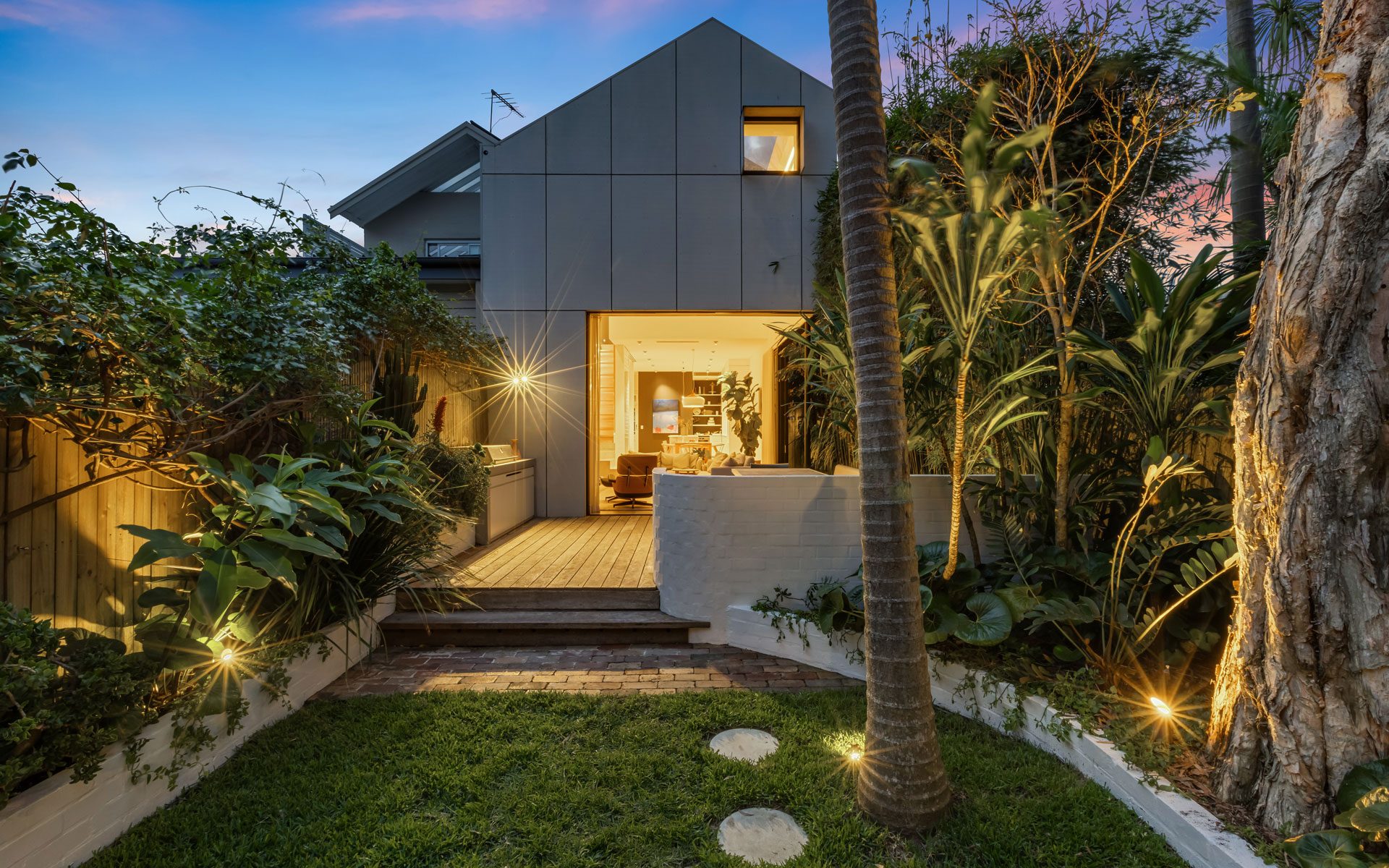
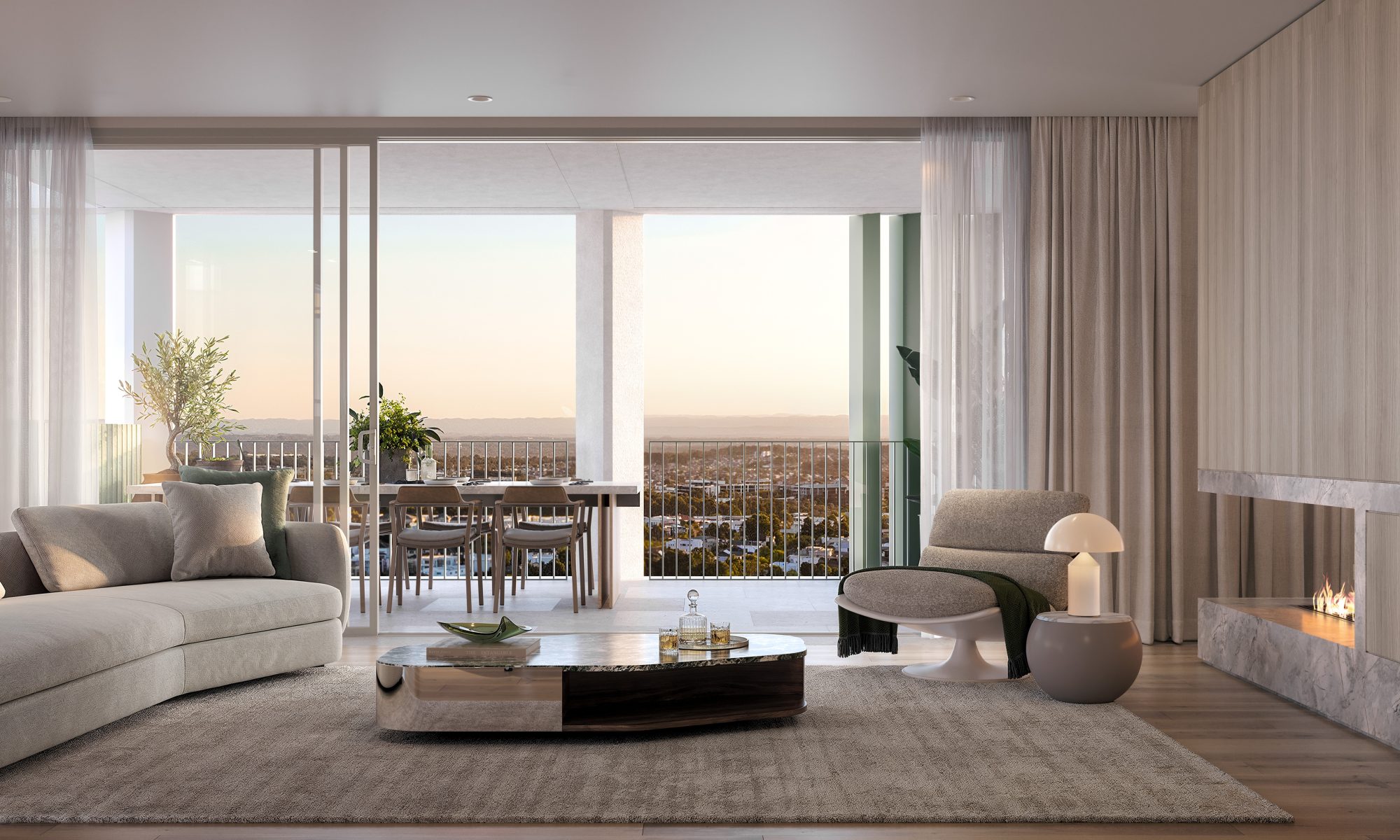
Property of the week: Penthouse, 601/12 Baptist St, Redfern

Long-term Sydney residents always had handful of not-so-glamourous nicknames for the building on the corner of Cleveland and Baptist Streets straddling Redfern and Surry Hills, but after a modern rebirth that’s all changed.

Once known as “Murder Mall” or “Methadone Mall”, the 1960s-built Surry Hills Shopping Centre was a magnet for colourful characters and questionable behaviour. Today, however, a $500 million facelift of the site — alongside a slow and steady gentrification of the two neighbouring suburbs — the prime corner property has been transformed into a luxury apartment complex Surry Hills Village by developer Toga Group.

The crowning feature of the 122-apartment project is the three-bedroom penthouse, fully completed and just released to market with a $7.5 million price guide.

Measuring 211sqm of internal space, with a 136sqm terrace complete with landscaping, the penthouse is the brand new brainchild of Surry Hills local Adam Haddow, director of architecture at award-winning firm SJB.

Victoria Judge, senior associate and co-interior design lead at SJB says Surry Hills Village sets a new residential benchmark for the southern end of Surry Hills.

“The residential offering is well-appointed, confident, luxe and bohemian. Smart enough to know what makes good living, and cool enough to hold its own amongst design-centric Surry Hills.”

Allan Vidor, managing director of Toga Group, adds that the penthouse is the quintessential jewel in the crown of Surry Hills Village.

“Bringing together a distinct design that draws on the beauty and vibrancy of Sydney; grand spaces and the finest finishes across a significant footprint, located only a stone’s throw away from the exciting cultural hub of Crown St and Surry Hills.”

Created to maximise views of the city skyline and parkland, the top floor apartment has a practical layout including a wide private lobby leading to the main living room, a sleek kitchen featuring Pietra Verde marble and a concealed butler’s pantry Sub-Zero Wolf appliances, full-height Aspen elm joinery panels hiding storage throughout, flamed Saville stone flooring, a powder room, and two car spaces with a personal EV.

All three bedrooms have large wardrobes and ensuites with bathrooms fittings such as freestanding baths, artisan penny tiles, emerald marble surfaces and brushed-nickel accents.

Additional features of the entertainer’s home include leather-bound joinery doors opening to a full wet bar with Sub-Zero wine fridge and Sub-Zero Wolf barbecue.

The Surry Hills Village precinct will open in stages until autumn next year and once complete, Wunderlich Lane will be home to a collection of 25 restaurants and bars plus wellness and boutique retail. The EVE Hotel Sydney will open later in 2024, offering guests an immersive experience in the precinct’s art, culture, and culinary offerings.


The Surry Hills Village penthouse on Baptist is now finished and ready to move into with marketing through Toga Group and inquiries to 1800 554 556.

New Zealand Inflation Eases, Opening Path for Big Rate Cuts

SYDNEY—New Zealand’s inflation rate returned to within the central bank’s target band for the first time since early 2021 in the third quarter, opening a path to more supersized interest-rate cuts in coming months.

The inflation rate ran at an annual pace of 2.2% in the quarter, near the midpoint of the desired 1% to 3% target band, with some economists warning that the Reserve Bank of New Zealand must continue lowering the official cash rate at speed as a neutral policy rate is still well off in the distance.

The annual increase in inflation compares with a rise of 3.3% in the second quarter, StatsNZ said Wednesday. Inflation rose by 0.6% in quarterly terms.

The inflation data justifies the 75 basis points of cuts announced so far since August, with the RBNZ stepping up the pace of lowering the official cash rate last week by joining the Federal Reserve in slashing by 50 basis points.

Economists warn that there is a risk that inflation will undershoot the target band in coming quarters, especially if the RBNZ backs away from more significant cuts.

The official cash rate has so far fallen to 4.75% from 5.50%, with a neutral policy rate likely closer to 3.00%, according to economists.

New Zealand’s farm-rich economy has been in and out of recession for years as the RBNZ proved to be one of the more aggressive central banks globally when combating the inflation surge that emerged after the Covid-19 pandemic.

Economic activity remains flat and in need of resuscitation, especially with growth in China, its main trading partner, in a slowdown, economists said.

Higher rents were the biggest contributor to the annual inflation rate, up 4.5%. Almost a fifth of the annual increase in the consumer-price index was due to rent prices.

Prices for local authority rates and payments increased 12.2% in the 12 months to the third quarter, StatsNZ said. Prices for cigarettes and tobacco also rose sharply in line with an annual excise-tax increase.

Still, lower prices for gasoline and vegetables helped to offset rising prices, StatsNZ added.

For Working Women in India, Staying Safe Can Feel Like a Full-Time Job

When Ajita Topo , a cook in an affluent neighbourhood in Delhi, leaves work in the evening, she holds her bag like a shield against her chest, keeps her fists clenched and carries a black umbrella with a very sharp end to ward off a possible attack.

She makes sure to wear lots of layers—no matter how hot it is—to deter someone from trying to grope her chest, and secures her bun with a sharp metal stick as an additional weapon.

Topo isn’t being paranoid. Last year, she was followed by two men when she left work after 10 p.m. She managed to scare them away by shouting as she passed homes with guards outside.

“Workplace, public transport, public places, we feel safe nowhere,” said Topo, the sole breadwinner for her two children. “The only solution is to stay alert at all times.”

For many women in India, taking steps to ward off a violent attack—and reassuring their families they are safe while at work and on their commutes—is an invisible form of labour that is a central element of their work life.

The killing and rape of a trainee doctor in the city of Kolkata in August was a fresh reminder for Indian women who work of the dangers lurking in public spaces where women are far less visible than men, from the deserted corners of a hospital or corporate park, in public transport or on city streets.

The 31-year-old was found dead in a seminar hall of the state-run hospital after she went on break during a night shift. A volunteer at the hospital has been arrested as a suspect. The killing prompted protests by women across the country.

Only 30% of women in India aged 15 to 64 were in the labour force in 2022, according to the International Labor Organization, as conservative values lead many families to discourage women working outside the home. In the U.S., the corresponding rate is 68%.

A decade ago, Indian laws dealing with crimes against women were overhauled in the wake of the gang-rape of a 23-year-old woman on a moving bus. But women’s rights advocates say that entrenched patriarchal attitudes haven’t budged significantly, and are at the root of frequent violence against women, both in the home and outside of it.

In other widely publicised incidents, female call centre workers have been assaulted and killed as they commuted to or from night shifts. Last year, a receptionist disappeared from the hotel where she worked and was found dead days later. Each time such a crime takes place, women experience another jolt of fear for their own safety.

Piyali Maiti , clinical director for counselling operations at 1to1help, which manages corporate assistance programs for employees, said worries sparked by the Kolkata attack have cropped up in conversations with employees and their family members in recent weeks.

Sometimes “young professionals are working out in a different city. So family members are also part of our concern group,” she said. “When we have sessions with them, they raise concerns for their child’s safety. ‘What can I do as a parent to make sure my child is safe?’”

For women working in healthcare, where they are a larger share of the workforce compared with many other occupations, but late night shifts and long hours are also common, the Kolkata attack has resonated especially deeply.

Amrita Bhattacharya , a 29-year-old medical resident at another hospital in the city, said she previously felt comfortable walking the distance—less than a mile—from her work to the hospital-provided women’s residence on her own at night. Now she asks a male colleague or friend to accompany her.

Earlier she used to chafe against rules at the residence, which include locking the facility’s doors after a certain hour.

“But now after the horrific incident, I feel being put under lock and key is a must in a society like ours,” she said. “It’s a strain to deal with such fear every day.”

Sexual-assault statistics indicate that women in India are more likely to be raped by a family member, romantic partner or friend, than an acquaintance, employer or stranger. Still, the highly publicised attacks on working women dovetail with existing beliefs held by many that a woman’s place is in the home, shaping decisions made by women and their families.

A Pew Research Center survey in 2019 found 40% of Indians think it is better for a marriage for men to provide while women take care of the home and children, significantly higher than the global median of 23%.

Some women choose to withdraw from work as soon as economic circumstances permit, while others prefer lower-paid work options close to home over travelling to more distant locations.

That perception that working in public is unsafe and homes are safe shows up in India’s newest employers—gig-work platforms. Companies that focus on deliveries have struggled to hire significant numbers of women; the lone exception is Urban Company, a platform that offers personal-care and repair services at home.

The pervasive sense that public spaces are unsafe also shapes company policy. Delivery platform Swiggy at one point limited delivery hours to before 6 p.m. for female workers. The company said in a 2021 blog post on its efforts to hire more women that it reversed the policy after realising it was barring women from earning during peak dinner hours.

Economists and researchers say the low share of Indian women in the workforce is costing India economic growth.

Economic privilege can offer an additional layer of security—such as a personal vehicle for commuting to work, or access to ride-share services that come with some inbuilt safety measures. But, nevertheless, the sense of insecurity persists.

Vidhi Pandey , a digital-marketing professional, has an almost 90-minute commute between her home in Gurgaon and her office in the Indian capital, and frequently attends evening events. If an international client is involved, her day can end at 2 a.m.

“Although my husband and mother have grown accustomed to my unconventional working hours, announcing a late night at the office still makes them lose their sleep,” said the 43-year-old.

Her mother frequently lobbies her to look for something closer to home even if it means earning less. But she has resisted the pressure. Instead, she reminds her mum of her extensive safety checklist.

When she books a cab, she makes sure to look at the driver’s performance rating and reads riders’ feedback regarding his behaviour. If she is wearing a skirt, she changes into something more covered up before getting into a taxi for her ride home.

On her phone, she keeps the Delhi Police panic button app open throughout the ride. The app, developed after the 2012 bus attack and called “Himmat” or “courage,” allows the user to quickly send an alert to the Delhi Police, with a link to the user’s location on Google Maps, as well as notifications to family and friends.

She makes sure to share her live location and trip status with her husband and at least one friend. Sometimes she keeps a phone call going with her mother or a friend throughout the car ride.

“I keep thinking about how to escape if something goes wrong,” said Pandey. “I dream of a day when our society is safe enough for me to travel alone anytime, anywhere without any fear or worry.”

The luxury property market embracing a surprising new approach to building the dream home

From the Spring issue of Kanebridge Quarterly. Order your copy here.

Design can achieve great things when environmentally enthusiastic homeowners have terrifically deep pockets. The rich and famous have long been ground-breakers in sustainable residential design, laying the foundations of a stealth-wealth aesthetic by funding innovative architects and new technologies.

Sustainability is now sexy with Hollywood heavyweights leading the charge.

Johnny Depp’s Bahamian island, Little Hall’s Pond Cay, cost him US$3.6 million in 2004 but the Pirates of the Caribbean star is rumoured to have spent millions more on enlisting the talents of home-brew hydrogen energy expert Mike Strizki to make the isle self-sufficient. Entourage actor Adrian Grenier, who hosts sustainability makeover TV show Alter Eco, has walked the talk with a house in Brooklyn, New York featuring walls insulated with recycled denim and rooftop gardens installed in an effort to eliminate the need for air conditioning.

Veteran actor Ed Begley Jr. famously built a luxury Californian home that achieved a LEED Platinum certification, the world’s most prestigious rating system for green buildings. He did it by recycling 96 percent of materials from the pre-existing house and adding a 9kw photovoltaic system and Tesla Power-wall.

Closer to home, in the early 2000s Cate Blanchett upcycled her former Sydney home with $1.5 million in renovations including a 20,000L water tank, high-tech solar panelling, low energy lighting and grey water recycling. Before eventually selling the Hunters Hill home and moving to London with husband Andrew Upton and their children, the pair were also instrumental in turning The Wharf Theatre green by installing approximately 2000 solar panels to provide 70 percent of the venue’s electricity and a system for rainwater harvesting.

Sean Triner, who works in environmental fundraising and is on the board of WWF Australia, wanted to challenge the idea that luxury and sustainability were mutually exclusive when he and his partner Christiana Stergiou built their Queensland home, Kingfisher House, in 2022.

Designed by PTMA Architecture and built by Kai Konstruct, the Currumbin Waters residence sits on a 5640sq m block, earned an energy-efficiency rating of 9.1 stars, featured twice in the national Sustainable House Day event and was the most-visited home in the Gold Coast Open House Architectural Festival in 2022 and 2023.

Kingfisher house sits on a 5640sqm block and has a 9.1 star rating.

“We wanted a sustainable house, but also wanted to be able to have a pool heater, charge our electric car, or turn the aircon on whenever we felt like it — basically we wanted to have it all,” he says. “Our idea was to show that you can reduce your carbon footprint dramatically and still get all those luxuries you might want.

“Usually when you’re designing a home, you want form, function and price. Does it do the job? Does it look nice? And can we afford it? We just added a fourth pillar — form, function, price and sustainability.”

The six-bedroom, barn-style smart home has a central courtyard with an automated roof, a wine cabinet opening to a secret games room in the attic, a solar-heated swimming pool, a self-contained pool house, a cyclone-rated zinc roof, a 20kw PV solar power system and 12kw battery store, two 27,000L water tanks and an underground garage with 7kw WallBox electric car charger.

“Another really simple but important thing is to consider fauna by planting local species. Everything we’ve done in terms of landscaping includes varieties from the region and edible plants that don’t harm the wildlife,” Triner adds. “As soon as we’d done the planting we started to see tracks of everything from echidnas to wallabies and have even seen koalas in our trees.”

Architect Chris Major, co-founder of Welsh+Major, says sustainability is a priority among many clients of high spec builds today.

“There’s a whole range of things clients are looking for. The obvious add ons are around water tanks and solar panels but batteries are fast becoming sought after, especially for those with bigger budgets. Reliability of power supply is a genuine concern,” she says.

“Many clients also want to make sure there are great sustainable choices made in materials and sometimes that comes with an extra price tag. When you’ve got deeper pockets, that’s something you can definitely do; support local designers over using potentially cheaper imported products.”

European brands are being consciously replaced with domestic alternatives.

“Our local designers are equally talented,” Major says. “We also have such beautiful materials in Australia and if we can source them sustainably here, that’s what we’re interested in.”

For a long time, bigger meant better in the built environment, but that obsession with larger-than-life luxury is falling out of fashion.

“Now it’s more about the quality of spaces rather than the biggest house possible,” she says. “The move is towards luxury in a more restrained way.”

Architect Chris Major says clients are now more interested in the quality of spaces more than the size of their homes. Image: Tom Ferguson

While intelligent architecture has always liked to push the envelope with the latest mod cons, the current environmental climate and recent natural disasters have had homeowners rethinking the their designer add ons.

“People are more conscious of the amount of energy that goes into building and running a home. It’s that idea of quality over quantity,” she says. “Passive solar design is really in focus now. It’s not that it was ever unfashionable, but some of these principles were forgotten in the midst of new technology.

“You can have solar panels, rainwater tanks, heat pumps and geothermal tech — which are all great — but they’re no substitute for just really good decisions around orientation, capturing cooling breezes and natural light.”

Savvy sustainable design can make a home a pleasure to live in, but really smart environmental decisions make for strong ROI, says David Medina of Sotheby’s International NSW, who regularly sells in the wealthy regional playgrounds of Byron Bay and the Southern Highlands.

“Sustainability is really important for buyers today,” he says. “Going back 15 years, one of the first questions I’d get asked was ‘Does it have access to power?’ That’s now moved from number one or two on the list to about number 10.” These days, he says, prestige purchasers are today more concerned about producing their own electricity.

David Medina says buyers for properties like Manar Homestead at Braidwood are keen to understand the sustainable features of luxury properties.

“In terms of resale, it’s a huge bonus to not be reliant on town power. Although they’re probably not as troubled by running costs as the average Australian, the luxury of living totally off-grid gives people a lot of strength. If there’s a storm or blackout and you’ve got a generator that kicks in to back up the battery then it gives them peace of mind.”

He says buyers also want enhanced water storage solutions, double or triple-glazed windows as well as savvy orientation to capture the best views, natural light and airflow. Some are even opting for small wind turbines.

“When homeowners are building they’re thinking further ahead than ever,” says Medina.  “Now the quality of products, the build quality, the architecture, is just developing at a rate of knots. I’m really excited to see what the next thing is going to be.”

Location, Location, Golf Simulator. A Developer Cracks the Office Market Code.

Manhattan’s office-vacancy rate climbed to more than 15% this year, a record high. About 80 miles away in Philadelphia, occupancy also is at historically low levels. But a 24-storey office tower located between the two cities has more than doubled its occupancy over the past five years.

Developer American Equity Partners bought the New Jersey office tower, known as 1 Tower Center, for $38 million in 2019. At the time, the 40-year-old building felt dated. It had no gym, tenant lounge or car-charging stations.  The low price enabled the firm to spend more than $20 million overhauling and luring tenants to the 435,000-square-foot property.

Now, the suburban building is nearly fully leased at competitive rents, mopping up tenants from other buildings after the owner added a new lobby, movie theatre, golf simulator, fitness centre and a tenant lounge featuring arcade games and ping-pong tables.

“Our tenants told us what they needed in order to fill up their offices,” said David Elkouby , a co-founder of American Equity, which owns about 4 million square feet of New Jersey office space.

The new owner also liked the location at the 14-acre hotel and conference-centre complex, off the New Jersey Turnpike’s Exit 9 in East Brunswick. The site is a relatively short commute for millions of workers in central New Jersey and is passed by 160,000 vehicles daily.

The property’s turnaround shows how office buildings can thrive even during dismal times for most of the U.S. office market, where vacancies remain much higher than pre pandemic.

Success often requires an ideal location—one that shortens the commute time of employees used to working at home—and the sort of upgrades and amenities companies say are necessary to lure employees back to the workspace.

One Vanderbilt, a deluxe office tower with a Michelin-star chef’s restaurant and plenty of outdoor space in Midtown Manhattan, is fully leased while charging some of the highest rents in the country.

The 11-story Entrada office building, in Culver City, Calif., is making the same formula work on the other coast. It opened two years ago with a sky deck, concierge services and recessed balconies. A restaurant is in the works. The owner said this month that it has signed three of the largest leases in the Los Angeles area this year.

1 Tower Center shows how the strategy can be effective even in less glamorous suburban locations. The tower is prospering while neighbouring buildings that are harder to reach with outdated facilities and poor food options struggle to fill desks even at reduced rents.

The recent interest-rate cut and reports that some big companies such as Amazon .com are re-instituting a five-day office workweek have raised hopes that the office market might be getting closer to turning.

But with more than 900 million square feet of vacant space nationwide and remote work still weighing on office demand, more creditors are seizing properties that are in default on debt payments.

Rates are still much higher than they were when tens of billions of dollars of office loans were made, and much of that debt is now maturing. The recent interest-rate cut doesn’t mean “office-sector woes are now over,” said Ermengarde Jabir, director of economic research for Moody’s commercial real-estate division.

Lenders are dumping distressed properties at steep discounts to what the buildings were worth before the pandemic. Some buyers are trying to compete simply by cutting their rents.

“Most owners don’t have the wherewithal to do what is required,” said Jamie Drummond, the Newmark senior managing director who is 1 Tower Center’s leasing agent. “Owners positioned to highly amenitise their buildings are the ones who are successful.”

HCLTech, a global technology company, illustrates the appeal. It greatly expanded its presence in New Jersey by moving this year to a 40,000-square-foot space designed for its East Coast headquarters at 1 Tower Center.

The India-based company said it was drawn to the building’s amenities and design. That made possible a variety of workspaces for employees, from quiet nooks to an artificial-intelligence lab. “You can’t just open an office and expect [employees] to be there,” said Meenakshi Benjwal , HCLTech’s head of Americas marketing.

HCLTech also liked the location near the homes of its employees and clients in the pharmaceutical, financial-services and other businesses.

Finally, it didn’t hurt that the building is a short drive from nearby MetLife Stadium. The company has a 75-person suite on the 50 yard line where it entertains clients at concerts and National Football League games.

“All of our clients love to fly from distant locations to experience the suite and stadium,” Benjwal said.

Should You Be Nice to Your Chatbot?

California couple Vikas Choudhary and Ridhi Sahni can’t agree on one thing: How polite must one be with ChatGPT?

Choudhary, the founder of an artificial intelligence startup based in Palo Alto, has fawned over the chatbot from OpenAI ever since it helped him squash a massive bug in his code.

“You’re a rock star,” he once told the AI chatbot.

“I’m super thankful for it, and I thank it quite a bit actually—especially if I think I was rude to it earlier,” said Choudhary.

His wife couldn’t care less. “If I’m using a microwave, I don’t go like: ‘Dear LG, Please heat this up.’ I just press a button and get on with my day,” said Sahni, who also works at a tech company.

She uses ChatGPT to generate cute greeting cards for friends’ babies.

“I think of this as purely transactional,” she said.

As talking to chatbots is now becoming more like normal conversations, AI users face an awkward ethical dilemma: Bots are programmed to be polite, but do we have to reciprocate? Is it wrong to speak harshly to them?

The debate has spilled onto social media where many people say one should practice politeness even with bots. Others think wasting kind words conversing with code is inefficient.

“I know AI isn’t real but it feels so rude if I don’t greet and thank it,” one user wrote on Reddit, prompting hundreds of comments and a lively debate over whether bots are keeping tabs on who is nice to them.

Some shot back with sarcasm. “AI will want to extinguish human race but not that one, he said ‘please and thank you’ 30 years ago to my 4.0 version,” one user wrote.

“I treat chatgpt like it’s my servant,” another said.

A recent survey showed Americans are split on being polite to AI. About 48% of 2,000 Americans surveyed by Talker Research thought it was important, with Gen Z respondents being the friendliest to bots. Around 27% of people agreed it was OK to be rude with or shout at bots.

One study out of Japan—a place where rules of etiquette are ironclad—concluded that being nice to ChatGPT can pay off. Impolite prompts “may lead to increased bias, incorrect answers, or refusal of answers,” the researchers found.

They found that the thesis held true across English, Japanese and Chinese.

Microsoft , which has added chatbots to its top products, says AI may not react well to bad behaviour as it is built to mimic human reactions.

“If you speak to the model rudely, you can expect it to be difficult with you too,” said Microsoft’s Chief Scientist Jaime Teevan.

“Just like humans, AI can’t always be the bigger person,” Microsoft said in a blog post.

Offering tips

Engineers say it helps to add phrases like “take a deep breath” to make models produce better answers. They joke that generative AI has a “praise kink” for its apparent need for positive affirmations and potential rewards.

In one experiment, ChatGPT gave longer answers when lured with a tip. The results indicated that responses were 11% longer when offered a $200 tip and 6% longer for a $20 tip. No real tips were paid during the experiment.

“The litmus test for how good a person you are is if you are nice to a waiter,” said Alana O’Grady, an executive at a tech startup based in San Mateo, Calif. “In the future, it’ll be how kind you are to your AI companion.”

O’Grady has used ChatGPT for a host of activities—from summarising reams of documents at work to recommendations for a family vacation to Lake Tahoe.

Her interactions start with a “Could you please” and end with “Great job,” or “That’s perfect!”

“People will think I’m crazy if they see how I talk to a computer,” she said.

Now O’Grady is training her children on the right etiquette by being polite to Apple ’s virtual assistant, Siri, around them. Her 4-year-old daughter recently said “I love you” to Siri.

Judith Martin—the author behind decades of “Miss Manners” books and columns on etiquette—suggests people be polite. She even thinks getting Siri or Amazon Alexa’s attention with a “Hey” is unacceptable.

“When it is one’s constant companion—and particularly in the presence of children—such devices should be treated with civility,” she wrote in one column .

Others disagreed, saying there should be a distinction between how people talk with people vs. bots.

‘Helps me to calm down’

Some humans are now turning to AI for help with etiquette. Frankfurt-based software developer Laszlo Deak uses a chatbot to vent and translate his work frustrations into polite prose.

He asked ChatGPT how to constructively tell another team that their product was bad. It suggested using kinder phrases to say it wasn’t working as well as expected.

“When you’re in the moment and angry, it takes extra effort to rephrase the whole thing,” said Deak. Reading ChatGPT’s iteration “helps me to calm down.”

He has also used ChatGPT to draft Slack messages to colleagues when they’re being difficult.

Mazen Lahham, a Dubai-based tech executive, said his company’s AI was better at satisfying angry and aggressive callers than its human call-centre workers.

“The AI learned to absorb and react in a calm, professional manner, something that can be very challenging for a human,” he wrote in a LinkedIn post.

Choudhary, the Palo Alto-based startup founder, is betting his good behaviour might pay off someday. “In the future if the AI overlords take over, I just want them to remember that I was polite.”

Why Iconic Brands Struggle With Innovation

Emphasising a product’s heritage can be a powerful marketing tool. Think of brands like Coca-Cola or Converse’s Chuck Taylor All Star sneakers.

But the strategy could have a big drawback, according to research . When a brand emphasises its past, customers are less likely to buy its updates and innovations. A food company that heavily promotes its classic recipe, for instance, could have a tough time getting customers to buy a new variation on the product. The reluctance is particularly strong if people think the brand has stood the test of time and is authentic the way it is.

When you change an original product, it challenges why many people like the product in the first place, says Rosanna Smith, an associate professor at the University of Illinois Urbana-Champaign and one of the paper’s co-authors.

“We call it the curse of the original, and the question is how to update a product that is considered an icon without enraging your customers,” says Smith.

The shock of the new

In one part of the study, 418 participants read about a fictional hand-cream company and its top lotion. Participants were either told the company was established in 1917 with “deep roots in the old world French apothecary” or that it was established in 2017. Then the participants were either told the hand lotion was developed when the company was founded or was a new and improved version of the original.

All participants tried the same lotion and rated it on a nine-point scale, with nine being most favourable. When it came to the 1917 company, people rated the classic formula much higher than the new one: The original got a 6.68, while the new one averaged only 6.09. In other words, people didn’t like a venerable brand that tried to innovate as much as a brand that stuck to its roots.

Meanwhile, participants who were told the company started in 2017 rated the original and improved hand creams similarly.

“One big limitation of heritage branding is that it makes it harder to innovate,” says Smith. “But there are ways to lessen the effect.”

Back to basics

For instance, in another experiment, 602 participants read about Fratellino, a fictional Italian-food brand launched in 1911 when founder Martina Fratellino began selling tomato sauce from her front porch. The participants were told the brand would be improving its original tomato-sauce recipe.

The people were then divided into three groups. The control group was told the company was proud to introduce the new formula. The second group was told the new sauce was a bold departure from the original recipe, while the third was told the change was inspired by traditional techniques Martina used to create her tomato sauce in 1911 and that the change was a return to the company’s beginnings.

The authors found that participants in the control group rated the new tomato sauce less favourably than the original, giving it a score of 6.0, compared with 7.2 for the original. Simply doing something novel hurt the tradition-heavy company. The new product did even worse among people who heard that it was a bold departure: The new item got a 5.57, compared with 7.19 for the original.

But in the third group, where the change was framed as grounded in the product’s origins, the scores for the original and new tomato sauces didn’t significantly differ.

“Stressing the connection to the brand’s origins may have made the update seem more authentic,” says Smith.

Worldwide Efforts to Reverse the Baby Shortage Are Falling Flat

Imagine if having children came with more than $150,000 in cheap loans, a subsidised minivan and a lifetime exemption from income taxes.

Would people have more kids? The answer, it seems, is no.

These are among the benefits—along with cheap child care, extra vacation and free fertility treatments—that have been doled out to parents in different parts of Europe, a region at the forefront of the worldwide baby shortage. Europe’s overall population shrank during the pandemic and is on track to contract by about 40 million by 2050, according to United Nations statistics.

Birthrates have been falling across the developed world since the 1960s. But the decline hit Europe harder and faster than demographers expected—a foreshadowing of the sudden drop in the U.S. fertility rate in recent years.

Reversing the decline in birthrates has become a national priority among governments worldwide, including in China and Russia , where Vladimir Putin declared 2024 “the year of the family.” In the U.S., both Kamala Harris and Donald Trump have pledged to rethink the U.S.’s family policies . Harris wants to offer a $6,000 baby bonus. Trump has floated free in vitro fertilisation and tax deductions for parents.

Europe and other demographically challenged economies in Asia such as South Korea and Singapore have been pushing back against the demographic tide with lavish parental benefits for a generation. Yet falling fertility has persisted among nearly all age groups, incomes and education levels. Those who have many children often say they would have them even without the benefits. Those who don’t say the benefits don’t make enough of a difference.

Two European countries devote more resources to families than almost any other nation: Hungary and Norway. Despite their programs, they have fertility rates of 1.5 and 1.4 children for every woman, respectively—far below the replacement rate of 2.1, the level needed to keep the population steady. The U.S. fertility rate is 1.6.

Demographers suggest the reluctance to have kids is a fundamental cultural shift rather than a purely financial one.

“I used to say to myself, I’m too young. I have to finish my bachelor’s degree. I have to find a partner. Then suddenly I woke up and I was 28 years old, married, with a car and a house and a flexible job and there were no more excuses,” said Norwegian Nancy Lystad Herz. “Even though there are now no practical barriers, I realised that I don’t want children.”

The Hungarian model

Both Hungary and Norway spend more than 3% of GDP on their different approaches to promoting families—more than the amount they spend on their militaries, according to the Organization for Economic Cooperation and Development.

Hungary says in recent years its spending on policies for families has exceeded 5% of GDP. The U.S. spends around 1% of GDP on family support through child tax credits and programs aimed at low-income Americans.

Hungary’s subsidised housing loan program has helped almost 250,000 families buy or upgrade their homes, the government says. Orsolya Kocsis, a 28-year-old working in human resources, knows having kids would help her and her husband buy a larger house in Budapest, but it isn’t enough to change her mind about not wanting children.

“If we were to say we’ll have two kids, we could basically buy a new house tomorrow,” she said. “But morally, I would not feel right having brought a life into this world to buy a house.”

Promoting baby-making, known as pro natalism, is a key plank of Prime Minister Viktor Orbán ’s broader populist agenda . Hungary’s biennial Budapest Demographic Summit has become a meeting ground for prominent conservative politicians and thinkers. Former Fox News anchor Tucker Carlson and JD Vance, Trump’s vice president pick, have lauded Orbán’s family policies.

Orbán portrays having children inside what he has called a “traditional” family model as a national duty, as well as an alternative to immigration for growing the population. The benefits for child-rearing in Hungary are mostly reserved for married, heterosexual, middle-class couples. Couples who divorce lose subsidised interest rates and in some cases have to pay back the support.

Hungary’s population, now less than 10 million, has been shrinking since the 1980s. The country is about the size of Indiana.

“Because there are so few of us, there’s always this fear that we are disappearing,” said Zsuzsanna Szelényi, program director at the CEU Democracy Institute and author of a book on Orbán.

Hungary’s fertility rate collapsed after the fall of the Soviet Union and by 2010 was down to 1.25 children for every woman. Orbán, a father of five, and his Fidesz party swept back into power that year after being ousted in the early 2000s. He expanded the family support system over the next decade.

Hungary’s fertility rate rose to 1.6 children for every woman in 2021. Ivett Szalma, an associate professor at Corvinus University of Budapest, said that like in many other countries, women in Hungary who had delayed having children after the global financial crisis were finally catching up.

Then progress stalled. Hungary’s fertility rate has fallen for the past two years. Around 51,500 babies have been born there this year through August, a 10% drop compared with the same period last year. Many Hungarian women cite underfunded public health and education systems and difficulties balancing work and family as part of their hesitation to have more children.

Anna Nagy, a 35-year-old former lawyer, had her son in January 2021. She received a loan of about $27,300 that she didn’t have to start paying back until he turned 3. Nagy had left her job before getting pregnant but still received government-funded maternity payments, equal to 70% of her former salary, for the first two years and a smaller amount for a third year.

She used to think she wanted two or three kids, but now only wants one. She is frustrated at the implication that demographic challenges are her responsibility to solve. Economists point to increased immigration and a higher retirement age as other offsets to the financial strains on government budgets from a declining population.

“It’s not our duty as Hungarian women to keep the nation alive,” she said.

Big families

Hungary is especially generous to families who have several children, or who give birth at younger ages. Last year, the government announced it would restrict the loan program used by Nagy to women under 30. Families who pledge to have three or more children can get more than $150,000 in subsidised loans. Other benefits include a lifetime exemption from personal taxes for mothers with four or more kids, and up to seven extra annual vacation days for both parents.

Under another program that’s now expired, nearly 30,000 families used a subsidy to buy a minivan, the government said.

Critics of Hungary’s family policies say the money is wasted on people who would have had large families anyway. The government has also been criticised for excluding groups such as the minority Roma population and poorer Hungarians. Bank accounts, credit histories and a steady employment history are required for many of the incentives.

Orbán’s press office didn’t respond to requests for comment. Tünde Fűrész, head of a government-backed demographic research institute, disagreed that the policies are exclusionary and said the loans were used more heavily in economically depressed areas.

Eszter Gerencsér and her husband, Tamas, always wanted a big family. Photo: Akos Stiller for WSJ

Government programs weren’t a determining factor for Eszter Gerencsér, 37, who said she and her husband always wanted a big family. They have four children, ages 3 to 10.

They received about $62,800 in low-interest loans through government programs and $35,500 in grants. They used the money to buy and renovate a house outside of Budapest. After she had her fourth child, the government forgave $11,000 of the debt. Her family receives a monthly payment of about $40 a month for each child.

Most Hungarian women stay home with their children until they turn 2, after which maternity payments are reduced. Publicly run nurseries are free for large families like hers. Gerencsér worked on and off between her pregnancies and returned full-time to work, in a civil-service job, earlier this year.

She still thinks Hungarian society is stacked against mothers and said she struggled to find a job because employers worried she would have to take lots of time off.

The country’s international reputation as family-friendly is “what you call good marketing,” she said.

Gina Ekholt said the government’s policies have helped offset much of the costs of having a child. Photo: Signe Fuglesteg Luksengard for WSJ

Nordic largesse

Norway has been incentivising births for decades with generous parental leave and subsidised child care. New parents in Norway can share nearly a year of fully paid leave, or around 14 months at 80% pay. More than three months are reserved for fathers to encourage more equal caregiving. Mothers are entitled to take at least an hour at work to breast-feed or pump.

The government’s goal has never been explicitly to encourage people to have more children, but instead to make it easier for women to balance careers and children, said Trude Lappegard, a professor who researches demography at the University of Oslo. Norway doesn’t restrict benefits for unmarried parents or same-sex couples.

Its fertility rate of 1.4 children per woman has steadily fallen from nearly 2 in 2009. Unlike Hungary, Norway’s population is still growing for now, due mostly to immigration.

“It is difficult to say why the population is having fewer children,” Kjersti Toppe, the Norwegian Minister of Children and Families, said in an email. She said the government has increased monthly payments for parents and has formed a committee to investigate the baby bust and ways to reverse it.

More women in Norway are childless or have only one kid. The percentage of 45-year-old women with three or more children fell to 27.5% last year from 33% in 2010. Women are also waiting longer to have children—the average age at which women had their first child reached 30.3 last year. The global surge in housing costs and a longer timeline for getting established in careers likely plays a role, researchers say. Older first-time mothers can face obstacles: Women 35 and older are at higher risk of infertility and pregnancy complications.

Gina Ekholt, 39, said the government’s policies have helped offset much of the costs of having a child and allowed her to maintain her career as a senior adviser at the nonprofit Save the Children Norway. She had her daughter at age 34 after a round of state-subsidised IVF that cost about $1,600. She wanted to have more children but can’t because of fertility issues.

She receives a monthly stipend of about $160 a month, almost fully offsetting a $190 monthly nursery fee.

“On the economy side, it hasn’t made a bump. What’s been difficult for me is trying to have another kid,” she said. “The notion that we should have more kids, and you’re very selfish if you have only had one…those are the things that took a toll on me.”

Her friend Ewa Sapieżyńska, a 44-year-old Polish-Norwegian writer and social scientist with one son, has helped her see the upside of the one-child lifestyle. “For me, the decision is not about money. It’s about my life,” she said.