





Property of the week: 185 Morgans Mill Rd, Bearii
The expansive estate is being offered for sale for the first time in 18 years
 2 min
2 min


Finding the time to hit the fairway isn’t a problem for anyone sporting their own golf course at home. Clarendon Eyre alongside the iconic Murray River in northern Victoria is a rural retreat with a difference — it’s home to five holes, complete with manicured fairways, genuine bunkers and a turquoise ornamental lake.
The Miller family bought the expansive estate as a traditional farm 18 years ago and set about turning the 105ha parcel into an all generations playground. Almost two decades later, Josh Miller and his wife Steph Claire Smith, a fitness influencer who recently appeared on Forbes’ 30 Under 30 list, got hitched at the picturesque property that holds a special place in their hearts.
“My wife and I first met there after her parents bought a property one paddock across. She was 12, I was 15, and in 2019 we had our wedding at the property so it’s really full of memories for us.”
The project manager and photographer is one of four siblings who grew up at Clarendon Eyre.
“I spent a lot of my life riding motorbikes and playing golf there. When we first bought it, there were a few very basic sand scraped greens. One day our Dad, who’s a retired horticulturist, bought a bag of golf balls off eBay and we started hitting them into the bush, but he had a better idea. One green turned into two, then three, four and five!” Miller adds.
Designed to replicate Augusta National, the rare private course features Santa Ana couch and Mackenzie Bent grass and has been meticulously maintained by a full-time team using top-tier equipment, all negotiable in the sale.
Nathan Verwoert and Robert Fletcher of Forbes Global Properties are marketing the 105ha property with a price guide of $8 million to $8.8 million.
“I’ve been in this job since 2009 and I get to see some pretty beautiful homes, but this just blows your mind. When you arrive, the property just comes out of left field and is such an oasis. It’s certainly one of the most unique properties I’ve ever had the pleasure of selling,” Verwoert says.
“It’s been a real labour of love for this family, who over a couple of decades have improved it and created their own sanctuary over the course of the time.”
Clarendon Eyre’s main residence is a tale of two houses, one is the former Mornington Art Gallery while the other was a weatherboard from Malvern in Melbourne. Both were relocated and connected to create an impressive seven-bedroom, five-bedroom homestead.
To marry the pair of properties, an architectural ‘bridge’ was conceived and now plays host to an expansive formal dining space that caters for up to 18 people and flows out to a shady alfresco area.
Neighbouring the landmark river which separates the two states, the Bearii estate is flanked by grand red gums, palm trees and space for rolling paddocks. Beyond the unique personal golf course, the land also houses an upgraded tennis court, a basketball court, a heated pool, spa and an Olympic built-in trampoline.
Following a recent refurbishment, the house has high-end features including Kustom timber floors, porcelain bench tops, automatic DIY Blinds, Control4 smart technology and Sonos sound system throughout including the home cinema.
The Bearii property is approximately a three-hour drive, or 45 minute helicopter journey, from Melbourne.
Clarendon Eyre is listed via an expressions of interest campaign through Forbes Global Properties with a price guide of $8 million to $8.8 million.

From making unpopular decisions to learning when to listen, leaders from five businesses reveal what nobody prepared them for — and how running a company has challenged their expectations.

Technology and semiconductor shares fell sharply as investors questioned the debt financing the AI infrastructure boom and confronted higher rates and Chinese competition.

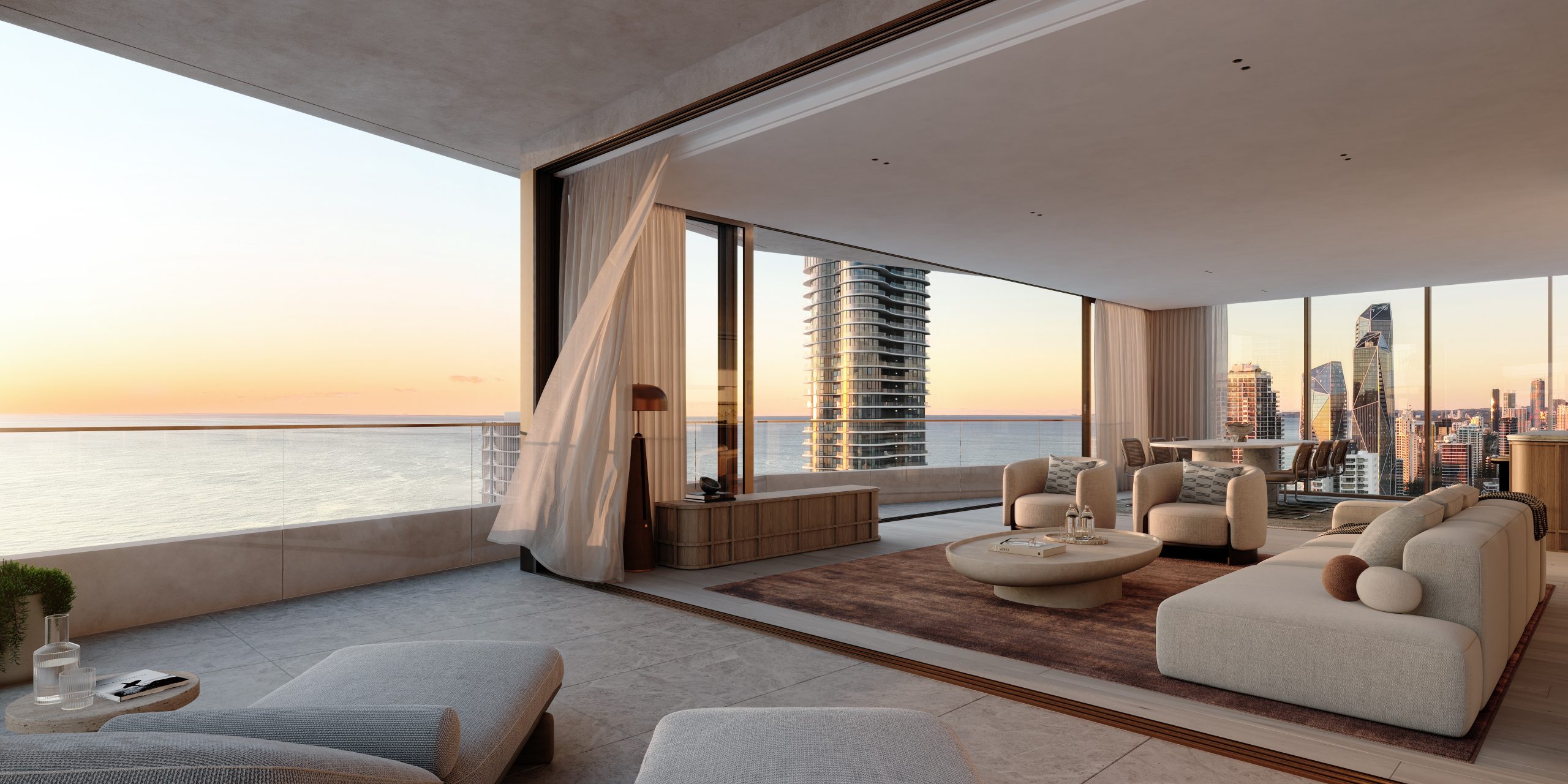
Mirvac’s 45-level Trielle has topped out at Yarra’s Edge, pairing riverfront apartments with wellness facilities, private dining and resident services.
3 min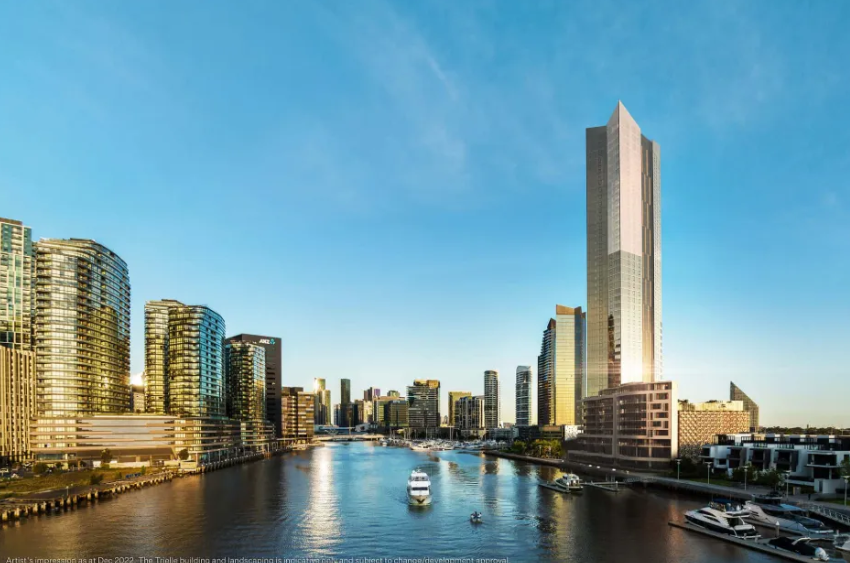
Mirvac has topped out Trielle at Melbourne’s Yarra’s Edge, with more than 70 per cent of the riverfront development sold and approximately 80 per cent of purchasers intending to make their apartment a home.
The figures, released on September 22, point to an owner-occupier audience for one of the precinct’s final residential towers. Mirvac began developing Yarra’s Edge in 2003, and its latest addition occupies one of the remaining absolute riverfront sites.
Mirvac CEO of Development Stuart Penklis said existing residents were among those moving up within the neighbourhood.
“Many purchasers already have a connection to Yarra’s Edge,” Mr Penklis said, describing buyers whose changing needs were encouraging an upgrade within the precinct.
“As one of the final residential towers within Yarra’s Edge, Trielle represents the culmination of more than two decades of creating one of Melbourne’s most established and sought-after waterfront communities,” Penklis said.
“Positioned on the Collins Street axis with absolute river frontage, Trielle offers residents a rare opportunity to enjoy sweeping views across the Yarra River, Melbourne skyline and Port Phillip Bay, while remaining seamlessly connected to the CBD. With Trielle now more than 70 per cent sold, we’re continuing to see strong demand from buyers seeking quality homes in established locations.”
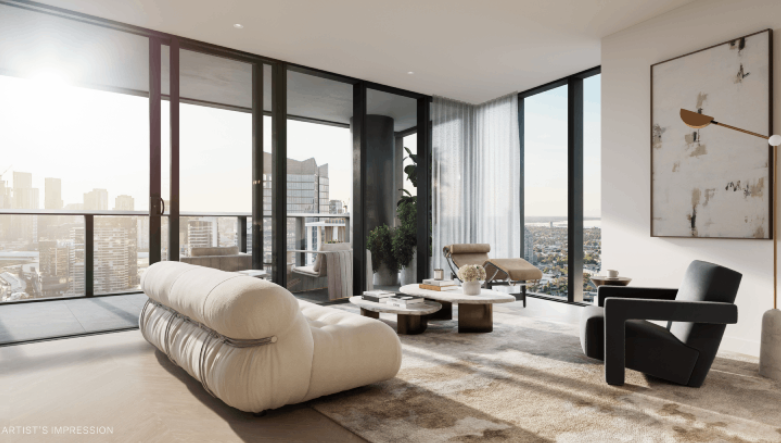
The developer also flagged a penthouse and sub-penthouse collection with larger layouts, premium finishes and broad outlooks. The planned wellness centrepiece, The Oasis, encompasses a 900-square-metre elevated urban rainforest.
Mirvac General Manager Residential Development Victoria Elysa Anderson said Trielle had resonated strongly with buyers seeking a rare lifestyle offering in Melbourne.
“Opportunities to secure a new luxury residence on a riverfront site of this calibre are incredibly rare, particularly within a community like Yarra’s Edge,” Anderson said.
“What makes Trielle unique is the combination of exceptional views, world-class residential facilities and the lifestyle that already exists around it. Residents are buying into a mature waterfront community with parks, promenades, dining, wellness and strong community connections already in place.”
The 45-level tower brings a substantial new presence to that waterfront. Its residential offering spans one-, two-, three- and four-bedroom apartments, with Signature, Prestige and Sub-Penthouse collections accommodating different household sizes. The north-facing position connects the apartments visually to the river and city beyond.
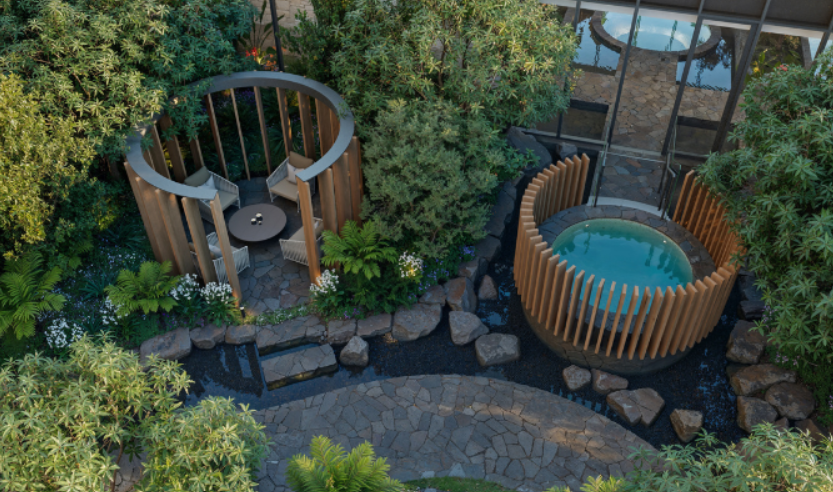
Seven storeys above the promenade, the planned Oasis combines planting and a running stream with a Scandinavian-inspired wellness club developed with spa specialist Naomi Gregory. Facilities include a 25-metre lap pool, hot magnesium pool, sauna, hydrotherapy, a gym, yoga and Pilates room, and treatment spaces.
The amenity extends beyond exercise. Residents will have access to The Biblioteca library and workspaces, ground-floor work pods, and The Salone piano lounge. A private Chef’s Table dining room offers a setting for larger gatherings, while a cinema, games room and sports lounge broaden the entertaining options. Concierge services and a dog-wash area support everyday routines.
Trielle comprises a collection of one, two, three and four-bedroom residences. Reflecting strong demand from owner occupiers, approximately 80 per cent of purchasers to date intend to live in their homes, highlighting the project’s appeal to those seeking a long-term waterfront lifestyle.
Mirvac has recently delivered The Albertine, a premium apartment development on the edge of Melbourne’s CBD, and is nearing completion of Prince & Parade in Brunswick, further strengthening its portfolio of thoughtfully designed apartment communities in some of Melbourne’s most sought-after urban locations.

A 30-metre masterpiece unveiled in Monaco brings Lamborghini’s supercar drama to the high seas, powered by 7,600 horsepower and unmistakable Italian design.

Now complete, Ophora at Tallawong offers luxury finishes, 10-year defect insurance and standout value from $475,000.


