Revealed: Sydney’s Most Expensive Suburbs to Rent
Sydney’s rental market is hitting new highs, with prime suburbs now topping $2,000 a week.
 4 min
4 min
Sydney is well and truly on the world map when it comes to luxury residential property, rivalling—and even beating—the likes of Tokyo and Dubai in terms of price per square metre.
The harbour capital has also proven itself to be a powerhouse for luxury residential rental growth. Knight Frank’s Prime Global Rental Index Q4 2024 showed prime rents across Sydney grew 4.7 per cent over 2024, the fifth-highest growth globally.
This has pushed several of Sydney’s top suburbs over the $2,000 per week median rent mark for a house, with surrounding areas fast approaching the milestone.
We’ve wrapped up the most expensive suburbs to live in across Sydney, with data sourced from property data analytics firm CoreLogic.
1. Vaucluse: Median purchase: $8.69m; Median rent: $2,198
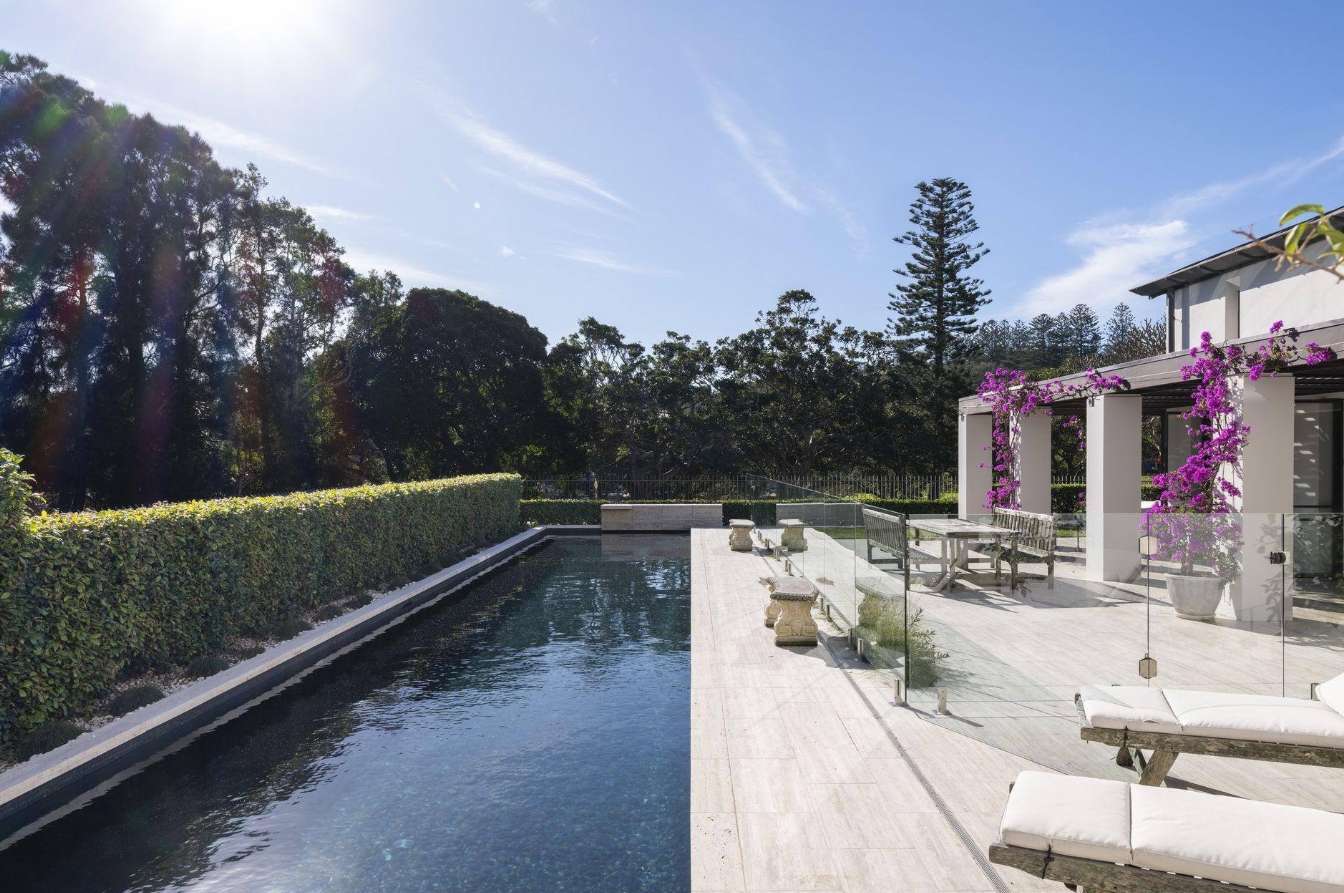
Vaucluse has consistently ranked as Sydney’s most expensive suburb for rental properties over the past few years, even with annual rents contracting by over 14 per cent. What sets it apart is its unique geography—it’s the only suburb in the Eastern Suburbs that stretches from the harbour to the ocean. Homes in Vaucluse top the price charts because most either boast Sydney Harbour views or enjoy uninterrupted outlooks over the Pacific Ocean.
The Neighbourhood
While most Eastern Suburbs have one main beach, Vaucluse is dotted with several secluded spots, such as Parsley Bay, Milk Beach, and the recently reopened Shark Beach, which had been closed for several years due to retaining wall repairs.
2. Dover Heights: Median purchase: $6.38m; Median rent: $2,024
Vaucluse’s immediate southern neighbour, Dover Heights, is the only other suburb in Sydney with a median house rental over $2,000. Dover Heights hugs the cliffs and is well known as one of the most tightly held house markets in the Eastern Suburbs. The homes are perched on the cliffside, and the majority of houses in the area have at least four bedrooms, pushing up prices.
The Neighbourhood
While there are no beaches to speak of, its elevated position provides some of the highest views of Sydney Harbour. It is also home to the Federation Cliff Walk, a five-kilometre clifftop walk with postcard views of the Pacific Ocean from Dover Heights to Watsons Bay.
3. Bronte: Median purchase: $5.64m, Median rent: $1,963
Bronte takes out the title of the most expensive of the ‘typical’ Eastern Suburbs beachside suburbs. Just 30 per cent of homes in Bronte are separate houses, with nearly half being apartments. Houses in the rental pool are typically original homes dating back to the 1960s that have been renovated over the last decade or so.
The Neighbourhood
Bronte has long been a favourite due to its more relaxed beachside lifestyle compared to the busier Bondi, although Bronte is no longer a ‘hidden gem’ anymore. It offers numerous lifestyle perks, from a small high street lined with shops and cafés to several eateries located by the beach, which also features one of the best natural ocean pools in the Eastern Suburbs.
4. North Bondi: Median purchase: $4.81m; Median rent: $1,932
North Bondi has become a hotbed of new homes, with frequent sales of either original houses or older apartment complexes being bought to be demolished and replaced by brand-new contemporary builds. There’s a mix of original cottages and new homes in the rental pool, the latter fetching over $7,000 a week.
The Neighbourhood
North Bondi is situated in a small pocket, just south of Dover Heights and north of Bondi Beach. Starting at the Ben Buckler Peninsula, near where Campbell Parade transitions into Military Road, North Bondi is one of the most secluded areas on the coastline, with Hastings Parade, Brighton Boulevard, and Ramsgate Avenue all offering a southward view over the sand.
5. Balgowlah Heights: Median purchase: $4.13m; Median rent: $1,930
Balgowlah Heights is the most expensive suburb to rent a house in the Northern Beaches. Land sizes tend to be much larger, and you get more for your money in the area compared to the East.
The Neighbourhood
Balgowlah Heights is the harbourside southern neighbour of Balgowlah. The Sydney Harbour National Park occupies half of the leafy suburb, part of the Manly to Spit Bridge Walk, and is home to Tania Park, with a children’s playground and sporting facilities overlooking Manly Cove. Nestled on the northern shores of Sydney Harbour, it offers a serene and leafy environment.
6. Bellevue Hill: Median purchase: $10.63m; Median rent: $1,917
Bellevue Hill stands as one of Sydney’s most prestigious suburbs and has some of the largest houses by median land size.
Given the large gap between median purchase price and median rental price, it is no wonder renters want to live among $10m homes and pay under $2,000 a week, when a $10m purchase means $2m deposit, over $500k in stamp duty, and roughly $12,000 a week in repayments.
Most mansions will never make it to public rental sites and are often snapped up by Hollywood stars, musicians, or even royalty when they visit Australia.
The Neighbourhood
One of the biggest drawcards for those living in Bellevue Hill is the proximity to two of the country’s top schools. While there are no catchment areas for private schools, Cranbrook School and Scots College will always draw affluent families to the suburb. Scots fees start at around $30,000 per annum from Year One and reach nearly $50,000 by Year 12.
Sydney’s Cheapest Suburb: Tregear; Median purchase: $782,000; Median rent: $544
The cheapest suburb to rent in Sydney is Tregear, located on the outskirts of Mt Druitt, approximately 50 km west of the CBD. The median house rental is $544, which is four times cheaper than renting a house in Vaucluse. The median house price in Tregear is $782,000, around 12 times less than Vaucluse.
Sydney’s Best Suburb: Point Piper
If money were no object, it’s hard to look past Sydney’s most affluent suburb as the top pick for the best place to live in the city, in my opinion.
It doesn’t even have an actual median house price, simply because so few properties change hands. Last year, just five houses sold, ranging from $8 million to $51.5 million. Homes on the best streets offer gun-barrel views of the Harbour Bridge and the Opera House, while the cosmopolitan Double Bay next door provides all the lifestyle conveniences.

From making unpopular decisions to learning when to listen, leaders from five businesses reveal what nobody prepared them for — and how running a company has challenged their expectations.

Technology and semiconductor shares fell sharply as investors questioned the debt financing the AI infrastructure boom and confronted higher rates and Chinese competition.
Mirvac’s 45-level Trielle has topped out at Yarra’s Edge, pairing riverfront apartments with wellness facilities, private dining and resident services.
3 min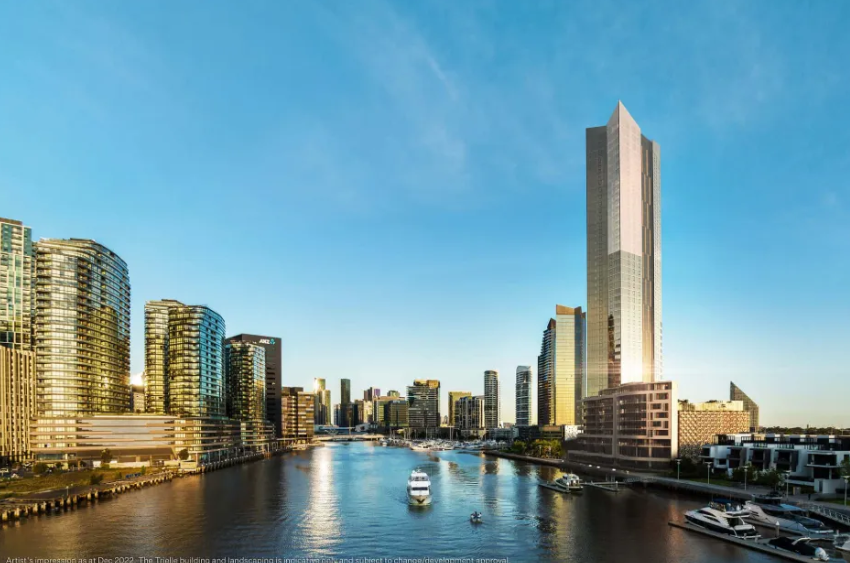
Mirvac has topped out Trielle at Melbourne’s Yarra’s Edge, with more than 70 per cent of the riverfront development sold and approximately 80 per cent of purchasers intending to make their apartment a home.
The figures, released on September 22, point to an owner-occupier audience for one of the precinct’s final residential towers. Mirvac began developing Yarra’s Edge in 2003, and its latest addition occupies one of the remaining absolute riverfront sites.
Mirvac CEO of Development Stuart Penklis said existing residents were among those moving up within the neighbourhood.
“Many purchasers already have a connection to Yarra’s Edge,” Mr Penklis said, describing buyers whose changing needs were encouraging an upgrade within the precinct.
“As one of the final residential towers within Yarra’s Edge, Trielle represents the culmination of more than two decades of creating one of Melbourne’s most established and sought-after waterfront communities,” Penklis said.
“Positioned on the Collins Street axis with absolute river frontage, Trielle offers residents a rare opportunity to enjoy sweeping views across the Yarra River, Melbourne skyline and Port Phillip Bay, while remaining seamlessly connected to the CBD. With Trielle now more than 70 per cent sold, we’re continuing to see strong demand from buyers seeking quality homes in established locations.”
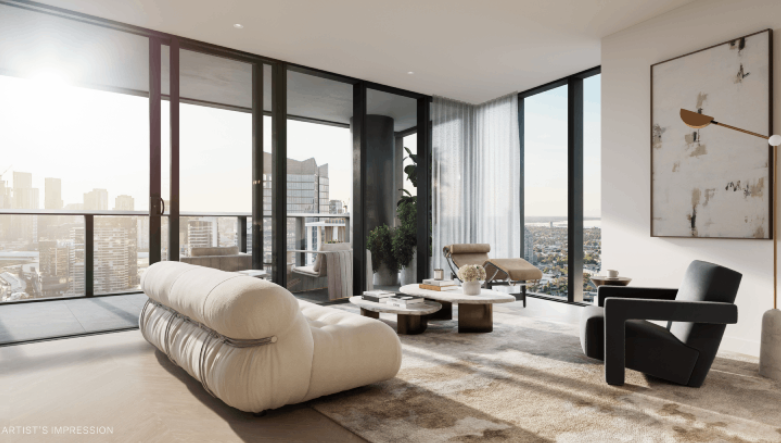
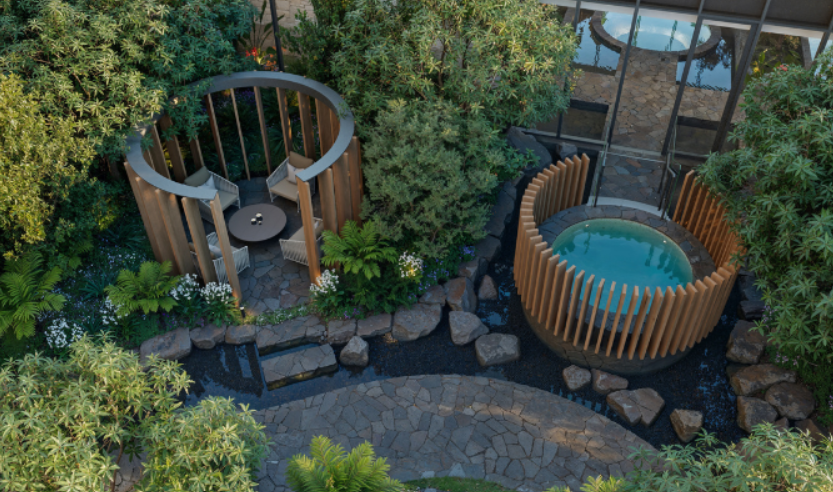
The developer also flagged a penthouse and sub-penthouse collection with larger layouts, premium finishes and broad outlooks. The planned wellness centrepiece, The Oasis, encompasses a 900-square-metre elevated urban rainforest.
Mirvac General Manager Residential Development Victoria Elysa Anderson said Trielle had resonated strongly with buyers seeking a rare lifestyle offering in Melbourne.
“Opportunities to secure a new luxury residence on a riverfront site of this calibre are incredibly rare, particularly within a community like Yarra’s Edge,” Anderson said.
“What makes Trielle unique is the combination of exceptional views, world-class residential facilities and the lifestyle that already exists around it. Residents are buying into a mature waterfront community with parks, promenades, dining, wellness and strong community connections already in place.”
The 45-level tower brings a substantial new presence to that waterfront. Its residential offering spans one-, two-, three- and four-bedroom apartments, with Signature, Prestige and Sub-Penthouse collections accommodating different household sizes. The north-facing position connects the apartments visually to the river and city beyond.
Seven storeys above the promenade, the planned Oasis combines planting and a running stream with a Scandinavian-inspired wellness club developed with spa specialist Naomi Gregory. Facilities include a 25-metre lap pool, hot magnesium pool, sauna, hydrotherapy, a gym, yoga and Pilates room, and treatment spaces.
The amenity extends beyond exercise. Residents will have access to The Biblioteca library and workspaces, ground-floor work pods, and The Salone piano lounge. A private Chef’s Table dining room offers a setting for larger gatherings, while a cinema, games room and sports lounge broaden the entertaining options. Concierge services and a dog-wash area support everyday routines.
Trielle comprises a collection of one, two, three and four-bedroom residences. Reflecting strong demand from owner occupiers, approximately 80 per cent of purchasers to date intend to live in their homes, highlighting the project’s appeal to those seeking a long-term waterfront lifestyle.
Mirvac has recently delivered The Albertine, a premium apartment development on the edge of Melbourne’s CBD, and is nearing completion of Prince & Parade in Brunswick, further strengthening its portfolio of thoughtfully designed apartment communities in some of Melbourne’s most sought-after urban locations.

A divide has opened in the tech job market between those with artificial-intelligence skills and everyone else.
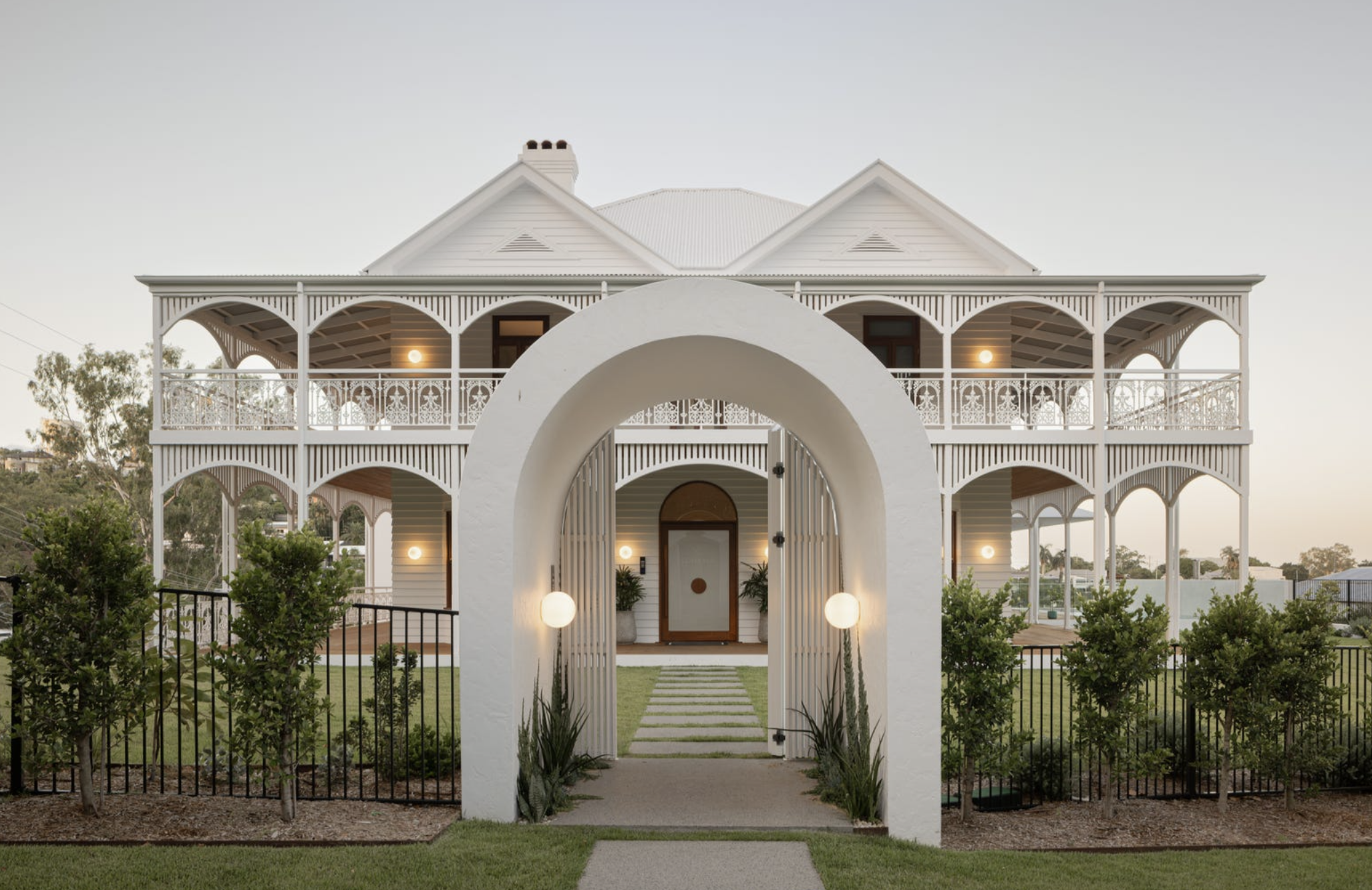
A restored 1860s Brisbane residence transformed by GRAYA has smashed Paddington’s house price record, selling for more than $12 million.