Treehouse-Like Home in the Blue Ridge Mountains Burt Reynolds Owned at His Peak Hits the Market
The 1970s modernist residence in Highlands, North Carolina, is asking $3.699 million.

 3 min
3 min
When actor Burt Reynolds was filming what would become the 1972 hit “Deliverance,” he fell in love with the Georgia wilderness in which it was filmed.
The film would mark his breakthrough onto the big screen, after his tenure as a television star in Western shows like “Gunsmoke” and “Hawk,” and he became one of the most famous actors throughout the 1970s and ’80s
About a decade after “Deliverance,” at the peak of his career, he purchased a home in the Blue Ridge Mountains just across the border in Highlands, North Carolina, according to previous reporting.
The 1970s home was designed by modernist architect Jim Fox, whose signature blend of simplicity and flair can be seen in the home’s flared roofs, glossy wooden interiors and suspended wraparound deck.
The home, which has traded hands several times since Reynolds sold it in the 1990s, is now back on the market asking $3.699 million with Jody Lovell of Highlands Sotheby’s International Realty.
Located on a 0.9-acre lot on King Gap Road, the three-bedroom home stands within the Nantahala National Forest at the far edge of a subdivision, giving it unobstructed views of the surrounding forests and the blue mountain skyline.

The home looks like a cross between a tree house and a yacht, with curved wood-clad ceilings, wood-panelled walls and floors, and wooden built-in furniture. The prevalent wood is balanced by large glass windows and stone walls, including a double-height stone monolith that centres the home.
The uniquely shaped home features a main level, an upper level and a lower level. The main level includes the common spaces, including a sunken living room with a half-circular couch facing the stone fireplace and a large, wood-framed window wall that slants over the garage.
The lower level includes a games room, office, wine cellar and an extra stone bathroom that Reynolds’ then-wife Lori Anderson built for the actor, according to Lovell. There is still an inscription on a painted wall in the “man cave” that Anderson wrote for him, signed in 1991.

In the early 2000s, the owners at the time hired the Highlands-based Fox to add an expansion, including a terrace with a stone fireplace, a plunge pool and waterfall. That’s in addition to a wraparound deck that extends from the main level as if suspended over the mountains, surrounded by minimalist green railings.
The sellers, who couldn’t be reached for comment, purchased the property in July 2024 for $2.975 million, above the asking price, and after only a few days on the market. Due to unforeseen health issues, they are looking to unload it sooner than expected, Lovell said.
Highlands, located in the southwest corner of North Carolina, is a popular vacation spot in the South because of its surrounding natural beauty and milder mountain climate. Since the pandemic, it has received a surge of interest from further afield.
“Deliverance” was filmed in Rabun County, Georgia, the pointed northeastern of the state, which juts into North Carolina and borders South Carolina.
 Copyright 2020, Dow Jones & Company, Inc. All Rights Reserved Worldwide. LEARN MORE




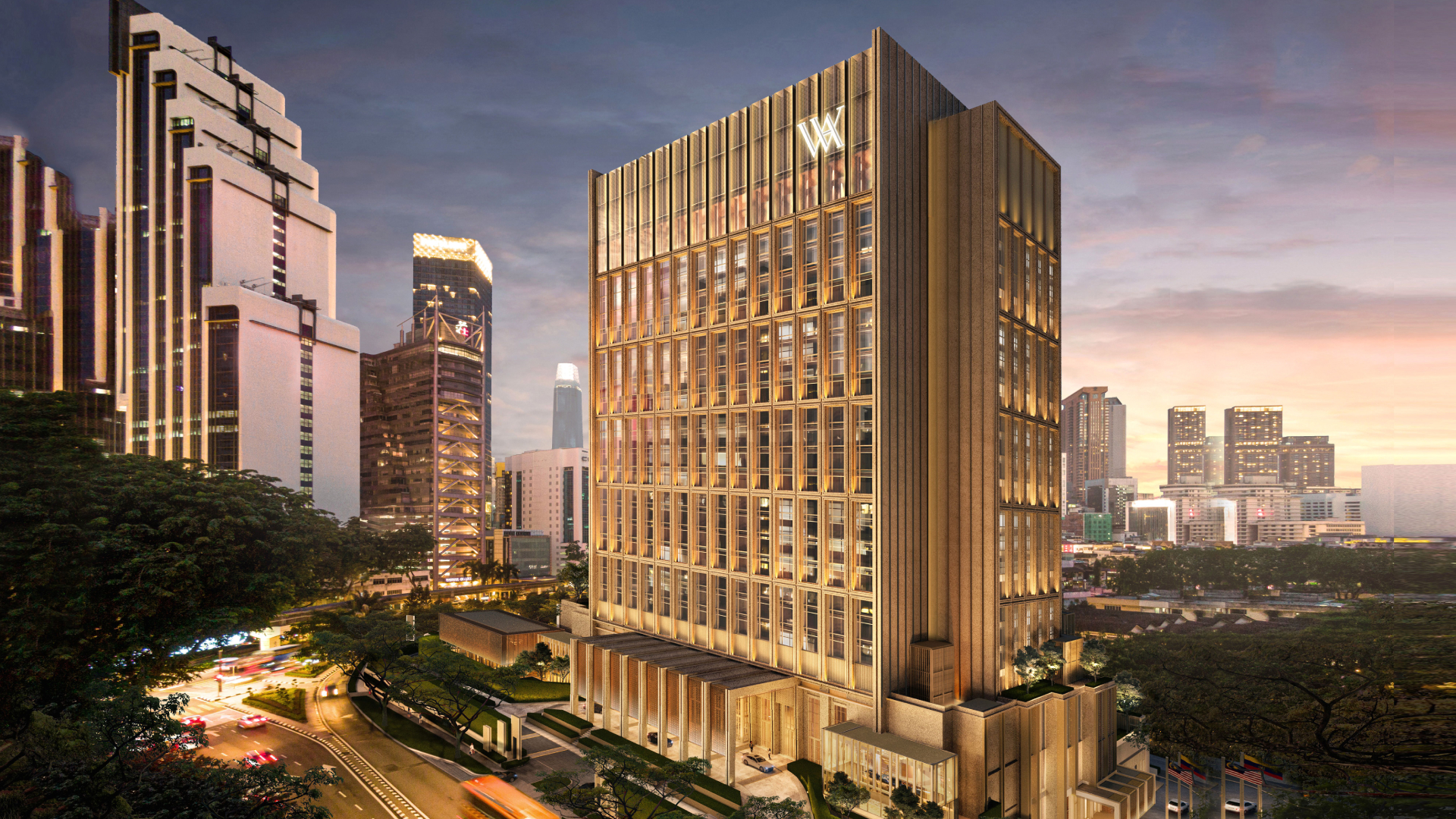
Waldorf Astoria Kuala Lumpur is scheduled to open on 30 October, introducing the Hilton luxury brand to Malaysia with an all-suite hotel in the city’s Golden Triangle.
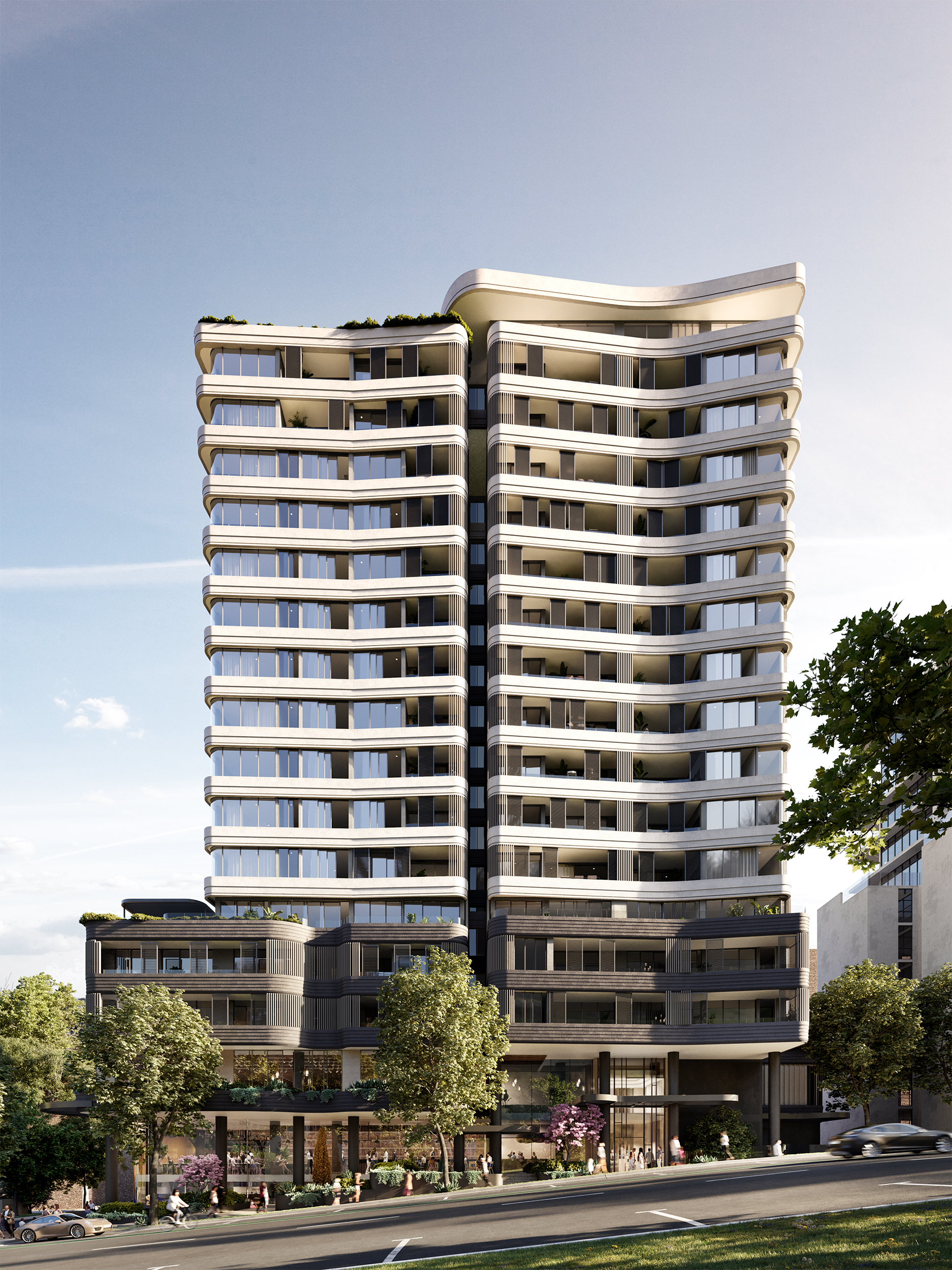
Located steps from Crows Nest Metro, the near-complete development brings luxury living to Sydney’s Lower North Shore.
Employment fell by 39,300 and unemployment held at a revised 4.7 per cent, giving the RBA more room to pause in November.
2 min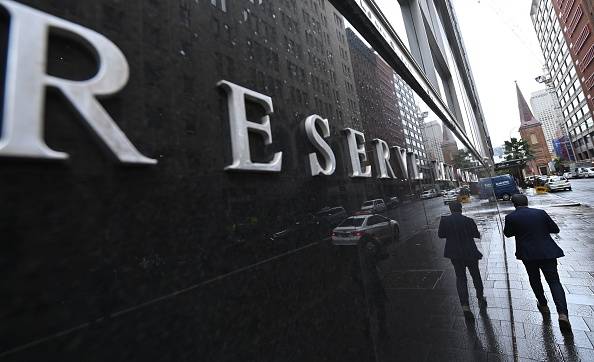
Australia’s labour market weakened in September, reducing—but not eliminating—the case for another Reserve Bank rate rise in November.
The seasonally adjusted unemployment rate was 4.7 per cent, according to the Australian Bureau of Statistics. August was revised to the same level, while September employment fell by 39,300 people. The number of unemployed Australians increased by 8,900 to 732,000.
The weakness extended beyond the headline rate. The employment-to-population ratio fell 0.3 percentage points to 63.6 per cent, participation declined 0.2 points to 66.8 per cent and underemployment edged up to 6.3 per cent. Part-time employment fell by 73,700, partly offset by a 34,400 increase in full-time work.
For the RBA, this is a clearer sign that restrictive monetary policy is cooling demand. Higher unemployment and falling employment reduce wage pressure over time and increase the risk that another rate rise would push the economy harder than necessary.
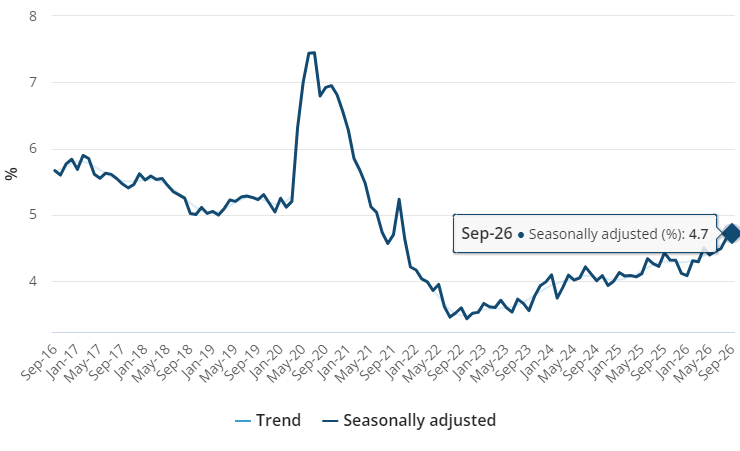
That makes a November increase less certain. It does not make a hold inevitable. The RBA must balance labour-market softness against inflation, and the September-quarter consumer price index due later in October will carry more direct weight in the decision.
For mortgage holders and property investors, the practical conclusion is not to trade one data release. Borrowers should continue testing repayments at higher rates, preserve liquidity and avoid basing a purchase on an assumed near-term reversal. Refinancing decisions should be assessed against total cost, not simply the advertised rate.
Property markets may initially welcome a reduced probability of another increase because borrowing capacity and sentiment are highly rate-sensitive. But a weakening labour market is not unambiguously positive for housing: job security supports mortgage serviceability, rental demand and buyer confidence.
The September numbers have given the RBA a credible reason to wait. Inflation will determine whether it can use it.

Two coming 2027 models – the first of the “Neue Klasse” cars coming to the U.S. early next year – have been revealed.
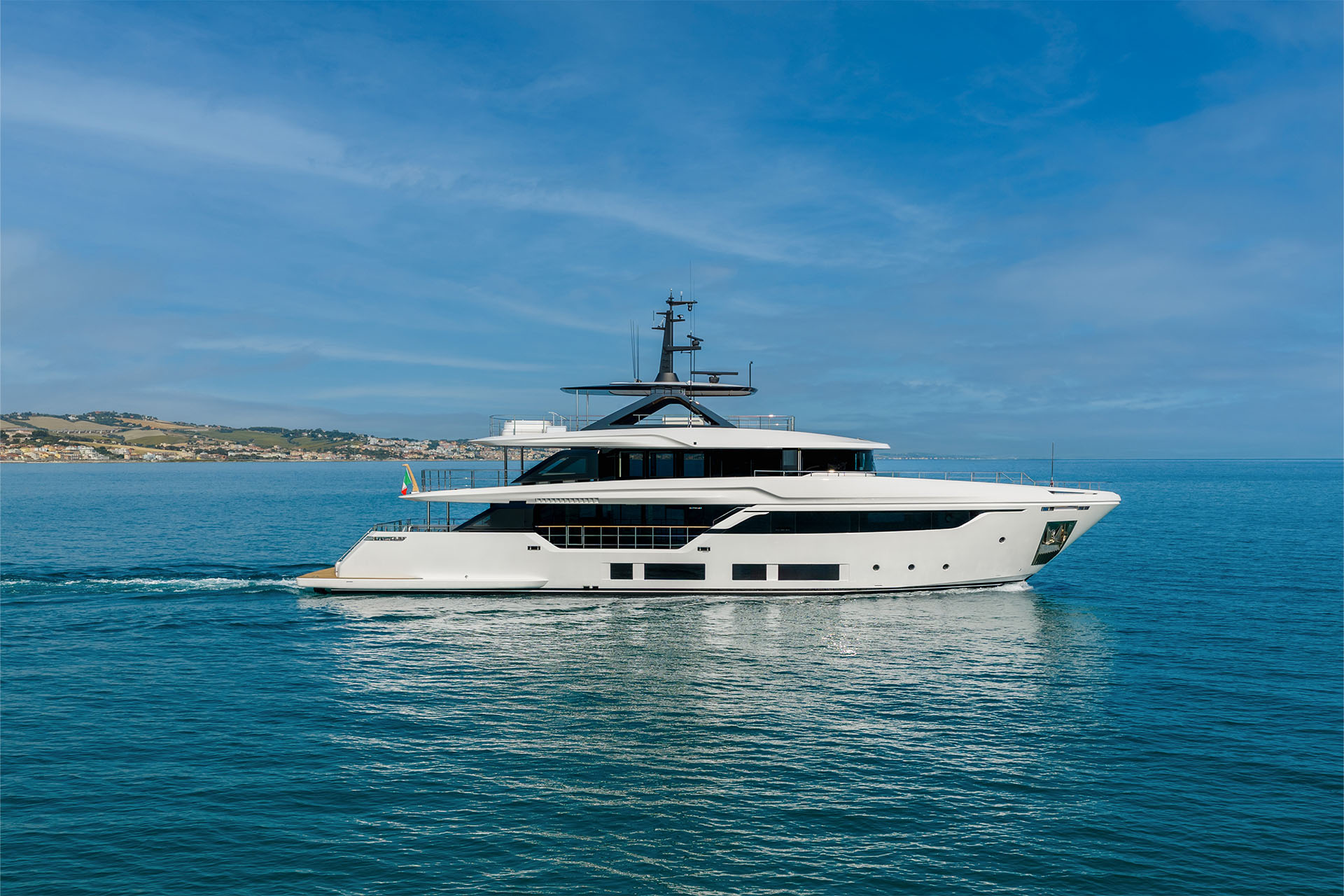
Four decks, 34.5 metres and a made-to-measure interior: step aboard the new Custom Line Navetta 35, unveiled at Cannes.