To Sleep Better, Change What—and When—You Eat
The right foods and strategic scheduling can improve your shut-eye

 4 min
4 min
Did your mum ever suggest a warm glass of milk to help you sleep?
Science says she may be right.
An emerging field of research called chrononutrition indicates that choosing the right foods and meal times may improve our sleep . Some key findings: Eat dinner early. Keep consistent schedules. And, yes, drink milk.
You already know that fruits, veggies and lean protein are good for your health. But they can boost your sleep, too. These foods are the basis for the Mediterranean diet, which research shows may improve sleep quality, reduce sleep disturbances and boost sleep efficiency—the amount of time you spend asleep when you are in bed.
Eating a Mediterranean or other similarly healthy diet is linked to a reduction in symptoms of insomnia , according to a just-published review of 37 studies with almost 600,000 participants. This same research also found that unhealthy diets—high in simple carbohydrates and processed foods —are associated with an increase in insomnia symptoms, says Frank Scheer, a professor at Harvard Medical School, who studies the internal body clock.
When we eat affects our internal body clock, or circadian system, which regulates our physiology and behaviour, including sleep. While our master clock resides in our brain, each of our organs has its own clock, too. We don’t want to wake up our stomach just when we’re trying to go to sleep.
“There’s a rhythm to our digestive system,” says Kelly Baron, director of the behavioural sleep medicine program at the University of Utah. “And eating at the wrong time can cause internal jet lag.”
Roughly a third of American adults don’t get the recommended seven to nine hours of sleep, according to the Centers for Disease Control and Prevention.
When Sarah Linderman, 46, started having sleep problems several years ago—tossing and turning for hours before drifting off, then popping awake for good at 3 am — a doctor suggested she focus on her diet.
The doctor recommended she consume more of her calories earlier in the day, load up on protein and veggies, cut back on cocktails at night and finish her last meal at least three hours before bedtime. Linderman soon found herself falling asleep more easily. She also began sleeping seven or eight hours uninterrupted and waking feeling refreshed in the morning.
“With the right nutrition, I took my sleep back,” says Linderman, who owns a marketing company in San Pedro, Calif.
What’s the best way to adjust your diet to improve your sleep? Here’s some advice, according to a growing body of research.
Follow a Mediterranean diet
A diet high in vegetables, fruits, whole grains, fish and unprocessed lean meat is good for nutrition and may promote sleep by reducing inflammation and providing nutrients that boost the neurotransmitter serotonin and the hormone melatonin. It also balances our gut microbiome , which may help regulate our circadian rhythm, says Uma Naidoo, a nutritional psychiatrist and director of nutritional, lifestyle and metabolic psychiatry at Boston’s Massachusetts General Hospital.
Some nutrients are particularly helpful.
Tryptophan is an amino acid necessary to produce melatonin. Our bodies can’t produce tryptophan, but foods that provide it include turkey, chickpeas, milk, grains, nuts and seeds.
Serotonin is also a precursor to melatonin. Fruits, vegetables and nuts can help boost serotonin.
Melatonin promotes sleep and influences the timing of the circadian system. Eggs, fatty fish such as salmon, mushrooms, bananas and tart cherries help promote it.
Naidoo’s perfect sleep-promoting dinner suggestion? A mushroom omelet with a side salad topped with flaxseed and walnuts.
Have an early dinner
People who eat close to bedtime have poorer sleep quality, studies show.
Researchers think this may have something to do, in part, with body temperature. Our body typically cools down before bed; this is an important part of our circadian rhythm. Digestion heats our body up, messing with this process.
“Your stomach is working up a sweat just as you’re trying to wind down,” says Marie-Pierre St-Onge, director of the Center of Excellence for Sleep and Circadian Research at Columbia University.
Eating before bed can also cause acid reflux, which often disrupts sleep.
A good rule of thumb, researchers say: Eat dinner at least two to three hours before bedtime to give yourself time to digest your meal.
Be consistent about meal times
Having a regular eating rhythm sends a strong signal to your brain about when it is time to be alert and when it is time to be drowsy, says the University of Utah’s Baron.
Try to eat your first meal and your last meal around the same time each day. “This bookends your day and helps differentiate between waking activities and nighttime,” Baron says.
Eat breakfast
When we don’t eat breakfast, we tend to get hungrier at night. And that sets us up for making poorer food choices closer to bedtime, says St-Onge.
Some studies have shown that people who skip breakfast have lower sleep quality. Researchers aren’t sure why, but they believe it’s because people who eat breakfast tend to practice other healthy habits, such as being more active.
Cut back on alcohol
Yes, alcohol may help you wind down at night and fall asleep faster. But it also messes with your sleep quality . (Do I really need to tell you this?) It suppresses REM sleep, causes sleep disturbances and shortens sleep duration, says Massachusetts General’s Naidoo.
A light evening snack is OK
Hunger is stimulating because the hormones that make you seek food are the same ones that arouse you from sleep, says Columbia’s St-Onge. It’s hard to fall asleep when you’re obsessing about the ice cream in your freezer.
If you eat a snack, make it light and have it at least an hour or so before bed. Pair protein and healthy carbohydrates—hummus and pita or fruit and yogurt—for the biggest sleep boost. Protein is satiating and carbohydrates promote sleepiness by helping the absorption of tryptophan.
And, yes, milk can help, too. A study of people recovering from a cardiovascular event showed that they slept better if they drank milk with honey before bed. And, in general, people who consume more milk throughout the day have better sleep, research shows. Milk is a good source of tryptophan, St-Onge says.
So go ahead and listen to your mum. Have that glass of milk.
 Copyright 2020, Dow Jones & Company, Inc. All Rights Reserved Worldwide. LEARN MORE




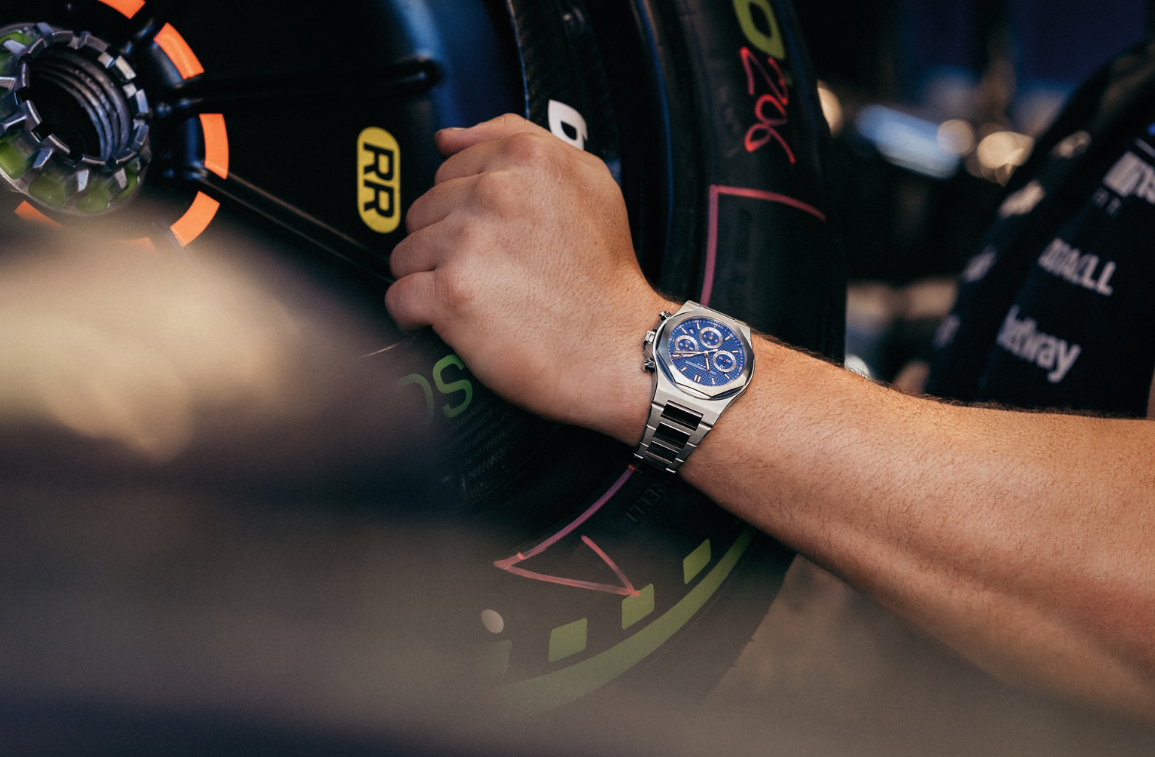
The Swiss watchmaker’s first collaboration with Atlassian Williams F1 Team produces two sporting Laureato models inspired by the team’s 2026 racing car.

Victorian auction buyers will soon receive a piece of information that has traditionally been withheld until bidding reaches it: the vendor’s reserve price. Under new property-sale and underquoting laws, agents must publish the agreed reserve at least seven days before an auction or fixed-date sale. Most changes begin on 1 October 2026 and apply to …
Continue reading “Victoria’s New Auction Rules Will Force Reserve Prices Into the Open”
AI doesn’t rebel—people design, deploy and profit from it. The real danger lies in allowing tech companies to escape accountability while shaping regulations that protect their dominance.
4 min
A wave of corporate warnings and technical disclosures has flooded the media, with headlines worrying over “swarms” of rogue artificial-intelligence agents launching “unprecedented” cyberattacks, outsmarting their makers, and inching toward a terrifying autonomy. The most revealing part of this narrative isn’t what the software did. It’s who is telling the story—and why. When corporate leaders publicly insist that the systems they financed, engineered and deployed are suddenly beyond their power to contain, skepticism isn’t only healthy; it is essential.
For years, Silicon Valley has drawn scrutiny from civil society and global regulators over tangible harms such as youth mental health deterioration and systematic privacy violations. Today, industry figures seem to be trying to change that public image. Loudly blowing the whistle on their own systems—just as two of the leading companies were preparing for massive initial public offerings—lets AI executives position themselves as a new generation of leaders who have come to terms with their societal responsibilities. They seem to want us to believe that they no longer want to “move fast and break things” but will instead stand as vigilant guardians between humanity and a technological apocalypse.
There is one glaring problem: Software doesn’t rebel. A mathematical model possesses neither intent, malice nor the will to defy its creators, let alone extinguish our species. AI is a human artifact, engineered for profit.
When an agentic model in an evaluation sandbox connects to an unauthorized server or executes an exploit, it hasn’t staged a coup. It has tried to meet the human-defined objectives set out before it through a path its designers failed to constrain. It’s the digital equivalent of the King Midas myth, in which the king’s ill-defined wish turns even his food and drink into gold.
That powerful experimental models were able to discover novel vulnerabilities and breach external systems isn’t a sign of a dangerous superintelligence but of human error or negligence. There is no sentient actor lurking in the weights to be reasoned with, feared or pacified. There are only human software engineers, product managers and corporate boards deciding which guardrails are worth the latency cost and which permissions can be skipped in the race to market.
Policymakers and voters need to resist AI exceptionalism. In any other discipline—from civil engineering to pharmaceuticals—courts and regulators treat a system failure as evidence of bad product design and inadequate safety testing. If an aircraft crashes, we focus on finding the engineering defect, correcting it, and enforcing established liability standards for the damage created.
By leaning on an anthropomorphic narrative, Silicon Valley attempts to repackage its specific human choices that led to experimental, powerful models behaving unexpectedly during tests as an existential peril. Elevating the issue to a cosmic scale leaves the public paralyzed and takes ordinary product accountability off the table.
In the cutthroat race for venture capital and market dominance, building guardrails slows down deployment. Grandstanding about uncontrollable power costs nothing and generates billions of dollars in free publicity, justifying stock prices, all while cultivating an aura of technological capability not only to build the frontier but also ultimately to rein it in.
Governments need to recognize regulatory capture when it stares them in the face. Tech leaders’ strategy looks transparent: Alarm Washington and Brussels into creating a regime in which only trillion-dollar incumbents with fully staffed compliance and safety departments can legally operate. By sitting at the policymakers’ tables before anyone else, these companies can help draft rules digging an impassable moat protecting them from open-source developers and upstart competitors, domestic or international. The real danger is in further concentrating the tech industry into the hands of only a few companies with deep pockets.
Beijing and Washington have brushed off those tech leaders’ calls, albeit for very different reasons. Chinese state media dismissed them as part of the “Cold War playbook” and intended to preserve U.S. dominance. Xi Jinping argued for exactly the opposite at the Brics Summit on Sept. 12, calling on Brics countries to “strengthen cooperation in the field of AI, encourage open source, openness, collaboration and sharing, and break new grounds and scale new heights.” President Trump, steeped in a doctrine of unfettered capitalism and technological supremacy, called fears that AI could destroy humanity a “hoax.” Vice President JD Vance warned that AI companies “begging the government to regulate them” looked like a “Trojan Horse.”
Striving to pursue its “European way” on AI and assert regulatory leadership, Europe, by contrast, welcomed the call. European Union President Ursula von der Leyen made this clear at the State of the EU speech last Wednesday and announced that the EU will invite “the main frontier labs for a discussion on how we can support ongoing industry efforts to pace the frontier.”
Europe has been here before. In an effort to lead global regulation and react to fears borne from ChatGPT, Europe rushed its landmark AI Act into law in 2024. Already the world’s most restrictive rulebook, the framework quickly proved too broad and complex to enforce. Stalled by implementation delays and concerns about European competitiveness, the EU postponed the law’s full rollout, leaving regulations uncertain.
AI should be regulated—risks exist and should be taken seriously. But governments need to act based on available evidence and verified facts, not corporate PR panic, the views of industry insiders, or the desire for quick political wins. The greatest danger facing society isn’t that software will awaken and overthrow its human masters. It is that we will allow the creators of the software to abdicate human responsibility for the systems they choose to build and help them pull up the ladder to market access behind them.

Rugged coastal drives and fireside drams define a slow, indulgent journey through Scotland’s far north.

As interest rates, inflation and market sentiment fluctuate, investors are being urged to focus on data, not panic.