A Texas-Built Hypercar, the 300 MPH Hennessey Venom, Is in the Running for the World’s Fastest Production Car

 3 min
3 min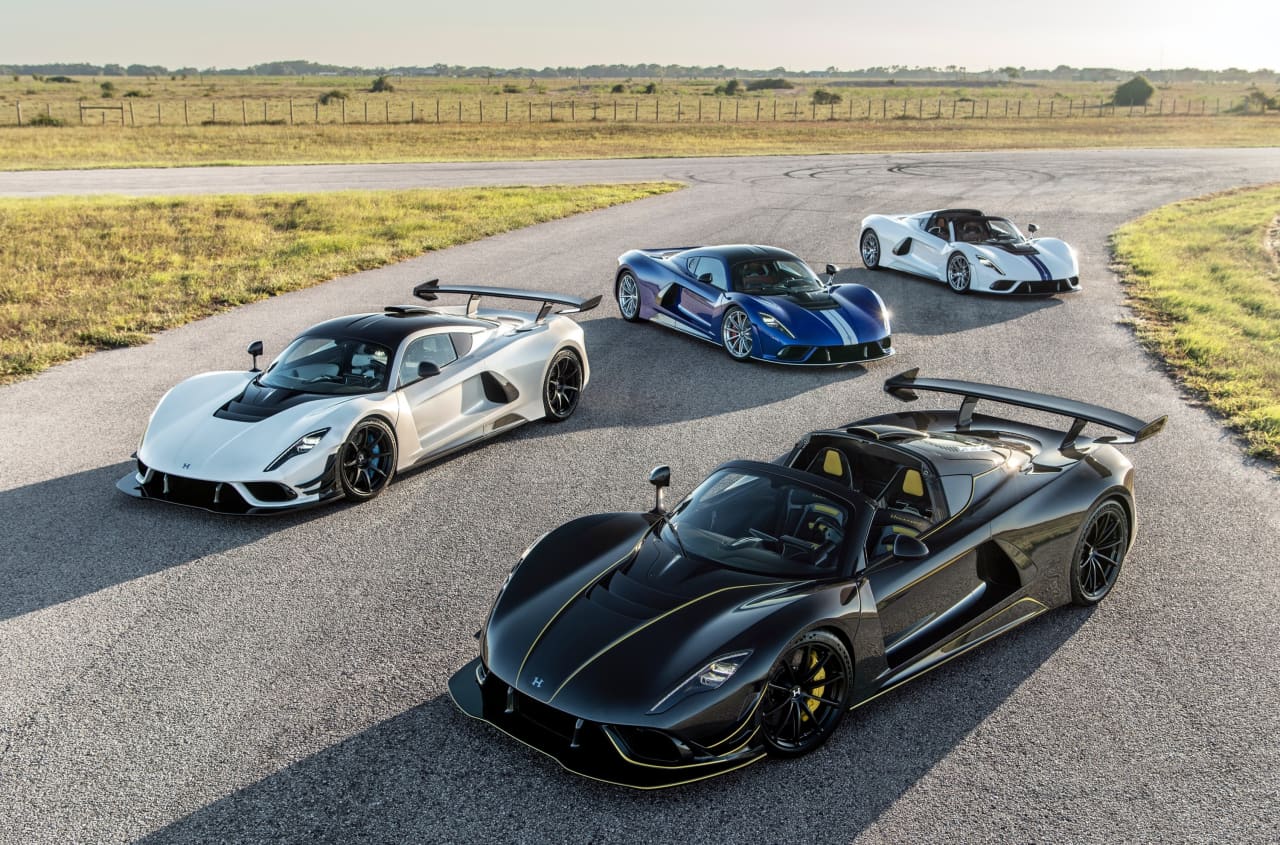
There are Corvette fans for whom the base US$68,300 car is plenty powerful enough. After all, it produces 495 horsepower and can reach 60 miles per hour in 2.9 seconds. But hold on, there’s also the approximately US$115,000 Z06—with 670 horsepower and able to reach 60 in 2.6 seconds. These split seconds are important for busy people—and for marketing claims. And if that’s not enough go power, there’s the even more formidable 900-horsepower ZR1 version of the Corvette, starting around US$150,000. The hybrid E-Ray, at US$104,900, is pretty potent, too.
But if they’re still too slow, fans of American-engineered muscle can consider the exclusive Texas-built Hennessey Venom F5, a limited-edition carbon-fibre hypercar. Ten years ago, the Hennessey became the world’s fastest production car, defeating the Bugatti Veyron Super Sport, with a top speed of 270.49 miles per hour.
That world title is much sought after, and is currently held by the Sweden-built 1,600-horsepower Koenigsegg Jesko Absolut, with a two-way average top speed of 277.8 mph. But Hennessey is still very much a contender. The company is hoping the 1,817-horsepower F5 (with 1,192 pound-feet of torque) can exceed 300 mph on the track this year.
Hennessey photo
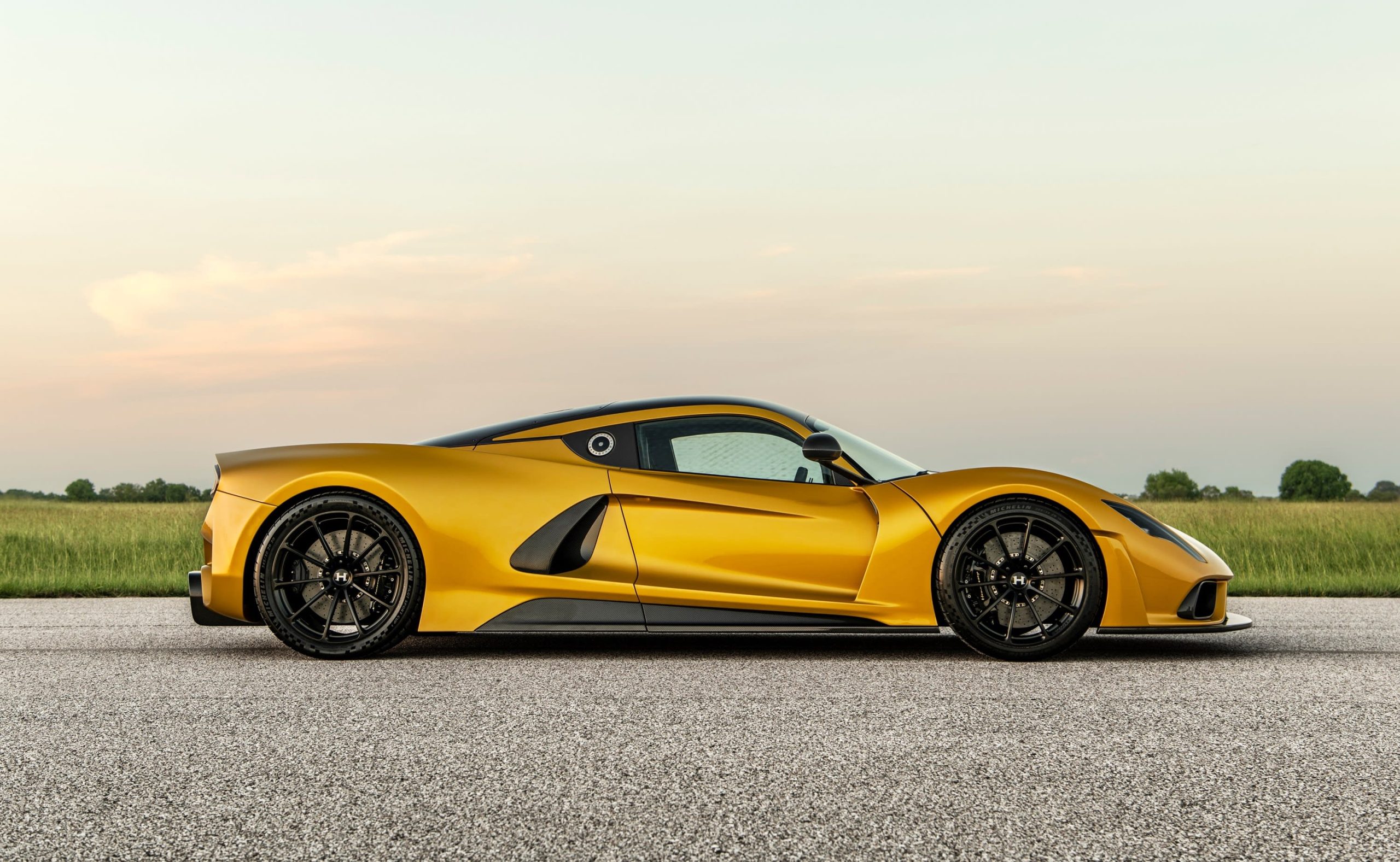
Hennessey’s previous Venom GT model (introduced in 2010) was based on the Lotus Exige, with a GM LS-based engine, and was built by partner Delta Motorsport. Spokesman Jon Visscher tells Penta , “The new Venom F5, revealed in 2020, is a 100%bespoke creation—unique to Hennessey and featuring a Hennessey-designed 6.6-litre twin-turbo V8 engine boasting 1,817 horsepower, making it the world’s most powerful combustion-engine production car.” Leaps in performance like this tend to be pricey.
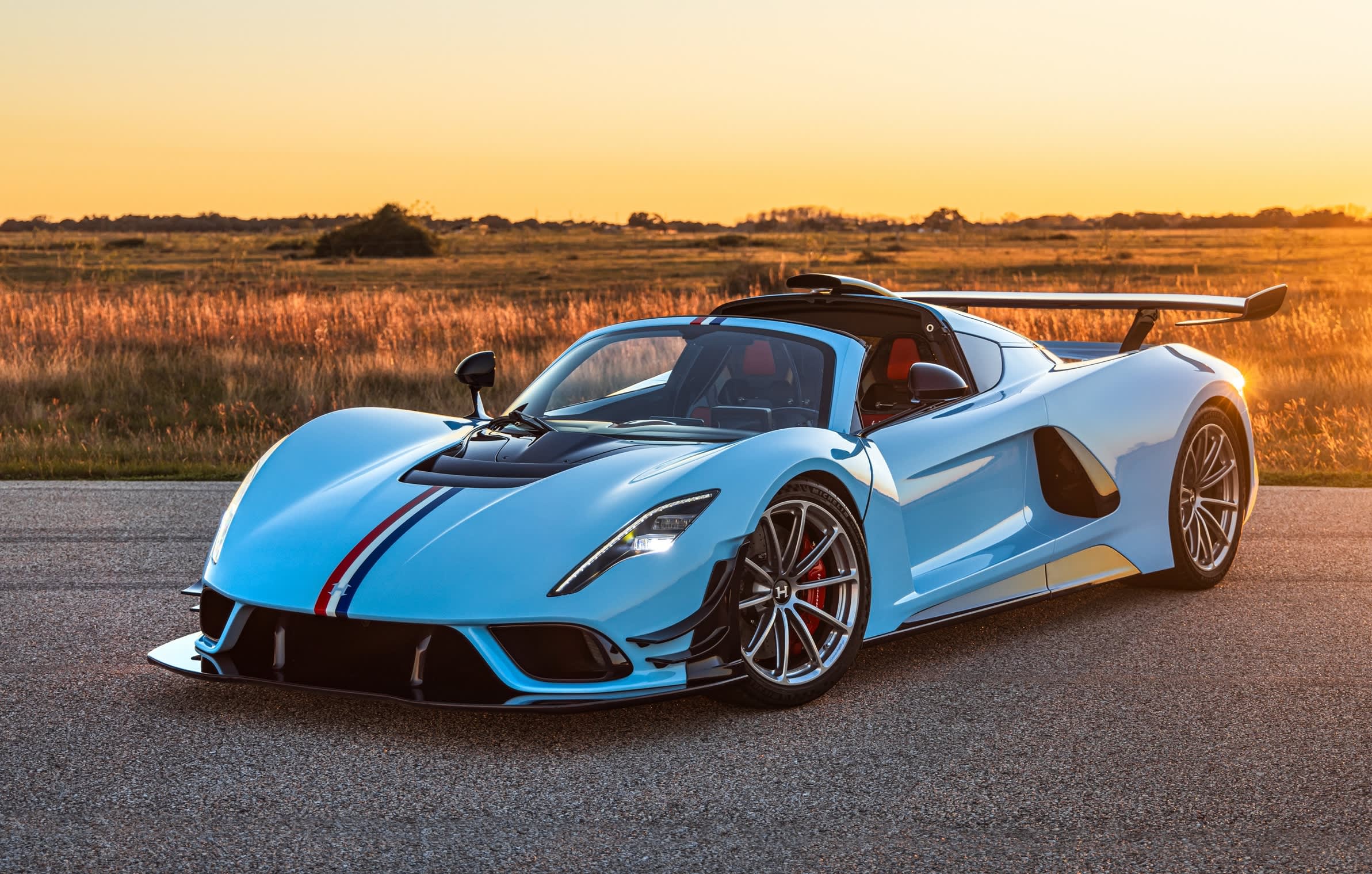
This is a very exclusive automobile, priced around US$2.5 million for the coupe, and US$3 million for the F5 Roadster announced in 2023. Only 30 Roadsters will be built, with a removable carbon-fiber roof. The 24 F5 coupes were spoken for in 2021, but if you really want one you could find a used example—or go topless. In a statement to Penta , company founder and CEO John Hennessey said that while the coupe “is now sold out, a handful of build slots remain for our Roadster and [track-focused] Revolution models.”
Only 24 Revolutions will be built in coupe form, priced at US$2.7 million. There’s also a rarefied roadster version of the Revolution, with just 12 to be built.
Hennessey photo
The Venom F5 coupe weighs only 3,000 pounds, and it’s not surprising that insane speeds are possible when combined with a hand-built motor (nicknamed “Fury”) created with power uppermost. The V8 in the F5, installed in a rear mid-engine configuration, has a custom engine block and lightweight forged aluminium pistons, billet-steel crankshaft, and forged-steel connecting rods. Twin turbochargers are featured. The F5 can reach 62 mph in less than three seconds, but top speed seems to be its claim to fame.
The driver shifts the rear-wheel-drive car via a seven-speed, single-clutch transmission with paddle shifters. The interior is not as spartan or as tight as in many other supercars, and is able to handle very tall people. The butterfly doors lift up for access.
“With 22 customer Venom F5 hypercars already delivered to customers around the world, and a newly expanded engineering team, we’re focusing the Venom F5 on delivering on its potential,” Hennessey says. “Breaking 300 mph in two directions is the goal we aim to achieve toward the end of this year to claim the ‘world’s fastest production car’ title.”
Hennessey says the car and team are ready. “Now the search is on for a runway or public road with a sufficiently long straight to allow our 1,817-horsepower, twin-turbo V8 monster to accelerate beyond 300 mph and return to zero safely.” The very competitive Hennessey said the track-focused Revolution version of the F5 set a fastest production car lap around Texas’ 3.41-mile Circuit of the Americas track in March, going almost seven seconds faster than a McLaren P1.
The Revolution features a roof-mounted central air scoop (to deliver cool air to the engine bay), a full-width rear carbon wing, larger front splitter and rear diffuser, tweaked suspension, and engine cooling. It’s got the same powertrain as the standard cars, but is enhanced to stay planted at otherworldly speeds.
 Copyright 2020, Dow Jones & Company, Inc. All Rights Reserved Worldwide. LEARN MORE





Borrowers cannot control the Reserve Bank, but they can control how exposed their household budget is to its next decision. The RBA meets on 29 September with inflation concerns still elevated and major-bank economists increasingly bringing forward their rate-rise calls. Fixed mortgage rates have also been moving, reducing the value of waiting for perfect certainty. …
Continue reading “What mortgage holders should do before the next RBA decision”
Australian shares finished higher on Tuesday, September 22, as a technology rally and lower oil prices outweighed weakness in energy companies and continued anxiety about domestic interest rates. The S&P/ASX 200 closed 25.9 points, or 0.30 per cent, higher at 8,757.8. The All Ordinaries gained 0.36 per cent to 8,951.0, while the All Technology index …
Continue reading “ASX Wrap: Technology lifts the ASX as falling oil relieves inflation pressure”
AI doesn’t rebel—people design, deploy and profit from it. The real danger lies in allowing tech companies to escape accountability while shaping regulations that protect their dominance.
4 min
A wave of corporate warnings and technical disclosures has flooded the media, with headlines worrying over “swarms” of rogue artificial-intelligence agents launching “unprecedented” cyberattacks, outsmarting their makers, and inching toward a terrifying autonomy. The most revealing part of this narrative isn’t what the software did. It’s who is telling the story—and why. When corporate leaders publicly insist that the systems they financed, engineered and deployed are suddenly beyond their power to contain, skepticism isn’t only healthy; it is essential.
For years, Silicon Valley has drawn scrutiny from civil society and global regulators over tangible harms such as youth mental health deterioration and systematic privacy violations. Today, industry figures seem to be trying to change that public image. Loudly blowing the whistle on their own systems—just as two of the leading companies were preparing for massive initial public offerings—lets AI executives position themselves as a new generation of leaders who have come to terms with their societal responsibilities. They seem to want us to believe that they no longer want to “move fast and break things” but will instead stand as vigilant guardians between humanity and a technological apocalypse.
There is one glaring problem: Software doesn’t rebel. A mathematical model possesses neither intent, malice nor the will to defy its creators, let alone extinguish our species. AI is a human artifact, engineered for profit.
When an agentic model in an evaluation sandbox connects to an unauthorized server or executes an exploit, it hasn’t staged a coup. It has tried to meet the human-defined objectives set out before it through a path its designers failed to constrain. It’s the digital equivalent of the King Midas myth, in which the king’s ill-defined wish turns even his food and drink into gold.
That powerful experimental models were able to discover novel vulnerabilities and breach external systems isn’t a sign of a dangerous superintelligence but of human error or negligence. There is no sentient actor lurking in the weights to be reasoned with, feared or pacified. There are only human software engineers, product managers and corporate boards deciding which guardrails are worth the latency cost and which permissions can be skipped in the race to market.
Policymakers and voters need to resist AI exceptionalism. In any other discipline—from civil engineering to pharmaceuticals—courts and regulators treat a system failure as evidence of bad product design and inadequate safety testing. If an aircraft crashes, we focus on finding the engineering defect, correcting it, and enforcing established liability standards for the damage created.
By leaning on an anthropomorphic narrative, Silicon Valley attempts to repackage its specific human choices that led to experimental, powerful models behaving unexpectedly during tests as an existential peril. Elevating the issue to a cosmic scale leaves the public paralyzed and takes ordinary product accountability off the table.
In the cutthroat race for venture capital and market dominance, building guardrails slows down deployment. Grandstanding about uncontrollable power costs nothing and generates billions of dollars in free publicity, justifying stock prices, all while cultivating an aura of technological capability not only to build the frontier but also ultimately to rein it in.
Governments need to recognize regulatory capture when it stares them in the face. Tech leaders’ strategy looks transparent: Alarm Washington and Brussels into creating a regime in which only trillion-dollar incumbents with fully staffed compliance and safety departments can legally operate. By sitting at the policymakers’ tables before anyone else, these companies can help draft rules digging an impassable moat protecting them from open-source developers and upstart competitors, domestic or international. The real danger is in further concentrating the tech industry into the hands of only a few companies with deep pockets.
Beijing and Washington have brushed off those tech leaders’ calls, albeit for very different reasons. Chinese state media dismissed them as part of the “Cold War playbook” and intended to preserve U.S. dominance. Xi Jinping argued for exactly the opposite at the Brics Summit on Sept. 12, calling on Brics countries to “strengthen cooperation in the field of AI, encourage open source, openness, collaboration and sharing, and break new grounds and scale new heights.” President Trump, steeped in a doctrine of unfettered capitalism and technological supremacy, called fears that AI could destroy humanity a “hoax.” Vice President JD Vance warned that AI companies “begging the government to regulate them” looked like a “Trojan Horse.”
Striving to pursue its “European way” on AI and assert regulatory leadership, Europe, by contrast, welcomed the call. European Union President Ursula von der Leyen made this clear at the State of the EU speech last Wednesday and announced that the EU will invite “the main frontier labs for a discussion on how we can support ongoing industry efforts to pace the frontier.”
Europe has been here before. In an effort to lead global regulation and react to fears borne from ChatGPT, Europe rushed its landmark AI Act into law in 2024. Already the world’s most restrictive rulebook, the framework quickly proved too broad and complex to enforce. Stalled by implementation delays and concerns about European competitiveness, the EU postponed the law’s full rollout, leaving regulations uncertain.
AI should be regulated—risks exist and should be taken seriously. But governments need to act based on available evidence and verified facts, not corporate PR panic, the views of industry insiders, or the desire for quick political wins. The greatest danger facing society isn’t that software will awaken and overthrow its human masters. It is that we will allow the creators of the software to abdicate human responsibility for the systems they choose to build and help them pull up the ladder to market access behind them.

Set on one of the city’s last absolute riverfront sites, The Riversdale by Mosaic combines irreplaceable waterfront ownership with one of Brisbane’s most significant residential opportunities.
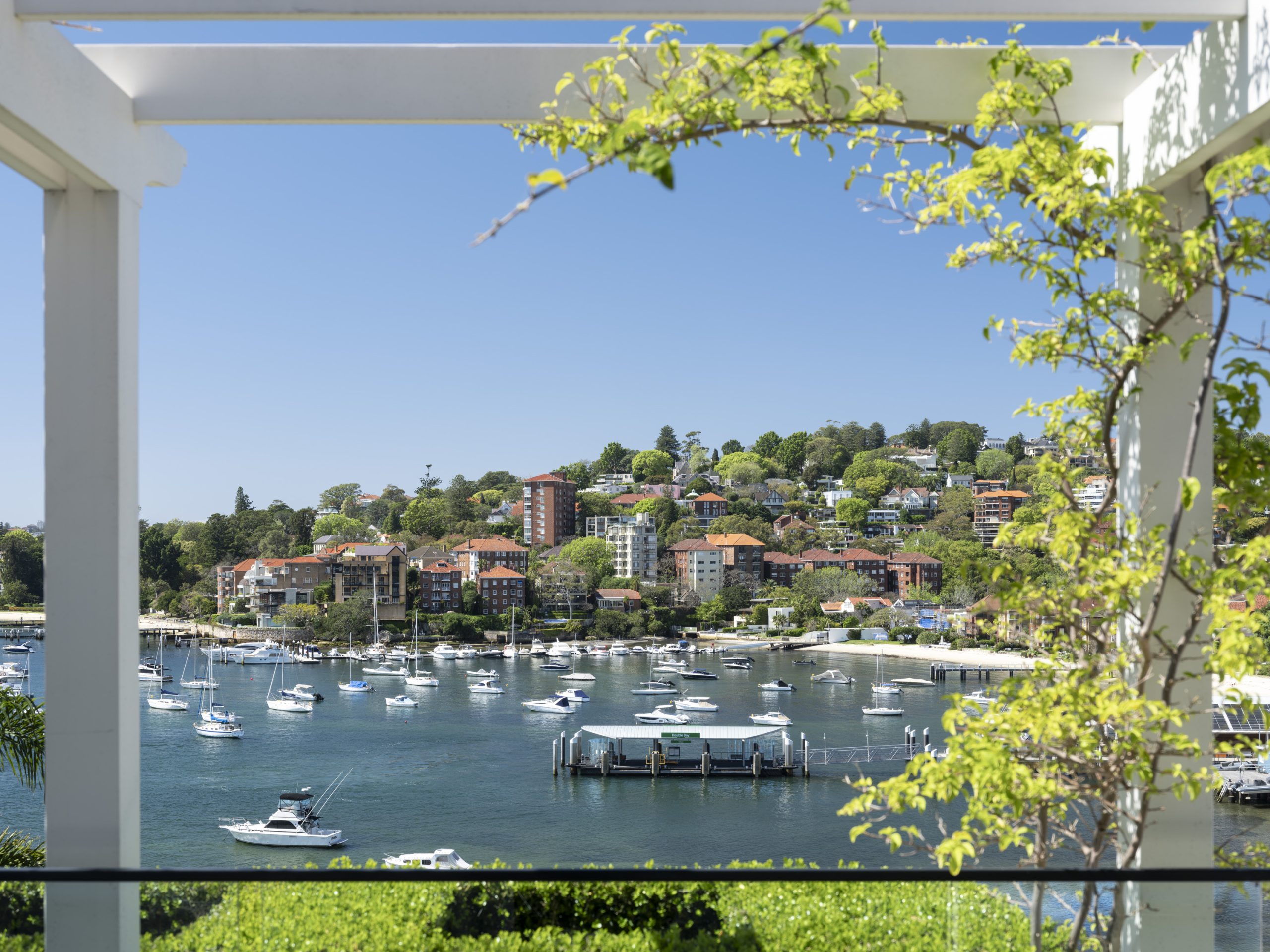
The grand harbourside residence combines sweeping Sydney Heads views, resort-style entertaining and refined designer finishes with a reported $36 million price guide.