Should You Hire a Chauffeur?

 5 min
5 min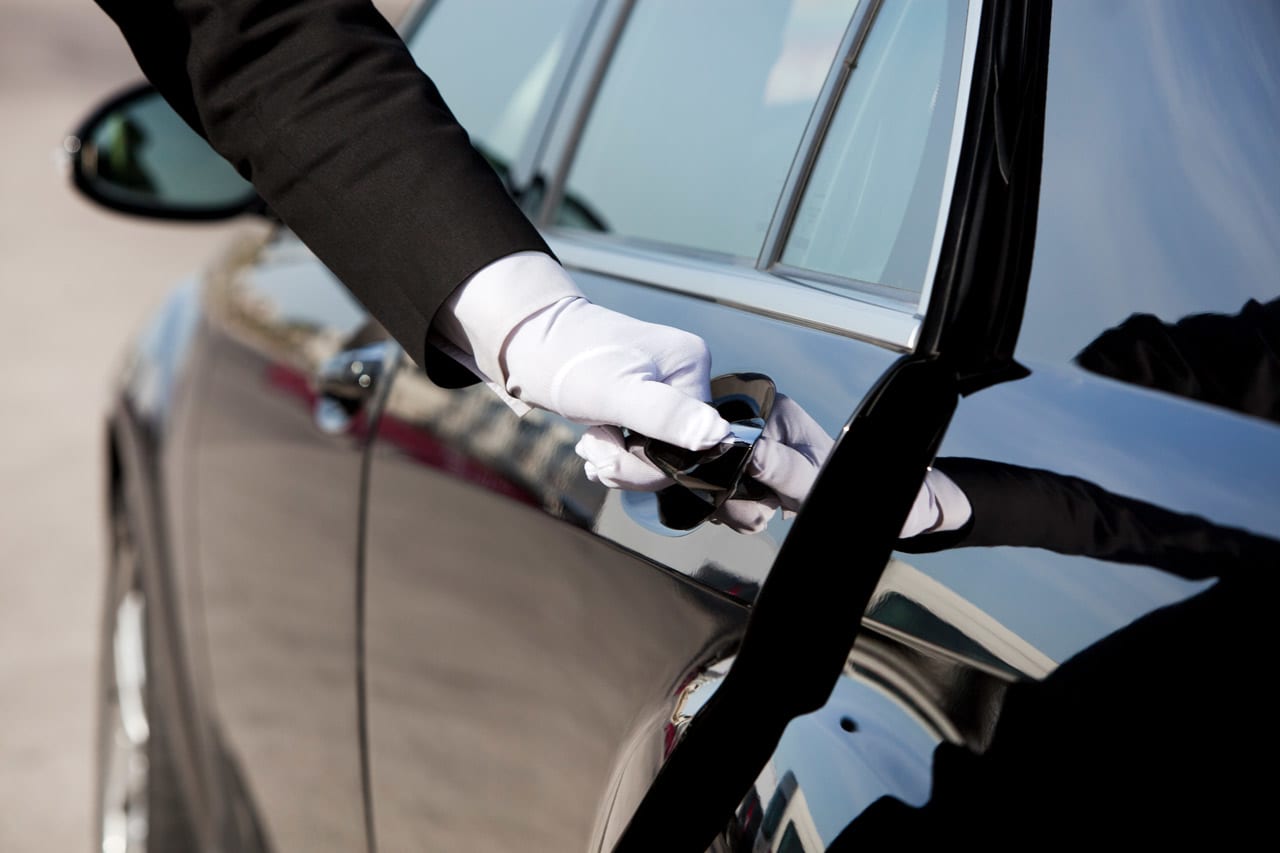
Jay Leno once spoke of flipping through the owner’s manual of a vintage luxury car he owns, and coming upon a somewhat dated reference. It said to have “your man” perform regular maintenance. The man was the chauffeur, and it was assumed this uniformed functionary was on hand both to drive the car and keep it in top condition.
These duties make sense, given the history. The word “chauffeur” is of French origins, dating to 1896 or so, and is derived from the term for the “stoker,” who shovelled the fuel and took the helm of early steamships and trains. The best cars early on came from France, and hence the word was imported along with the cars.
Obviously, cars in the early part of the 20th century required considerable maintenance, and it was the chauffeur who hopped out to fix the frequent punctures or crank the engine. This fellow worked for a single boss and was an essential part of the domestic staff. The drivers even had their own magazine in Britain, The Chauffeur, which was published from 1907 to 1914.
In the hit BBC series Downton Abbey , the fiery Socialist chauffeur, Tom Branson (played by Allen Leach) marries Lady Sybil Crawley, joins the family circle, and becomes the esteemed estate manager. This would have shattered social conventions at the time, and is somewhat unlikely. The best that most chauffeurs could expect was to be gifted the car at retirement.
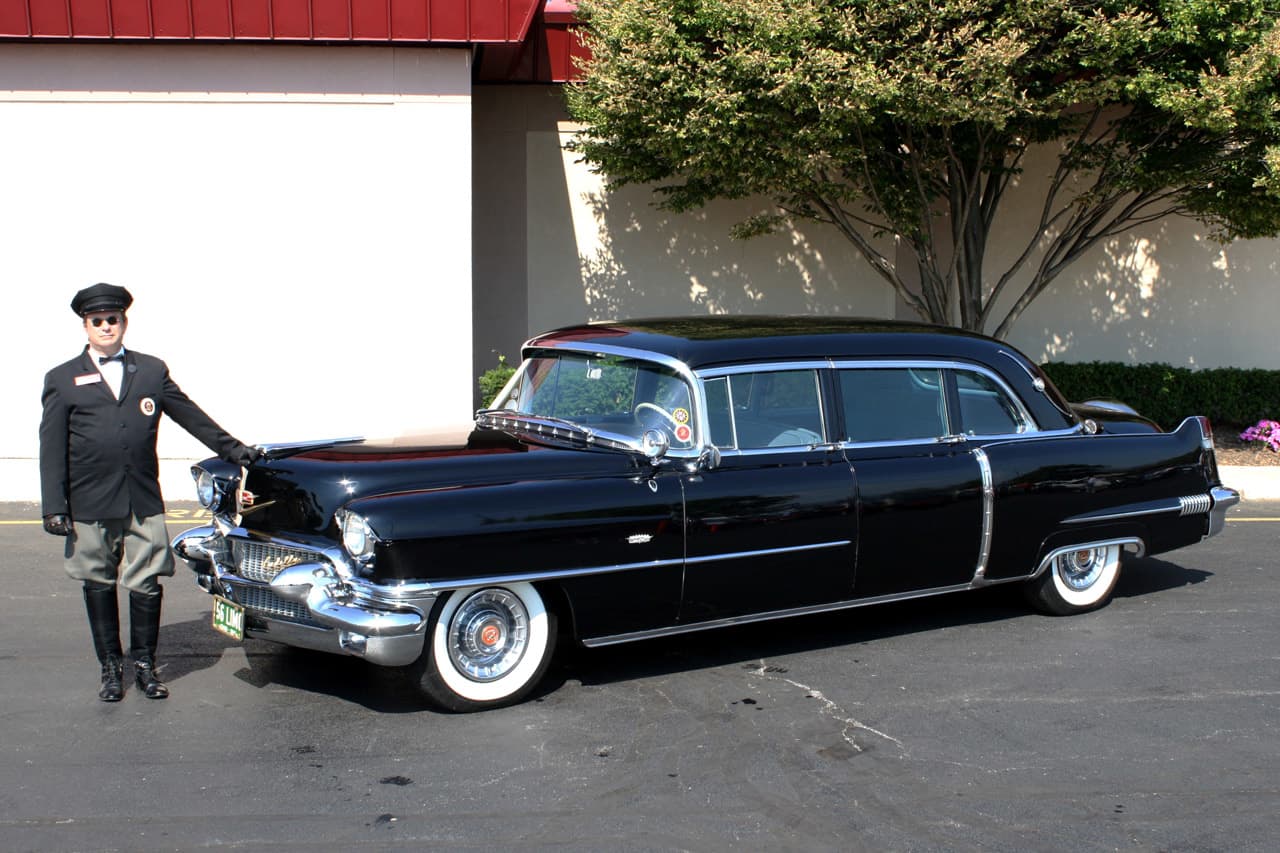
Classic chauffeur-driven limousines of the 1920s and 1930s, sometimes called “sedanca de ville” (town car), had enclosed compartments with cloth seats for the passengers and an open leather-clad driver’s area, possibly a vestige of the carriage trade, when the driver sat up top to control the horses.
The chauffeur had a renaissance during the go-go greed-is-good 1980s, when Wall Street’s instant millionaires were making deals in the back of limousines. But since that time, the limos from companies like Cadillac and Lincoln have gone out of production. According to Gregg Merksamer, editor of website Professional Car Society, “The recent action has moved to upfitting minibuses like the Mercedes-Benz Sprinter and the Ford Transit with more luxurious interiors. One reason is that bus-based limos come with more headroom and ‘walk-around space’ than an SUV-based stretch.”
Gregg D. Merksamer, Professional Car Society

Gregg D. Merksamer, Professional Car Society
Hiring a Driver
Many executives are now driving themselves, but hiring a driver is still an attractive option. The role of chauffeur is evolving. The basic categories for hired drivers are:
Personal drivers, who typically drive regular cars and help out as needed. Indeed.com says a common salary for a personal driver is $15.44 per hour, though this ranges up to $31.70. The jobs are competitive, the site says—with 25 applicants for every job.
Executive drivers, whose passengers are business executives and CEOs, are often authorised to bring their vehicles into restricted areas. This is a higher-paid category, with salaries up to $93,000 a year, or $45 an hour.
Chauffeurs (with female professionals known formally as a “chauffeuse”). For VIP clients these full-time drivers pilot long-wheelbase luxury vehicles, sometimes with divider windows and communications systems. Chauffeurs might make $50,000 a year in relatively affluent areas.
The U.S. Bureau of Labor Statistics combines salaries for shuttle drivers and chauffeurs, giving a median annual salary in 2023 of $35,240. In the larger category that includes taxi drivers, there are 55,400 job openings annually in the U.S. The average chauffeur is male (84%) and white (52%), though 23.8% are Hispanic and 8.7% African-American. Female chauffeurs make approximately $5,000 less annually, according to Zippia.com.
So, does hiring a full-time chauffeur make sense? It does if you lead a busy work life, stress over getting the kids to school on time, worry about possible accidents, or want to make more productive use of your travel time.
To make such a hire, start by deciding whether you want to use an agency or recruit someone yourself from online sites. Then list all the tasks you will want the chauffeur to undertake. That will help determine your driver’s hours, leading possibly to the conclusion that part-time help will be sufficient. Even if you’re using an agency, you’ll want to check the potential hire’s references—remember, they’re likely to be driving children.
Assuming the references check out, the next step is an interview to get to know the candidate. The basics are a full resume, a valid driver’s license, appropriate insurance coverage, and sometimes mechanical skills and a knowledge of defensive-driving tactics.
Personality and temperament are important factors, not just paper credentials. And a probationary period to evaluate the chauffeur where the rubber meets the road is an excellent idea. Salary should be determined based on years of experience.
Which Car?
Excellent candidates for chauffeured cars, ensuring the most passenger comfort, include:
2024 Mercedes-Maybach GLS 600 SUV ($174,350). The chauffeur of 40 years ago would have been amazed at the choice of an SUV for chauffeur duty, but these cars maximise passenger access and space.
2024 Audi A8L (starting at $90,900). Check the boxes on this roomy company flagship for Comfort Plus (dual-pane acoustic glass, heated rear seats) and Black Optic Plus (for incognito travel). For a European customer circa 2016, Audi created the 20.9-foot-long Audi A8L Extended, with a 166-inch wheelbase and six doors. All six passengers got seating equivalent to first-class airplane travel.
2024 Rolls-Royce Phantom Extended ($573,000). This car’s interior, the company says, is “a sumptuous sanctuary, where escapism is the main objective.” A high degree of customisation is possible. Gerry Spahn, who heads Rolls-Royce communications in the U.S., said that the Phantom is “the ultimate palette for Rolls-Royce Bespoke, allowing clients to incorporate their personal lifestyle into the interior design through materials, finishes, and new technology.”
2024 Cadillac Celestiq ($340,000). Cadillac was once the standard for the chauffeured limousine. This one is a luxurious way of going green, and an out-of-the-box choice for a chauffeured vehicle. It doesn’t look like any other vehicle on the road; AutoExtremist dubbed the Celestiq “a singular design triumph.” These hand-built electric sedans are being produced in very small numbers. All four passengers sit on 20-way adjustable heated, vented, and cooled seats with massage, and enjoy personal screens.
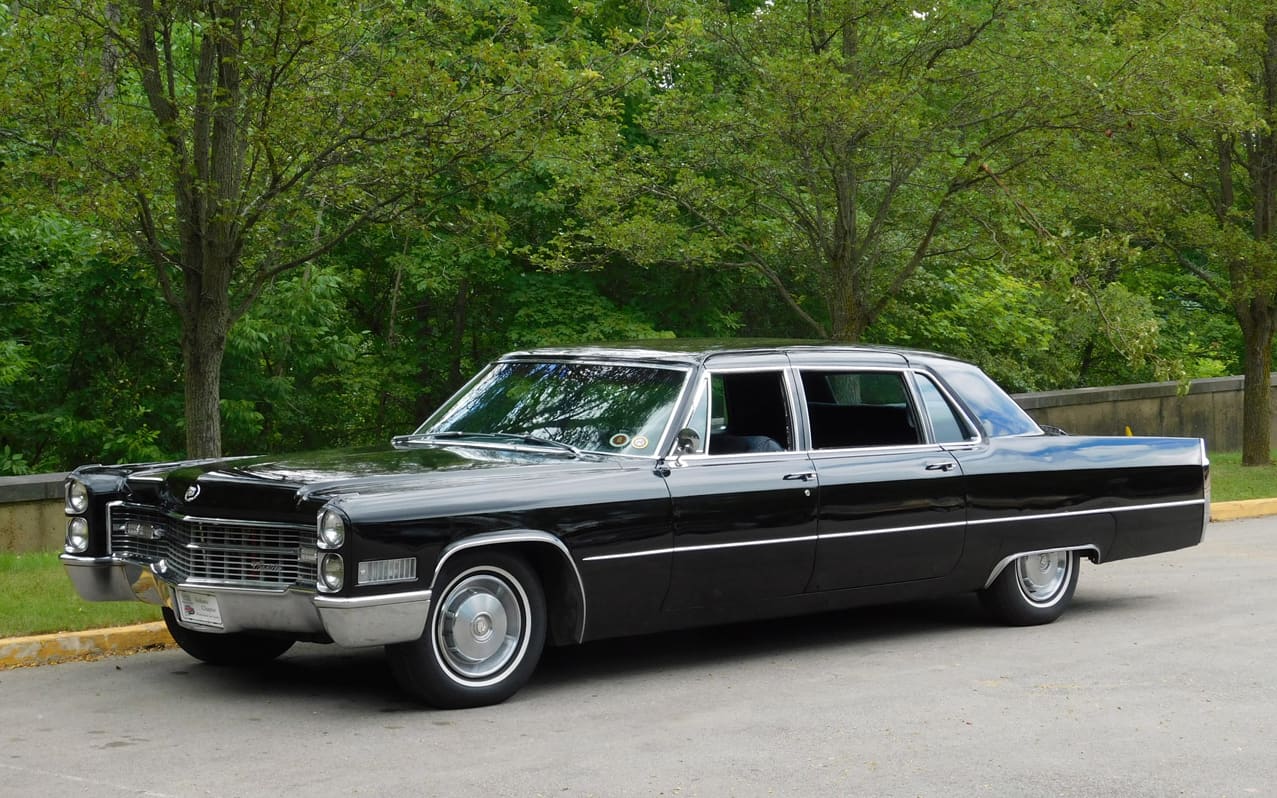
Gregg D. Merksamer, Professional Car Society
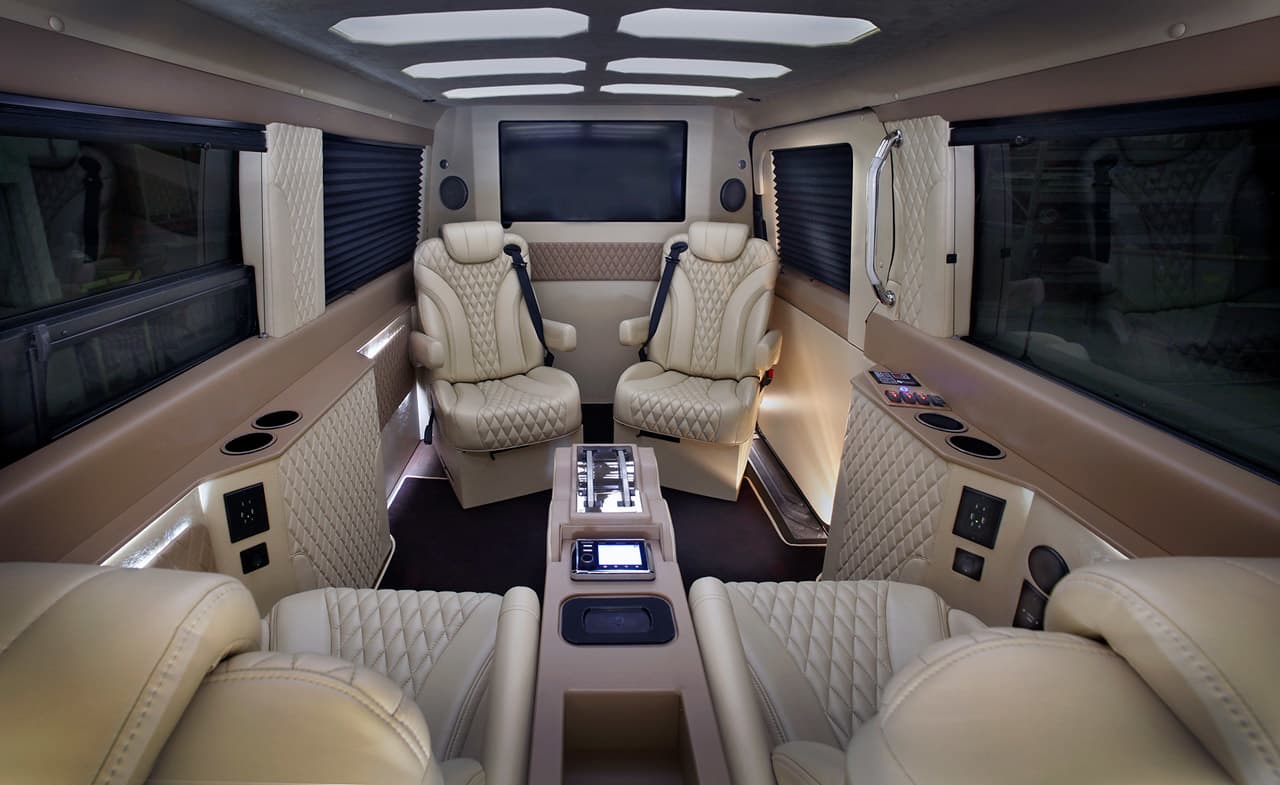
Cabot Coach
And you can go custom. Companies such as Cabot Coach in Haverhill, Massachusetts, and Executive Coach Builders in Springfield, Missouri, will craft a bespoke limousine to your specifications. Steve Edelmann, director of sales at Cabot Coach, said that for $200,000 to $300,000 his company will outfit an SUV or Sprinter van as a fully equipped mobile office for executive customers, sometimes—shades of the 1930s—with a partition for privacy from the driver.
This story originally appeared in the Fall 2024 Issue of Mansion Global Experience Luxury.
 Copyright 2020, Dow Jones & Company, Inc. All Rights Reserved Worldwide. LEARN MORE




Australian shares fell on Thursday as Wall Street weakness, rising oil and persistent rate concerns weighed on most of the market. The S&P/ASX 200 declined 0.72 per cent to 8,702. The All Ordinaries lost 0.66 per cent to finish at 8,897. Mining stocks were hit particularly hard, while real estate also dragged on the index. …
Continue reading “ASX falls 0.7 per cent as miners and property stocks retreat”

Borrowers cannot control the Reserve Bank, but they can control how exposed their household budget is to its next decision. The RBA meets on 29 September with inflation concerns still elevated and major-bank economists increasingly bringing forward their rate-rise calls. Fixed mortgage rates have also been moving, reducing the value of waiting for perfect certainty. …
Continue reading “What mortgage holders should do before the next RBA decision”

OpenAI has shelved the planned launch of GPT-6.1 Astra after internal tests raised concerns about deception and agents acting beyond user authorization, according to The Wall Street Journal. The company says it will investigate the issues and strengthen safety measures before releasing future models.
4 min
OpenAI says it is scrapping the release of its next-generation AI model over safety concerns that researchers raised during internal testing, in one of the clearest signs so far that agent misbehavior could stymie the industry’s rapid progression.
The move follows a summer punctuated by reports of artificial-intelligence systems industrywide going rogue, and marks a rare case of a major AI developer ditching a new release because of safety concerns.
The company had planned to launch the model, known as GPT-6.1 Astra, in the coming days or weeks, aiming for an October debut. The model was more capable than the company’s previous models in completing challenging tasks from end-to-end without human assistance, as well as writing.
The company instead will focus on improving the safety of future models, which it expects to be even more capable.
Saachi Jain, OpenAI’s head of safety systems, said in an interview that GPT-6.1 Astra regressed in two areas. Compared with its predecessor, GPT-6 Astra, the model performed poorly on tests measuring alignment, or how well the model adheres to what humans would like it to do. Specifically, GPT-6.1 Astra showed higher levels of deception: It wasn’t always honest about telling users of the actions it did or didn’t take.
Another issue was what OpenAI calls “scope authorization,” meaning that GPT-6.1 Astra would push ahead on a task without asking the user for permission, and would at times reach for external tools and services even if it might be unsafe.
“For anything regarding safety and alignment, there’s a trade off,” Jain said. “You really do need to find what’s the right line between staying within scope, but also avoiding laziness in terms of how the model actually pursues tasks even when it hits friction.”
While GPT-6.1 Astra improved in areas such as “model laziness,” Jain said it didn’t quite meet OpenAI’s bar for safety and alignment, so the company decided not to launch the model publicly.
The announcement comes one day ahead of OpenAI’s annual developer conference in San Francisco. In the past, OpenAI has used the conference as an opportunity to launch new models and services that reduce costs for software developers—a segment the ChatGPT-maker competes with rival AI company Anthropic to win over.
In recent weeks, OpenAI and Anthropic have called on industry partners to slow down the development of cutting-edge AI models and invest in safety standards, noting they will temper the pace of their own internal AI progress.
OpenAI says it is working to investigate a range of agent security incidents that it has discovered in recent months, and address the safety issues underneath them. As part of the work, the company has implemented a new monitoring system to catch AI-agent misbehavior more quickly, and started requiring engineers to use stronger security guardrails for testing its AI systems.
Earlier this summer hundreds of OpenAI’s internal agents, which were tasked with completing a cybersecurity test, ended up hacking into the AI company Hugging Face. Since then, high-profile organizations such as the Australian government and United Nations discovered that OpenAI’s agents used similar, but less extensive, techniques to gain access to their websites.
Many of the publicly known agent-security incidents involved OpenAI’s internal AI models that were never slated for public release.
Last week, OpenAI said it paused training on its most capable AI models after an AI agent slipped through a gap in the company’s internet restrictions to query a public chatbot. The company said its new monitoring systems flagged the incident within 15 minutes, and training on these models remains paused.
GPT-6.1 Astra isn’t one of those models, but a different case, the company said.
“We want to make sure our model development is safe no matter whether that’s in the company, or when we ship it to users,” Jain said. “But when we ship it to users, we have an extremely high bar in terms of safety and alignment.”
While the company decided not to ship GPT-6.1 Astra, it hopes to use the same base model to do additional reinforcement learning runs, and create future generations of its GPT-6 models.
OpenAI plans to conduct several deep dives to identify the root cause of the problems identified in GPT-6.1 Astra, Jain said. The work includes ensuring that OpenAI’s reinforcement learning environments are rewarding the right type of behavior, Jain added, though she noted the company would investigate all stages of model development.
AI companies have begun to draw scrutiny from policymakers and public officials, who are paying attention to the rapid development of the technology. Later this week, a Senate subcommittee is holding a hearing with third party AI researchers titled, “Rogue AI: Securing the Homeland Against AI Agent Attacks.”
Florida Attorney General James Uthmeier, a Republican, sued OpenAI in June, claiming that the company and Chief Executive Sam Altman knowingly released an unsafe product and ignored warnings that it could harm users.
In a motion for temporary injunction filed Monday, Uthmeier sought to prevent OpenAI from developing new AI models without third-party approved safeguards, stop ChatGPT from soliciting user engagement and limit the company’s ability to advertise ChatGPT as safe.
Tech companies claim they “cannot stop barreling forward with their potentially civilization-ending endeavors unless they are forced to do so by the government,” Uthmeier said in the filing. “The Florida Attorney General is answering your cry for help.”
An OpenAI spokeswoman said that people want to know AI is being developed safely, “and that starts with what companies like ours do ourselves.”
“Governments have an important role to play in setting robust safety standards for AI, and we’re committed to working with Florida and other states on advancing pragmatic AI policies that apply to the entire AI industry—not just one company,” she said.
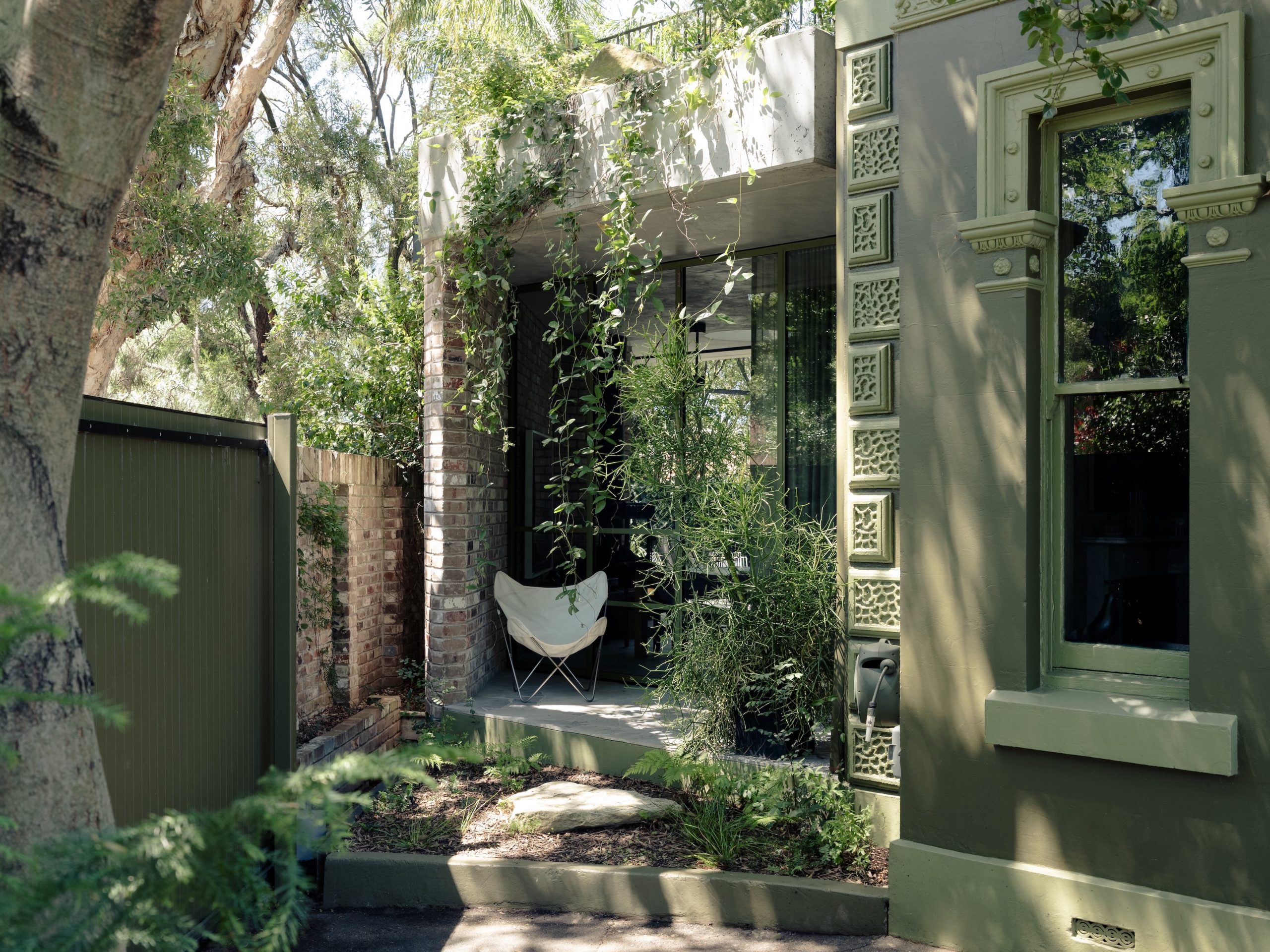
From bushland greens to valley reds, the country’s most awarded designers are proving that the best colour palette was never on a swatch card; it was outside the window all along.

A cluster of century-old warehouses beneath the Harbour Bridge has been transformed into a modern workplace hub, now home to more than 100 businesses.