Want to Take the Pain Out of Planning Meals? Learn to Be an AI Whisperer.
With the debut of DeepSeek’s buzzy chatbot and updates to others, we tried applying the technology—and a little human common sense—to the most mind-melting aspect of home cooking: weekly meal planning.

 7 min
7 min
Read the news, and it won’t take long to find a story about the latest feat of artificial intelligence. AI passed the bar exam! It can help diagnose cancer! It “painted” a portrait that sold at Sotheby’s for $1 million!
My own great hope for AI: that it might simplify the everyday problem of meal planning.
Seem a bit unambitious? Think again. For more than two decades as a food writer, I’ve watched families struggle to get weeknight meals on the table. One big obstacle is putting in the upfront time to devise a variety of easy meals that fit both budget and lifestyle.
Meal planning poses surprisingly complex challenges. Stop for a minute and consider what you’re actually doing when you compile a weekly grocery list. Your brain is simultaneously calculating how many people are eating, the types of foods they enjoy, ingredient preferences (and intolerances), your budget, the time available to cook and so on. No wonder so many weeknights end with mediocre takeout.
Countless approaches have tried to “disrupt” the meal-plan slog: books, magazines, apps, the once-vaunted meal kits, which even delivered the ingredients right to your door. But none could offer truly personalized plans. Could AI succeed where others failed?
The Weird Old Days
I conducted my first tests of AI in the summer of 2023, with mixed results. Early versions of Open AI’s ChatGPT produced some usable recipes. (I still occasionally make its gingery pork in lettuce wraps.) But the shopping lists it created were sometimes missing an ingredient or two. Bots! They’re just like us!
Eager to please, the chatbot also made some comical culinary suggestions. After I mentioned I had a blender, it determinedly steered me to use the blender…for everything, including fried rice, which it recommended I whiz into a kind of gruel. While it provided a competent recipe for pasta with zucchini, thyme and lemon, it thought it would be brilliant to add marshmallows, which I’d mentioned I had in my pantry, to the sauce. As a friend said: “If you’re having AI plan the recipes for you, it should definitely be doing something better than what your stoned friend would make you at two in the morning.”
Early AI could plan meals for the week, but required a lot of hand-holding. Like an overconfident intern.
More Fully Baked
Eighteen months after those first attempts—about 1,000 years in AI time—I was ready to try again. In January, DeepSeek AI, a Chinese chatbot, grabbed headlines around the world for its capabilities and speed (and potential security risks). There were also new and improved versions of the chatbots I’d found wanting.
This time, I decided to experiment with ChatGPT, Anthropic’s Claude and DeepSeek. (To see how they compared to one another, see “Bytes to Bites,” below.)
From my first AI rodeo, I knew to use short, direct sentences and get very specific about what I wanted. “Think like an experienced family recipe developer,” I told DeepSeek. “Create a week’s worth of dinners for a family of four. At least three meals should be vegetarian. One person doesn’t like fresh tomatoes. We like Italian, Japanese and Mexican cuisine. All meals should be cooked within 60 minutes.”
For the next 24 seconds, the chatbot “reasoned” through my request, spelling out concerns as I watched, rapt: Would the person who doesn’t like fresh tomatoes eat marinara sauce? Black bean and sweet potato tacos are a nice vegetarian entree, but opt for salsa verde to avoid tomatoes. Lemony chicken piccata is fast, but serve with broccolini. It was…amazing. The consolidated shopping list the chatbot provided was error free.
I tried the same prompt with Claude and ChatGPT, with curiously similar results. With all the options in the world, both bots suggested black bean and sweet potato tacos, and chicken piccata. The recipes’ instructions varied, as did suggested side dishes.
Relationship Counselling
I decided to write a more detailed request. “Long prompts are good prompts,” said Dan Priest, chief AI officer for consulting firm PwC in the U.S. The more information you provide, the more the AI can “align with your expectations.” Don’t try to get everything right the first time, Priest said: “Have a conversation.”
Good advice. I admit, when I first began my tests, I was searching for weak spots. But I learned it’s crucial to refine requests. As Priest said, AI will consider your various demands and make trade-offs—though perhaps not the ones you’d make.
So I started talking to AI. I said I like to cook with seasonal ingredients—that my dream dinner is a night at Chez Panisse, the Berkeley restaurant where chef Alice Waters redefined rustic-French cooking as California cuisine. Within seconds I had gorgeous recipes for spring lamb chops with fresh herbs, and miso-glazed cod with spring onions and soba. When I asked to limit the budget to $200, the bot swapped in pork for pricey lamb and haddock for cod. I requested meals that adhered to guidelines from the American Heart Association, and recipes that used only what was in my fridge. No problem.
But would the recipes work? Chatbots don’t have experience cooking; they are Large Language Models trained to predict what word should follow the last. As any cook knows, a recipe that reads well can still end in disaster. To my surprise, the recipes I tested worked exactly as written by the chatbots—and took no longer than advertised. Even my luddite husband called Claude’s rigatoni with butternut squash, kale and brown butter “a keeper.”
As yet no chatbot can compete with Alice Waters—or my husband, for that matter—in the kitchen. (For more on that, see “How Do Real Cooks Rate AI?” below.) But I’ll keep asking AI to, say, create shopping lists for recipes I upload, or come up with a recipe for what I happen to have in the refrigerator—as long as I’m there to whisper in the chatbot’s ear.
Bytes to Bites
Which chatbot is right for your kitchen?
Any of the three chatbots we tested can deliver a working meal plan—if you know how to talk to it. My personal pick was Anthropic’s Claude, for its intelligent tone and creativity, followed by DeepSeek AI for its “reasoning.” AI “agents” such as Open AI’s Operator, can, in theory, order the food needed to cook your recipes, but the consensus is they need a bit more time to develop.
Open AI’s ChatGPT • I had quibbles with ChatGPT’s first round of recipes. The seasoning skewed bland—only one tablespoon of soy sauce for a large veggie stir fry. It had me start by sautéing my chicken piccata, which then got cold while the pasta cooked. ChatGPT was also annoyingly chipper in its interactions. Still, with a few requested revisions, its lemon and pea risotto was perfection.
DeepSeek AI • I was impressed with this chatbot’s “reasoning” and the way it balanced sometimes-conflicting requests. Its recipes were seasonal (without prompting) and easy to follow; its shopping list, error free. Its one unforgivable mistake: presuming a paltry number of stuffed pasta shells would feed my hungry family. Some have voiced security concerns over using a Chinese chatbot; I felt comfortable sharing my meal preferences with it.
Anthropic’s Claude • I felt like Claude “got” me. This encouraged me to chat with it, resulting in recipes I liked and that worked, like a Mexican pozole for winter nights. This bot does need prompting; its initial instructions for brown butter and crispy sage leaves would have flummoxed an inexperienced cook. But when I suggested it offer step-by-step instructions, it praised me, which made me think it was even smarter.
Try This at Home
Have a conversation. Even a very specific meal-planning prompt requires AI to make assumptions and choices you might oppose. Ask it to revise. Add additional requirements. Follow up for more specific instructions. Time spent up front will deliver a more successful plan.
Role-play. Ask AI to think like a cook whose food you enjoy. (Told I like writer Tamar Adler’s recipes, Claude instantly offered one for wild mushroom bread pudding.) If you aren’t a skilled cook, it’s probably unwise to ask AI to mimic a three-star chef. Instead, ask it to simplify recipes inspired by your idol.
Read carefully and use common sense. It is always important to read through a recipe before you shop or set up in the kitchen, and this is especially true with AI. Recipes are invented on the fly and not tested. Ask for clarification if necessary, or a rewrite based on your skills, equipment or time.
Ask for a consolidated shopping list. In seconds, AI can aggregate the ingredients for your recipes into a single grocery list. Ask for total pounds or number of packages needed. (This saves you having to figure out, for example, how many red peppers to buy for 2 cups diced.)
Request cook times and visual cues. A good recipe writer lets you know how things will look or feel as they cook. Ask AI for the same. This will improve a vague “Bake for 20 minutes” to “bake for 20 minutes or until golden brown and the cake springs back to the touch.”
How Do Real Cooks Rate AI?
We asked AI to create dishes in the style of three favourite cooks, which it does base on text from the Internet and elsewhere it’s been trained on. And then we asked the cooks to judge the results. Verdict: The recipes didn’t reflect our panel’s expertise or attention to detail. Seems AI can’t replace them—yet.
Tamar Adler undefined Trained to cook at seminal restaurants including Prune and Chez Panisse; food writer, cookbook author, podcaster
AI dishes inspired by Tamar: Winter Squash and Wild Mushroom Bread Pudding; Braised Lamb Shoulder With White Beans and Winter Herbs; Pan-Roasted Cod With Leeks and Potatoes
Assessment: “Superficially, the recipes seem great and like recipes I would write.”
Critiques: “So much of everything I’ve written has been geared toward helping cooks build community and capability. Here, a cook is neither digging in and learning by trying and failing and repeating and growing; nor are they talking to another person, exchanging advice, smiles, jokes, ideas, updates.”
GRADE: C
Nik Sharma undefined Molecular biologist turned chef; editor in residence, America’s Test Kitchen; cookbook author
AI dishes inspired by Nik: Black Pepper and Lime Dal With Crispy Shallots; Roasted Spring Chicken With Black Cardamom and Orange; Roasted Winter Squash and Root Vegetables With Maple-Miso Glaze
Assessment: “A bit creepy. It’s trying too hard to imitate me but leaving out my intuition and propensity to experiment.”
Critiques: “Ingredients are not listed in order of use, and quantities and cook times are off. Black cardamom would kill that chicken. Also: I always list volumes for liquids and weights, whenever possible.” (AI did not—but you could ask it to!)
GRADE: C
Andrea Nguyen undefined Leading expert on the cuisine of Vietnam, cookbook author, cooking teacher, creator of Viet World Kitchen
AI dishes inspired by Andrea: Quick Lemongrass Chicken Bowl; Winter Vegetable Banh Mi With Spicy Mayo; Quick-Braised Ginger Pork with Winter Citrus
Assessment: “Machine learning is good for certain things, like getting factual questions answered. AI mined my content near and far, and got some things right but not others. Good recipes contain nuances in instructions that offer visual and taste cues.”
Critiques: “Quantities were off—often way off. The rice bowl is only good for a desperate moment. The ginger pork is an awful mash up of ideas. Yuck.”
GRADE: C/C+
 Copyright 2020, Dow Jones & Company, Inc. All Rights Reserved Worldwide. LEARN MORE





For Central Element, the start of work at Pearl represents another step in the company’s growing eastern suburbs pipeline.

All three vehicles will form part of a broader charitable initiative benefiting Big Brothers Big Sisters of America, the American Red Cross and Starlight Children’s Foundation

Apple’s first foldable, the $1,999 iPhone Duo, combines an iPhone and iPad Mini experience—but its size, weight and price come with compromises.
4 min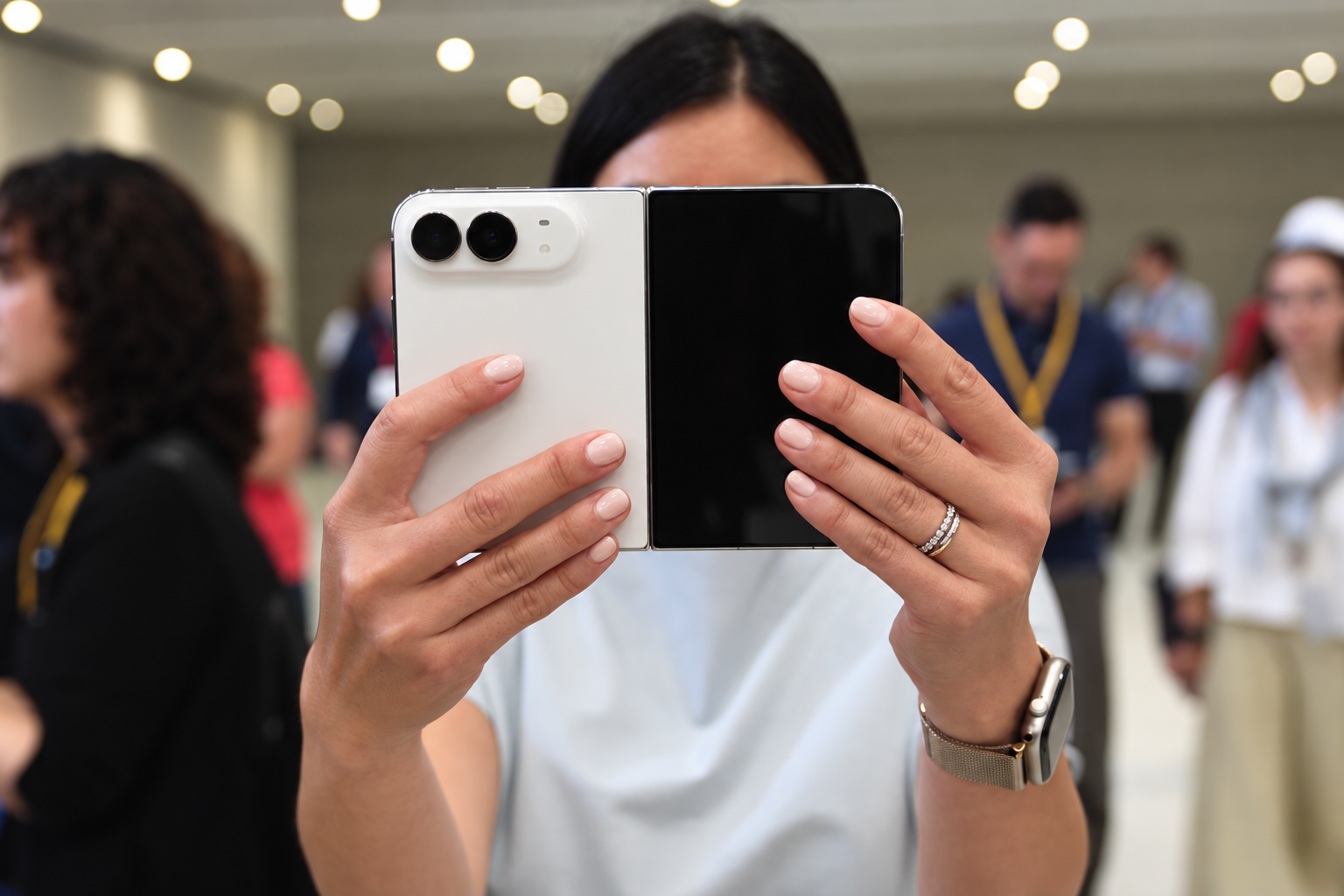
As I watched a Netflix show on Apple’s first foldable, the iPhone Duo, I had two surprising thoughts.
The first: Maybe I don’t need my iPad Mini anymore.
The second: Uh oh, am I about to spend $1,999 on a phone?
I didn’t think folding phones were for me. I’ve been testing Android versions from Samsung and Google since 2019, and those early editions came with too much screen and too many compromises.
Fast forward seven years, and the technology has come a long way. Apple—in its very Apple way—has also come up with some hardware and software trickery to make up for some shortcomings of the basic design. My desire for a folding phone before today was zero. After today, it’s a lot more than zero.
I’m not ready to recommend the Duo, which ships on Oct. 23, just yet. Not until I am able to test it more fully, so be on the lookout for that review in a few weeks. But from what I experienced at Apple Park on Wednesday, I could actually picture myself using this new half-phone, half-tablet hybrid.
Crease camouflage
For months, I’ve been using Samsung’s Galaxy Z Fold 8, a similarly squat, passport-shaped foldable that opens up to a larger screen. It’s impressively thin and can easily fit into the infuriatingly tiny pockets in women’s pants and dresses. Samsung did a lot of work to minimize the crease—the dip between the two halves of the big interior display—but it’s still clearly there.
When I held the iPhone Duo open, the crease was barely visible. As I slid my finger across the display, I could feel it, but it’s more subtle than Samsung’s. Most of the time, the screen looked as flat and smooth as the one on an iPad.
Apple employed both software and hardware techniques to camouflage the crease. The matte surface of the interior 7.6-inch screen minimizes reflections to hide it. (Samsung’s Fold 8 screen is shiny.)
And as you begin to open or close the iPhone Duo, the interface shifts the controls and content away from the center crease. If, say, you’re watching a video on the outer screen, you can open the Duo to switch to the bigger display within. A black fade marks the transition. You don’t see the video full screen until the phone is completely flat.
Heavy handed
My second observation was that, when the Duo is closed, in phone mode, it was harder to use one-handed than I expected.
In the keynote trailer and press release, Apple touted how thin the Duo is. It’s marketed as the thinnest iPhone ever—when open.
But it’s actually thicker and heavier than most of its Android competitors. The Duo weighs 254 grams, and is 11.3 millimeters thick when closed. The Samsung Galaxy Fold 8 is just 201 grams, with a thickness of 9.7 millimeters. Google’s Pixel 11 Pro Fold is 239 grams and 10.1 millimeters.
Because the Duo is also wider than a standard iPhone, I found it quite a challenge to type.
I admit, I do have smaller-than-average hands. So I consulted my colleague Rolfe Winkler, who has a larger grip. He agreed the Duo feels big.
Apple rearranged the interface on the outer screen so it looks different than traditional iPhones. The dock and control center are off to the right to be more reachable. Committing to the Duo as your main device will require adjustments in your handling. You will have to learn a new way to use and type.
Work and play
My most surprising takeaway? I feel a pull toward this device.
I always thought that combining an iPhone and an iPad would mean bigger compromises. The battery life is about the same as the 18 Pro (up to 24 hours of “regular use” on a single charge), though I’ll need to verify that in my real-world testing. And it’s also as durable, with the same IP68 dust- and water-resistance rating as the rest of the iPhone lineup.
There are trade-offs, for sure. Trying out the camera, I immediately missed the 8X zoom in my Pro model. The Duo has just 2X zoom, which wouldn’t cut it for the dozens of pictures I take of my kid every day.
But the dual screens unlock new photo functionality. You can see what your shot looks like from the outside screen. As someone who has tried tirelessly to self-direct a family photo—or a spouse—I am very eager to try this out more.
Foldables, I initially thought, were for classic mobile-warrior jet-setter types, who never sit at a desk and are always on calls. For that crowd, the Duo can run two apps side-by-side.
Me, I’m more of a bed binge-watcher and ebook reader. That’s what my beloved iPad Mini is for.
Watching videos on the Duo is a nice experience—nice enough that you forget the screen is 0.7 inches smaller than the iPad Mini’s. The main screen is also a 4:3 aspect ratio. Very similar, by the way, to the IMAX edition of the Odyssey.
Because I wasn’t able to snag a ticket to one of the sold-out screenings, I will be watching Christopher Nolan’s version of Homer’s epic on the Duo, just as the director intended. (Just kidding! Sort of.)
The Duo costs $800 more than an iPhone 18 Pro, and I’m not sure I want to spend that premium on a first-generation Apple device. But I’m not ruling out the idea that a Duo might one day be in my future. Stay tuned for my full review.

Australian actor Chris Hemsworth has joined Archie Rose Distilling Co. as co-owner and strategic business partner as the Sydney spirits company prepares to enter the United States. The partnership brings Hemsworth together with Archie Rose founder Will Edwards, with the pair aiming to build greater international recognition for Australian whisky. Founded in Sydney in 2014, …
Continue reading “Chris Hemsworth Joins Archie Rose as Co-Owner Ahead of Global Expansion”

A record-breaking $11 million sale at The Centennial Collection has set a new benchmark for luxury apartment living in Bondi Junction.