The 60-Year-Old Real-Estate Agent Giving History Lessons on Instagram
Georgetown agent Jamie Peva blends history and real estate on Instagram, turning local stories into a powerful sales strategy.

 5 min
5 min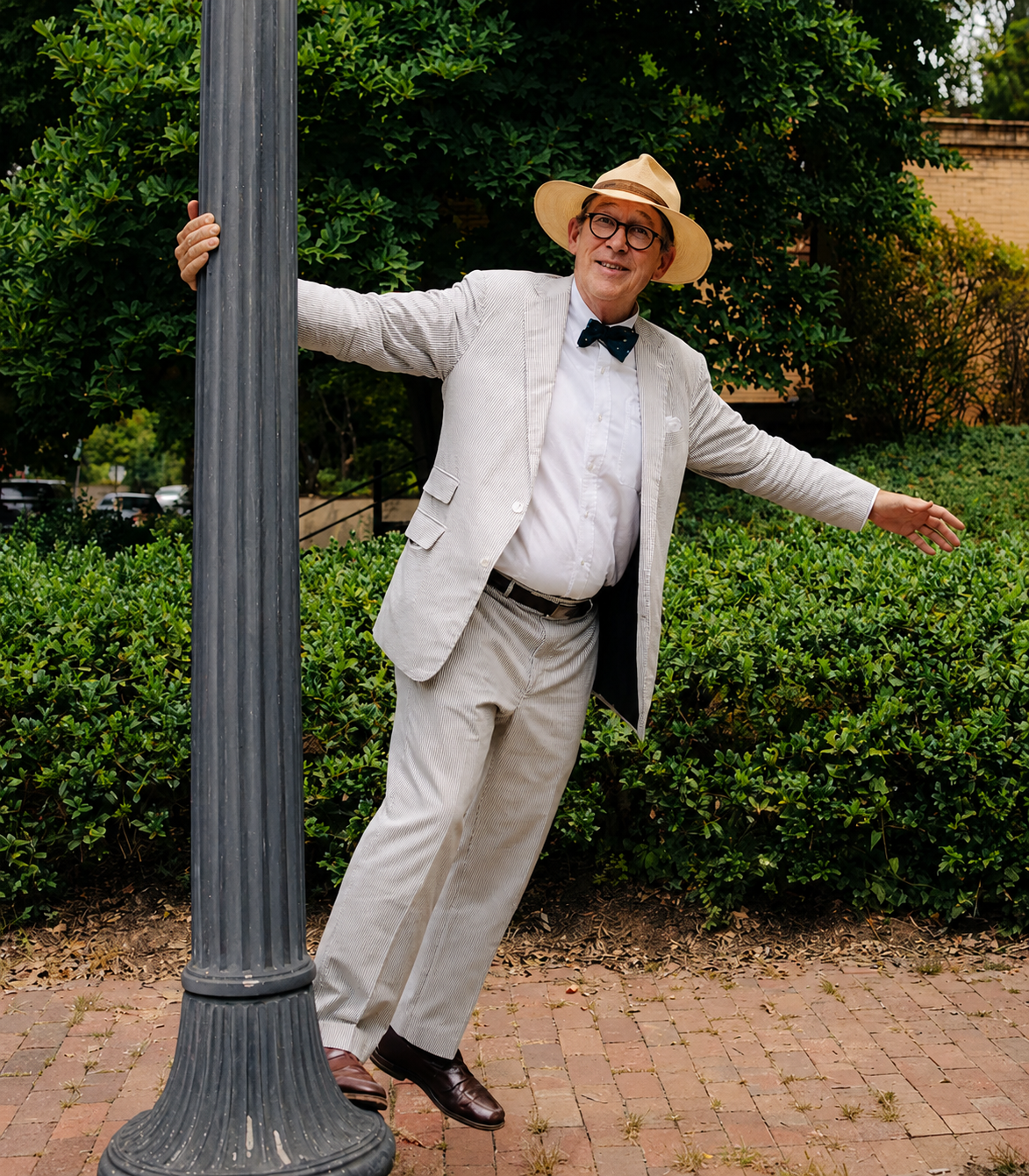
On a recent morning in Georgetown—Washington, D.C.’s oldest neighborhood—real-estate agent Jamie Peva strode down leafy N Street, brimming with historical tidbits.
Jackie Kennedy once lived on the street, he said. So did Ben Bradlee, former executive editor of the Washington Post, along with a former Miss America and a powerful U.S. Senator. Bradlee’s widow, author Sally Quinn, and Eric Schmidt, former CEO of Google, own stately homes there.
“I’ve seen a picture of Lyndon Johnson coming out of this house,” said Peva, passing a Federal-style brick mansion. “Also, the Beatles went to a lawn party here.”
Peva, a 60-year-old agent with Washington Fine Properties, has sold Georgetown real estate for over three decades, often traversing the neighborhood by bicycle. Of the roughly 2,500 houses in the historic neighborhood, he has been involved in the sale of 460, he estimated. A self-styled historian of the neighborhood, he knows stories behind its houses and their owners going back generations.
With a knack for lively storytelling, he shares his knowledge with some 37,500 Instagram followers, who have made Peva—sporting the bow ties he has worn since boarding school—an unlikely social-media influencer. Many of his followers are locals, and most have no plans to buy or sell real estate—until they do. It is then, according to Peva, that his spirited reels bring him to mind.
“It’s the digital version of a refrigerator magnet,” he said.
After Peva’s first video in November 2023, his eponymous Instagram account sparked a 10% increase in sales volume in the first year, and another 20% the next, he estimated. “It’s been very good for business, there is no question about it,” he said.
But Peva’s posts have also made him a local celebrity. As he walked down N street, the driver of a Mercedes station wagon slowed down to honk and wave. A lady walking a large dark gray dog stopped to ask what he was filming that day (a reel about a Colonial-era bottling plant.) Peva knew the dog from walking his two springers, Jumpy and Peggy-O, in the neighborhood.
“I need to make a video about the pooches of Georgetown,” he mused.
A growing number of real-estate agents now use social media to sell, and some have millions of followers with reels featuring ultraluxury pads, selling tips or reality TV-style reports on their daily lives. While Peva posts about his listings—and sometimes those of other agents—he mostly focuses on Georgetown history, local businesses and community events, saying his goal is to benefit both his business and the neighborhood.
“If we don’t find something genuinely interesting and worth sharing, we won’t do it,” said Peva’s daughter, Violet Peva, a New York social-media strategist who films, edits and posts his reels. “We cover many topics, not just real-estate information.”
Peva is originally from Connecticut, but has lived in Georgetown for over 30 years, currently in a cottage-style house with a white picket fence. Over the years, Georgetown has changed. The Georgetown Set, a powerful group of Cold War-era residents whose Sunday-night potluck dinners are said to have swayed U.S. policy, has long faded away. The community is still home to high-profile Washingtonians, including a Republican senator and several cabinet members. But it increasingly also attracts technology and finance executives, according to Peva. He now routinely signs nondisclosure agreements, ensuring privacy for wealthy clients. The shift has made him rethink his marketing approach.
“For years, a big part of our Georgetown business was made up of people who maintained a low profile,” he said. Real-estate agents were similarly low-key. Today, curb appeal is more important, he said, and agents are promoting themselves more. “As this change was underfoot, I was thinking that I needed to evolve myself too,” he said.
Though his own social-media use is mostly limited to following sailing accounts, he asked his daughter to help him post his listings online. Violet, now 26, started coming to D.C. once a month to film his reels. After an early video, on a condominium building called the Elliott, her sister Fern called her to report: “Daddy’s blowing up on Instagram,” Violet recalled. The reel got over 50,000 views. The next two each drew over 300,000. Peva’s most popular post ever, with over 838,000 views, was about the Grateful Dead playing in Georgetown. Sometimes, Peva interviews Georgetowners such as Quinn, the author, or Jamie Stachowski, the owner of a local butcher shop.
Peva, who majored in history in college, now spends up to two hours a day on research, usually in the morning while on his stationery bike. Online, he pores over old newspapers or the Library of Congress website, and he has a collection of articles and books—in and out of print—about Georgetown.
Companies often approach Peva for promotional posts, he said, but he turns them down, feeling that followers would lose interest in constant commercials. One exception is a recent paid post on Mount Vernon, the former home of George Washington. Peva wanted to share its history, he said, and didn’t want to lose the opportunity to another Instagrammer.
Anthony Arend, a professor at Georgetown University, has lived in his current home for 19 years without any plans to sell or buy real estate. But he follows Peva and often likes his posts.
“He is very charismatic, he is energetic, and he obviously knows a lot about the community,” said Arend, who has referred house-hunting friends to Peva.
One of Peva’s biggest deals—the $10.5 million sale of a 19th-century Italianate mansion—came after he made two 2024 reels featuring the property. In March, he sold the longtime O Street home of Tim and Jane Matz for $5.8 million after featuring it on his Instagram. Peva had showed them the home 25 years earlier, with Violet in a baby carrier on his back.
Last year, Kate Watts, 49, a digital consultant, called Peva to sell her late father’s three-bedroom house on Q Street; her husband had seen Peva on Instagram. In an October reel, Peva praised the architecture of the house, designed by modernist Hugh Newell Jacobsen. Halfway through, he mentioned an open house the next day, ending with an upbeat: “Did I also mention this house is for sale? $3.75 million!” The reel got 27,000 views, the open house was packed, and the buyers made an offer at the list price on the same day.
 Copyright 2020, Dow Jones & Company, Inc. All Rights Reserved Worldwide. LEARN MORE




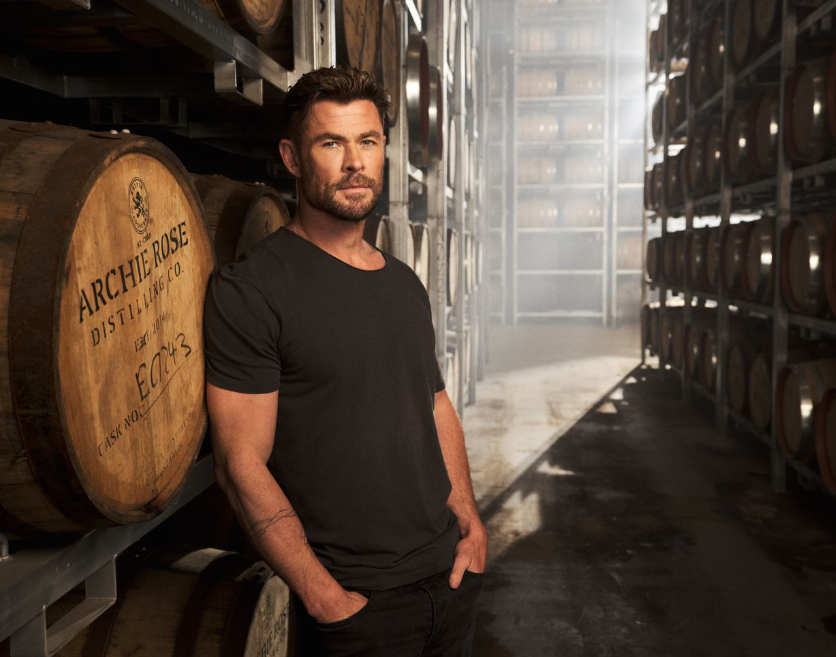
Australian actor Chris Hemsworth has joined Archie Rose Distilling Co. as co-owner and strategic business partner as the Sydney spirits company prepares to enter the United States. The partnership brings Hemsworth together with Archie Rose founder Will Edwards, with the pair aiming to build greater international recognition for Australian whisky. Founded in Sydney in 2014, …
Continue reading “Chris Hemsworth Joins Archie Rose as Co-Owner Ahead of Global Expansion”

Porsche has revealed a one-off 911 GT2 RS that brings the extraordinary silhouette of its 935/78 “Moby Dick” racing car onto the road. Created by Porsche Sonderwunsch with Manthey, the commission began with a near-new GT2 RS. The owner requested greater performance, a Slantnose profile and a rear wing influenced by the limited 911 GT3 …
Continue reading “Porsche Builds a Road-Going “Moby Dick” From a 911 GT2 RS”
 4 min
4 min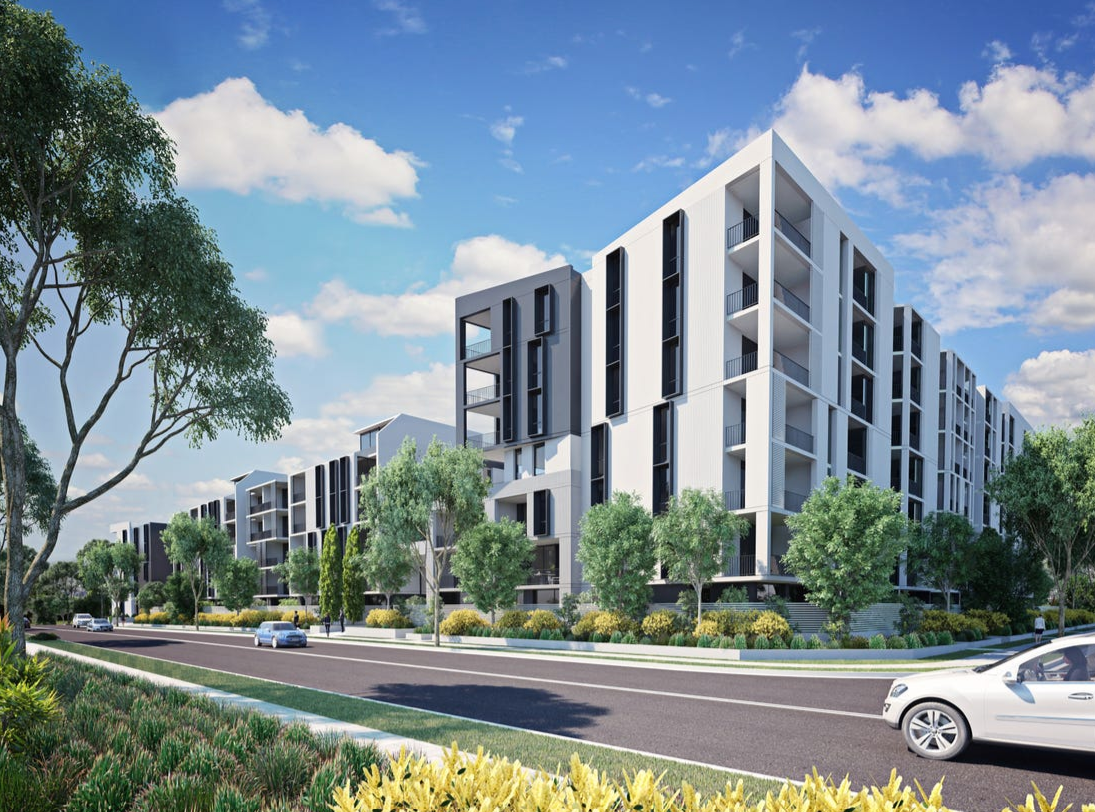
A Perfect Storm Claims a Major Player
Western Sydney’s property development sector was rattled this week by the collapse of Bathla Group, one of the region’s most prominent builders of affordable housing.
Administrators from Teneo were appointed to the group’s main entity, Universal Property Group, along with related firm Raj & Jai Construction, after months of mounting financial pressure.
The scale of the fallout is significant. Universal Property Group reported liabilities of $3.2 billion as at June last year, the bulk of it owed to private credit funds, a detail likely to draw scrutiny as administrators work through the group’s finances.
Founder Bhart Bhushan pointed to a “perfect storm” of softening sales, the impact of May’s federal budget changes and rising construction costs. Bathla’s chief executive was more blunt, acknowledging that falling property prices and climbing build costs had squeezed the business over a sustained period.
The human cost is already visible. Off-the-plan buyers across Bathla’s Western Sydney projects, including in Schofields, Marsden Park and Tallawong, suburbs at the heart of the group’s development pipeline, are now facing uncertainty over deposits, settlement timelines and unfinished builds.
It’s a story that has become depressingly familiar in NSW, with more than 1,500 construction firms going under in the state this financial year alone.
A Market Searching for Certainty
Bathla’s failure isn’t an isolated event. It’s a symptom of the conditions squeezing developers across Western Sydney, and Marsden Park sits right at the centre of that pressure.
Rising construction costs, tighter lending and softening buyer sentiment have combined to push even large, established players to the wall.
For prospective buyers looking at Marsden Park, the collapse has sharpened a question that was already on many minds: not just whether a development looks good on paper, but whether the developer behind it has the staying power, capital discipline and planning relationships to actually deliver.
In that environment, track record has become the differentiator that matters most.
Buyers are no longer simply comparing floorplans and masterplans. They’re asking who has the balance sheet, discipline and history to see a precinct through from approval to completion.
KDMC: 25 Years, Zero Incomplete Projects
Against that backdrop, KDMC’s position in Marsden Park stands out.
The Kanebridge Group development arm has been building in Northwest Sydney for 25 years and, in that time, has never left a project unfinished.
That’s not a marketing line. It’s a completion record buyers can check against a market that has just delivered a stark reminder of what happens when developers overextend.
KDMC’s flagship Marsden Park project, a roughly 1,320-home precinct at 264A South Street, reflects the scale of ambition the suburb now needs from a developer that can actually deliver it.
It’s also a project with history.
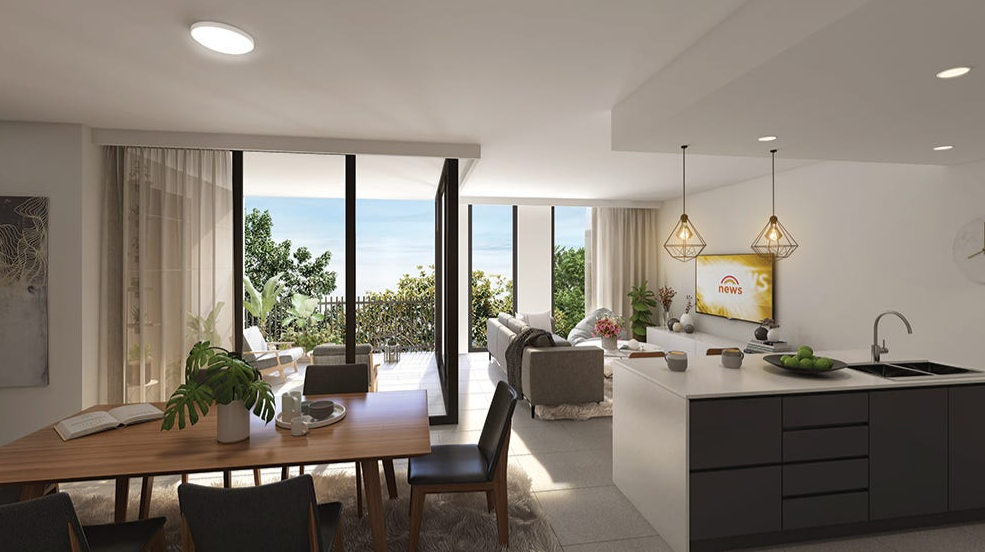
Back in 2017, KDMC launched Stage One of the development and sold 49 units in a single day, a result that speaks for itself in terms of market confidence.
Shortly after, the project was abruptly put on hold when Transport for NSW halted the DA to reserve the site for a future train line. It would have been easy for a lesser developer to walk away.
Instead, that pause has turned into the site’s greatest asset.
With the train line now set to connect Marsden Park directly to both Sydney Airport and the CBD, the residual site has become one of the most sought-after development opportunities in Sydney, a rare case of patience and planning discipline converting a setback into a generational upside.
The current stage of the project is backed by lodged State Environmental Assessment Requirements and formal development applications, along with independent valuation and transport infrastructure analysis.

The aim is to ensure the precinct is grounded in real, defensible fundamentals, precisely the kind of financial and planning discipline that was missing in Bathla’s playbook.
KDMC has also backed its recent projects with a 10-year defect warranty, well beyond the statutory minimum most buyers have come to expect.
For anyone who has just watched a major developer collapse mid-build, that kind of guarantee isn’t a nice-to-have. It’s the difference between a confident purchase and a leap of faith.
The Bottom Line for Marsden Park Buyers
Marsden Park’s growth story doesn’t need more supply promises. It needs a developer who delivers on them.
With Bathla out of the picture and its Marsden Park buyers left assessing their options, KDMC’s quarter-century of completed projects and extended defect cover offer something increasingly rare in the current climate: certainty.
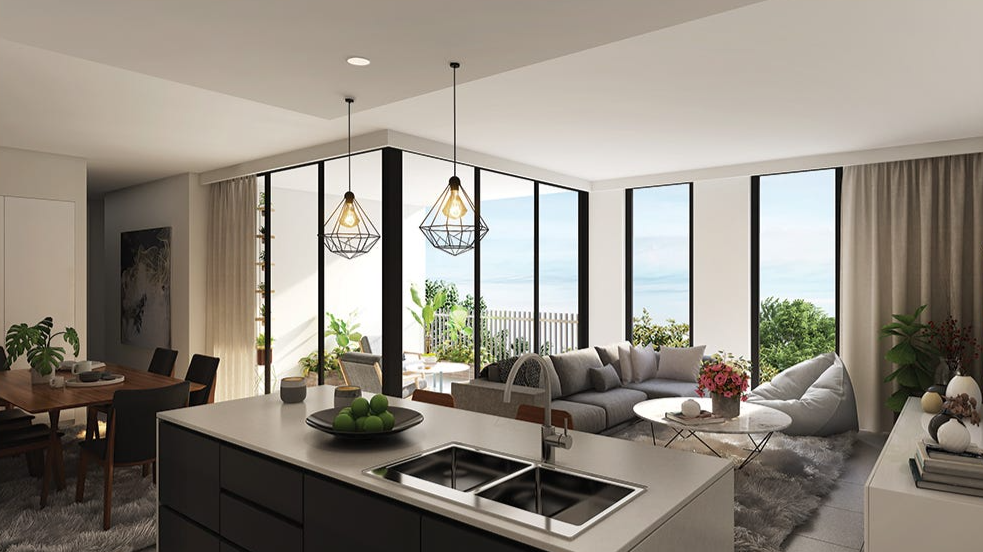
For anyone weighing up where to place their trust in Marsden Park right now, the calculation has become simple.
Choose a developer with a story of every project finished, and a site whose fortunes have only strengthened with time, not a headline about one that wasn’t.
For more information email propertyconcierge@kanebridge.com.au
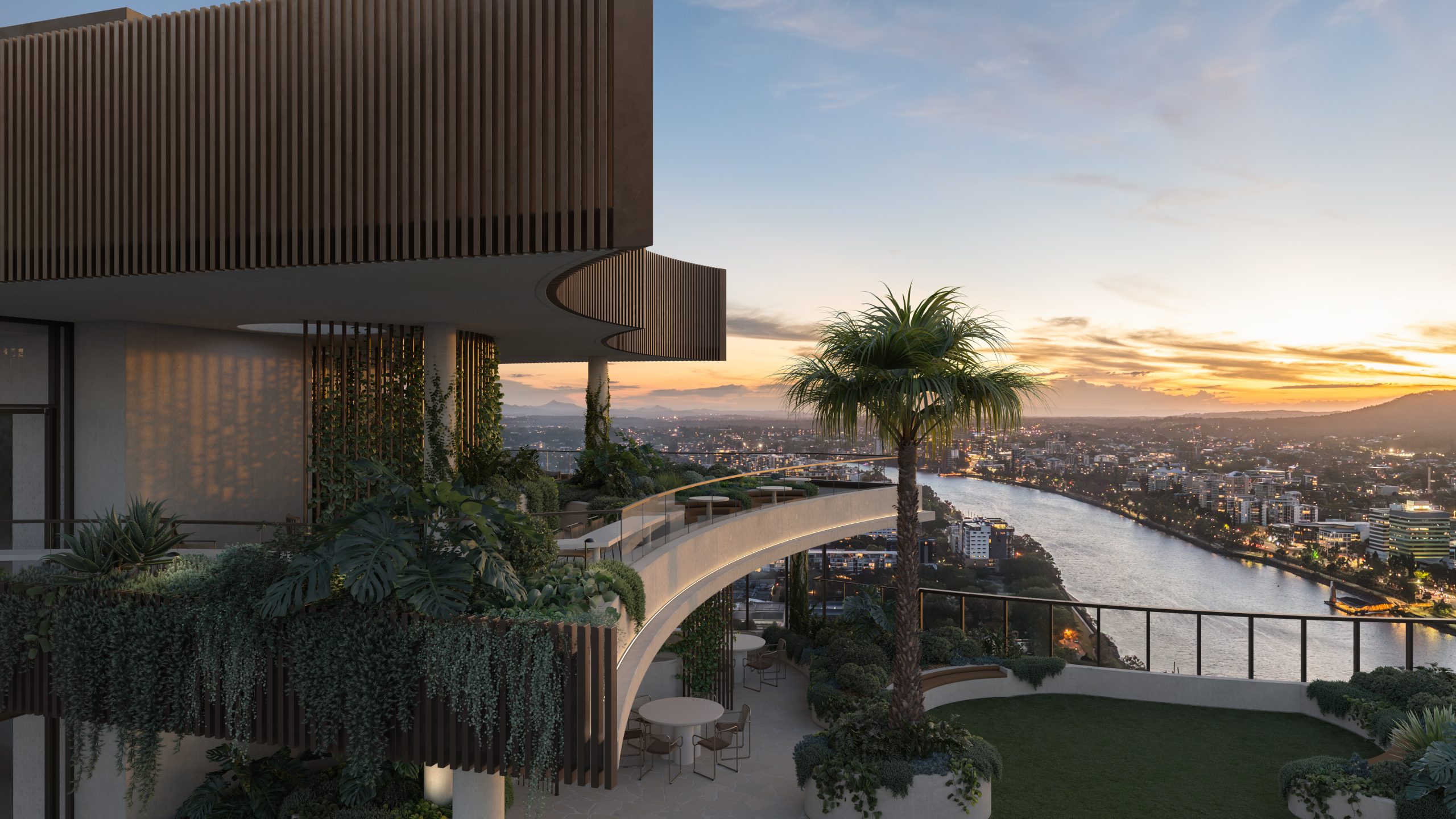
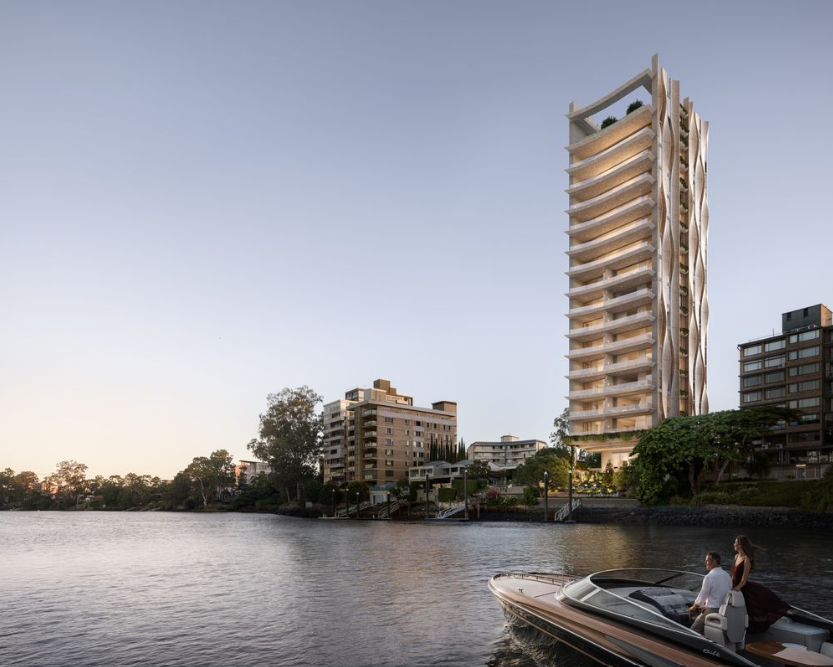
Set on one of the city’s last absolute riverfront sites, The Riversdale by Mosaic combines irreplaceable waterfront ownership with one of Brisbane’s most significant residential opportunities.

Chinese carmaker GAC will expand its Australian electric vehicle line-up with the city-focused AION UT hatchback.