

Higher Rates Are Biting — But the RBA Says Most Borrowers Are Still Holding Up
The RBA says most Australian borrowers remain resilient, but around 2 per cent of variable-rate owner-occupiers face a cash-flow shortfall.
 3 min
3 min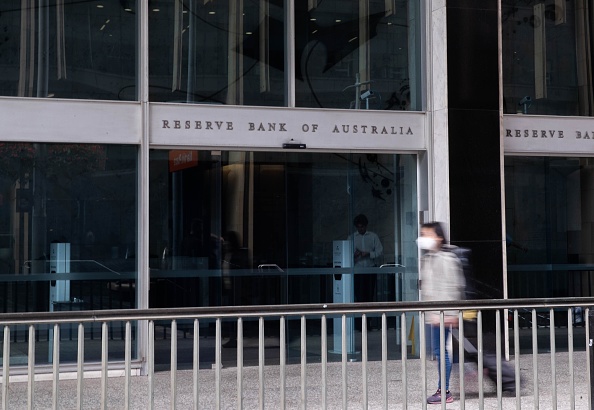
The Reserve Bank’s October stability review finds that most borrowers remain resilient, even as a small but important group experiences cash-flow shortfalls and investor activity remains a source of potential market amplification.
Australian borrowers have absorbed higher interest rates better than many feared, but the averages conceal a small group under genuine pressure.
The Reserve Bank’s October 2026 Financial Stability Review estimates that around 2 per cent of variable-rate owner-occupier borrowers are experiencing a cash-flow shortfall — meaning essential spending and scheduled mortgage payments exceed income. That is a minority, yet in a mortgage market containing millions of loans it is not insignificant.
The broader picture is more resilient. Most mortgagors continue to service their debts, helped by strong employment, income growth, savings buffers and the capacity to reduce discretionary spending. Many households also entered the tightening cycle with substantial equity, limiting the risk that a forced sale would leave debt outstanding after the property changed hands.
For owner-occupiers, the report reinforces the difference between repayment discomfort and insolvency. A household may feel materially poorer after a rate increase without being unable to pay. The danger rises when several stresses arrive together: reduced working hours, illness, separation, expiring interest-only terms or a major unexpected expense.
That is why borrowers should focus on liquidity, not only equity. A home can be worth considerably more than its mortgage while the owner still struggles to meet this month’s repayment. An offset balance or accessible savings buffer can therefore matter more in the short term than a strong paper gain.
Investors face a different calculation. The RBA notes that investor housing activity can amplify property-price cycles because investors may respond more quickly than owner-occupiers to changing expected returns. Rising rates increase holding costs, while rent, vacancy, maintenance, land tax and insurance determine whether an asset remains cash-flow sustainable.
Investor lending has moderated from elevated levels, although it remains an area watched by regulators. APRA’s June-quarter data showed investment loans represented 31.2 per cent of outstanding residential mortgage credit and 35.6 per cent of new residential lending. It also showed that 8.9 per cent of new investor loans had a debt-to-income ratio of six times or more, compared with a lower share across new lending overall.
High debt-to-income lending is not automatically poor lending. A borrower may have substantial assets, reliable income or a clear deleveraging plan. But leverage leaves less room for error when rates rise or income weakens. Investors should stress-test repayments above the current rate, allow for periods without rent and budget for irregular capital expenses rather than treating gross rent as spendable income.
The RBA’s assessment does not amount to a forecast that mortgage stress will disappear. Financial stability can remain sound while individual households experience serious hardship. Borrowers who expect difficulty should contact their lender early; hardship arrangements are generally more effective before arrears compound.
For prospective buyers, the practical message is not to assume that system-wide resilience makes every loan safe. Purchase price, deposit, loan structure and cash reserves still determine personal risk. For investors, the discipline is sharper: evaluate the property on net cash flow, realistic rent and a conservative interest-rate assumption, not on the hope that capital growth will solve an overextended balance sheet.
Australia’s mortgage market is bending rather than breaking. The RBA’s two-per-cent estimate shows, however, that resilience is not evenly shared — and prudent borrowers should build their finances for the possibility that their own circumstances will not resemble the average.
Borrower dashboard
Variable-rate owner-occupiers in cash-flow shortfall: Around 2 per cent, RBA estimate
Total residential mortgage credit: $2.5585 trillion at June 2026, APRA
Investor share of outstanding residential credit: 31.2 per cent
Investor share of new residential lending: 35.6 per cent
New investor loans at DTI of six or more: 8.9 per cent

Studio apartments have almost disappeared from new Australian developments. Lura is bringing them back to Burleigh Heads from $495,000.

Porsche’s Cayenne Turbo Electric produces up to 1,156PS and reaches 100km/h in a claimed 2.5 seconds.
Bjorn Farrugia was named for Björn Borg, the ice-cool Swede who once ruled Wimbledon’s Centre Court, and for a long stretch of his young life the name felt like a mandate
3 min
A tennis scholarship took him to America two decades ago with no return ticket in mind. Today the Melbourne-born, Beverly Hills-based agent is one of the most decorated names in Los Angeles luxury real estate — and still calls himself an Australian first.

Now complete, Ophora at Tallawong offers luxury finishes, 10-year defect insurance and standout value from $475,000.

From warmer neutrals to tactile finishes, Australian homes are moving away from stark minimalism and towards spaces that feel more human.