As demand outstrips supply pressure mounts on housing prices
Selling conditions are on the up for vendors in Australia’s capitals
 3 min
3 min
Not that long ago, Australia was in the midst of the fastest drop in housing values on record, as rapidly increasing interest rates caused capital city values to plunge more than 9 percent in the space of about 10 months.
That’s all changed since hitting a low in February, with three consecutive months of positive growth in housing values due to a significant imbalance between supply and demand. So, less than a week out from winter, what’s the outlook for Australia’s property market?
Resilience: Competition is rife
There’s not a lot of competition in the market for vendors currently with decade-low listing numbers. It’s one of the reasons selling conditions have strengthened, as evidenced by above average clearance rates, faster selling time and less negotiation. For context, the total number of homes listed for sale nationally is tracking 28 percent below usual. When listing volumes are very low, selling conditions strengthen, which means potential vendors thinking about selling may well be tempted to list now rather than waiting until the traditional spring period, when activity surges and there’s a spike in competition to sell.
Rising prices: Sustainable or not?
Home values for the four largest capital cities all recorded an increase in housing values from the lows recorded in February. A mid-month update based on CoreLogic Australia’s daily Home Value Index showed the upswing gathering momentum, especially in cities such as Brisbane where the index is up 1.0% over the past four weeks. Sydney however is still leading the charge. Considering housing affordability measures remain stretched such a strong rate of growth is surprising and probably unsustainable. Clearance rates: Low supply vs high demand
Auction clearance rates have been holding at 70% or higher in recent weeks and volumes are slowly on the rise at a time when they would traditionally start to drift lower. Coupled with the upwards pressure on housing values these signs suggest, if anything, the market is gathering momentum rather than slowing down. The stronger clearance rates along with other vendor metrics like faster selling times for private treaty sales and reduced discounting rates, indicate sellers are getting a little bit more leverage back.
Buyer motivation: Urgency and FOMO on the rise
Fear of Missing Out (FOMO) or buyer concern about being left behind was at its peak when the market was in full flight in 2021. While the trend is not back, yet, it does appear that some buyer demographics are highly motivated to get into the market. If the trend for low advertised stock
levels, rising clearance rates and higher values continues, it would not be surprising to see FOMO becoming more pervasive. As demand picks up against strong overseas migration and extremely tight rental markets, there’s likely to be some renters who try to fast track their purchasing decisions as well. The pool of available properties they’re competing for is the smallest it’s been in more than 10 years. A sense of urgency will likely play a part in some decision making over winter.
Challenges: Interest rates and market sentiment
Demonstrating an ability to service a loan is going to be one of the biggest hurdles that prospective buyers will face this year. Interest rates are high, but assessment levels are three percentage points higher again. However, qualifying for the loan is only one challenge. We can’t ignore low consumer sentiment levels, which will also be having some dampening effect on the market’s current exuberance and we shouldn’t expect to see a material lift in property activity until there’s an improvement in consumer confidence more broadly.
Wavering confidence: Economic uncertainty
If the RBA were to cut interest rates there is a good chance we would see a lift in consumer spirits, accompanied by a substantial pick up in both buyer and selling activity. Logically, lower interest rates would be the catalyst for a further uptick in housing values. Of course, we’re not expecting a rate cut anytime soon and there’s speculation that rates may even rise a little bit further this year. Economists are split on their forecasts with predictions for further rate hikes, some stability and some cuts later this year. All of this is likely to be adding to uncertainty and low consumer confidence levels, however any reduction in rates will likely be the cue for more buyers and sellers to become active again.
Homeowner resilience: Mortgage repayments remain steady
We would be naive to think there isn’t going to be a rise in motivated selling or increase in mortgage arrears in the short to medium-term. However, coming off record low rates, most banks were reporting 90-day arrears rates of around 0.5% to 0.6% at the end of 2022. That benchmark is set to increase, however most homeowners or borrowers will do their best to pull back sharply on discretionary spending before missing mortgage repayments or selling their home.
After winter, what’s next?
Spring 2023 is going to be interesting. Historically, it’s the season for new listings and sales transactions, but that activity didn’t materialise for spring last year. There’s possibly some accrued supply building up from people who have been thinking about selling but holding back, and if the market remains relatively buoyant we could see a very active spring this season. A material increase in advertised supply could dampen values and clearance rates as more homes come on the market.
Tim Lawless is Research Director at CoreLogic Asia Pacific

From making unpopular decisions to learning when to listen, leaders from five businesses reveal what nobody prepared them for — and how running a company has challenged their expectations.

Technology and semiconductor shares fell sharply as investors questioned the debt financing the AI infrastructure boom and confronted higher rates and Chinese competition.

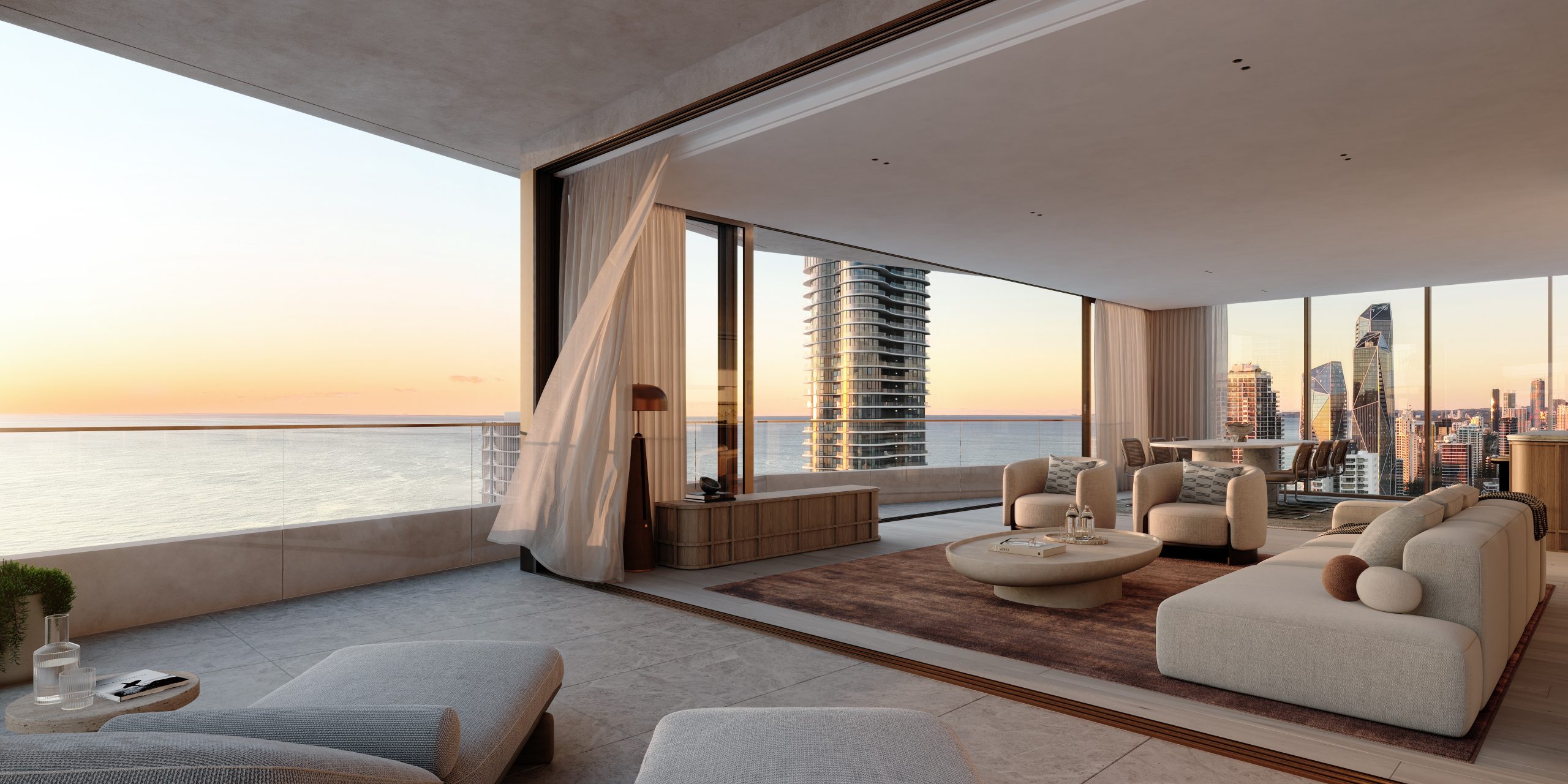
Mirvac’s 45-level Trielle has topped out at Yarra’s Edge, pairing riverfront apartments with wellness facilities, private dining and resident services.
3 min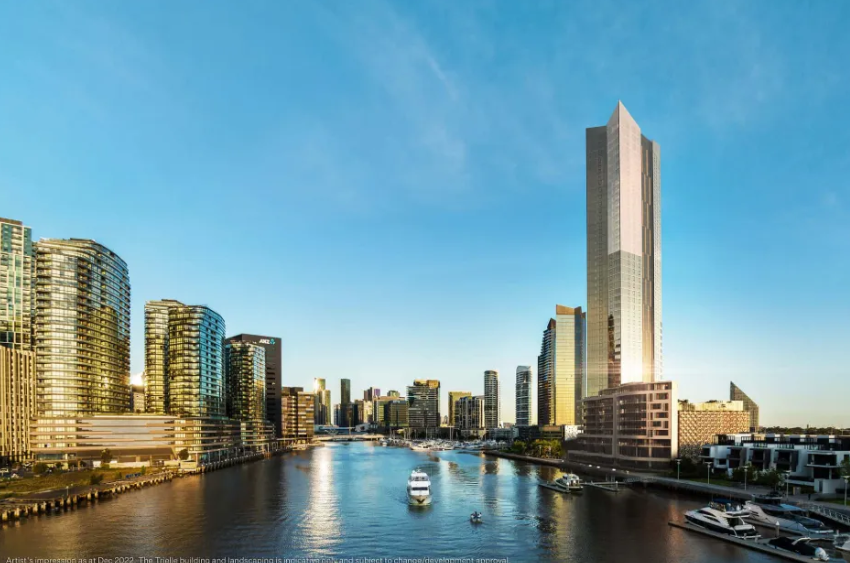
Mirvac has topped out Trielle at Melbourne’s Yarra’s Edge, with more than 70 per cent of the riverfront development sold and approximately 80 per cent of purchasers intending to make their apartment a home.
The figures, released on September 22, point to an owner-occupier audience for one of the precinct’s final residential towers. Mirvac began developing Yarra’s Edge in 2003, and its latest addition occupies one of the remaining absolute riverfront sites.
Mirvac CEO of Development Stuart Penklis said existing residents were among those moving up within the neighbourhood.
“Many purchasers already have a connection to Yarra’s Edge,” Mr Penklis said, describing buyers whose changing needs were encouraging an upgrade within the precinct.
“As one of the final residential towers within Yarra’s Edge, Trielle represents the culmination of more than two decades of creating one of Melbourne’s most established and sought-after waterfront communities,” Penklis said.
“Positioned on the Collins Street axis with absolute river frontage, Trielle offers residents a rare opportunity to enjoy sweeping views across the Yarra River, Melbourne skyline and Port Phillip Bay, while remaining seamlessly connected to the CBD. With Trielle now more than 70 per cent sold, we’re continuing to see strong demand from buyers seeking quality homes in established locations.”
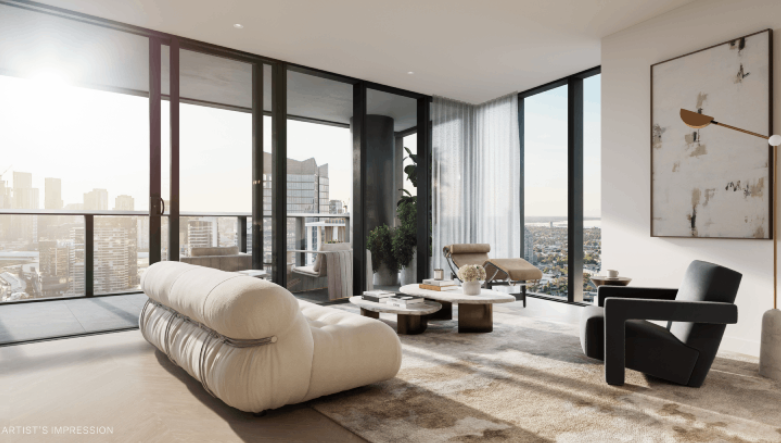
The developer also flagged a penthouse and sub-penthouse collection with larger layouts, premium finishes and broad outlooks. The planned wellness centrepiece, The Oasis, encompasses a 900-square-metre elevated urban rainforest.
Mirvac General Manager Residential Development Victoria Elysa Anderson said Trielle had resonated strongly with buyers seeking a rare lifestyle offering in Melbourne.
“Opportunities to secure a new luxury residence on a riverfront site of this calibre are incredibly rare, particularly within a community like Yarra’s Edge,” Anderson said.
“What makes Trielle unique is the combination of exceptional views, world-class residential facilities and the lifestyle that already exists around it. Residents are buying into a mature waterfront community with parks, promenades, dining, wellness and strong community connections already in place.”
The 45-level tower brings a substantial new presence to that waterfront. Its residential offering spans one-, two-, three- and four-bedroom apartments, with Signature, Prestige and Sub-Penthouse collections accommodating different household sizes. The north-facing position connects the apartments visually to the river and city beyond.
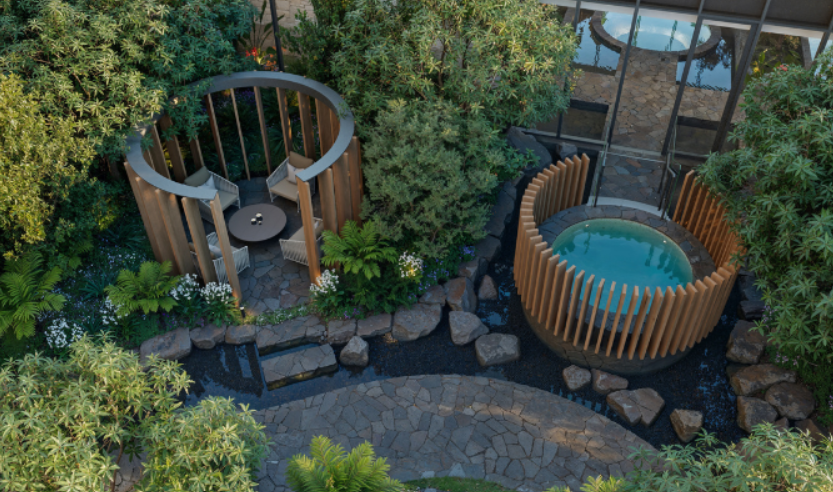
Seven storeys above the promenade, the planned Oasis combines planting and a running stream with a Scandinavian-inspired wellness club developed with spa specialist Naomi Gregory. Facilities include a 25-metre lap pool, hot magnesium pool, sauna, hydrotherapy, a gym, yoga and Pilates room, and treatment spaces.
The amenity extends beyond exercise. Residents will have access to The Biblioteca library and workspaces, ground-floor work pods, and The Salone piano lounge. A private Chef’s Table dining room offers a setting for larger gatherings, while a cinema, games room and sports lounge broaden the entertaining options. Concierge services and a dog-wash area support everyday routines.
Trielle comprises a collection of one, two, three and four-bedroom residences. Reflecting strong demand from owner occupiers, approximately 80 per cent of purchasers to date intend to live in their homes, highlighting the project’s appeal to those seeking a long-term waterfront lifestyle.
Mirvac has recently delivered The Albertine, a premium apartment development on the edge of Melbourne’s CBD, and is nearing completion of Prince & Parade in Brunswick, further strengthening its portfolio of thoughtfully designed apartment communities in some of Melbourne’s most sought-after urban locations.
Records keep falling in 2025 as harbourfront, beachfront and blue-chip estates crowd the top of the market.

As the season turns, Handpicked Wines’ latest Pinot Noir and Chardonnay releases reveal how subtle shifts in place shape what ends up in the glass.