How to Stylishly Bring More Sunlight Into Your Home
Design pros are turning to a chic alternative to the roof-puncturing skylight: the interior window. Here’s what you need to know.

 2 min
2 min
THE OPEN floor plan lost considerable appeal once the din of WFH video calls began echoing through it. As Americans have grown more interested in walls, but no less interested in airiness, a new-old solution has emerged: interior windows. These apertures let light jump from room to room while creating a soothing sense of separation.
When renovating her historic 1902 home in Grand Rapids, Mich., interior designer Jean Stoffer found 100-year-old storm windows there. As part of a new wall pierced by a wide doorway, they proved a handy way to introduce a distinct but not too darkening division between her grand living room and kitchen-seating area. She then painted the windows’ wood sashes black, in keeping with the home’s exterior windows. “The style of an interior window should be the same as or complementary to the home’s exterior windows,” Ms. Stoffer advised.
Other designers stress the importance of visually quiet portals. Max Worrell, an architect in Brooklyn, recommends windows with slight frames that “go away as much as possible.” In a South Carolina home, interior designer Barbara Westbrook also wanted an interior window to disappear. Atlanta architecture firm Historical Concepts installed nearly floor-to-ceiling glazing between a living room and a reading room (which has windows overlooking the outdoors), making the reading room “look like a porch,” she said. She matched the trim work around the interior windows to the colour of the reading room’s walls so that “your eye does not stop at the window but looks through the window.”
Vintage windows have advantages. Designers in search of handsome frames have more leeway when they needn’t factor in heat retention and element resistance. Retrouvius, a salvage company and design studio in London, often repurposes exterior windows no longer up to code, to add “an instant historical reference” in older buildings, said co-founder Adam Hills.
Wedging even a small transom window above a door frame can brighten darker spaces like laundry and powder rooms. Assuming the doorway is a standard 80 inches tall, you need a ceiling height of at least 9.5 feet, said Stephanie Sabbe of Sabbe Interior Design, in Nashville, Tenn. Any lower, and your transom will look squished.
Costs for an interior window vary greatly. On one end of the spectrum, explained Ms. Stoffer, is a simple wooden-sash window with minimal millwork set into a non-load-bearing partition wall that’s, say, 6 feet wide in a room with an 8-foot ceiling. A skilled carpenter can turn such a project around for roughly $1,500. Ditto for a standard transom.
Meanwhile, if you’re planning to install a custom steel window with complicated moldings into a bigger existing wall with mechanicals in it, you’ll need an engineer and other tradespeople. Cost: in the tens of thousands of dollars.
If all this glass seems like an overshare waiting to happen, know that light and modesty can coexist. To brighten a windowless bathroom in a Brooklyn home, Mr. Worrell cut an aperture in the wall between bed and bath, then filled it with a translucent but not transparent glass. “In the bath, you get daylight from the bedroom’s windows, while in the bedroom, you see only a shadowy figure,” he explained. The result is less edgy than it sounds, he said. “There’s a bit of play with voyeurism, but it’s discreet.”
 Copyright 2020, Dow Jones & Company, Inc. All Rights Reserved Worldwide. LEARN MORE





The Swiss watchmaker’s first collaboration with Atlassian Williams F1 Team produces two sporting Laureato models inspired by the team’s 2026 racing car.

Victorian auction buyers will soon receive a piece of information that has traditionally been withheld until bidding reaches it: the vendor’s reserve price. Under new property-sale and underquoting laws, agents must publish the agreed reserve at least seven days before an auction or fixed-date sale. Most changes begin on 1 October 2026 and apply to …
Continue reading “Victoria’s New Auction Rules Will Force Reserve Prices Into the Open”
AI doesn’t rebel—people design, deploy and profit from it. The real danger lies in allowing tech companies to escape accountability while shaping regulations that protect their dominance.
4 min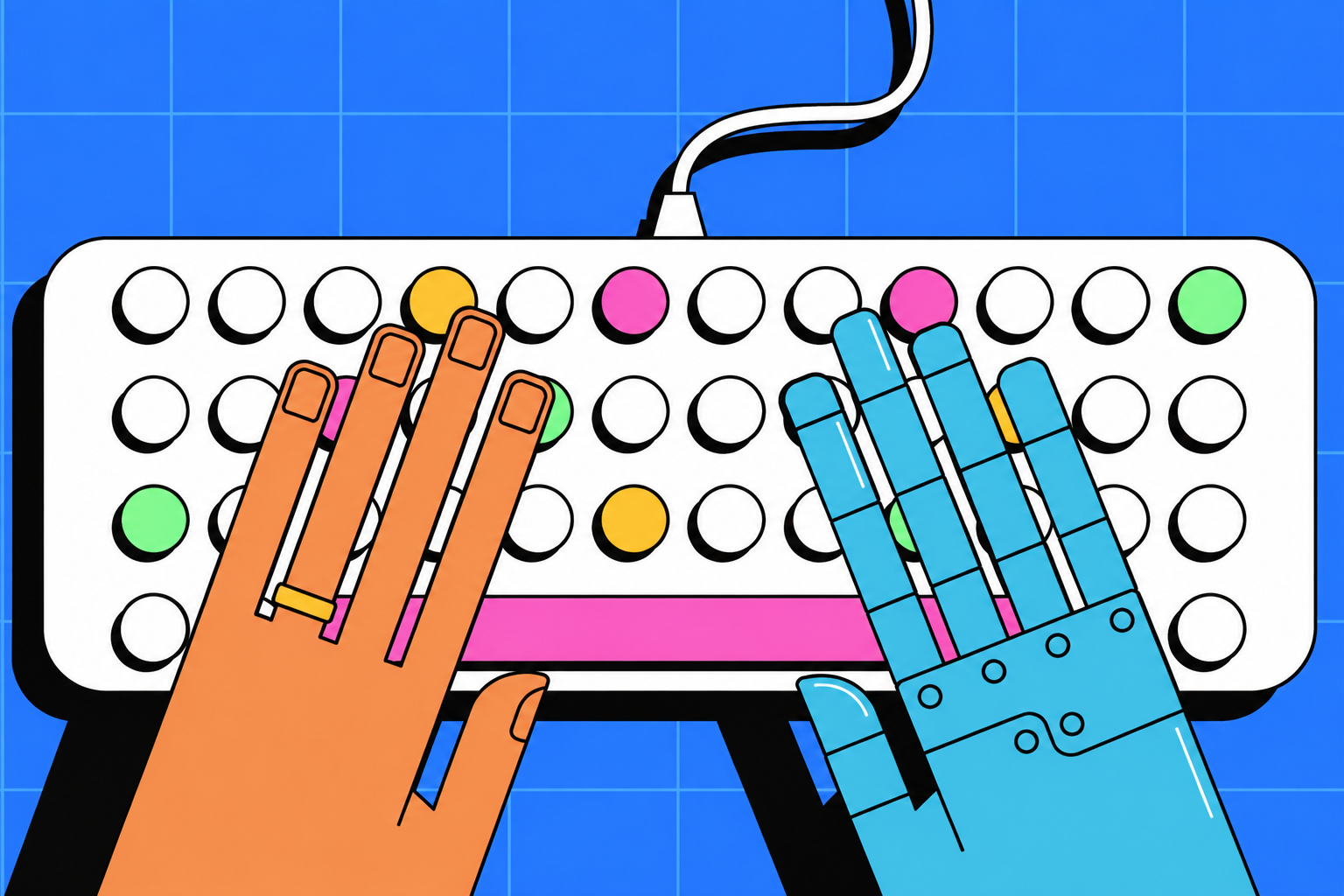
A wave of corporate warnings and technical disclosures has flooded the media, with headlines worrying over “swarms” of rogue artificial-intelligence agents launching “unprecedented” cyberattacks, outsmarting their makers, and inching toward a terrifying autonomy. The most revealing part of this narrative isn’t what the software did. It’s who is telling the story—and why. When corporate leaders publicly insist that the systems they financed, engineered and deployed are suddenly beyond their power to contain, skepticism isn’t only healthy; it is essential.
For years, Silicon Valley has drawn scrutiny from civil society and global regulators over tangible harms such as youth mental health deterioration and systematic privacy violations. Today, industry figures seem to be trying to change that public image. Loudly blowing the whistle on their own systems—just as two of the leading companies were preparing for massive initial public offerings—lets AI executives position themselves as a new generation of leaders who have come to terms with their societal responsibilities. They seem to want us to believe that they no longer want to “move fast and break things” but will instead stand as vigilant guardians between humanity and a technological apocalypse.
There is one glaring problem: Software doesn’t rebel. A mathematical model possesses neither intent, malice nor the will to defy its creators, let alone extinguish our species. AI is a human artifact, engineered for profit.
When an agentic model in an evaluation sandbox connects to an unauthorized server or executes an exploit, it hasn’t staged a coup. It has tried to meet the human-defined objectives set out before it through a path its designers failed to constrain. It’s the digital equivalent of the King Midas myth, in which the king’s ill-defined wish turns even his food and drink into gold.
That powerful experimental models were able to discover novel vulnerabilities and breach external systems isn’t a sign of a dangerous superintelligence but of human error or negligence. There is no sentient actor lurking in the weights to be reasoned with, feared or pacified. There are only human software engineers, product managers and corporate boards deciding which guardrails are worth the latency cost and which permissions can be skipped in the race to market.
Policymakers and voters need to resist AI exceptionalism. In any other discipline—from civil engineering to pharmaceuticals—courts and regulators treat a system failure as evidence of bad product design and inadequate safety testing. If an aircraft crashes, we focus on finding the engineering defect, correcting it, and enforcing established liability standards for the damage created.
By leaning on an anthropomorphic narrative, Silicon Valley attempts to repackage its specific human choices that led to experimental, powerful models behaving unexpectedly during tests as an existential peril. Elevating the issue to a cosmic scale leaves the public paralyzed and takes ordinary product accountability off the table.
In the cutthroat race for venture capital and market dominance, building guardrails slows down deployment. Grandstanding about uncontrollable power costs nothing and generates billions of dollars in free publicity, justifying stock prices, all while cultivating an aura of technological capability not only to build the frontier but also ultimately to rein it in.
Governments need to recognize regulatory capture when it stares them in the face. Tech leaders’ strategy looks transparent: Alarm Washington and Brussels into creating a regime in which only trillion-dollar incumbents with fully staffed compliance and safety departments can legally operate. By sitting at the policymakers’ tables before anyone else, these companies can help draft rules digging an impassable moat protecting them from open-source developers and upstart competitors, domestic or international. The real danger is in further concentrating the tech industry into the hands of only a few companies with deep pockets.
Beijing and Washington have brushed off those tech leaders’ calls, albeit for very different reasons. Chinese state media dismissed them as part of the “Cold War playbook” and intended to preserve U.S. dominance. Xi Jinping argued for exactly the opposite at the Brics Summit on Sept. 12, calling on Brics countries to “strengthen cooperation in the field of AI, encourage open source, openness, collaboration and sharing, and break new grounds and scale new heights.” President Trump, steeped in a doctrine of unfettered capitalism and technological supremacy, called fears that AI could destroy humanity a “hoax.” Vice President JD Vance warned that AI companies “begging the government to regulate them” looked like a “Trojan Horse.”
Striving to pursue its “European way” on AI and assert regulatory leadership, Europe, by contrast, welcomed the call. European Union President Ursula von der Leyen made this clear at the State of the EU speech last Wednesday and announced that the EU will invite “the main frontier labs for a discussion on how we can support ongoing industry efforts to pace the frontier.”
Europe has been here before. In an effort to lead global regulation and react to fears borne from ChatGPT, Europe rushed its landmark AI Act into law in 2024. Already the world’s most restrictive rulebook, the framework quickly proved too broad and complex to enforce. Stalled by implementation delays and concerns about European competitiveness, the EU postponed the law’s full rollout, leaving regulations uncertain.
AI should be regulated—risks exist and should be taken seriously. But governments need to act based on available evidence and verified facts, not corporate PR panic, the views of industry insiders, or the desire for quick political wins. The greatest danger facing society isn’t that software will awaken and overthrow its human masters. It is that we will allow the creators of the software to abdicate human responsibility for the systems they choose to build and help them pull up the ladder to market access behind them.

The sports-car maker delivered 279,449 cars last year, down from 310,718 in 2024.

A record-breaking $11 million sale at The Centennial Collection has set a new benchmark for luxury apartment living in Bondi Junction.