Why London’s Wealthy Are Renting Instead of Buying

 5 min
5 min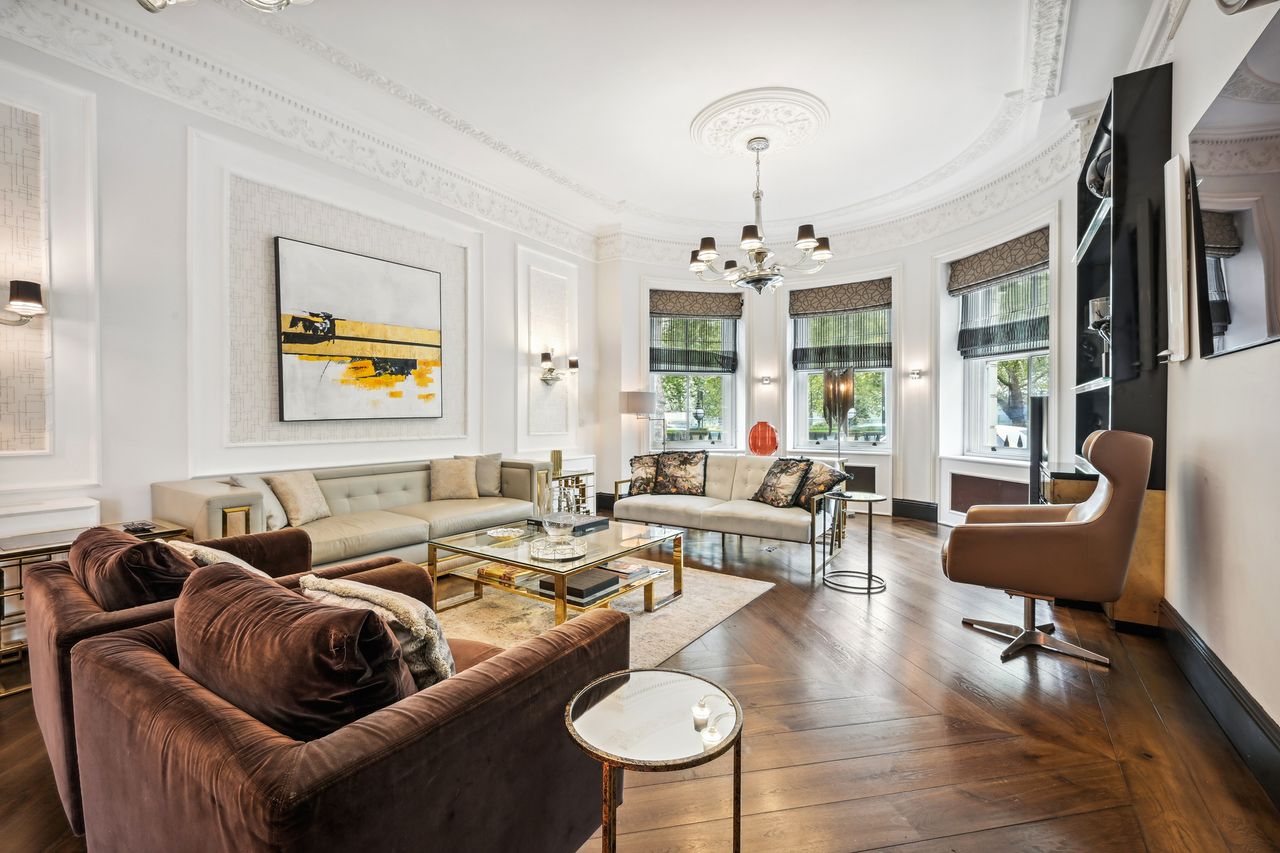
With London luxury real-estate prices on the slide and a collapse in high-end deal volume, it has been a tough year for prime central London real estate. But the prime rental market is thriving. People in need of a London base are increasingly opting to take the flexible, minimal-commitment housing option rather than buying, and paying Britain’s high taxes, in a stalled market. As a result, prime rents are escalating. House price analyst LonRes found that average prime rents in London increased 3.5% between December 2022 and December 2023. Average prime rents are now 29% above pre pandemic levels notched during the period of 2017 to 2019.
Separate research from estate agent Beauchamp Estates found that 63 London homes were rented out for $6,370 or more per week—about $330,000 per year—between January and June 2023. Buying agent Liam Monaghan, managing director of London Central Portfolio, said many of his prime tenants live a global, itinerant lifestyle. They include soccer players, actors and film producers and tech entrepreneurs.
“They can obviously afford to buy these properties, but perhaps they are on a short-term contract or are growing a business and have got a lot of wealth quite quickly and are jumping between lots of different countries and are still working out where they want to live,” said Monaghan. Nina McDowall, head of lettings at estate agent Strutt & Parker’s office in Knightsbridge, one of London’s most expensive neighbourhoods, said many of her renters are considering buying a London property but only when they find the perfect home at a great price. “There are a lot of people who are weighing up their options,” she said. “They might also be sitting tight to see if prices slide further.”
Others, such as Antonio Volpin, simply don’t see London property as a great investment opportunity. Volpin, who is Italian, moved to London for work in 2011, initially living out of hotels. When his wife and two sons joined him in London in 2012, the family started renting.
“We mulled the idea of buying a property, because the market was very strong, but I thought it could not grow forever, and with my work I am not sure where I will be next year,” said Volpin, 61, a consultant for asset and fund management firms.
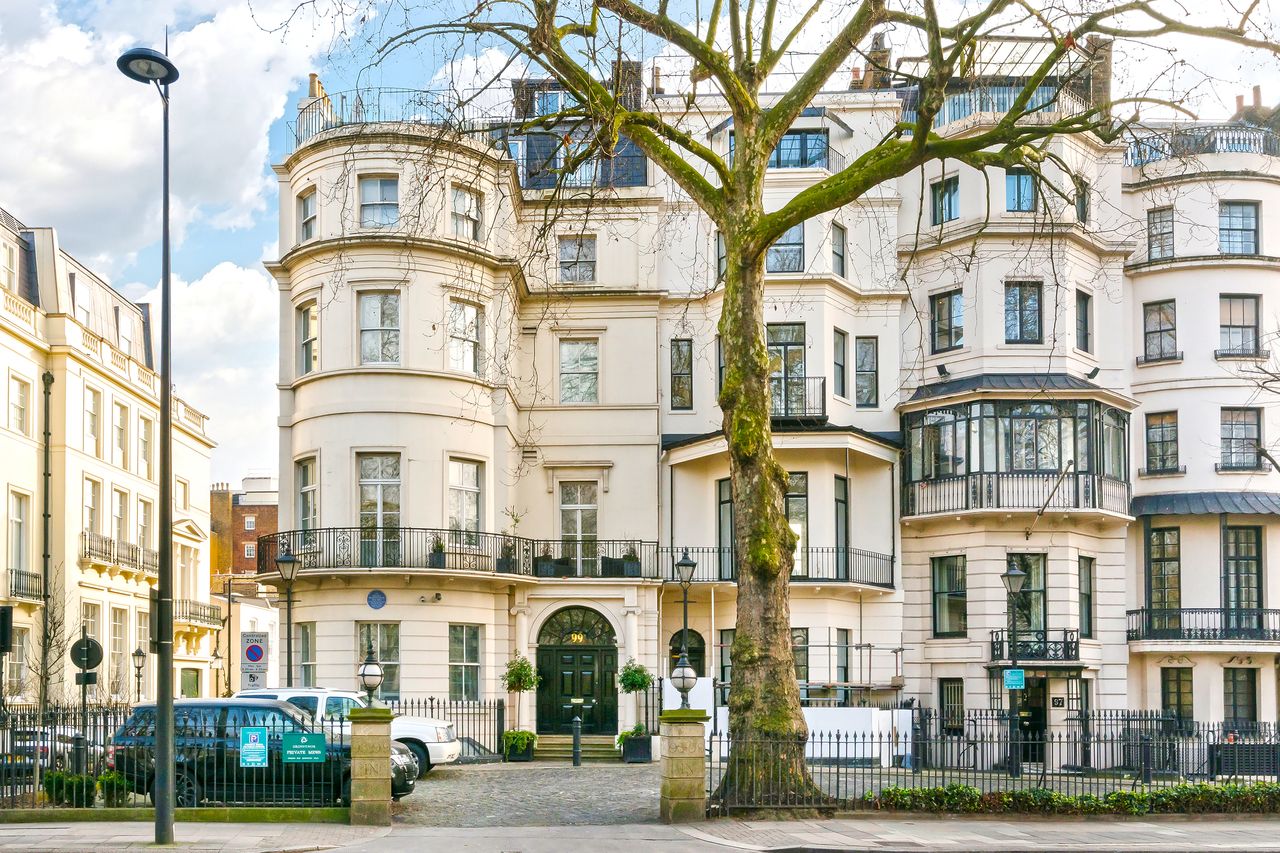
The family’s decision to continue renting proved prescient, because prime central London’s house prices have stagnated for almost a decade. According to LonRes, average sale prices in prime central London increased by just 2.3% between 2013 and 2023 (from $2,130 per square foot to $2,180 per square foot). In 2016, Volpin’s job took him to Singapore, and now he and his university professor wife are based in Rome. Their two sons, aged 26 and 22, opted to remain in London so their parents, who visit regularly, have continued to rent a three-bedroom, three-level, apartment in the affluent, historic neighbourhood of South Kensington, 2 miles west of the city centre.

Volpin has signed a nondisclosure agreement prohibiting him from revealing his monthly rental costs, but a spokeswoman for his estate agent, Winkworth, said that a similar property would cost up to $191,000 per year.
“Certainly with that money I could buy, but the point is that at the moment it is more of a kind of holiday home,” Volpin said. “When I come, I want to be close to downtown and to the friends I made while living in London.”
McDowell believes that the reason top-end rental prices have accelerated while home sale prices are falling is simple: Demand for these types of rentals is high and there is a serious undersupply of high-specification, turnkey properties.
“They are as rare as hen’s teeth,” she said. “Super-prime tenants will not sacrifice or compromise on many things. The condition and functionality of the property has to be slick and beautiful, and they will pay big prices, or pay one or two years in advance, to secure the right property.”
But while rents are rising, prime-central London landlords still have to work hard to attract high-paying tenants who expect five-star standards. “I have had people who want walls to be ripped out or massive extension work,” said Sinead Conlon, head of corporate and relocation services at John D Wood & Co. estate agents. “Some of them want interior-design furniture packages costing about $32,000 to $127,000 per month. They are all looking for an add-on.”
In one memorable case, Conlon was able to rent a substantial house in the north London suburb of Primrose Hill to a tenant who wanted the toilets in the bathrooms, 17 of them, to be replaced with Japanese models with built-in bidets. The tenant, who paid around $70,000 per month to rent the house for a year starting in 2021, eventually settled for just 10 new toilets to be fitted.
“But they are around £25,000 [$32,000] a pop, so it was not exactly cheap,” said Conlon.
Another problem facing landlords is dwindling profit margins. Interest rates have jumped and, since 2020, landlords cannot deduct mortgage interest from their tax bills, said Becky Fatemi, executive partner of Sotheby’s Realty UK. The administration of renting a property is also not cheap. Fatemi said landlords should expect to pay their estate agent between 8% and 15% of the annual rent to find and install a tenant. Management fees, if required, add another 5% to the cost.
Vickram Mirchandani currently owns and rents out two prime London properties. He is painfully aware how hard it is to turn a decent profit even in a hot rental market. Mirchandani, 46, who is British, bought a five-bedroom family home in the upscale neighbourhood of Belgravia, about 10 years ago. They lived in the home full time, but he and his wife became increasingly disillusioned with life in Britain and left London in October, then moved to Dubai with their young family in January—they have one child and are expecting a second.

CREDIT:Vickram Mirchandani
Mirchandani has decided against trying to sell the property until London’s property market has revived. In October 2023, tenants moved into the 4,200-square-foot townhouse, paying just under $8,900 per month in rent.
“It was gone within a week, on the second viewing, for the asking price,” said Mirchandani, a renewable-energy developer. “In hindsight, I could probably have got a little bit more.”
Mirchandani also owns a second property, a three-bedroom penthouse in Belgravia, which he had originally hoped to flip. “The plan was to purchase it, develop it, and sell it at a handsome margin,” he said. “But after Brexit that handsome margin never materialized.” The apartment is also rented out, fetching $11,500 per month. “I actually got over asking price for that one because the tenant has a dog and I said, ‘Fine, but that will be an extra 10%,’ ” said Mirchandani. “I am very happy with the prices achieved.”
He is less happy with the yields his capital is earning. He estimates that after costs, including income tax, he is earning around 1.5% to 2%. England’s major banks are currently offering interest rates of around 4% to 5%. Longer term, Mirchandani is still weighing his options. “I could keep them in the hope that someday some miracle will happen and they will go up, but if we like it in Dubai we will probably sell the properties,” he said.
 Copyright 2020, Dow Jones & Company, Inc. All Rights Reserved Worldwide. LEARN MORE





From making unpopular decisions to learning when to listen, leaders from five businesses reveal what nobody prepared them for — and how running a company has challenged their expectations.

Technology and semiconductor shares fell sharply as investors questioned the debt financing the AI infrastructure boom and confronted higher rates and Chinese competition.
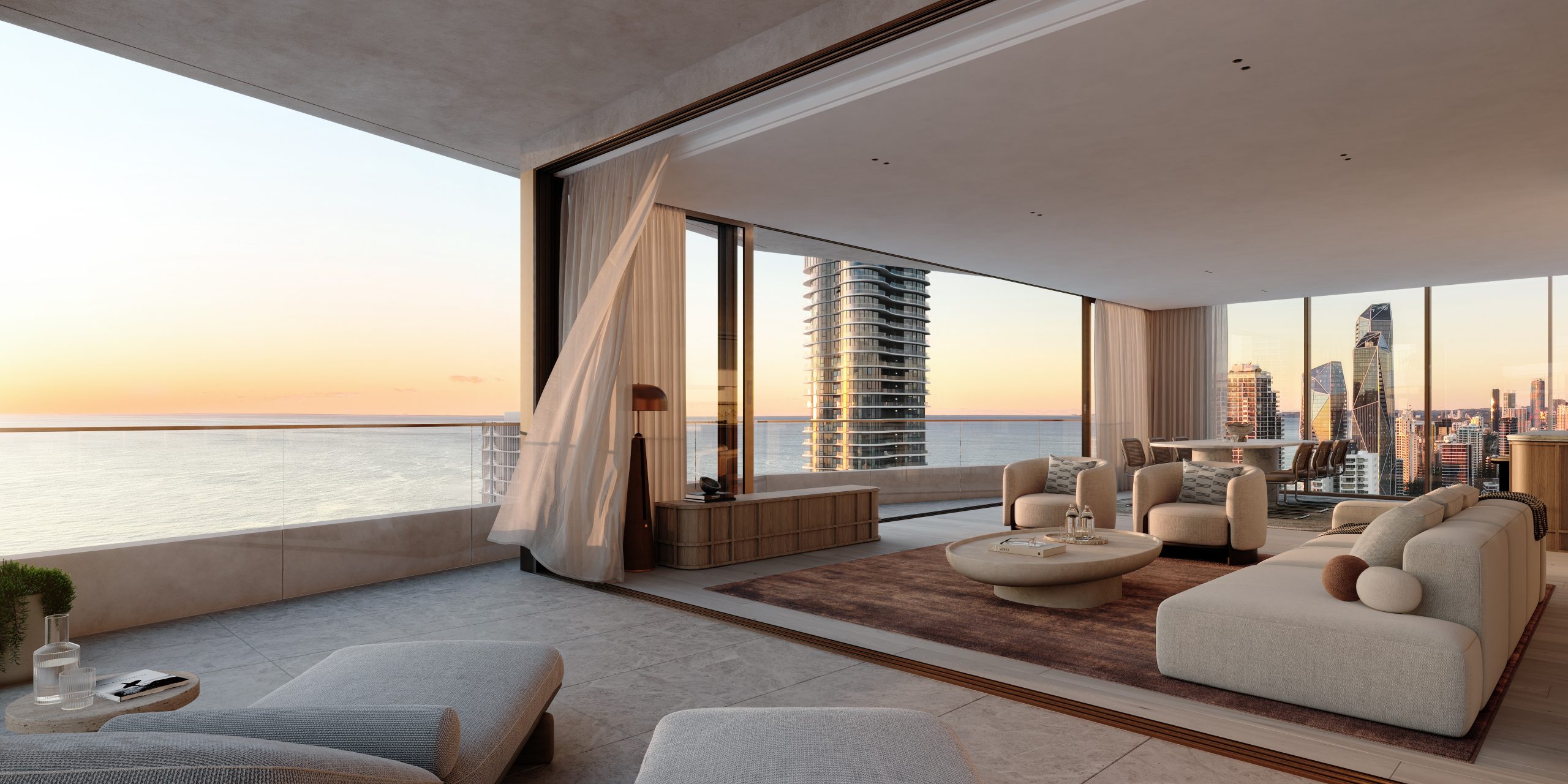
Mirvac’s 45-level Trielle has topped out at Yarra’s Edge, pairing riverfront apartments with wellness facilities, private dining and resident services.
3 min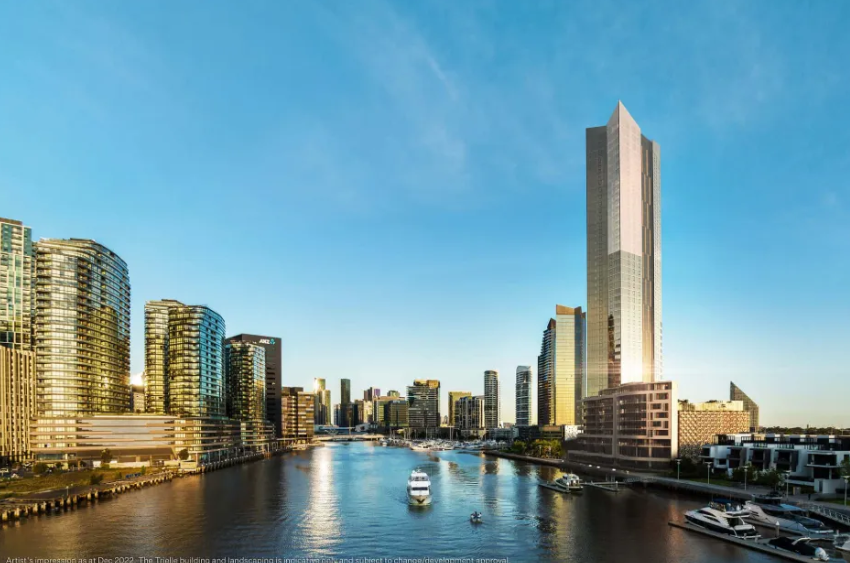
Mirvac has topped out Trielle at Melbourne’s Yarra’s Edge, with more than 70 per cent of the riverfront development sold and approximately 80 per cent of purchasers intending to make their apartment a home.
The figures, released on September 22, point to an owner-occupier audience for one of the precinct’s final residential towers. Mirvac began developing Yarra’s Edge in 2003, and its latest addition occupies one of the remaining absolute riverfront sites.
Mirvac CEO of Development Stuart Penklis said existing residents were among those moving up within the neighbourhood.
“Many purchasers already have a connection to Yarra’s Edge,” Mr Penklis said, describing buyers whose changing needs were encouraging an upgrade within the precinct.
“As one of the final residential towers within Yarra’s Edge, Trielle represents the culmination of more than two decades of creating one of Melbourne’s most established and sought-after waterfront communities,” Penklis said.
“Positioned on the Collins Street axis with absolute river frontage, Trielle offers residents a rare opportunity to enjoy sweeping views across the Yarra River, Melbourne skyline and Port Phillip Bay, while remaining seamlessly connected to the CBD. With Trielle now more than 70 per cent sold, we’re continuing to see strong demand from buyers seeking quality homes in established locations.”
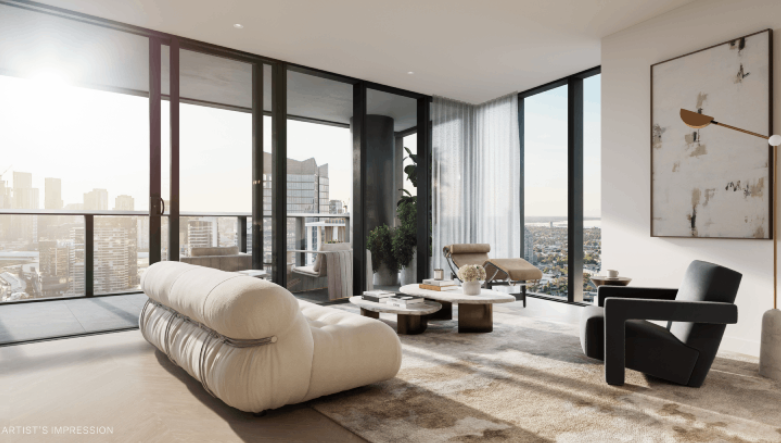
The developer also flagged a penthouse and sub-penthouse collection with larger layouts, premium finishes and broad outlooks. The planned wellness centrepiece, The Oasis, encompasses a 900-square-metre elevated urban rainforest.
Mirvac General Manager Residential Development Victoria Elysa Anderson said Trielle had resonated strongly with buyers seeking a rare lifestyle offering in Melbourne.
“Opportunities to secure a new luxury residence on a riverfront site of this calibre are incredibly rare, particularly within a community like Yarra’s Edge,” Anderson said.
“What makes Trielle unique is the combination of exceptional views, world-class residential facilities and the lifestyle that already exists around it. Residents are buying into a mature waterfront community with parks, promenades, dining, wellness and strong community connections already in place.”
The 45-level tower brings a substantial new presence to that waterfront. Its residential offering spans one-, two-, three- and four-bedroom apartments, with Signature, Prestige and Sub-Penthouse collections accommodating different household sizes. The north-facing position connects the apartments visually to the river and city beyond.
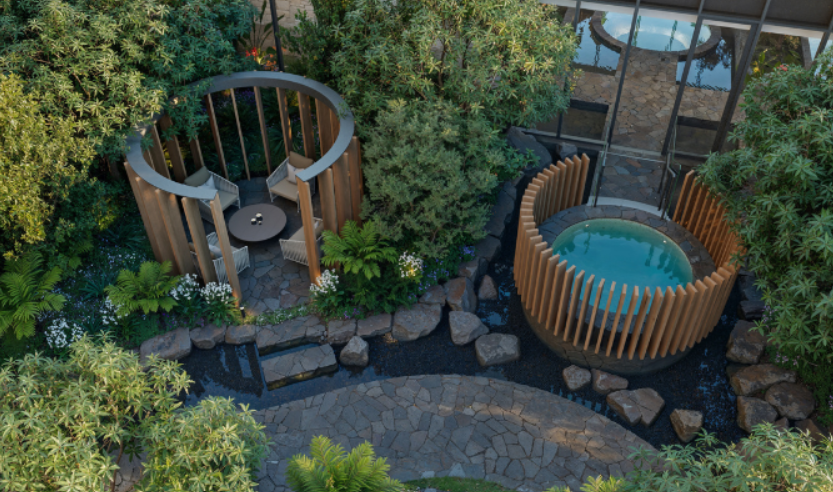
Seven storeys above the promenade, the planned Oasis combines planting and a running stream with a Scandinavian-inspired wellness club developed with spa specialist Naomi Gregory. Facilities include a 25-metre lap pool, hot magnesium pool, sauna, hydrotherapy, a gym, yoga and Pilates room, and treatment spaces.
The amenity extends beyond exercise. Residents will have access to The Biblioteca library and workspaces, ground-floor work pods, and The Salone piano lounge. A private Chef’s Table dining room offers a setting for larger gatherings, while a cinema, games room and sports lounge broaden the entertaining options. Concierge services and a dog-wash area support everyday routines.
Trielle comprises a collection of one, two, three and four-bedroom residences. Reflecting strong demand from owner occupiers, approximately 80 per cent of purchasers to date intend to live in their homes, highlighting the project’s appeal to those seeking a long-term waterfront lifestyle.
Mirvac has recently delivered The Albertine, a premium apartment development on the edge of Melbourne’s CBD, and is nearing completion of Prince & Parade in Brunswick, further strengthening its portfolio of thoughtfully designed apartment communities in some of Melbourne’s most sought-after urban locations.

A 30-metre masterpiece unveiled in Monaco brings Lamborghini’s supercar drama to the high seas, powered by 7,600 horsepower and unmistakable Italian design.

From gorilla encounters in Uganda to a reimagined Okavango retreat, Abercrombie & Kent elevates its African journeys with two spectacular lodge transformations.