A Classic Mercedes Roadster Is Going Electric in a New Partnership

 3 min
3 min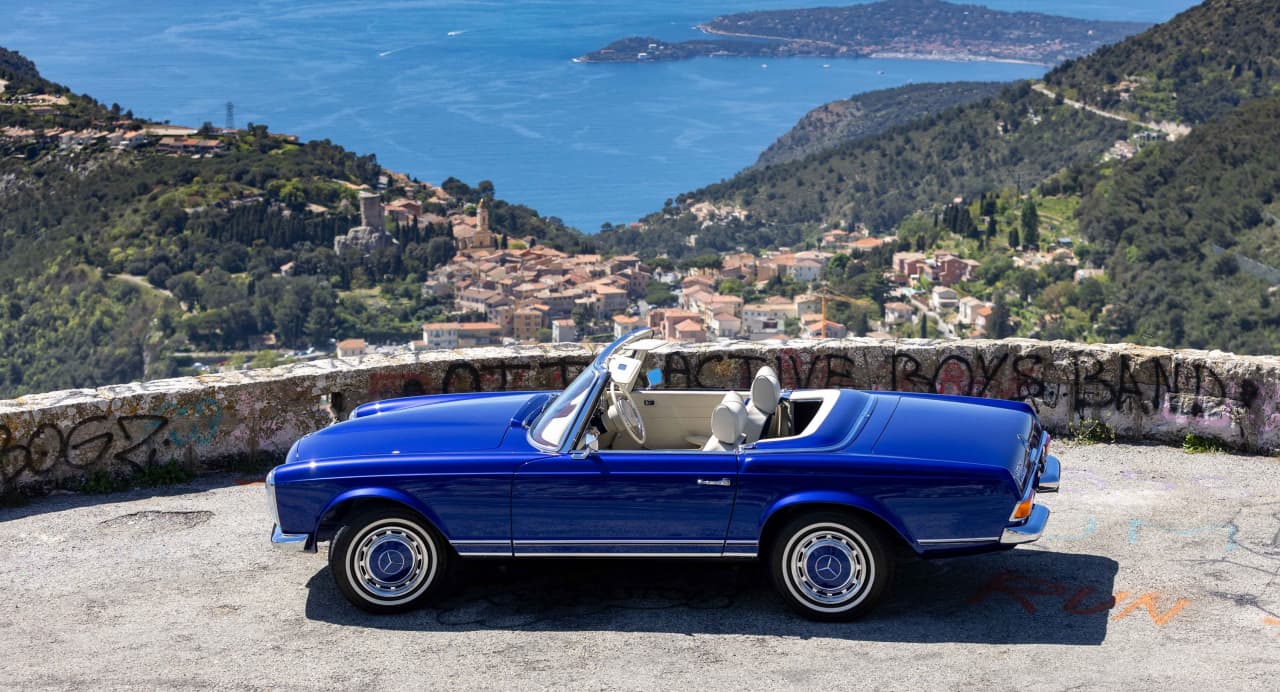
Hemmels, a Cardiff, Wales-based company that rebuilds Mercedes-Benz SLs, will soon offer an electric drivetrain for the W113 “Pagoda” models to the tune of half a million dollars through a new partnership.
The W113 SL is a glamorous two-seat roadster, which replaced the 190SL. It was introduced as the 230 SL at the 1963 Geneva Motor Show, then was gradually replaced by larger-engine models until the end of the line in 1971. The model was quite popular in the U.S., where nearly 20,000 were sold.
“We were on a route to develop a battery powertrain in-house at Hemmels, and we began to realize what a complex undertaking it is, given international regulations. That’s when we discovered that Everrati had already engineered a solution,” says CEO Tom Butterfield.
The result is a collaboration between Hemmels and Everatti—which restores and electrifies classic “icons” from Porsche, Mercedes, and Land Rover from its base in Bicester, Oxfordshire. Hemmels will restore the cars and Everrati will install electric powertrains. The partnership will be officially announced on Friday, and SLs from both companies will be shown at the upcoming Pebble Beach Concours d’Elegance during Monterey Car Week (Aug. 9-18). The first jointly produced car should be available to customers in November or December. Ordering a car and taking delivery will take eight to 10 months.
The price for a full Hemmels build, with the Everrati electric drivetrain, is £400,000 (US$513,000), excluding the donor vehicle that the company can locate for customers. The cars will be offered internationally.
The SLs will have 68-kilowatt-hour batteries, distributed to help maintain the car’s ideal front-rear balance.
“The bulk of the weight will be where the original engine and gearbox were located, and there will also be batteries in place of the fuel tank and a small pack in the boot [trunk] occupying about the space of the spare tire,” says Justin Lunny, Everrati’s founder and CEO. As battery technology evolves, Lunny says, it should be able to get a more powerful pack into the same locations, and upgrades can occur.
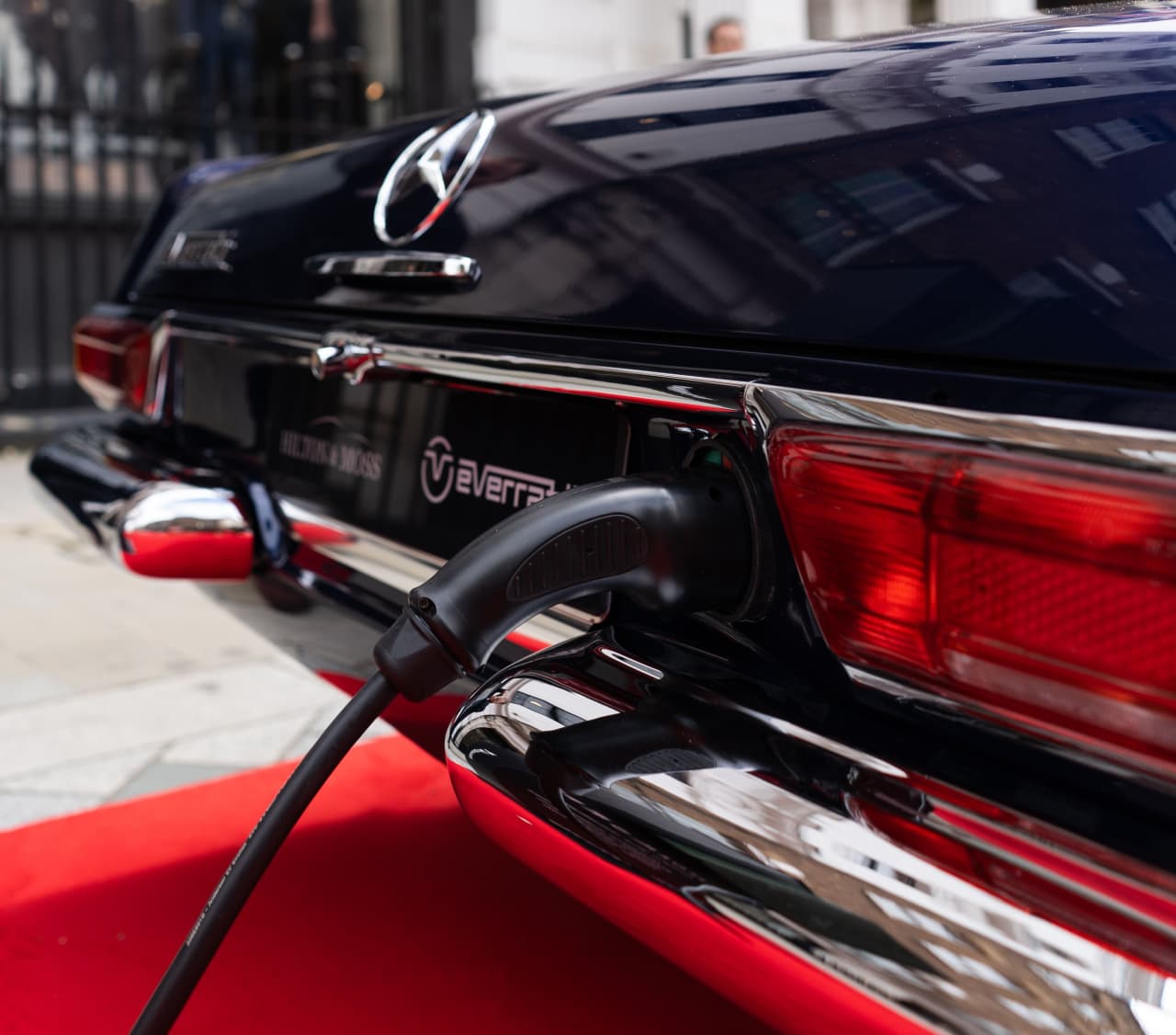
Another British company Helix, a Lotus supplier, will provide a power-dense but compact 300-horsepower motor that together with the battery pack should yield a range of 200 miles and a zero-to-60 miles per hour time of under seven seconds. The cars will use a limited slip differential for good grip, and will be equipped for regenerative braking—recapturing energy and allowing “one pedal” driving. “The end result is a very usable driving experience,” Lunny says.
“Our process in rebuilding the cars is very in-depth, and it’s what makes us stand out,” says Butterfield, whose family bought Hemmels in 2018. “We use brand-new and upgraded parts—we don’t restore what’s there unless we absolutely have to go that route.” The restoration process can take 4,000 worker hours, and bespoke buyers have wide latitude in colors, interior materials, and a choice of options. High-end audio and Bluetooth are available.
The cars will have already been rebuilt by Hemmels by the time they take their 130-mile journey to Everrati, where the drivetrains are—very carefully—installed.
Lunny says that the SLs will not be cut up or altered during the drivetrain installation. “We don’t damage the structure of the vehicle,” he says, “and everything is technically reversible. We retain the value of the original vehicle. The owners can keep the original internal-combustion engine, ensuring that it’s still with the car.” Butterfield adds that one of his clients is turning his engine into the base “for a glass table that will be installed in his man cave.”
Lunny describes the SLs as “art pieces that happen to have wheels. We love them like our babies, and everything we do is to a replicable standard, on par with what an [original equipment] manufacturer would do.”
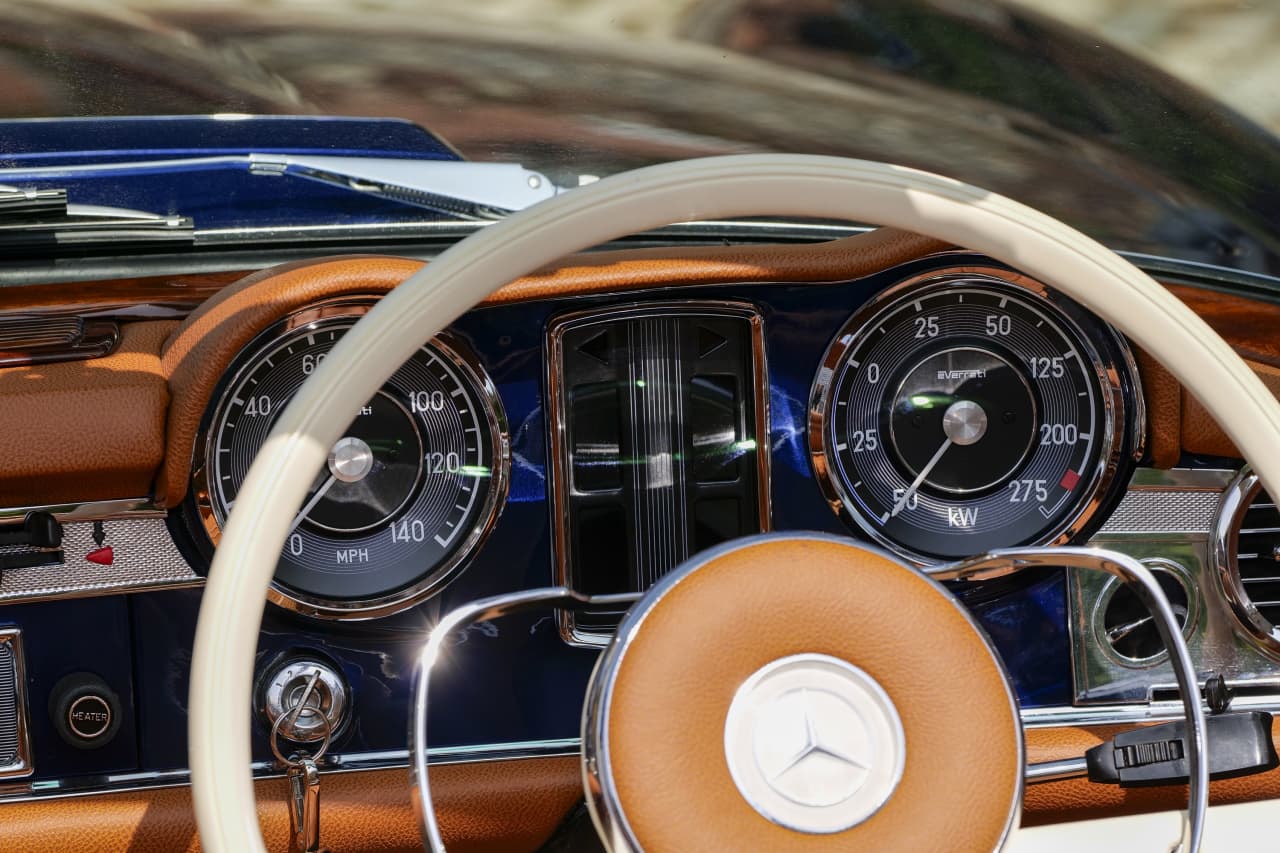
The W113 SLs may be more than 50 years old, but their styling—and appeal across generations—remains timeless.
“It’s not just a certain age or demographic,” Lunny says. “The new audience is the ultra-high-net-worth individuals who adore beautiful iconic cars, especially the Pagoda, but want a clean-air powertrain, with modern air conditioning, that is enjoyable to drive.”
Butterfield intends to keep production relatively low, producing perhaps 10 to 12 electric Pagodas annually. “To stretch to 25 cars per year would risk the quality of our builds,” he says. Some 60% to 70% of Hemmels’ output has gone to U.S. buyers, and that’s one reason the Monterey appearance—the company’s first—is important to the brand.
Hemmels also works its magic on the earlier 190SL, and electric conversions of those models, through the partnership, are possible in the future, Butterfield says.
 Copyright 2020, Dow Jones & Company, Inc. All Rights Reserved Worldwide. LEARN MORE




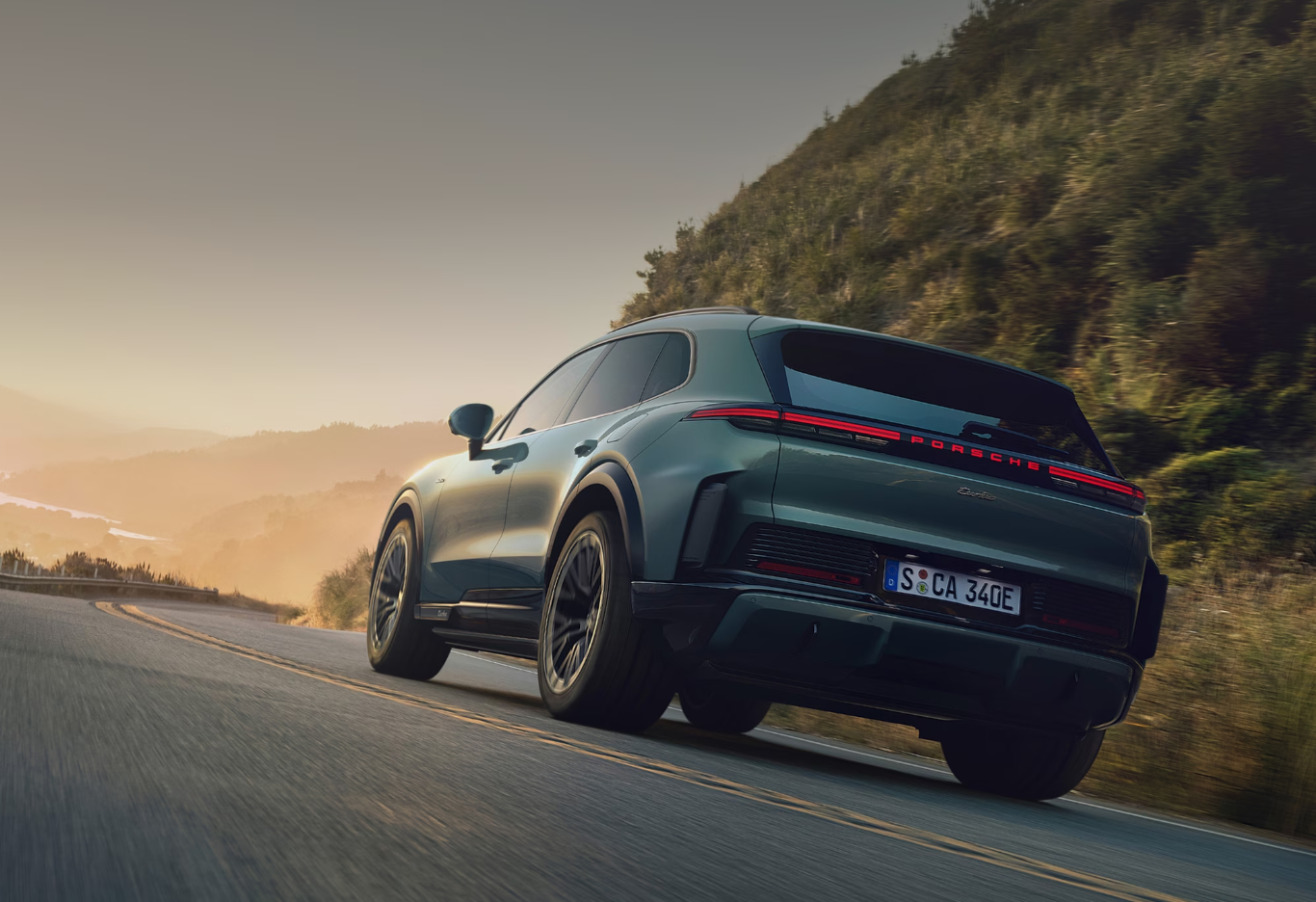
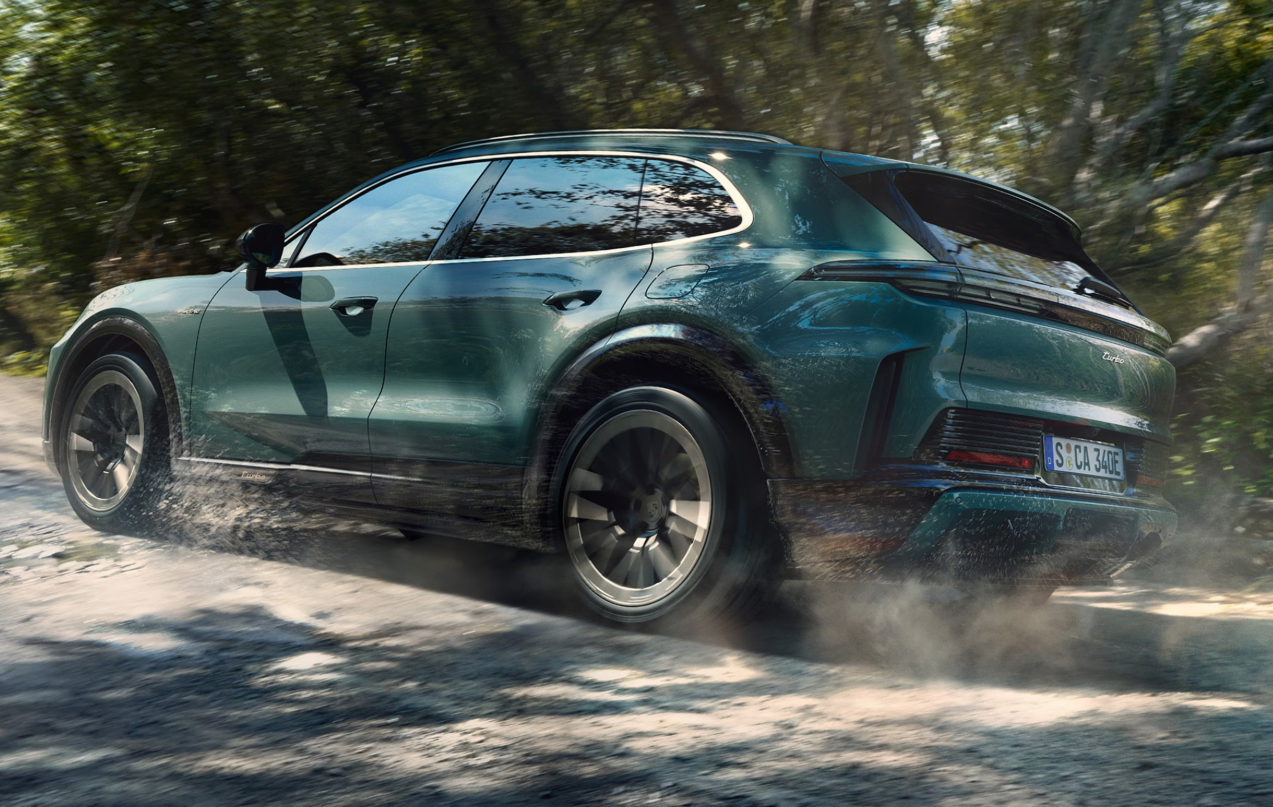
Porsche’s Cayenne Turbo Electric produces up to 1,156PS and reaches 100km/h in a claimed 2.5 seconds.
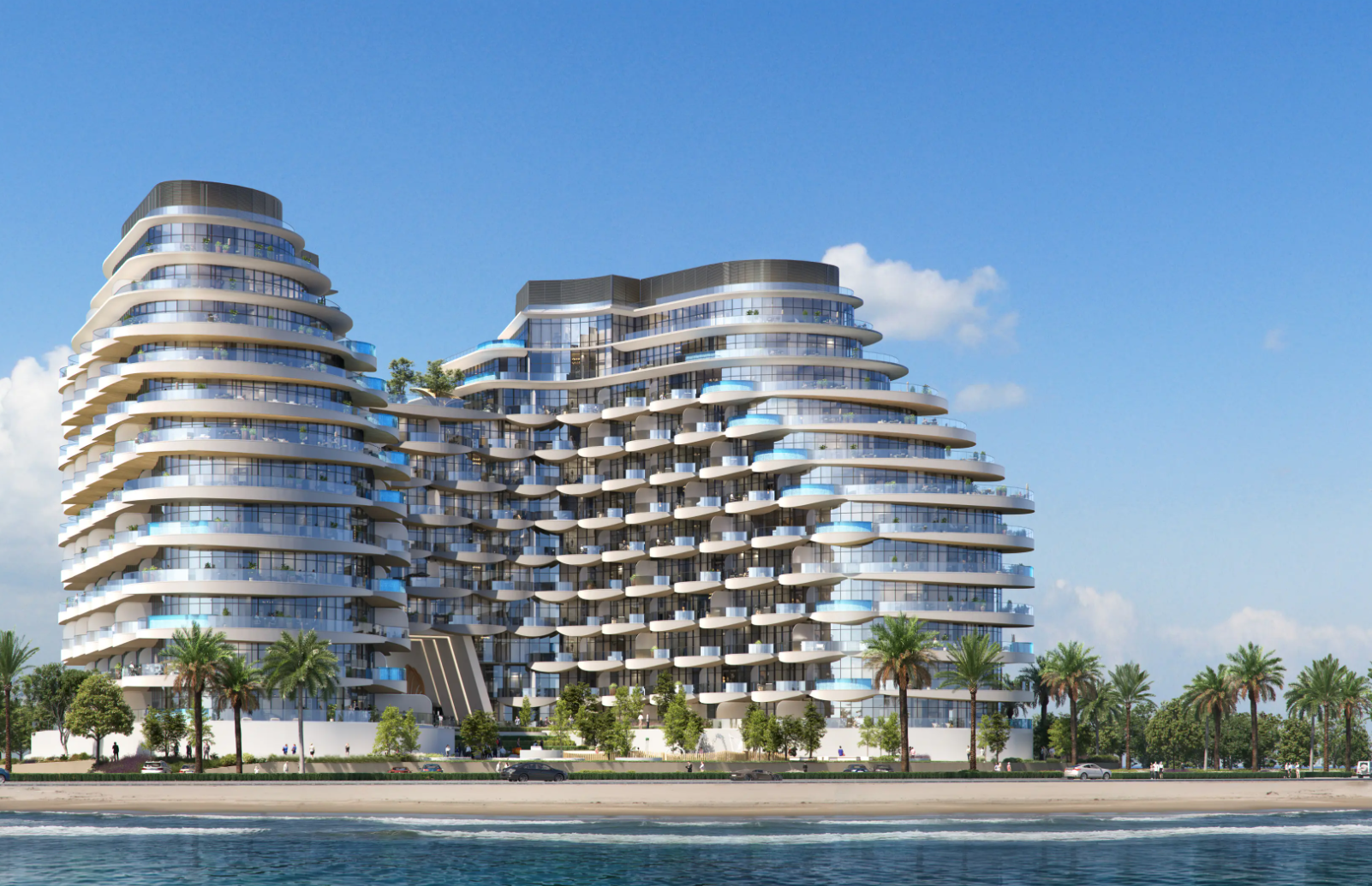
BNW Developments has established a Sydney presence, joining Arada and Sobha Realty among the growing number of UAE developers pursuing Australian buyers and development opportunities.
Porsche’s Cayenne Turbo Electric produces up to 1,156PS and reaches 100km/h in a claimed 2.5 seconds.
5 minFor all the attention Porsche’s move to electric power has generated, perhaps the most surprising number attached to its latest EV isn’t its range or charging speed.
It’s 1,156.
That is the maximum horsepower available from the new Cayenne Turbo Electric, making a large, five-seat family SUV the most powerful production Porsche ever built.
Not a 911. Not a Taycan. Not one of Stuttgart’s limited-production track specials. A Cayenne.
The new flagship produces up to 850kW, or 1,156PS, and 1,500Nm of torque with Launch Control activated, enough to send it from 0–100km/h in just 2.5 seconds.
Keep the accelerator pinned and 200km/h arrives in 7.4 seconds, before the Cayenne eventually reaches its 260km/h top speed. Those numbers put a vehicle capable of carrying five people and their luggage firmly into supercar territory.
It also represents something of a full-circle moment for the Cayenne.
When Porsche first revealed the original Cayenne more than two decades ago, the idea that the sports car specialist would build an SUV was controversial. It went on to become one of the company’s most important models and helped expand Porsche well beyond the traditional two-door sports car market.
Now the Cayenne is again being used to push Porsche into new territory.
The Cayenne Turbo Electric sits at the top of a growing three-model electric range in Australia, above the Cayenne Electric and Cayenne S Electric. Crucially, Porsche isn’t abandoning combustion power in the process. Petrol and plug-in hybrid versions of the Cayenne continue alongside the new electric generation, giving buyers a choice of powertrains rather than forcing an immediate wholesale transition.
But if the electric Cayenne is supposed to demonstrate what Porsche believes the next generation of its luxury SUV can do, the Turbo is the exclamation point.
In normal driving it produces up to 630kW, or 857PS. A Push-to-Pass function can temporarily add another 130kW for 10 seconds, while the full 850kW is unleashed with Launch Control.
Managing that much performance repeatedly is considerably more complicated than simply fitting powerful electric motors.
Porsche has equipped the rear motor with direct oil cooling, technology derived from motorsport, designed to maintain high continuous power output and efficiency rather than deliver one spectacular acceleration run before heat begins limiting performance.
It is part of the broader engineering challenge facing the new Cayenne.
Porsche hasn’t simply had to make a very fast electric SUV. It has had to make a 1,156PS electric SUV behave like a Porsche.
Adaptive air suspension with Porsche Active Suspension Management is standard, while the Turbo adds Porsche Torque Vectoring Plus. Rear-axle steering, capable of turning the rear wheels by up to five degrees, is optional.
Buyers can also specify Porsche Active Ride, the active suspension technology already seen elsewhere in the Porsche range. The system is designed to almost completely compensate for pitch and roll movements, helping keep the body level under acceleration, braking and cornering. That becomes particularly relevant in a large SUV carrying a substantial battery beneath its floor.
Even braking has been approached differently.
The Cayenne Electric can recover energy at up to 600kW under deceleration, a figure Porsche compares with the recuperation capabilities of its Formula E racing cars. The company says around 97 per cent of everyday braking can consequently be handled by the electric motors without requiring the conventional friction brakes.
For those intending to explore the outer edges of its performance envelope, Porsche Ceramic Composite Brakes remain available on the Turbo.
Then there is the battery.
A 113kWh high-voltage battery sits at the centre of the Cayenne’s new 800-volt electrical architecture. For the Turbo, Porsche quotes a European WLTP range of up to 623 kilometres, although Australian-specific range figures can vary depending on specification and testing.
More impressive is how quickly that battery can theoretically be replenished.
The Cayenne can accept DC charging at up to 390kW under optimal conditions, briefly reaching as much as 400kW under specific circumstances. Porsche says a 10 to 80 per cent charge can take less than 16 minutes when connected to sufficiently powerful infrastructure and with the battery at the appropriate temperature.
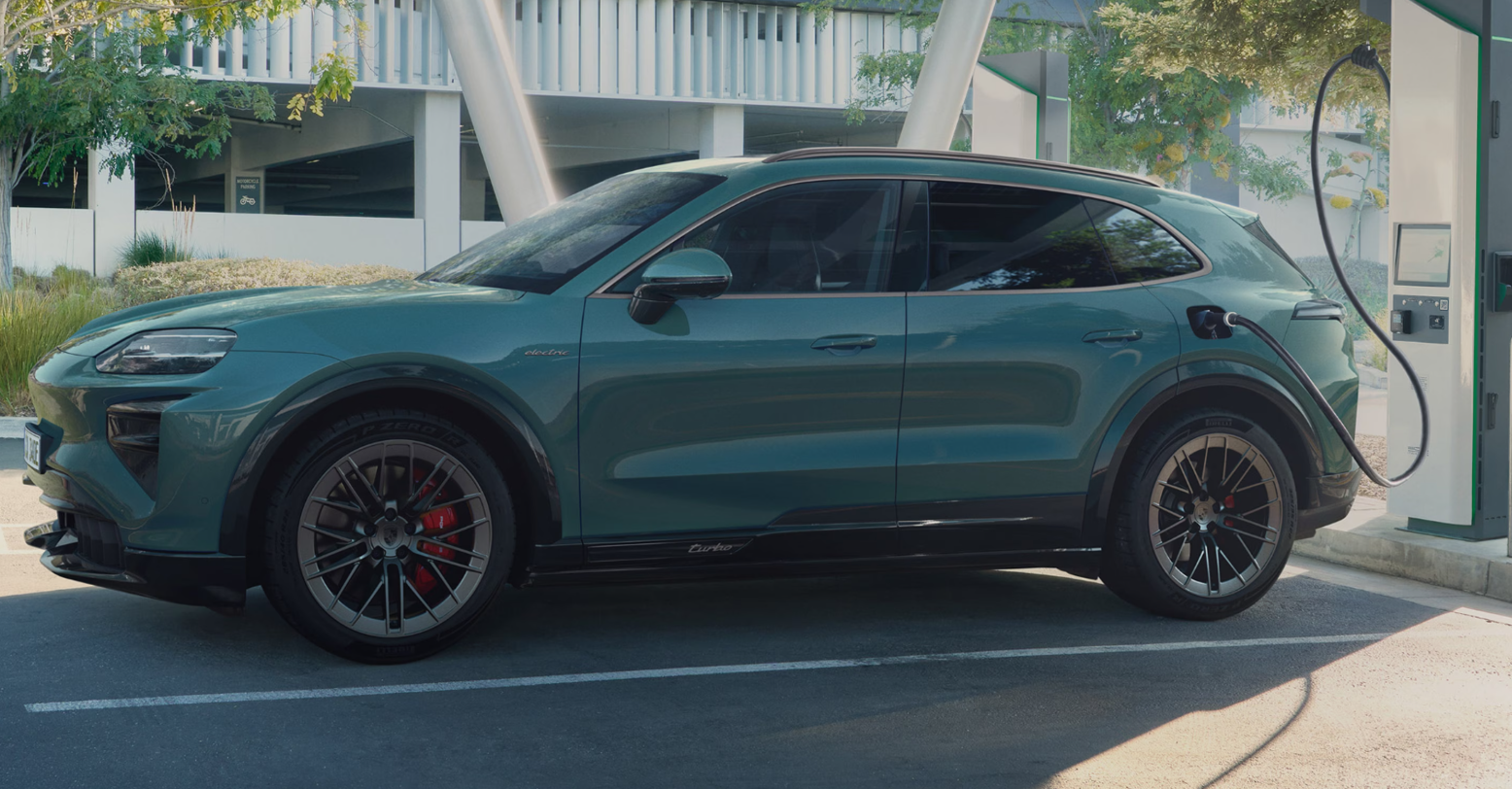
That potentially addresses one of the compromises that has traditionally separated a long-distance electric luxury SUV from its petrol equivalent.
Finding a charger capable of delivering anywhere near 400kW is another matter, particularly in Australia, but the car itself has been engineered with considerably more charging capacity than much of today’s infrastructure can provide.
Porsche is going further at home.
The Cayenne Electric is the first Porsche designed to support optional wireless charging. Rather than plugging the car into a wallbox, owners will eventually be able to park above a floor plate capable of inductively charging the battery at up to 11kW.
The system automatically recognises the vehicle and allows it to lower itself into the appropriate position above the plate. Porsche expects the wireless charging system to become available to order in Australia in the fourth quarter of 2026, with Australian Cayenne Electric models pre-wired to allow it to be retrofitted, unless buyers opt out.
For all those numbers, however, the Cayenne still has to fulfil the role that has made it such an important Porsche for more than 20 years. It needs to be useful.
The electric model is 4,985mm long and rides on a 3,023mm wheelbase, almost 13 centimetres longer between the axles than the combustion-engined Cayenne.
Most of that extra space has been used to improve rear passenger accommodation.
The electrically adjustable rear seats can move between comfort and cargo-oriented positions, while luggage capacity ranges from 781 litres to 1,588 litres. Removing an engine from the front also creates a further 90-litre luggage compartment under the bonnet.
Depending on specification, the Cayenne Electric can tow as much as 3.5 tonnes. It is that collision of figures that perhaps best explains the new Turbo.
This is a vehicle capable of reaching 100km/h in 2.5 seconds and producing 1,500Nm of torque, yet it can also carry a family, swallow more than 1,500 litres of luggage with the rear seats configured for cargo and tow a substantial boat or caravan.
Inside, Porsche has similarly moved the Cayenne further into its digital era.
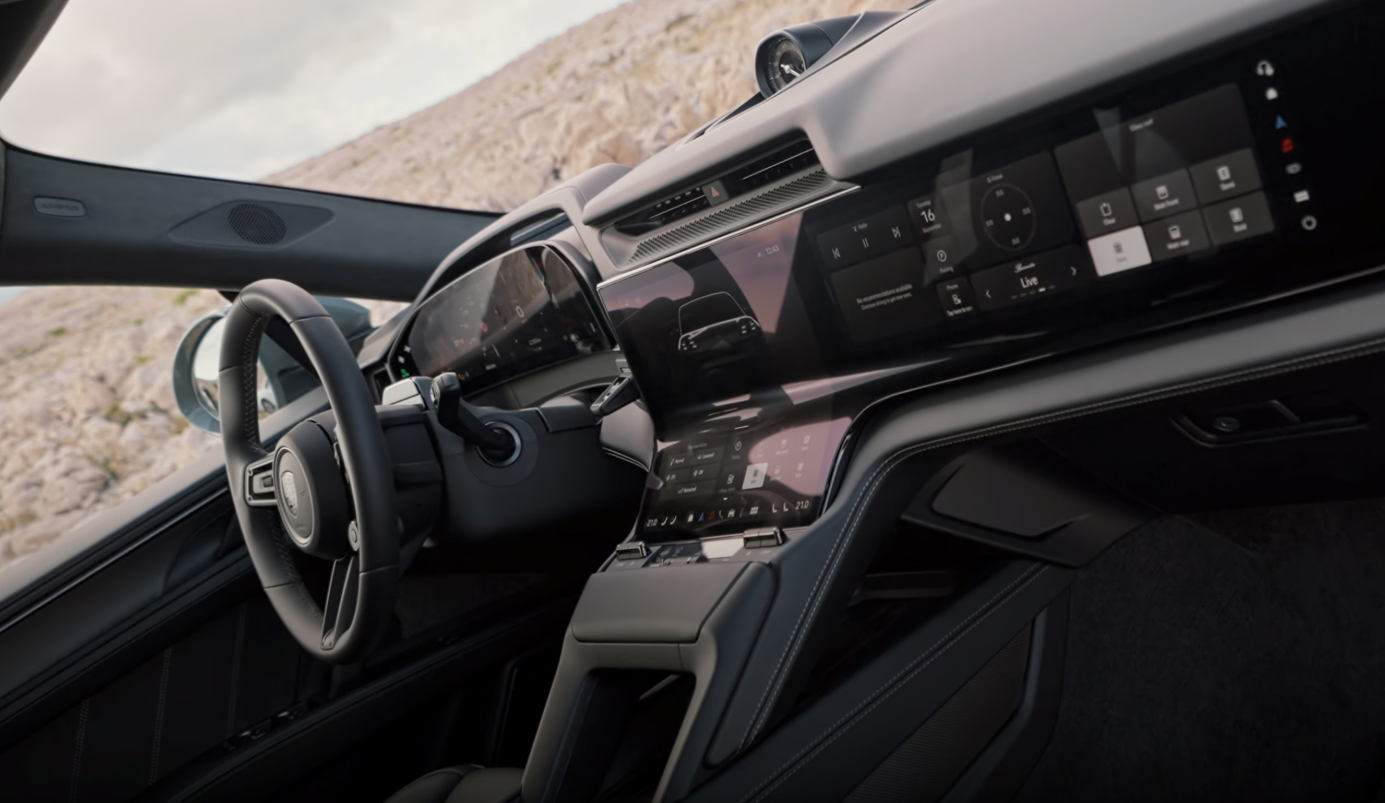
The new Porsche Driver Experience combines a fully digital instrument display with the curved central Flow Display, while a separate passenger display and augmented-reality head-up display are available.
Despite the expansion of screen real estate, Porsche has retained a mixture of digital and physical controls rather than moving every function behind a touchscreen.
Australian Turbo models also receive a generous standard specification, including a panoramic roof, ventilated front seats, four-zone climate control, privacy glass and Porsche’s Parking Entry Package with Surround View and Self-Steering ParkAssist.
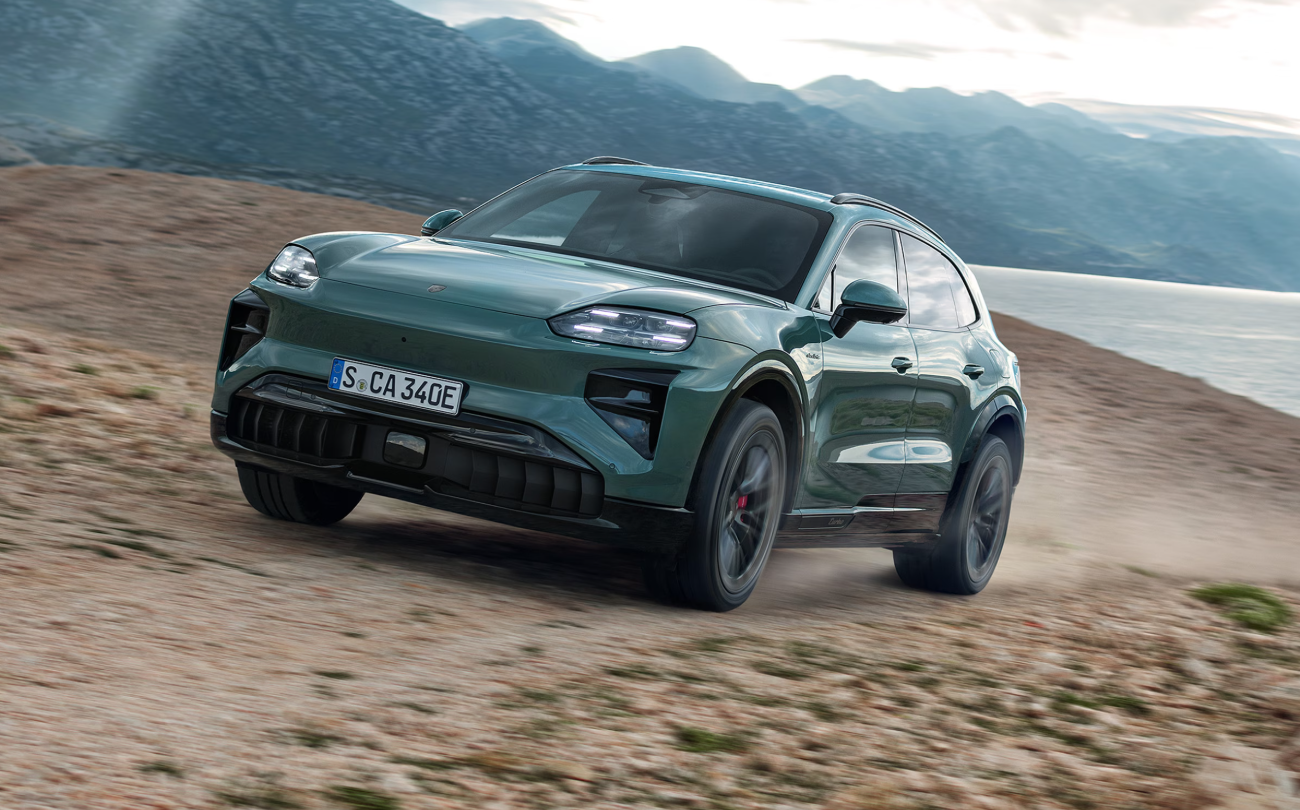
And we now know what all of it will cost.
The Cayenne Turbo Electric is priced from $259,900 before on-road costs in Australia, compared with $167,800 for the Cayenne Electric and $193,100 for the Cayenne S Electric.
Orders are already open, with the first Australian deliveries expected from the third quarter of 2026.
There is also a Cayenne Turbo Coupé Electric for buyers wanting the same extraordinary drivetrain beneath a more sporting roofline. It is priced from $272,100 before on-road costs.
Ultimately, however, the significance of the Turbo isn’t simply that Porsche has electrified another model. The company has used electrification to move the performance ceiling of the Cayenne somewhere it has never been before.

From elevated skincare to handcrafted home pieces, this year’s most thoughtful gifts go beyond the expected.

Pure Amazon has begun journeys deep into Peru’s Pacaya-Samiria National Reserve, combining contemporary design, Indigenous craftsmanship and intimate wildlife encounters in one of the richest ecosystems on Earth.