‘Full House’ Creator’s L.A. Mansion, Complete With a 35-Foot Waterslide, Relists for $50 Million
Screenwriter and TV producer Jeff Franklin built the lavish residence on the homesite where the 1969 Manson Family murders took place.

 2 min
2 min
A Beverly Hills megamansion, complete with a backyard grotto and a lazy river, that was built by “Full House” creator Jeff Franklin is returning to the market with a multimillion-dollar price cut.
The Southern California home will list on Wednesday for just shy of $50 million, a more than 40% price cut from its initial asking price of $85 million from 2022.
The home has also been occasionally available for rent, asking as much as nearly $250,000 a month.
It sits on the site where Sharon Tate and four others were murdered by the Manson Family in 1969.
That since-demolished home, which Tate and her husband, director Roman Polanski, were renting from music producer Terry Melcher, was torn down in the mid-1990s by a developer, from whom Franklin bought the property before it was completed, according to The Wall Street Journal.
Franklin took the developer’s partially built house and tore it down to the studs to build his own custom home, working with “King of the Megamansion” Richard Landry to do so. The mansion, which has been Franklin’s primary residence for nearly two decades, was completed in 2006.
Dubbed Villa Andalusia, the 21,000-square-foot megamansion combines Andalusian style with South-Asian influences, which was a “fun design challenge,” Landry said in a statement. Listing agent Adam Brawer of Compass likened the home’s design and scale to a palace.
“The interiors combine my love of European architecture and Asian culture, but curated to maximize the California lifestyle,” Franklin wrote in an email.
Amenities throughout the home range from a wood-paneled billiards and poker room to a large aquarium dividing the sitting room and dining room—fish included in the sale.
“It feels like a James Bond villain’s lair,” Brawer said. “Architecturally, it feels like a throwback to a much older time, except it has all the creature comforts of 2025—it’s fully smart.”
With 3.6 acres, the mansion sits on an unusually large lot for Beverly Hills Post Office. It also has wide-ranging views, overlooking the entirety of the city to the Pacific Ocean, and as far as Pasadena on a clear day, Brawer said. Both the property size and its views are what attracted Franklin to it.
“I loved the spectacular views, and the size of the lot allowed me to be creative in designing the unique backyard oasis,” Franklin said.
That backyard oasis is made up of two pools —a wading pool and an infinity pool—which are connected by a lazy river.
Each pool has its own hot tub, with the wading pool’s tucked into a grotto behind three waterfalls. A 35-foot waterslide flows into another waterfall—there are six in total, and there’s also a koi pond, a fire pit and a swim-up bar.
“This is one of the most exciting pools we have ever designed,” Landry said.
Franklin built the home—which has nine bedrooms and 18 bathrooms—with hosting large gatherings in mind, Brawer said.
In addition to the lavish backyard, there are also multiple bars, a game room and a home theater inside, and many of its living spaces lead directly out to the backyard. There’s also two garages, including one underground, and a large motor court, allowing the property to fit at least 20 cars.
Franklin, 70, created the sitcom “Full House” in 1987 and served as showrunner until 1992. He also created its sequel series, “Fuller House,” for Netflix in 2016. Franklin previously owned the San Francisco house that was used for the exterior of the Tanner family home in “Full House.” He remodeled it, also with Landry, and sold it in 2020.
 Copyright 2020, Dow Jones & Company, Inc. All Rights Reserved Worldwide. LEARN MORE




From making unpopular decisions to learning when to listen, leaders from five businesses reveal what nobody prepared them for — and how running a company has challenged their expectations.

Technology and semiconductor shares fell sharply as investors questioned the debt financing the AI infrastructure boom and confronted higher rates and Chinese competition.
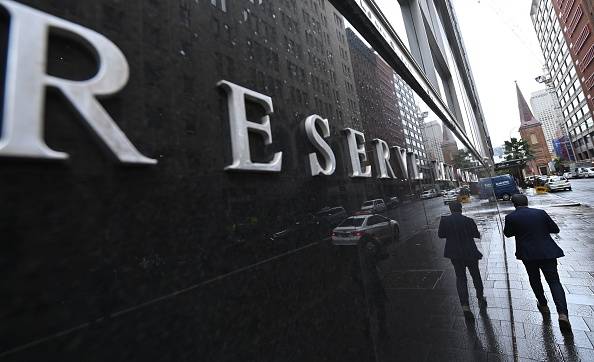
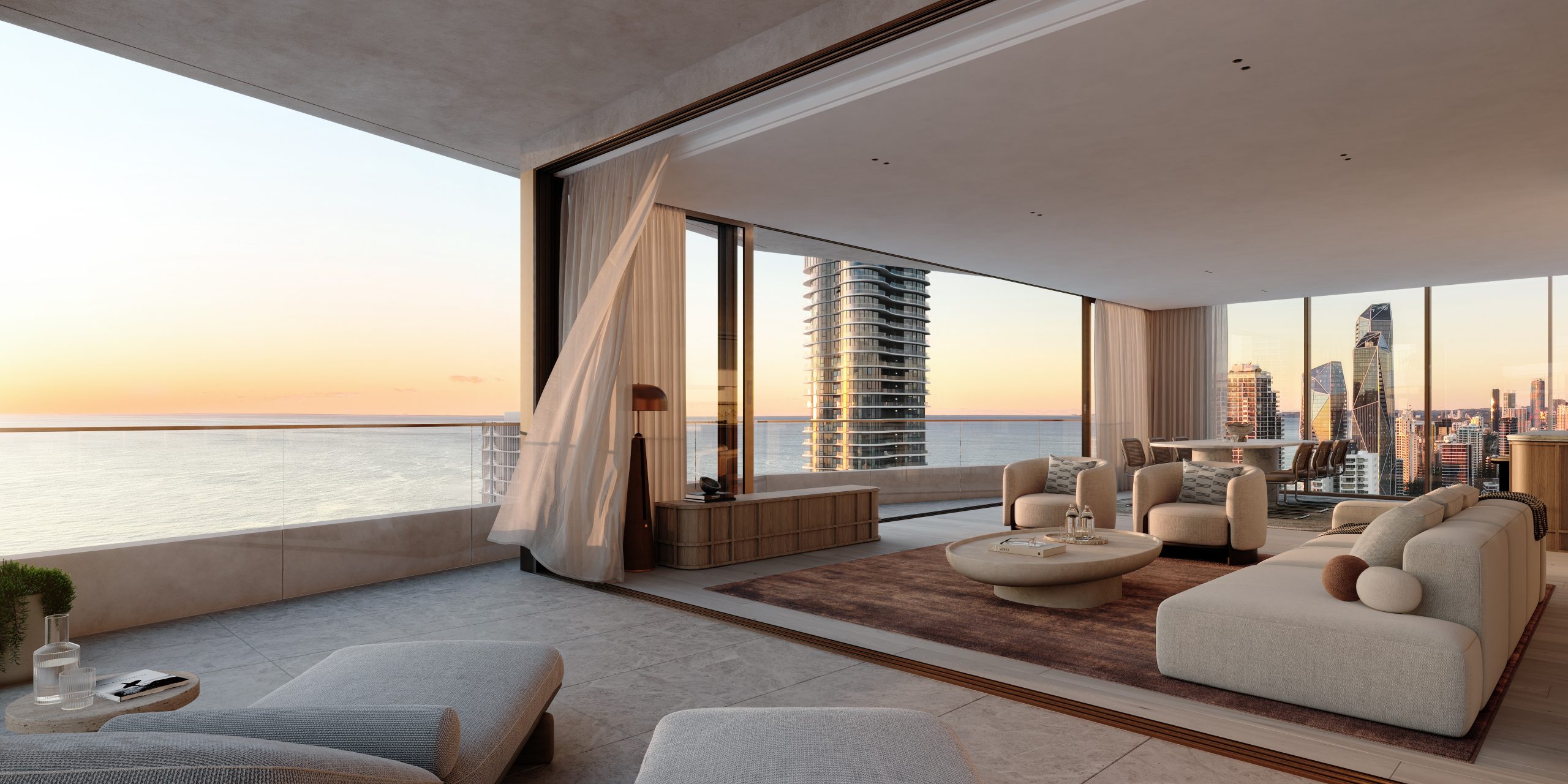
Mirvac’s 45-level Trielle has topped out at Yarra’s Edge, pairing riverfront apartments with wellness facilities, private dining and resident services.
3 min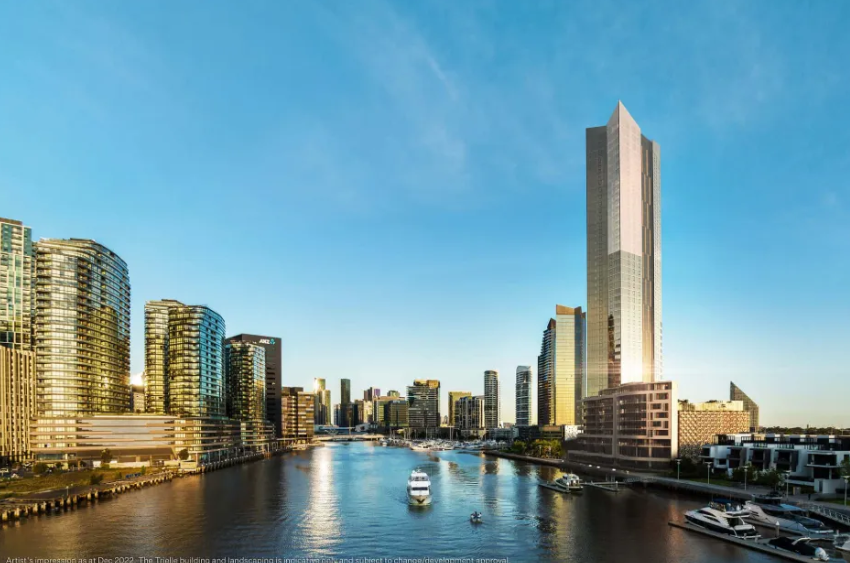
Mirvac has topped out Trielle at Melbourne’s Yarra’s Edge, with more than 70 per cent of the riverfront development sold and approximately 80 per cent of purchasers intending to make their apartment a home.
The figures, released on September 22, point to an owner-occupier audience for one of the precinct’s final residential towers. Mirvac began developing Yarra’s Edge in 2003, and its latest addition occupies one of the remaining absolute riverfront sites.
Mirvac CEO of Development Stuart Penklis said existing residents were among those moving up within the neighbourhood.
“Many purchasers already have a connection to Yarra’s Edge,” Mr Penklis said, describing buyers whose changing needs were encouraging an upgrade within the precinct.
“As one of the final residential towers within Yarra’s Edge, Trielle represents the culmination of more than two decades of creating one of Melbourne’s most established and sought-after waterfront communities,” Penklis said.
“Positioned on the Collins Street axis with absolute river frontage, Trielle offers residents a rare opportunity to enjoy sweeping views across the Yarra River, Melbourne skyline and Port Phillip Bay, while remaining seamlessly connected to the CBD. With Trielle now more than 70 per cent sold, we’re continuing to see strong demand from buyers seeking quality homes in established locations.”
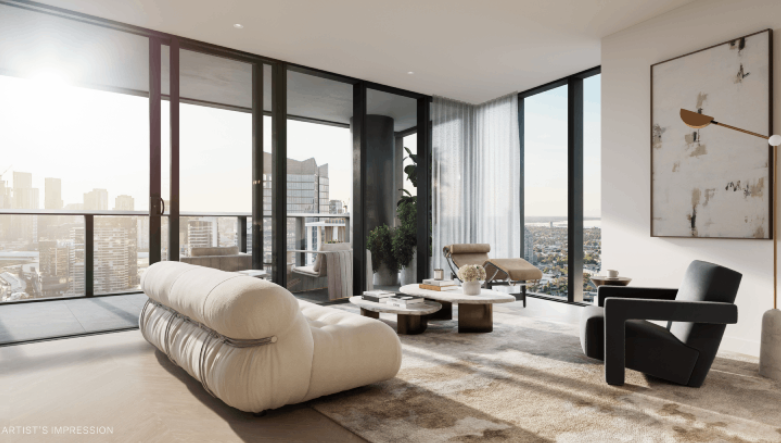
The developer also flagged a penthouse and sub-penthouse collection with larger layouts, premium finishes and broad outlooks. The planned wellness centrepiece, The Oasis, encompasses a 900-square-metre elevated urban rainforest.
Mirvac General Manager Residential Development Victoria Elysa Anderson said Trielle had resonated strongly with buyers seeking a rare lifestyle offering in Melbourne.
“Opportunities to secure a new luxury residence on a riverfront site of this calibre are incredibly rare, particularly within a community like Yarra’s Edge,” Anderson said.
“What makes Trielle unique is the combination of exceptional views, world-class residential facilities and the lifestyle that already exists around it. Residents are buying into a mature waterfront community with parks, promenades, dining, wellness and strong community connections already in place.”
The 45-level tower brings a substantial new presence to that waterfront. Its residential offering spans one-, two-, three- and four-bedroom apartments, with Signature, Prestige and Sub-Penthouse collections accommodating different household sizes. The north-facing position connects the apartments visually to the river and city beyond.
Seven storeys above the promenade, the planned Oasis combines planting and a running stream with a Scandinavian-inspired wellness club developed with spa specialist Naomi Gregory. Facilities include a 25-metre lap pool, hot magnesium pool, sauna, hydrotherapy, a gym, yoga and Pilates room, and treatment spaces.
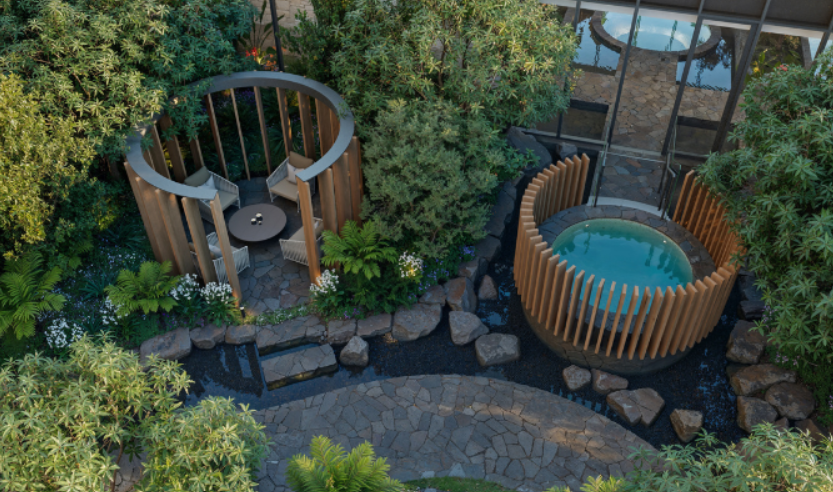
The amenity extends beyond exercise. Residents will have access to The Biblioteca library and workspaces, ground-floor work pods, and The Salone piano lounge. A private Chef’s Table dining room offers a setting for larger gatherings, while a cinema, games room and sports lounge broaden the entertaining options. Concierge services and a dog-wash area support everyday routines.
Trielle comprises a collection of one, two, three and four-bedroom residences. Reflecting strong demand from owner occupiers, approximately 80 per cent of purchasers to date intend to live in their homes, highlighting the project’s appeal to those seeking a long-term waterfront lifestyle.
Mirvac has recently delivered The Albertine, a premium apartment development on the edge of Melbourne’s CBD, and is nearing completion of Prince & Parade in Brunswick, further strengthening its portfolio of thoughtfully designed apartment communities in some of Melbourne’s most sought-after urban locations.
From mud baths to herbal massages, Fiji’s heat rituals turned one winter escape into a soul-deep reset.
When the Writers Festival was called off and the skies refused to clear, one weekend away turned into a rare lesson in slowing down, ice baths included.