ROLLS-ROYCE UNVEILS A NEW ERA OF BESPOKE LUXURY IN SYDNEY
The world’s most prestigious automotive marque has unveiled its reimagined Sydney showroom, creating a new destination for Australia’s growing cohort of ultra-high-net-worth buyers seeking deeply personalised luxury.
 2 min
2 min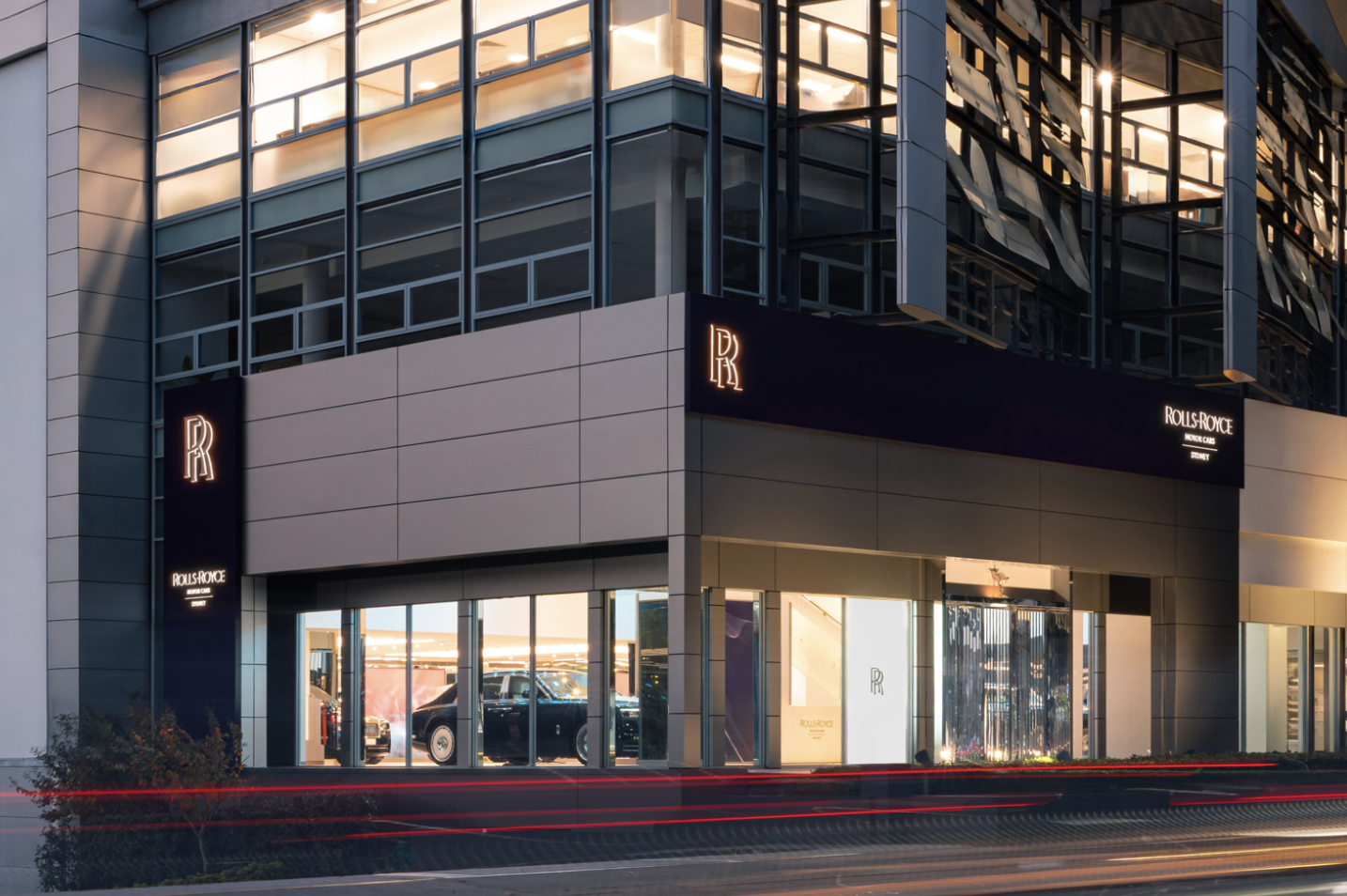
Rolls-Royce has opened a new chapter in its Australian story, unveiling a reimagined Sydney showroom designed to cater to a new generation of wealthy clients who view luxury not as a product, but as a personal expression of identity.
Located on O’Riordan Street in Alexandria, the showroom is the first in Australia to embody the marque’s latest global retail design language and reflects the growing importance of the local market for Rolls-Royce’s highly bespoke commissions.
The unveiling comes as demand for personalised luxury experiences continues to grow among affluent Australians, with Rolls-Royce reporting increasing interest in highly customised vehicles featuring unique materials, finishes and design elements.
Julian Jenkins, Director of Sales & Brand at Rolls-Royce Motor Cars, said Australia has been part of the marque’s story since its earliest days.
“Australia has been part of the Rolls-Royce story from the very beginning, with only the 54th Rolls-Royce to be made ordered by Australian Archibald Black in 1906, and today we are proud to write its next chapter,” Jenkins said.
More than just a showroom, the new space has been conceived as an immersive luxury environment where clients can begin commissioning a vehicle tailored to their tastes.
At its heart is the Bespoke Commissioning Atelier, a dedicated space where prospective owners can explore an extensive range of materials, finishes and detailing options, from rare wood veneers to embroidery threads, allowing them to create a vehicle that is uniquely their own.
The showroom also features a “Cabinet of Curiosities” that showcases objects and references inspired by the Australian landscape and creative culture, designed to spark ideas for future commissions.
Nick Pagent, CEO and Managing Director of Autosports Group, which operates Rolls-Royce Motor Cars Sydney, said today’s luxury buyers are increasingly seeking products that reflect their individuality.
“Our clients are among Australia’s most dynamic and creative individuals; they don’t simply want a motor car, they want to commission a statement of who they are,” Pagent said.
The opening also signals Rolls-Royce’s confidence in the Australian luxury market, which the company describes as one of the most vibrant in the Asia-Pacific region. The Sydney showroom follows the opening of a new Rolls-Royce showroom in Auckland in 2025, strengthening the brand’s presence across Australia and New Zealand.
For Rolls-Royce, the investment is about far more than displaying motor cars. It reflects a broader shift in luxury consumption, where affluent buyers increasingly seek experiences, craftsmanship and personalisation over standardised products.
In that sense, the new Sydney showroom is less a dealership and more a luxury atelier, one designed to help clients transform an idea into a one-of-one Rolls-Royce.
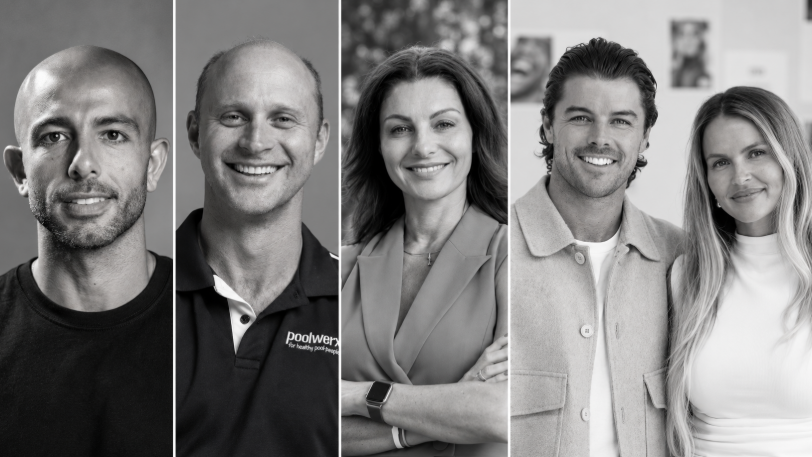
From making unpopular decisions to learning when to listen, leaders from five businesses reveal what nobody prepared them for — and how running a company has challenged their expectations.

Technology and semiconductor shares fell sharply as investors questioned the debt financing the AI infrastructure boom and confronted higher rates and Chinese competition.
Tesla’s new Roadster used suction technology and SpaceX-derived thrusters to jump and flip—but production, price and road legality remain unresolved.
3 min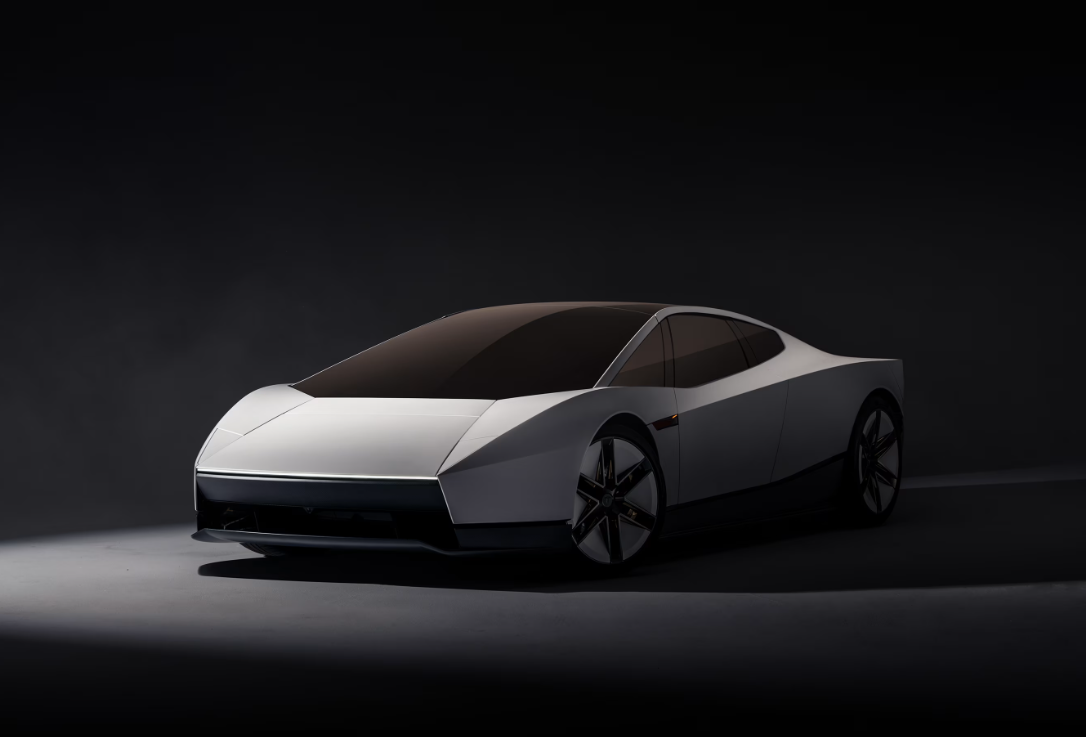
Tesla has finally revealed its radically redesigned Roadster—and delivered the airborne spectacle Elon Musk has been promising for years.
Unveiled at a SpaceX testing facility near Waco, Texas, the new electric supercar drove onto a steeply curved ramp, used a suction system to cling to its underside and launched into the air. Cold-gas thrusters stabilised the vehicle as it rotated and returned to the ground.
In another demonstration, the Roadster cleared a line of Tesla vehicles that included a Semi, Cybertruck, Cybercab, Model Y and Model 3.
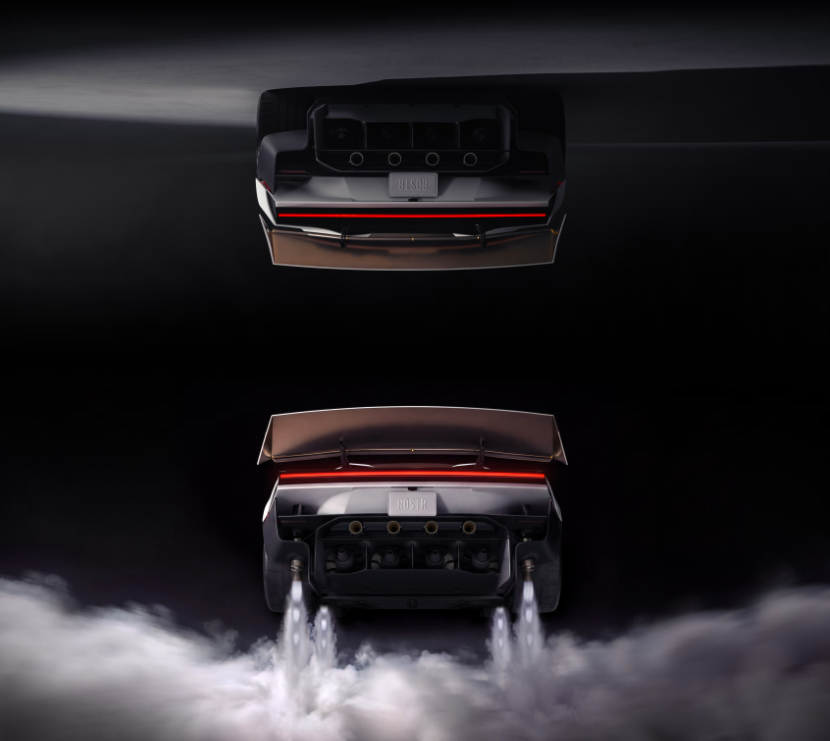
It was an extraordinary stunt. Whether it proved Tesla has created a genuine flying car is another matter.
The vehicle did not demonstrate sustained, controlled flight of the kind associated with an aircraft or electric vertical take-off and landing vehicle. Its thrusters instead produced brief powered leaps, rotation and landing control.
“We’re not talking about sustained flight,” Smithsonian National Air and Space Museum curator Roger Connor told CNN. “We are literally talking about hopping.”
How does it work?
Tesla has outlined three intended Roadster configurations.
The two-seat Performance model is the comparatively conventional version, although little about it sounds ordinary. It uses active aerodynamics and what Tesla calls a multi-mode suction system to increase downforce and allow the car to adhere to steep or inverted surfaces.
The two-seat Thrust adds rear-mounted cold-gas thrusters, designed to deliver acceleration from zero to 60mph—approximately 97km/h—in less than one second.
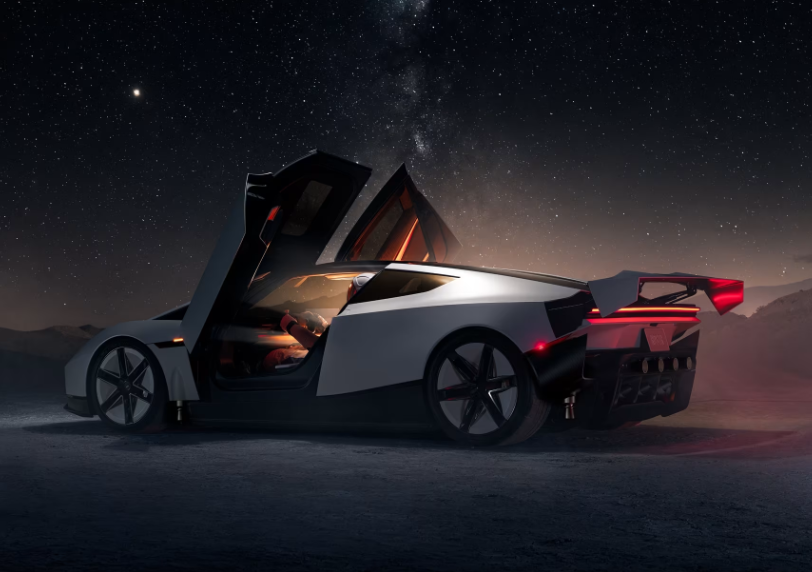
At the top is the single-seat Rocket, equipped with 10 thrusters positioned around the vehicle. This is the version intended to perform the airborne manoeuvres demonstrated in Texas.
Tesla engineering vice-president Lars Moravy said the system uses approximately 600 litres of compressed air. Carbon-fibre-wrapped pressure vessels occupy available spaces throughout the car, supplying the thrusters used for acceleration, lift and directional control.
The technology is more closely related to a rocket reaction-control system than a conventional flying-car powertrain. Rather than producing continuous lift through wings or propellers, it releases highly pressurised gas to generate short bursts of thrust.
Tesla says all three versions will offer approximately 300 miles—or 483 kilometres—of driving range and a top speed exceeding 230mph, equivalent to about 370km/h.
These remain company claims rather than independently verified production specifications.
Can buyers order one?
Reservations have reopened in selected markets. According to reporting from the launch, Tesla is seeking US$50,000 to reserve the Performance variant and US$250,000 for the Thrust. Access to the Rocket is described as invitation-only.
No final purchase price was announced, and Tesla has not confirmed Australian pricing, delivery timing or regulatory approval.
Musk said production would begin in 2028. That should be treated as an ambition rather than a settled delivery date.
The second-generation Roadster was originally unveiled in 2017 and was expected to reach customers within several years. The program was subsequently delayed in 2020, 2021, 2023 and 2024. Some customers have consequently held substantial reservations for close to a decade.
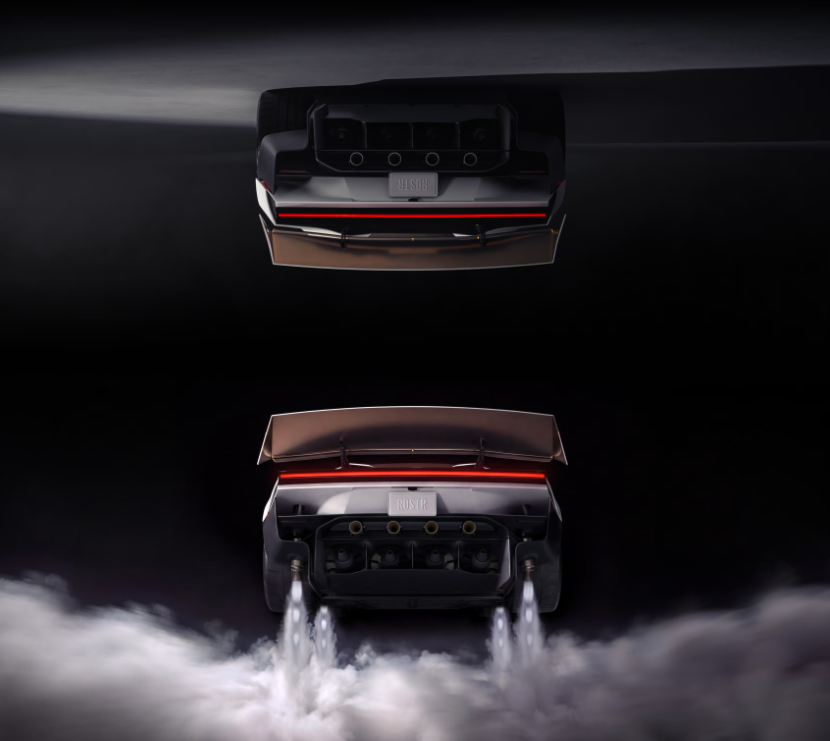
There are also formidable regulatory questions. A road-registered vehicle capable of deliberately leaving the ground, rotating and landing among other traffic does not fit neatly within existing vehicle standards. Its compressed-air system, pressure vessels and unconventional manoeuvres would require extensive safety assessment.
The more plausible outcome is that Tesla produces the Performance and perhaps Thrust versions for road and track use, while tightly restricting the Rocket’s airborne functions—or reserving them for controlled environments.
Tesla has produced a genuine moving prototype capable of remarkable stunts. It has not yet demonstrated that customers will be permitted to repeat them on public roads.
For now, the Roadster is real enough to jump. Whether it becomes a car people can buy, register and use as demonstrated remains the more consequential test.
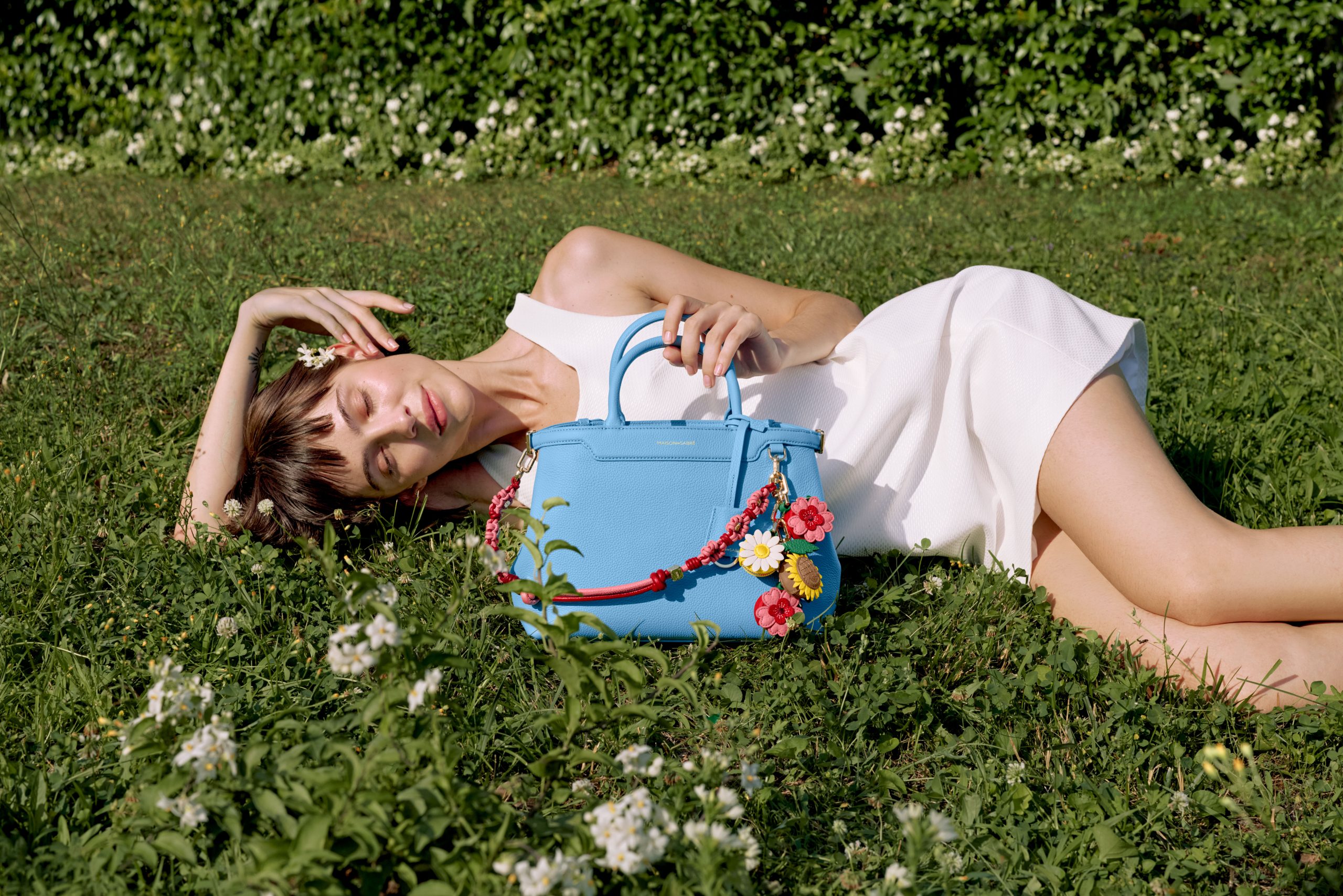
The Australian leather house has opened an immersive four-day pop-up in Manhattan, unveiling its Bloom Collection and redefining what a product launch can look like.
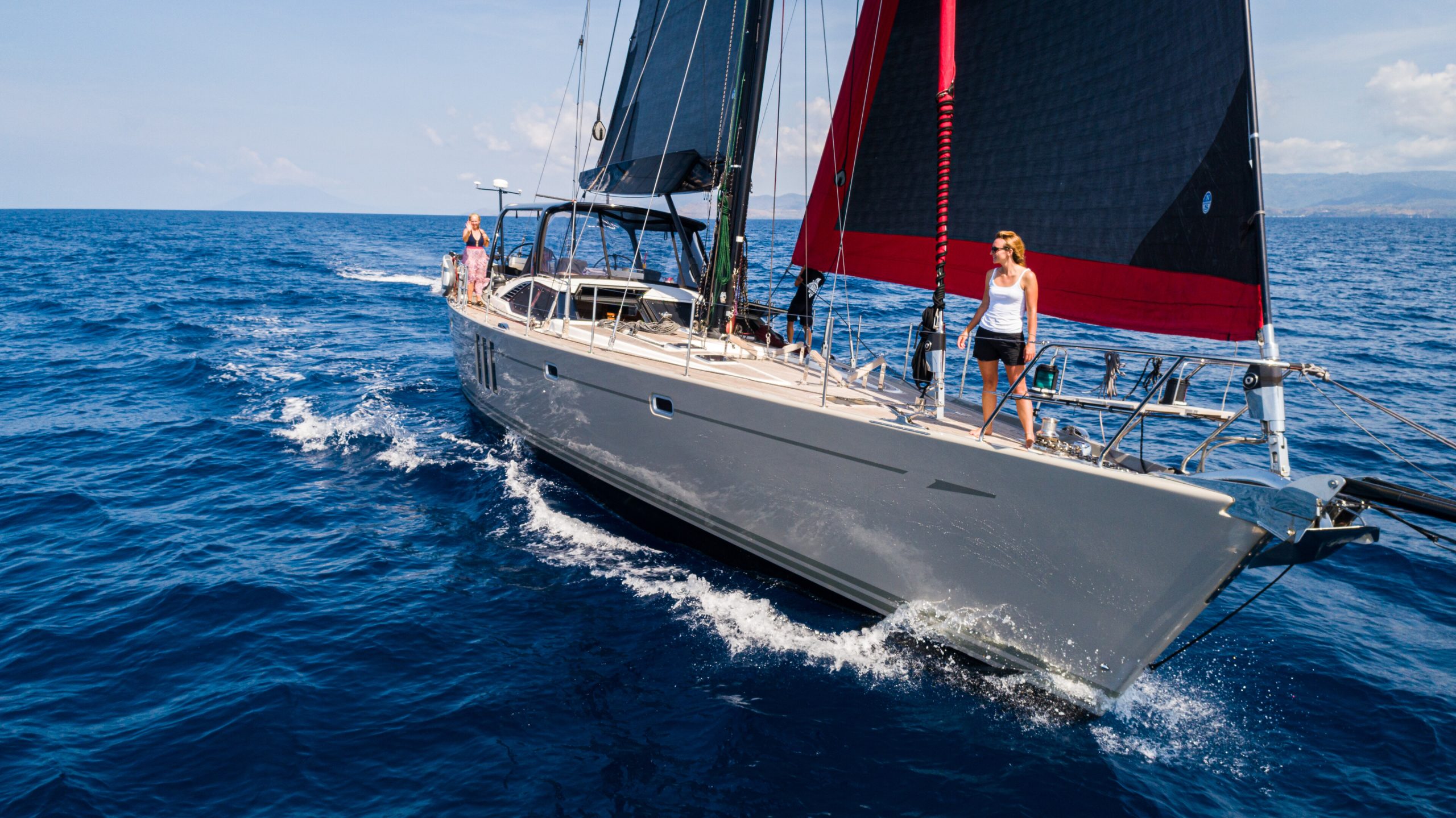
From the Caribbean to Australia’s east coast, Oyster’s latest world rally promises a bluewater voyage designed for owners seeking ultimate sailing experiences.