Once Under the Radar, Americans Are Buying Homes in Spain More Than Ever Before
The strength of the dollar, an increase in direct flights and an appetite for the ‘Spanish way of life’ has driven more U.S. buyers to the country’s real-estate market

 6 min
6 min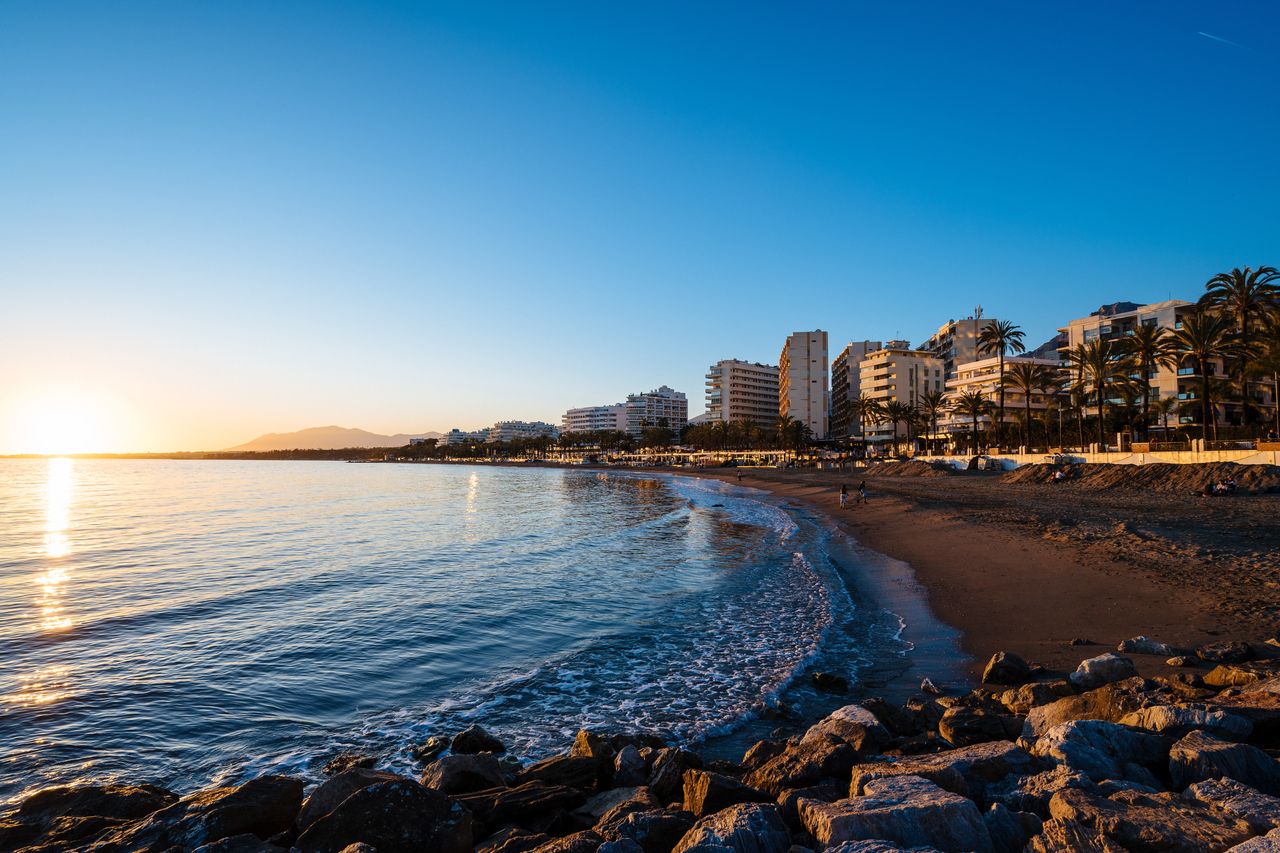
Ron Hale ushered in 2023 by relocating from landlocked Orlando, Fla., to a primary residence in Marbella, on southern Spain’s Mediterranean coast. In January, the 59-year-old founder and CEO of Natural Tone Organic Skincare, a Florida-based beauty-supply company, closed on a 3,000-square-foot, three-story townhouse, with four bedrooms, spacious balconies, sea views and a sale price of $1.1 million.
Mr. Hale, who wanted a base to better supervise his company’s diverse European interests, chose Marbella, a glamorous resort known for its balmy year-round climate, because of “the food, the golf and the international flair of it all,” he says. And his newly remodeled turnkey purchase—what he likes to call a place to lock and leave—has easy access to Málaga airport, the gateway to Spain’s Costa del Sol region, a 45-minute drive away.
“Golfing interests me,” he says, citing his townhouse’s proximity to a number of courses, such as the Real Club de Golf Las Brisas. “But the airport is key.”
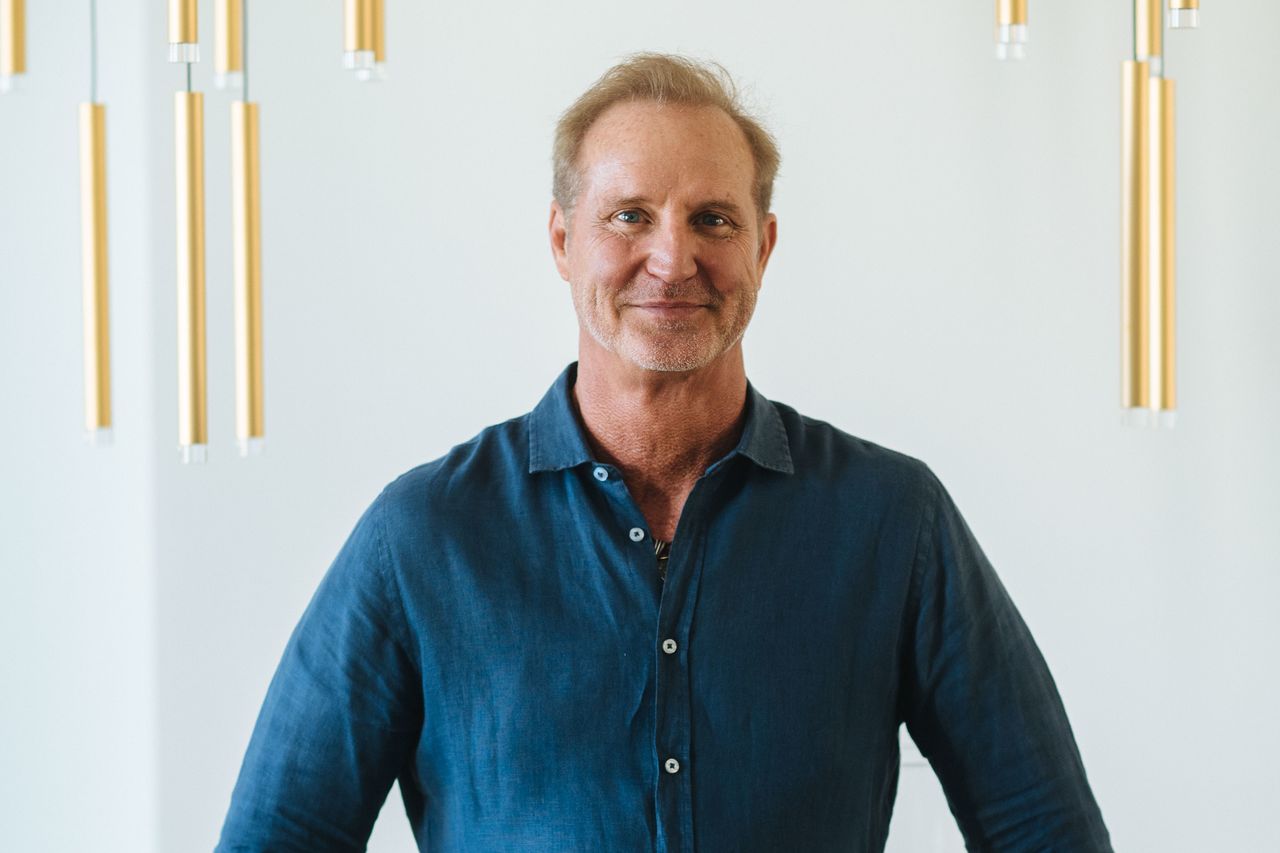
PHOTO: GABRIEL NAVAS FOR THE WALL STREET JOURNAL
American buyers of primary residences and vacation homes are shaking up the Spanish real-estate market. Mark Stücklin, a Barcelona-based real-estate analyst who owns the website Spanish Property Insight, says Spanish notary records indicate that sales to Americans were up 76% in the first half of 2022 compared with the year before, making it the highest half-year by volume on record.
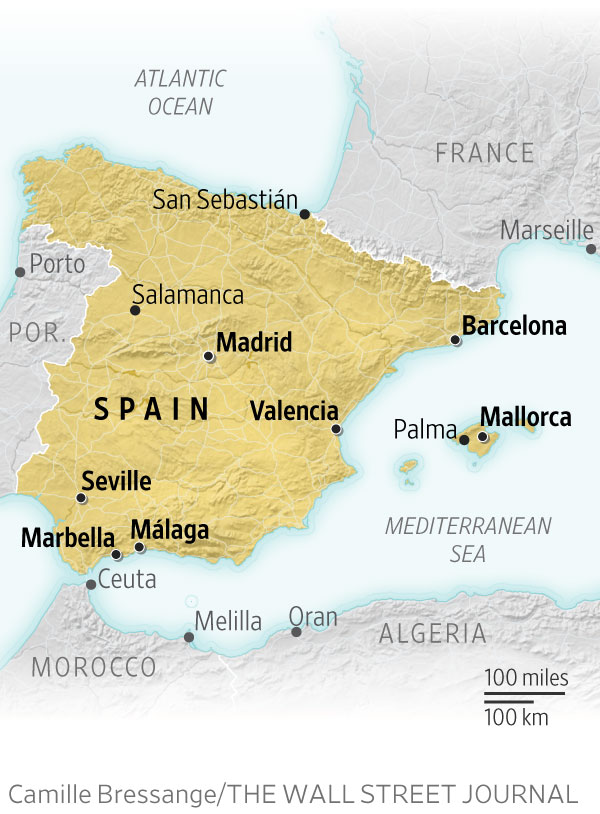
Mr. Stücklin says the plurality of Americans are buying in Andalusia, the region that includes Marbella, Málaga and Seville. Sean Woolley, managing director of Cloud Nine Spain, which handles sales of coastal properties between Málaga and Gibraltar, says Americans “were never really on our radar before” but they now make up 25% of his sales and 20% of his inquiries. In Madrid, Alejandra Vanoli, managing director of Spain’s VIVA Sotheby’s International Realty, says Americans have become her agency’s No. 1 foreign clientele in the Spanish capital’s high-end market, replacing Latin Americans, the longtime linchpin in luxury sales.
Regular direct flights between Atlanta and Madrid were a key factor for Gil and Laura Madrid, who work together at Ms. Madrid’s Georgia-based travel agency, Resort to Laura Madrid. This year, the couple’s surname proved “fortuitous,” jokes Mr. Madrid, 58, when they paid just over $1 million for a 1,790-square-foot Madrid apartment in the city’s atmospheric La Latina neighbourhood, a short walk from the Royal Palace. They settled on the two-bedroom, two-bathroom turnkey refurbishment after looking at a dozen other homes. They plan to use it for vacations.
Ms. Madrid, 54, calls the choice a no-brainer, citing the city’s vibrant culture and the historic centre’s walkability and affordability. The couple say they had been reluctant to buy a second home but were inspired by the strength of the dollar—down nearly 10% since breaking through parity with the euro last summer but still near historic highs in terms of purchasing power—and by the eight-hour travel time between their Atlanta and La Latina homes.
“Nonstop flights are really critical,” adds Mr. Madrid.
Spain’s real-estate market is seeing rising prices, but the country, which by some measures is still recovering from the 2008-09 financial crisis, can seem like a bargain. The Madrids’ new La Latina neighbourhood is located in the Centro district, among the city’s strongest, with prices rising 8% between the fourth quarters of 2021 and 2022, according to analysis by Tinsa Spain, the real estate valuation and data company. Greater Madrid prices are down 12.3% from early 2008 highs. In Marbella, Mr. Hale’s new home, prices rose 6.4% in 2022 from 2021, still down some 15% from their peak in the third quarter of 2008.
Palma de Mallorca, the capital of Spain’s Balearic Islands, has some of the country’s most expensive residential real estate, with average prices of $263 a square foot, up nearly 6% in 2022. Now, with seasonal direct flights to Newark, N.J., the historic city, with its revived medieval core, is seeing a spike in American buyers who want to balance Old World charm with contemporary convenience. Sotheby’s Ms. Vanoli says Palma city properties, 20 minutes from the airport, are at the top of Americans’ lists.
Kelsey and Michael Wulff, a British-German couple in their 60s, have listed their 11,800-square-foot Palma palace for $6.3 million. The couple, both retired, paid $3.1 million in 2013, and then spent about $530,000 to renovate the 13th-century structure. After a few years of dividing their time between the palace and a smaller city apartment nearby, they are selling the larger home, which in recent years they have used for guests, parties, and events, such as a private concert series.
Located a short walk from Palma’s waterfront Gothic cathedral, the palace salon has its original wooden ceilings, whose vivid colours were revealed during a restoration, and a rooftop terrace with 360-degree views. Mrs. Wulff has been a witness to Palma’s remarkable gentrification. Back in 2000, she recalls, “even taxi drivers wouldn’t come to this area. Now it’s Palma’s most expensive.”
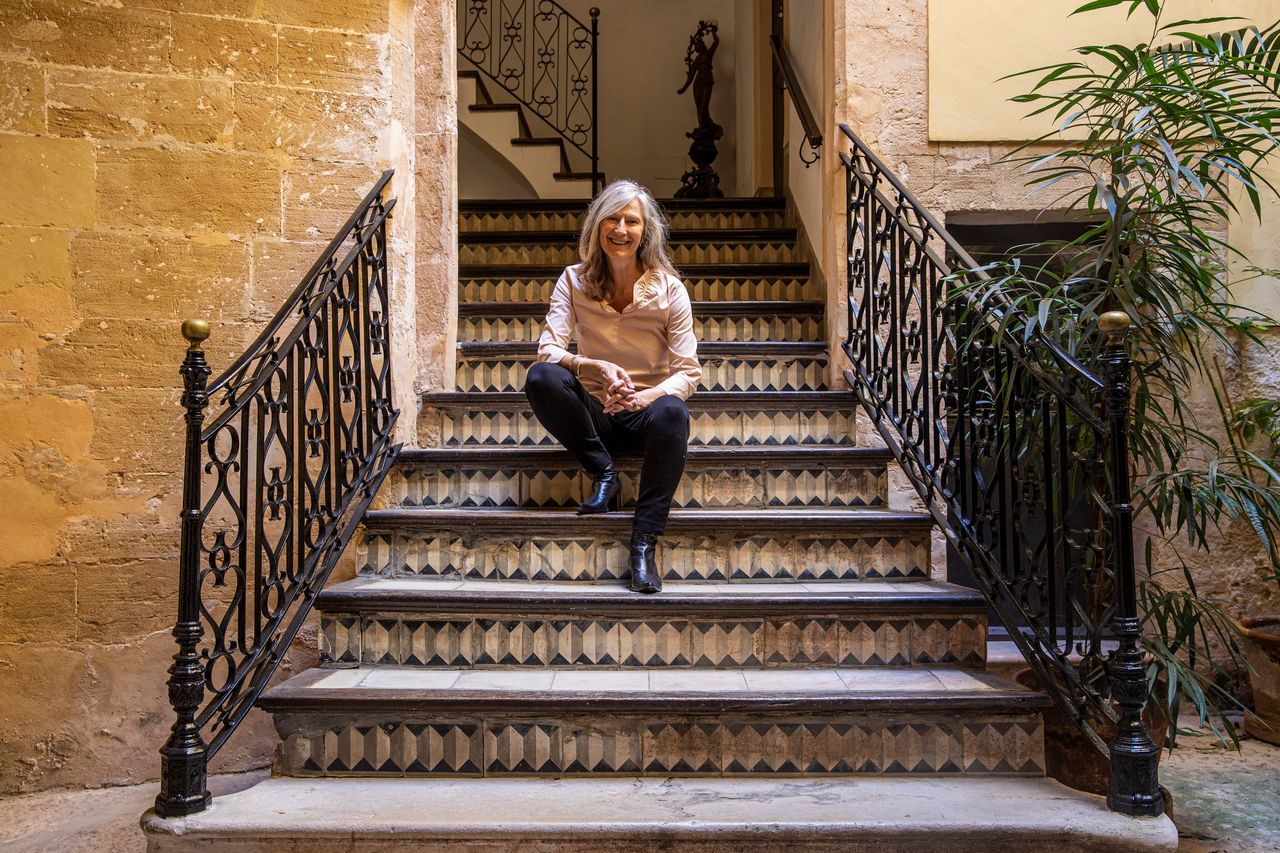
PHOTO: STUART PEARCE FOR THE WALL STREET JOURNAL
Back on the mainland, Valencia, Spain’s third-largest city, also has become a centre of expatriate American living, even though it doesn’t have direct flights to the U.S. Real-estate agent Conor Wilde, CEO and founder of Found Valencia Property, says 90% of his American clients are interested in full relocation. This new wave of expat American is coming for a “Spanish way of life” that his clients regard as a respite from political divisions and the threat of gun violence, he says.
Newly resettled Americans typically arrive with school-age children, he says, but maintain their home ties, spending summers and holidays back in the U.S. “We have American buyers coming in every single week,” he says. “I have never seen anything like it.”
Valencia combines Barcelona-style architecture and beach life with Madrid-style urbanity and Seville’s signature orange trees. Rob Glickman and his wife, Tina Ashamalla, a couple in their early 50s, relocated here in 2019 from the San Francisco Bay Area. Now living in a rooftop rental in the historic centre, Mr. Glickman, a former Silicon Valley marketing executive who works remotely for a London-based marketing startup, and his wife, a nonprofit board member, closed in late December on a 1,400-square-foot apartment near their rental.
They plan to use the property now for visiting friends and family, and possibly later on as a primary residence in their retirement. They paid $470,000 for the apartment and two garage spaces (precious commodities in the historic city) and are now shopping for a three- or four-bedroom apartment with outdoor space for themselves and their two children, ages 20 and 17, after the family moves out of the rental. “The original idea was to travel the world,” says Mr. Glickman. “Then Covid hit and we stayed here.”
Mr. Wilde says newly arriving Americans often come with Spain’s so-called Golden Visa program in mind. This rewards real-estate purchases of at least 500,000 euros (about $536,000) with familywide residency permits.
Scott Pirrie, a recent Valencia arrival from greater Seattle, is earning dollars from real-estate investments back in the U.S. Currently, Mr. Pirrie, 41, and his wife, 29, along with their young daughter, are living in a rental, but are looking for a three-bedroom apartment of up to 2,150 square feet at a price that would qualify them for the Golden Visa program.
More Americans also make up the clientele at Culto Interior Design, a Barcelona studio co-founded by Daniel Rotmensch, 41, a Spain-based Israeli who offers a one-stop-shop refurbishment service that includes art on the walls.
Mr. Rotmensch says Americans typically spend $160,000 to $320,000 on redoing their new homes, which may include German kitchens and Italian designer furniture, and nearly always lead to an upgrade in air conditioning. He says his recent American clients come from Miami, Los Angeles and San Francisco, among other places, and are interested in areas like Eixample, a 19th-century district marked by Art Nouveau architecture and a lively shopping and restaurant scene.
Average home prices in Barcelona top out at $358 a square foot, slightly higher than Madrid, but growth is more sluggish. Prices in the Eixample district rose a mere 1% in 2022, says Tinsa.
Eixample luxury homes, known for their stylish vintage detailing, are a fraction of what similar units might cost in London or Paris. A four-bedroom, 3,900-square-foot apartment in a prime Eixample neighborhood is currently listed for about $3 million. The apartment has stucco ceilings and a balcony off the terrazzo-floor kitchen.
 Copyright 2020, Dow Jones & Company, Inc. All Rights Reserved Worldwide. LEARN MORE




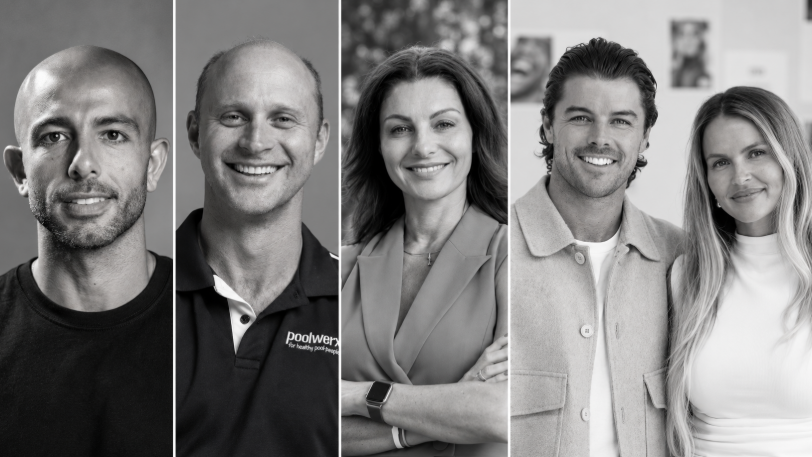
From making unpopular decisions to learning when to listen, leaders from five businesses reveal what nobody prepared them for — and how running a company has challenged their expectations.

Technology and semiconductor shares fell sharply as investors questioned the debt financing the AI infrastructure boom and confronted higher rates and Chinese competition.
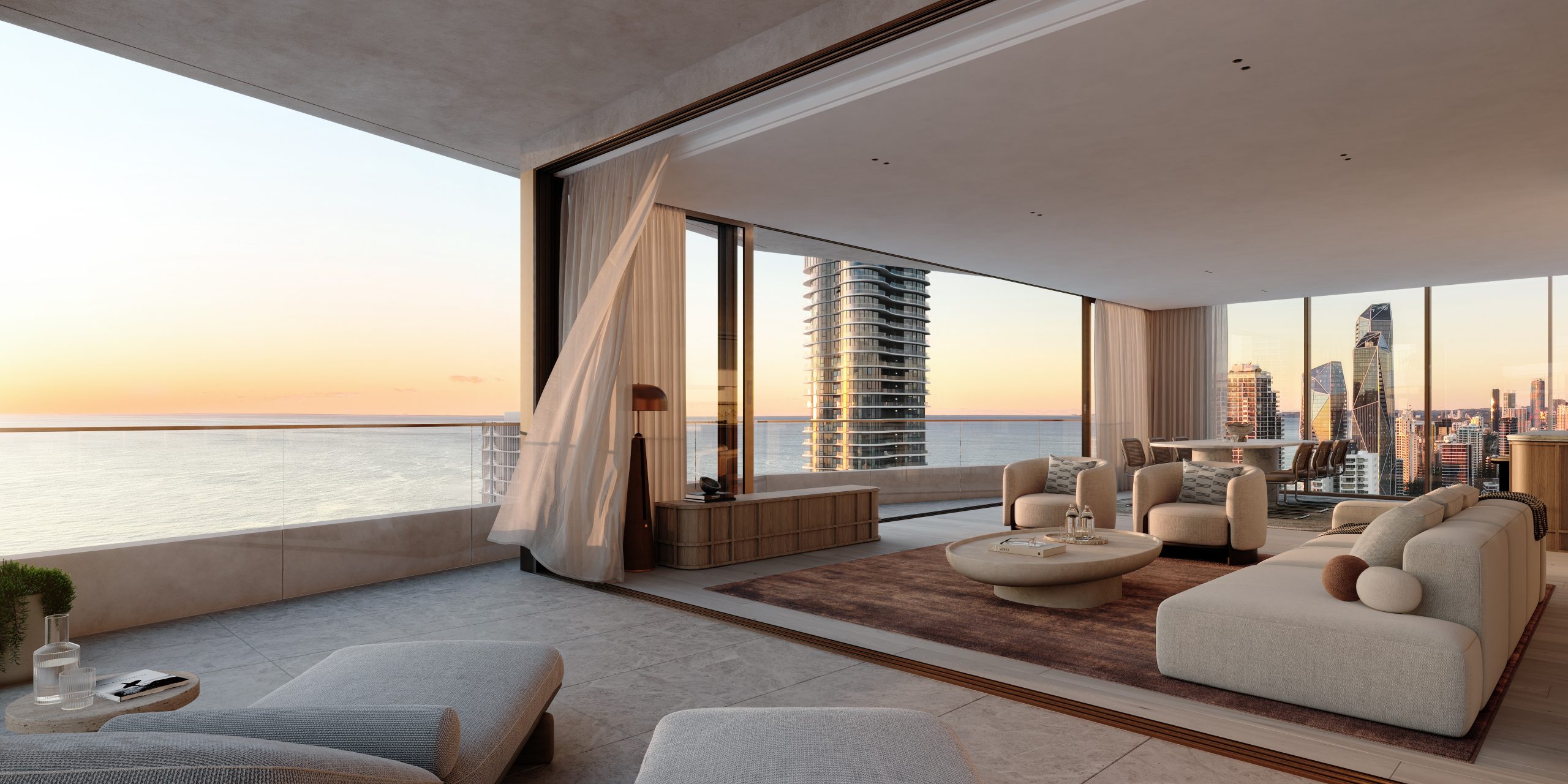
Mirvac’s 45-level Trielle has topped out at Yarra’s Edge, pairing riverfront apartments with wellness facilities, private dining and resident services.
3 min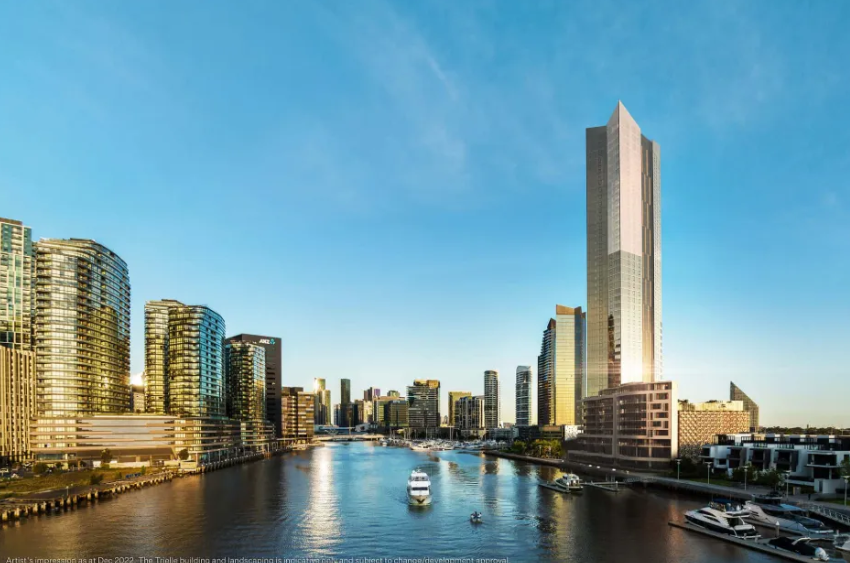
Mirvac has topped out Trielle at Melbourne’s Yarra’s Edge, with more than 70 per cent of the riverfront development sold and approximately 80 per cent of purchasers intending to make their apartment a home.
The figures, released on September 22, point to an owner-occupier audience for one of the precinct’s final residential towers. Mirvac began developing Yarra’s Edge in 2003, and its latest addition occupies one of the remaining absolute riverfront sites.
Mirvac CEO of Development Stuart Penklis said existing residents were among those moving up within the neighbourhood.
“Many purchasers already have a connection to Yarra’s Edge,” Mr Penklis said, describing buyers whose changing needs were encouraging an upgrade within the precinct.
“As one of the final residential towers within Yarra’s Edge, Trielle represents the culmination of more than two decades of creating one of Melbourne’s most established and sought-after waterfront communities,” Penklis said.
“Positioned on the Collins Street axis with absolute river frontage, Trielle offers residents a rare opportunity to enjoy sweeping views across the Yarra River, Melbourne skyline and Port Phillip Bay, while remaining seamlessly connected to the CBD. With Trielle now more than 70 per cent sold, we’re continuing to see strong demand from buyers seeking quality homes in established locations.”
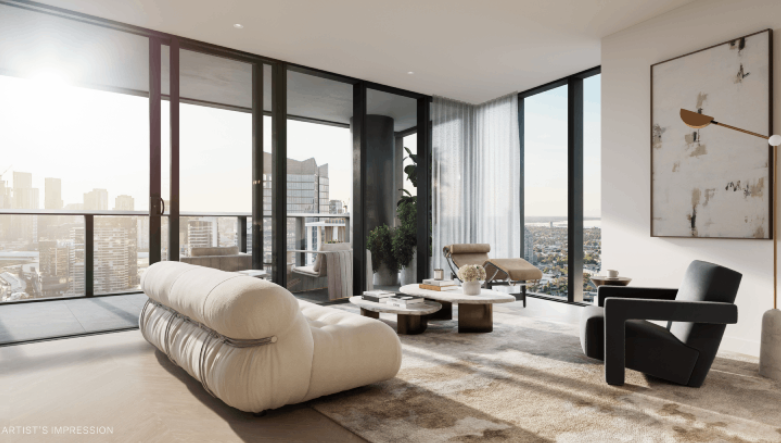
The developer also flagged a penthouse and sub-penthouse collection with larger layouts, premium finishes and broad outlooks. The planned wellness centrepiece, The Oasis, encompasses a 900-square-metre elevated urban rainforest.
Mirvac General Manager Residential Development Victoria Elysa Anderson said Trielle had resonated strongly with buyers seeking a rare lifestyle offering in Melbourne.
“Opportunities to secure a new luxury residence on a riverfront site of this calibre are incredibly rare, particularly within a community like Yarra’s Edge,” Anderson said.
“What makes Trielle unique is the combination of exceptional views, world-class residential facilities and the lifestyle that already exists around it. Residents are buying into a mature waterfront community with parks, promenades, dining, wellness and strong community connections already in place.”
The 45-level tower brings a substantial new presence to that waterfront. Its residential offering spans one-, two-, three- and four-bedroom apartments, with Signature, Prestige and Sub-Penthouse collections accommodating different household sizes. The north-facing position connects the apartments visually to the river and city beyond.
Seven storeys above the promenade, the planned Oasis combines planting and a running stream with a Scandinavian-inspired wellness club developed with spa specialist Naomi Gregory. Facilities include a 25-metre lap pool, hot magnesium pool, sauna, hydrotherapy, a gym, yoga and Pilates room, and treatment spaces.
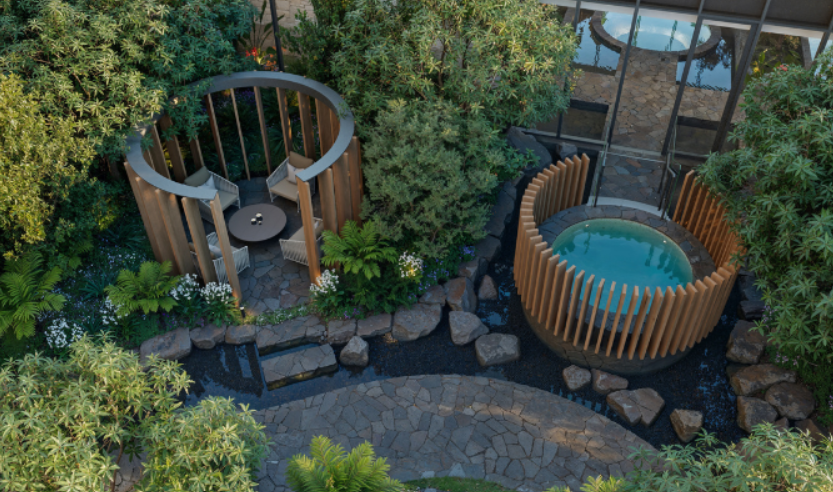
The amenity extends beyond exercise. Residents will have access to The Biblioteca library and workspaces, ground-floor work pods, and The Salone piano lounge. A private Chef’s Table dining room offers a setting for larger gatherings, while a cinema, games room and sports lounge broaden the entertaining options. Concierge services and a dog-wash area support everyday routines.
Trielle comprises a collection of one, two, three and four-bedroom residences. Reflecting strong demand from owner occupiers, approximately 80 per cent of purchasers to date intend to live in their homes, highlighting the project’s appeal to those seeking a long-term waterfront lifestyle.
Mirvac has recently delivered The Albertine, a premium apartment development on the edge of Melbourne’s CBD, and is nearing completion of Prince & Parade in Brunswick, further strengthening its portfolio of thoughtfully designed apartment communities in some of Melbourne’s most sought-after urban locations.
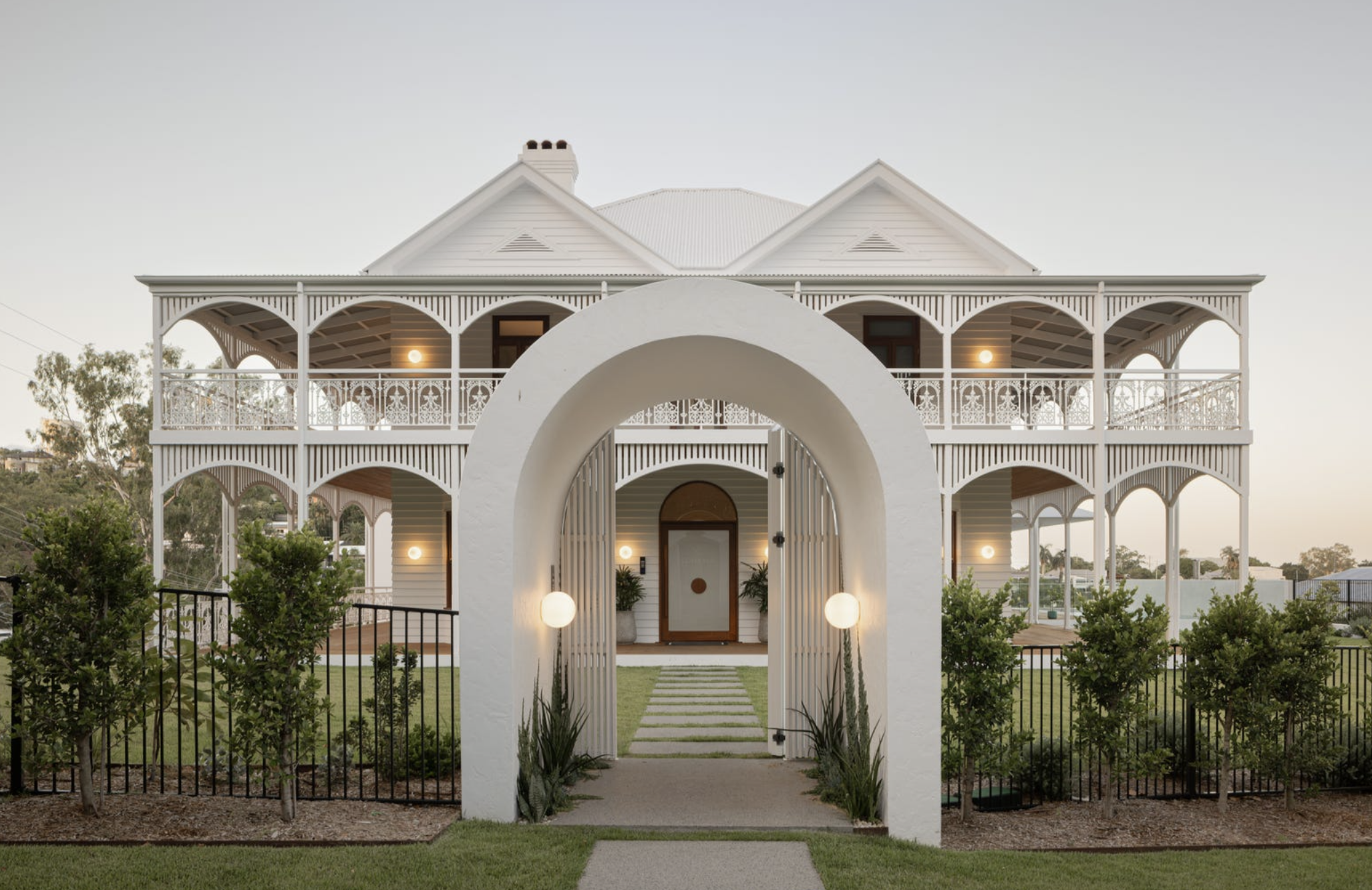
A restored 1860s Brisbane residence transformed by GRAYA has smashed Paddington’s house price record, selling for more than $12 million.

The PG rating has become the king of the box office. The entertainment business now relies on kids dragging their parents to theatres.