The Malibu Mansion Abandoned by Kanye West Is Hitting the Market Again
The seller, Steven ‘Bo’ Belmont, is asking $39 million for the under-construction project.

 3 min
3 min
In September 2024, crowdfunding entrepreneur Steven “Bo” Belmont paid $21 million for a Tadao Ando-designed house in Malibu, Calif., that rapper Kanye West had purchased, gutted and abandoned, promising to restore it back to its original state.
Now, with the renovation in full swing, Belmont is putting the beachfront property back on the market for $39 million. If he doesn’t find an appealing offer, he’ll list the property for between $55 million and $65 million closer to completion, he said.
Belmont is continuing with construction, and expects the project to be done in early 2026. But he would make as much money for his investors selling now versus when the project is finished, since the carrying costs on the property are about $1 million a month.
And he is eager to sell quickly. “The minute I start going over a year of hold time, it lowers my average return on investment,” he said. “And my number one goal with my business is to take care of my investors.”
Belmont has received several unsolicited offers for the four-bedroom home over the last few months, including a $30 million overture from a Montana developer and a $28 million offer from a local builder. “I’m obviously not going to take that,” he said, “but there’s been a lot of activity.”
The roughly 4,000-square-foot house was designed more than decade ago by Ando, a Pritzker Prize-winning Japanese architect with a celebrity following, for financier Richard Sachs. West, who now goes by Ye, paid $57.3 million to buy it from Sachs in 2021, then gutted the house with plans to turn it into a beachfront bunker, according to a lawsuit from one of his contractors.
As he proceeded with the project, West made headlines for erratic behavior and antisemitic comments, and brands such as Gap and Adidas cut ties with him. He listed the property for $53 million in December 2023.
When Belmont bought it, the house had no windows, bathrooms or electricity, and was completely exposed to wind and sea spray from the Pacific Ocean. To fund the restoration, Belmont’s crowdfunding company, Belwood Investments, raised millions from investors who chipped in as little as $1,000 to north of $1 million.
Since then, he has done all the framing, installed new plumbing and electrical systems and redone the roof, he said. The glass for the windows hasn’t yet arrived from Germany; it is expected to be installed by the end of the summer, according to Belmont. He estimated the total cost of the project, which is being overseen by architecture firm Marmol Radziner, at around $8.5 million.
Buying early would allow the new owner to make some aesthetic decisions about the home, said Jason Oppenheim of the Oppenheim Group, one of the listing agents. “This house is like a Picasso,” he said. “This is almost like allowing the buyer to pick the frame.”
Malibu Road, where the property is located, wasn’t impacted by the L.A. wildfires earlier this year, but parts of the larger Malibu area were wiped out. Buyers right now are nervous about insurance and the pace of rebuilding, Belmont said, but he still expects long-term demand for Malibu homes. He noted that the hulking concrete structure would be impossible to burn.
The fires were “a horrible thing,” Belmont said, “but to be quite frank, there’s no inventory to buy on the Pacific Coast Highway, so it really bolstered our value.”
Belmont is eager to distance the Ando home from its association with West. “What I don’t want is that type of reckless publicity to be correlated with this piece of art,” he said. “It doesn’t need that type of stigma. It needs to be really showcased for what it truly is—an Ando.”
Ando has famously designed only a few residences for select clients. Beyoncé and Jay-Z paid $190 million in 2023 for a Malibu mansion he designed. Their home is known as the “Big Ando,” compared with Belmont’s “Little Ando.”
Oppenheim stars on the Netflix reality TV show “Selling Sunset,” and episodes for a coming season have been filmed at the house, Belmont said.
Belmont said he has already submitted an offer on another high-profile celebrity home, the property of embattled rapper P. Diddy . He said he submitted an offer of around $30 million for the home, which had been listed for $61.5 million, but it was declined. He has since lowered his offer to $27.5 million.
Belmont started Belwood in 2018. Previously, he served three years in prison after a 2014 conviction for assault with a deadly weapon in connection with allegedly hitting a man with a pitchfork during an altercation.
Oppenheim is co-listing the property with Mauricio Umansky from The Agency.
 Copyright 2020, Dow Jones & Company, Inc. All Rights Reserved Worldwide. LEARN MORE





From making unpopular decisions to learning when to listen, leaders from five businesses reveal what nobody prepared them for — and how running a company has challenged their expectations.

Technology and semiconductor shares fell sharply as investors questioned the debt financing the AI infrastructure boom and confronted higher rates and Chinese competition.
Mirvac’s 45-level Trielle has topped out at Yarra’s Edge, pairing riverfront apartments with wellness facilities, private dining and resident services.
3 min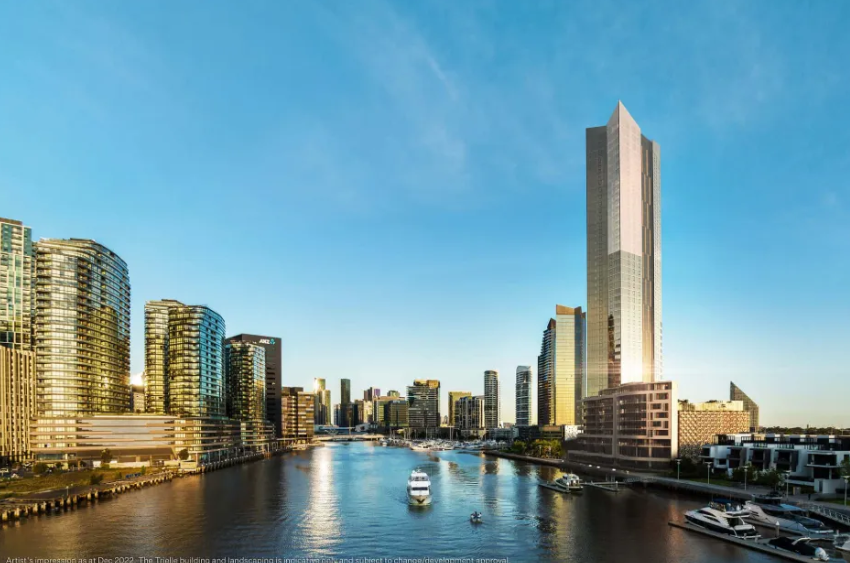
Mirvac has topped out Trielle at Melbourne’s Yarra’s Edge, with more than 70 per cent of the riverfront development sold and approximately 80 per cent of purchasers intending to make their apartment a home.
The figures, released on September 22, point to an owner-occupier audience for one of the precinct’s final residential towers. Mirvac began developing Yarra’s Edge in 2003, and its latest addition occupies one of the remaining absolute riverfront sites.
Mirvac CEO of Development Stuart Penklis said existing residents were among those moving up within the neighbourhood.
“Many purchasers already have a connection to Yarra’s Edge,” Mr Penklis said, describing buyers whose changing needs were encouraging an upgrade within the precinct.
“As one of the final residential towers within Yarra’s Edge, Trielle represents the culmination of more than two decades of creating one of Melbourne’s most established and sought-after waterfront communities,” Penklis said.
“Positioned on the Collins Street axis with absolute river frontage, Trielle offers residents a rare opportunity to enjoy sweeping views across the Yarra River, Melbourne skyline and Port Phillip Bay, while remaining seamlessly connected to the CBD. With Trielle now more than 70 per cent sold, we’re continuing to see strong demand from buyers seeking quality homes in established locations.”
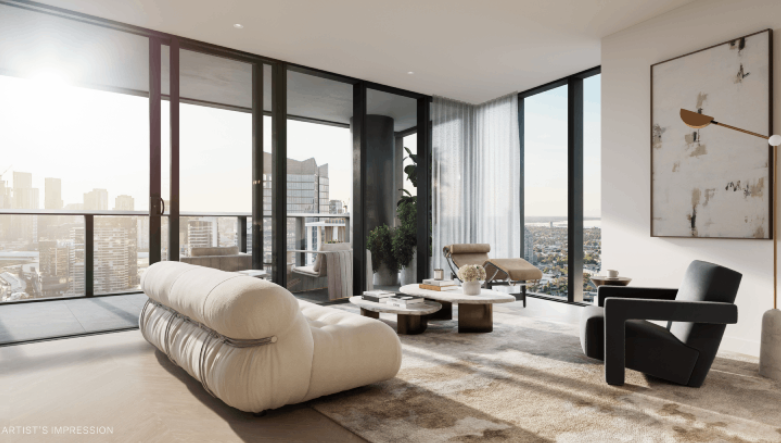
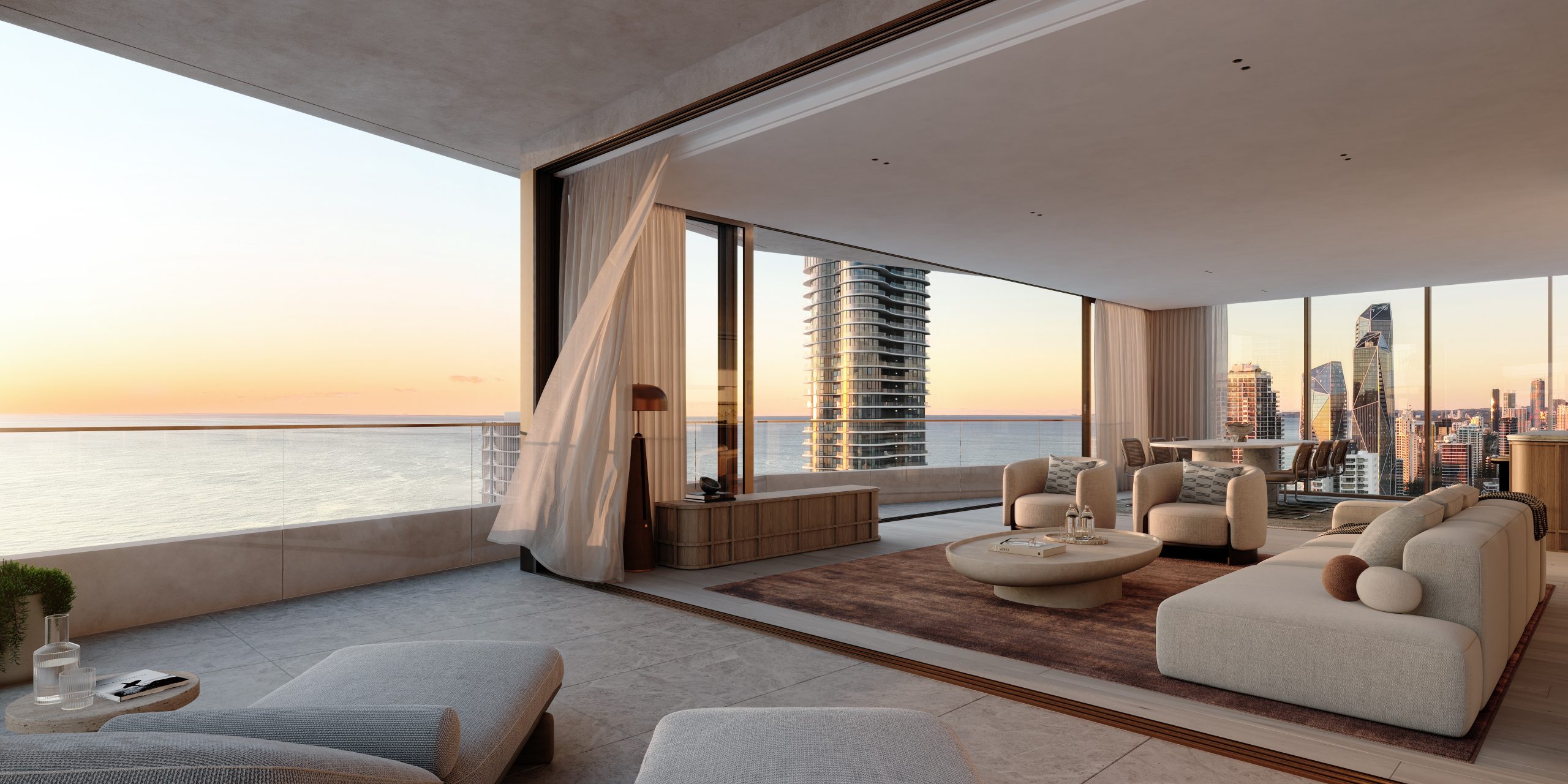
The developer also flagged a penthouse and sub-penthouse collection with larger layouts, premium finishes and broad outlooks. The planned wellness centrepiece, The Oasis, encompasses a 900-square-metre elevated urban rainforest.
Mirvac General Manager Residential Development Victoria Elysa Anderson said Trielle had resonated strongly with buyers seeking a rare lifestyle offering in Melbourne.
“Opportunities to secure a new luxury residence on a riverfront site of this calibre are incredibly rare, particularly within a community like Yarra’s Edge,” Anderson said.
“What makes Trielle unique is the combination of exceptional views, world-class residential facilities and the lifestyle that already exists around it. Residents are buying into a mature waterfront community with parks, promenades, dining, wellness and strong community connections already in place.”
The 45-level tower brings a substantial new presence to that waterfront. Its residential offering spans one-, two-, three- and four-bedroom apartments, with Signature, Prestige and Sub-Penthouse collections accommodating different household sizes. The north-facing position connects the apartments visually to the river and city beyond.
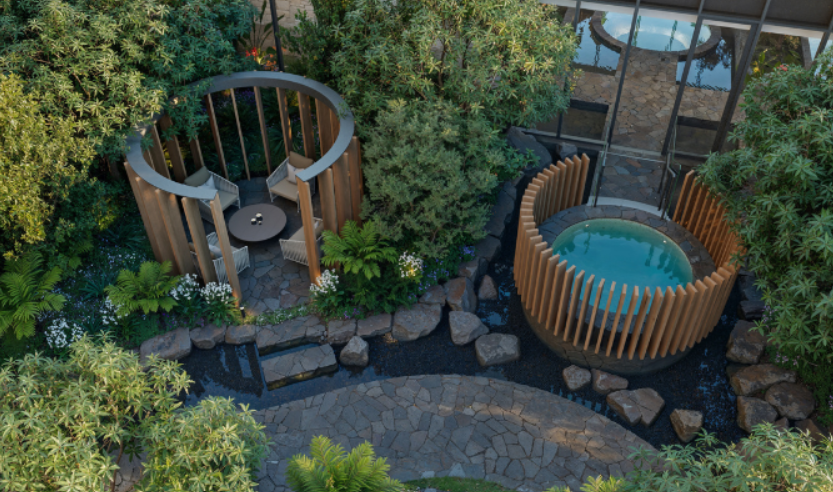
Seven storeys above the promenade, the planned Oasis combines planting and a running stream with a Scandinavian-inspired wellness club developed with spa specialist Naomi Gregory. Facilities include a 25-metre lap pool, hot magnesium pool, sauna, hydrotherapy, a gym, yoga and Pilates room, and treatment spaces.
The amenity extends beyond exercise. Residents will have access to The Biblioteca library and workspaces, ground-floor work pods, and The Salone piano lounge. A private Chef’s Table dining room offers a setting for larger gatherings, while a cinema, games room and sports lounge broaden the entertaining options. Concierge services and a dog-wash area support everyday routines.
Trielle comprises a collection of one, two, three and four-bedroom residences. Reflecting strong demand from owner occupiers, approximately 80 per cent of purchasers to date intend to live in their homes, highlighting the project’s appeal to those seeking a long-term waterfront lifestyle.
Mirvac has recently delivered The Albertine, a premium apartment development on the edge of Melbourne’s CBD, and is nearing completion of Prince & Parade in Brunswick, further strengthening its portfolio of thoughtfully designed apartment communities in some of Melbourne’s most sought-after urban locations.

Following the successful launch of its Palais Collection, MAISON de SABRÉ has unveiled a new modular handbag system offering more than 720 styling combinations.

Borrowers cannot control the Reserve Bank, but they can control how exposed their household budget is to its next decision. The RBA meets on 29 September with inflation concerns still elevated and major-bank economists increasingly bringing forward their rate-rise calls. Fixed mortgage rates have also been moving, reducing the value of waiting for perfect certainty. …
Continue reading “What mortgage holders should do before the next RBA decision”