AUSTRALIA’S FASTEST-CHARGING LUXURY EV UNVEILED
Zeekr’s new all-electric 7X SUV sets a bold benchmark for premium EVs in Australia, with world-first battery tech and a 13-minute fast charge.
 2 min
2 min
Luxury goes electric – at speed. Chinese-Swedish marque Zeekr has officially launched the 7X in Australia, positioning it as the country’s first mid-sized luxury electric SUV tailored for modern families. But this is no ordinary EV.
The Zeekr 7X arrives with the world-first Golden Battery – a breakthrough in ultra-fast charging technology that propels the vehicle from 10 to 80 per cent in just 13 minutes.
Unveiled today at the Australian Museum in Sydney, the Zeekr 7X represents a sophisticated fusion of Scandinavian design, next-gen digital integration and high-performance engineering.
With pricing starting at $57,900 (plus on-road costs), the model offers three variants: a single-motor Rear-Wheel Drive, Long-Range Rear-Wheel Drive, and the flagship dual-motor Performance All-Wheel Drive, which delivers a blistering 0–100km/h in 3.8 seconds.
Luxury, Reimagined
Designed in Zeekr’s Gothenburg studio, alongside stablemates Volvo, Polestar and Lotus, the 7X is based on Geely’s SEA platform and features a minimalist exterior marked by sleek surfaces, sculpted lines and full-width LED lighting.
Inside, it’s a sanctuary of luxe detailing, advanced technology and serious space. Despite its mid-size status, it offers the roominess of a full-size SUV and 539L of rear boot space, with up to 62L front storage in RWD models.
Cabin luxuries include power-operated doors, ventilated massage seats and premium materials across all touchpoints—particularly on the Performance AWD variant.
A Cockpit from the Future
As a software-defined vehicle, the 7X is built around digital smarts. It runs Qualcomm’s lightning-fast Snapdragon 8295 chip, making it the most powerful Zeekr yet. The 16-inch HD touchscreen infotainment system is matched by an optional 36.2-inch AR head-up display that overlays navigation and alerts into the driver’s field of view.
Safety technology is comprehensive, with 12 cameras and radar enabling features such as Adaptive Cruise Control, 3D surround-view monitoring, cross-traffic alerts and full automatic park assist.
Over-the-air software updates promise to keep the vehicle’s systems continuously evolving.
Performance Meets Practicality
With up to 615km of range (WLTP), the Long-Range RWD model is ideal for extended family road trips, while the AWD Performance trim offers serious muscle with 475kW of power and 710Nm of torque. The active air suspension system with 45mm lift capacity ensures off-road capability to match the on-road presence.
Unrivalled Charging Speed
Underpinning the Zeekr 7X’s headline charging time is an 800V electrical architecture, future-proofed to handle 450kW DC rates as infrastructure evolves. Even today, using a 360kW charger, drivers can add hundreds of kilometres of range in under a quarter of an hour.
Home charging is just as impressive. A standard 22kW onboard AC charger enables a full charge (10–100%) in 4.5 hours for the standard RWD model.
Pre-Order Incentives
To celebrate the launch, Zeekr is offering exclusive bonuses to the first 1,000 Australian customers, including:
- Complimentary 7kW home charger
- Portable charging cables (Type 2 and Mini)
- Free choice of exterior and interior colours
- Seven-year vehicle warranty and roadside assistance
The Zeekr Era Arrives
With more than 520,000 EVs sold globally since its debut in 2021, Zeekr is rapidly becoming a heavyweight in electric mobility. The 7X joins the local lineup ahead of the Zeekr X and Zeekr 009 later this year, signalling the brand’s serious ambitions for the Australian market.
“The Zeekr 7X delivers the kind of intelligent design, long-range confidence, and ultra-fast charging that Australian drivers are looking for,” said Frank Li, Vice President of Zeekr International and Managing Director of Zeekr Australia.
“It’s engineered for modern families but with the refinement and technology you’d expect from a premium EV.”
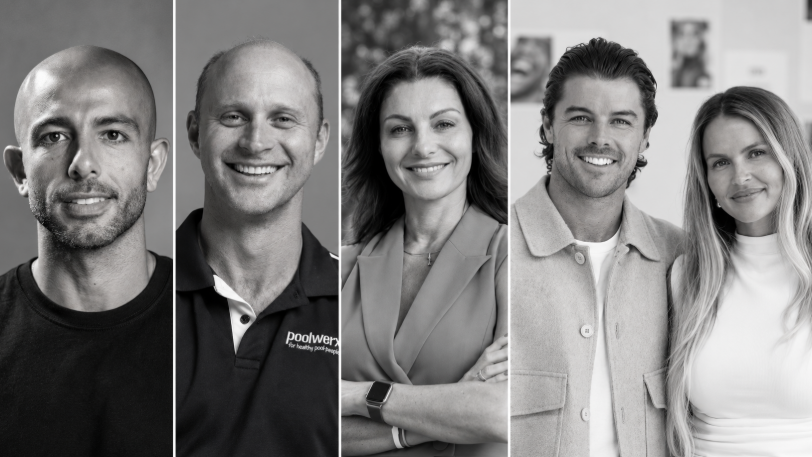
From making unpopular decisions to learning when to listen, leaders from five businesses reveal what nobody prepared them for — and how running a company has challenged their expectations.
Technology and semiconductor shares fell sharply as investors questioned the debt financing the AI infrastructure boom and confronted higher rates and Chinese competition.
Elon Musk is exploring a potential merger between Tesla and SpaceX, a deal that could reshape the future of AI, robotics, autonomous vehicles and space technology. With a combined valuation potentially reaching $3.5 trillion, the move could bring Musk’s vision of an interconnected technology ecosystem closer to reality, although a deal remains uncertain.
5 min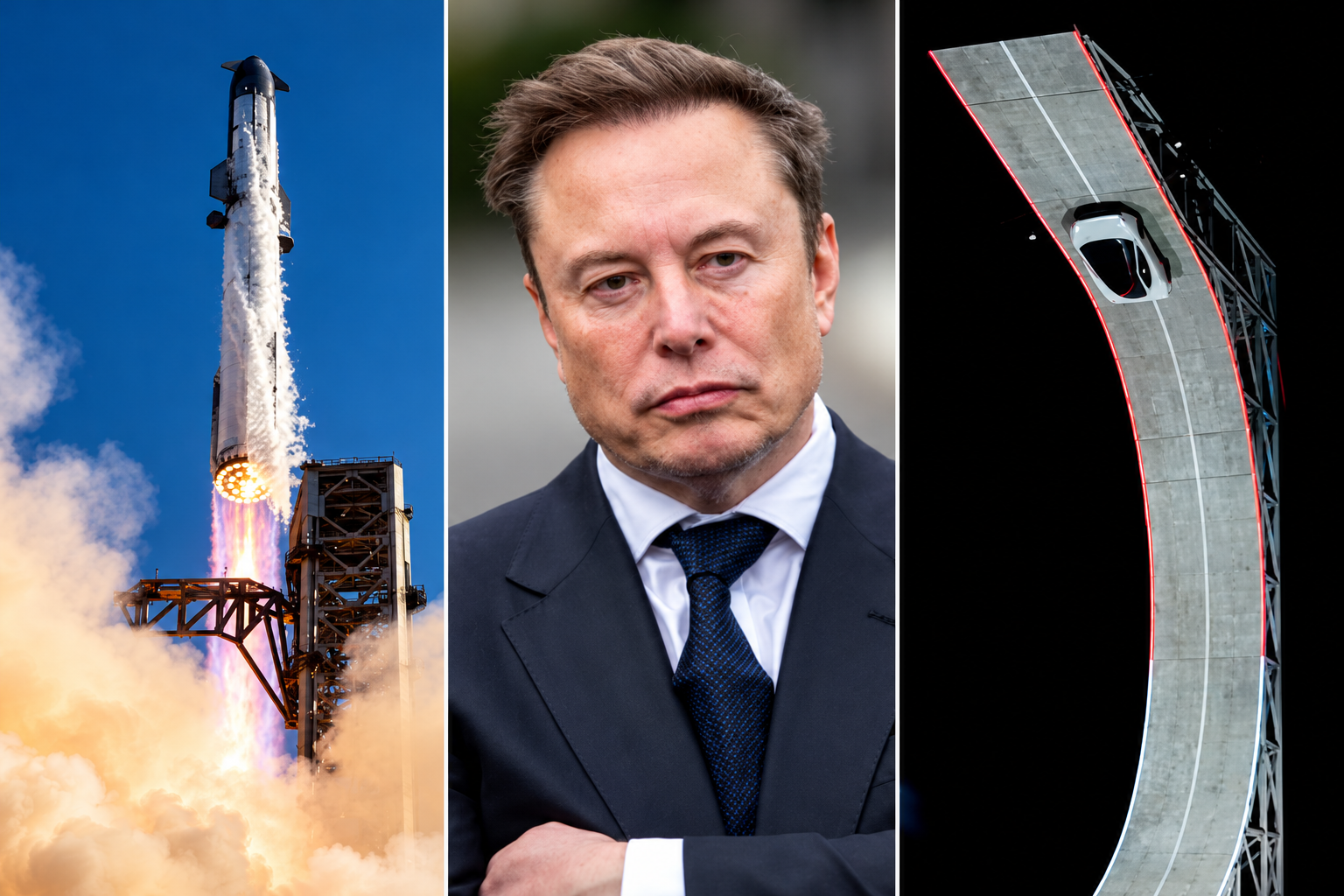
Elon Musk has engineered ties between Tesla TSLA 3.41%increase; up pointing triangle and SpaceX SPCX 7.79%increase; up pointing triangle that are hard to break, and now he wants to fuse them together permanently.
Musk has run both Tesla and SpaceX concurrently over the past two decades, using a schedule that dictated which days he spent focused on each business.
The companies have often shared resources and personnel, signaling their close ties. Last year, SpaceX looked into creating a spacesuit for Tesla’s humanoid robot Optimus, a person familiar with the matter said. Tesla last week showed off its new Roadster, a vehicle featuring SpaceX rocket thrusters that it hopes to soon bring to market.
And in recent months, Musk has repositioned both companies by expanding beyond their core operations toward a shared mission centered on artificial intelligence.
The world’s richest man on Tuesday signaled his interest in tying up SpaceX and Tesla, marking what would be the biggest corporate merger of all time. Because he serves as chief executive of SpaceX and Tesla, Musk said committees of independent directors at both companies are evaluating a possible deal, adding that a transaction might not come to fruition.
The committees will likely evaluate, with lawyers and bankers, how each company would fare in a potential deal and how a deal might best be structured. They then present their conclusions to their respective boards, who typically vote on whether to proceed.
“It’s an odd Kabuki dance where two groups of people are talking and I can’t be in the conversation,” Musk told SpaceX investors on Tuesday in response to an analyst’s question about a potential deal.
For Musk, the merger supports his vision of a world full of autonomous cars, humanoid robots and weekly rocket launches, as well as the data centers and satellites required to keep the whole thing running.
Some investors and analysts said they expect a transaction would be structured as an all-stock deal, with SpaceX potentially paying a modest premium for Tesla shares.
SpaceX, which has a market value of about $2 trillion, said it is seeing sharp growth in revenue across its businesses, which include operating data centers, launching rockets and operating satellite networks such as the internet service Starlink. Tesla is valued at about $1.5 trillion and is expanding its operations beyond its automotive and energy business. Shares in both companies traded higher following the news Tuesday.
Musk’s substantial ownership stakes in both companies, along with voting control at SpaceX, has enabled him to set the deal in motion. Analysts and investors said the deal will probably face regulatory scrutiny internationally, though some see Musk’s close relationship with the Trump administration as an asset to getting approval.
Blurred lines
The companies haven’t said which directors are on the special committees evaluating a potential deal. Several SpaceX and Tesla board members have either personal or business ties to Musk. And like Musk, venture capitalist Ira Ehrenpreis sits on both boards.
In a filing this week, Tesla outlined millions of dollars in business agreements with SpaceX and its subsidiaries last year, including $143 million in car sales to SpaceX, $3.3 million in advertising that it bought on the social-media platform X and $430 million in revenue from the sale of Megapack batteries for SpaceX’s data centers.
The companies also split the cost of resources including the use of Musk’s SpaceX jet and the bill for his personal security, which he runs through a private company.
Employees at both companies routinely move between companies to work on special projects, and some executives have dual roles, including Charles Kuehmann, vice president of materials engineering at both SpaceX and Tesla, and Ashok Elluswamy, the vice president of AI software at Tesla who runs a joint venture with SpaceX called Digital Optimus.
Over the years, Musk has launched new startups within his empire, including brain-implant company Neuralink, underground-tunnel developer the Boring Company and xAI, the AI startup that merged with SpaceX in February.
It is that AI business that Musk thinks can serve a market worth tens of trillions of dollars, justifying the need for a merger.
The business case goes like this: Tesla is developing robotaxis and robots, which it calls “physical AI.” SpaceX is working on the back end of physical AI: the data-center capacity and internet connection required for those robotaxis and robots to operate continuously.
“I don’t see what the value of Tesla is if it’s not merged with SpaceX,” said investment adviser Ross Gerber, a former Tesla bull turned critic invested in both companies. “If they don’t merge, the brains of everything that runs Tesla is owned by another company.”
On top of it all, both companies face constraints on the supply chains they need to make this world a reality, particularly when it comes to chips. To address this, Musk earlier this year announced a joint venture between Tesla, SpaceX and Intel to design and manufacture chips in Texas. “The most epic chip-building exercise by far,” he has said.
Musk at the wheel
For Musk, a merger would also solve two problems: demands on his attention and his lack of control at Tesla.
Tesla for years was Musk’s only public company, a status that came with greater scrutiny. There, Musk reports to a public board, as well as individual investors who make up around 30% of Tesla’s voting power, according to FactSet.
The question of Musk’s attention became a particular focus for investors and the board in recent years after he acquired Twitter in 2022 and launched xAI in 2023, and again in 2025 as he spent time in Washington, D.C., running the Department of Government Efficiency in the early months of President Trump’s second term.
As Tesla’s car business suffered in 2025, Musk threatened to take his AI ambitions outside the company if he wasn’t granted 25% voting control. Last November, Tesla shareholders approved a new pay package for Musk, which created a path for him to vastly expand his stake.
As of Sept. 30, Musk owned a roughly 20% stake in Tesla, according to the company’s proxy filing.
The SpaceX IPO gave Musk a different path. When SpaceX went public in June, the deal’s structure enabled him to have more than 80% voting power at the company—so much that he can’t be fired and decisions can’t be made without his support.
If SpaceX acquires Tesla, he will likely stay in control.

An opulent Ryde home, packed with cinema, pool, sauna and more, is hitting the auction block with a $1 reserve.

The Australian leather house has opened an immersive four-day pop-up in Manhattan, unveiling its Bloom Collection and redefining what a product launch can look like.