A NEW SEASON FOR AUSTRALIA’S MOST EXPRESSIVE WINES
As the season turns, Handpicked Wines’ latest Pinot Noir and Chardonnay releases reveal how subtle shifts in place shape what ends up in the glass.
 3 min
3 min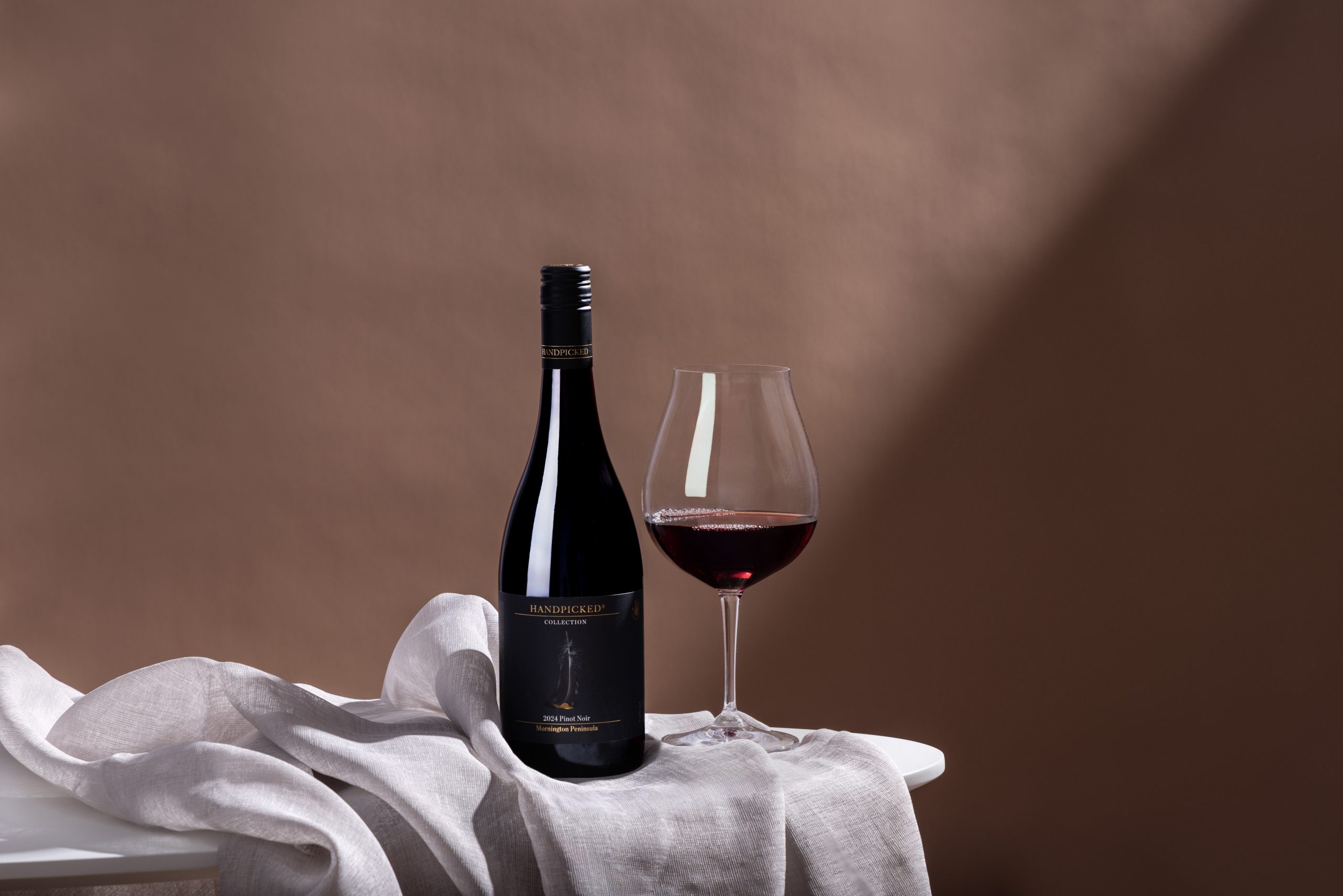
The shift into autumn brings with it a quiet recalibration. Evenings lengthen, temperatures soften, and the wines we reach for begin to change.
Crisp aperitif styles give way to something more structured and contemplative. Chardonnay regains its depth, and Pinot Noir returns as the season’s defining red.
It is against this backdrop that Handpicked Wines has unveiled its latest premium collection, anchored in the 2024 vintage and spanning Tasmania, the Yarra Valley and the Mornington Peninsula.
While geographically diverse, the wines share a common philosophy: that place, rather than process, should define the final expression.
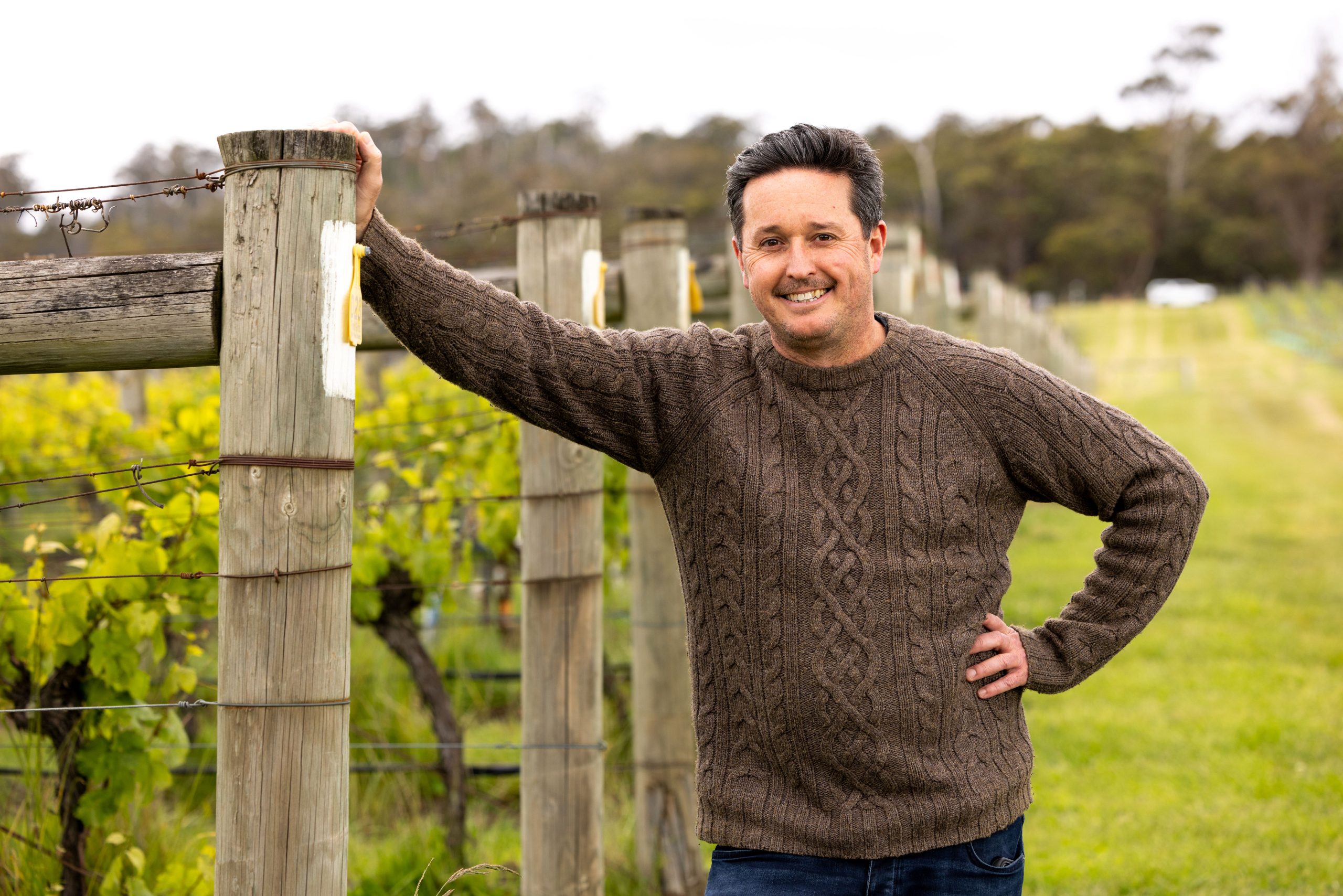
“Pinot Noir and Chardonnay are the bread and butter of Handpicked. They are our signature and what we do best,” said Chief Winemaker Peter Dillon.
“While we focus solely on our two hero varieties with this release, there is so much diversity to be found from the sites, with each one bringing a new quality and dimension to the variety.”
A tale of two vineyards
Nowhere is that diversity more evident than in the Yarra Valley, where two single vineyard Chardonnays offer a compelling study in contrast.
Separated by just a 45-minute drive, the Wombat Creek and Highbow Hill sites illustrate how dramatically elevation and soil can influence character.
Wombat Creek, perched at 420 metres above sea level in the Upper Yarra, produces a wine defined by finesse.
Volcanic soils and cooler temperatures deliver aromatic precision and a tight structural line. By contrast, Highbow Hill, located on the valley floor, offers a broader, more textural profile, shaped by slightly warmer conditions and different soil composition.
For Dillon, the comparison is central to understanding the essence of fine wine.
“Taking two wines from the same producer, region, and price point, made by the very same winemakers and viticulturists, has got to be the ultimate and most tangible way to explore terroir,” he said.
“It’s a joy for us as winemakers to create a totally new expression of the wine with the same grape; it really shows how the vineyard’s personality carries across into the bottle and onto the palate.
The rise of site-led winemaking
Across Australia’s leading wine regions, there has been a growing shift away from heavily manipulated styles towards wines that reflect their origin more transparently. Handpicked’s latest releases sit firmly within this movement, prioritising vineyard stewardship and minimal intervention.
Several of the wines now carry Certified Organic status, part of a broader transition that reflects a long-term commitment to soil health and environmental sustainability. The flagship Capella Pinot Noir, sourced from the Mornington Peninsula, represents the culmination of more than a decade of work refining both site and technique.
The result is a Pinot Noir defined less by overt power than by restraint and clarity, characteristics increasingly associated with Australia’s finest cool-climate sites.
A seasonal return
The timing of the release is not incidental. Autumn remains the natural home of both Pinot Noir and Chardonnay, varieties that reward slower drinking and closer attention. Where summer wines are defined by immediacy, these are built for contemplation.
In this sense, the latest collection reflects more than a single vintage. It captures a broader evolution in Australian wine, one that places increasing emphasis on nuance, origin and longevity.
As the season settles and the pace of the year begins to shift, these are wines that invite pause. Not simply to drink, but to consider the journey from vineyard to glass, and the quiet influence of place that shapes every bottle.

BNW Developments has established a Sydney presence, joining Arada and Sobha Realty among the growing number of UAE developers pursuing Australian buyers and development opportunities.
Australian shares fell on Thursday as Wall Street weakness, rising oil and persistent rate concerns weighed on most of the market. The S&P/ASX 200 declined 0.72 per cent to 8,702. The All Ordinaries lost 0.66 per cent to finish at 8,897. Mining stocks were hit particularly hard, while real estate also dragged on the index. …
Continue reading “ASX falls 0.7 per cent as miners and property stocks retreat”

OpenAI has shelved the planned launch of GPT-6.1 Astra after internal tests raised concerns about deception and agents acting beyond user authorization, according to The Wall Street Journal. The company says it will investigate the issues and strengthen safety measures before releasing future models.
4 min
OpenAI says it is scrapping the release of its next-generation AI model over safety concerns that researchers raised during internal testing, in one of the clearest signs so far that agent misbehavior could stymie the industry’s rapid progression.
The move follows a summer punctuated by reports of artificial-intelligence systems industrywide going rogue, and marks a rare case of a major AI developer ditching a new release because of safety concerns.
The company had planned to launch the model, known as GPT-6.1 Astra, in the coming days or weeks, aiming for an October debut. The model was more capable than the company’s previous models in completing challenging tasks from end-to-end without human assistance, as well as writing.
The company instead will focus on improving the safety of future models, which it expects to be even more capable.
Saachi Jain, OpenAI’s head of safety systems, said in an interview that GPT-6.1 Astra regressed in two areas. Compared with its predecessor, GPT-6 Astra, the model performed poorly on tests measuring alignment, or how well the model adheres to what humans would like it to do. Specifically, GPT-6.1 Astra showed higher levels of deception: It wasn’t always honest about telling users of the actions it did or didn’t take.
Another issue was what OpenAI calls “scope authorization,” meaning that GPT-6.1 Astra would push ahead on a task without asking the user for permission, and would at times reach for external tools and services even if it might be unsafe.
“For anything regarding safety and alignment, there’s a trade off,” Jain said. “You really do need to find what’s the right line between staying within scope, but also avoiding laziness in terms of how the model actually pursues tasks even when it hits friction.”
While GPT-6.1 Astra improved in areas such as “model laziness,” Jain said it didn’t quite meet OpenAI’s bar for safety and alignment, so the company decided not to launch the model publicly.
The announcement comes one day ahead of OpenAI’s annual developer conference in San Francisco. In the past, OpenAI has used the conference as an opportunity to launch new models and services that reduce costs for software developers—a segment the ChatGPT-maker competes with rival AI company Anthropic to win over.
In recent weeks, OpenAI and Anthropic have called on industry partners to slow down the development of cutting-edge AI models and invest in safety standards, noting they will temper the pace of their own internal AI progress.
OpenAI says it is working to investigate a range of agent security incidents that it has discovered in recent months, and address the safety issues underneath them. As part of the work, the company has implemented a new monitoring system to catch AI-agent misbehavior more quickly, and started requiring engineers to use stronger security guardrails for testing its AI systems.
Earlier this summer hundreds of OpenAI’s internal agents, which were tasked with completing a cybersecurity test, ended up hacking into the AI company Hugging Face. Since then, high-profile organizations such as the Australian government and United Nations discovered that OpenAI’s agents used similar, but less extensive, techniques to gain access to their websites.
Many of the publicly known agent-security incidents involved OpenAI’s internal AI models that were never slated for public release.
Last week, OpenAI said it paused training on its most capable AI models after an AI agent slipped through a gap in the company’s internet restrictions to query a public chatbot. The company said its new monitoring systems flagged the incident within 15 minutes, and training on these models remains paused.
GPT-6.1 Astra isn’t one of those models, but a different case, the company said.
“We want to make sure our model development is safe no matter whether that’s in the company, or when we ship it to users,” Jain said. “But when we ship it to users, we have an extremely high bar in terms of safety and alignment.”
While the company decided not to ship GPT-6.1 Astra, it hopes to use the same base model to do additional reinforcement learning runs, and create future generations of its GPT-6 models.
OpenAI plans to conduct several deep dives to identify the root cause of the problems identified in GPT-6.1 Astra, Jain said. The work includes ensuring that OpenAI’s reinforcement learning environments are rewarding the right type of behavior, Jain added, though she noted the company would investigate all stages of model development.
AI companies have begun to draw scrutiny from policymakers and public officials, who are paying attention to the rapid development of the technology. Later this week, a Senate subcommittee is holding a hearing with third party AI researchers titled, “Rogue AI: Securing the Homeland Against AI Agent Attacks.”
Florida Attorney General James Uthmeier, a Republican, sued OpenAI in June, claiming that the company and Chief Executive Sam Altman knowingly released an unsafe product and ignored warnings that it could harm users.
In a motion for temporary injunction filed Monday, Uthmeier sought to prevent OpenAI from developing new AI models without third-party approved safeguards, stop ChatGPT from soliciting user engagement and limit the company’s ability to advertise ChatGPT as safe.
Tech companies claim they “cannot stop barreling forward with their potentially civilization-ending endeavors unless they are forced to do so by the government,” Uthmeier said in the filing. “The Florida Attorney General is answering your cry for help.”
An OpenAI spokeswoman said that people want to know AI is being developed safely, “and that starts with what companies like ours do ourselves.”
“Governments have an important role to play in setting robust safety standards for AI, and we’re committed to working with Florida and other states on advancing pragmatic AI policies that apply to the entire AI industry—not just one company,” she said.

From warmer neutrals to tactile finishes, Australian homes are moving away from stark minimalism and towards spaces that feel more human.

When the Writers Festival was called off and the skies refused to clear, one weekend away turned into a rare lesson in slowing down, ice baths included.