





$30m Southern Highlands trophy home Invergowrie returns to the market
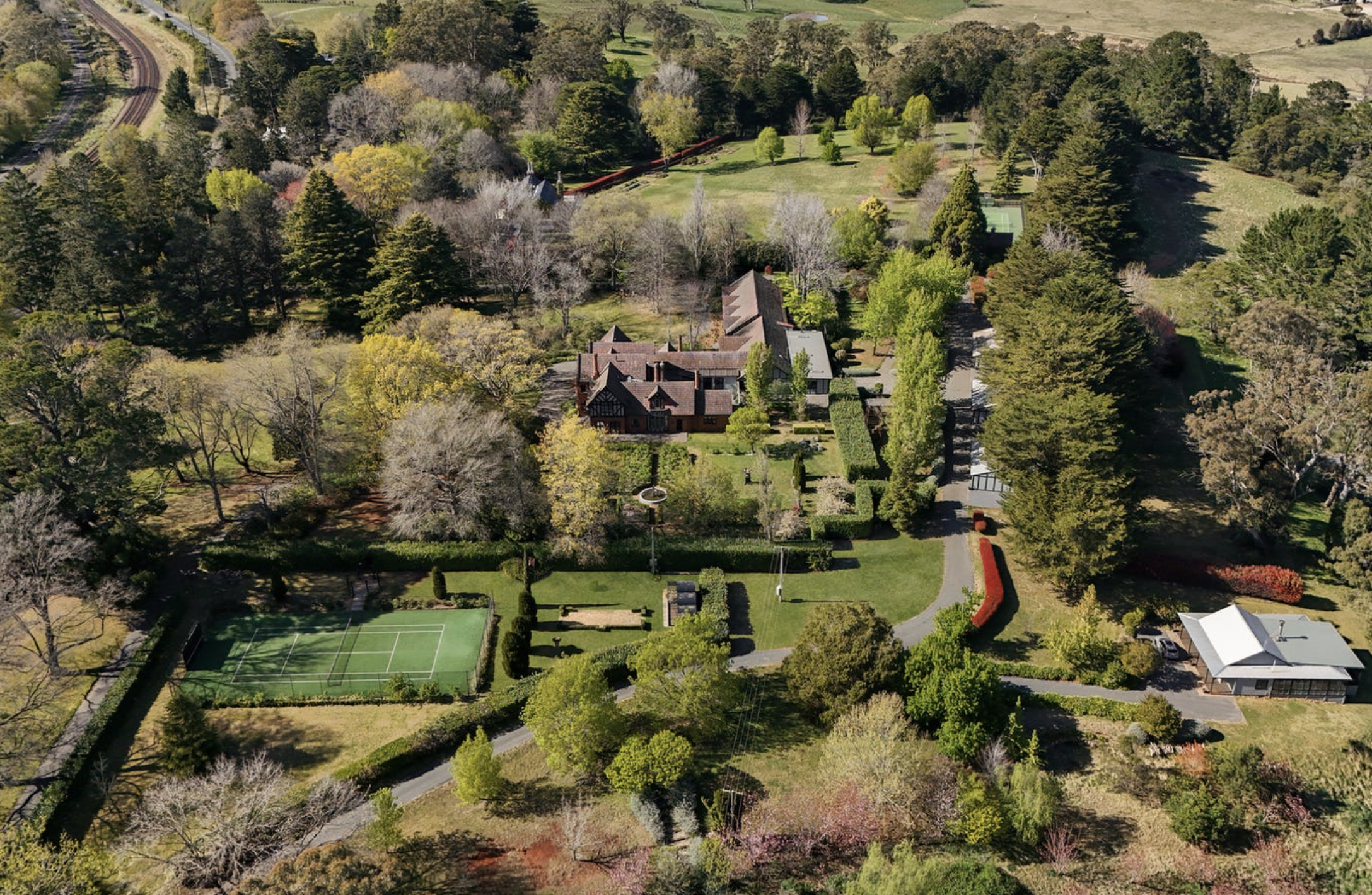
One of the Southern Highlands’ most celebrated country estates has returned to the market, with the historic Invergowrie offered for sale amid expectations it could achieve up to $30 million.
 2 min
2 min
Invergowrie, one of the best-known and most luxurious estates in the Southern Highlands, has been listed for sale with a price of up to $30 million.
The Exeter acreage is being offered for the first time since 2019, when it was sold by former Liberal Party leader John Hewson to little-known Queensland grazier Victoria Anderson.
The property attracted significant attention during Hewson’s ownership, having remained on the market for a decade prior to its sale. He initially sought $11 million in 2009, then ultimately accepted $6 million seven years later.
Architectural heritage and landmark gardens
The main residence dates back to 1936, when it was commissioned by pioneering industrialist Sir Cecil Harold Hoskins, whose leadership helped shape the nation’s iron and steel industry. Designed by architect Geoffrey Loveridge, Invergowrie is a grand Tudor Revival residence set within gardens conceived by celebrated landscape designer Paul Sorensen. His early 20th-century landscapes remain among the most admired in the Highlands.
Today, those heritage plantings — sweeping lawns, ancient oaks, stately silver elms and groves of cedar — continue to frame the home in established grandeur.
A richly reimagined interior
Since purchasing Invergowrie in 2019, Anderson has comprehensively reimagined the interiors, engaging award-winning studio Greg Natale Designs to transform the historic residence into a richly layered and opulent home.
Every detail speaks to bespoke quality: deep navy joinery offset by striking brass fixtures and hand-gilded ceilings; French oak parquetry laid in the classic Versailles pattern; Italian porcelain tessellated tiles; and plush custom carpeting underfoot. One-off wallpapers from Papiers de Paris sit alongside coveted designs by Versace, Gucci and Ralph Lauren, while decorative lighting selections include pieces from Ralph Lauren Home, Kelly Wearstler and Kate Spade.
The designer kitchen is fitted with integrated Miele refrigeration, a Smeg cooktop, a Thermoseal oven, a EuroCave wine cabinet, and a Qasair executive range hood, while Carrara marble surfaces and a Billi tap deliver boiling, chilled, and sparkling water. Bathrooms and powder rooms are finished in Norwegian Rose and Carrara marble.
A private estate on 9.3 hectares
Spanning two levels, Invergowrie comprises six bedrooms in the main residence, along with several formal and informal living and dining rooms, an office, gym, reception room, bar and wine cellar. There is also a trophy room adjoining a billiards room and an indoor 25-metre pool.
Across the 9.3-hectare estate sits a self-contained 1800s Lakehouse with two additional bedrooms, as well as a separate two-bedroom guest house and a caretaker’s cottage. The grounds also feature a tennis court, wrought-iron arbour, aviary and bocce court.
Cullen & Royle agents Deborah Cullen and Richard Royle are marketing the property in conjunction with James Hall of Savills.
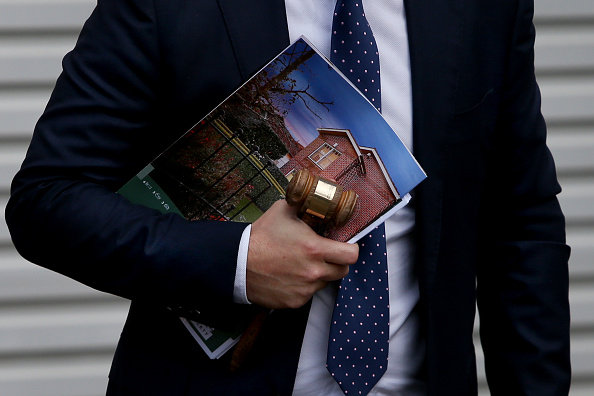
Victorian auction buyers will soon receive a piece of information that has traditionally been withheld until bidding reaches it: the vendor’s reserve price. Under new property-sale and underquoting laws, agents must publish the agreed reserve at least seven days before an auction or fixed-date sale. Most changes begin on 1 October 2026 and apply to …
Continue reading “Victoria’s New Auction Rules Will Force Reserve Prices Into the Open”
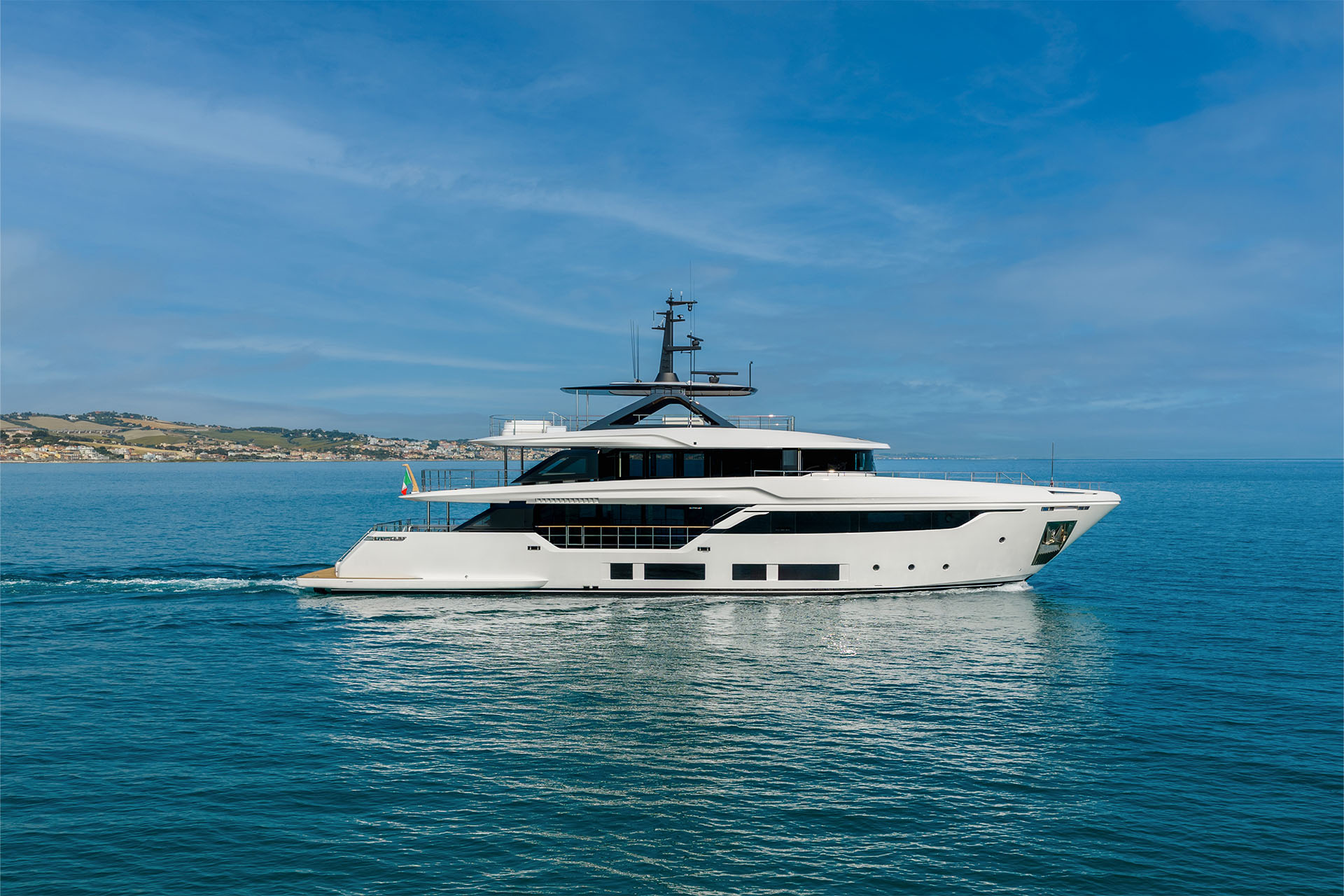
Four decks, 34.5 metres and a made-to-measure interior: step aboard the new Custom Line Navetta 35, unveiled at Cannes.
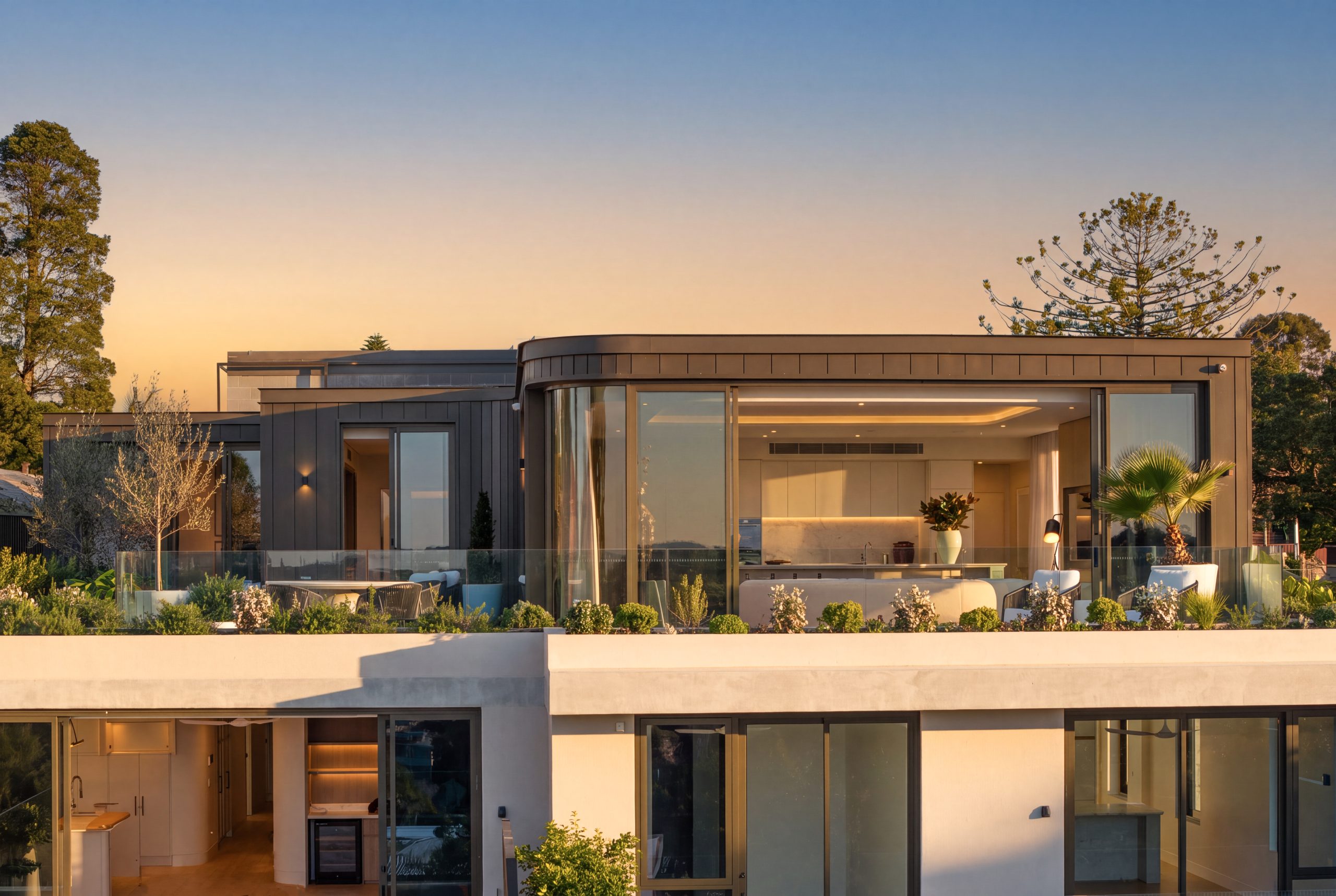
New detached-home sales fell 10% nationally in August, led by a 27% decline in Victoria, raising concerns about construction starts in 2027.
2 min
Australia’s hoped-for recovery in housing construction is losing momentum before it has had time to close the national supply gap.
Sales of new detached homes fell 10 per cent nationally in August, according to the Housing Industry Association’s survey of major volume builders across the five largest mainland states. It was the fourth consecutive monthly decline.
The fall was broad rather than isolated. Victoria recorded the largest retreat, down 27 per cent, followed by Queensland at 20.2 per cent, New South Wales at 17.5 per cent, South Australia at 10.8 per cent and Western Australia at 8.2 per cent.
Across the three months to August, sales were 19.3 per cent below the preceding three-month period and 7.7 per cent lower than the equivalent period a year earlier.
New-home sales matter beyond the immediate fortunes of volume builders. They are an early indicator of future starts: buyers sign contracts, finance is finalised, approvals are secured and construction follows months later. A sustained sales decline during the middle of 2026 is therefore likely to weaken commencements during 2027.
The slowdown reflects the collision of several pressures. Households have absorbed multiple interest-rate rises, reducing borrowing capacity and increasing the repayment cost attached to a new build. Established-home prices have softened in some markets, weakening the relative appeal of waiting through a construction period. Builders continue to face elevated labour and material costs.
The Reserve Bank’s August analysis showed new-dwelling construction prices increased 1.8 per cent during the June quarter and 5.3 per cent over the year. It attributed part of the pressure to oil-derived building products and other conflict-related costs.
Policy uncertainty can also cause buyers and investors to defer large commitments. But the precise contribution of any single tax or regulatory change is difficult to isolate from rates, confidence, land prices and construction costs. The HIA survey should be read as an indicator from large builders rather than a complete count of every dwelling sale.
The figures complicate progress towards the Housing Accord target of 1.2 million homes. The National Housing Supply and Affordability Council reported 308,000 completions since the Accord began and 244,000 dwellings under construction in the March quarter. Approvals and commencements had improved, but falling sales risk undermining the next wave.
For developers and governments, the warning is that planning approvals alone do not create homes. Projects need finance, viable construction pricing and buyers able to settle. If one part fails, approved supply can remain on paper.
Data box
National August new-home sales: Down 10 per cent
Three months to August: Down 19.3 per cent from the preceding three months
Year-on-year three-month comparison: Down 7.7 per cent
Victoria: Down 27 per cent
Queensland: Down 20.2 per cent
New South Wales: Down 17.5 per cent
South Australia: Down 10.8 per cent
Western Australia: Down 8.2 per cent

Wealthy Aussies are swapping large family homes for high-end apartments, with sales of prestige units tripling over the past decade.
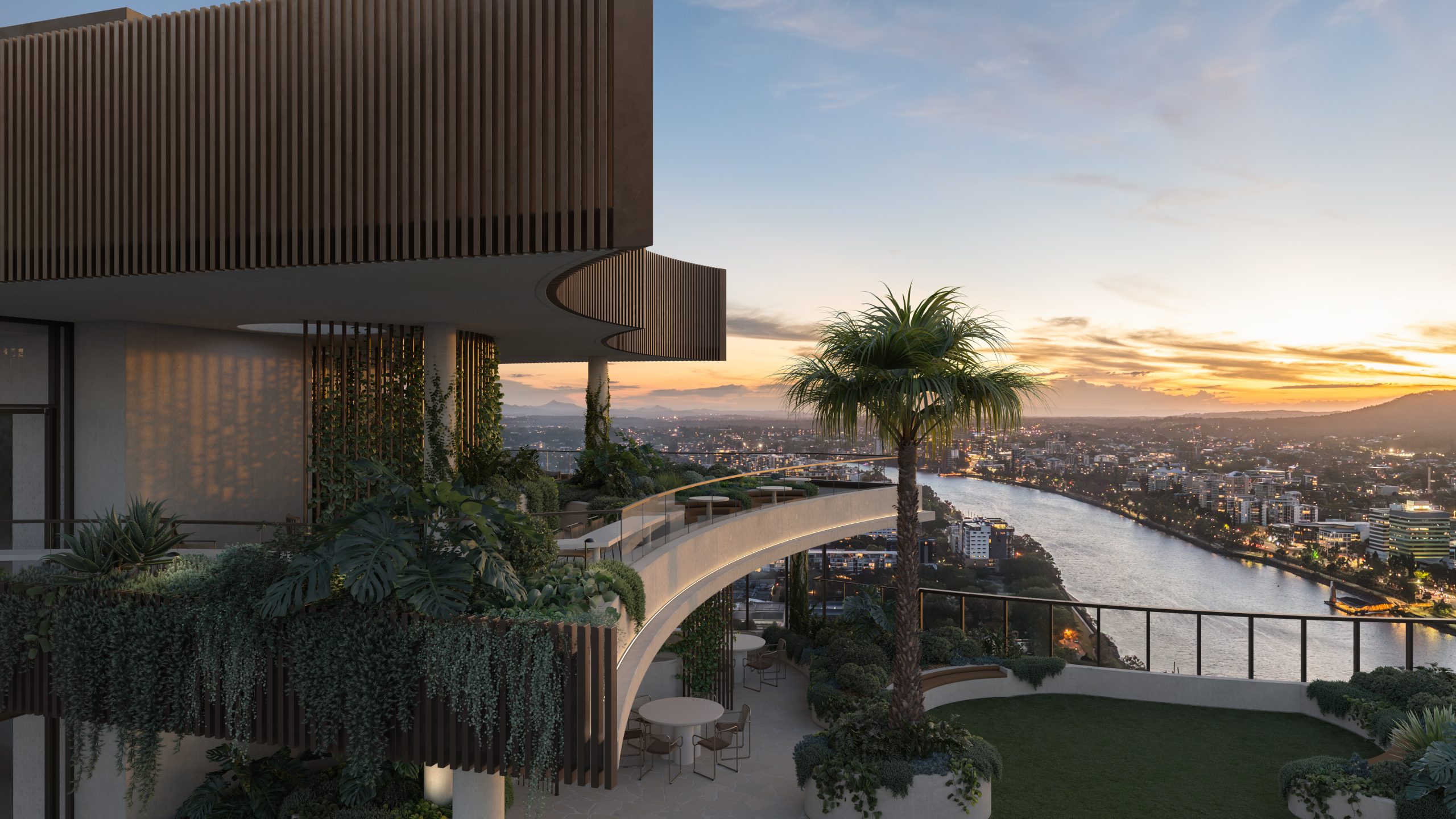
Set on one of the city’s last absolute riverfront sites, The Riversdale by Mosaic combines irreplaceable waterfront ownership with one of Brisbane’s most significant residential opportunities.


