JOHN KNOX HOUSE: FROM MANSE TO MANSION
Built in 1880, Brighton’s historic John Knox House blends Gothic Revival grandeur with a striking contemporary extension and resort-style living.
 2 min
2 min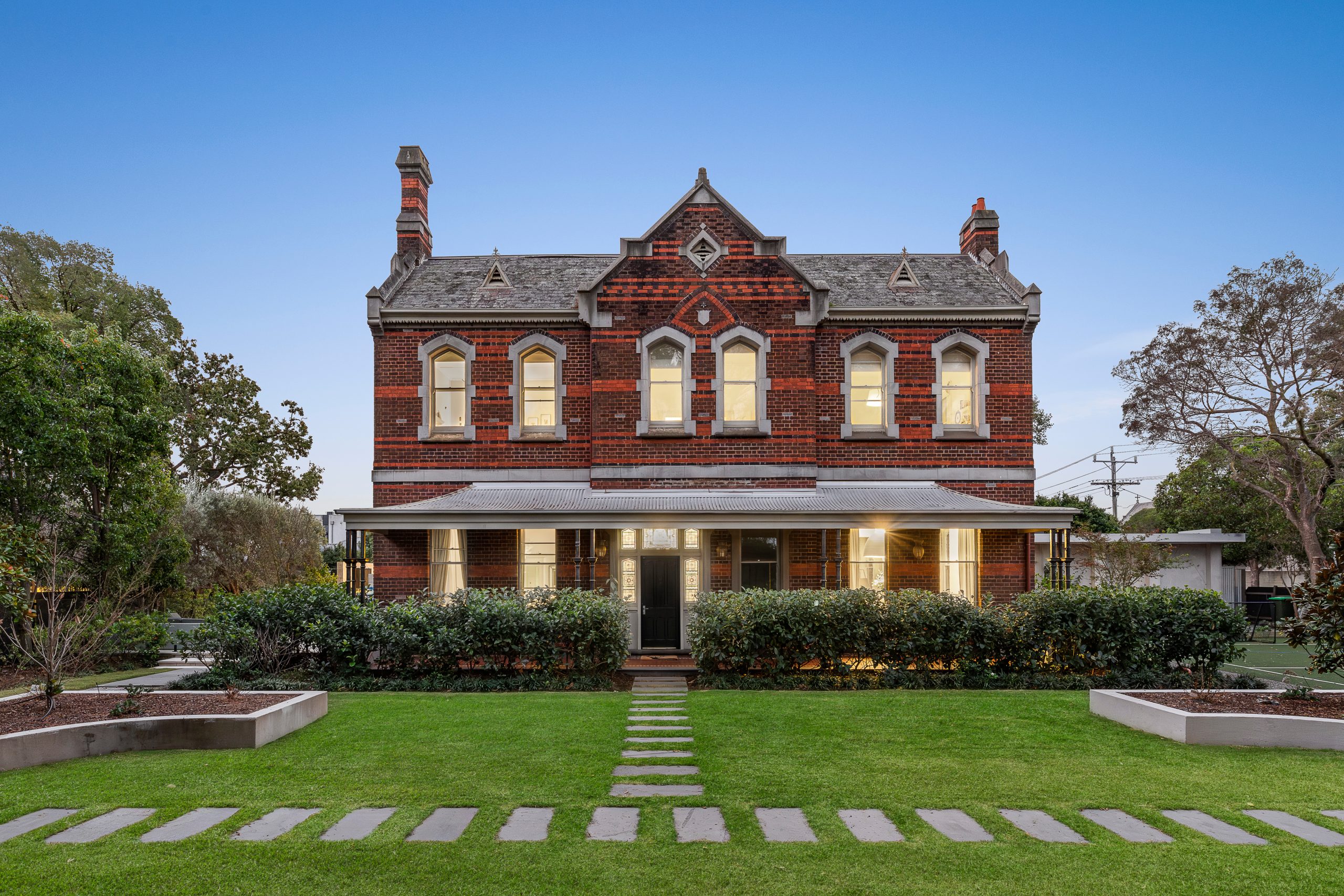

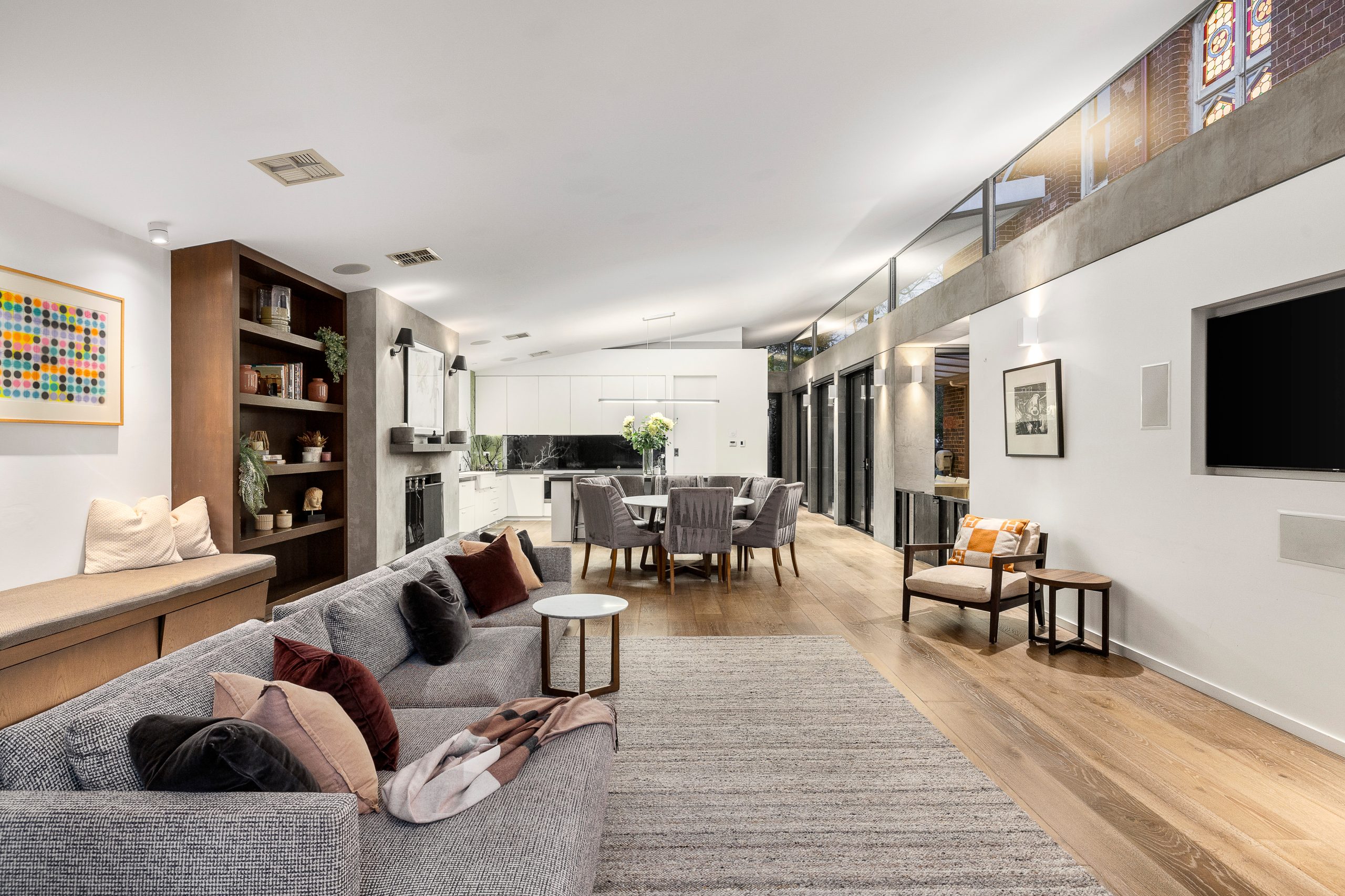
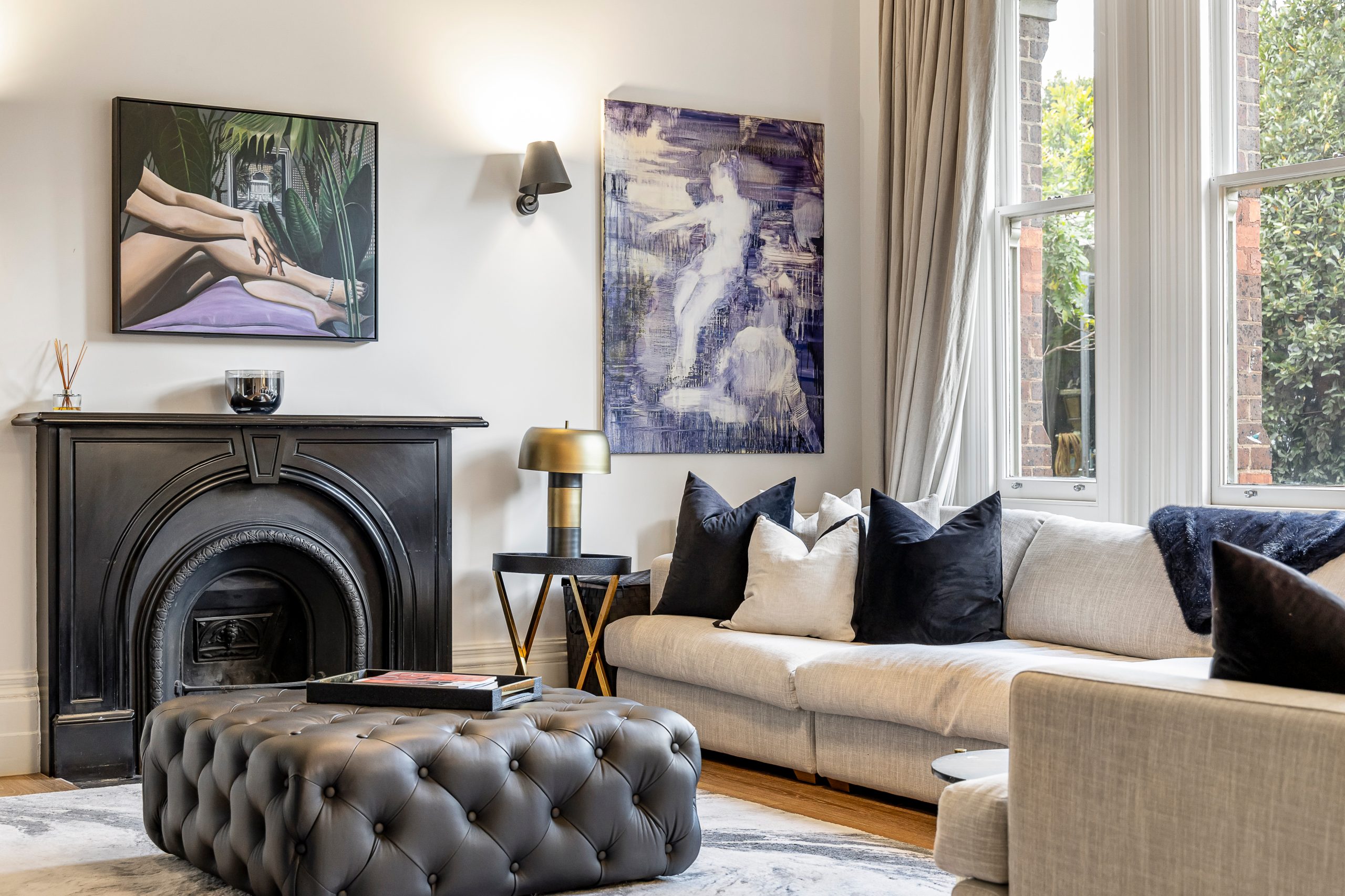
Once the home of a Presbyterian minister, John Knox House has had a distinguished journey over the past century and a half.
The former manse next to John Knox Church on North Rd is now a glamorous Gothic landmark complete with a private tennis court, swimming pool, and a sophisticated 21st century addition.
Today’s John Knox House is a modern mansion offering all the creature comforts of a contemporary family home, with period details celebrating the residence’s holy history.
Built in 1880, the Gothic Revival manse was designed by prolific Melbourne architect Lloyd Tayler, who also drafted St John’s Anglican Church in Toorak and St Paul’s in Sale. Tayler’s other work includes Marden House in East Melbourne and the 1880s additions to the iconic Sunbury mansion Rupertswood, birthplace of The Ashes.
By 2026, John Knox House will remain a significant piece of Melbourne’s architectural history, even featuring on the John Knox Architectural Trail Walk.
It remained in the church’s hands for more than a century before the Uniting Church sold both the place of worship and the manse in 2007, with the latter selling for $2.701 million.
Since then, the Brighton trophy home has traded several times, most recently in 2017 for $6.75 million. Back on the market this month, John Knox House is listed with Kay & Burton Bayside agents Matthew Pillios and Melissa Grinter with a price guide between $10.5 million and $11.5 million.
The heritage-listed residence sits on a vast 1647sq m block in one of Brighton’s most sought-after neighbourhoods, less than 1 km to the bay.
While the grand estate has a colourful history, it also features a sophisticated modern renovation showcasing a blend of old-world charm and 21st-century flair fit for a growing family.
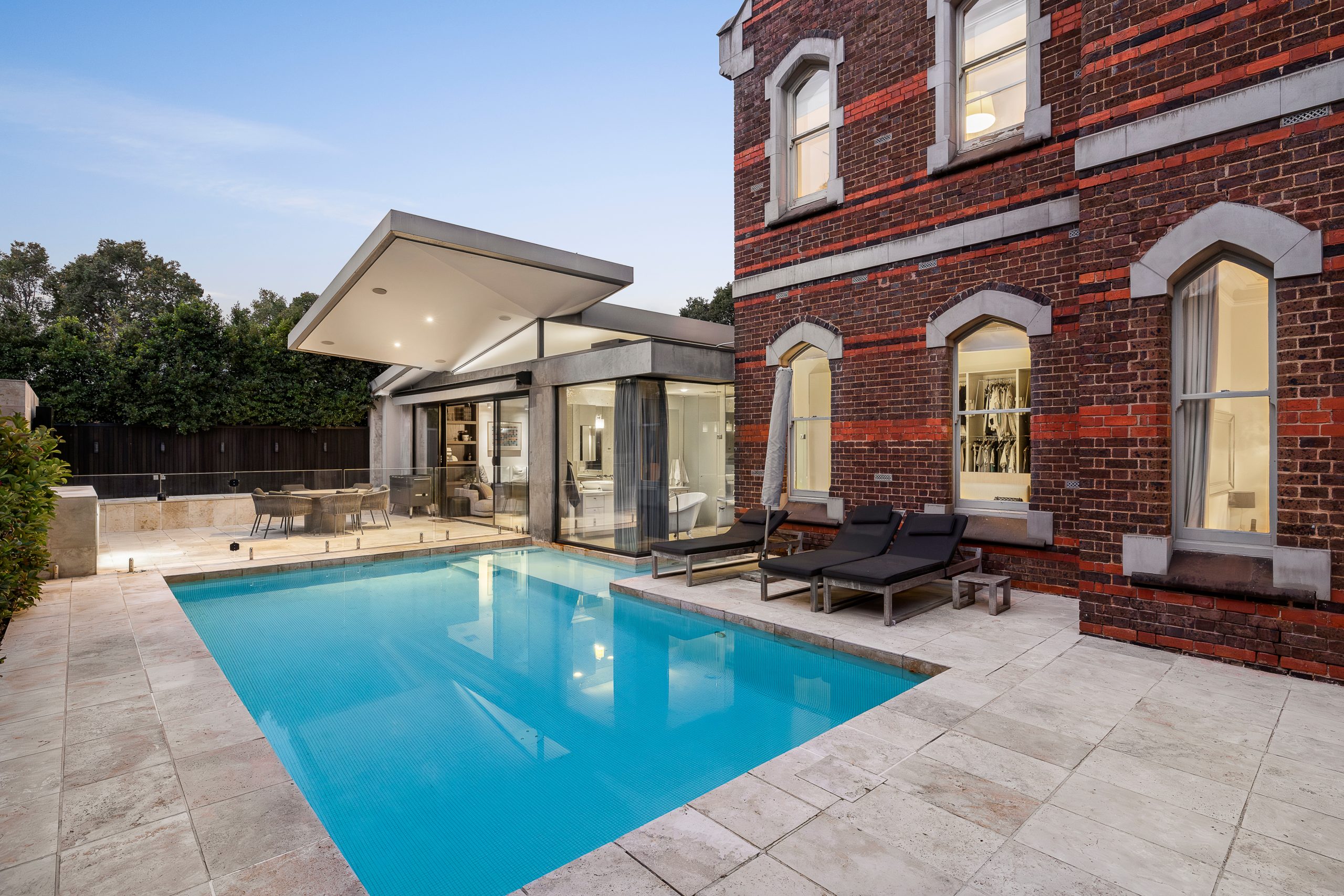
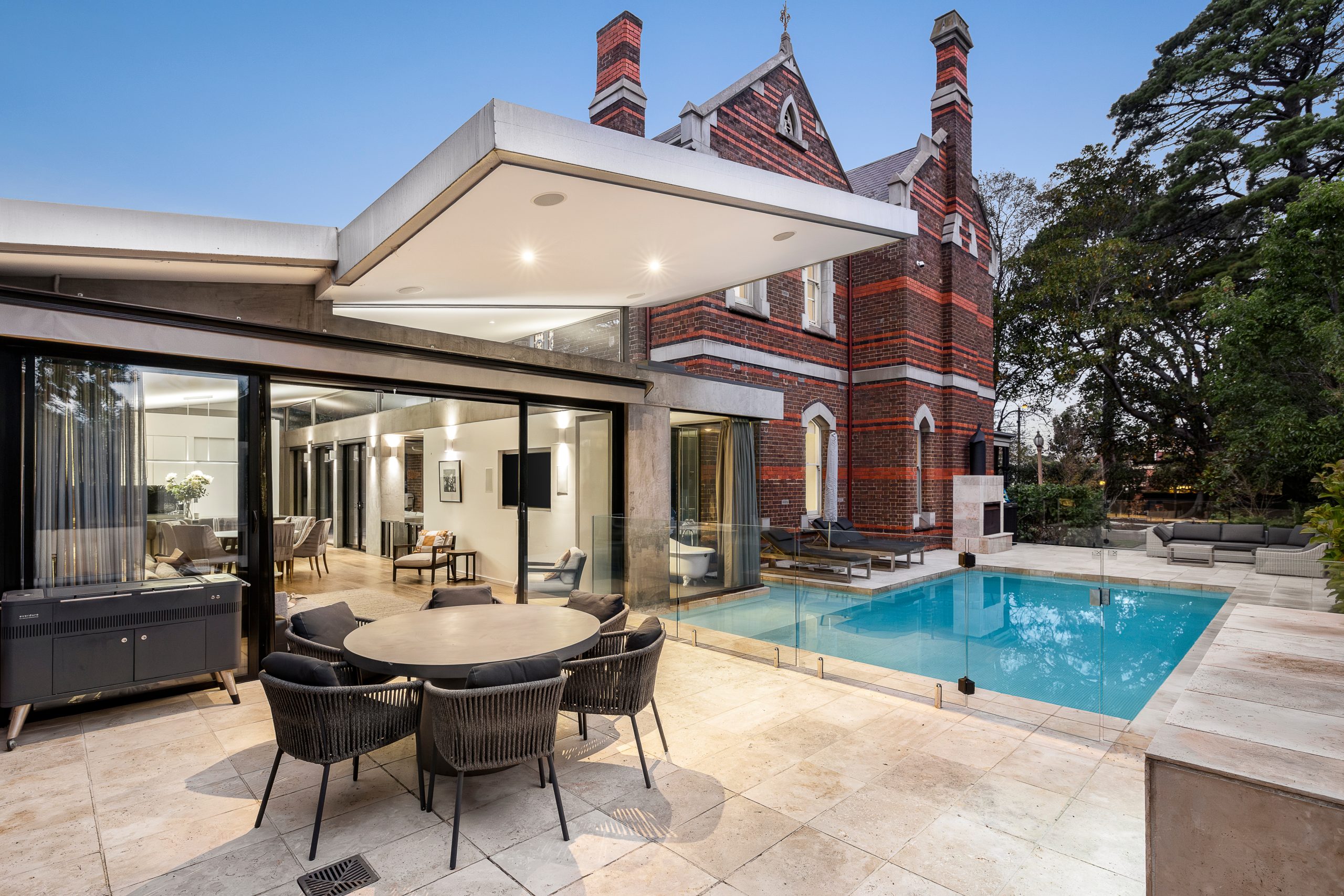
Original Gothic touches include ornate detailing, tessellated tiles, a period fireplace, and stained-glass windows. Meanwhile, the striking contemporary addition, with its unique cantilevered roof, is defined by concrete, steel, and glass walls.
At the heart of the newer wing is a large open-plan living zone with a stone kitchen featuring Miele appliances, a large island bench, and a walk-in pantry. The adjoining dining and lounge spaces spill out to the alfresco entertaining area with a built-in fridge, pizza oven, outdoor television, and integrated seating.
The long list of resort-style features includes a pool, an outdoor fireplace, a full-size tennis court that can be used as a basketball court, plus landscaped grounds, established trees, and a children’s playground.
A ground-floor palatial primary suite has a fireplace, dressing room, and a vast marble ensuite with a freestanding tub and twin vanities. Upstairs, there is a spacious rumpus room, a family-friendly bathroom, and four more bedrooms, each with built-ins.
Additional features at John Knox House include an underground cellar, hydronic heating, surround-sound systems, CCTV security, intercom and C-Bus home automation throughout.
The historic house is close to Brighton Beach, North Road Reserve, Kamesburgh Gardens and Martin St shopping and dining precincts.
For Central Element, the start of work at Pearl represents another step in the company’s growing eastern suburbs pipeline.

All three vehicles will form part of a broader charitable initiative benefiting Big Brothers Big Sisters of America, the American Red Cross and Starlight Children’s Foundation
Apple’s first foldable, the $1,999 iPhone Duo, combines an iPhone and iPad Mini experience—but its size, weight and price come with compromises.
4 min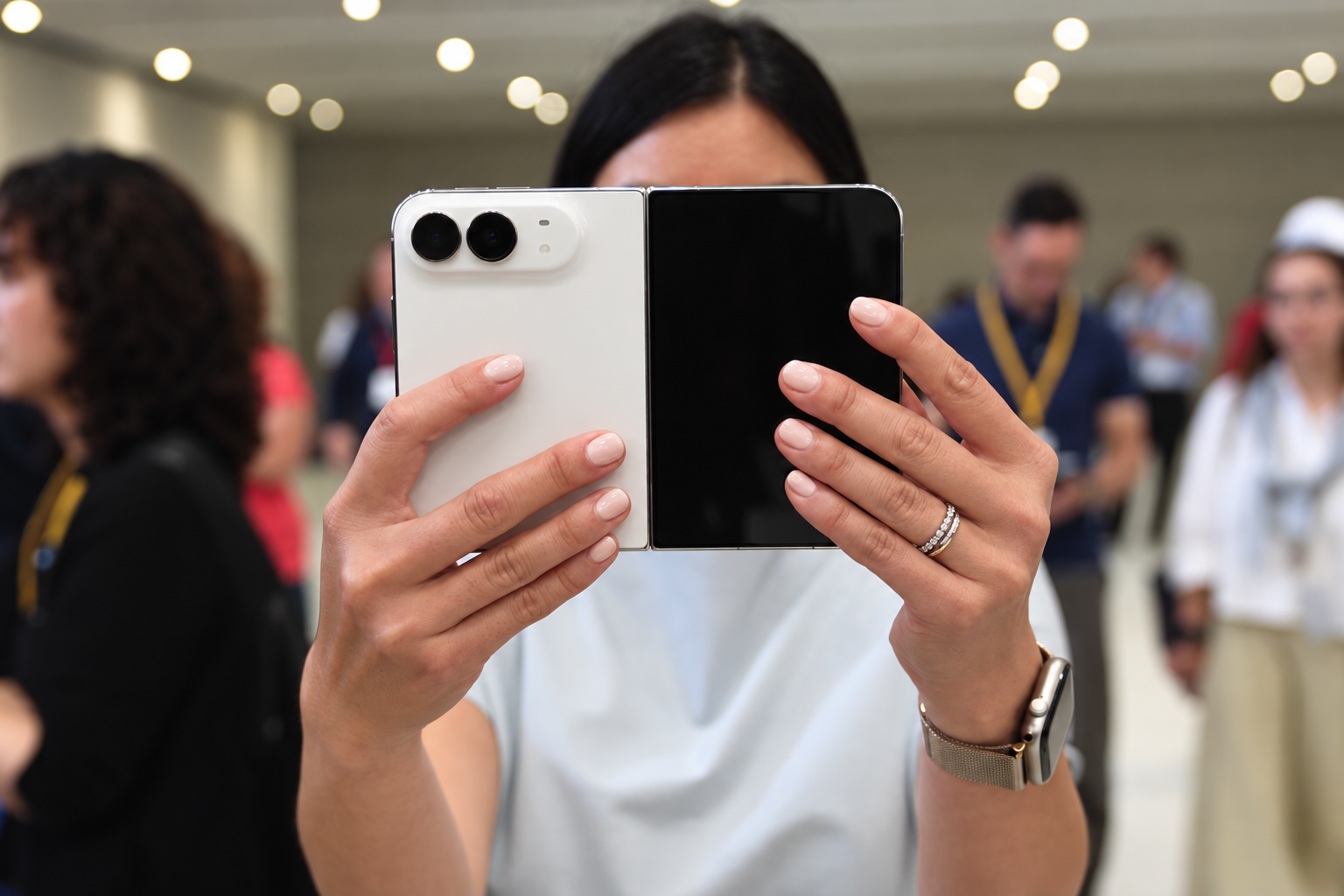
As I watched a Netflix show on Apple’s first foldable, the iPhone Duo, I had two surprising thoughts.
The first: Maybe I don’t need my iPad Mini anymore.
The second: Uh oh, am I about to spend $1,999 on a phone?
I didn’t think folding phones were for me. I’ve been testing Android versions from Samsung and Google since 2019, and those early editions came with too much screen and too many compromises.
Fast forward seven years, and the technology has come a long way. Apple—in its very Apple way—has also come up with some hardware and software trickery to make up for some shortcomings of the basic design. My desire for a folding phone before today was zero. After today, it’s a lot more than zero.
I’m not ready to recommend the Duo, which ships on Oct. 23, just yet. Not until I am able to test it more fully, so be on the lookout for that review in a few weeks. But from what I experienced at Apple Park on Wednesday, I could actually picture myself using this new half-phone, half-tablet hybrid.
Crease camouflage
For months, I’ve been using Samsung’s Galaxy Z Fold 8, a similarly squat, passport-shaped foldable that opens up to a larger screen. It’s impressively thin and can easily fit into the infuriatingly tiny pockets in women’s pants and dresses. Samsung did a lot of work to minimize the crease—the dip between the two halves of the big interior display—but it’s still clearly there.
When I held the iPhone Duo open, the crease was barely visible. As I slid my finger across the display, I could feel it, but it’s more subtle than Samsung’s. Most of the time, the screen looked as flat and smooth as the one on an iPad.
Apple employed both software and hardware techniques to camouflage the crease. The matte surface of the interior 7.6-inch screen minimizes reflections to hide it. (Samsung’s Fold 8 screen is shiny.)
And as you begin to open or close the iPhone Duo, the interface shifts the controls and content away from the center crease. If, say, you’re watching a video on the outer screen, you can open the Duo to switch to the bigger display within. A black fade marks the transition. You don’t see the video full screen until the phone is completely flat.
Heavy handed
My second observation was that, when the Duo is closed, in phone mode, it was harder to use one-handed than I expected.
In the keynote trailer and press release, Apple touted how thin the Duo is. It’s marketed as the thinnest iPhone ever—when open.
But it’s actually thicker and heavier than most of its Android competitors. The Duo weighs 254 grams, and is 11.3 millimeters thick when closed. The Samsung Galaxy Fold 8 is just 201 grams, with a thickness of 9.7 millimeters. Google’s Pixel 11 Pro Fold is 239 grams and 10.1 millimeters.
Because the Duo is also wider than a standard iPhone, I found it quite a challenge to type.
I admit, I do have smaller-than-average hands. So I consulted my colleague Rolfe Winkler, who has a larger grip. He agreed the Duo feels big.
Apple rearranged the interface on the outer screen so it looks different than traditional iPhones. The dock and control center are off to the right to be more reachable. Committing to the Duo as your main device will require adjustments in your handling. You will have to learn a new way to use and type.
Work and play
My most surprising takeaway? I feel a pull toward this device.
I always thought that combining an iPhone and an iPad would mean bigger compromises. The battery life is about the same as the 18 Pro (up to 24 hours of “regular use” on a single charge), though I’ll need to verify that in my real-world testing. And it’s also as durable, with the same IP68 dust- and water-resistance rating as the rest of the iPhone lineup.
There are trade-offs, for sure. Trying out the camera, I immediately missed the 8X zoom in my Pro model. The Duo has just 2X zoom, which wouldn’t cut it for the dozens of pictures I take of my kid every day.
But the dual screens unlock new photo functionality. You can see what your shot looks like from the outside screen. As someone who has tried tirelessly to self-direct a family photo—or a spouse—I am very eager to try this out more.
Foldables, I initially thought, were for classic mobile-warrior jet-setter types, who never sit at a desk and are always on calls. For that crowd, the Duo can run two apps side-by-side.
Me, I’m more of a bed binge-watcher and ebook reader. That’s what my beloved iPad Mini is for.
Watching videos on the Duo is a nice experience—nice enough that you forget the screen is 0.7 inches smaller than the iPad Mini’s. The main screen is also a 4:3 aspect ratio. Very similar, by the way, to the IMAX edition of the Odyssey.
Because I wasn’t able to snag a ticket to one of the sold-out screenings, I will be watching Christopher Nolan’s version of Homer’s epic on the Duo, just as the director intended. (Just kidding! Sort of.)
The Duo costs $800 more than an iPhone 18 Pro, and I’m not sure I want to spend that premium on a first-generation Apple device. But I’m not ruling out the idea that a Duo might one day be in my future. Stay tuned for my full review.

Hand-built in Melbourne and limited to just 10 cars a year, the Zeigler/Bailey Z/B 4.4 is reshaping what a modern collector car can be.

MAISON de SABRÉ’s new Spring Harvest Collection turns everyday produce into collectible leather charms and introduces fresh silhouettes in its cult Bucket bag family.