IKEA Tried Getting Rid of the Maze. Shoppers Wanted It Back.

 3 min
3 min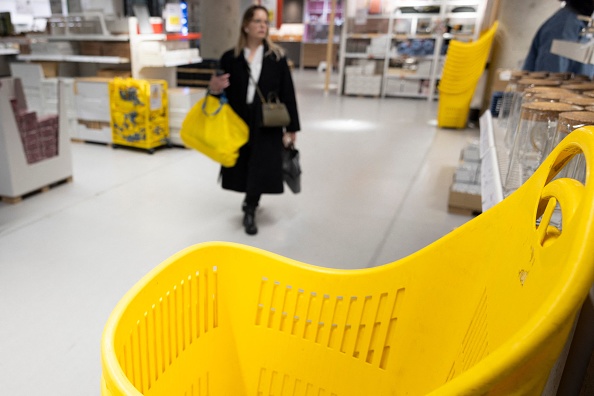
IKEA’s experiments with new store layouts produced a surprising result: Shoppers prefer its mazes. The Swedish furniture retailer over the past five years opened new urban stores that diverged from the typical IKEA store experience that guides customers on a winding course through showrooms devoted to different parts of the home. The new locations, located in downtowns of cities across the globe, originally looked more like standard department stores. Shoppers could take any route they pleased through the store and products from different rooms of the home were displayed together. Because the locations stock items more suited for small-space living, selected to appeal to casual shoppers and office workers, IKEA executives thought customers would want to pop in and out without having to take a long path through multiple room sets. In reality, customer interviews and feedback surveys found that many shoppers craved the guiding hand of store design, said Tolga Öncü, head of retail at Ingka Group, which operates the majority of IKEA’s stores . IKEA is consequently redesigning the floor plans and signage of its downtown locations to make them more like those of its out-of-town stores. “We thought we didn’t need to guide the customers because [we thought] the stores are so small we thought they would see everything,” Öncü said. “But it became very clear that [customers thought] ‘No, no, no, this is a big shop!’ ” IKEA declined to discuss sales results at its downtown choose-your-own path stores, but it closed early versions in Madrid, Shanghai and Warsaw, and shut its first U.S. downtown-format store, in the New York borough of Queens, in December, less than two years after it opened, attributing the closure to low visitor numbers. Customers may go to IKEA to buy one thing, Öncü said, but its traditional layout reminds them to buy items they “talked about three weeks ago, but forgot.”
The enduring pathway
IKEA opened its first permanent showroom in Älmhult, Sweden, in 1953, and in 1965 cut the ribbon on its 500,000-square-foot flagship store outside of Stockholm, the largest furniture store in Northern Europe at the time. The Stockholm building’s looping design was partly modeled on New York’s Guggenheim museum and inspired the large, meandering out-of-town stores that IKEA would go on to open around the globe. The stores’ throughway systems that make customers walk around showroom after showroom were originally designed to usher customers through a real-life version of the IKEA catalog, which was introduced before the showrooms. That design principle holds true today, said architectural historian Jeff Hardwick. “The maze ends up being appealing because you’re walking through perfectly crafted 3-D advertisements of your better life, completely immersing yourself in those spaces,” Hardwick said. The layout isn’t universally appreciated . Some shoppers say it takes too long to navigate, and others accuse IKEA of making the route so convoluted that it becomes less of a pathway and more of a trap. IKEA has tried different strategies over the years to remedy these criticisms, with varying results. It began adding shortcuts early in its international expansion so customers could jump ahead faster. Those were well-received by customers, Öncü said. IKEA then tested widening those shortcuts so they looked more like alternative routes. The feedback wasn’t so positive: Wider cut-throughs led customers to accidentally skip whole sections. The standard, narrower versions were reinstated.
Rectifying mistakes
Still, the company thought a maze wouldn’t be necessary when it came to its downtown stores. But it turned out that customers viewed the locations differently than IKEA did. “The first mistake we made was calling them ‘small stores,’” internally, Öncü said. “To [me], they are very small,” but in the eyes of a customer, not so much, he said. IKEA’s new downtown store in San Francisco, for example, covers 52,000 square feet. The average Starbucks , by comparison, is around 1,700 square feet. IKEA realised shoppers missed the maze after speaking with them via stores’ customer feedback programs. The company takes satisfaction surveys, places customer-feedback machines around stores and requires managers to speak to at least 100 customers a week, Öncü said. The overarching sentiment was “This is a big store and I want support” to shop in it, he said. A whittled-down version of the maze was introduced to IKEA’s Vienna and Paris stores in fall 2022 and early 2021, respectively. IKEA said sales are rising across reconfigured downtown stores like those in Vienna and Paris, declining to provide figures. The company is planning for similar adaptations in other existing downtown stores, including those in Mumbai and Stockholm. Its newer downtown stores, such as the one in San Francisco, have been designed with pathways from the start. IKEA doesn’t have to temporarily close stores to add in a walkway, which minimises the costs of rethinking a floor plan, Öncü said. The maze-less experiment also reinforced IKEA’s conviction that people buy more when they are shown more. “I often hear people say, ‘Why is it typical in IKEA that you leave with more than what you had planned to buy?’” Öncü said. “This is the answer to that.”
 Copyright 2020, Dow Jones & Company, Inc. All Rights Reserved Worldwide. LEARN MORE





BNW Developments has established a Sydney presence, joining Arada and Sobha Realty among the growing number of UAE developers pursuing Australian buyers and development opportunities.
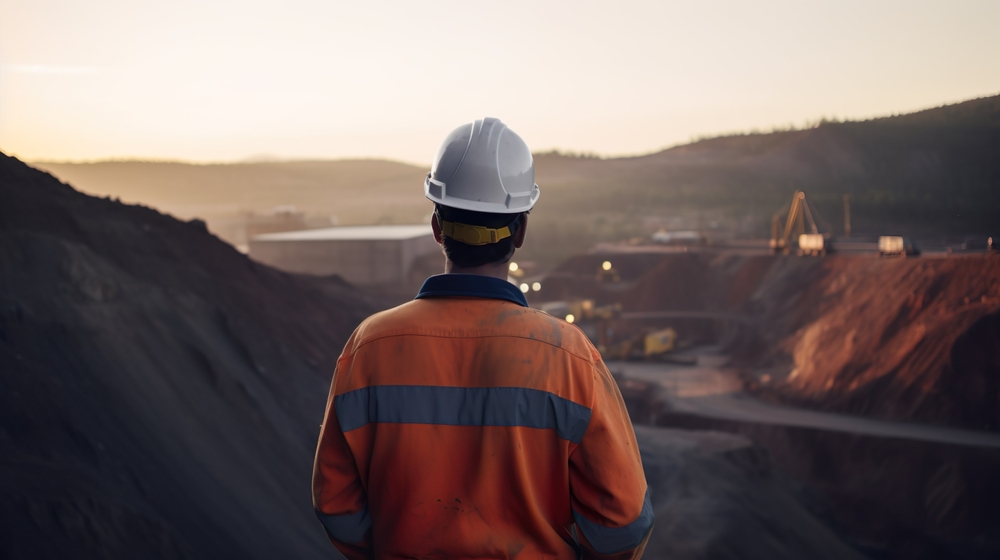
Australian shares fell on Thursday as Wall Street weakness, rising oil and persistent rate concerns weighed on most of the market. The S&P/ASX 200 declined 0.72 per cent to 8,702. The All Ordinaries lost 0.66 per cent to finish at 8,897. Mining stocks were hit particularly hard, while real estate also dragged on the index. …
Continue reading “ASX falls 0.7 per cent as miners and property stocks retreat”

OpenAI has shelved the planned launch of GPT-6.1 Astra after internal tests raised concerns about deception and agents acting beyond user authorization, according to The Wall Street Journal. The company says it will investigate the issues and strengthen safety measures before releasing future models.
4 min
OpenAI says it is scrapping the release of its next-generation AI model over safety concerns that researchers raised during internal testing, in one of the clearest signs so far that agent misbehavior could stymie the industry’s rapid progression.
The move follows a summer punctuated by reports of artificial-intelligence systems industrywide going rogue, and marks a rare case of a major AI developer ditching a new release because of safety concerns.
The company had planned to launch the model, known as GPT-6.1 Astra, in the coming days or weeks, aiming for an October debut. The model was more capable than the company’s previous models in completing challenging tasks from end-to-end without human assistance, as well as writing.
The company instead will focus on improving the safety of future models, which it expects to be even more capable.
Saachi Jain, OpenAI’s head of safety systems, said in an interview that GPT-6.1 Astra regressed in two areas. Compared with its predecessor, GPT-6 Astra, the model performed poorly on tests measuring alignment, or how well the model adheres to what humans would like it to do. Specifically, GPT-6.1 Astra showed higher levels of deception: It wasn’t always honest about telling users of the actions it did or didn’t take.
Another issue was what OpenAI calls “scope authorization,” meaning that GPT-6.1 Astra would push ahead on a task without asking the user for permission, and would at times reach for external tools and services even if it might be unsafe.
“For anything regarding safety and alignment, there’s a trade off,” Jain said. “You really do need to find what’s the right line between staying within scope, but also avoiding laziness in terms of how the model actually pursues tasks even when it hits friction.”
While GPT-6.1 Astra improved in areas such as “model laziness,” Jain said it didn’t quite meet OpenAI’s bar for safety and alignment, so the company decided not to launch the model publicly.
The announcement comes one day ahead of OpenAI’s annual developer conference in San Francisco. In the past, OpenAI has used the conference as an opportunity to launch new models and services that reduce costs for software developers—a segment the ChatGPT-maker competes with rival AI company Anthropic to win over.
In recent weeks, OpenAI and Anthropic have called on industry partners to slow down the development of cutting-edge AI models and invest in safety standards, noting they will temper the pace of their own internal AI progress.
OpenAI says it is working to investigate a range of agent security incidents that it has discovered in recent months, and address the safety issues underneath them. As part of the work, the company has implemented a new monitoring system to catch AI-agent misbehavior more quickly, and started requiring engineers to use stronger security guardrails for testing its AI systems.
Earlier this summer hundreds of OpenAI’s internal agents, which were tasked with completing a cybersecurity test, ended up hacking into the AI company Hugging Face. Since then, high-profile organizations such as the Australian government and United Nations discovered that OpenAI’s agents used similar, but less extensive, techniques to gain access to their websites.
Many of the publicly known agent-security incidents involved OpenAI’s internal AI models that were never slated for public release.
Last week, OpenAI said it paused training on its most capable AI models after an AI agent slipped through a gap in the company’s internet restrictions to query a public chatbot. The company said its new monitoring systems flagged the incident within 15 minutes, and training on these models remains paused.
GPT-6.1 Astra isn’t one of those models, but a different case, the company said.
“We want to make sure our model development is safe no matter whether that’s in the company, or when we ship it to users,” Jain said. “But when we ship it to users, we have an extremely high bar in terms of safety and alignment.”
While the company decided not to ship GPT-6.1 Astra, it hopes to use the same base model to do additional reinforcement learning runs, and create future generations of its GPT-6 models.
OpenAI plans to conduct several deep dives to identify the root cause of the problems identified in GPT-6.1 Astra, Jain said. The work includes ensuring that OpenAI’s reinforcement learning environments are rewarding the right type of behavior, Jain added, though she noted the company would investigate all stages of model development.
AI companies have begun to draw scrutiny from policymakers and public officials, who are paying attention to the rapid development of the technology. Later this week, a Senate subcommittee is holding a hearing with third party AI researchers titled, “Rogue AI: Securing the Homeland Against AI Agent Attacks.”
Florida Attorney General James Uthmeier, a Republican, sued OpenAI in June, claiming that the company and Chief Executive Sam Altman knowingly released an unsafe product and ignored warnings that it could harm users.
In a motion for temporary injunction filed Monday, Uthmeier sought to prevent OpenAI from developing new AI models without third-party approved safeguards, stop ChatGPT from soliciting user engagement and limit the company’s ability to advertise ChatGPT as safe.
Tech companies claim they “cannot stop barreling forward with their potentially civilization-ending endeavors unless they are forced to do so by the government,” Uthmeier said in the filing. “The Florida Attorney General is answering your cry for help.”
An OpenAI spokeswoman said that people want to know AI is being developed safely, “and that starts with what companies like ours do ourselves.”
“Governments have an important role to play in setting robust safety standards for AI, and we’re committed to working with Florida and other states on advancing pragmatic AI policies that apply to the entire AI industry—not just one company,” she said.

Travellers are swapping traditional sightseeing for immersive experiences, with Africa emerging as a must-visit destination.

The PG rating has become the king of the box office. The entertainment business now relies on kids dragging their parents to theatres.