HOW TO BUILD YOUR PROPERTY INVESTMENT DREAM TEAM
Success in property investing isn’t a solo act. Building the right team of advisers, brokers and specialists can turn ambition into a long-term, wealth-building strategy.
 3 min
3 min
To succeed in property investing, you need a trusted team of skilled professionals to guide you and the right mindset to help you land the plane. Your team doesn’t just provide technical expertise, they help balance your mindset, encouraging action without recklessness.
But who exactly do you need on your dream team? Let’s explore.
Qualified Property Investment Adviser
A Qualified Property Investment Adviser (QPIA) is your strategic architect, designing a roadmap for your property_ journey. Their role goes beyond simple advice, they create your investment strategy, provide tailored recommendations, and plan your portfolio with a long-term focus.
They clearly document your goals and objectives, your risk appetite, and the risks associated with an investment, all within a comprehensive written property investment plan supported by detailed graphs and tables on future spending, cash flow, borrowings, tax, and wealth forecasts with appropriate assumptions as it relates to your retirement targets.
Their expertise ensures you remain focused on the ideal blend of potential locations and best-suited, investment-grade properties that align with your desire to retire on $3,000 per week. They’re the trusted cornerstone of your team, turning your vision into actionable steps and outcomes.
Investment-savvy mortgage broker
An experienced mortgage broker doesn’t just source loans, they structure your finances strategically to support your property goals. From credit planning to managing loan structures, they ensure your borrowing strategy forms part of your overall plan for now and in the future. If they’re doing their job right, they should really be your ‘personal’ banker.
Buyer’s agent
Your buyer’s agent acts as your dedicated market area and property selection specialist, responsible for clarifying your brief, identifying, assessing, negotiating, and securing the best-suited investment-grade properties that align with your strategy. They’re not just an extra set of eyes, they ARE your eyes and ears on the ground. They are playing every day on the ‘inside’!
Financial planner
A licensed financial planner takes a holistic approach to your wealth creation and management, covering superannuation/SMSFs, managed funds, shares, and personal insurances. They ensure your property investments are seamlessly integrated into your broader financial, wealth, and retirement strategy, safeguarding your retirement and long-term objectives and financial security.
As the architects of your financial defence pillar, they implement crucial risk insurances to protect your wealth. Think of them as building a moat around your property portfolio.
Accountant
A property-savvy accountant is essential for determining the best ownership structure for your investments– be it individual ownership, partnerships, trusts, companies, or SMSFs. As a licensed tax agent, their expertise ensures your tax position is optimised while remaining fully compliant with regulations. By legally maximising deductions, they play a pivotal role in managing both your income and capital gains tax obligations in an effort to enhance your cash flow, allowing your portfolio to perform more effectively and efficiently.
Solicitor
Your solicitor is indispensable for reviewing contracts, handling conveyancing, and safeguarding your assets.
They ensure property transfers and guarantees are seamlessly executed while protecting you from any hidden surprises in the purchase process.
Their expertise provides peace of mind and solid legal protection for your investments. Thinking more broadly, they will play an important role in your estate planning and wills as your wealth base grows.
Building and pest inspector
A thorough inspection before purchasing a property is essential. A trusted building and pest inspector helps you avoid costly mistakes by identifying structural issues or pest infestations before they become your problem. Their fee is the best insurance to make sure you don’t end up paying thousands.
Property manager
A skilled property manager is your on-the-ground partner for maintaining and maximising the performance of your investment. They handle tenant selection, rent collection, property maintenance, and compliance with rental regulations, ensuring your asset remains a hassle-free source of income.
By managing day-to-day operations and addressing any issues promptly, they protect your property’s value and free you to focus on growing your portfolio. They also coordinate essential safety and compliance checks, such as electrical, plumbing, and gas inspections to meet minimum standards in your state or territory, to safeguard your investment. A good property manager is an investment in peace of mind and long-term success.
These professionals ensure you’re equipped to make informed, confident decisions at every stage of your investment journey. Even with the best team, your success depends on your mindset as a long-term investor. Your team not only provides technical expertise but also helps keep your mindset balanced – encouraging action without recklessness.
This is an edited extract from How to Retire on $3,000 a Week: The Property Couch’s Playbook for Passive Property Investing by Bryce Holdaway & Ben Kingsley (Major Street Publishing RRP $32.99), available at all leading retailers. Visit http://thepropertycouch.com.au/

From making unpopular decisions to learning when to listen, leaders from five businesses reveal what nobody prepared them for — and how running a company has challenged their expectations.

Technology and semiconductor shares fell sharply as investors questioned the debt financing the AI infrastructure boom and confronted higher rates and Chinese competition.


Mirvac’s 45-level Trielle has topped out at Yarra’s Edge, pairing riverfront apartments with wellness facilities, private dining and resident services.
3 min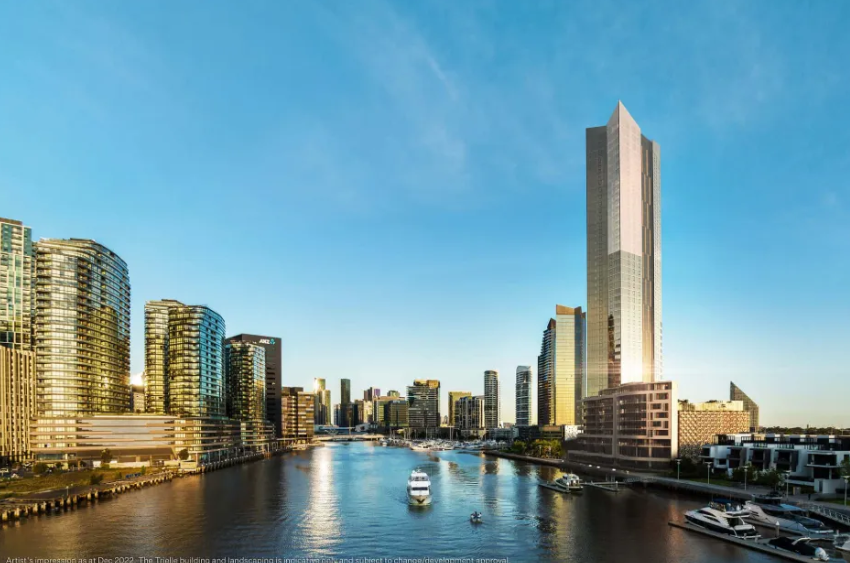
Mirvac has topped out Trielle at Melbourne’s Yarra’s Edge, with more than 70 per cent of the riverfront development sold and approximately 80 per cent of purchasers intending to make their apartment a home.
The figures, released on September 22, point to an owner-occupier audience for one of the precinct’s final residential towers. Mirvac began developing Yarra’s Edge in 2003, and its latest addition occupies one of the remaining absolute riverfront sites.
Mirvac CEO of Development Stuart Penklis said existing residents were among those moving up within the neighbourhood.
“Many purchasers already have a connection to Yarra’s Edge,” Mr Penklis said, describing buyers whose changing needs were encouraging an upgrade within the precinct.
“As one of the final residential towers within Yarra’s Edge, Trielle represents the culmination of more than two decades of creating one of Melbourne’s most established and sought-after waterfront communities,” Penklis said.
“Positioned on the Collins Street axis with absolute river frontage, Trielle offers residents a rare opportunity to enjoy sweeping views across the Yarra River, Melbourne skyline and Port Phillip Bay, while remaining seamlessly connected to the CBD. With Trielle now more than 70 per cent sold, we’re continuing to see strong demand from buyers seeking quality homes in established locations.”

The developer also flagged a penthouse and sub-penthouse collection with larger layouts, premium finishes and broad outlooks. The planned wellness centrepiece, The Oasis, encompasses a 900-square-metre elevated urban rainforest.
Mirvac General Manager Residential Development Victoria Elysa Anderson said Trielle had resonated strongly with buyers seeking a rare lifestyle offering in Melbourne.
“Opportunities to secure a new luxury residence on a riverfront site of this calibre are incredibly rare, particularly within a community like Yarra’s Edge,” Anderson said.
“What makes Trielle unique is the combination of exceptional views, world-class residential facilities and the lifestyle that already exists around it. Residents are buying into a mature waterfront community with parks, promenades, dining, wellness and strong community connections already in place.”
The 45-level tower brings a substantial new presence to that waterfront. Its residential offering spans one-, two-, three- and four-bedroom apartments, with Signature, Prestige and Sub-Penthouse collections accommodating different household sizes. The north-facing position connects the apartments visually to the river and city beyond.
Seven storeys above the promenade, the planned Oasis combines planting and a running stream with a Scandinavian-inspired wellness club developed with spa specialist Naomi Gregory. Facilities include a 25-metre lap pool, hot magnesium pool, sauna, hydrotherapy, a gym, yoga and Pilates room, and treatment spaces.

The amenity extends beyond exercise. Residents will have access to The Biblioteca library and workspaces, ground-floor work pods, and The Salone piano lounge. A private Chef’s Table dining room offers a setting for larger gatherings, while a cinema, games room and sports lounge broaden the entertaining options. Concierge services and a dog-wash area support everyday routines.
Trielle comprises a collection of one, two, three and four-bedroom residences. Reflecting strong demand from owner occupiers, approximately 80 per cent of purchasers to date intend to live in their homes, highlighting the project’s appeal to those seeking a long-term waterfront lifestyle.
Mirvac has recently delivered The Albertine, a premium apartment development on the edge of Melbourne’s CBD, and is nearing completion of Prince & Parade in Brunswick, further strengthening its portfolio of thoughtfully designed apartment communities in some of Melbourne’s most sought-after urban locations.

A survey of people with at least $1 million in investable assets found women in their 30s and 40s look nothing like older generations in terms of assets and priorities

A record-breaking $11 million sale at The Centennial Collection has set a new benchmark for luxury apartment living in Bondi Junction.