Tivoli Avenue, Rose Bay home, shoots for $30 million
 3 min
3 min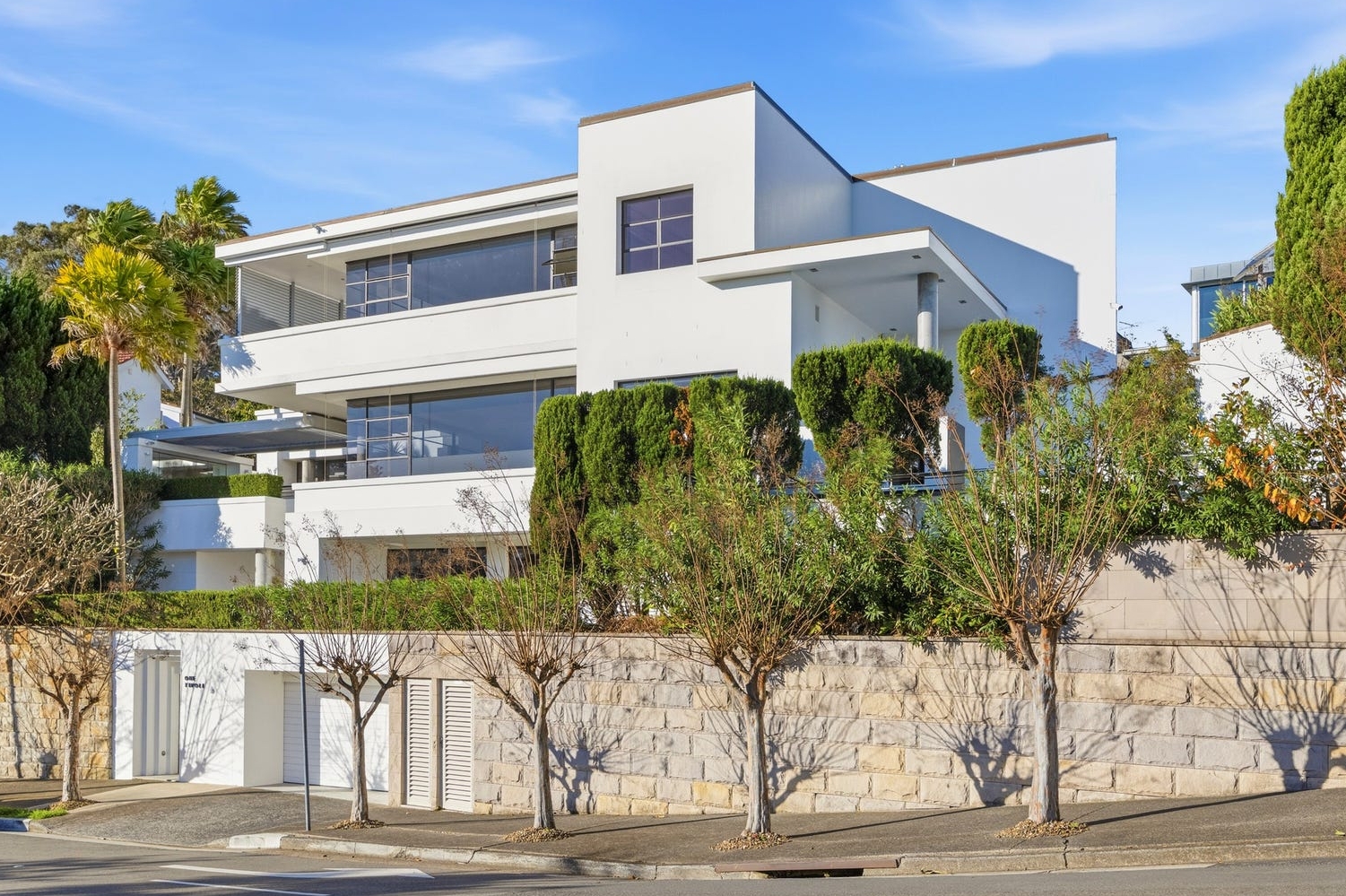
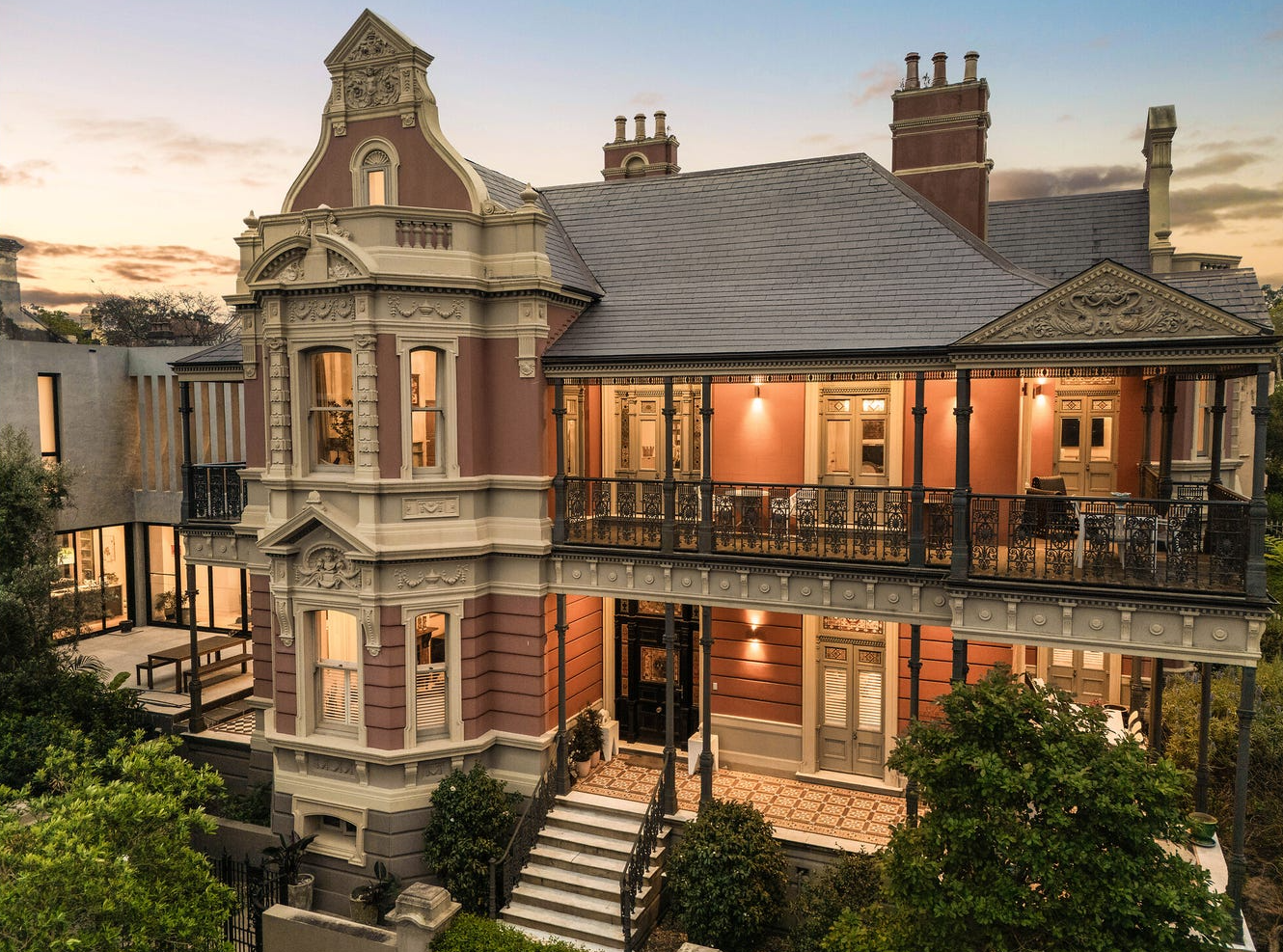
There is a particular kind of address in Sydney that needs no introduction — a street name that, spoken aloud in the right circles, conjures an immediate picture of sandstone, sail-white water and old harbourside money. Tivoli Avenue is one of them. And the house that has just come to market at number one is precisely the kind of trophy residence this pocket of Rose Bay was built to hold.
Brad Pillinger, who has sold some of Sydney’s most expensive homes and set many records over his career, has a $30 million guide for the renovated home that is selling for the first time in two decades. The late 1990s-built home, at the entry of Tivoli Avenue on the corner of New South Head Road, was bought for $7.2 million in 2006.
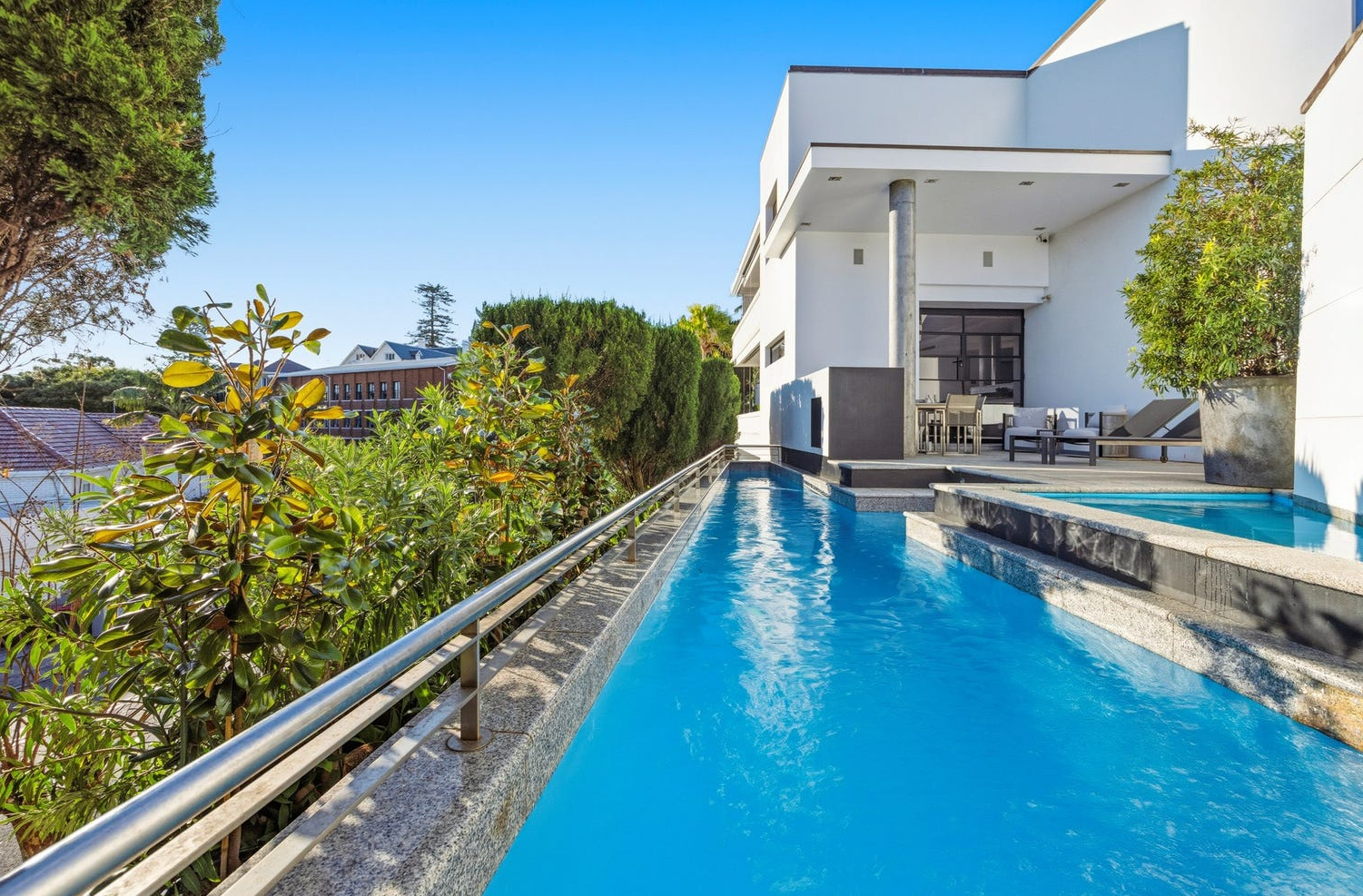
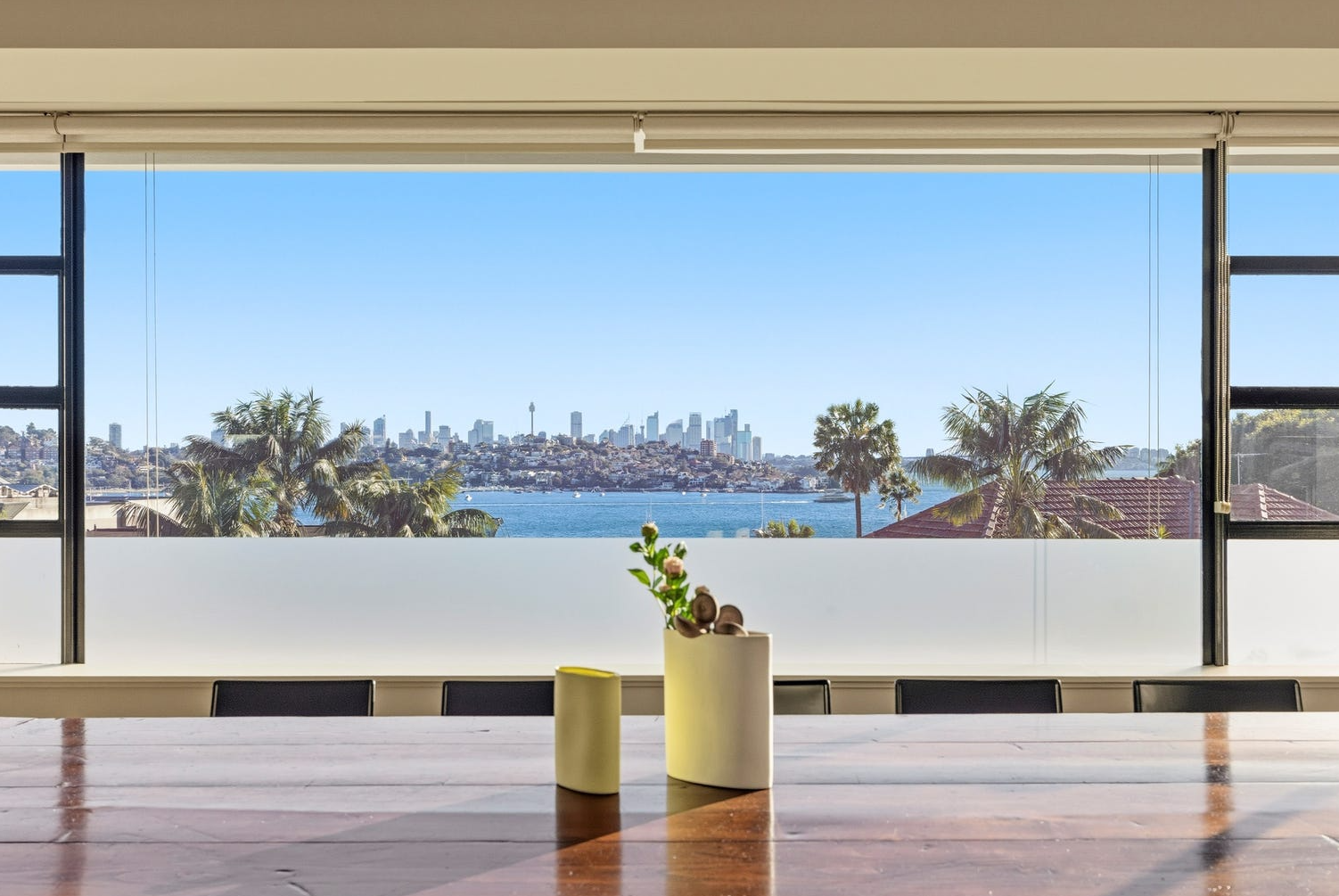
At $30 million, this is not simply a renovation — it is a reinvention. The entire interior has been stripped back and rebuilt with the kind of restraint that only comes from serious money spent well. Nothing here shouts. Instead, walls of glass do the talking, drawing the harbour and the city skyline into every principal room and letting Sydney’s most photographed view — the Bridge, framed by open water — become the home’s real decorative statement.
Across three considered levels, the house reads less like a single dwelling than a small, beautifully organised village: a huge main suite with its own dressing room, freestanding bath and balcony sits apart from a teenage retreat and two further bedrooms tucked privately into the lower level with their own terrace — the kind of separation that busy, multi-generational households have come to prize above almost anything else. A lift connects it all, quietly, for owners who intend to enjoy this address for decades rather than years.
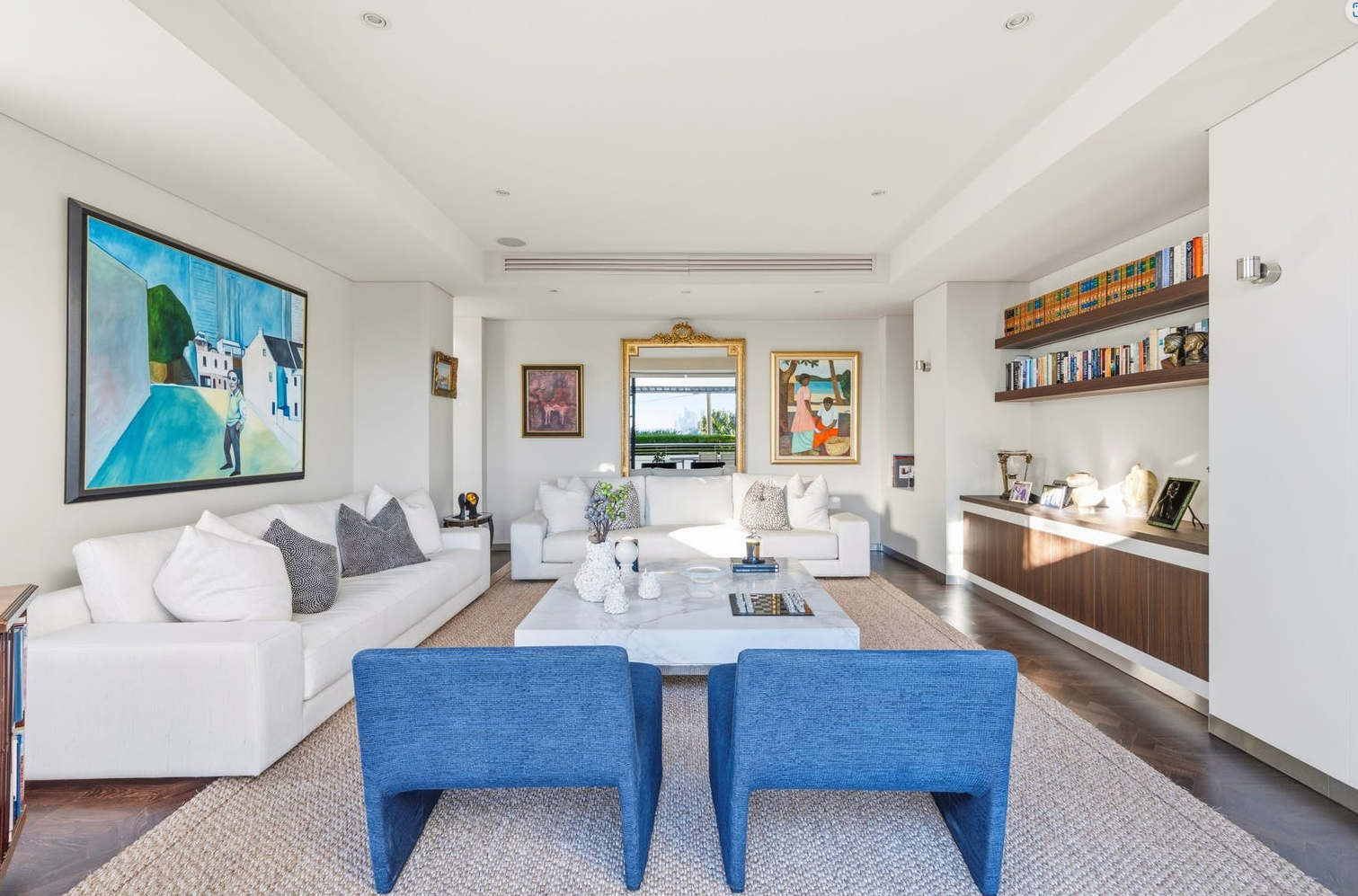
Entertaining, unsurprisingly, has been treated as a discipline in its own right. There is a formal living and dining wing anchored by custom joinery and a library-like wall of bookshelves, a separate second lounge for quieter evenings, and a designer induction kitchen with its own scullery — the unglamorous but essential engine room that lets marble benchtops stay marble-clean. Outside, a pool with a water feature sits alongside a heated spa positioned, deliberately, to catch the harbour view at dusk. A Vergola-shaded terrace and covered barbecue patio complete an entertaining sequence that moves seamlessly from indoors to out, which is, after all, the whole promise of eastern suburbs living.
Practicality has not been sacrificed for polish. Triple garaging with dedicated motorcycle space, a cellar, and generous storage throughout speak to owners who collect — cars, wine, art — as much as they entertain. A sandstone security wall and discreet, secure entry give the home the low-key privacy that genuine trophy properties now require as standard, not luxury.
And then there is the setting itself. Few streets in Sydney offer a walk to this calibre of private schooling, the café culture of Rose Bay village, and the Hermitage Foreshore Walk to Watsons Bay — arguably the city’s most scenic stretch of harbourside path — all within a few unhurried minutes on foot.
The street seldom sees property transactions, but it did make headlines last year when a waterfront sold for $82.5 million. It was bought by Yianni Gourlas and John Angelis, the latter’s father being business Jim Angelis, who has owned next door since 2021 when he paid $45 million for Villa Florida, the landmark Spanish Mission-style home which was once owned by comedian Barry Humphries. Angelis rebuilt the home, spending just shy of $19 million.
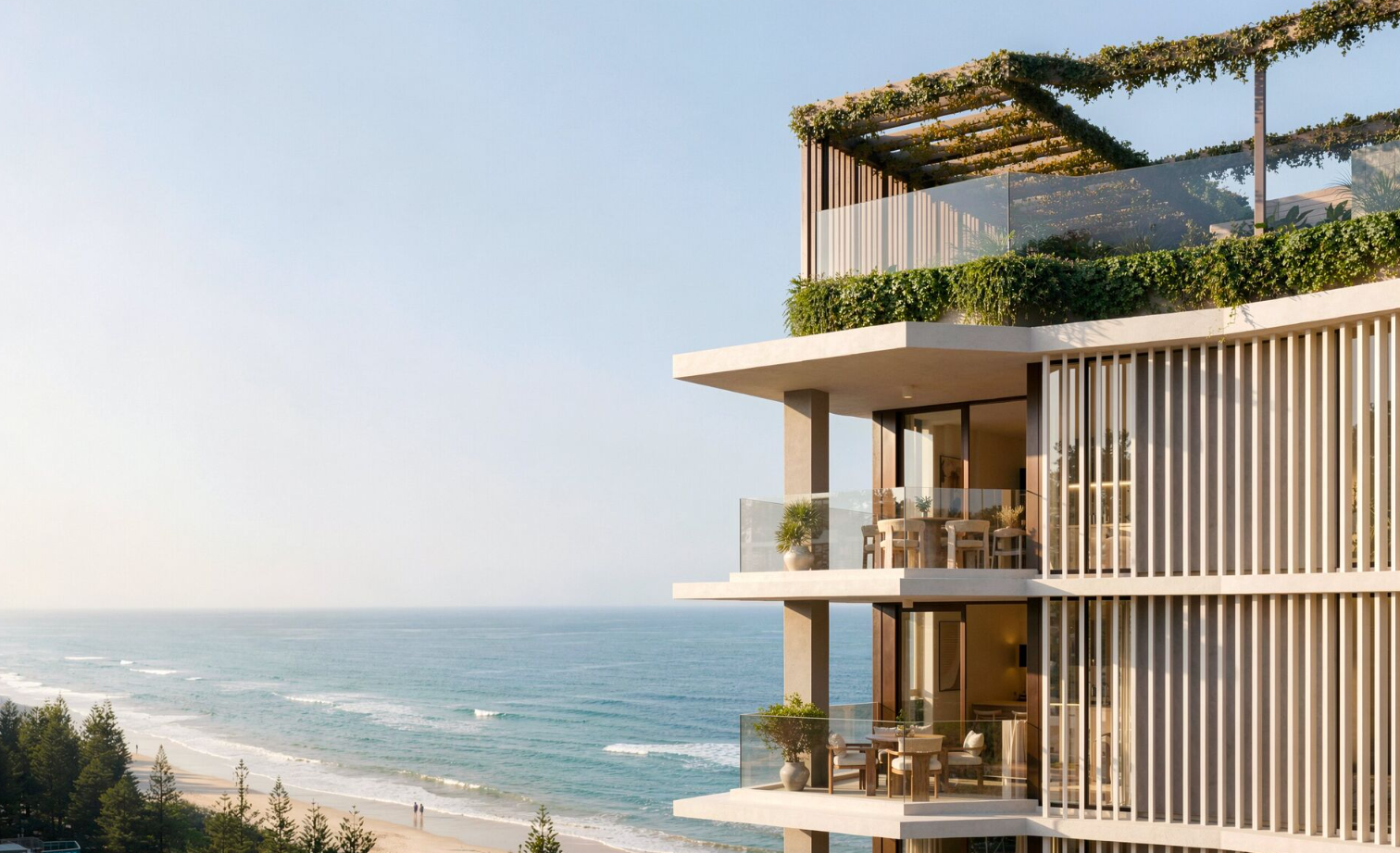
Studio apartments have almost disappeared from new Australian developments. Lura is bringing them back to Burleigh Heads from $495,000.

Porsche’s Cayenne Turbo Electric produces up to 1,156PS and reaches 100km/h in a claimed 2.5 seconds.
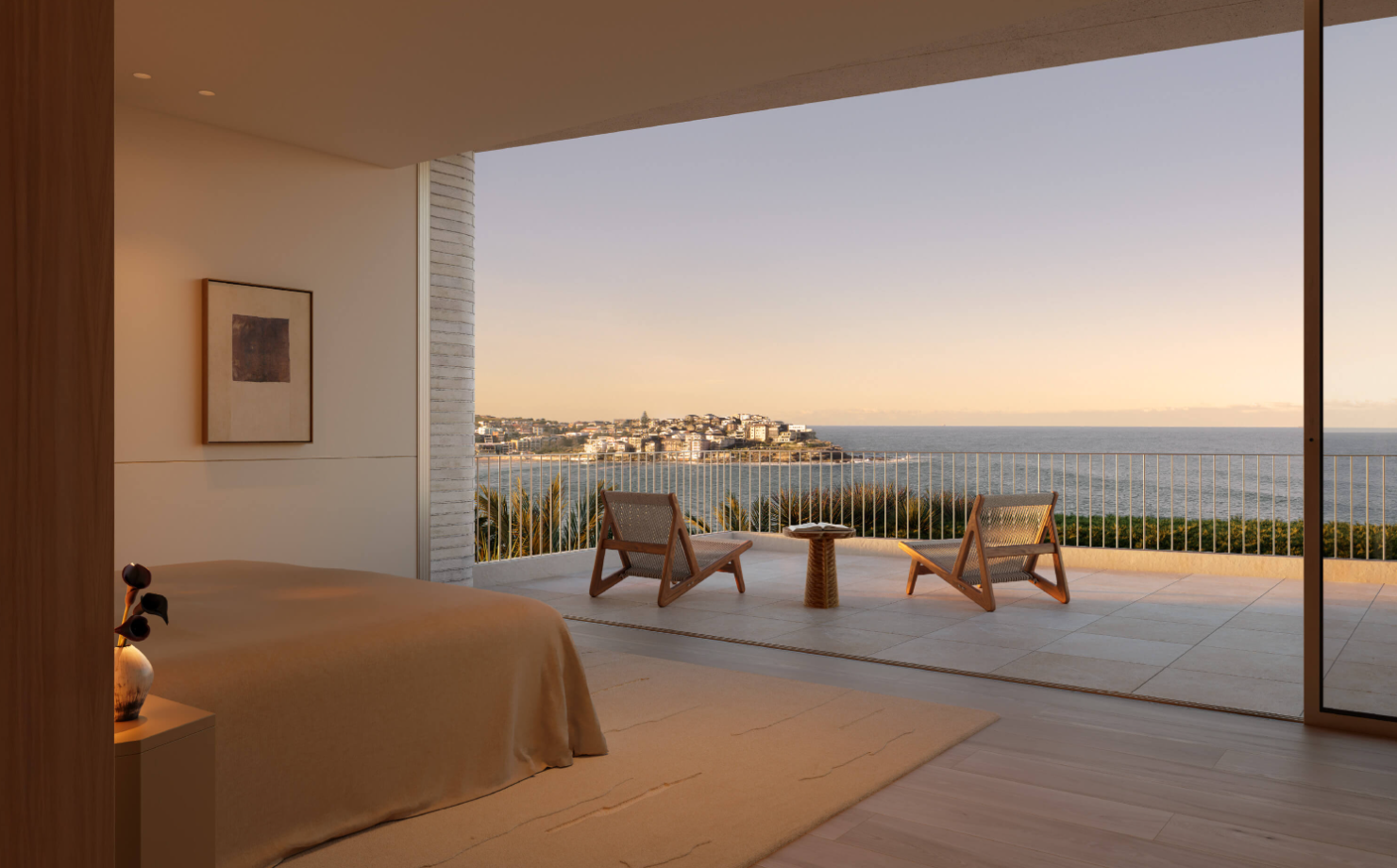
Blackmores vitamin mogul Marcus Blackmore and Caroline Furlong have listed their transformed Bayview waterfront, three years after buying the century-old Pittwater cottage known as The Shack.
3 min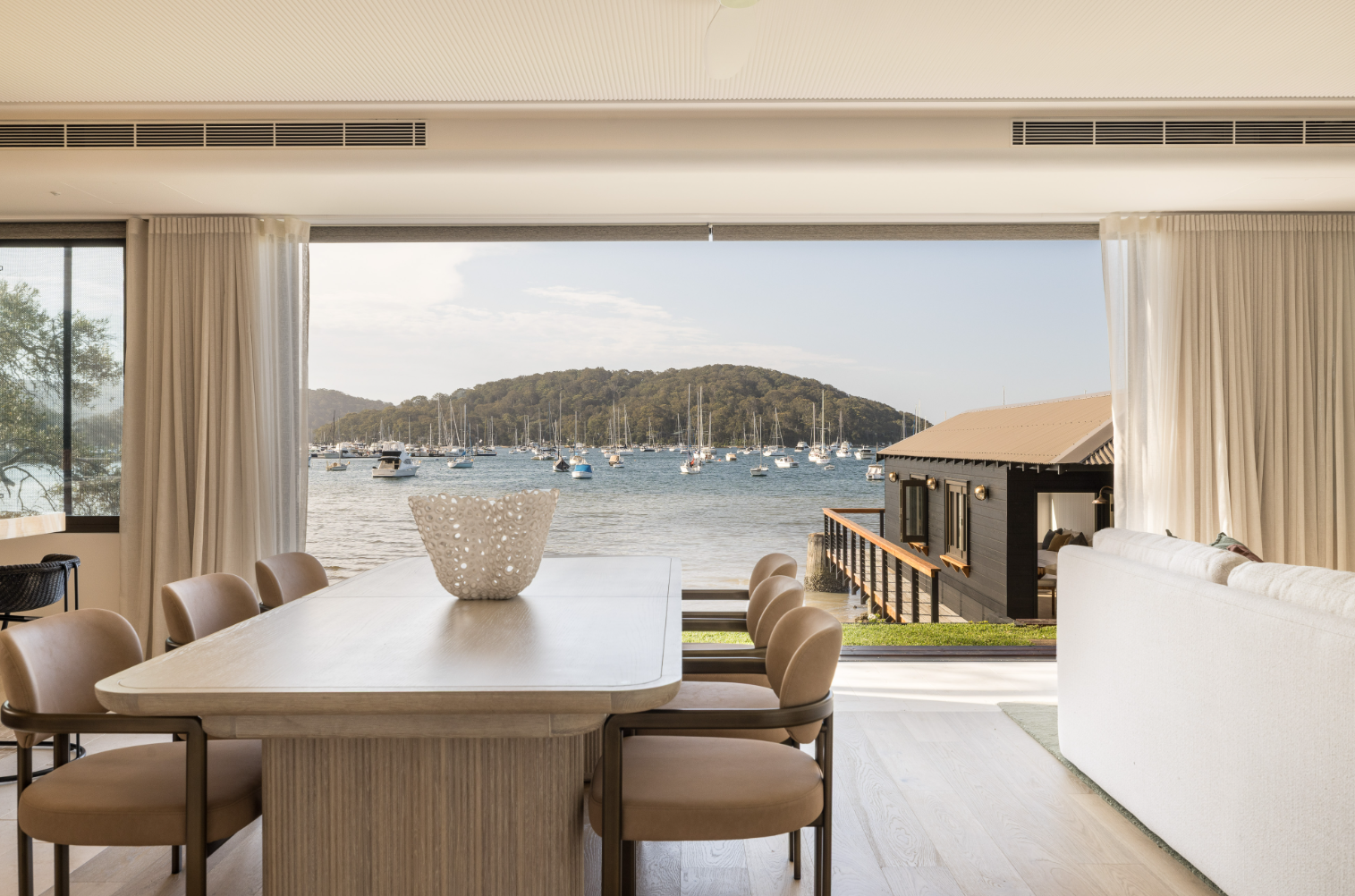
There is very little left of the century-old Pittwater shack Marcus Blackmore and Caroline Furlong bought for $5.7 million just over three years ago.
The vitamin industry heavyweight and his wife have returned 1808 Pittwater Road, Bayview to the market, but what buyers will find today is considerably different from the modest waterfront cottage that Blackmore and Furlong bought in August 2023.
The couple bought the tightly held property, long known locally as The Shack, after it had remained with the same family since the 1930s.
The timing of the purchase was particularly notable. It came immediately after Japanese brewing giant Kirin’s $1.9 billion takeover of Blackmores was announced, a deal which resulted in an $11.6 million dividend for Blackmore as a major shareholder of the company founded by his father, Maurice Blackmore.
It ended almost a century of ownership by the family of local teacher Neville Moodie.
The original three-bedroom, one-bathroom cottage sat almost on the water, with lawns running to Pittwater and a timber boathouse at the shoreline. Its appeal was less about the house itself and more about a rare north-facing position overlooking Scotland Island and a location where waterfront holdings are seldom offered for sale.
Three years on, Blackmore and Furlong have completely reimagined the site. 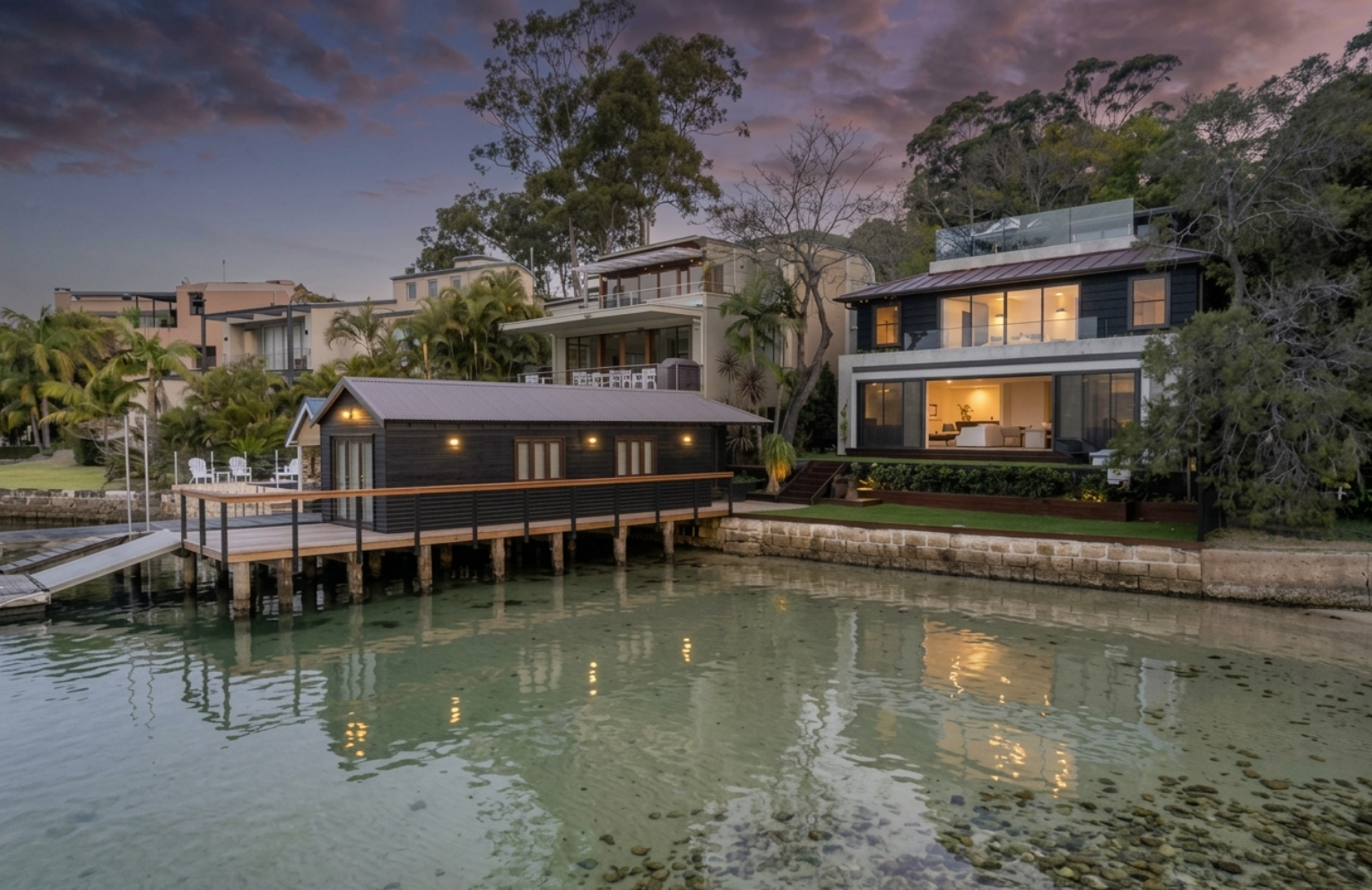 Walter Barda Design was commissioned to design a new split-level residence, delivered by Touchstone Construction Group, that takes full advantage of the relatively compact waterfront parcel and its prized northern orientation.
The resulting home is unmistakably contemporary, with curved architectural forms, natural limestone and timber flooring, extensive glazing and reinforced concrete construction wrapped in external timber cladding.
The main living level opens directly to a north-facing terrace and waterfront lawn, while the kitchen centres around a substantial island bench with Miele appliances and a butler’s pantry.
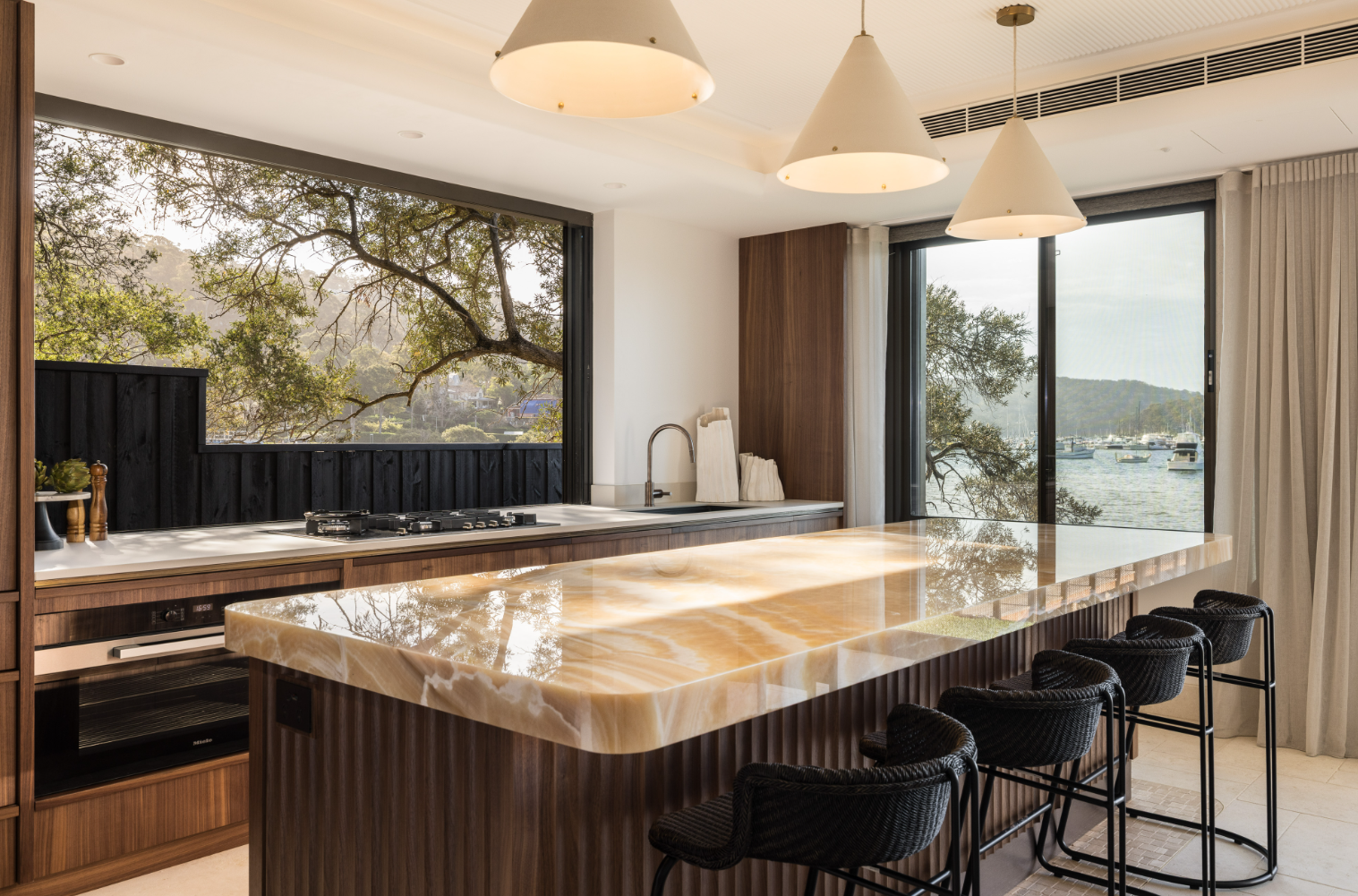
The main bedroom has been designed almost as a private suite within the home, with two walk-in wardrobes, two ensuites and its own balcony. Two further bedrooms each have an ensuite, while the waterfront boathouse has been designed as a multipurpose space with its own bathroom, giving it the flexibility to operate as additional accommodation.
Perhaps the most impressive addition sits above it all.
The top floor combines a home office with an outdoor kitchen and rooftop entertaining terrace, complete with a spa and elevated views across Pittwater towards Scotland Island.
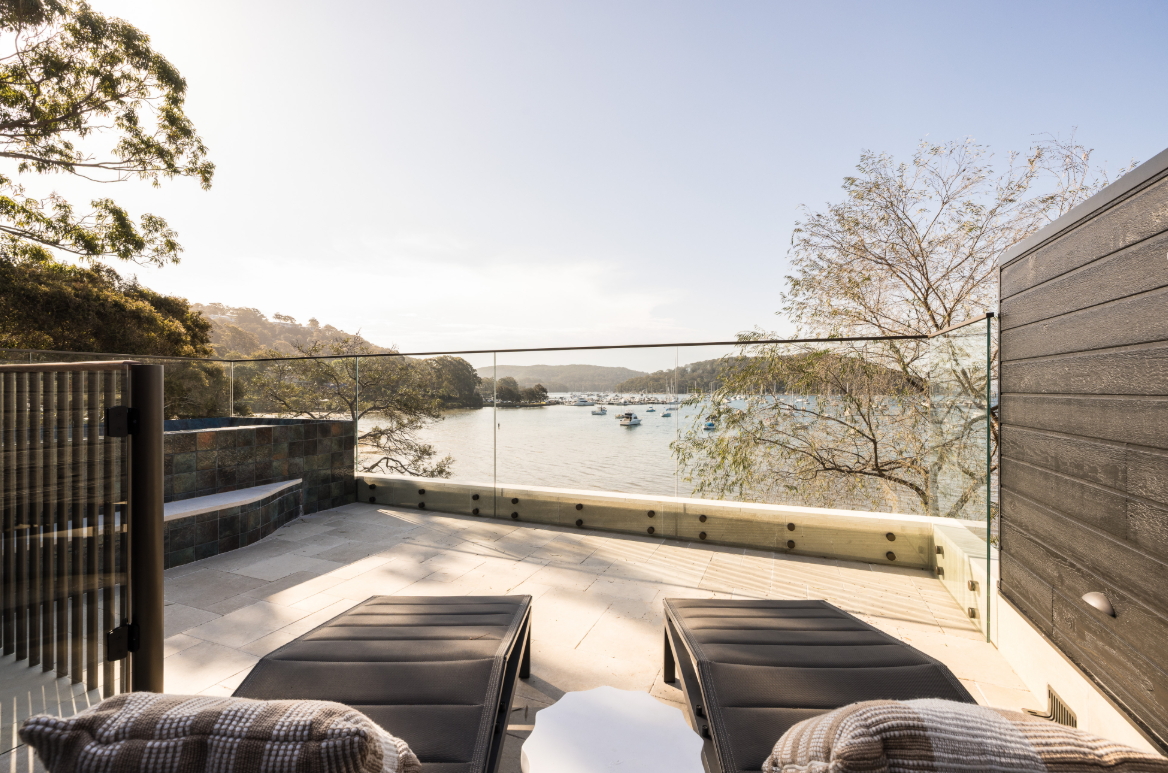
An internal lift connects the home’s levels, while underfloor heating, home automation, solar, ducted air conditioning, an EV charger and an internal-access double garage bring the original Pittwater weekender firmly into the 21st century.
A private slipway preserves perhaps the most important feature for a long-time Pittwater resident and accomplished sailor such as Blackmore: direct access to the water.
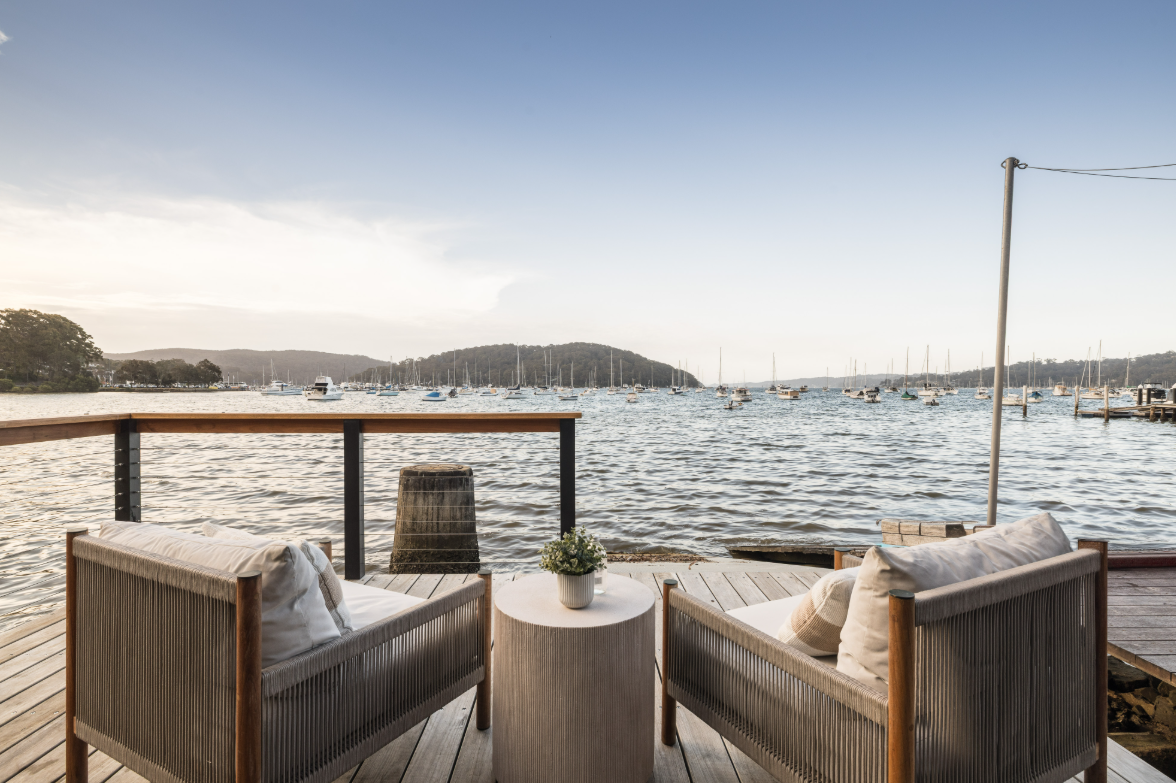
The project represents the latest chapter in a long-running love affair with Pittwater property for Blackmore.
He spent 25 years on Prince Alfred Parade in Newport after buying the deep waterfront property for $1.31 million in 1995. Blackmore and Furlong extensively renovated the Rowan Stewart-designed home over their ownership before selling it in 2020 for $8.125 million.
By then, they had already secured their next Pittwater address.
In 2016, the couple paid $9.25 million for Sandgate, a Queenslander-style waterfront residence further along Pittwater Road in Bayview, bought from USForex co-founder Matthew Gilmour.
The 1,500 sqm holding subsequently underwent a substantial rebuild, with development documents at the time putting the cost of the new home, swimming pool and jetty at around $3.37 million. It became their principal Bayview residence after the Newport sale.
Property of the Week
Property: 1808 Pittwater Road, Bayview, NSW
Owners: Marcus Blackmore and Caroline Furlong
Agent: Phillip Sheh, Black Diamondz
Price: Contact agent
Purchased: $5.7 million, August 2023
Architect: Walter Barda Design
Builder: Touchstone Construction Group

Exclusive eco-conscious lodges are attracting wealthy travellers seeking immersive experiences that prioritise conservation, community and restraint over excess.

From farm-to-table Thai to fairy-lit mango trees and Coral Sea vistas, Port Douglas has award-winning dining and plenty of tropical charm on the side.