Skechers Went After the Customers Nike Didn’t. It Paid Off.
Shoe company has focused on comfort over cool—‘we’re just a different player’

 4 min
4 min
The NBA’s 2023 most valuable player and last season’s top European goal scorer aren’t Nike or Adidas athletes. When playing, they wear what Martha Stewart wears: Skechers .
The shoe company—known for its hands-free slip-in styles—has grabbed the attention of enough people to become the third-largest footwear company in the world by sales. It is on track to net $10 billion in revenue by 2026, without achieving the coolness status that can juice demand for a brand.
Skechers did it by capturing parts of the market that are largely neglected by its competitors. Nike has superstars. Hoka has tapped into hardcore runners. Tech bros are willing to pay up for On shoes . Skechers thrives on retirees looking for comfortable kicks and families looking for something more affordable for their children.
“It’s almost the complete opposite of what the bigger brands do,” John Vandemore , Skechers finance chief, said in an interview. “We’re just a different player.”
Skechers isn’t flashy. Executives say they are in the “foot covering” business, and they work to make those coverings comfy and cheap. Its children’s styles cost around $50, and the brand doesn’t sell the limited releases that can fetch hundreds of dollars. It does, however, make $115 pickleball shoes with Goodyear rubber.
The company gets about two-thirds of its sales outside the U.S. Instead of opening its own stores, Skechers sometimes works with a franchise system and will wait years before investing on its own operations overseas. Skechers executives say they are bigger than Nike in India.
“People try to pigeonhole us into the Nike model or the Adi model, and it just doesn’t work,” Vandemore said. “It doesn’t mean that our model isn’t successful.”
Skechers has also started making soccer cleats and basketball sneakers, and it has scored some superstar endorsers. It added Bayern Munich striker Harry Kane to its roster in 2023, then signed a deal with Philadelphia 76ers star Joel Embiid last year. “You get them because the marketplace didn’t take care of them,” said Skechers Chief Operating Officer David Weinberg .
The company reported sales of $8 billion in 2023, up from $1.8 billion about a decade ago. Investors have taken notice. Over the past five years, Skechers share price has nearly doubled, while shares of Nike and Adidas have declined more than 25%.
Entering the race
Skechers has been run by its founder, Robert Greenberg , for three decades. The 84-year-old chief executive operates the business from its Manhattan Beach, Calif., offices with his son Michael Greenberg as president.
The father-son team doesn’t participate in quarterly earnings calls, and the CEO hasn’t done a major media appearance in about a decade. In 1989, Robert Greenberg sued American Airlines after the company published a photo of him in an in-flight magazine, saying he agreed to be interviewed on the condition that no photographs of him were published.
Skechers didn’t make the Greenbergs available for this article.
The entrepreneur moved to California in the 1970s and got his start in the footwear industry by selling E.T.-branded shoelaces. Greenberg and his son turned that business into L.A. Gear, which became a large athletic-shoe maker in the 1980s with celebrity endorsers such as Michael Jackson .
L.A. Gear ran into trouble when it entered the performance market, sponsoring such athletes as Wayne Gretzky and Joe Montana . Greenberg was ultimately pushed out of the company he had founded. Analysts said that, at the time, the company had expanded too quickly.
Skechers was started in 1992, but sales didn’t take off for decades. Weinberg, the Skechers operating chief who was also an executive at L.A. Gear, said Skechers needed investments in its global operations and time to grow.
Skechers had some success in the 2000s with celebrity ambassadors—including Britney Spears —and later with its Shape-Ups walking shoes in the early 2010s. As the company expanded, there was some fluctuation in the results, Weinberg said, and people began to think that it was a boom-or-bust business.
“Today, there’s no shoe, no category, no customer, no geography that is a make or break for us,” Weinberg said.
Filling holes left by rivals
Skechers shifted in recent years into the performance arena to fill what its leaders see as openings left by Nike and others.
The business got a boost from Nike’s decision during the pandemic to exit many retailers that catered to lower-income consumers and focus on selling directly to consumers. Nike also cut back on styles that sold for less than $100.
In late 2023, Nike sued Skechers, claiming its rival was infringing on Nike’s patents for its Flyknit technology for seamless shoes. Skechers responded that the lawsuit was baseless and an example of Nike using its financial resources to stifle competition. The case is pending.
Skechers executives said they are still more interested in creating comfy shoes than signing the most expensive athletes. On its website, the company dedicates a section to showcase its comfort technologies.
Maria Afsharian is a convert. The Montclair, N.J., real-estate agent wore only sandals and had given up on sneakers because she couldn’t find ones that wouldn’t hurt her heels. Last year, her chiropractor recommended Skechers.
“I don’t even think about my feet anymore,” Afsharian said. The 59-year-old said the Skechers Go Walk shoes have made her more active, and she doesn’t get blisters anymore. “Since I have these, I’m unstoppable,” she said.
Skechers does work with designers, street artists and celebrities, but executives said they don’t rely on projects that are limited releases because they don’t think limited releases generate the same hype and awareness as they do for other brands.
“That’s not really our consumer,” said Vandemore, the finance chief. “That’s not what somebody’s looking for us to do.”
 Copyright 2020, Dow Jones & Company, Inc. All Rights Reserved Worldwide. LEARN MORE




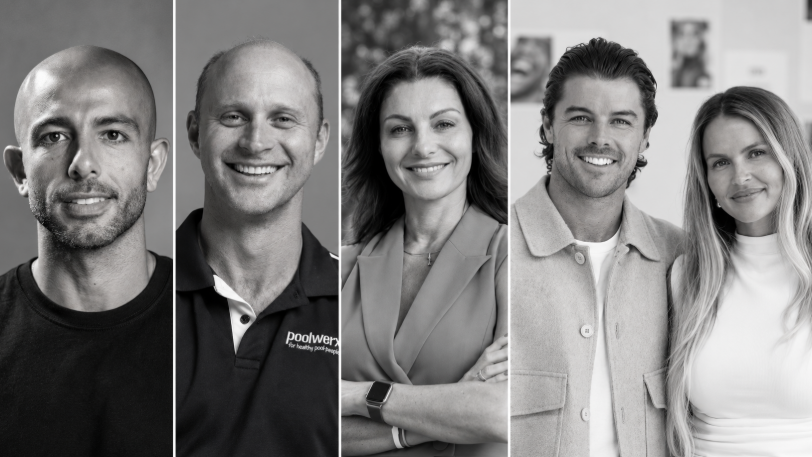
From making unpopular decisions to learning when to listen, leaders from five businesses reveal what nobody prepared them for — and how running a company has challenged their expectations.
Technology and semiconductor shares fell sharply as investors questioned the debt financing the AI infrastructure boom and confronted higher rates and Chinese competition.
Elon Musk is exploring a potential merger between Tesla and SpaceX, a deal that could reshape the future of AI, robotics, autonomous vehicles and space technology. With a combined valuation potentially reaching $3.5 trillion, the move could bring Musk’s vision of an interconnected technology ecosystem closer to reality, although a deal remains uncertain.
5 min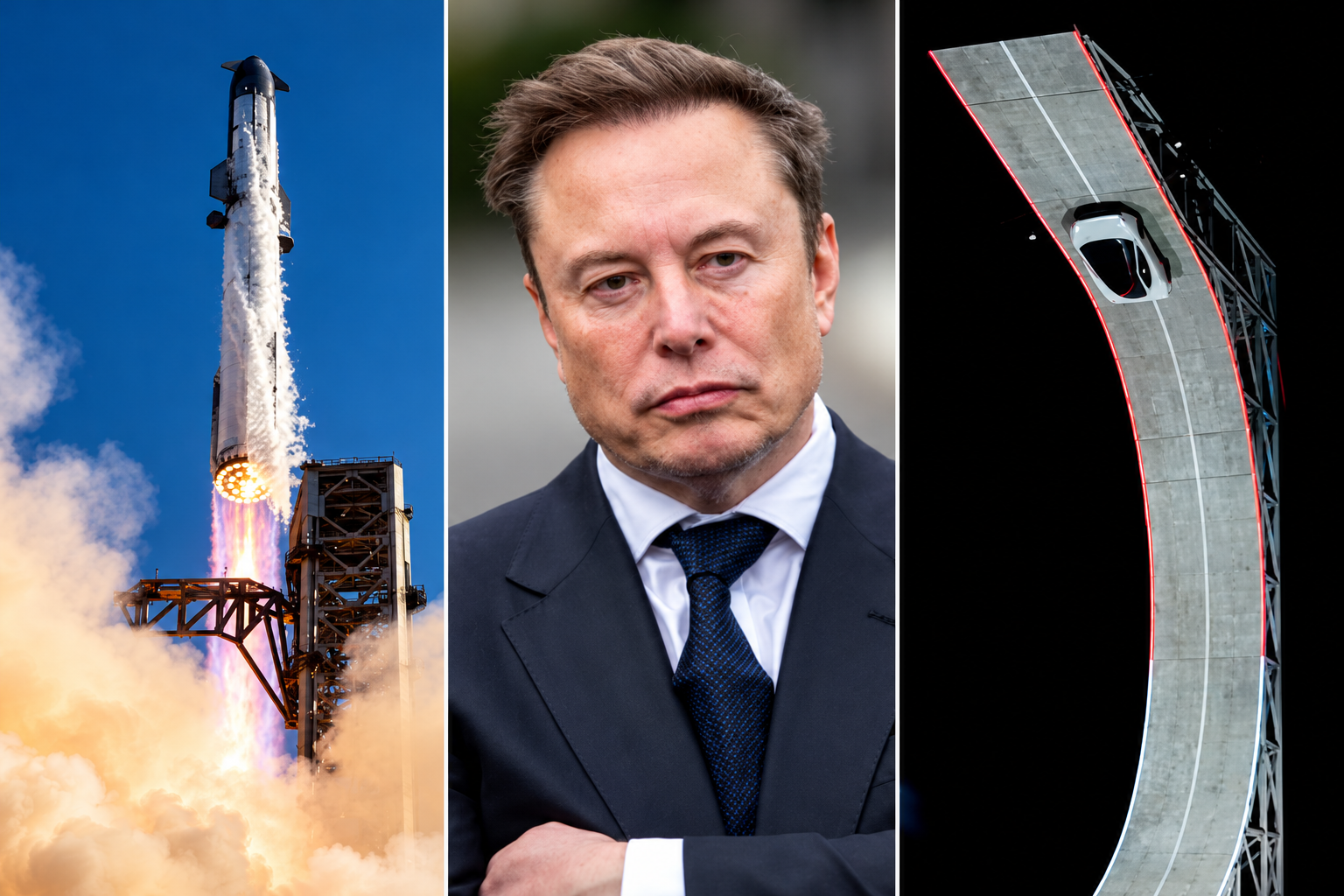
Elon Musk has engineered ties between Tesla TSLA 3.41%increase; up pointing triangle and SpaceX SPCX 7.79%increase; up pointing triangle that are hard to break, and now he wants to fuse them together permanently.
Musk has run both Tesla and SpaceX concurrently over the past two decades, using a schedule that dictated which days he spent focused on each business.
The companies have often shared resources and personnel, signaling their close ties. Last year, SpaceX looked into creating a spacesuit for Tesla’s humanoid robot Optimus, a person familiar with the matter said. Tesla last week showed off its new Roadster, a vehicle featuring SpaceX rocket thrusters that it hopes to soon bring to market.
And in recent months, Musk has repositioned both companies by expanding beyond their core operations toward a shared mission centered on artificial intelligence.
The world’s richest man on Tuesday signaled his interest in tying up SpaceX and Tesla, marking what would be the biggest corporate merger of all time. Because he serves as chief executive of SpaceX and Tesla, Musk said committees of independent directors at both companies are evaluating a possible deal, adding that a transaction might not come to fruition.
The committees will likely evaluate, with lawyers and bankers, how each company would fare in a potential deal and how a deal might best be structured. They then present their conclusions to their respective boards, who typically vote on whether to proceed.
“It’s an odd Kabuki dance where two groups of people are talking and I can’t be in the conversation,” Musk told SpaceX investors on Tuesday in response to an analyst’s question about a potential deal.
For Musk, the merger supports his vision of a world full of autonomous cars, humanoid robots and weekly rocket launches, as well as the data centers and satellites required to keep the whole thing running.
Some investors and analysts said they expect a transaction would be structured as an all-stock deal, with SpaceX potentially paying a modest premium for Tesla shares.
SpaceX, which has a market value of about $2 trillion, said it is seeing sharp growth in revenue across its businesses, which include operating data centers, launching rockets and operating satellite networks such as the internet service Starlink. Tesla is valued at about $1.5 trillion and is expanding its operations beyond its automotive and energy business. Shares in both companies traded higher following the news Tuesday.
Musk’s substantial ownership stakes in both companies, along with voting control at SpaceX, has enabled him to set the deal in motion. Analysts and investors said the deal will probably face regulatory scrutiny internationally, though some see Musk’s close relationship with the Trump administration as an asset to getting approval.
Blurred lines
The companies haven’t said which directors are on the special committees evaluating a potential deal. Several SpaceX and Tesla board members have either personal or business ties to Musk. And like Musk, venture capitalist Ira Ehrenpreis sits on both boards.
In a filing this week, Tesla outlined millions of dollars in business agreements with SpaceX and its subsidiaries last year, including $143 million in car sales to SpaceX, $3.3 million in advertising that it bought on the social-media platform X and $430 million in revenue from the sale of Megapack batteries for SpaceX’s data centers.
The companies also split the cost of resources including the use of Musk’s SpaceX jet and the bill for his personal security, which he runs through a private company.
Employees at both companies routinely move between companies to work on special projects, and some executives have dual roles, including Charles Kuehmann, vice president of materials engineering at both SpaceX and Tesla, and Ashok Elluswamy, the vice president of AI software at Tesla who runs a joint venture with SpaceX called Digital Optimus.
Over the years, Musk has launched new startups within his empire, including brain-implant company Neuralink, underground-tunnel developer the Boring Company and xAI, the AI startup that merged with SpaceX in February.
It is that AI business that Musk thinks can serve a market worth tens of trillions of dollars, justifying the need for a merger.
The business case goes like this: Tesla is developing robotaxis and robots, which it calls “physical AI.” SpaceX is working on the back end of physical AI: the data-center capacity and internet connection required for those robotaxis and robots to operate continuously.
“I don’t see what the value of Tesla is if it’s not merged with SpaceX,” said investment adviser Ross Gerber, a former Tesla bull turned critic invested in both companies. “If they don’t merge, the brains of everything that runs Tesla is owned by another company.”
On top of it all, both companies face constraints on the supply chains they need to make this world a reality, particularly when it comes to chips. To address this, Musk earlier this year announced a joint venture between Tesla, SpaceX and Intel to design and manufacture chips in Texas. “The most epic chip-building exercise by far,” he has said.
Musk at the wheel
For Musk, a merger would also solve two problems: demands on his attention and his lack of control at Tesla.
Tesla for years was Musk’s only public company, a status that came with greater scrutiny. There, Musk reports to a public board, as well as individual investors who make up around 30% of Tesla’s voting power, according to FactSet.
The question of Musk’s attention became a particular focus for investors and the board in recent years after he acquired Twitter in 2022 and launched xAI in 2023, and again in 2025 as he spent time in Washington, D.C., running the Department of Government Efficiency in the early months of President Trump’s second term.
As Tesla’s car business suffered in 2025, Musk threatened to take his AI ambitions outside the company if he wasn’t granted 25% voting control. Last November, Tesla shareholders approved a new pay package for Musk, which created a path for him to vastly expand his stake.
As of Sept. 30, Musk owned a roughly 20% stake in Tesla, according to the company’s proxy filing.
The SpaceX IPO gave Musk a different path. When SpaceX went public in June, the deal’s structure enabled him to have more than 80% voting power at the company—so much that he can’t be fired and decisions can’t be made without his support.
If SpaceX acquires Tesla, he will likely stay in control.

A 30-metre masterpiece unveiled in Monaco brings Lamborghini’s supercar drama to the high seas, powered by 7,600 horsepower and unmistakable Italian design.

Pure Amazon has begun journeys deep into Peru’s Pacaya-Samiria National Reserve, combining contemporary design, Indigenous craftsmanship and intimate wildlife encounters in one of the richest ecosystems on Earth.