Skip Busy Mykonos. Greece’s Holiday House Hunters in the Know Turn to This Alternative.
This peninsular region has beaches, mountains and luxury homes at much lower prices than in the popular Cyclades islands

 6 min
6 min
Three peninsulas make up Halkidiki, an 1,130-square-mile area in Greece’s northern Macedonia region. Like a trident, Athos, Sithonia and Kassandra stretch into the Aegean sea.
Of the three, Kassandra “is the most developed part of Halkidiki,” according to Theodor Nikolaou, an agent with Engel & Völkers Greece in Thérmi. “Activity started in the 1970s and ’80s, and just continued, especially in coastal villages.”
While lower-profile and less touristed than Greek islands like Santorini or Mykonos, Kassandra still boasts sought-after restaurants, nightclubs and shops, said Ioanna Paloka, an agent with Savills Greece in Thessaloniki. “People prefer to buy here because of the amenities, the beautiful beaches, and the mixture of commercial and residential development,” she said. Beaches including Polychrono Beach, Hanioti Beach and Pefkochori Beach boast clear waters, soft sand and postcard-perfect coastal scenery.
Boundaries
Kassandra is the westernmost of Halkidiki’s peninsulas, and the most populated. At about 128 square miles, Kassandra descends from Cassandreia, its northernmost city, to the Aegean Sea. Kassandra is also the nearest peninsula to Thessaloniki, Greece’s second-largest city, and its international airport. “It’s the most accessible part of Halkidiki,” Paloka said.

Seaside locations are most coveted for luxury property, according to Nikolaou. They include the village of Sani, on the west side of Kassandra; Pefkochori, on the peninsula’s east side; and the area around Glarokavos Harbour, just south of Pefkochori. “The combination of sun, the blue of the sea, and the green of pine draws people from around the world,” he said.
Kassandra’s most exclusive locations are Sani, the east-peninsula village of Paliouri, Possidi in the southwest, and Pefkohori, Pakola said.
Thessaloniki is about 60 miles northwest of central Kassandra. Thessaloniki Airport Makedonia, the regional international airport, is a few miles further west. Athens is about 350 miles south.
Price Range
Beachfront properties in Kassandra command premium prices, Paloka said. “Most people at the high end prefer to buy beachfront.” Prices range from €3,000 (US$3,243) to €6,000 per square meter, she said. “For €6,000 per square meter, you’re buying about 20,000 square meters of land with a 1,000-square-meter house, a swimming pool, very modern, in a new development by the sea and surrounded by forests.”
For €5 million in Sani, Savills has listed a 350-square-meter home with six bedrooms and three bathrooms on about 17,000 square meters of land with sea views. In a new development in the village of Siviri, Savills is offering 350-square-meter beach-adjacent homes with seven bedroom suites, private pools, and garages for €2.05 million. Siviri, on Kassandra’s west side, is popular with tourists for its clusters of bars and cafes.

Listglobally
Prices across Kassandra “depend on the distance from the sea,” said Nikolaou of Engel & Volkers Greece. “The closer you are, and the more private the property, the higher the price.” While prices average €2,500 to €4,000 per square meter across Kassandra, they can soar to €8,000 to €10,000 “for the best beachfront luxury property,” he said.
In Pallini, on Kassandra’s east coast, Engel & Volkers is offering an oceanfront hilltop estate on more than 4,000 square meters of land, with nine bedroom suites and amenities including a wine cellar and full bar. Built in 1991, the property is listed for €4,500,000.
The most expensive Kassandra listing in October was a 10-bedroom, 1000-square-meter Sani villa with sea views and a pool for €17,000,000, offered by the Hellenic Property agency.
Housing Stock
In the coastal parts of Kassandra undergoing rapid development, architecture is almost uniformly modern. “There are three types of homes here. Apartments and villas, which aren’t as hot. Multi-home complexes with sea views, which are better. And private luxury beachfront properties, which are at the top.”
Older and even “ancient” properties are common in Kassandra’s mountainous inland regions, according to Nikolaou. “These traditional stone houses in some of the old villages can qualify as luxury homes once they’re renovated, but many require extensive work,” he said. The village of Agia Paraskevi, in south-central Kassandra, has also become a popular tourist destination for its thermal spas and ancient churches.

Getty Images/imageBROKER RF
The higher end of the market consists almost exclusively of detached, modern homes, said Paloka. “Condominiums make up the lower end of the market here,” she said. “And there are almost no historical buildings in the most sought-after coastal areas.”
Luxury Amenities
Greek and international buyers are discovering Kassandra as an alternative to tourist hubs like Mykonos and Santorini. “The fact that Kassandra is not the islands is an amenity in itself,” Paloka said. “It’s very private, relaxed and peaceful, without that madness. Most of the infrastructure here only appeared over the last 10 years.” For golf and tennis, most locals frequent the seaside Sani Resort, which operates private athletic clubs along with its five high-end hotels. Most complexes also have private pools, according to Nikolaou of Engel & Volkers.
MORE : Republican Fundraiser and Rockstar Energy Drink Founder Russell Weiner Lists $47 Million Park City, Utah, House
As Kassandra’s profile has risen, its restaurant scene has flourished, with high-end eateries including Metoxi, in a temple-like stone building with sunset views; “creative Greek” spot Giria Elia in Pefkohori’s Hotel Anna Maria; and Kriopigi’s Fiki Fiki, the first Asian-Peruvian fusion restaurant in Halkidiki. Several private medical clinics operate on the peninsula, including the 24-hour Kassandria’s Health Center and Primary Medical Care of Pefkochori.
What Makes It Unique
“Kassandra is a picturesque environment, surrounded by forest, with clean, beautiful, crystal-clear seas,” said Paloka. “The proximity to Thessaloniki also makes it unique. You’re just an hour from the city centre, but you can enjoy all Kassandra has to offer.”
Kassandra’s annual Sani Festival brings A-list musical talent to the peninsula every year; the 2024 edition saw stars including Placido Domingo, Madeleine Peyroux, Tom Jones, and Emeli Sande on the roster.
Who Lives There
Nearly 40% of buyers in Kassandra are “from central Europe, especially German-speaking countries,” Nikolaou said. “They see the Mediterranean, and this part of Greece, as the Florida of Europe. They want a home in the region to use in retirement.” Another 25% of buyers come from the Balkans, including Bulgaria and Romania, “and other countries without direct access to the Mediterranean Sea. This is the first possible access for them,” he said. An additional 15% of buyers hail from Israel and the Middle East. “Thessaloniki once had a significant Jewish population, and Israelis love it. They want to invest here,” Nikolaou said. Just a handful of buyers come from North America, he added.

Getty Images
Kassandra’s largest, most extravagant villas belong to Greeks, according to Paloka of Savills. But those owners are starting to take their profits. “Those properties had been second homes, and the Greek owners are now selling to mostly European buyers,” she said.
Greece’s golden visa program, which grants a five-year residency permit in exchange for a minimum real-estate purchase, has attracted “a huge number of foreigners, but to less expensive properties,” Paloka said. In October, however, the Greek government raised the minimum investment for a golden visa to €800,000 from €250,000 in sought-after destinations including Halkidiki, the region where Kassandra is located.
Notable Residents
Swiss-based Greek billionaire Aristotеlis Mistakidis “has bought a lot of property in Halkidiki, including a villa in Glarokavos,” Nikolaou said. Brad Pitt and Angelina Jolie vacationed in Kassandra when they were an item, and John Travolta and Robert De Niro “spend summers in Kassandra with their families,” Nikolaou said.
Outlook
“Consistency” is the hallmark of the market in Kassandra, said Paloka of Savills.
“Prices may have gone up on lower-end properties, but prime estates have stayed the same or maybe dropped just a bit. What’s key is that it’s more affordable than the islands, and a better value for your money.” Kassandra’s rental market is also “extremely strong, year-round,” meaning owners can generate revenue from their properties, she said. “Even at Christmas, people love coming here. The islands are great, but you can’t get flights there all year―you have to take a ferry off-season.”
Nikolaou, however, said that “the demand for second homes means prices will continue to increase.” He also noted that property prices per square meter “are much more of a value for the money, especially for beachfront properties.”
Investors “are now looking to Kassandra and Halkidiki to develop new tourist areas,” Nikolaou said. “They don’t want to go to the islands. If you count the kilometres of seashore here, it’s like you have 100 islands. And it’s sunny the whole year.”
 Copyright 2020, Dow Jones & Company, Inc. All Rights Reserved Worldwide. LEARN MORE





From making unpopular decisions to learning when to listen, leaders from five businesses reveal what nobody prepared them for — and how running a company has challenged their expectations.

Technology and semiconductor shares fell sharply as investors questioned the debt financing the AI infrastructure boom and confronted higher rates and Chinese competition.
Mirvac’s 45-level Trielle has topped out at Yarra’s Edge, pairing riverfront apartments with wellness facilities, private dining and resident services.
3 min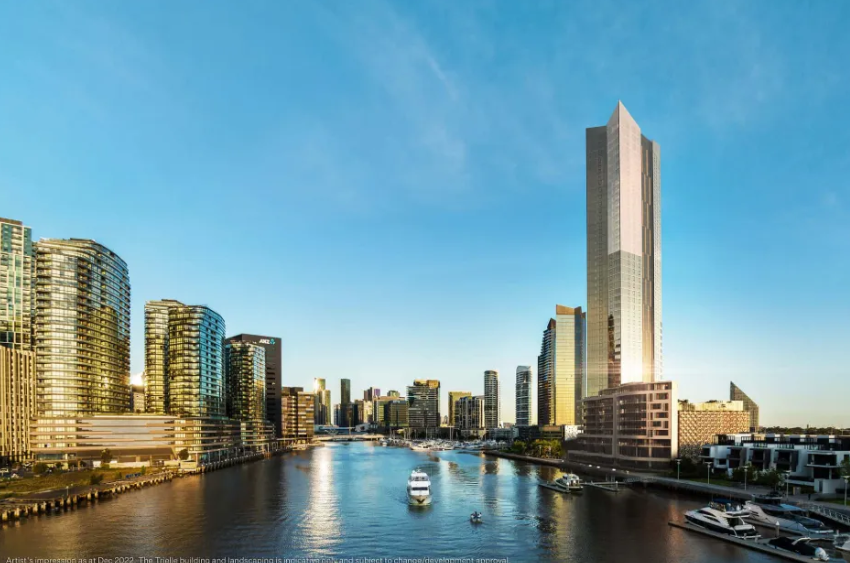
Mirvac has topped out Trielle at Melbourne’s Yarra’s Edge, with more than 70 per cent of the riverfront development sold and approximately 80 per cent of purchasers intending to make their apartment a home.
The figures, released on September 22, point to an owner-occupier audience for one of the precinct’s final residential towers. Mirvac began developing Yarra’s Edge in 2003, and its latest addition occupies one of the remaining absolute riverfront sites.
Mirvac CEO of Development Stuart Penklis said existing residents were among those moving up within the neighbourhood.
“Many purchasers already have a connection to Yarra’s Edge,” Mr Penklis said, describing buyers whose changing needs were encouraging an upgrade within the precinct.
“As one of the final residential towers within Yarra’s Edge, Trielle represents the culmination of more than two decades of creating one of Melbourne’s most established and sought-after waterfront communities,” Penklis said.
“Positioned on the Collins Street axis with absolute river frontage, Trielle offers residents a rare opportunity to enjoy sweeping views across the Yarra River, Melbourne skyline and Port Phillip Bay, while remaining seamlessly connected to the CBD. With Trielle now more than 70 per cent sold, we’re continuing to see strong demand from buyers seeking quality homes in established locations.”
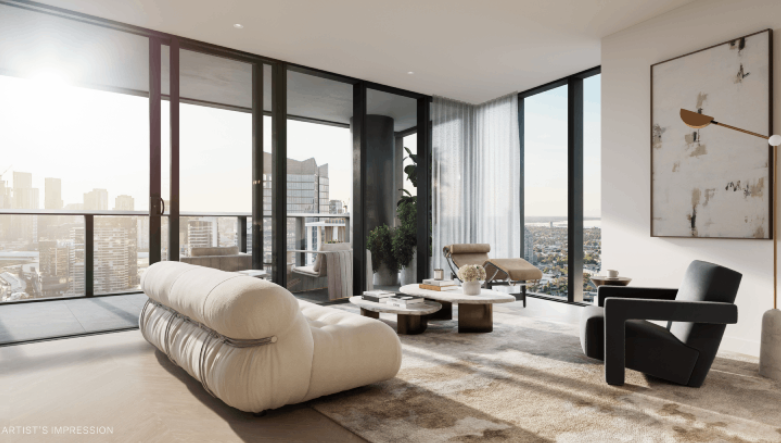
The developer also flagged a penthouse and sub-penthouse collection with larger layouts, premium finishes and broad outlooks. The planned wellness centrepiece, The Oasis, encompasses a 900-square-metre elevated urban rainforest.
Mirvac General Manager Residential Development Victoria Elysa Anderson said Trielle had resonated strongly with buyers seeking a rare lifestyle offering in Melbourne.
“Opportunities to secure a new luxury residence on a riverfront site of this calibre are incredibly rare, particularly within a community like Yarra’s Edge,” Anderson said.
“What makes Trielle unique is the combination of exceptional views, world-class residential facilities and the lifestyle that already exists around it. Residents are buying into a mature waterfront community with parks, promenades, dining, wellness and strong community connections already in place.”
The 45-level tower brings a substantial new presence to that waterfront. Its residential offering spans one-, two-, three- and four-bedroom apartments, with Signature, Prestige and Sub-Penthouse collections accommodating different household sizes. The north-facing position connects the apartments visually to the river and city beyond.
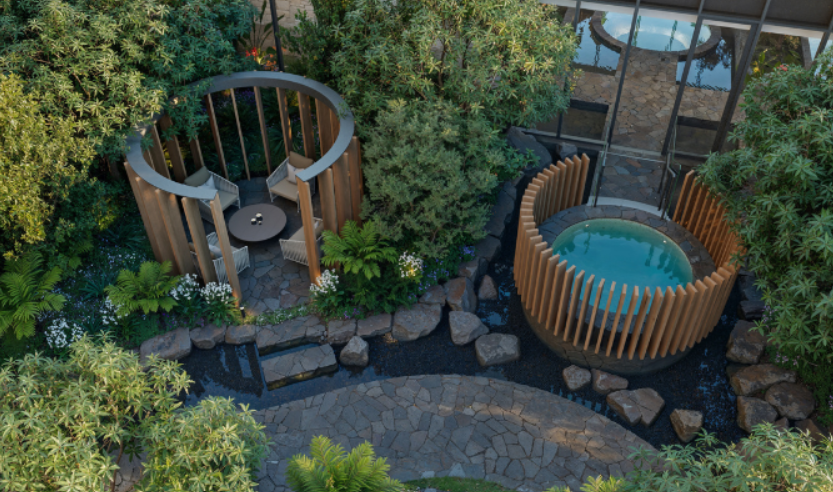
Seven storeys above the promenade, the planned Oasis combines planting and a running stream with a Scandinavian-inspired wellness club developed with spa specialist Naomi Gregory. Facilities include a 25-metre lap pool, hot magnesium pool, sauna, hydrotherapy, a gym, yoga and Pilates room, and treatment spaces.
The amenity extends beyond exercise. Residents will have access to The Biblioteca library and workspaces, ground-floor work pods, and The Salone piano lounge. A private Chef’s Table dining room offers a setting for larger gatherings, while a cinema, games room and sports lounge broaden the entertaining options. Concierge services and a dog-wash area support everyday routines.
Trielle comprises a collection of one, two, three and four-bedroom residences. Reflecting strong demand from owner occupiers, approximately 80 per cent of purchasers to date intend to live in their homes, highlighting the project’s appeal to those seeking a long-term waterfront lifestyle.
Mirvac has recently delivered The Albertine, a premium apartment development on the edge of Melbourne’s CBD, and is nearing completion of Prince & Parade in Brunswick, further strengthening its portfolio of thoughtfully designed apartment communities in some of Melbourne’s most sought-after urban locations.

A 30-metre masterpiece unveiled in Monaco brings Lamborghini’s supercar drama to the high seas, powered by 7,600 horsepower and unmistakable Italian design.

The megamansion was built for Tony Pritzker, heir to the Hyatt Hotel fortune and brother of Illinois Gov. JB Pritzker.