Stand Outside Barefoot for Better Health? ‘I Feel Like an Oddball, But if It Works, It Works.’
Pilots, pro athletes and others try ’grounding’—though don’t step on a bee. ‘I said a couple of bad words to myself.’

 4 min
4 min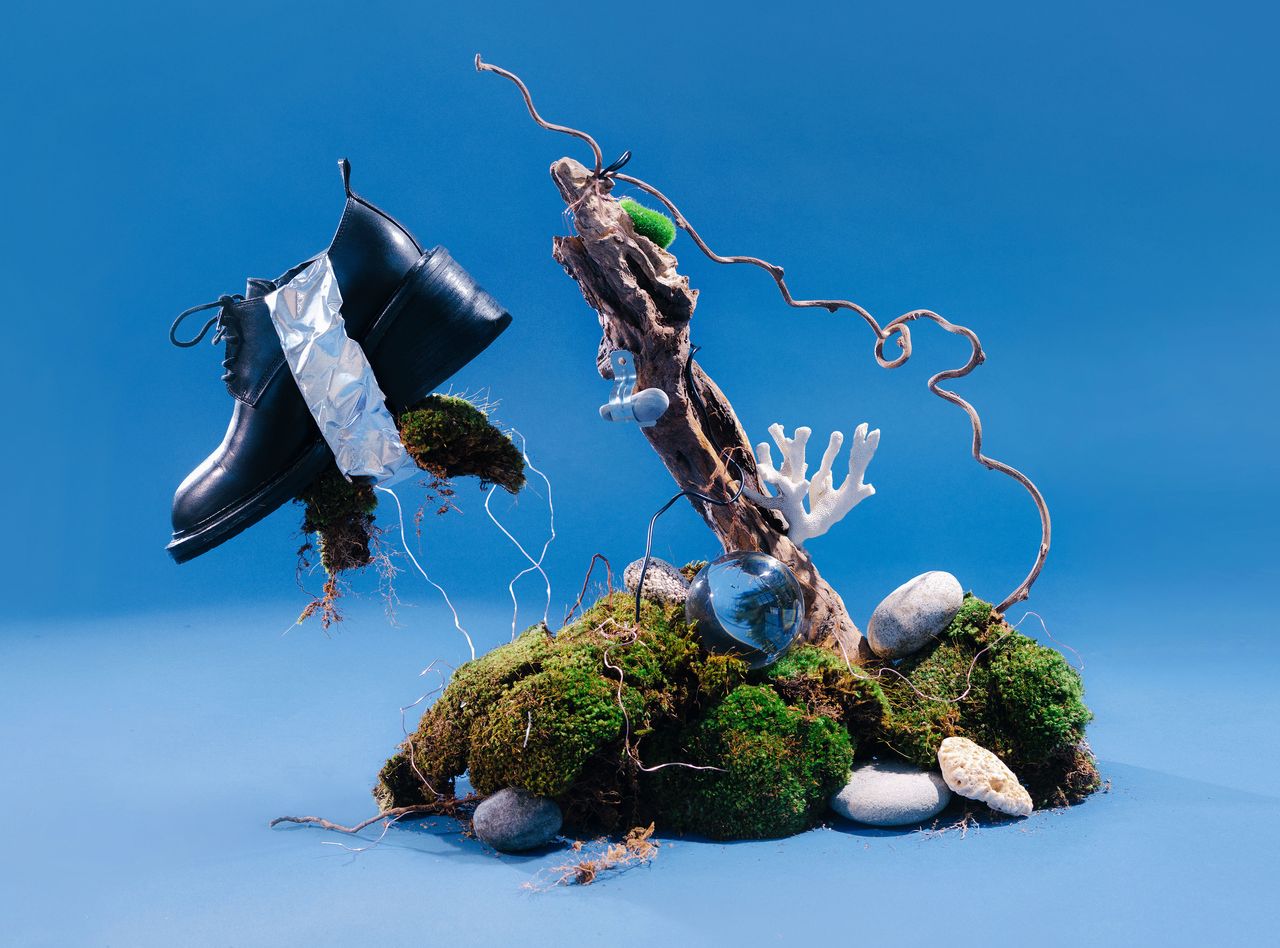
When Sara Jean Meyer got a text from her mom that said, “I have a surprise for you,” she assumed it would be a free bubble tea. Instead, her mother showed up with a roll of foil tape, a long copper pipe, an electrical wire and a rod clamp.
They were all supplies required to “ground” Meyer’s bed. Grounding is what proponents call the process of connecting to the earth’s natural electric charge, often by physically touching it or connecting to the grounding system built into most U.S. homes.
The wellness practice is gaining, well, ground, among alternative-health fans, who claim it cures headaches, helps them sleep and reduces inflammation. Some go basic by simply standing barefoot in their yards. Others try more complicated, do-it-yourself approaches to maximise time spent grounding—even while indoors.
Luis Rios, a pilot based in Los Angeles, says grounding, also known as earthing, helps ease joint pain in his knees after long flights. He mostly does it outdoors, with his feet touching the ground, though it can be difficult to find places to hike or stand barefoot at travel destinations.
During a recent trip to Savannah, Ga., he stood in a park across from a stretch of restaurants and businesses on a tree with an exposed root while two tour buses drove by. “I felt like I was kind of like the main attraction, they were looking at me like, ‘What is this guy doing?’” says Rios, 58. “I feel like an oddball, but if it works, it works.”
Grounding merchandise proliferates, and in July 2023, TikTok searches for the hashtags #grounding, which has 529 million views, and #earthing, which has 163 million views, reached peak popularity from the previous three years. Some pro athletes dig grounding: Baseball player Spencer Turnbull said in a 2021 MLB talk-show interview that the practice helps him get loose, focused and “just kinda wakes me up.”
Karamvir Bhatti, 30, a model and freelance graphic designer in New York, purchased a $30 earthing mat which arrived with a cable to plug into the bottom hole of any three-pronged outlet. The bottom or grounding hole connects to a wire that runs into a service panel that connects to the ground. These wires are installed around most newer buildings to prevent electric surges.
In the U.K., a couple created a “grounded” running shoe, manufactured with conductive materials such as silver fiber webbing, that has sold thousands of pairs since the company, Bahé, launched last year, says director of operations Nikki Ward.
Earthing researchers—some of whom have connections to companies that sell products such as yoga mats and bedsheets—say the habit can reduce oxidative stress, a condition linked to various conditions. It does so, they contend, by dissipating static electricity buildup in the body and syncing with the earth’s natural negative electric charge.
“We surmise, but don’t have direct research, that earthing will help slow the aging process,” says Gaetan Chevalier, director of the nonprofit Earthing Institute, which funds research and education about earthing and grounding.
Most traditional doctors and scientists say the benefits of grounding aren’t grounded in evidence. Dozens of studies have popped up on the subject, but many have limitations including small sample sizes, self-reported or subjective outcomes and conflicts of interest.
“At the most basic physics level, a fifth-grader should be able to debunk this,” says Dr. Steven Novella, a neurologist at the Yale School of Medicine and editor of the website Science-Based Medicine.
Like many adopters of earthing—sometimes dubbed “earthers”—who hope the practice will relieve chronic pain, Meyer hoped her husband would find some relief from rheumatoid arthritis when she tried grounding a bed.
She laid out a grid of the tin tape on the mattress pad, popped out her bedroom window screen to run the wire through it, hammered the copper rod into the ground outside and attached the stripped wire to the clamp.
“It’s a little crazy. I was curious what my neighbours might think if they see us out there pounding a hole into the ground,” says Meyer,35, a stay-at-home mom in Cottage Grove, Minn. “I just kept telling myself, if it works, great, and if it doesn’t, we tried.”
Grounding the bed didn’t dissipate her husband’s pain, she says, but they both generally slept better despite some poking and prodding from the metallic tape. Eventually, she ordered two earthing mats from Amazon to replace the homespun system.
Many earthers concede the placebo effect could be at play in health improvements they experience. Stress reduction as a result of spending more time away from screens, or meditating, as some earthers do outside or on earthing mats, can have benefits, doctors say.
And connection to nature likely accounts for some benefits people say they experience after earthing outdoors, says Dr. Brent Bauer, who directs Mayo Clinic’s Complementary and Integrative Medicine Program.
Despite a lack of solid scientific evidence, even skeptics largely concede: What is the risk in trying?
(Not zero. Websites that sell grounding products that plug into wall outlets warn users to disconnect their devices during lightning and thunderstorms to protect against electrical surges.)
“I was just like, these are trees. What are they going to do?” Bhatti, the New York City-based model, wondered before she tried earthing the first time. For outdoor earthing, she sits under trees barefoot.
She started taking the train upstate for monthly nature getaways during the pandemic. On one trip, she kicked off her shoes, sat on the ground, and immediately felt calmer.
“I just thought, OK, if this is hippie-dippie, if this is weird, it’s free and I’m not hurting anyone,” she says.
Not everybody earths unscathed.
Thomas Ichim, 47, chief executive of a psychiatry biotechnology company in San Diego, Calif., walks 10,000 barefoot steps almost every day as part of his earthing routine. He has built up some calluses—but they weren’t enough to protect him one day last month. About halfway through, just as he started to feel the earthing “energy,” he says, he stepped on a bee. “I said a couple of bad words to myself.”
Despite the sting, Ichim is still walking barefoot most mornings. He says it help him feel more energized, more creative and put him in a better mood.
“The placebo effect, if it does something good for you, then who cares?”
 Copyright 2020, Dow Jones & Company, Inc. All Rights Reserved Worldwide. LEARN MORE




From making unpopular decisions to learning when to listen, leaders from five businesses reveal what nobody prepared them for — and how running a company has challenged their expectations.
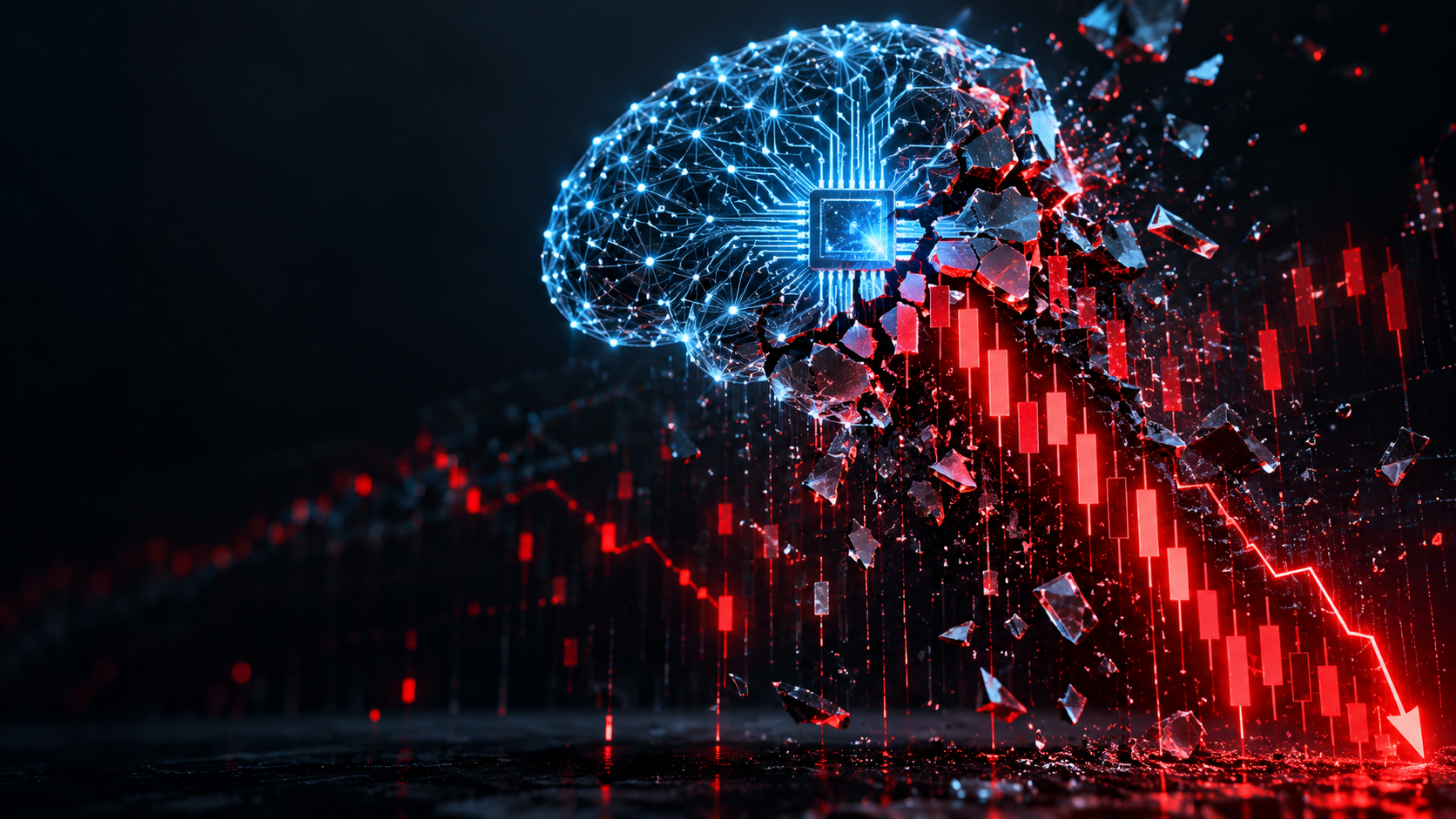
Technology and semiconductor shares fell sharply as investors questioned the debt financing the AI infrastructure boom and confronted higher rates and Chinese competition.

Elon Musk is exploring a potential merger between Tesla and SpaceX, a deal that could reshape the future of AI, robotics, autonomous vehicles and space technology. With a combined valuation potentially reaching $3.5 trillion, the move could bring Musk’s vision of an interconnected technology ecosystem closer to reality, although a deal remains uncertain.
5 min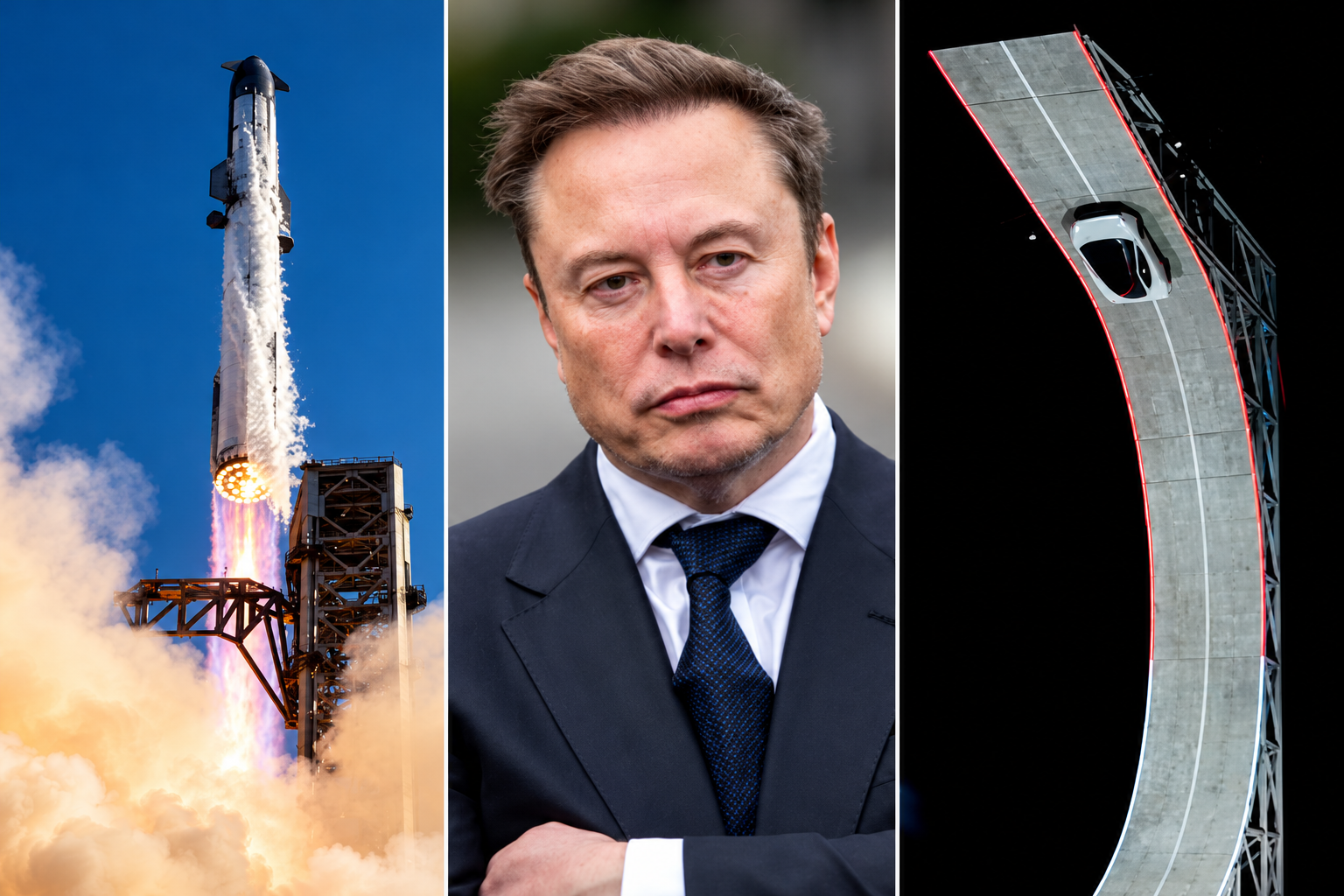
Elon Musk has engineered ties between Tesla TSLA 3.41%increase; up pointing triangle and SpaceX SPCX 7.79%increase; up pointing triangle that are hard to break, and now he wants to fuse them together permanently.
Musk has run both Tesla and SpaceX concurrently over the past two decades, using a schedule that dictated which days he spent focused on each business.
The companies have often shared resources and personnel, signaling their close ties. Last year, SpaceX looked into creating a spacesuit for Tesla’s humanoid robot Optimus, a person familiar with the matter said. Tesla last week showed off its new Roadster, a vehicle featuring SpaceX rocket thrusters that it hopes to soon bring to market.
And in recent months, Musk has repositioned both companies by expanding beyond their core operations toward a shared mission centered on artificial intelligence.
The world’s richest man on Tuesday signaled his interest in tying up SpaceX and Tesla, marking what would be the biggest corporate merger of all time. Because he serves as chief executive of SpaceX and Tesla, Musk said committees of independent directors at both companies are evaluating a possible deal, adding that a transaction might not come to fruition.
The committees will likely evaluate, with lawyers and bankers, how each company would fare in a potential deal and how a deal might best be structured. They then present their conclusions to their respective boards, who typically vote on whether to proceed.
“It’s an odd Kabuki dance where two groups of people are talking and I can’t be in the conversation,” Musk told SpaceX investors on Tuesday in response to an analyst’s question about a potential deal.
For Musk, the merger supports his vision of a world full of autonomous cars, humanoid robots and weekly rocket launches, as well as the data centers and satellites required to keep the whole thing running.
Some investors and analysts said they expect a transaction would be structured as an all-stock deal, with SpaceX potentially paying a modest premium for Tesla shares.
SpaceX, which has a market value of about $2 trillion, said it is seeing sharp growth in revenue across its businesses, which include operating data centers, launching rockets and operating satellite networks such as the internet service Starlink. Tesla is valued at about $1.5 trillion and is expanding its operations beyond its automotive and energy business. Shares in both companies traded higher following the news Tuesday.
Musk’s substantial ownership stakes in both companies, along with voting control at SpaceX, has enabled him to set the deal in motion. Analysts and investors said the deal will probably face regulatory scrutiny internationally, though some see Musk’s close relationship with the Trump administration as an asset to getting approval.
Blurred lines
The companies haven’t said which directors are on the special committees evaluating a potential deal. Several SpaceX and Tesla board members have either personal or business ties to Musk. And like Musk, venture capitalist Ira Ehrenpreis sits on both boards.
In a filing this week, Tesla outlined millions of dollars in business agreements with SpaceX and its subsidiaries last year, including $143 million in car sales to SpaceX, $3.3 million in advertising that it bought on the social-media platform X and $430 million in revenue from the sale of Megapack batteries for SpaceX’s data centers.
The companies also split the cost of resources including the use of Musk’s SpaceX jet and the bill for his personal security, which he runs through a private company.
Employees at both companies routinely move between companies to work on special projects, and some executives have dual roles, including Charles Kuehmann, vice president of materials engineering at both SpaceX and Tesla, and Ashok Elluswamy, the vice president of AI software at Tesla who runs a joint venture with SpaceX called Digital Optimus.
Over the years, Musk has launched new startups within his empire, including brain-implant company Neuralink, underground-tunnel developer the Boring Company and xAI, the AI startup that merged with SpaceX in February.
It is that AI business that Musk thinks can serve a market worth tens of trillions of dollars, justifying the need for a merger.
The business case goes like this: Tesla is developing robotaxis and robots, which it calls “physical AI.” SpaceX is working on the back end of physical AI: the data-center capacity and internet connection required for those robotaxis and robots to operate continuously.
“I don’t see what the value of Tesla is if it’s not merged with SpaceX,” said investment adviser Ross Gerber, a former Tesla bull turned critic invested in both companies. “If they don’t merge, the brains of everything that runs Tesla is owned by another company.”
On top of it all, both companies face constraints on the supply chains they need to make this world a reality, particularly when it comes to chips. To address this, Musk earlier this year announced a joint venture between Tesla, SpaceX and Intel to design and manufacture chips in Texas. “The most epic chip-building exercise by far,” he has said.
Musk at the wheel
For Musk, a merger would also solve two problems: demands on his attention and his lack of control at Tesla.
Tesla for years was Musk’s only public company, a status that came with greater scrutiny. There, Musk reports to a public board, as well as individual investors who make up around 30% of Tesla’s voting power, according to FactSet.
The question of Musk’s attention became a particular focus for investors and the board in recent years after he acquired Twitter in 2022 and launched xAI in 2023, and again in 2025 as he spent time in Washington, D.C., running the Department of Government Efficiency in the early months of President Trump’s second term.
As Tesla’s car business suffered in 2025, Musk threatened to take his AI ambitions outside the company if he wasn’t granted 25% voting control. Last November, Tesla shareholders approved a new pay package for Musk, which created a path for him to vastly expand his stake.
As of Sept. 30, Musk owned a roughly 20% stake in Tesla, according to the company’s proxy filing.
The SpaceX IPO gave Musk a different path. When SpaceX went public in June, the deal’s structure enabled him to have more than 80% voting power at the company—so much that he can’t be fired and decisions can’t be made without his support.
If SpaceX acquires Tesla, he will likely stay in control.

A haven for hedge-fund titans and Hollywood grandees, Greenwich is one of the world’s most expensive residential enclaves, where eye-watering prices meet unapologetic grandeur.
High-end homeowners are choosing to upgrade rather than relocate, investing in bespoke design, premium finishes and long-term lifestyle value.