The Wealthy Are Overpricing Their Homes. Auctions Show Just How Much.
Desperate to sell, more rich homeowners are turning to the auction market—but the results aren’t always what they bargained for

 9 min
9 min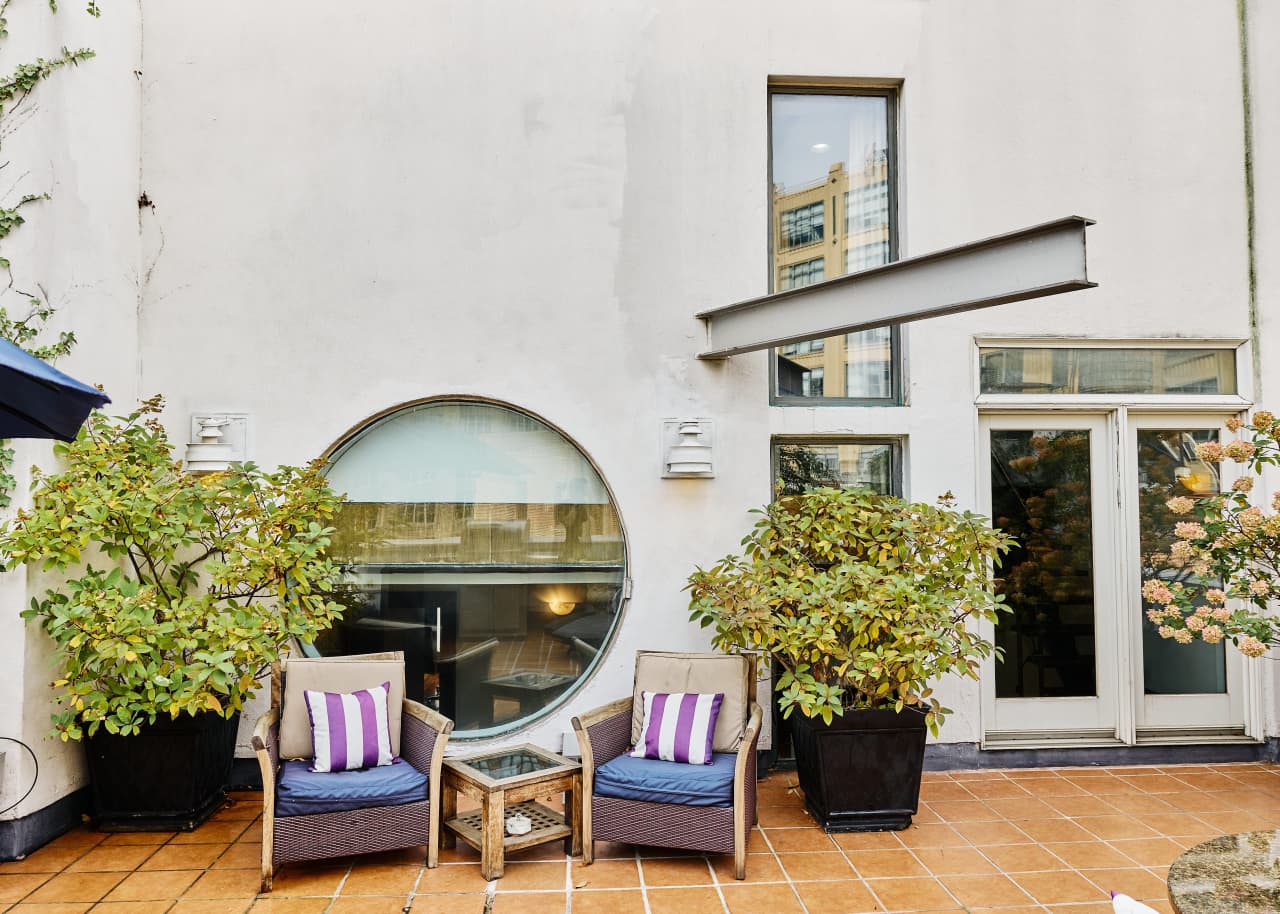
Randy and Robin Landsman had been trying to sell their Manhattan penthouse for over a year when they turned to the auction market this summer. First listed for $12.2 million, their triplex in the sought-after Tribeca neighborhood came with more than 2,000 square feet of terraces, a floating staircase and a private elevator.
At auction, the roughly 3,300-square-foot property sold for $5 million, less than half of what they had originally asked and little more than they paid for it two decades ago. “It was obviously a stupid mistake,” Randy said of deciding to auction the home.
More closely associated with pricey art or collectibles, auctions are on the rise for luxury real estate, with auction houses reporting a dramatic spike in the number of high-net-worth sellers seeking their services since 2020. Amid a slowdown in luxury home sales, auction companies are pitching homeowners on their ability to market unique properties to a range of deep-pocketed buyers beyond local markets and to sell them within a precise time frame.
Emboldened by the trophy home prices they see on television, or stuck on a major sale that happened previously in their neighbourhood or city, sellers who aggressively priced their luxury homes often have been forced to repeatedly cut their asking prices, agents said. Then, when all else fails, they turn to auction.
The increasing disconnect between what luxury homeowners think their properties are worth and what buyers are willing to pay is helping to drive up interest in auctions. But aspirational sellers are finding that auctions don’t always yield their desired outcome—and that they aren’t without risks.
La Dune, an oceanfront Hamptons estate that was listed for $150 million in 2022, sold at auction for $89 million this year. The One, a Bel-Air mega mansion once slated to list for $500 million, sold for $126 million at auction in 2022. Villa Firenze, a Los Angeles estate in the storied Beverly Park neighbourhood, sold for $51 million at auction in 2021, having been initially listed for $165 million. It has since traded hands again for $52 million.
Earlier this year, former “Real Housewives of New York City” star Sonja Morgan auctioned her Upper East Side townhouse, which had been on and off the market for more than a decade. Once listed for as high as $10.75 million, its price had been slashed more recently to $7.5 million. It fetched $4.595 million in the auction.
Misha Haghani, founder of real-estate auction house Paramount Realty USA, said he frequently counsels prospective auction clients that they have been too aggressive in their original pricing.
“I will tell the seller, ‘You’ve been on the market for X period of time at three different price points. Why hasn’t it sold? It’s obvious why. Because it’s mispriced,” he said. Almost every owner “thinks their home is better than it actually is.”
The number of luxury home sales in the U.S. declined 10.6% in the third quarter from a year earlier, according to brokerage Redfin . Despite the market slowdown, sellers have been reluctant to lower prices. Luxury home prices rose 9% in that same time to the highest third-quarter level on record, growing nearly three times faster than non luxury prices.
Since the pandemic boom, high-end properties are also taking longer to sell. On average, luxury listings spent 46 days on the market during the third quarter, up from 36 days during the same period in 2021, Redfin data show.
White Elephants
Haghani, who founded Paramount in 2009, said his company has seen a flood of interest from high-end sellers since the pandemic, 99% of it now inbound from homeowners approaching Paramount. Scott Kirk , chief executive of home-auction competitor Interluxe Auctions, founded in 2013, said business has more than doubled every year for the last three years.
Auctions tend to attract the real-estate world’s white elephants—properties that may be quirky, highly personalised or ultra luxury, resort-style homes in neighbourhoods where that type of housing is atypical.
A White House replica in the San Francisco Bay Area had been designed for the oldest son of William Randolph Hearst and included a duplicate of the Oval Office, East Room and White House Rose Garden. In Whitefish, Mont., former pro football player Drew Brees built a home that resembled a treehouse. It was perched 15 feet above the ground inside a forest. And a castle-style home owned by former baseball star Derek Jeter in New York’s Greenwood Lake area had a medieval-looking tower, rooftop battlements and a copy of the Statue of Liberty.
“The properties that we represent that do really well at auction, they’re not fungible,” said Kirk. “These properties have extremely unique attributes about them that make them very difficult to comp.”
By the time a property comes to auction, it has likely already undergone at least one price reduction, said Haghani.
“When they come to us, hopefully they’ve had some sense knocked into them,” he said of sellers. “They’re tired, they’ve had enough. They say, ‘As long as the offer is decent, as long as it’s fair, I’m going to take it even if it’s not exactly what I wanted before.’”
For many sellers, the draw of an auction is the set timeline. Where their home could linger on the market for months or years listed the traditional way, the auction template offers a sale date, as long as bids reach the minimum, if one was set. Auction companies also promise to market a property more widely than a local broker, to both a national and international audience.
In 2018, Randy Singer, a retired entrepreneur, listed the family’s historic home in the West Chop neighbourhood of Martha’s Vineyard without a real-estate agent for $16.9 million, inspired by a $17 million listing nearby. He eventually worked with at least three agents and cut the price to as low as $7.9 million in May. It has been in Singer’s family since 1949, when it was purchased by his grandfather, and needs significant updates, he said.
Now, Paramount is auctioning the property in November with a $6 million reserve price, which acts as a minimum.
“Nothing has worked,” Singer said. “We’ve been trying so long, and I need to move on with my life.”
Corporate consultant Ed Vilandrie and his wife, Martha Cavanaugh, are glad they decided to auction their 144-acre Vermont estate with Interluxe, just 45 days after listing it for $6.275 million. They had a hunch the Peacham, Vt., property would secure a better price with the broader marketing of an auction because of its unique scale for the local area. They were told that the previous owner spent upward of $18 million to construct a family compound there. The couple paid $2.2 million for it in 2011.
Located beyond the typical high-end pockets of Vermont, it might not have captured the attention of out-of-state buyers without an auction setting, they said.
After three days of bidding in October, the auction closed with a high offer of $5.88 million, including the 12% buyer’s premium that covers a commission to the auction house and fees for the agents who worked on the deal. Excluding that premium, the roughly $5.25 million deal was still well above their $3.9 million reserve price.
How it works
A number of auction companies focused on luxury homes emerged in the wake of the financial crisis and have since tried to shake the stigma that auctions are just for bankruptcy or financial distress.
Concierge Auctions, Paramount and Interluxe are now among the largest players, and some top brokerages have issued formal recommendations of auction houses to their agents as prescreened vendors. In 2021, Realogy , the parent company of Sotheby’s International Realty now known as Anywhere Real Estate, partnered with Sotheby’s art auction house to buy a majority stake in Concierge. Paramount has partnerships with Compass and Serhant. They have marketed heavily to rebrand auctions as a legitimate alternative to the traditional sales method, rather than a last-ditch option.
“There’s a lot of education that we do,” said Interluxe’s Kirk. Sellers are “appreciating and really understanding that auctions are not an admission of failure.”
The auction companies all have slightly different strategies. Paramount offers a format that calls for a transparent online auction where the bidding is visible in real time, but also offers a sealed bid process whereby prospective buyers submit their offers privately in best-and-final style. The sealed-bid process is a kind of hybrid between an auction and a traditional sale. In both instances, if an offer doesn’t meet the reserve price, the seller isn’t obligated to sell.
In the vast majority of cases, Paramount says it places a reserve price on the property. Interluxe puts reserve prices on 96% of homes, Kirk said.
Paramount takes a fixed 6% commission on any sale, and agent fees are charged on top of that. In Interluxe auctions, buyers pay the sellers a 12% buyer’s premium, which is then shared to varying degrees with the auction house and the agents. Neither company makes any money if a property doesn’t hit its reserve price.
Many sellers who have worked with Concierge say executives encouraged them to proceed without a reserve price in order to maximise interest and momentum. Whether there’s a reserve price or not, Concierge takes a 12% to 15% buyer’s premium as a commission, plus there are agent fees. It markets the property heavily before the auction, and tries to generate early offers by offering prospective buyers a “starting bid incentive,” or 50% discount on the buyer’s premium if they submit a winning bid before the start of the auction.
Not every auction ends in a sale.
A few years ago, former Yankees player Derek Jeter’s home in Greenwood Lake, N.Y., failed to sell at auction after bids fell short of the $6.5 million reserve price. The property—with a roughly 12,500-square-foot residence—initially hit the market asking $14.75 million in 2018. Haghani, whose firm handled the auction, said he felt the reserve price was a “very tall order” for the area, even with extensive marketing and press coverage.
The home eventually sold in July for $5.1 million.
Some sellers see the writing on the wall and never go through with the auction at all.
Concierge, for example, holds a “green-light call” before the auction with sellers who forgo a reserve price. The call typically takes place after a two-week marketing blitz when prospective buyers are enticed to make early bids. During the call, sellers give a final OK for the auction to proceed or exercise their right to cancel.
Real-estate agent Kylie McCollough of Mott & Chace Sotheby’s International Realty said one of her clients, the owner of an 8,000-square-foot penthouse listed for $5.9 million, considered an auction last year because the unit was unusually large for the Portsmouth, R.I., area. The homeowner pulled the plug on the auction with Concierge after early bids came in between $2 million and $3 million. “The risk is, that could be as high as it goes,” she said. “Our client did not want to take the risk.”
After canceling the auction, the property sold for $4.5 million about six months later.
The owner of the White House replica in the Bay Area canceled its auction with Concierge in June when early bids fell short of his expectations, said listing agent Alex Buljan of Compass. The roughly 24,400-square-foot mansion in Hillsborough, Calif., originally listed for $38.9 million, was priced at $36.9 million at the time, with expected starting bids in the $10 million to $17 million range. The property just sold for $23 million.
Brees’s treehouse auction was also canceled, according to listing agent Sean Averill of PureWest Christie’s International Real Estate.
‘Vomited and Blacked Out’
Pricing a multimillion-dollar home can be more of an art than a science. In August, 49% of luxury homes sold below their initial asking price with an average discount of 9%, according to Zillow.
In an auction, it’s even more common. A Wall Street Journal analysis of properties handled by Concierge, which calls itself the world’s largest auction house for luxury real estate, found that a majority of home auctions sell below list price.
The average discount was 46% for 51 home auctions last year, according to the Journal’s analysis of Concierge’s publicized sales. The analysis only included U.S. sales that closed and where recorded prices were publicly available. This year, 39 closings through Sept. 18 had an average discount of 41%, the Journal found.
An analysis of Interluxe auctions, based on a list of sales the company provided, shows seven publicly recorded closings in 2023 with an average discount of about 26%. Through Sept. 18 of this year, it had four closings with an average discount of about 21%. The analysis only included sales that closed and where recorded prices were publicly available.
Paramount declined to provide its statistics, saying they weren’t readily available.
Concierge declined to comment for this article beyond a statement saying it stands by its results. “We specialise in high-value properties that are challenging to price and often require multiple years to sell. Our transparent platform determines market value through competitive bidding, with final sale prices representing the market price in a 60-day process resulting in a compelling value proposition for our sellers,” a company spokeswoman said.
Rather than listing their East Hampton estate, financial-services executive Erik Stern and his wife, Michelle Stern, went straight to auction. They said they were referred to Concierge by Charles Stewart , the CEO of Concierge’s part-owner Sotheby’s, who had been renting their property.
“It’s almost like a stock market, where you’ve got buyers and sellers and they come to the market price,” Erik said. “So I thought this actually sounds much more reasonable to me than just putting it on [the market] and seeing what happens.”
He said they expected that the house, a modernist property designed by architect Norman Jaffe, was worth around $20 million or more, based on the 3-acre parcel of land alone. The Sterns said Concierge representatives didn’t want to put a reserve price on the property because they believed it would stifle momentum, but the couple were assured there was a high level of interest.
“There was all this talk about, ‘You know, we’ve got people flying in from Switzerland to see your home, people from all over the U.S., a lot of Texans,’” said Michelle.
The auction ended in minutes and closed at $15 million, far less than the Sterns had expected.
“I think I vomited and blacked out,” Michelle said. The Sterns were offered $100,000 by Concierge to settle their claims that Concierge had misled them; the settlement agreement contained a confidentiality provision that would have prevented the Sterns from speaking negatively about Concierge. They declined.
The Landsmans, owners of the Tribeca penthouse, also hadn’t set a reserve price. They said they agreed to go ahead with their auction after representatives from Concierge predicted a “very active” auction and told them seven bidders had registered to participate.
Much of the couple’s retirement nest egg was tied up in the property, located in an 1800-era building, said Randy Landsman, who is the CEO of a financial-advisory firm.
“They told us it’s going to be a lot of activity. They told us they were speaking to their bidders frequently,” Randy said.
Once the auction began, none of the registered bidders submitted new bids. The property sold by default for the highest pre-bid of $5 million. Having agreed not to place a reserve price on the apartment, they were forced to accept the bid.
“They called a meeting right after the auction was over, and they said, ‘Sorry it didn’t work out,’” said Randy.
The deal fell apart soon after; the buyer pulled the plug after the Landsmans failed to close by the agreed-upon date, the Landsmans said. The couple said they have since been served with a letter for arbitration by Concierge, which says it’s still due its commission.
 Copyright 2020, Dow Jones & Company, Inc. All Rights Reserved Worldwide. LEARN MORE





From making unpopular decisions to learning when to listen, leaders from five businesses reveal what nobody prepared them for — and how running a company has challenged their expectations.

Technology and semiconductor shares fell sharply as investors questioned the debt financing the AI infrastructure boom and confronted higher rates and Chinese competition.

Mirvac’s 45-level Trielle has topped out at Yarra’s Edge, pairing riverfront apartments with wellness facilities, private dining and resident services.
3 min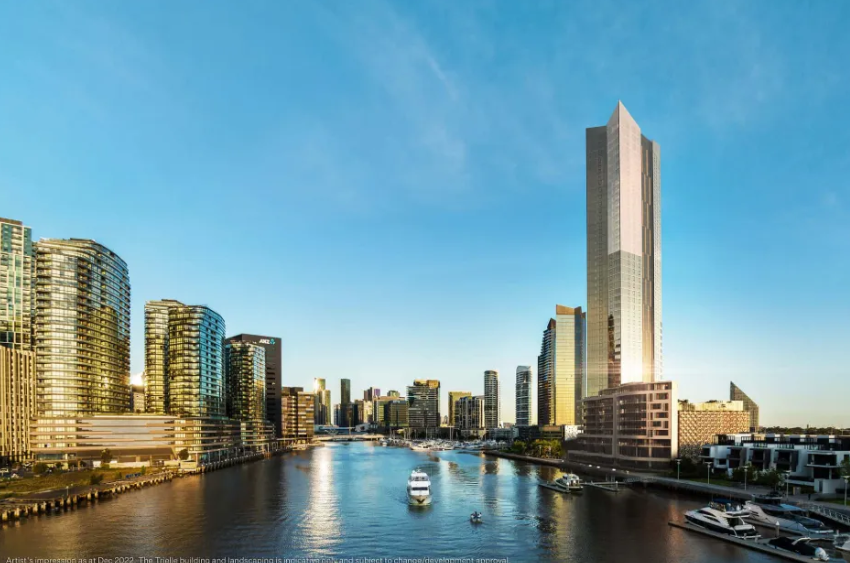
Mirvac has topped out Trielle at Melbourne’s Yarra’s Edge, with more than 70 per cent of the riverfront development sold and approximately 80 per cent of purchasers intending to make their apartment a home.
The figures, released on September 22, point to an owner-occupier audience for one of the precinct’s final residential towers. Mirvac began developing Yarra’s Edge in 2003, and its latest addition occupies one of the remaining absolute riverfront sites.
Mirvac CEO of Development Stuart Penklis said existing residents were among those moving up within the neighbourhood.
“Many purchasers already have a connection to Yarra’s Edge,” Mr Penklis said, describing buyers whose changing needs were encouraging an upgrade within the precinct.
“As one of the final residential towers within Yarra’s Edge, Trielle represents the culmination of more than two decades of creating one of Melbourne’s most established and sought-after waterfront communities,” Penklis said.
“Positioned on the Collins Street axis with absolute river frontage, Trielle offers residents a rare opportunity to enjoy sweeping views across the Yarra River, Melbourne skyline and Port Phillip Bay, while remaining seamlessly connected to the CBD. With Trielle now more than 70 per cent sold, we’re continuing to see strong demand from buyers seeking quality homes in established locations.”
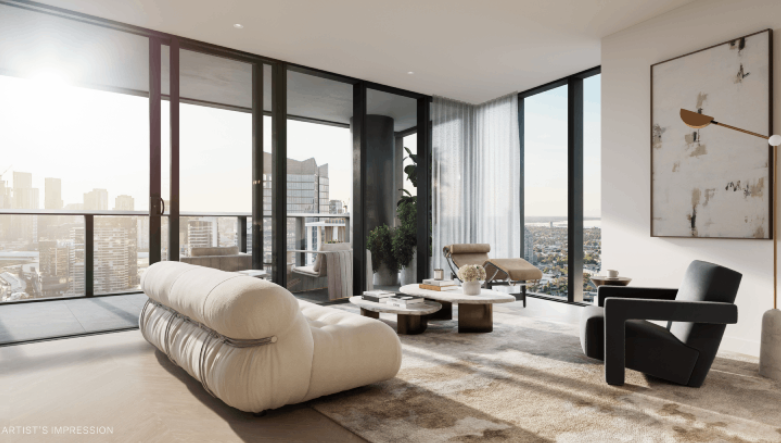
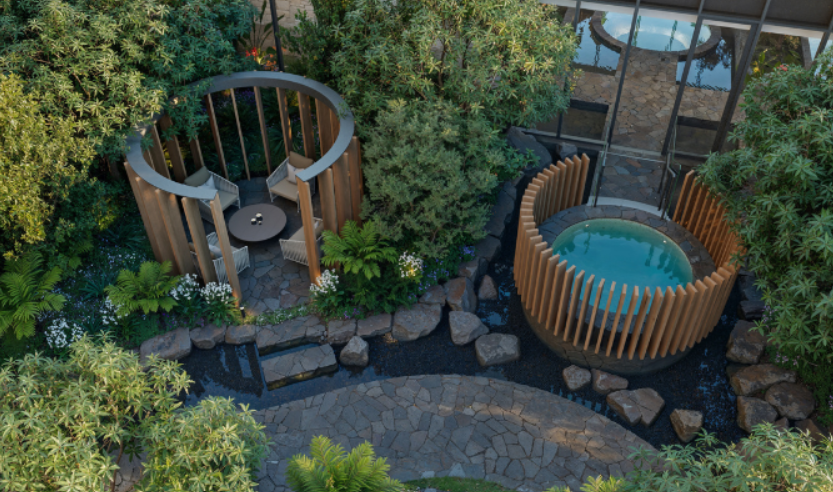
The developer also flagged a penthouse and sub-penthouse collection with larger layouts, premium finishes and broad outlooks. The planned wellness centrepiece, The Oasis, encompasses a 900-square-metre elevated urban rainforest.
Mirvac General Manager Residential Development Victoria Elysa Anderson said Trielle had resonated strongly with buyers seeking a rare lifestyle offering in Melbourne.
“Opportunities to secure a new luxury residence on a riverfront site of this calibre are incredibly rare, particularly within a community like Yarra’s Edge,” Anderson said.
“What makes Trielle unique is the combination of exceptional views, world-class residential facilities and the lifestyle that already exists around it. Residents are buying into a mature waterfront community with parks, promenades, dining, wellness and strong community connections already in place.”
The 45-level tower brings a substantial new presence to that waterfront. Its residential offering spans one-, two-, three- and four-bedroom apartments, with Signature, Prestige and Sub-Penthouse collections accommodating different household sizes. The north-facing position connects the apartments visually to the river and city beyond.
Seven storeys above the promenade, the planned Oasis combines planting and a running stream with a Scandinavian-inspired wellness club developed with spa specialist Naomi Gregory. Facilities include a 25-metre lap pool, hot magnesium pool, sauna, hydrotherapy, a gym, yoga and Pilates room, and treatment spaces.
The amenity extends beyond exercise. Residents will have access to The Biblioteca library and workspaces, ground-floor work pods, and The Salone piano lounge. A private Chef’s Table dining room offers a setting for larger gatherings, while a cinema, games room and sports lounge broaden the entertaining options. Concierge services and a dog-wash area support everyday routines.
Trielle comprises a collection of one, two, three and four-bedroom residences. Reflecting strong demand from owner occupiers, approximately 80 per cent of purchasers to date intend to live in their homes, highlighting the project’s appeal to those seeking a long-term waterfront lifestyle.
Mirvac has recently delivered The Albertine, a premium apartment development on the edge of Melbourne’s CBD, and is nearing completion of Prince & Parade in Brunswick, further strengthening its portfolio of thoughtfully designed apartment communities in some of Melbourne’s most sought-after urban locations.
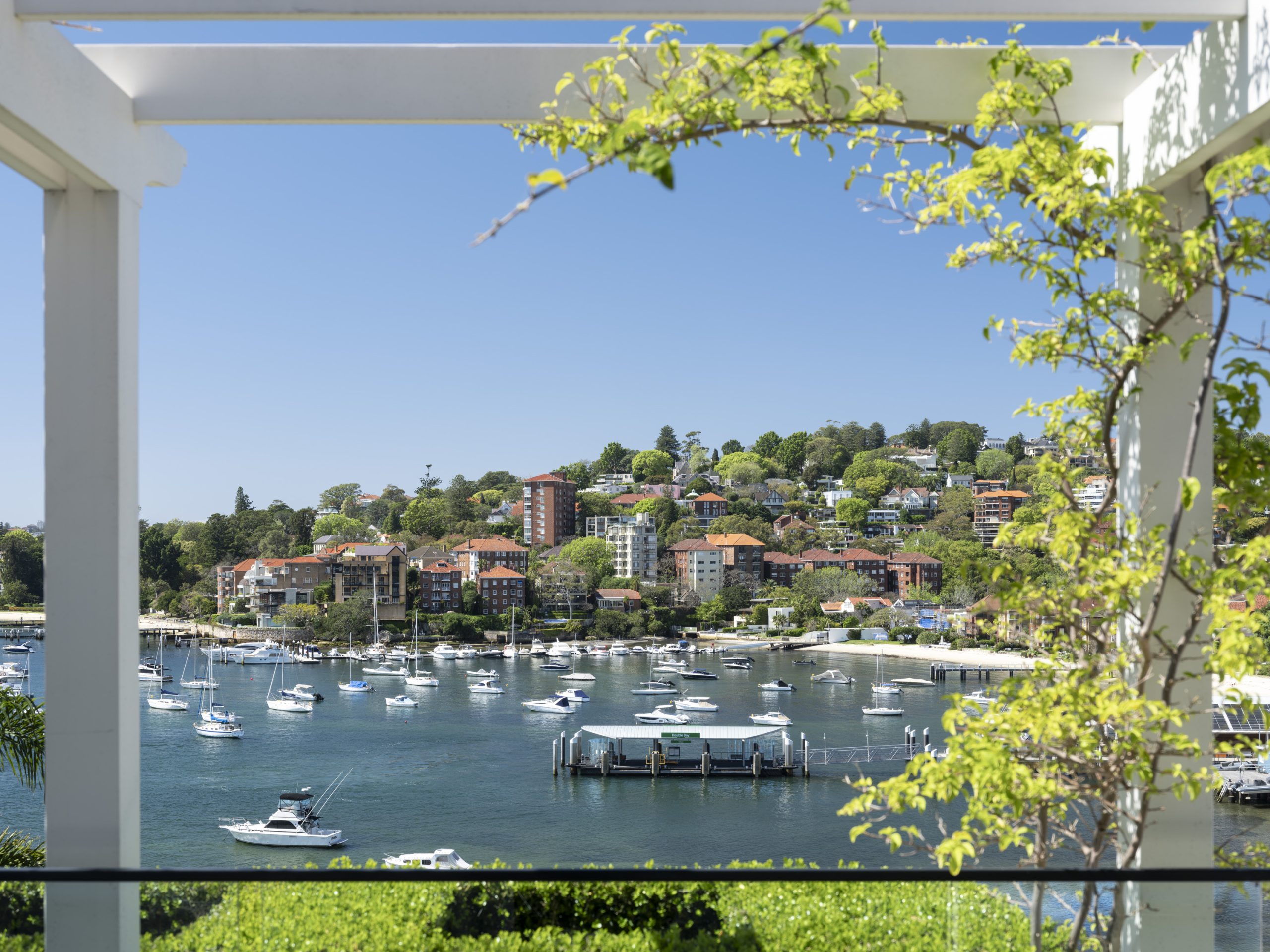
The grand harbourside residence combines sweeping Sydney Heads views, resort-style entertaining and refined designer finishes with a reported $36 million price guide.
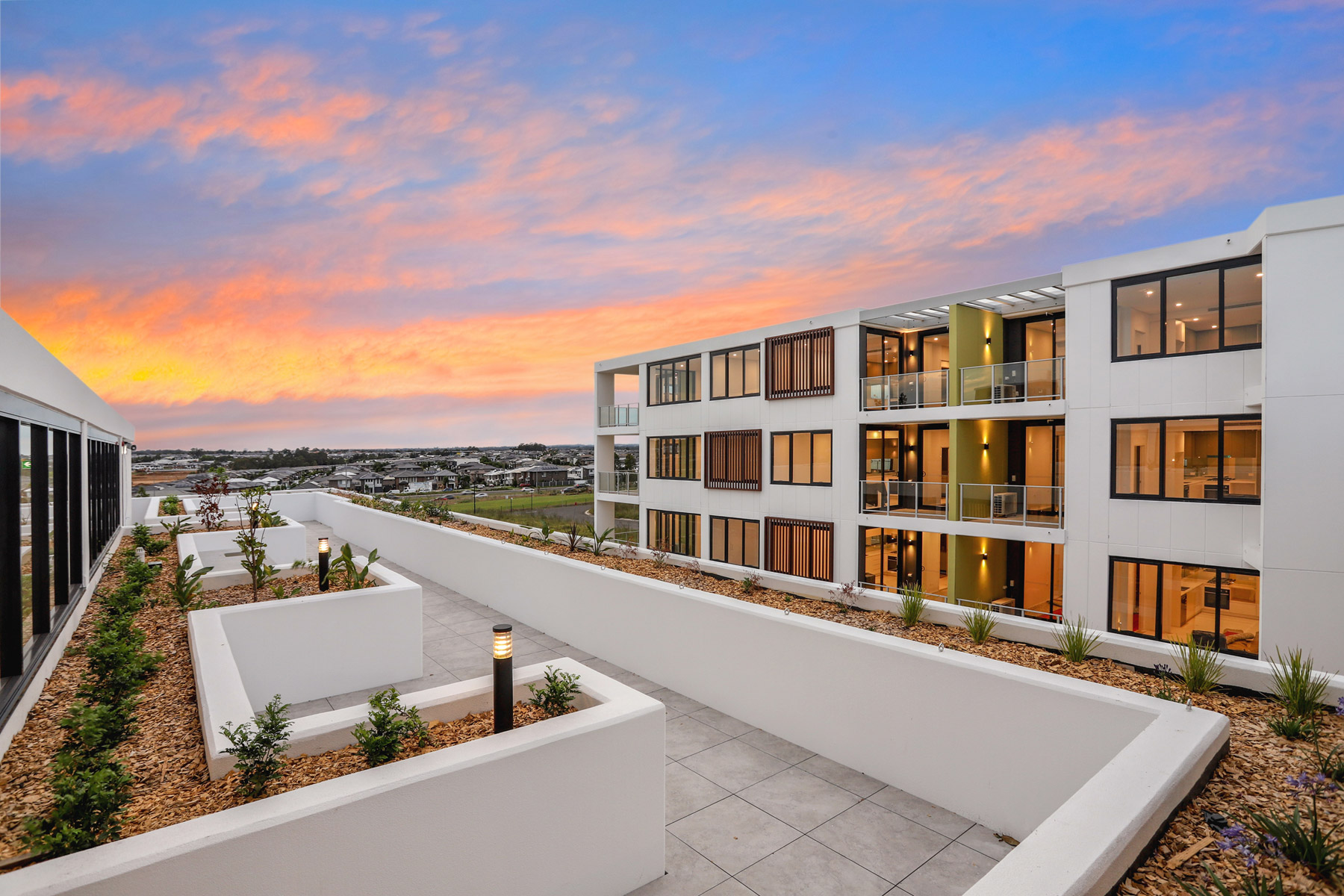
Ophora Tallawong has launched its final release of quality apartments priced under $700,000.