Winter property market warms up as buyers and sellers come out to play
Buyer demand remains strong leading into busy Spring season
 2 min
2 min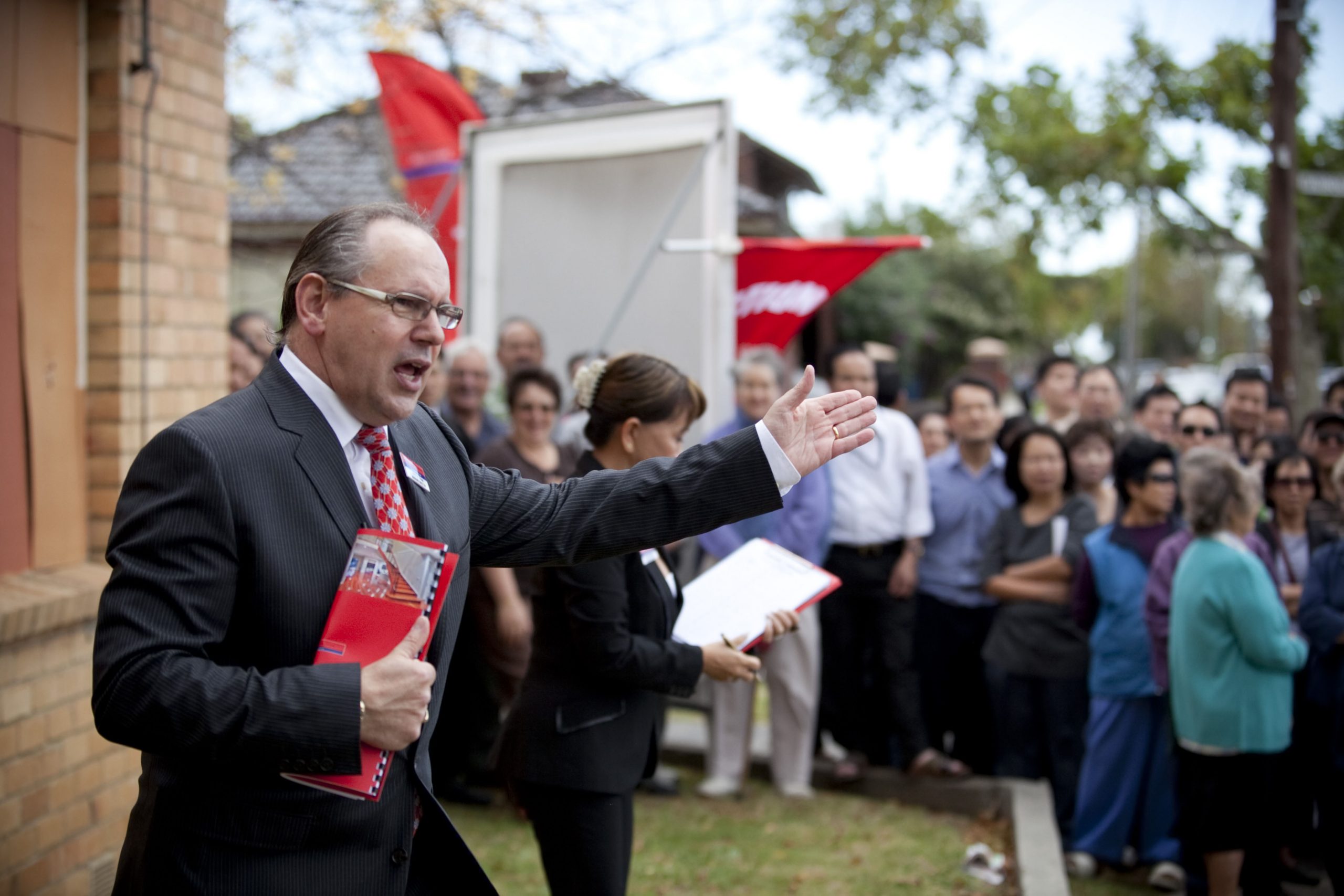
Traditional market trends were turned on their head this winter, with new data from PropTrack showing listings and sales in July were higher than last year and buyer enquiry remained strong. REA senior data analyst Karen Dellow said the market has been buoyant during the colder months, with sales in July 19 percent higher than last year and 16 percent higher than the five-year average.
“In contrast to 2022 and 2023, where sales dropped month-on-month from June to July, this year recorded a 10 percent uptick, which is highly unusual for this period,” Ms Dellow said. “Cities like Hobart, Brisbane, Adelaide, and regions like the ACT have experienced robust growth compared to last year, while Melbourne, Sydney, and Perth had moderate increases.”
Ms Dellow said the increase in sales was partly the result of an increase in listings, which is also unusual for winter given most people prefer to sell in Spring. In July, there were 12 percent more new listings on realestate.com.au than last year. Across the combined capital cities, there was a 14.4 percent increase while regional Australia saw a 7.9 percent uplift.
The hottest property market in the country, Perth, recorded the highest increase in new listings in July, up 16.5 percent. “Despite a significant housing shortage exacerbated by high demand, new listings are quickly snapped up, with total listings in Perth down by 20.2 percent compared to last year,” Ms Dellow said. “All other cities except Darwin had an increase in new listings in July and experienced year-on-year growth.”
Data also indicates continued strong buyer demand in Winter, with each listing on realestate.com.au attracting an average of 10 buyer enquiries in July, Ms Dellow said.
“This is equal to July 2023 and slightly higher than 2022. Given the increase in listings in July 2024, overall activity was higher. Adelaide and Brisbane lead in enquiries per listing, with 23 and 22 enquiries, respectively.”
Bucking the trend is Melbourne with eight buyer enquiries per listing in July, down 16 percent compared to 2023. “Despite increased listings in Melbourne, fewer buyers are in the market compared to other cities, as the city grapples with the highest property taxes in the country and a slower return in investors compared to the other states,” Ms Dellow said.
“A busy winter bodes well for the spring selling season … and with expectations of no further interest rate rises this year, buyers are likely to be out in force and remain active throughout the remainder of the year.”
Spring is typically the strongest selling season of the year in Australian real estate. CoreLogic data shows that over the past decade, new listings have increased by an average of 18.2 percent in Spring and sales have lifted by an average of 8.3 percent.
CoreLogic head of research, Eliza Owen, said: “Looking at spring of 2024, it is possible we could see demand come under pressure from a continuation of high interest rates, slowing economic conditions and low consumer sentiment, and sellers may struggle in two of the state capitals in particular.” Those two capital cities are Melbourne and Hobart, with Ms Owen describing them as fairly flat or falling markets at the moment. Conversely, Perth and Adelaide are particularly strong.
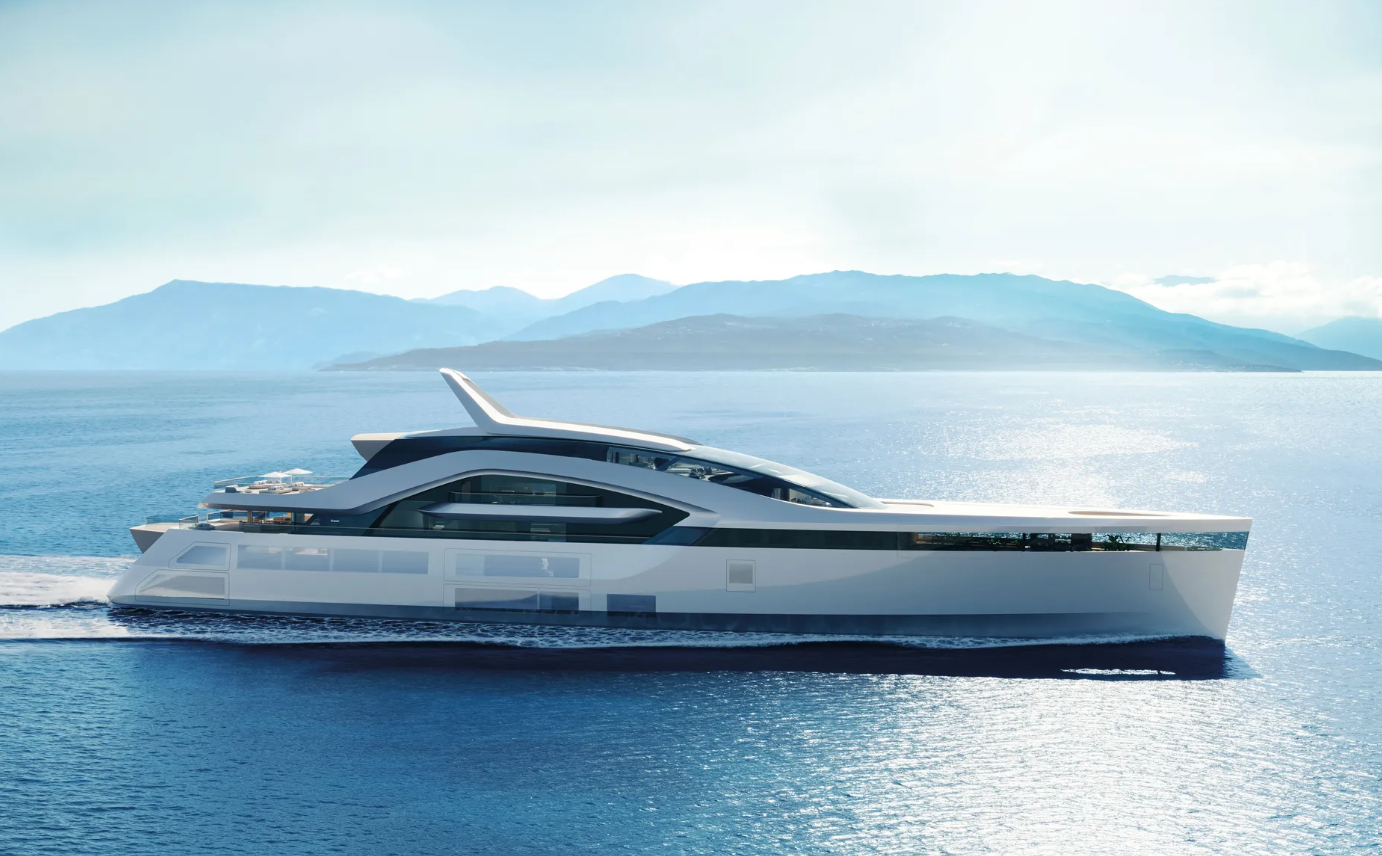
On the owner’s deck, a 20-metre swimming pool incorporates Feadship’s patented ContraWave technology and extends indoors as a suspended, glass-bottomed infinity pool.

Automobili Lamborghini is turning its attention to something considerably more difficult to define: what makes Italian excellence uniquely Italian?
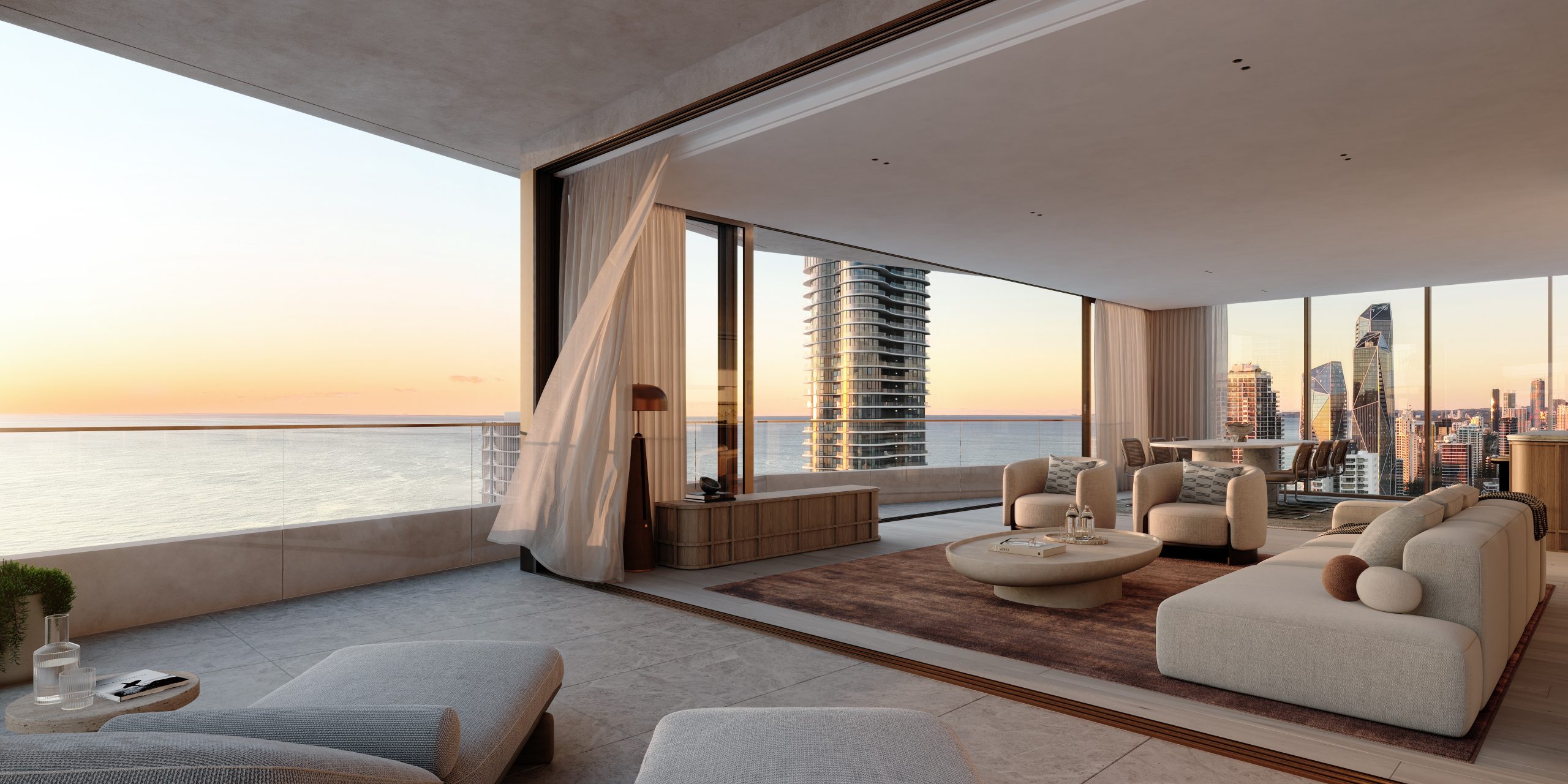
Mirvac’s 45-level Trielle has topped out at Yarra’s Edge, pairing riverfront apartments with wellness facilities, private dining and resident services.
3 min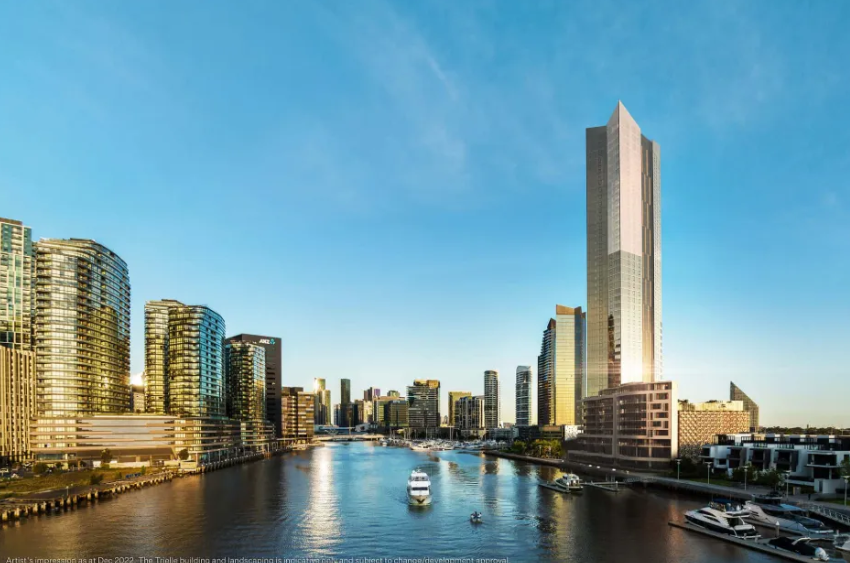
Mirvac has topped out Trielle at Melbourne’s Yarra’s Edge, with more than 70 per cent of the riverfront development sold and approximately 80 per cent of purchasers intending to make their apartment a home.
The figures, released on September 22, point to an owner-occupier audience for one of the precinct’s final residential towers. Mirvac began developing Yarra’s Edge in 2003, and its latest addition occupies one of the remaining absolute riverfront sites.
Mirvac CEO of Development Stuart Penklis said existing residents were among those moving up within the neighbourhood.
“Many purchasers already have a connection to Yarra’s Edge,” Mr Penklis said, describing buyers whose changing needs were encouraging an upgrade within the precinct.
“As one of the final residential towers within Yarra’s Edge, Trielle represents the culmination of more than two decades of creating one of Melbourne’s most established and sought-after waterfront communities,” Penklis said.
“Positioned on the Collins Street axis with absolute river frontage, Trielle offers residents a rare opportunity to enjoy sweeping views across the Yarra River, Melbourne skyline and Port Phillip Bay, while remaining seamlessly connected to the CBD. With Trielle now more than 70 per cent sold, we’re continuing to see strong demand from buyers seeking quality homes in established locations.”
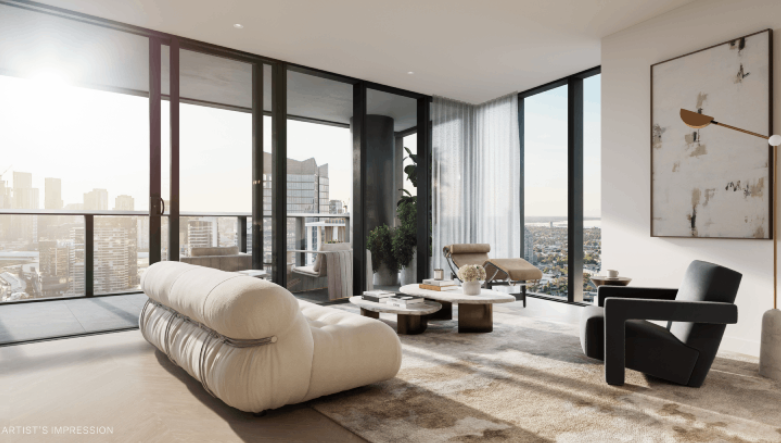
The developer also flagged a penthouse and sub-penthouse collection with larger layouts, premium finishes and broad outlooks. The planned wellness centrepiece, The Oasis, encompasses a 900-square-metre elevated urban rainforest.
Mirvac General Manager Residential Development Victoria Elysa Anderson said Trielle had resonated strongly with buyers seeking a rare lifestyle offering in Melbourne.
“Opportunities to secure a new luxury residence on a riverfront site of this calibre are incredibly rare, particularly within a community like Yarra’s Edge,” Anderson said.
“What makes Trielle unique is the combination of exceptional views, world-class residential facilities and the lifestyle that already exists around it. Residents are buying into a mature waterfront community with parks, promenades, dining, wellness and strong community connections already in place.”
The 45-level tower brings a substantial new presence to that waterfront. Its residential offering spans one-, two-, three- and four-bedroom apartments, with Signature, Prestige and Sub-Penthouse collections accommodating different household sizes. The north-facing position connects the apartments visually to the river and city beyond.
Seven storeys above the promenade, the planned Oasis combines planting and a running stream with a Scandinavian-inspired wellness club developed with spa specialist Naomi Gregory. Facilities include a 25-metre lap pool, hot magnesium pool, sauna, hydrotherapy, a gym, yoga and Pilates room, and treatment spaces.
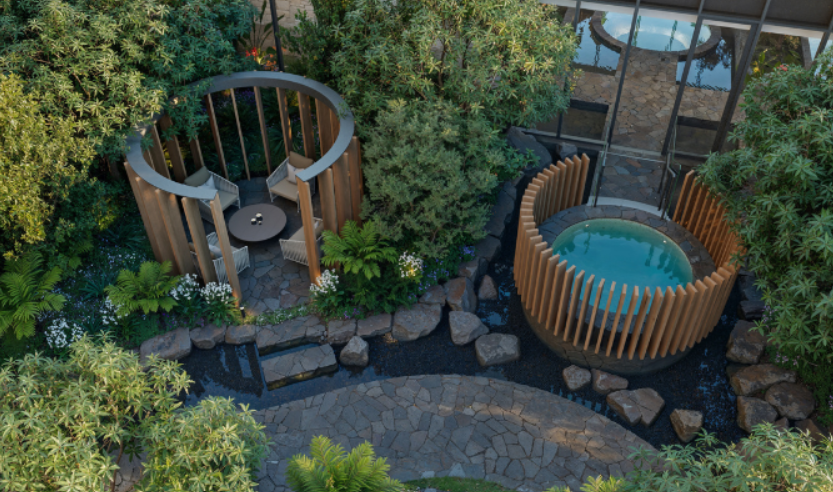
The amenity extends beyond exercise. Residents will have access to The Biblioteca library and workspaces, ground-floor work pods, and The Salone piano lounge. A private Chef’s Table dining room offers a setting for larger gatherings, while a cinema, games room and sports lounge broaden the entertaining options. Concierge services and a dog-wash area support everyday routines.
Trielle comprises a collection of one, two, three and four-bedroom residences. Reflecting strong demand from owner occupiers, approximately 80 per cent of purchasers to date intend to live in their homes, highlighting the project’s appeal to those seeking a long-term waterfront lifestyle.
Mirvac has recently delivered The Albertine, a premium apartment development on the edge of Melbourne’s CBD, and is nearing completion of Prince & Parade in Brunswick, further strengthening its portfolio of thoughtfully designed apartment communities in some of Melbourne’s most sought-after urban locations.

From gorilla encounters in Uganda to a reimagined Okavango retreat, Abercrombie & Kent elevates its African journeys with two spectacular lodge transformations.

Margot Robbie and Jacob Elordi star in an adaptation of the classic novel that respects the romance’s slow burn.