

Fashion’s Boring-and-Expensive Era Is Over
From Gucci to Valentino, designers have a new ethos: Fun

 3 min
Not long ago, designer Jonathan Anderson attended a music festival where he surveyed the crowd and thought, Now this is where all the fashion has been lurking.
“I saw more people dressing more in high fashion than actually what was happening in fashion,” said Anderson , who designs the British clothing brand JW Anderson, as well as LVMH’s Loewe.
The free expression of these festival goers stuck with Anderson as it clashed with the risk-shy attitude that has guided much of luxury fashion in recent years. “I wonder,” said Anderson this past weekend in Milan, “has fashion become so conservative whereas what’s happening out there is actually way more avant-garde?”
Just a couple of years ago in Milan, “quiet luxury ” was on the tip of everyone’s tongue. This collocation was a simplistic shorthand for where fashion was going: pricey but prim; light on logos but heavy on the wallet; all cashmere everything in grey, beige, navy.
Fashion is a creative industry and designers can only cup their mouths for so long. At the latest edition of Milan men’s fashion week, shouts in the form of new, notice-me clothes broke out from the runways.
“People want uniqueness, maybe they want something which is challenging somehow,” said Anderson, speaking after the latest JW Anderson show, which was widely held up as the most successful collection of a muddled Milanese sprint.
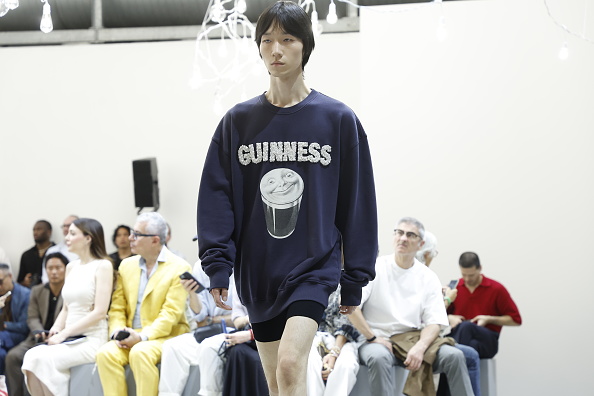
Highlights included winsome cardigans with children’s book depictions of London terrace houses, leather jackets contorted by ski-slope-like hems and a kitschy sweater showing a smirking pint of Guinness—an upmarket riff on a Dublin tourist souvenir.
The day after Anderson’s show, came the surprise online release of a bulging 171-outfit lookbook from Valentino, the first stab from the label’s new creative director Alessandro Michele, who helped lift Gucci to a more than $10-billion brand before leaving in 2022.
At Gucci, Michele ushered in a maximalist fashion moment, and based on this initial showing, his taste for theatrics is intact. Against a backdrop of winter-mint curtains, feather-haired models (often wearing gigundo nerd glasses and hoops of pearls) sported floppy dog-ear ties, Kermit-green suits and tapestry prints. Flipping through the collection, all the tired but fitting Michele comparisons came rushing back: Wes Anderson films, kooky grandmothers and leopard-clad psych-rock bands.
Valentino, which is part-owned by Kering, also made its commercial intentions clear by sending out 93 close-up photos spotlighting easy-to-buy accessories like V-logoed sandals and rectangular handbags.
Notably, Sabato de Sarno, the still newish creative director who replaced Michele at Gucci, seemed to be shrugging off his own restraints. Neither De Sarno nor François-Henri Pinault, CEO of Gucci parent company Kering, spoke to the press after the show, but the collection was a departure from the brand’s recent strategy of focusing on classic, trend-agnostic pieces that cater to older, wealthier clients.

De Sarno’s surf-inspired offering bounded between skin-revealing mesh polo shirts, skimpy thigh-high shorts and camp-collared shirts with blooming hibiscus flowers prints. It would be hard to imagine much of it on anyone over 29. (Actor Paul Mescal, 28, was already in the front row in a pair of those shorty shorts.)
Youthful abandon was the theme at Gucci’s mightiest Milanese competitor, Prada. “Sometimes when you get older you start to overthink a lot and you limit yourself,” said Raf Simons , who is co-creative of the brand with Miuccia Prada , the grand doyenne of Italian fashion. “When you are young, you just go. We like that spirit.”
Models wore navel-exposing shrunken sweaters and pre-wrinkled sportcoats, a seeming nod to teens who haven’t yet learned the wonders of ironing. A lurid palette of hot pink and electric blue spoke to juvenile fashion experimentation.
Throughout the long weekend in Milan, the feeling settled in that this new, shoutier tone was a necessary course correction during an unsteady period for the apparel industry, and really, Europe at large.
The chatter of the front row centred on this month’s European Union elections which saw a surge in support for right-wing candidates, catching pundits and leaders like French President Emmanuel Macron by surprise. Inflation also remains stubbornly high.
Pressingly, for the fashion world, some of the world’s largest luxury labels have been reporting a glut of unsold products and a dearth of shoppers. Past strategies don’t seem to be working and one could tell that brands were ready to try anything to spur shoppers to spend a bit more.
Even at Zegna, a label so synonymous with quiet luxury that the cast of “Succession” wore it on that money-mad show, the clothes were more conspicuous. In between its Learjet-bound sotto voce suits, one found vivacious coral patterned jackets in blue and yellow.
“For sure playing more with colours and prints, we had fun,” said Zegna’s artistic director Alessandro Sartori following his show. “It’s a sense of freedom that I wanted to express.”
 Copyright 2020, Dow Jones & Company, Inc. All Rights Reserved Worldwide. LEARN MORE


From making unpopular decisions to learning when to listen, leaders from five businesses reveal what nobody prepared them for — and how running a company has challenged their expectations.
Technology and semiconductor shares fell sharply as investors questioned the debt financing the AI infrastructure boom and confronted higher rates and Chinese competition.
Elon Musk is exploring a potential merger between Tesla and SpaceX, a deal that could reshape the future of AI, robotics, autonomous vehicles and space technology. With a combined valuation potentially reaching $3.5 trillion, the move could bring Musk’s vision of an interconnected technology ecosystem closer to reality, although a deal remains uncertain.
5 min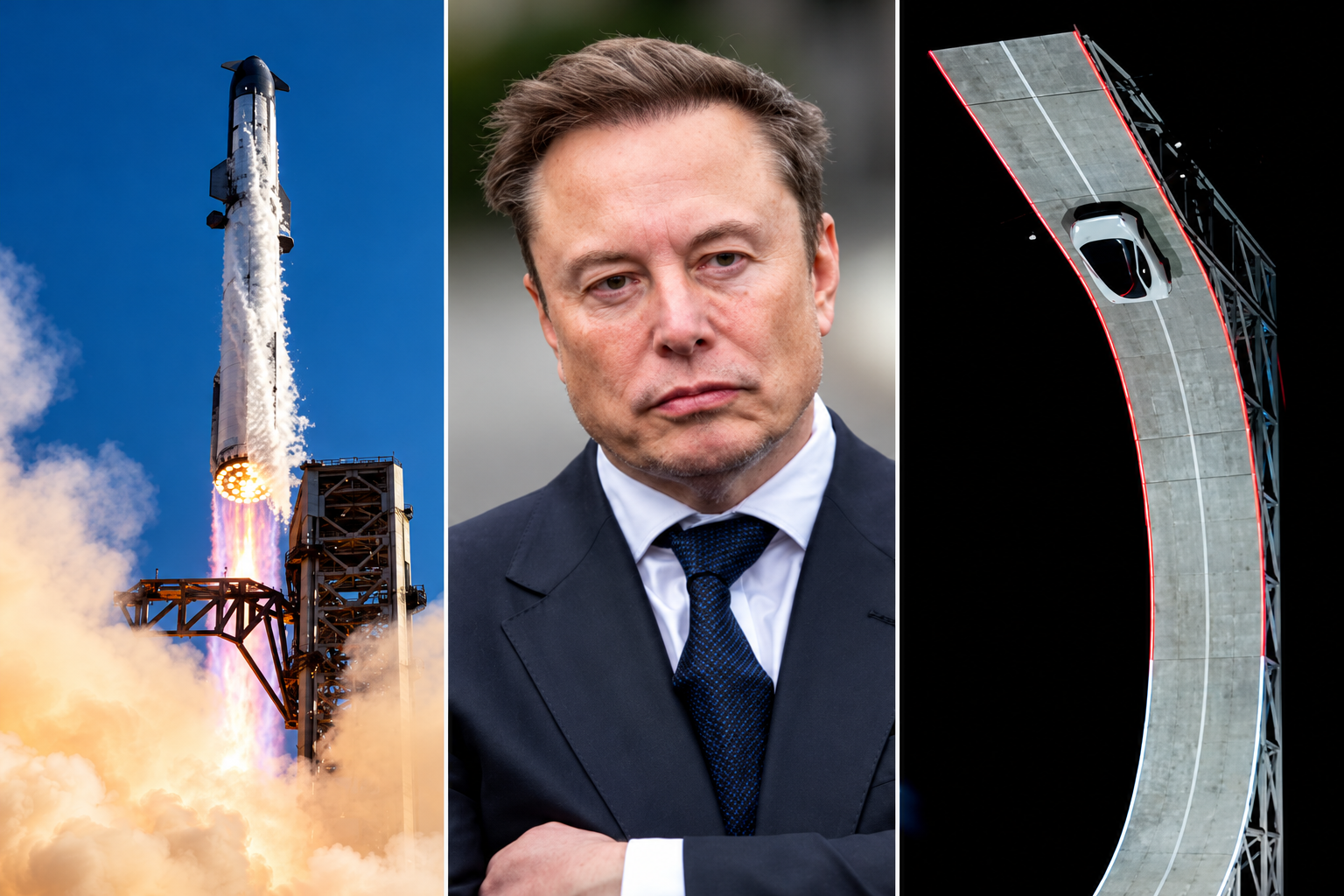
Elon Musk has engineered ties between Tesla TSLA 3.41%increase; up pointing triangle and SpaceX SPCX 7.79%increase; up pointing triangle that are hard to break, and now he wants to fuse them together permanently.
Musk has run both Tesla and SpaceX concurrently over the past two decades, using a schedule that dictated which days he spent focused on each business.
The companies have often shared resources and personnel, signaling their close ties. Last year, SpaceX looked into creating a spacesuit for Tesla’s humanoid robot Optimus, a person familiar with the matter said. Tesla last week showed off its new Roadster, a vehicle featuring SpaceX rocket thrusters that it hopes to soon bring to market.
And in recent months, Musk has repositioned both companies by expanding beyond their core operations toward a shared mission centered on artificial intelligence.
The world’s richest man on Tuesday signaled his interest in tying up SpaceX and Tesla, marking what would be the biggest corporate merger of all time. Because he serves as chief executive of SpaceX and Tesla, Musk said committees of independent directors at both companies are evaluating a possible deal, adding that a transaction might not come to fruition.
The committees will likely evaluate, with lawyers and bankers, how each company would fare in a potential deal and how a deal might best be structured. They then present their conclusions to their respective boards, who typically vote on whether to proceed.
“It’s an odd Kabuki dance where two groups of people are talking and I can’t be in the conversation,” Musk told SpaceX investors on Tuesday in response to an analyst’s question about a potential deal.
For Musk, the merger supports his vision of a world full of autonomous cars, humanoid robots and weekly rocket launches, as well as the data centers and satellites required to keep the whole thing running.
Some investors and analysts said they expect a transaction would be structured as an all-stock deal, with SpaceX potentially paying a modest premium for Tesla shares.
SpaceX, which has a market value of about $2 trillion, said it is seeing sharp growth in revenue across its businesses, which include operating data centers, launching rockets and operating satellite networks such as the internet service Starlink. Tesla is valued at about $1.5 trillion and is expanding its operations beyond its automotive and energy business. Shares in both companies traded higher following the news Tuesday.
Musk’s substantial ownership stakes in both companies, along with voting control at SpaceX, has enabled him to set the deal in motion. Analysts and investors said the deal will probably face regulatory scrutiny internationally, though some see Musk’s close relationship with the Trump administration as an asset to getting approval.
Blurred lines
The companies haven’t said which directors are on the special committees evaluating a potential deal. Several SpaceX and Tesla board members have either personal or business ties to Musk. And like Musk, venture capitalist Ira Ehrenpreis sits on both boards.
In a filing this week, Tesla outlined millions of dollars in business agreements with SpaceX and its subsidiaries last year, including $143 million in car sales to SpaceX, $3.3 million in advertising that it bought on the social-media platform X and $430 million in revenue from the sale of Megapack batteries for SpaceX’s data centers.
The companies also split the cost of resources including the use of Musk’s SpaceX jet and the bill for his personal security, which he runs through a private company.
Employees at both companies routinely move between companies to work on special projects, and some executives have dual roles, including Charles Kuehmann, vice president of materials engineering at both SpaceX and Tesla, and Ashok Elluswamy, the vice president of AI software at Tesla who runs a joint venture with SpaceX called Digital Optimus.
Over the years, Musk has launched new startups within his empire, including brain-implant company Neuralink, underground-tunnel developer the Boring Company and xAI, the AI startup that merged with SpaceX in February.
It is that AI business that Musk thinks can serve a market worth tens of trillions of dollars, justifying the need for a merger.
The business case goes like this: Tesla is developing robotaxis and robots, which it calls “physical AI.” SpaceX is working on the back end of physical AI: the data-center capacity and internet connection required for those robotaxis and robots to operate continuously.
“I don’t see what the value of Tesla is if it’s not merged with SpaceX,” said investment adviser Ross Gerber, a former Tesla bull turned critic invested in both companies. “If they don’t merge, the brains of everything that runs Tesla is owned by another company.”
On top of it all, both companies face constraints on the supply chains they need to make this world a reality, particularly when it comes to chips. To address this, Musk earlier this year announced a joint venture between Tesla, SpaceX and Intel to design and manufacture chips in Texas. “The most epic chip-building exercise by far,” he has said.
Musk at the wheel
For Musk, a merger would also solve two problems: demands on his attention and his lack of control at Tesla.
Tesla for years was Musk’s only public company, a status that came with greater scrutiny. There, Musk reports to a public board, as well as individual investors who make up around 30% of Tesla’s voting power, according to FactSet.
The question of Musk’s attention became a particular focus for investors and the board in recent years after he acquired Twitter in 2022 and launched xAI in 2023, and again in 2025 as he spent time in Washington, D.C., running the Department of Government Efficiency in the early months of President Trump’s second term.
As Tesla’s car business suffered in 2025, Musk threatened to take his AI ambitions outside the company if he wasn’t granted 25% voting control. Last November, Tesla shareholders approved a new pay package for Musk, which created a path for him to vastly expand his stake.
As of Sept. 30, Musk owned a roughly 20% stake in Tesla, according to the company’s proxy filing.
The SpaceX IPO gave Musk a different path. When SpaceX went public in June, the deal’s structure enabled him to have more than 80% voting power at the company—so much that he can’t be fired and decisions can’t be made without his support.
If SpaceX acquires Tesla, he will likely stay in control.
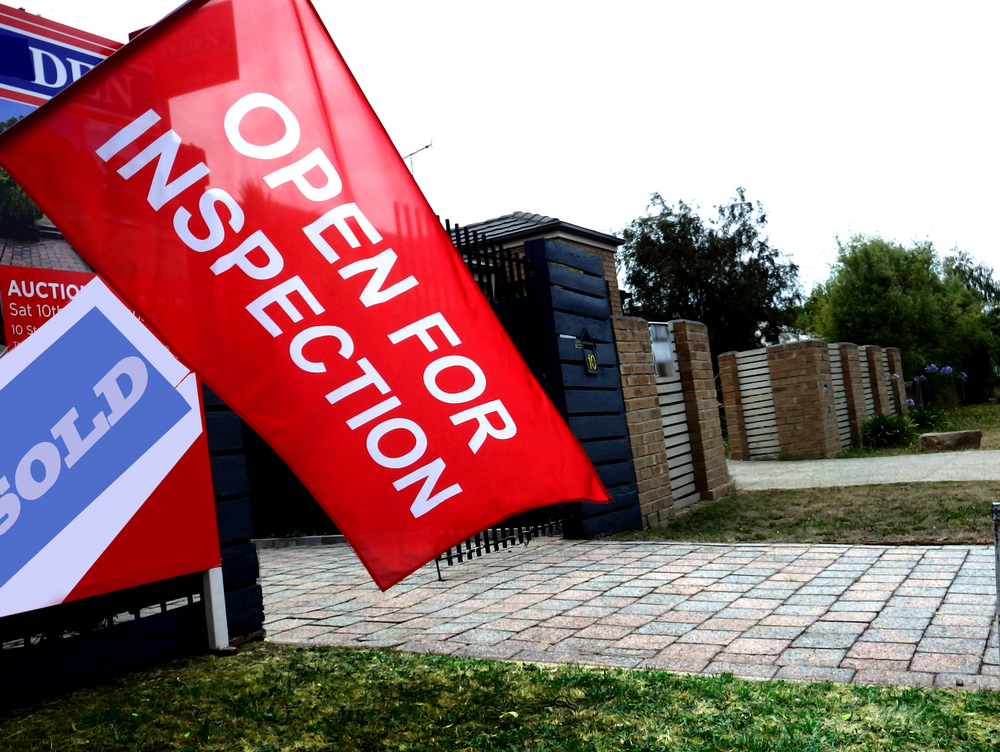
Australia’s housing market rebounded sharply in 2025, with lower-value suburbs and resource regions driving growth as rate cuts, tight supply and renewed competition reshaped the year.

Formula 1 may be the world’s most glamorous sport, but for Oscar Piastri, it’s also one of the most lucrative. At just 24, Australia’s highest-paid athlete is earning more than US$40 million a year.