Wine Snobs, Don’t Let a Cute Critter on the Label Come Between You and a Great Bottle
For a couple of decades now, oenophiles have turned up their noses at the many ‘critter wines’ that followed in the wake of a certain Aussie label and its colourful wallaby. Time to reconsider.

 4 min
4 min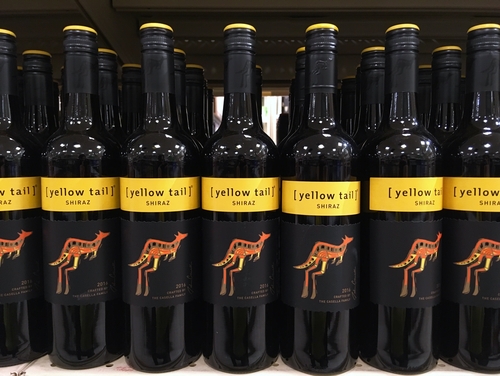
A wine with an animal on its label is often regarded as less-than-serious, meant to appeal more to pet lovers than oenophiles.
“Animals give consumers vibes of cheapness,” observed Jeffrey Wolfe, proprietor of Wolfe’s Wine Shoppe in Coral Gables, Fla. Blame it on Yellow Tail, that cheap Aussie wine with the cheerful wallaby logo. Yellow Tail spawned a veritable den of “critter wines” two decades ago, and few left an enduring impression of quality.
I thought about all of that recently when I went looking for a wine with a horse on its label. I’d written a biography of Marguerite Henry, the author of “Misty of Chincoteague” among other horse books for children, and wanted to serve “horse wines” at my book signings. As it happened, I turned up several good bottles. Perhaps other good wines were hiding behind pictures of sheep, lions or bears?
I found a number of bottles whose labels were inspired by the animals that roam the landscapes where the wines were produced. For example, the mascot on the label of the 2022 Black Cabra Malbec ($US10)—a wine marked by soft tannins and notes of red fruit and spice—pays homage to the black goat that wanders the Argentine Andes, the location of the winery and vineyards. It’s a great-value red from winemaker Fabian Valenzuela and vineyard manager Carlos Correas of Bodega Zolo.
The solo sheep on the label of the dry, refreshingly light 2023 Landhaus Mayer Grüner Veltliner ($US12) nods to a long association between sheep and viticulture in the Weinviertel region of Lower Austria. According to Paul Kiefer, sales director of Mayer am Pfarrplatz winery and its label Landhaus Mayer, sheep historically grazed between the grapevines planted both outside and within city limits in the region. “Maximising space for agriculture and viticulture was key,” Kiefer said. Adorably, sheep can still be found in vineyards there today.
For the label of the 2020 Roberto Henríquez Tierra de Pumas Bio Bío Valley País ($US20), winemaker Roberto Henríquez chose two pumas, an endangered species in the Nahuelbuta Mountain Range, near his winery in the Bio Bío valley of Chile. The wine itself is a soft, slightly funky, intriguingly earthy, low-alcohol red made from Pais grapes harvested from old vines.
The Catalan donkeys on the label of the 2021 Clos dels Guaràns VI Negre “Les Someres” ($20) may be whimsically depicted wearing dainty frocks, but their breed is likewise endangered. In this blend of red grapes from Catalonia’s Penedès region, winemaker Jordi Raventos has produced a pleasing low-alcohol wine marked by bright acidity and ripe fruit.
Among the wines I found with horse labels, five stood out: three rosés and two reds. Two of the rosés were produced on Long Island by vintner-equestrians. The soft, slightly fruity, Merlot-dominant 2023 Wölffer Estate Rosé ($US16) is a reliably good pink whose label features a subtle gold profile of a horse entwined with grapes. The Sagaponack winery was founded by the late Christian Wölffer, a businessman and horseman who built both a winery and a horse barn.
The juicy, slightly tart 2023 Macari Sparkling Horses Cabernet Franc Pet-Nat ($US32) sports a full-colour profile of a horse on its label. The rendering was inspired by winery operations director Gabriella Macari’s love of horses. It’s also a nod to the unofficial name of the North Fork property her grandfather purchased in the 1960s: Locals referred to it as “Horse Head Bluffs,” said Macari, after a horse-head-shaped dune that once stood at the edge of what is now their vineyard.
The 2023 The Withers El Dorado Rosé ($US22) was produced in California but inspired by the rosés of Bandol, France, according to vintner Andrew Tow, who also makes Rhone-style reds and Pinot Noirs. All of his wine labels feature a portrait of Mr. Burgess, the beloved horse of his wife and the winery’s co-owner, Kathleen Tow. Even the name of the winery is horse-oriented: The Withers is the name of the point at which a horse’s neck and back meet.
Equestrian and vintner Ernesto Catena (son of famed Malbec producer Nicolás Catena) chose colourful horses in heraldic gear to decorate the label of his delicious red-berry-fruited 2022 Padrillos Malbec Mendoza ($US10). “We pay homage to the Padrillo, a strong but sensitive creature, that is very playful, free spirited and of strong nature at the same time,” Catena explained in an email. The wine is sourced from two old-vine high-elevation Malbec vineyards and aged in used and neutral oak at his winery Finca de los Padrillos.
Adding a horse to the label of the toothsome, juicy 2022 Clos de Roilette Cuvée Christie Fleurie ($US22) was not, originally, an entirely playful move according to the winery’s importer, Kevin McKenna, of Louis Dressner Wines in New York. In the 1930s, Mr. Crozet, the then-owner of the esteemed Beaujolais estate, was irked when his wines lost their Moulin-à-Vent appellation and were assigned to the new and, as yet, far-less-prestigious Fleurie. So he struck the appellation from all his labels and emblazoned them instead with a portrait of his prized racehorse, Roilette. The estate’s current owners, the Couderts, continue to use the iconic portrait, though they’ve added the Fleurie name, which has gained esteem in the intervening decades.
An amphibious label I’ve loved for a long time, Frog’s Leap is in a league of its own. Launched in 1981—“long before the arrival of ‘critter wines,’ ” founder John Williams noted—this Napa winery has long produced affordable, delicious wines. Its tangy 2023 Frog’s Leap Sauvignon Blanc Rutherford ($US24) is no exception. Williams described the origin of the name thusly: “a drunken contraction of Stag’s Leap [Wine Cellars], where I spent my formative years as their first winemaker, and the Frog Farm, the beloved home of Larry Turley, my co-founder.” Label artist Charles House took the name as a jumping-off point to create his now-famous leaping frog.
Surprisingly, one species that proved scarce in my search for animals on wine labels was man’s best friend. I looked high and low but found only one (not-so-great) wine whose label featured a dog. As the owner of two Pembroke Welsh corgis, I’d hoped to find a good wine-canine combo. If anyone finds a bottle with a corgi on the label, please let me know.
 Copyright 2020, Dow Jones & Company, Inc. All Rights Reserved Worldwide. LEARN MORE





Australian shares fell on Thursday as Wall Street weakness, rising oil and persistent rate concerns weighed on most of the market. The S&P/ASX 200 declined 0.72 per cent to 8,702. The All Ordinaries lost 0.66 per cent to finish at 8,897. Mining stocks were hit particularly hard, while real estate also dragged on the index. …
Continue reading “ASX falls 0.7 per cent as miners and property stocks retreat”

Borrowers cannot control the Reserve Bank, but they can control how exposed their household budget is to its next decision. The RBA meets on 29 September with inflation concerns still elevated and major-bank economists increasingly bringing forward their rate-rise calls. Fixed mortgage rates have also been moving, reducing the value of waiting for perfect certainty. …
Continue reading “What mortgage holders should do before the next RBA decision”
2 min
A property portfolio can look comfortable until several small pressures arrive together: a rate increase, a vacancy, higher insurance and an unexpected repair. The correct time to model that combination is before it occurs.
Start by recalculating every loan at 0.25, 0.50 and one percentage point above its current rate. Include principal-and-interest repayments even where a loan is temporarily interest-only, because the eventual step-up may be larger than the next RBA move.
Then calculate true net rent. Deduct management, council and water charges, strata, insurance, maintenance, land tax where applicable and a vacancy allowance. A property advertised with an attractive gross yield can produce a very different result after these costs.
Third, review the portfolio’s liquidity. An offset account can reduce interest while keeping cash accessible, but investors should obtain tax advice before moving funds between loans. The distinction between investment and private debt affects deductibility, and poorly structured redraws can create lasting complexity.
Fourth, examine refinancing risk rather than just today’s rate. A highly leveraged investor may be unable to refinance on the same terms because the new lender tests total debt at a higher assessment rate. Credit-card limits, owner-occupied debt and shaded rental income can all reduce capacity.
Fifth, rank properties by resilience. Consider net yield, vacancy risk, near-term capital expenditure, tenant demand, debt attached and the cost of selling. This is not an instruction to sell the weakest performer automatically; transaction costs and tax consequences matter. It is a way to identify where pressure would emerge first.
Investors should also review fixed-rate and interest-only expiry dates. A portfolio with several facilities resetting in the same quarter carries concentration risk even when each loan appears manageable individually.
The goal is not to predict the RBA perfectly. It is to ensure that one policy decision does not force a rushed refinancing, sale or reduction in essential maintenance. A portfolio that can absorb higher rates and temporary income interruptions gives its owner time to make deliberate decisions.
Read more: What mortgage holders should do before the next RBA decision
Portfolio checklist
Stress test: Current rate plus 0.25, 0.50 and one percentage point.
Model: Net rent after every recurring cost and vacancy.
Check: Fixed-rate expiries, interest-only expiries and loan maturity.
Preserve: An accessible emergency buffer.
Review: Insurance, land tax, strata works and major maintenance.
Seek advice: Licensed credit, financial and tax advice before restructuring.

The Perpetual Padellone draws its name from the coveted reference 8171 while introducing an instantaneous complete annual calendar to Rolex’s modern Perpetual collection.

The PG rating has become the king of the box office. The entertainment business now relies on kids dragging their parents to theatres.