Inside Sydney’s Ultra-Luxury Property Market: What’s Driving Demand in 2025
Simon Cohen, one of Australia’s top luxury property buyers, discusses the growing appeal of family homes, the rise of technology in high-end properties, and the neighbourhoods to dominate Sydney’s ultra-luxury market this year.
 2 min
2 min
Q: Simon, what major trends do you think will shape Sydney’s ultra-luxury property market in 2025?
A: One of the most significant trends is the growing interest in family homes. People are increasingly looking at luxury homes not only as great places to live but also as sound investments. The demand for spacious properties, especially those catering to multi-generational living, will only grow in 2025.
Q: Do you think the preferences of luxury property buyers have evolved over the past few years?
A: Absolutely. Luxury property buyers today are far more discerning. While investment potential is still important, there’s been a noticeable shift towards a home prioritising lifestyle. Buyers are seeking properties that offer a balance of functionality and indulgence, a change from years past when location alone was often the deciding factor.
Q: What about the types of properties people are purchasing? Are buyers prioritising investment properties or homes to live in?
A: The trend is definitely leaning more towards family homes as primary residences rather than purely investment properties. Buyers are looking for homes that suit their needs now but also offer long-term value, both financially and in terms of lifestyle.
Last year, we saw this with the sale of Elaine, a historic mansion in Point Piper, which sold for $130 million, matching the national record. This was a prime example of a property that combines heritage, luxury, and the appeal of family living. Another noteworthy transaction was Rockleigh, also in Point Piper, which sold for $85 million.
Q: Are there any areas in Sydney that will gain prominence in the ultra-luxury market next year?
A: Suburbs like Vaucluse, Bellevue Hill, and Mosman continue to dominate the ultra-luxury market, but I think areas like Woollahra are gaining even more prominence. These neighbourhoods combine prestige with accessibility, and they’re becoming increasingly sought after by affluent buyers.
Q: What features or amenities are non-negotiable for buyers in the ultra-luxury market?
A: Quality is everything in this market. Buyers expect premium finishes and high-end features, such as smart home technology, custom-designed interiors, and amenities like home cinemas, temperature-controlled wine cellars, and private gyms. However, simplicity in technology is key. Buyers want features like automated curtains or heated floors, with a focus on ease of use.
Q: Since you founded Cohen Handler in 2009, what has been the most significant change in the luxury property market?
A: The biggest change is the sheer scale of what buyers are willing to spend. In 2009, we thought we’d seen big numbers, but those pale compared to today. The level of competition and the international interest in Sydney’s luxury market have driven prices to unprecedented levels.
Q: If you could give one piece of advice to someone looking to invest in the luxury property market in Sydney in 2025, what would it be?
A: Do your homework and seek expert advice. In this market, there’s a right purchase and a wrong purchase, and the difference could mean tens of millions of dollars. Knowing what you’re buying and understanding the potential value is absolutely critical.
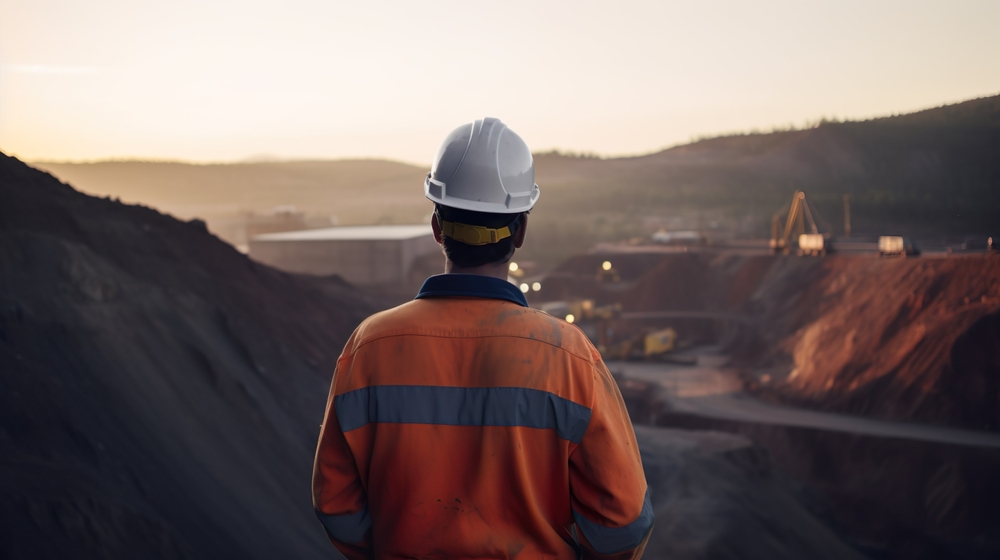
Australian shares fell on Thursday as Wall Street weakness, rising oil and persistent rate concerns weighed on most of the market. The S&P/ASX 200 declined 0.72 per cent to 8,702. The All Ordinaries lost 0.66 per cent to finish at 8,897. Mining stocks were hit particularly hard, while real estate also dragged on the index. …
Continue reading “ASX falls 0.7 per cent as miners and property stocks retreat”

Borrowers cannot control the Reserve Bank, but they can control how exposed their household budget is to its next decision. The RBA meets on 29 September with inflation concerns still elevated and major-bank economists increasingly bringing forward their rate-rise calls. Fixed mortgage rates have also been moving, reducing the value of waiting for perfect certainty. …
Continue reading “What mortgage holders should do before the next RBA decision”

A five-bedroom Palo Alto home designed by Steven Ehrlich is listed for $44 million, making it the city’s most expensive listing. Built around a dramatic concrete spine, the home features four courtyards and a pool.
3 min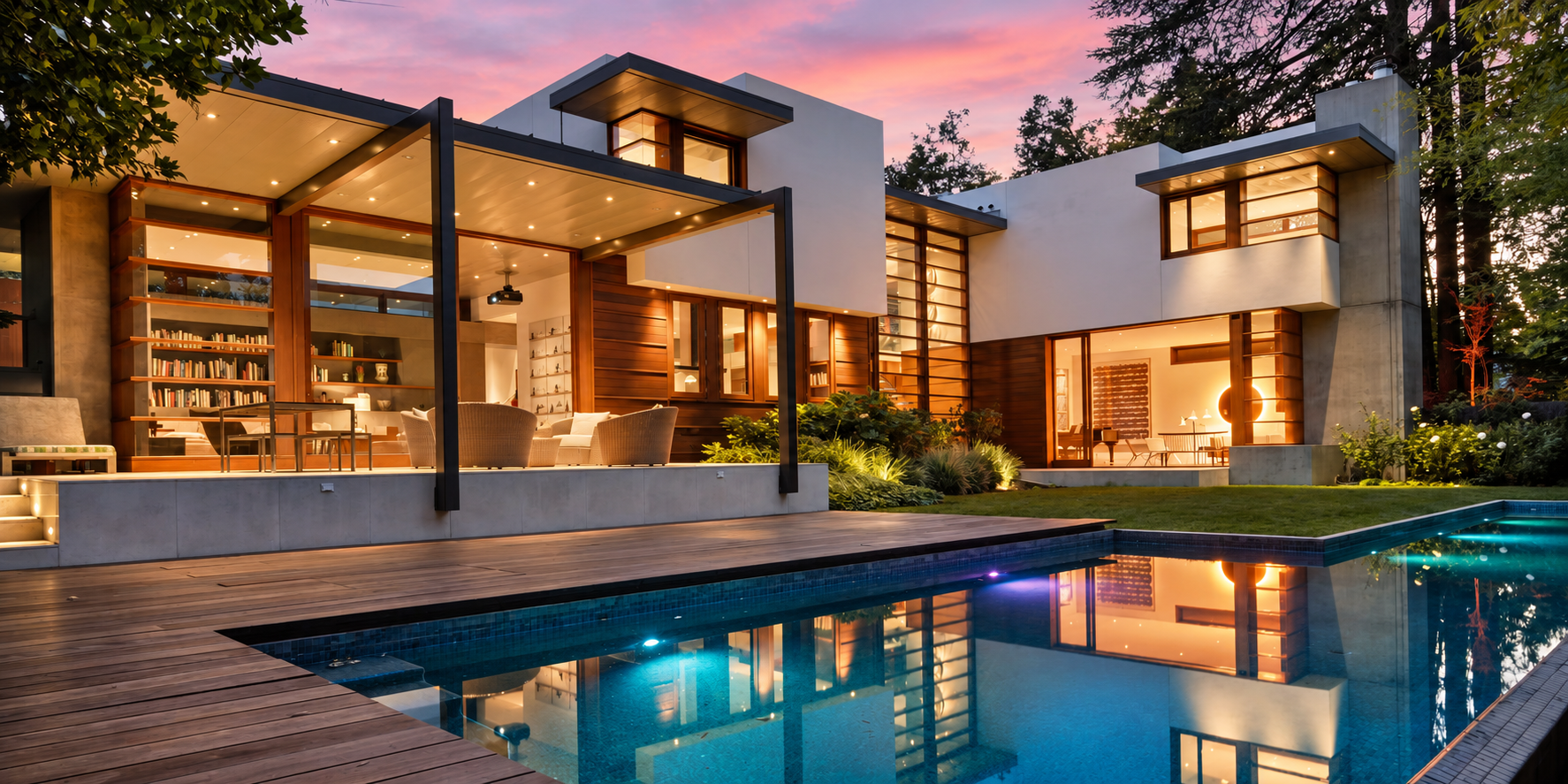
For years, tech entrepreneur Asher Waldfogel and his wife, Helyn MacLean, dreamed of building a modern house in Palo Alto, Calif.
The couple, however, worried about clashing with the Mediterranean-style architecture typically associated with their neighborhood of Old Palo Alto.
So they tapped architect Steven Ehrlich to create a design that paid homage to its surroundings with stucco, mahogany and titanium zinc cladding. They spent $20 million over several years building the house, completed in 2005.
Now looking to be closer to their adult daughter on the East Coast, they are putting the five-bedroom home on the market for $44 million—the most expensive listing in Palo Alto.
Waldfogel is an angel investor who co-founded Redback Networks, a telecommunications-equipment company. MacLean previously had a career in fundraising.
The couple purchased the roughly 0.4-acre site for $7.1 million in 2000 and demolished a circa-1930s Spanish Colonial home. The house they built pinwheels around a central staircase. It has 7,900 square feet of livable space, with four distinct courtyards and a pool.
A key feature of the home is a cast-in-place concrete wall, or spine, that is two stories high and about 80 feet long. “There’s a little bit of controlled chaos in what comes out of the form,” unlike a perfectly uniform surface, Waldfogel said. “If you want that, you do it in plastic.”
Waldfogel said he and his wife are thinking about the next phase of life now that their daughter is grown, although they have not decided where they will move. They also have a home in Sun Valley, Idaho.
“Right now we’re just trying to emotionally let go and decide what to do next,” he said.
Palo Alto, an epicenter of venture capital and tech startups in Silicon Valley, is home to some of the country’s biggest tech titans. Sales volume and prices are rising, with a median sale price of $3.5 million for the three months ending in August, up 5.8% year-over-year, according to real-estate brokerage Redfin.
Arthur Sharif of Sotheby’s International Realty—San Francisco Brokerage has the listing.
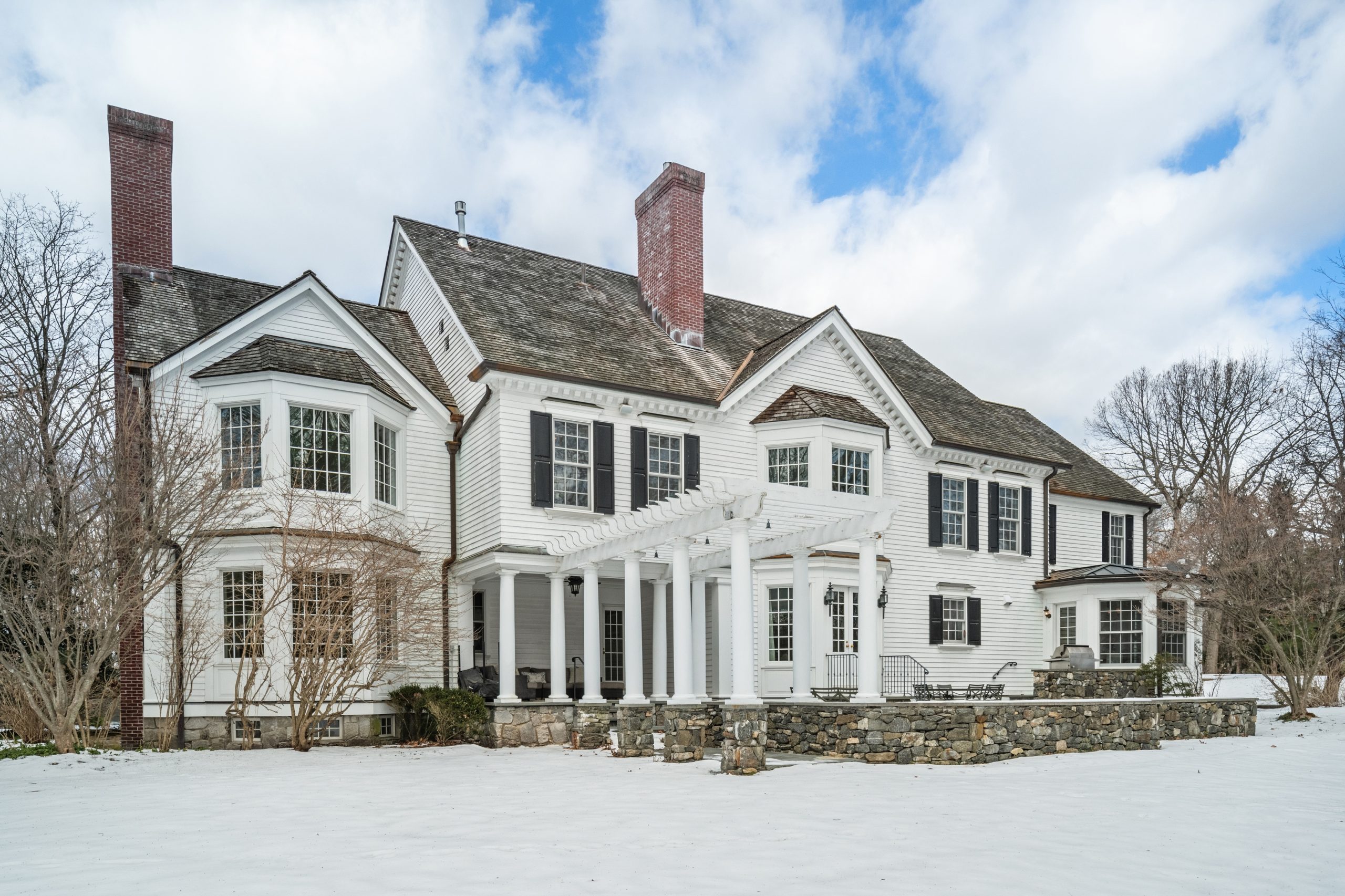
A haven for hedge-fund titans and Hollywood grandees, Greenwich is one of the world’s most expensive residential enclaves, where eye-watering prices meet unapologetic grandeur.

All three vehicles will form part of a broader charitable initiative benefiting Big Brothers Big Sisters of America, the American Red Cross and Starlight Children’s Foundation