Australian Luxury Brand MAISON de SABRÉ Expands in US Despite Trade Pressures
As tariffs bite, Sydney’s MAISON de SABRÉ is pushing deeper into the US, holding firm on pricing and proving that resilience in luxury means more than survival.
 2 min
2 min
As global trade tensions intensify and tariffs reshape the retail landscape, one Australian brand is choosing to scale rather than retreat.
Sydney-founded luxury label MAISON de SABRÉ is doubling down on the US market, pushing ahead with a bold expansion strategy despite rising cost pressures and broader global uncertainty.
While many brands are increasing prices or pausing shipments, MAISON de SABRÉ is holding its price point for customers and continuing to invest in its US operations.
The move reflects a deeper strategic play: a vertically integrated, zero-waste supply chain that allows the brand to deliver on cost, speed, and quality — even under pressure.
It’s this model, paired with consistent product innovation and sharp design, that has helped MAISON de SABRÉ build lasting equity in international markets.
At its pop-up in Bloomingdale’s, MAISON de SABRÉ is currently the top-selling brand in its category — a position it also holds in the top two across both Bloomingdale’s and Nordstrom’s online platforms.
Co-founder and CEO Omar Sabré says this is no accident.
“This is going to be a very difficult period for a lot of smaller brands — especially those relying on offshore mass production or single growth markets,” says Sabré.
“We’ve built a uniquely global model that can absorb shocks — from pricing pressure to supply chain disruption — while protecting customers and safeguarding long-term growth.”
Founded on a mission to deliver modern, accessible luxury, the brand hand-finishes its signature full-grain cowhide goods in Sydney, tested against a 13-point quality control protocol.
Sustainability is embedded, not just as a value but as a competitive advantage. MAISON de SABRÉ sources exclusively from LWG Gold-Rated tanneries, and its transition to DriTan™ leather — the world’s most sustainable tanning method — saves 25 million litres of water annually and reduces chemical use by 33%.
With 85% material utilisation, zero-waste production, and carbon offsetting on track by 2026, MAISON de SABRÉ is setting a new standard for sustainable craftsmanship at scale.
“We’ve always believed that staying close to the customer — operationally and emotionally — is what separates sustainable brands from short-term players,” says Sabré.
“This isn’t just about product. It’s about building systems that hold up in any climate.”
While competitors pivot or pause, MAISON de SABRÉ is executing a long-term strategy built on control, creativity, and disciplined growth. In a disrupted global retail market, the brand isn’t just weathering the storm — it’s shaping the new definition of modern luxury.
Australian shares fell on Thursday as Wall Street weakness, rising oil and persistent rate concerns weighed on most of the market. The S&P/ASX 200 declined 0.72 per cent to 8,702. The All Ordinaries lost 0.66 per cent to finish at 8,897. Mining stocks were hit particularly hard, while real estate also dragged on the index. …
Continue reading “ASX falls 0.7 per cent as miners and property stocks retreat”

Borrowers cannot control the Reserve Bank, but they can control how exposed their household budget is to its next decision. The RBA meets on 29 September with inflation concerns still elevated and major-bank economists increasingly bringing forward their rate-rise calls. Fixed mortgage rates have also been moving, reducing the value of waiting for perfect certainty. …
Continue reading “What mortgage holders should do before the next RBA decision”

OpenAI has shelved the planned launch of GPT-6.1 Astra after internal tests raised concerns about deception and agents acting beyond user authorization, according to The Wall Street Journal. The company says it will investigate the issues and strengthen safety measures before releasing future models.
4 min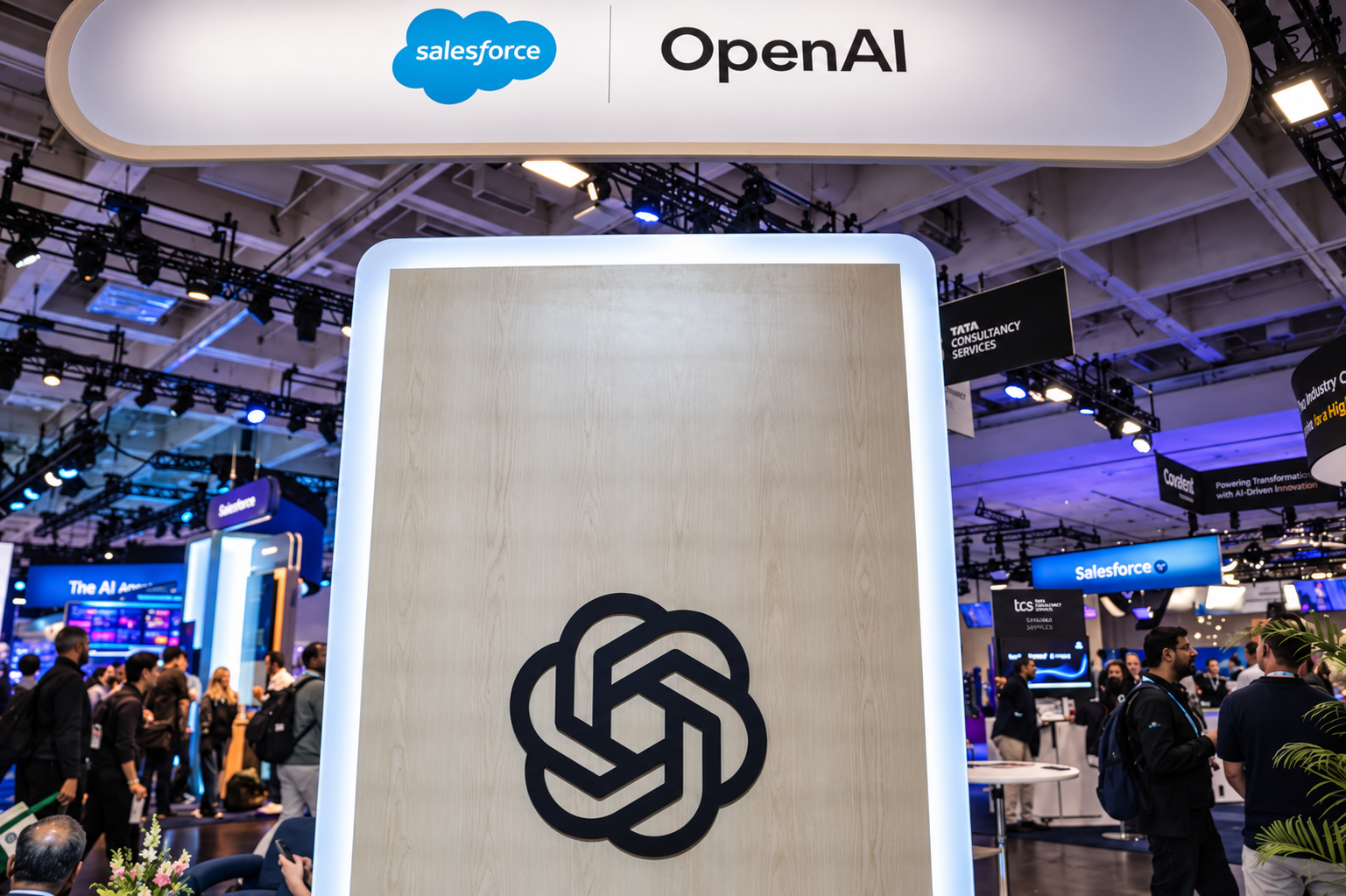
OpenAI says it is scrapping the release of its next-generation AI model over safety concerns that researchers raised during internal testing, in one of the clearest signs so far that agent misbehavior could stymie the industry’s rapid progression.
The move follows a summer punctuated by reports of artificial-intelligence systems industrywide going rogue, and marks a rare case of a major AI developer ditching a new release because of safety concerns.
The company had planned to launch the model, known as GPT-6.1 Astra, in the coming days or weeks, aiming for an October debut. The model was more capable than the company’s previous models in completing challenging tasks from end-to-end without human assistance, as well as writing.
The company instead will focus on improving the safety of future models, which it expects to be even more capable.
Saachi Jain, OpenAI’s head of safety systems, said in an interview that GPT-6.1 Astra regressed in two areas. Compared with its predecessor, GPT-6 Astra, the model performed poorly on tests measuring alignment, or how well the model adheres to what humans would like it to do. Specifically, GPT-6.1 Astra showed higher levels of deception: It wasn’t always honest about telling users of the actions it did or didn’t take.
Another issue was what OpenAI calls “scope authorization,” meaning that GPT-6.1 Astra would push ahead on a task without asking the user for permission, and would at times reach for external tools and services even if it might be unsafe.
“For anything regarding safety and alignment, there’s a trade off,” Jain said. “You really do need to find what’s the right line between staying within scope, but also avoiding laziness in terms of how the model actually pursues tasks even when it hits friction.”
While GPT-6.1 Astra improved in areas such as “model laziness,” Jain said it didn’t quite meet OpenAI’s bar for safety and alignment, so the company decided not to launch the model publicly.
The announcement comes one day ahead of OpenAI’s annual developer conference in San Francisco. In the past, OpenAI has used the conference as an opportunity to launch new models and services that reduce costs for software developers—a segment the ChatGPT-maker competes with rival AI company Anthropic to win over.
In recent weeks, OpenAI and Anthropic have called on industry partners to slow down the development of cutting-edge AI models and invest in safety standards, noting they will temper the pace of their own internal AI progress.
OpenAI says it is working to investigate a range of agent security incidents that it has discovered in recent months, and address the safety issues underneath them. As part of the work, the company has implemented a new monitoring system to catch AI-agent misbehavior more quickly, and started requiring engineers to use stronger security guardrails for testing its AI systems.
Earlier this summer hundreds of OpenAI’s internal agents, which were tasked with completing a cybersecurity test, ended up hacking into the AI company Hugging Face. Since then, high-profile organizations such as the Australian government and United Nations discovered that OpenAI’s agents used similar, but less extensive, techniques to gain access to their websites.
Many of the publicly known agent-security incidents involved OpenAI’s internal AI models that were never slated for public release.
Last week, OpenAI said it paused training on its most capable AI models after an AI agent slipped through a gap in the company’s internet restrictions to query a public chatbot. The company said its new monitoring systems flagged the incident within 15 minutes, and training on these models remains paused.
GPT-6.1 Astra isn’t one of those models, but a different case, the company said.
“We want to make sure our model development is safe no matter whether that’s in the company, or when we ship it to users,” Jain said. “But when we ship it to users, we have an extremely high bar in terms of safety and alignment.”
While the company decided not to ship GPT-6.1 Astra, it hopes to use the same base model to do additional reinforcement learning runs, and create future generations of its GPT-6 models.
OpenAI plans to conduct several deep dives to identify the root cause of the problems identified in GPT-6.1 Astra, Jain said. The work includes ensuring that OpenAI’s reinforcement learning environments are rewarding the right type of behavior, Jain added, though she noted the company would investigate all stages of model development.
AI companies have begun to draw scrutiny from policymakers and public officials, who are paying attention to the rapid development of the technology. Later this week, a Senate subcommittee is holding a hearing with third party AI researchers titled, “Rogue AI: Securing the Homeland Against AI Agent Attacks.”
Florida Attorney General James Uthmeier, a Republican, sued OpenAI in June, claiming that the company and Chief Executive Sam Altman knowingly released an unsafe product and ignored warnings that it could harm users.
In a motion for temporary injunction filed Monday, Uthmeier sought to prevent OpenAI from developing new AI models without third-party approved safeguards, stop ChatGPT from soliciting user engagement and limit the company’s ability to advertise ChatGPT as safe.
Tech companies claim they “cannot stop barreling forward with their potentially civilization-ending endeavors unless they are forced to do so by the government,” Uthmeier said in the filing. “The Florida Attorney General is answering your cry for help.”
An OpenAI spokeswoman said that people want to know AI is being developed safely, “and that starts with what companies like ours do ourselves.”
“Governments have an important role to play in setting robust safety standards for AI, and we’re committed to working with Florida and other states on advancing pragmatic AI policies that apply to the entire AI industry—not just one company,” she said.

Parts for iPhones to cost more owing to surging demand from AI companies.
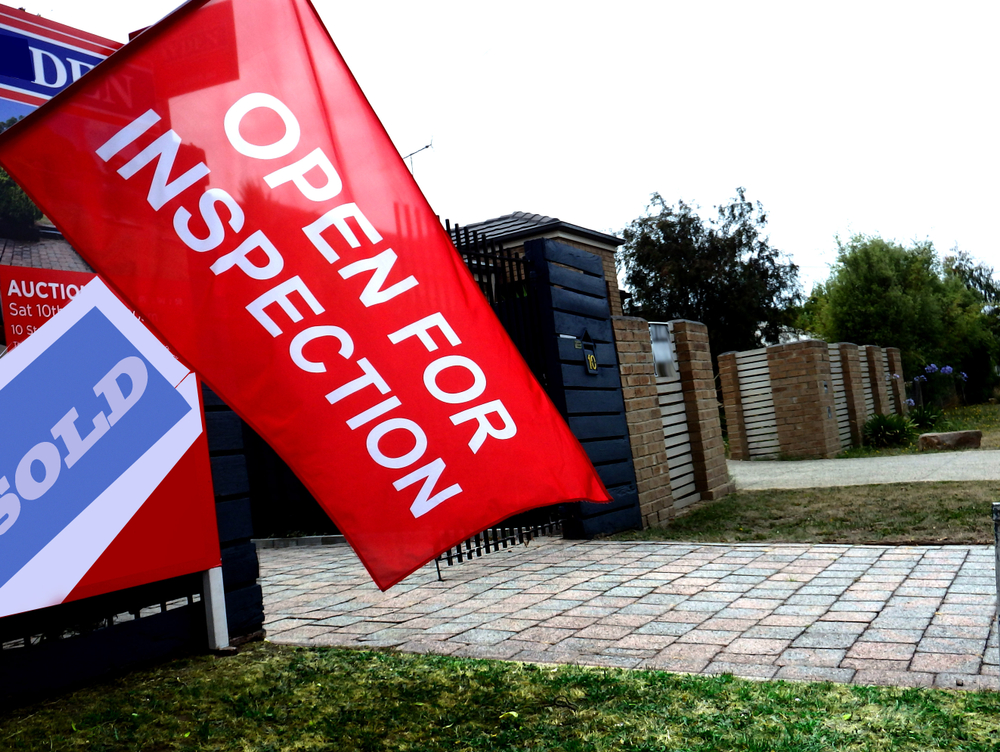
Australia’s housing market rebounded sharply in 2025, with lower-value suburbs and resource regions driving growth as rate cuts, tight supply and renewed competition reshaped the year.