THE ART OF CREATING A BEAUTIFUL GALLERY WALL
A well-designed gallery wall adds instant sophistication and personality. Here’s how to curate one with depth, cohesion and lasting impact.
 2 min
2 min
A well-curated gallery wall is more than a collection of framed pieces; it’s a personal design statement, an artistic focal point and a conversation starter all in one.
When done right, it can bring sophistication, personality and energy to any space.
Whether you’re showcasing collected art, photography or prints, here’s how to create a gallery wall that looks expertly designed and effortlessly impressive.
Start with a story, not just a style
The most compelling gallery walls are intentional. Before you start selecting pieces, think about the story you want the wall to tell. Is it about travel? Family? Colour? Abstract expression? A curated wall with a common theme, even a loose one, will always feel more cohesive and elevated.
Mix mediums, not just frames
A gallery wall becomes truly dynamic when you blend different mediums, think photography, fine art prints, line drawings, vintage pieces or even textiles and sculptural elements. This mix creates visual depth and prevents the wall from feeling flat or formulaic. That said, keep the framing consistent. Choose one or two finishes such as black, natural wood or brass and repeat them to maintain visual unity across diverse works.
Map out your layout before hanging
This step is essential. Lay your frames on the floor first, or create cutouts of each frame size using paper and tape them to the wall. This helps you visualise the arrangement and perfect the spacing. Remember, gallery walls don’t have to be symmetrical; asymmetrical layouts with balanced spacing and varied heights can be even more striking. Aim for a five to 10 centimetre gap between frames for a polished look.
Anchor with a hero piece
Every gallery wall needs a focal point, a larger or bolder piece that anchors the eye. This could be a vivid abstract, a stunning black and white photograph or a meaningful artwork. Place it slightly off centre and build your layout around it, using smaller supporting pieces to create flow.
Think about the room’s architecture
Consider the wall’s scale and position in the home. A gallery wall above a sofa or console table should extend slightly beyond the width of the furniture for balance. In hallways or staircases, follow the line of the stairs or elongate vertically for dramatic effect. Ensure there’s breathing room around the gallery so it doesn’t feel cramped.
Layer in personal touches
To elevate your gallery wall from simply stylish to truly stunning, add personal elements, a candid travel photo, an old family snapshot or a postcard from your favourite gallery. When paired with more formal or high-end pieces, these touches humanise the space and draw people in.
Let lighting do the final work
If you really want to impress your visitors, consider gallery-style lighting. Picture lights, ceiling-mounted spotlights or subtle LED strips can highlight individual works and give the entire wall a refined, gallery-like finish. Lighting enhances texture, adds warmth and brings your curated collection to life.
Final styling tip
A gallery wall should never feel too perfect; the beauty is in its layered, collected feel. Don’t be afraid to evolve it over time. Add new pieces, swap out prints or reframe works for a refresh. The most striking gallery walls are living stories, designed with care, character and just a little bit of flair.
Kellie Richardson is an Interior Designer and Founder of Kurved by Design

For Central Element, the start of work at Pearl represents another step in the company’s growing eastern suburbs pipeline.

All three vehicles will form part of a broader charitable initiative benefiting Big Brothers Big Sisters of America, the American Red Cross and Starlight Children’s Foundation

Randy Boyagoda’s new novel, “Lords of Serendipity,” delivers a biting satire of cheating, politics and dysfunction across modern universities.
5 min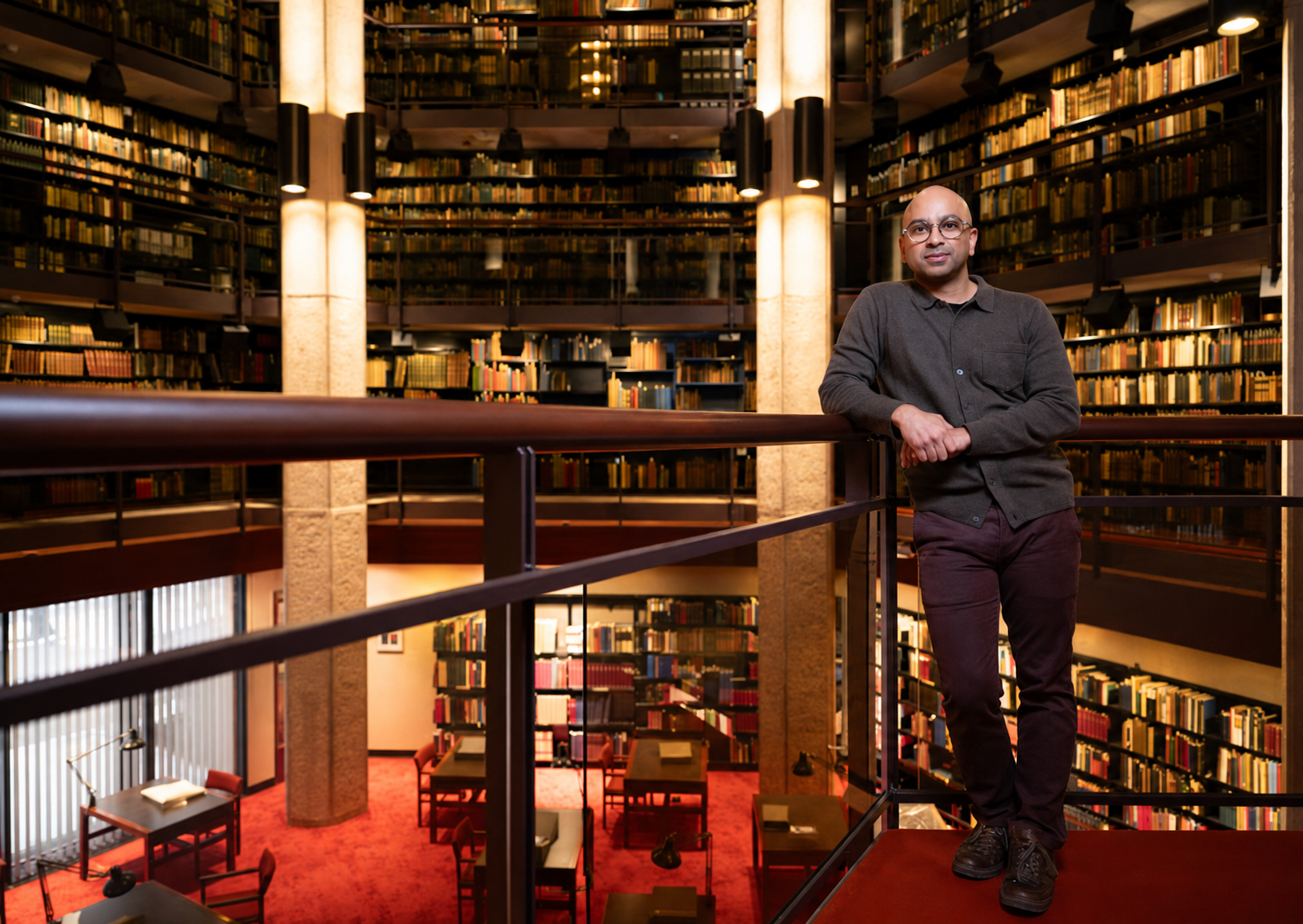
Administrative cowardice. Rampant cheating. The soaking and scamming of undergrads and grad students. Performative wokeism. Intensifying competition for international tuition dollars from an expansive China.
These are either the latest dire headlines about American higher ed or the myriad subplots of “Lords of Serendipity,” an ambitious new novel by Randy Boyagoda. Unlike most campus fiction, its scope extends well beyond the cloister of the liberal arts classroom to whammy the entire university system, from its financial model to its function within a globalized economy. Along the way, it skewers its lightning-rod targets with a precision too sharp to be considered entirely fictional.
That its author is not only well-versed in satire, having written four other novels in the genre, but is also a professor of English at the University of Toronto and an experienced college administrator, further blurs the lines between comic fiction and brutal fact. It’s the kind of no-holds-barred book only a consummate insider would know to write—but only one who is also conveniently outside the American university system could get away with writing.
“This is someone who’s got the inside dope on what can go on at universities, especially with international students, and what kind of con games are going on,” said Margaret Atwood, a friend and fellow Torontonian.
The novel, like Boyagoda himself, is often very funny—even as the dilemmas its characters face read as tragedy. Its cast includes the bickering members of a Sri Lankan hotel cleaner’s family, insecure American freshmen, dead-end third-tier college professors and their highflying Ivy League counterparts and dispirited university functionaries. An old-fashioned Dickensian tale, it sweeps across continents and campuses, from a classic liberal-arts college to a stand-in for Harvard University to an urban technical school to the dilapidated buildings of a state-run university in Sri Lanka.
“I’m a joyful person,” Boyagoda said in an interview, though he prefers to see his outlook on academia as “hopeful” rather than optimistic. He smiles and laughs frequently. He bikes everywhere. He derives energy from his students and from his four daughters, ages 14 to 20. They help him and his American wife, Anna, also an educator, care for Boyagoda’s father, an immigrant from Sri Lanka who has dementia and lives with the family.
The germ of the novel came to Boyagoda during the pandemic, when he was serving as a vice-dean. An urban legend was circulating about a statistics grad student selling passing grades to international students. The cheating scheme itself may well have been apocryphal, but it felt tantalizingly plausible.
“As a novelist, it stayed with me,” Boyagoda said. “Who would sell grades for a stats course? Why would someone buy grades? What’s motivating them? Why wouldn’t the university be doing something about it?” What he didn’t want to do, he explained, was write “another novel about a creative writing professor and his drama with students.”
In addition to writing novels—the first of which was a finalist for Canada’s prestigious Giller Prize; he’s written eight books in total—Boyagoda teaches literature full-time. For his students next semester, kids raised in a purportedly “post-literature era,” he’s assigning three 700-page novels, he noted mischievously, books by George Eliot, Ralph Ellison and Kiran Desai.
On RateMyProfessors, students remark on Boyagoda’s heavy assignments, tough grading and distaste for cellphones, but also hail his “comedy.” When alerted to these reviews, Boyagoda laughed. “Guilty as charged,” he said.
“Randy’s one of those people in academia who is very well educated but doesn’t have an ounce of superiority about him,” said John Irving, who frequently guest lectures in Boyagoda’s classroom. “It’s amazing to see how willing students are to talk in his classrooms, how little afraid they feel of being mocked or put down—he gets complete candor out of them.”
Negotiating competing interests seems to come naturally to him. Like many college campuses, after the Oct. 7 Hamas attack on Israel, the University of Toronto was embroiled in protests, encampments and discord; part of the school’s response was to convene a working group on civil discourse. Boyagoda was put in charge, serving for two years. It’s the kind of thankless task many professors would flee from, but Boyagoda relished the prospect and thinks the group, which is ongoing, made progress.
He has since pivoted to another formidable academic concern: the waning prestige of the humanities. In July, Boyagoda became the director of the Jackman Humanities Institute and special advisor on the humanities to the dean of arts and science. This fall, he is starting a series of gatherings he calls the Dead Book Club. (Dead writers feature heavily among his favorites: St. Augustine, Dante, William Faulkner, Evelyn Waugh, Saul Bellow.)
“The goal is to encourage students to read for its own sake and have conversation for its own sake,” Boyagoda said. “The importance of the humanities will be revealed to those who participate.”
“Lords of Serendipity,” which publishes next week, reflects Boyagoda’s commitment to the pursuit of knowledge: “I’m supposed to say I learn more from my students than they do from me, but no,” Boyagoda said. “I enjoy sharing my excitement and joy about literature and ideas. There are these moments when you are teaching and you can see someone’s face change because they didn’t know something and then they did. That moment when you’re actually watch someone enlarge themselves is deeply satisfying.”
In literary circles, Boyagoda is often referred to as a Catholic novelist, a description he embraces. “A novelist willing to give shape and voice to contemporary religious experience is needed,” Boyagoda said. “I understand myself as a Catholic novelist, provided that I’m not only a Catholic novelist, I’m also a South Asian novelist and I’m a Canadian novelist. I don’t want to be captive to one label.”
His characters, he said, are subjected to what he calls “Graham Greene character situations.”
“They are trying to do good in a fallen world and realize the most they can do is less harm than someone else would do in that same role,” he explained. “They have to accept they are complicit in something that provides some good thing to others. It’s a very Graham Greene way of thinking about sacrifice.”
The campus green they inhabit is a febrile zone in which lofty ideals and cynicism regularly collide. It’s a place where a traditional holiday college celebration is now an occasion for political protest. Kids freely police one another inside and out of the classroom with social media their constant, ready weapon of choice. International students, knowing their family’s financial futures hinge on their degrees, operate in terror of failure and deportation.
Early readers of the book include Gary Shteyngart and Junot Diaz, both of whom have taught at universities and written comic novels. They each contacted Boyagoda midway through to say, in essence, “You nailed it.”
As biting as “Lords of Serendipity” can be, Boyagoda’s faith in higher education remains undaunted.
“It’s absurd that we live in societies that make the decision to take people between the ages of 18 and 22, when they are most physically capable of contributing to our nations and communities, and tell them, ‘Go away for four years, and read and learn and have conversations,’” he said. “I want students to be aware of what an incredible privilege that is.”
Corrections & Amplifications
Randy Boyagoda is a special advisor on the humanities to the dean of arts and science at the University of Toronto. An earlier version of this article incorrectly said he is a special adviser to the dean of humanities. (Corrected on Sept. 2)

In the lead-up to the country’s biggest dog show, a third-generation handler prepares a gaggle of premier canines vying for the top prize.

From elevated skincare to handcrafted home pieces, this year’s most thoughtful gifts go beyond the expected.