Buy the House First, Get Married Later: Couples’ New Math
Unmarried home buyers say they are giving priority to a financial foundation over a legal one

 4 min
4 min
The big wedding can wait. Couples are deciding they would rather take the plunge into homeownership.
In reshuffling the traditional order of adult milestones, some couples may decide not to marry at all, while others say they are willing to delay a wedding. Buying a home is as much, if not more of a commitment, they reason. It helps them build financial stability when the housing market is historically unaffordable.
In 2023, about 555,000 unmarried couples said that they had bought their home in the previous year, according to a Wall Street Journal analysis of Census Bureau data. That is up 46% from 10 years earlier, when just under 381,000 couples did the same.
Unmarried couples amounted to more than 11% of all U.S. home sales. The percentage has climbed steadily over the past two decades—a period in which marriage rates have fallen. These couples make up triple the share of the housing market that they did in the mid-1980s, according to the National Association of Realtors.
To make it work, couples must look past the significant risk that the relationship could blow up, or something could happen to one partner. Without a marriage certificate, living situations and finances are more likely to fall into limbo, attorneys say.
Mark White, 59 years old, and Sheila Davidson, 62, bought a lakeside townhouse together in Newport News, Va., in 2021. But only her name is on the deed. He sometimes worries about what would happen to the house if something happened to her. They have told their children that he should inherit the property, but don’t have formal documentation.
“We need to get him on the deed at some point,” Davidson said.
White and Davidson both had previous marriages, and decided they don’t want to do it again. They also believe tying the knot would affect their retirement benefits and tax brackets.
Financial foundation
Couples that forgo or postpone marriage say they are giving priority to a financial foundation over a legal one. The median homeowner had nearly $400,000 in wealth in 2022, compared with roughly $10,000 for renters, according to the Federal Reserve’s Survey of Consumer Finances.
Even couples that get married first are often focused on the house. Many engaged couples ask for down-payment help in lieu of traditional wedding gifts.
“A mortgage feels like a more concrete step toward their future together than a wedding,” said Emily Luk, co-founder of Plenty, a financial website for couples.
Elise Dixon and Nick Blue, both 29, watched last year as the Fed lifted rates, ostensibly pushing up the monthly costs on a mortgage. The couple, together for four years, decided to use $80,000 of their combined savings, including an unexpected inheritance she received from her grandfather, to buy a split-level condo in Washington, D.C.

“Buying a house is actually a bigger commitment than an engagement,” Dixon said.
They did that, too, getting engaged eight months after their April 2023 closing date. They are planning a small ceremony on the Maryland waterfront next year with around 75 guests, which they expect to cost less than they spent on the home’s down payment and closing costs.
The ages at which people buy homes and enter marriages have both been trending upward. The median age of first marriage for men is 30.2, and for women, 28.6, according to the Census Bureau. That is up from 29.3 and 27.0 a decade earlier. The National Association of Realtors reported this year that the median age of first-time buyers was 38, up from 31 in 2014.
Legal protections
Family lawyers—and parents—sometimes suggest protections in case the unmarried couple breaks up. A prenup-like cohabitation agreement spells out who keeps the house, and how to divide the financial obligations. Without the divorce process, a split can be even messier, legal advisers say.
Family law attorneys say more unmarried people are calling for legal advice, but often balk at planning for a potential split, along with the cost of drawing up such agreements, which can range from $1,000 to $3,000, according to attorney-matching service Legal Match.
Dixon, the Washington condo buyer, said she brushed off her mother’s suggestion that she draft an agreement with Blue detailing how much she invested, figuring that their mutual trust and equal contributions made it unnecessary. (They are planning to get a prenup when they wed, she said.)
There are a lot of questions couples don’t often think about, such as whether one owner has the option to buy the other out, and how quickly they need to identify a real-estate agent if they decide to sell, said Ryan Malet, a real-estate lawyer in the D.C. region.
The legal risks often don’t deter young home buyers.
Peyton Kolb, 26, and her fiancé figured that a 150-person wedding would cost $200,000 or more. Instead, they bought a three-bedroom near Tampa with a down payment of less than $50,000.
“We could spend it all on one day, or we could invest in something that would build equity and give us space to grow,” said Kolb, who works in new-home sales.
Owning a place where guests could sleep in an extra bedroom, instead of on the couch in their old rental, “really solidified us starting our lives together,” Kolb said. Their wedding is set for next May.
Homes and weddings have both gotten more expensive, but there are signs that home prices are rising faster. From 2019 to 2023, the median sales price for existing single-family homes rose by 44%, according to the National Association of Realtors. The average cost of a wedding increased 25% over that time, according to annual survey data from The Knot.
Rent versus buy
Roughly three quarters of couples move in together before marriage, and may already be considering the trade-offs between buying and renting. The cost of both has risen sharply over the past few years, but rent rises regularly while buying with a fixed-rate mortgage caps at least some of the costs.
An $800 rent hike prompted Sonali Prabhu and Ryan Willis, both 27, to look at buying. They were already paying $3,200 in monthly rent on their two-bedroom Austin, Texas, apartment, and felt they had outgrown it while working from home.
In October, they closed on a $425,000 three-bed, three-bath house. Their mortgage payment is $200 more than their rent would have been, but they have more space. They split the down payment and she paid about $50,000 for some renovations.
Her dad’s one request was that the house face east for good fortune, she said. Both parents are eagerly awaiting an engagement.
“We’re very solid right now,” said Prabhu, who plans to get married in 2026. “The marriage will come when it comes.”
 Copyright 2020, Dow Jones & Company, Inc. All Rights Reserved Worldwide. LEARN MORE





From making unpopular decisions to learning when to listen, leaders from five businesses reveal what nobody prepared them for — and how running a company has challenged their expectations.

Technology and semiconductor shares fell sharply as investors questioned the debt financing the AI infrastructure boom and confronted higher rates and Chinese competition.
Mirvac’s 45-level Trielle has topped out at Yarra’s Edge, pairing riverfront apartments with wellness facilities, private dining and resident services.
3 min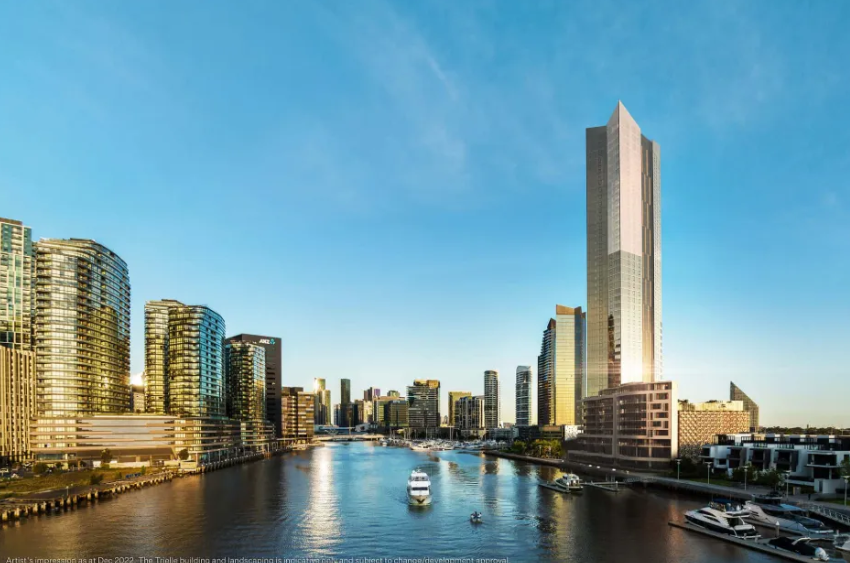
Mirvac has topped out Trielle at Melbourne’s Yarra’s Edge, with more than 70 per cent of the riverfront development sold and approximately 80 per cent of purchasers intending to make their apartment a home.
The figures, released on September 22, point to an owner-occupier audience for one of the precinct’s final residential towers. Mirvac began developing Yarra’s Edge in 2003, and its latest addition occupies one of the remaining absolute riverfront sites.
Mirvac CEO of Development Stuart Penklis said existing residents were among those moving up within the neighbourhood.
“Many purchasers already have a connection to Yarra’s Edge,” Mr Penklis said, describing buyers whose changing needs were encouraging an upgrade within the precinct.
“As one of the final residential towers within Yarra’s Edge, Trielle represents the culmination of more than two decades of creating one of Melbourne’s most established and sought-after waterfront communities,” Penklis said.
“Positioned on the Collins Street axis with absolute river frontage, Trielle offers residents a rare opportunity to enjoy sweeping views across the Yarra River, Melbourne skyline and Port Phillip Bay, while remaining seamlessly connected to the CBD. With Trielle now more than 70 per cent sold, we’re continuing to see strong demand from buyers seeking quality homes in established locations.”

The developer also flagged a penthouse and sub-penthouse collection with larger layouts, premium finishes and broad outlooks. The planned wellness centrepiece, The Oasis, encompasses a 900-square-metre elevated urban rainforest.
Mirvac General Manager Residential Development Victoria Elysa Anderson said Trielle had resonated strongly with buyers seeking a rare lifestyle offering in Melbourne.
“Opportunities to secure a new luxury residence on a riverfront site of this calibre are incredibly rare, particularly within a community like Yarra’s Edge,” Anderson said.
“What makes Trielle unique is the combination of exceptional views, world-class residential facilities and the lifestyle that already exists around it. Residents are buying into a mature waterfront community with parks, promenades, dining, wellness and strong community connections already in place.”
The 45-level tower brings a substantial new presence to that waterfront. Its residential offering spans one-, two-, three- and four-bedroom apartments, with Signature, Prestige and Sub-Penthouse collections accommodating different household sizes. The north-facing position connects the apartments visually to the river and city beyond.
Seven storeys above the promenade, the planned Oasis combines planting and a running stream with a Scandinavian-inspired wellness club developed with spa specialist Naomi Gregory. Facilities include a 25-metre lap pool, hot magnesium pool, sauna, hydrotherapy, a gym, yoga and Pilates room, and treatment spaces.

The amenity extends beyond exercise. Residents will have access to The Biblioteca library and workspaces, ground-floor work pods, and The Salone piano lounge. A private Chef’s Table dining room offers a setting for larger gatherings, while a cinema, games room and sports lounge broaden the entertaining options. Concierge services and a dog-wash area support everyday routines.
Trielle comprises a collection of one, two, three and four-bedroom residences. Reflecting strong demand from owner occupiers, approximately 80 per cent of purchasers to date intend to live in their homes, highlighting the project’s appeal to those seeking a long-term waterfront lifestyle.
Mirvac has recently delivered The Albertine, a premium apartment development on the edge of Melbourne’s CBD, and is nearing completion of Prince & Parade in Brunswick, further strengthening its portfolio of thoughtfully designed apartment communities in some of Melbourne’s most sought-after urban locations.
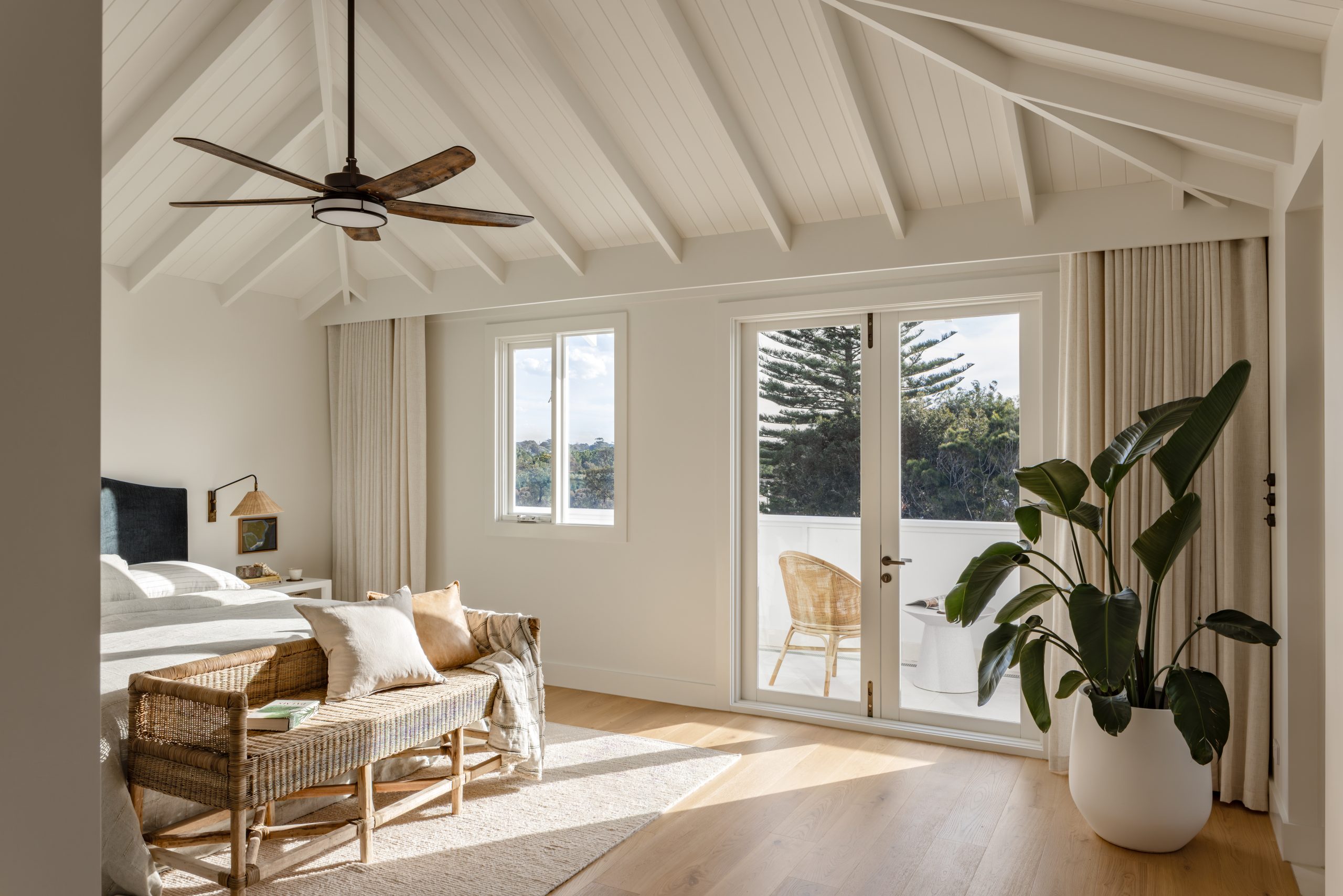
From warmer neutrals to tactile finishes, Australian homes are moving away from stark minimalism and towards spaces that feel more human.
Technology and semiconductor shares fell sharply as investors questioned the debt financing the AI infrastructure boom and confronted higher rates and Chinese competition.