Creating An Extended Shelf Life
As residents seek solace and sanctuary from their interiors, the home library has emerged as the perfect place for reading and reflection
 5 min
5 min
In an era when every square metre of real estate is worth its weight in gold, something as indulgent as a home library might feel like an anachronism. If we can store thousands of books in our smartphone, why line a room with potential dust collectors?
Despite the technological revolution — or perhaps because of it — the traditional home library space is holding its ground. As work infiltrates our homes and trickles into family life, many homeowners are purposefully carving out a corner of their home in an homage to a low-tech life.

Reading the room
Award-winning architect Luigi Rosselli says while the pandemic may have brought the office home to the fore, he’s witnessing a revolution against remote working.
“It depends on the client, but I’m mostly seeing two generations interested in libraries. One is the older generation who grew up with books, they still read a lot and like to get up and refer to a book or even feel the ‘microwaves’ from the pages reminding them of these wonderful stories or knowledge that can be passed on through,” he says.
“Then there’s the younger generation who are working long hours in front of a computer or some other electronic device and they are rebelling. They’re reacting to a sort of technology addiction and finding instead an interest in books and reading.”
Smaller footprints, especially in city residences, are notoriously challenging when it comes to storage and function, but Rosselli says libraries needn’t be single-use spaces.
“That’s very much my challenge; people saying they want a room for this, they want a room for that,” he says. “What I’ve done quite a few times is give a dual use to libraries. In fact, books only use up wall space, so in between those walls you can have quite a lot of space leftover.”
In his Bondi Bombora project, Rosselli created a stairwell library to accommodate the resident family’s large — and growing — book collection.
“One storey wouldn’t have been enough. So a stairwell worked ideally in the sense that it now has two functions.
“We also retained an old bay window underneath the stairs to make a study nook that is cocooned and separated from an active house filled with lots of kids.”
For a book-loving calligrapher in Sydney, Rosselli designed The Books House, which resembles a random stack of books from the outside while inside there is a private library hidden behind a moving bookcase.
While a home office and library fusion seems like a perfect match, savvy design and innovative thinking can marry a library to alternative rooms.
“In my house when the children were young they had a library room where the television was not allowed, they could do homework there but also it was a relaxing space with a couch so you could sit and read,” Rosselli says. “Now our children have grown up and moved out we put a table in there.
“It’s ended up being our favourite dining area because it’s in such good company, and the acoustics of books is fantastic.”
A turn up for the books

Whether it’s a limited footprint or a client seeking a hint of James Bond-style intrigue at home, professional cabinet maker Amos Groth of Groth & Sons says libraries are only limited by imagination — and budget.
“It’s a balance of what you’d like in your wildest dreams and what we can give you practically. But we try to really push the boundaries on the aesthetics to get all those bells and whistles,” Groth says, adding that private libraries can cost between $25,000 and $250,000. “A lot of my clients tell me when they go into their libraries and close the door they’re transported to London or Bath or anywhere in the world.
“Libraries offer an element of escapism.”
Over three decades, Groth & Sons has become known as “the bespoke library outfitters” fitting books into almost any space.
“We’ve done libraries in dining rooms, in hallways, as long as you’ve got enough space to get a floor lamp, a library ladder and a comfy chair. It doesn’t have to be an entire room,” Groth says.
“Today, people realise libraries aren’t about showing off a book collection, but are more about what a space represents.
“For me, in my library, I feel like I’m surrounded by my best mates.”
A home library might seem like an old school luxury, but Groth says they have come full circle.
“When I first started, some people thought book-filled rooms were ostentatious but today they can be really practical and fun spaces. It’s about getting away from the stresses and strains of technology to go into a low-tech room for a breath of fresh air,” he says.
Floor-to-ceiling walls of books, secret doors, cabinets on hydraulics and rolling library ladders might seem like the stuff of movies but Groth says fanciful libraries do exist.
“People have the fantasy of a library ladder, it makes them feel like they’re in a film with Audrey Hepburn or Rex Harrison,” he says.
“We often get asked about secret doors — we’re currently working on one where you actually pull a book and the door opens. They’re not the cheapest things, and there’s a lot of behind-the-scenes work because you can’t just put them into a regular doorframe.
“A lot of what we do are one-offs.”
Developing a love of books

A challenge for homeowners “rightsizing” to apartments is giving up superfluous living spaces, but developers are taking note of what buyers want, both inside and outside their residences. Along with private dining spaces and fully-equipped wellness spaces, libraries are seen as a desirable option for buyers.
Alceon has answered the call for more communal retreats on site, starting with Akoya in Sydney’s north.
The over-55s project is home to 39 apartments but includes approximately 700sqm of common areas such as a residents-only library to be stocked with 100 books from local bookshop Constant Reader.
“It’s not a tokenistic space, it’s a purpose-built library with a fireplace, a lounging section and plenty of shelving for residents to add more books to,” said Todd Campling, development director at Alceon Group.
“Our goal with the library was to recreate the creature comforts of home for residents who might be relocating from quite substantial family homes.
“There’s also a commercial-grade bar next to the library and personal lock-up wine cellars so people can enjoy a glass while they read.”
Campling adds that as Australians, especially in major cities, move towards multi-density living, it is the developer’s responsibility to create areas where neighbours, friends and family can enjoy social moments.
“Additional amenities aren’t for everyone and they aren’t for every development, it’s about curating spaces that are the perfect blend of what you’ve had — and what you wish you had,” he says.
And as generations age and needs evolve through a building’s lifespan, he says such communal spaces should be adaptable.
“The notion of a library with the Chesterfields lounges and balloons of bourbon could also become multi-generational spaces used by the grandparents down to their grandchildren. We envisage these library spaces or co-working areas can be a place to catch up with your neighbour, sit in a nice quiet space by yourself or hold a book club.”
Photography by Prue Ruscoe

From making unpopular decisions to learning when to listen, leaders from five businesses reveal what nobody prepared them for — and how running a company has challenged their expectations.

Technology and semiconductor shares fell sharply as investors questioned the debt financing the AI infrastructure boom and confronted higher rates and Chinese competition.

Elon Musk is exploring a potential merger between Tesla and SpaceX, a deal that could reshape the future of AI, robotics, autonomous vehicles and space technology. With a combined valuation potentially reaching $3.5 trillion, the move could bring Musk’s vision of an interconnected technology ecosystem closer to reality, although a deal remains uncertain.
5 min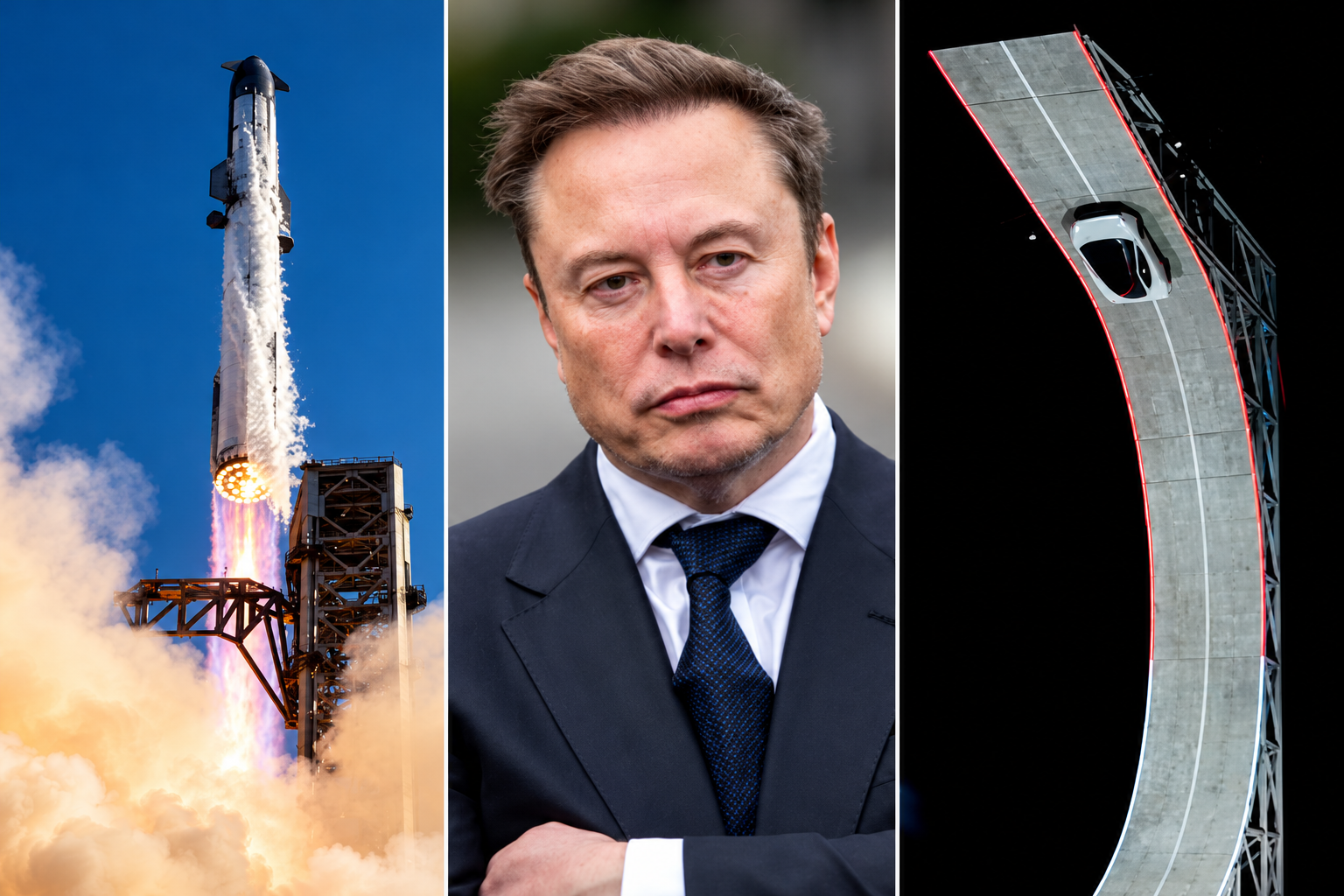
Elon Musk has engineered ties between Tesla TSLA 3.41%increase; up pointing triangle and SpaceX SPCX 7.79%increase; up pointing triangle that are hard to break, and now he wants to fuse them together permanently.
Musk has run both Tesla and SpaceX concurrently over the past two decades, using a schedule that dictated which days he spent focused on each business.
The companies have often shared resources and personnel, signaling their close ties. Last year, SpaceX looked into creating a spacesuit for Tesla’s humanoid robot Optimus, a person familiar with the matter said. Tesla last week showed off its new Roadster, a vehicle featuring SpaceX rocket thrusters that it hopes to soon bring to market.
And in recent months, Musk has repositioned both companies by expanding beyond their core operations toward a shared mission centered on artificial intelligence.
The world’s richest man on Tuesday signaled his interest in tying up SpaceX and Tesla, marking what would be the biggest corporate merger of all time. Because he serves as chief executive of SpaceX and Tesla, Musk said committees of independent directors at both companies are evaluating a possible deal, adding that a transaction might not come to fruition.
The committees will likely evaluate, with lawyers and bankers, how each company would fare in a potential deal and how a deal might best be structured. They then present their conclusions to their respective boards, who typically vote on whether to proceed.
“It’s an odd Kabuki dance where two groups of people are talking and I can’t be in the conversation,” Musk told SpaceX investors on Tuesday in response to an analyst’s question about a potential deal.
For Musk, the merger supports his vision of a world full of autonomous cars, humanoid robots and weekly rocket launches, as well as the data centers and satellites required to keep the whole thing running.
Some investors and analysts said they expect a transaction would be structured as an all-stock deal, with SpaceX potentially paying a modest premium for Tesla shares.
SpaceX, which has a market value of about $2 trillion, said it is seeing sharp growth in revenue across its businesses, which include operating data centers, launching rockets and operating satellite networks such as the internet service Starlink. Tesla is valued at about $1.5 trillion and is expanding its operations beyond its automotive and energy business. Shares in both companies traded higher following the news Tuesday.
Musk’s substantial ownership stakes in both companies, along with voting control at SpaceX, has enabled him to set the deal in motion. Analysts and investors said the deal will probably face regulatory scrutiny internationally, though some see Musk’s close relationship with the Trump administration as an asset to getting approval.
Blurred lines
The companies haven’t said which directors are on the special committees evaluating a potential deal. Several SpaceX and Tesla board members have either personal or business ties to Musk. And like Musk, venture capitalist Ira Ehrenpreis sits on both boards.
In a filing this week, Tesla outlined millions of dollars in business agreements with SpaceX and its subsidiaries last year, including $143 million in car sales to SpaceX, $3.3 million in advertising that it bought on the social-media platform X and $430 million in revenue from the sale of Megapack batteries for SpaceX’s data centers.
The companies also split the cost of resources including the use of Musk’s SpaceX jet and the bill for his personal security, which he runs through a private company.
Employees at both companies routinely move between companies to work on special projects, and some executives have dual roles, including Charles Kuehmann, vice president of materials engineering at both SpaceX and Tesla, and Ashok Elluswamy, the vice president of AI software at Tesla who runs a joint venture with SpaceX called Digital Optimus.
Over the years, Musk has launched new startups within his empire, including brain-implant company Neuralink, underground-tunnel developer the Boring Company and xAI, the AI startup that merged with SpaceX in February.
It is that AI business that Musk thinks can serve a market worth tens of trillions of dollars, justifying the need for a merger.
The business case goes like this: Tesla is developing robotaxis and robots, which it calls “physical AI.” SpaceX is working on the back end of physical AI: the data-center capacity and internet connection required for those robotaxis and robots to operate continuously.
“I don’t see what the value of Tesla is if it’s not merged with SpaceX,” said investment adviser Ross Gerber, a former Tesla bull turned critic invested in both companies. “If they don’t merge, the brains of everything that runs Tesla is owned by another company.”
On top of it all, both companies face constraints on the supply chains they need to make this world a reality, particularly when it comes to chips. To address this, Musk earlier this year announced a joint venture between Tesla, SpaceX and Intel to design and manufacture chips in Texas. “The most epic chip-building exercise by far,” he has said.
Musk at the wheel
For Musk, a merger would also solve two problems: demands on his attention and his lack of control at Tesla.
Tesla for years was Musk’s only public company, a status that came with greater scrutiny. There, Musk reports to a public board, as well as individual investors who make up around 30% of Tesla’s voting power, according to FactSet.
The question of Musk’s attention became a particular focus for investors and the board in recent years after he acquired Twitter in 2022 and launched xAI in 2023, and again in 2025 as he spent time in Washington, D.C., running the Department of Government Efficiency in the early months of President Trump’s second term.
As Tesla’s car business suffered in 2025, Musk threatened to take his AI ambitions outside the company if he wasn’t granted 25% voting control. Last November, Tesla shareholders approved a new pay package for Musk, which created a path for him to vastly expand his stake.
As of Sept. 30, Musk owned a roughly 20% stake in Tesla, according to the company’s proxy filing.
The SpaceX IPO gave Musk a different path. When SpaceX went public in June, the deal’s structure enabled him to have more than 80% voting power at the company—so much that he can’t be fired and decisions can’t be made without his support.
If SpaceX acquires Tesla, he will likely stay in control.
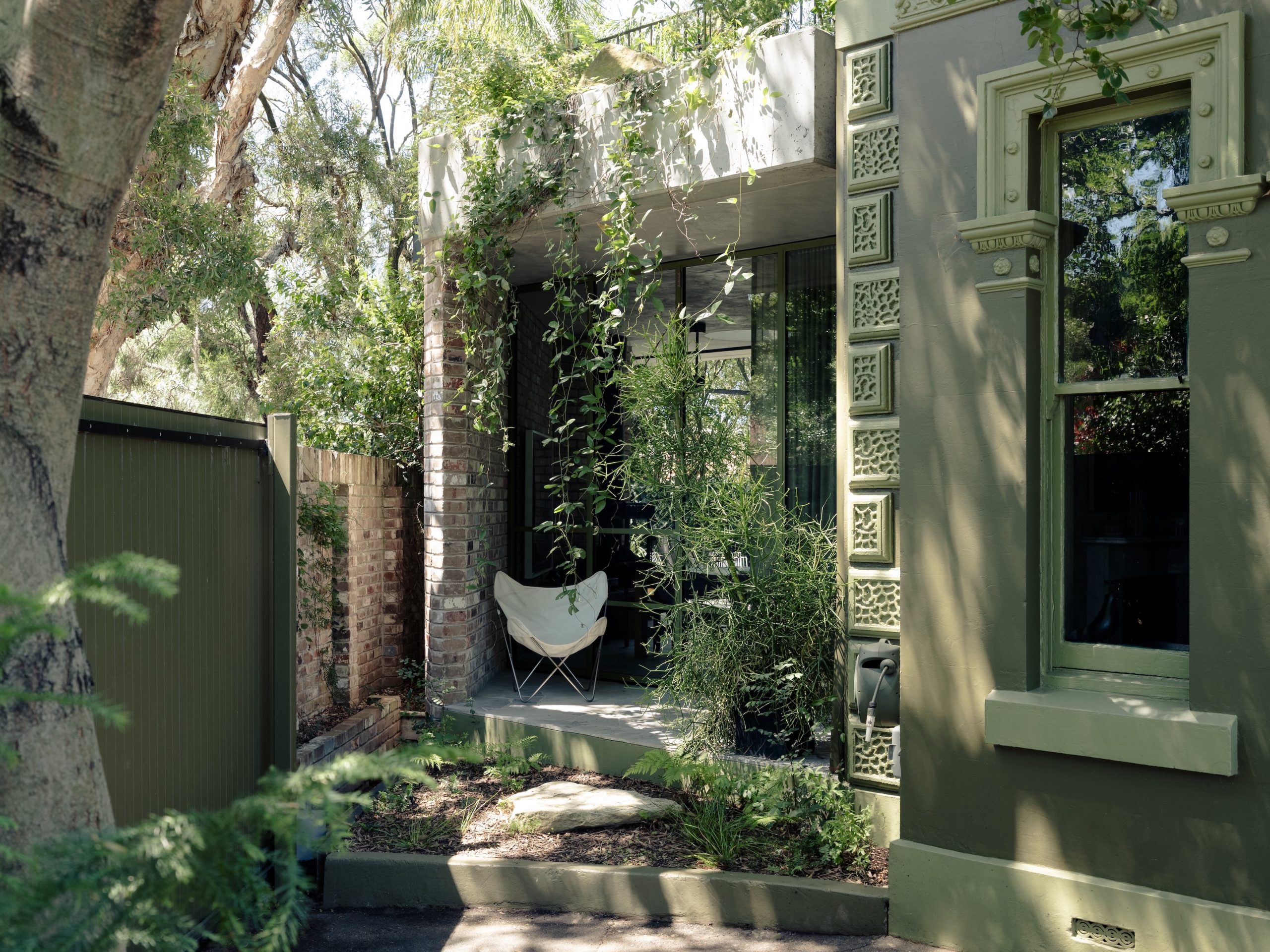
From bushland greens to valley reds, the country’s most awarded designers are proving that the best colour palette was never on a swatch card; it was outside the window all along.

All three vehicles will form part of a broader charitable initiative benefiting Big Brothers Big Sisters of America, the American Red Cross and Starlight Children’s Foundation