Inside the Summer Surge Powering Australia’s Holiday Home Markets
Summer continues to be prime time for Australia’s lifestyle markets, with Byron Bay and the Gold Coast recording headline sales right through Xmas.
 3 min
3 min
Summer is truly the time in the sun for Australia’s holiday destinations.
An embarrassment of riches floods into town from the capitals, many arriving with the idea of securing a holiday home.
That means real estate markets run right through Christmas and New Year, in stark contrast to capitals like Sydney and Melbourne which largely shut down until after the school holidays post–Australia Day.
Some secured their purchases, or sales, in time for the Christmas holidays.
Take The Block judge Darren Palmer and his cosmetics expert husband, Olivier Duvillard.
They bought an original beach shack near Belongil Beach in Byron Bay for $4.2 million, after selling their former Suffolk Park retreat, Pompano House, for $2.6 million.
Sydney-based Cricketer Nic Maddinson secured himself a getaway in time for Christmas, spending $1.88 million on a four-bedroom home in Coorabell.
One of Chemist Warehouse’s largest shareholders, and managing director of its QLD and NSW operations, Brett Clark, and wife Maria paid $27.5 million for Copperstone, the luxury Bangalow retreat of Oroton heir Tom Lane and wife Emma, in July.
Closer to Christmas, they expanded the already 19-hectare holding by spending $3.5 million for the vacant 24-hectare block next door.

Still in Bangalow, Susan Fashion Group founder Naomi Milgrom sold one of her Byron region holdings.
She offloaded a “Tuscan-style villa” for $4.9 million. Milgrom, who owns three adjoining properties on the dress-circle Lighthouse Road opposite Clarkes Beach in the heart of Byron, paid $3 million for the three-bedroom home on 2.4 hectares in 2017.
Fellow Melbourne-based best-selling author and podcaster Hugh Van Cuylenburg was also in a selling mood.
He sold his Bangalow retreat for $7.5 million. The founder of The Resilience Project took a hit on the 1905 original cottage, which had been architecturally upgraded into an ultra-modern home, having bought it less than two years ago for $8 million.

Closer to town, retired professional surfer Owen Wright sold one of his new development houses for $6 million just days before Christmas.

The Daniels Street home, with four bedrooms and a mineral pool, is one of four homes developed by Wright, who is keeping one of them. The buildings were completed at the start of December.
It was the same story for sellers Peter Ostick and his wife Ida Almasi, founders of Soma wellness spa, better known as the main filming location for Nicole Kidman’s Nine Perfect Strangers.
They nabbed a buyer for their five-bedroom Border Street home, which was reportedly asking around $20 million, after just six weeks on the market shortly before Christmas.
The couple sold the aforementioned Soma wellness spa this year in Ewingsdale, in the Byron hinterland, to Lorna Clarkson, founder of activewear giant Lorna Jane, for just shy of $11 million.
The Gold Coast, another one of Australia’s most popular holiday destinations, saw the same energy levels heading into the Christmas period.
An apartment in Dune Main Beach, the beachfront new development by Andrews Projects, sold for $6.8 million just before Christmas.
The full-floor, three-bedroom unit sits on the third level of the building that has a who’s who of Melbourne-based owners including former JB Hi-Fi owners Richard and Alison Bouris and a business entity with the directors tied to retail billionaire Solomon Lew.
Former AFL legend Buddy Franklin and wife Jesinta secured a buyer for Villa Casa, their Mediterranean-inspired Reedy Creek estate.
They sold the five-bedroom, 2021-built home for $10.5 million, three years after they bought it for $8.75 million, such has been the boom in the local real estate market post-COVID and in the lead up to the 2032 Brisbane Summer Olympics.

Technology and semiconductor shares fell sharply as investors questioned the debt financing the AI infrastructure boom and confronted higher rates and Chinese competition.
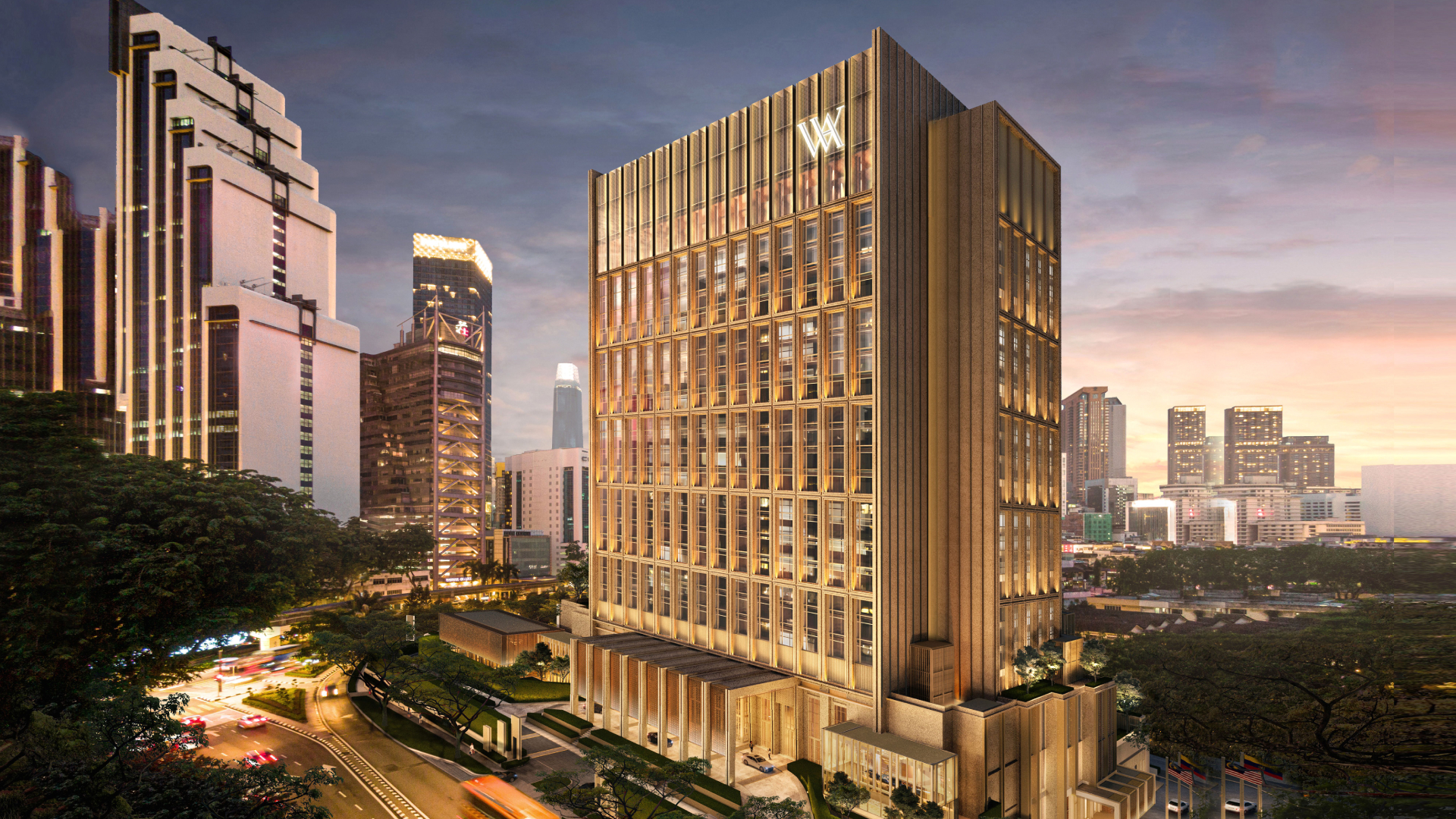
Waldorf Astoria Kuala Lumpur is scheduled to open on 30 October, introducing the Hilton luxury brand to Malaysia with an all-suite hotel in the city’s Golden Triangle.
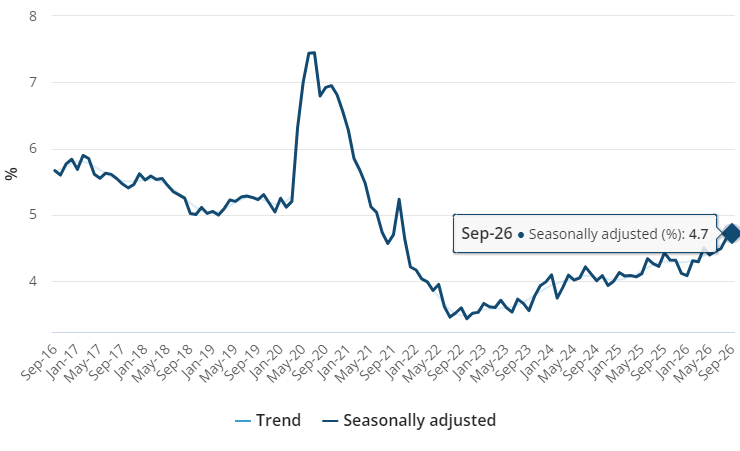
Employment fell by 39,300 and unemployment held at a revised 4.7 per cent, giving the RBA more room to pause in November.
2 min
Australia’s labour market weakened in September, reducing—but not eliminating—the case for another Reserve Bank rate rise in November.
The seasonally adjusted unemployment rate was 4.7 per cent, according to the Australian Bureau of Statistics. August was revised to the same level, while September employment fell by 39,300 people. The number of unemployed Australians increased by 8,900 to 732,000.
The weakness extended beyond the headline rate. The employment-to-population ratio fell 0.3 percentage points to 63.6 per cent, participation declined 0.2 points to 66.8 per cent and underemployment edged up to 6.3 per cent. Part-time employment fell by 73,700, partly offset by a 34,400 increase in full-time work.
For the RBA, this is a clearer sign that restrictive monetary policy is cooling demand. Higher unemployment and falling employment reduce wage pressure over time and increase the risk that another rate rise would push the economy harder than necessary.
That makes a November increase less certain. It does not make a hold inevitable. The RBA must balance labour-market softness against inflation, and the September-quarter consumer price index due later in October will carry more direct weight in the decision.
For mortgage holders and property investors, the practical conclusion is not to trade one data release. Borrowers should continue testing repayments at higher rates, preserve liquidity and avoid basing a purchase on an assumed near-term reversal. Refinancing decisions should be assessed against total cost, not simply the advertised rate.
Property markets may initially welcome a reduced probability of another increase because borrowing capacity and sentiment are highly rate-sensitive. But a weakening labour market is not unambiguously positive for housing: job security supports mortgage serviceability, rental demand and buyer confidence.
The September numbers have given the RBA a credible reason to wait. Inflation will determine whether it can use it.

MAISON de SABRÉ’s new Spring Harvest Collection turns everyday produce into collectible leather charms and introduces fresh silhouettes in its cult Bucket bag family.
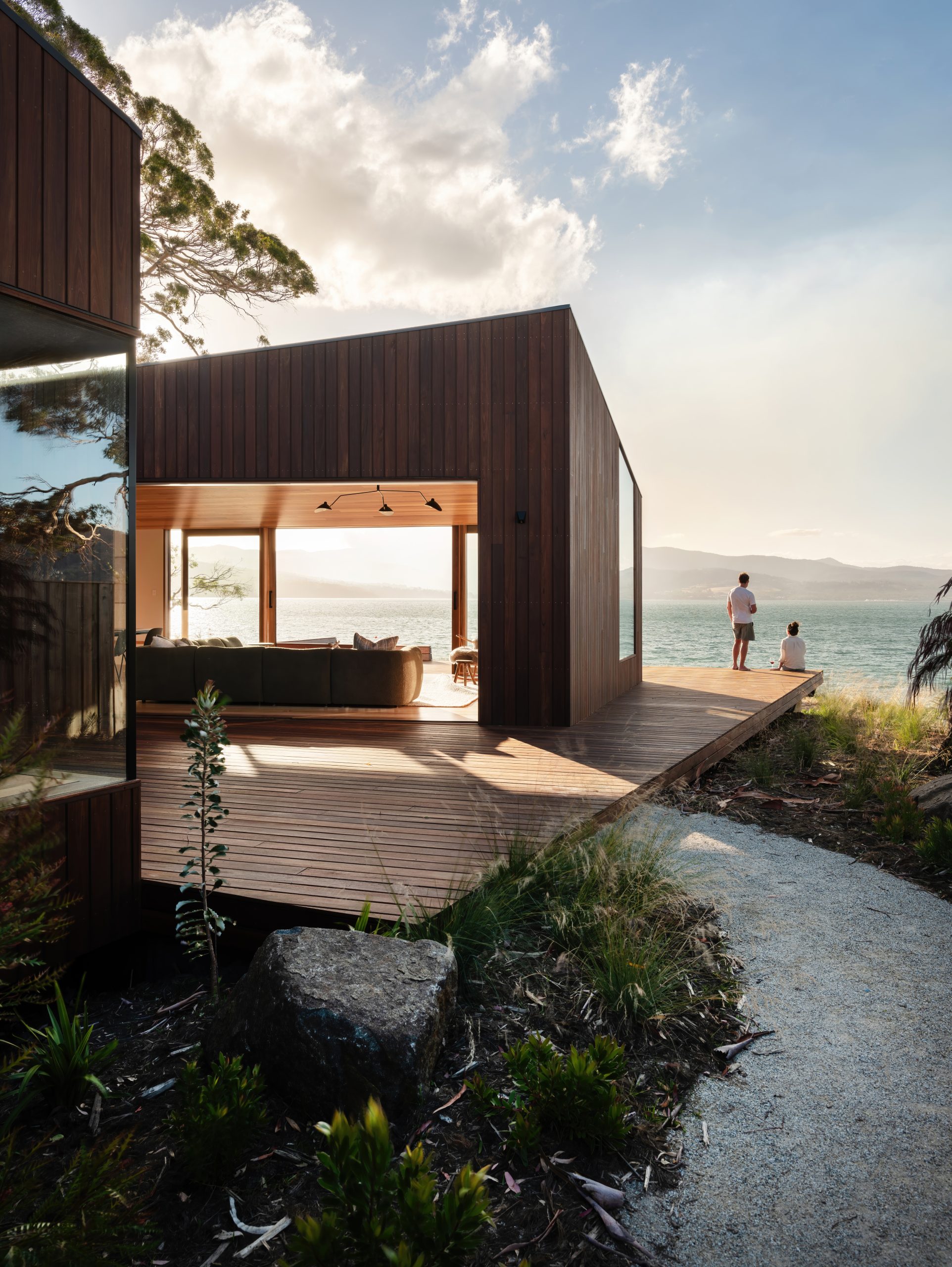
From the shacks of yesterday to the sculptural sanctuaries of today, Australia’s coastal architecture has matured into a global benchmark for design.