Suddenly There Aren’t Enough Babies. The Whole World Is Alarmed.

The world is at a startling demographic milestone. Sometime soon, the global fertility rate will drop below the point needed to keep population constant. It may have already happened.

Fertility is falling almost everywhere, for women across all levels of income, education and labor-force participation. The falling birthrates come with huge implications for the way people live, how economies grow and the standings of the world’s superpowers.

In high-income nations, fertility fell below replacement in the 1970s, and took a leg down during the pandemic. It’s dropping in developing countries, too. India surpassed China as the most populous country last year, yet its fertility is now below replacement.

“The demographic winter is coming,” said Jesús Fernández-Villaverde, an economist specialising in demographics at the University of Pennsylvania.

​Many government leaders see this as a matter of national urgency. They worry about shrinking workforces , slowing economic growth and underfunded pensions; and the vitality of a society with ever-fewer children. Smaller populations come with diminished global clout, raising questions in the U.S., China and Russia about their long-term standings as superpowers.

Some demographers think the world’s population could start shrinking within four decades—one of the few times it’s happened in history.

Donald Trump , this year’s presumptive Republican presidential nominee, has called collapsing fertility a bigger threat to Western civilization than Russia. A year ago Japanese Prime Minister Fumio Kishida declared that the collapse of the country’s birthrate left it “standing on the verge of whether we can continue to function as a society.” Italian Prime Minister Giorgia Meloni has prioritized raising the country’s “demographic GDP.”

Governments have rolled out programs to stop the decline—but so far they’ve barely made a dent.

Demographic surprise

In 2017, when the global fertility rate—a snapshot of how many babies a woman is expected to have over her lifetime—was 2.5, the United Nations thought it would slip to 2.4 in the late 2020s. Yet by 2021, the U.N. concluded, it was already down to 2.3—close to what demographers consider the global replacement rate of about 2.2. The replacement rate, which keeps population stable over time, is 2.1 in rich countries, and slightly higher in developing countries, where fewer girls than boys are born and more mothers die during their childbearing years.

While the U.N. has yet to publish estimated fertility rates for 2022 and 2023, Fernández-Villaverde has produced his own estimate by supplementing U.N. projections with actual data for those years covering roughly half the world’s population. He has found that national birth registries are typically reporting births 10% to 20% below what the U.N. projected.
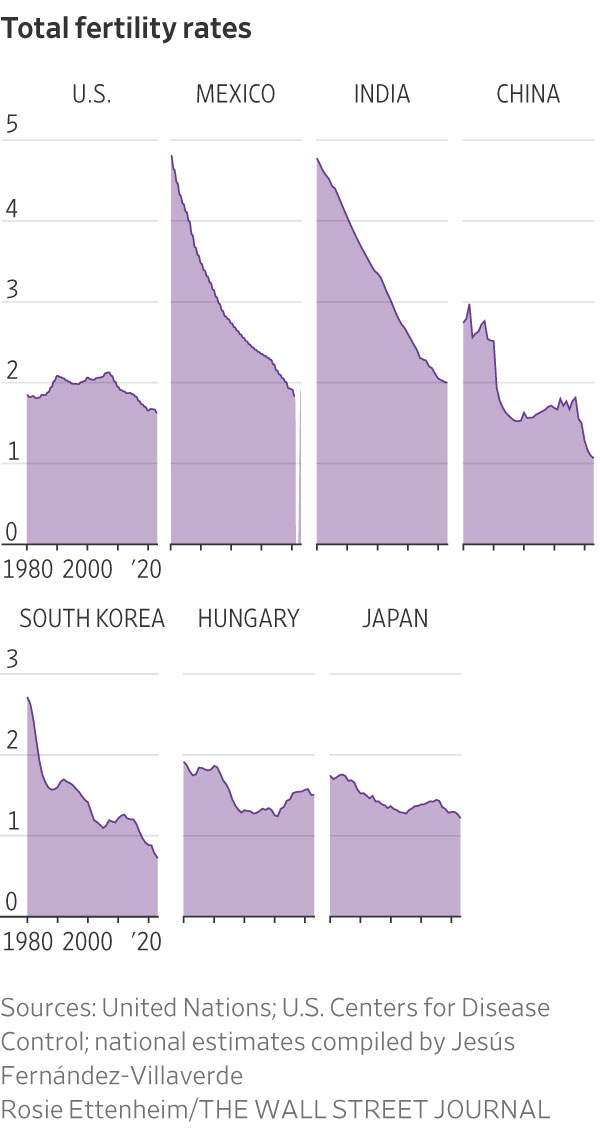
China reported 9 million births last year , 16% less than projected in the U.N.’s central scenario. In the U.S., 3.59 million babies were born last year, 4% less than the U.N. projected. In other countries, the undershoot is even larger: Egypt reported 17% fewer births last year. In 2022, Kenya reported 18% fewer.

Fernández-Villaverde estimates global fertility fell to between 2.1 and 2.2 last year, which he said would be below global replacement for the first time in human history. Dean Spears, a population economist at the University of Texas at Austin, said while the data isn’t good enough to know precisely when or if fertility has fallen below replacement, “we have enough evidence to be quite confident about…the crossing point not being far off.”

In 2017 the U.N. projected world population, then 7.6 billion, would keep climbing to 11.2 billion in 2100. By 2022 it had lowered and brought forward the peak to 10.4 billion in the 2080s. That, too, is likely out of date. The Institute for Health Metrics and Evaluation at the University of Washington now thinks it will peak around 9.5 billion in 2061 then start declining.

In the U.S., a short-lived pandemic baby boomlet has reversed. The total fertility rate fell to 1.62 last year, according to provisional government figures, the lowest on record .

Had fertility stayed near 2.1, where it stood in 2007, the U.S. would have welcomed an estimated 10.6 million more babies since, according to Kenneth Johnson, senior demographer at the University of New Hampshire.

In 2017, when the fertility rate was 1.8, the Census Bureau projected it would converge over the long run to 2.0. It has since revised that down to 1.5. “It has snuck up on us,” said Melissa Kearney, an economist at the University of Maryland specialising in demographics.

A second demographic transition?

Historians refer to the decline in fertility that began in the 18th century in industrialising countries as the demographic transition. As lifespans lengthened and more children survived to adulthood, the impetus for bearing more children declined. As women became better educated and joined the workforce, they delayed marriage and childbirth, resulting in fewer children.

Now, said Spears, “the big-picture fact is that birthrates are low or are falling in many diverse societies and economies.”

Some demographers see this as part of a “second demographic transition,” a society-wide reorientation toward individualism that puts less emphasis on marriage and parenthood, and makes fewer or no children more acceptable.

In the U.S., some thought at first that women were simply delaying childbirth because of lingering economic uncertainty from the 2008 financial crisis.

In research published in 2021 , the University of Maryland’s Kearney and two co-authors looked for possible explanations for the continued drop. They found that state-level differences in parental abortion notification laws, unemployment, Medicaid availability, housing costs, contraceptive usage, religiosity, child-care costs and student debt could explain almost none of the decline. “We suspect that this shift reflects broad societal changes that are hard to measure or quantify,” they conclude.

Kearney said while raising children is no more expensive than before, parents’ preferences and perceived constraints have changed: “If people have a preference for spending time building a career, on leisure, relationships outside the home, that’s more likely to come in conflict with childbearing.”

Meanwhile, time-use data show that mothers and fathers, especially those that are highly educated, spend more time with their children than in the past. “The intensity of parenting is a constraint,” Kearney said.

Erica Pittman, a 45-year-old business banker in Raleigh, N.C., said she and her husband opted to have only one child because of demands on their time, including caring for her mother, who died last year after a long battle with multiple sclerosis. Their 8-year-old son is able to participate in theatre workshops, soccer and summer camps because the couple, with a combined income of about $225,000 a year, has more time and money.
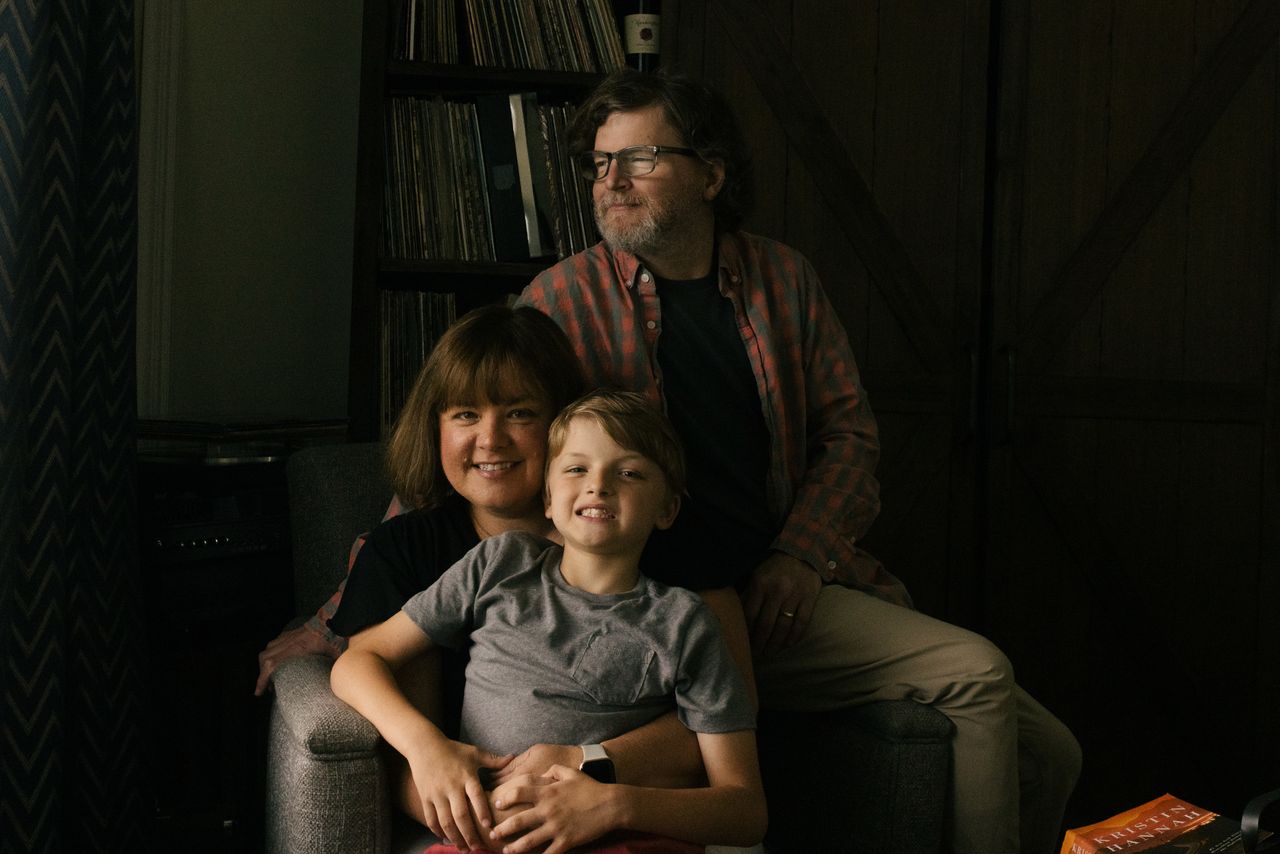
The Pittman family in Raleigh, N.C. PHOTO: ANGELA OWENS/THE WALL STREET JOURNAL

“I feel like a better mom,” Pittman said. “I feel like I can go to work—because I have a fairly demanding job—but I can also make time to volunteer at his school, be the chaperone for the field trip and do those kinds of things, because I only have one to coordinate with my schedule.”

Pittman said she only questions their decision when her son says he wishes he had a sibling to play with. In response, she and her husband, a middle-school history teacher, pick vacation destinations with a kids’ club, such as a Disney cruise, so her son can play with others his age.

‘Plugged into the global culture’

Fertility is below replacement in India even though the country is still poor and many women don’t work —factors that usually sustain fertility.

Urbanisation and the internet have given even women in traditional male-dominated villages a glimpse of societies where fewer children and a higher quality of life are the norm. “People are plugged into the global culture,” said Richard Jackson, president of the Global Aging Institute, a nonprofit research and education group.

Mae Mariyam Thomas, 38, who lives in Mumbai and runs an audio production company, said she’s opted against having children because she never felt the tug of motherhood. She sees peers struggling to meet the right person, getting married later and, in some instances, divorcing before they have kids. At least three of her friends have frozen their eggs, she said.

“I think now we live in a really different world, so I think for anyone in the world it’s tough to find a partner,” she said.

Sub-Saharan Africa once appeared resistant to the global slide in fertility, but that too is changing. The share of all women of reproductive age using modern contraception grew from 17% in 2012 to 23% in 2022, according to Family Planning 2030, an international organisation.

Mae Mariyam Thomas, at her house in Mumbai, India, has opted to not have children. PHOTO: ATUL LOKE FOR THE WALL STREET JOURNAL

Jose Rimon, a professor of public health at Johns Hopkins University, credits that to a push by national leaders in Africa which, he predicted, would drive fertility down faster than the U.N. projects.

Once a low fertility cycle kicks in, it effectively resets a society’s norms and is thus hard to break, said Jackson. “The fewer children you see your colleagues and peers and neighbours having, it changes the whole social climate,” he said.

Danielle Vermeer grew up third in a family of four children on Chicago’s North Side, where her neighbourhood was filled with Catholics of Italian, Irish and Polish descent and half her close friends had as many siblings as her or more. Her Italian-American father was one of four children who produced 14 grandchildren. Now her parents have five grandchildren, including Vermeer’s two children, ages 4 and 7.

The 35-year-old, who is the co-founder of a fashion thrifting app, said that before setting out to have children, she consulted dozens of other couples and her Catholic church and read at least eight books on the subject, including one by Pope Paul VI. She and her husband settled on two as the right number.

“The act of bringing a child into this world is an incredible responsibility,” she said.

New policies

Governments have tried to reverse the fall in fertility with pro natalist policies.

Perhaps no country has been trying longer than Japan. After fertility fell to 1.5 in the early 1990s, the government rolled out a succession of plans that included parental leave and subsidised child care. Fertility kept falling.

In 2005, Kuniko Inoguchi was appointed the country’s first minister responsible for gender equality and birthrate. The main obstacle, she declared, was money: People couldn’t afford to get married or have children. Japan made hospital maternity care free and introduced a stipend paid upon birth of the child.

Japan’s fertility rate climbed from 1.26 in 2005 to 1.45 in 2015. But then it started declining again, and in 2022 was back to 1.26.

This year, Prime Minister Fumio Kishida rolled out yet another program to increase births that extends monthly allowances to all children under 18 regardless of income, free college for families with three children, and fully paid parental leave.

Inoguchi, now a member of parliament’s upper house, said the constraint on would-be parents is no longer money, but time. She has pressed the government and businesses to adopt a four-day workweek. She said, “If you’re a government official or manager of a big corporation, you should not worry over questions of salary now, but that in 20 years time you will have no customers, no clients, no applicants to the Self-Defense Forces.”

Hungarian Prime Minister Viktor Orban has pushed one of Europe’s most ambitious natality agendas. Last year he expanded tax benefits for mothers so that women under the age of 30 who have a child are exempt from paying personal income tax for life. That’s on top of housing and child-care subsidies as well as generous maternity leaves.

Hungary’s fertility rate, though still well below replacement, has risen since 2010. But the Vienna Institute of Demography attributed this primarily to women delaying childbirth because of a debt crisis that hit around 2010. Adjusted for that, fertility has risen only slightly, it concluded.

In the U.S., while state and federal legislators have pushed to expand child-care subsidies and parental leave, they have generally not set a higher birthrate as an explicit goal. Some Republicans, though, are leaning in that direction. Last year, Trump said he backed paying out “baby bonuses” to prop up U.S. births, and GOP Arizona Senate candidate Kari Lake recently endorsed the idea.

Republican Sen. J.D. Vance of Ohio said falling fertility matters beyond the economic pressures of a smaller labor force and unfunded Social Security. “Do you live in communities where there are smiling happy children, or where people are just ageing?” he said in an interview. Lack of siblings and cousins, he said, contributes to children’s social isolation.

He’s studied potential solutions, in particular Hungary’s approach, but hasn’t seen proof of anything that works over the long term.

The Institute for Health Metrics and Evaluation found little evidence that pronatalist policies lead to sustained rebounds in fertility. A woman may get pregnant sooner to capture a baby bonus, researchers say, but likely won’t have more kids over the course of her lifetime.

Economic pressure

With no reversal in birthrates in sight, the attendant economic pressures are intensifying. Since the pandemic, labor shortages have become endemic throughout developed countries. That will only worsen in coming years as the postcrisis fall in birthrates yields an ever-shrinking inflow of young workers, placing more strain on healthcare and retirement systems.

Neil Howe , a demographer at Hedgeye Risk Management, has pointed to a recent World Bank report suggesting that worsening demographics could make this a second consecutive “lost decade” for global economic growth.

The usual prescription in advanced countries is more immigration, but that has two problems. As more countries confront stagnant population, immigration between them is a zero-sum game. Historically, host countries have sought skilled migrants who enter through formal, legal channels, but recent inflows have been predominantly unskilled migrants often entering illegally and claiming asylum.

High levels of immigration have also historically aroused political resistance, often over concerns about cultural and demographic change. A shrinking native-born population is likely to intensify such concerns. Many of the leaders keenest to raise birthrates are most resistant to immigration.

As birthrates fall, more regions and communities experience depopulation, with consequences ranging from closed schools to stagnant property values. Less selective colleges will soon struggle to fill classrooms because of the plunge in birthrates that began in 2007, said Fernández-Villaverde. Vance said rural hospitals can’t stay open because of the falling local population.

An economy with fewer children will struggle to finance pensions and healthcare for growing ranks of elderly. South Korea’s national pension fund, one of the world’s largest, is on track to be depleted by 2055. A special legislative committee recently presented several possible pension reforms, but there’s only a short window to act before the next presidential election campaign heats up.

There’s been little public pressure to act, said Sok Chul Hong, an economist at Seoul National University. “The elderly are not very interested in pension reform, and the youth are apathetic towards politics,” he said. “It is truly an ironic situation.”


A Car That Costs as Much as a House Is the Latest ‘Dream’ of America’s Upper Middle Class

When Lamborghini announced its end-of-an-era Huracán Super Trofeo Jota last April, in an edition of just 10, it sold out immediately. No price was announced, though it was probably above US$400,000. That hardly deterred buyers eager to own one of the last Huracán supercars.

Lamborghini Huracán

Ferrari’s limited-edition 812 Competizione and 812 Competizione A in 2021? The 999 hardtops (US$598,567) and 599 targas (US$694,549) were gone very quickly, though maybe not in 60 seconds.

Meanwhile, the Rolls-Royce Black Badge Cullinan “Blue Shadow Private Collection” cars that appeared in 2023, just 62 in number, disappeared within two weeks. Black Badge Series II Cullinans start at US$470,000 for 2025, but these special editions are pricier—more than US$600,000.

“The primary driver for Rolls-Royce Cullinan clients is not price, but a combination of lifestyle and personalised exclusivity,” says Martin Fritsches, president and CEO of Rolls-Royce Motor Cars North America.

Rolls-Royce Cullinan

The global supercar market was US$17.5 billion in 2023, reports MarketResearch.biz, but it could soar to US$24.9 billion by 2033. Supercars, Business Research Insights says, “are a symbol of luxury, performance and status, appealing to affluent buyers who seek exclusivity and the thrill of driving a high-powered machine. … With a growing global economy and increasing wealth, the demand for supercars continues to rise.”

In the U.S., the American International Automobile Dealers Association reported that luxury brand deliveries in 2023 were more than 2.6 million, accounting for 17% of U.S. light-vehicle sales. That was up from 2.2 million sales in 2021 (and a 14.7% share).

Supercar sales represent small totals, but big potential profits. It’s a niche with an increasing number of startups, including battery cars from companies such as Lucid and Rimac. Ferrari, for instance, reported a US$1.36 billion profit in 2023, a yearly record. That’s despite producing only 13,221 units in the year. Ferrari has typically produced between 8,000 and 11,000 cars annually, but it’s one of the world’s most written-about, admired, and sought-after brands.

And Lamborghini had its best year in 2023, with an operating profit of US$777 million. That’s on sales of 10,100 globally. But each sale was a big ticket: The Huracán buyer in 2023 paid between US$212,090 and US$340,690. Volume didn’t help Tesla all that much. The company sold 1.8 million vehicles globally in 2023 (and had the world’s best-selling car in the Model Y), but has been experiencing declining profits.

This year, the supercar and luxury carmakers are revelling in the power of special editions and the one-of-one “bespoke” commission. Without having to make major changes to their existing models, the companies are able to greatly increase the price—via distinctive colours, interior appointments, and personalisation. Perhaps Tesla would do better if it too delved deeper into accommodating its eager customers with vast personalisation possibilities. Who wouldn’t want a one-of-10 SpaceX Edition of the Model Y?

Meanwhile, established supercar makers are rapidly transitioning to electric and hybrid drive, motivated by international regulations that will ban internal-combustion engines by 2035. Maserati, for instance, is introducing electric “Folgore” versions of its GranCabrio convertible this year, and MC20 supercar in 2025. There will be a new electric SUV in 2027 and a four-door battery Quattroporte in 2028. Electrification is not likely to lead to either lower prices or lower demand, but there’s no certainty.

The Collector Market Is Cruising, Too

The market for collector vehicles above US$200,000 also remains quite healthy. The US$143 million paid for the 1955 Mercedes-Benz 300 SLR Uhlenhaut Coupe in 2022 surpassed the results of any other car sold at auction by more than US$90 million.

This 1955 Mercedes-Benz coupe broke records when it sold for $142m in 2022

Critics who said that high-dollar buyers would never buy US$200,000-plus cars online (without seeing them in person) have been proven dramatically wrong, and the increase in online buying on sites like Bring a Trailer (BaT) and Cars & Bids has stoked rising values.

“March 2024 was the largest-volume month in our Premium Listings category since we launched it in 2019,” says Randy Nonnenberg, president and co-founder of BaT. “April 2024 followed on with 64 vehicles selling at over US$200,000 in value, with the top sale a Bugatti Chiron at US$3.075 million.”

Offerings in that price range from a US$250,000 1932 Ford hot rod coupe and a Lexus LFA to modern Ferraris and Ford GTs, Nonnenberg says. “The low transaction fees of our online platform make it very attractive for buyers of these expensive items when compared to other venues.”

Pre-owned supercars (and adjacent American muscle) often appreciate in the marketplace, with the rare (and most powerful) ones commanding huge prices.

“The strong US$3.5 million paid at our Amelia Island auction in March 2024 for a Porsche 918 Spyder Weissach—as well as many other strong prices for contemporary supercars—demonstrates the strength in this segment,” says David Gooding , president of the Gooding and Company international auction house. Seven cars priced at more than US$10 million were offered at auction last year, reports Hagerty, with as many as 10 expected in 2024.

McKeel Hagerty , CEO and chairman at Hagerty, says the US$200,000 price point is an interesting one in the enthusiast car market.

“With a budget like that, you can buy some fantastic classics with a rich history, late-model supercars, or you can build a wide variety of the latest restomods [older cars restored with modern amenities],” Hagerty says. “These are the dream cars of the American upper-middle class.”

Hagerty says that US$200,000 would buy “a great, early Porsche 911 S or Jaguar Series 1 E-Type Roadster.” A supercar car lover might also find a Lamborghini Huracán or Ferrari 458 with “weapons-grade performance” in the price range, or a Plymouth Superbird and ‘66 Mustang GT350, he adds.

A rare 2015 Porsche 918 Spyder Weissach supercar

Despite the demand, Brian Rabold, vice president at Hagerty Automotive Intelligence, says that high-priced cars don’t necessarily appreciate as fast as some others when they age.

“In the past five years, the 87 vehicle generations in the Hagerty Price Guide with an average value between US$200,000 and US$500,000 have seen an average value growth of 9.24%. This lags behind the 35% average value growth seen in the remaining 1,351 vehicle generations,” Rabold says.

Nevertheless, he says the future “looks bright” for the US$200,000 to US$500,000 segment. “These vehicles are becoming more popular among collectors. Surprisingly, Baby Boomers (who hold most of the wealth in the country) are not driving this growth.” Hagerty is seeing more queries from Gen-X.

“Owning a desirable car or truck that you can drive, or show is much more fun than storing your stock certificates in a safe,” says Craig Jackson , chairman and CEO of the Barrett-Jackson auction house. “Plus, it can offer a long-term upside if you research before you buy.”

Five Things You Should Stop Doing Before Applying For a Home Loan

No matter whether you’re a first home buyer or a seasoned investor, entering the property market right now, in whatever capacity, is a tricky task thanks to high interest rates and a super competitive market across the board.

With Google searches like ‘how much deposit do I need to buy a house’  and ‘how to get a home loan’ currently trending, there’s one question potential buyers should be asking, as well: ‘what are the things to stop doing before applying for a home loan’.

Barbara Giamalis, a mortgage broker at Tiimely Home, has over 25 years of experience on the matter, and says there are certainly some factors to consider when applying for a home loan that can better your chances of success.

“There’s no right or wrong time to purchase a home; it all depends on every person’s financial situation, but you must ensure you’re comfortable paying back the loan based on your personal financial circumstances,” said Ms Giamalis.

“The number one question I’m asked is, ‘how much can I borrow?’, but there’s a huge difference between what people can borrow now in comparison to rates. By enacting some of these small tips below, it might just be the difference between getting approved or denied for a home loan.”

Below, Ms Giamalis lists five things you should consider stopping if you’re planning to apply for a home loan. And with predications of lower interest rates coming into play this year, there’s never been a better time to get on top of the home loan race.

—

1. Consider cancelling your credit card

This is a simple one. Typically, if you’re looking to borrow more money for a higher loan, it’s wise to close any credit card accounts you have open. Contrary to popular opinion, you definitely don’t need a credit card to build your credit score to get a home loan.

“If you’ve got credit cards, try and pay them off and cancel them before applying for a loan because it gives you greater borrowing power,” said Ms Giamalis.

“You don’t need a good credit score through a credit card to get approved for a home loan as your credit rating is what it is. If you’re a first-time borrower and never had a loan, your rating won’t be great, it might be around 700, but it’s better than having 800 with two credit cards.”

Typically, a credit card rating is calculated from your credit report, which is essentially a history of your credit card actions. It’s calculated based off your line of credit (the amount you have borrowed), your credit application history, and whether you have paid your debts in time. Your score will be highlighted between zero to 1,200; the higher the score, the better your odds are of getting a loan. The lower your score, riskier you present to potential lenders.

Getty Images


2. Stop using ‘Buy Now, Pay Later’ schemes 

We’ve all been there. ‘Buy Now, Pay Later’ services present as extremely attractive payment alternatives when shopping online. But therein lies the danger; such services rely on its customers not making repayments in time.

And if you’re considering applying for a home loan, it’s wise to avoid using such services all together.

“If an applicant opts to pay off purchases in increments, even interest-free payments, this could signal to some lenders that the applicant may not be financially stable,” said Ms Giamalis.

“Most lenders will look at the living expenses of an applicant. If an applicant is using ‘buy now, pay later’ services more than what they have in their savings, this could be a red flag and lenders could question whether they can afford a loan.”

Services like Afterpay also have the right to report any missed payments on your credit history, which could definitely have a negative impact to your credit score.

3. Don’t put off saving for future mortgage repayments

Before applying for a home loan, a good indication of whether you would be able to afford the monthly repayments on your mortgage is demonstrating the ability to save the amount. This, along with saving for your ten or 20 percent deposit, will put you in good stead for your home loan preparation, and will show lenders that you’re disciplined when it comes to finances.

“One of the best tips for young people, and one they can start doing now, is to start saving for their monthly mortgage payment before applying for a home loan as it shows dedication,” said Ms Giamalis.

Ms Giamalis adds that having a three-month saving history is a great way to prove this to potential lenders.

Here are some friendly financial tools to assist you along the way.

Unsplash


4. Stop gambling and making cash withdrawals 

According to Gambling Statistics Australia, 6.8 million Australians participate in some form of gambling each year. This could include activities like buying a ticket in the lottery right through to using gambling apps and visiting casinos. This can present as an obvious red flag to lenders, who will take this into account when deciding to service a home loan application or not.

Another factor to consider is cash withdrawals. If you’re someone who is making regular ATM cash withdrawals per week or per month, this can be a problem as the potential lender can’t track where this money is going. Experts suggest it’s better to have purchases that are traceable.

“Large one-off purchases such as a couch, a new hot water service or a motor vehicle, won’t be taken into an applicant’s living expenses as it’s a one-off meaning the banks will look at that as a discretionary cost,” added Ms Giamalis.

Erik Mclean // Unsplash


5. Don’t hold onto student debt

One of the key considerations your mortgage broker or financial professional will consider in the home loan application process is paying out any debts you may have outstanding, such as your higher education debt.

It might seem obvious that paying off a HECS debt will strengthen your chances of obtaining a home loan, however, Ms Giamalis says many people often don’t factor in these debts.

“The Higher Education Loan Program (HELP) impacts your borrowing power. HELP debt is a liability that you need to declare in the home loan application process,” said Ms Giamalis.

“The impact of HECS on your ability to get a home loan may vary depending on your income level and the amount of your HECS debt. Seeking financial advice before deciding to pay off your debt is crucial.”

Many are not in the position to pay off their student loans immediately, so this point comes as an additional should you be in the position to do so. This also applies even in light of the Federal Government’s proposal to wipe a reported $3 billion in debt from three million Australians who have HECS debts through indexation changes, essentially capping indexation rate for loans. The proposal is designed to lend a hand in helping young tertiary educated Australians pay off their student loans.

—

Manila’s Bel-Air Neighbourhood Is as Posh as It Sounds

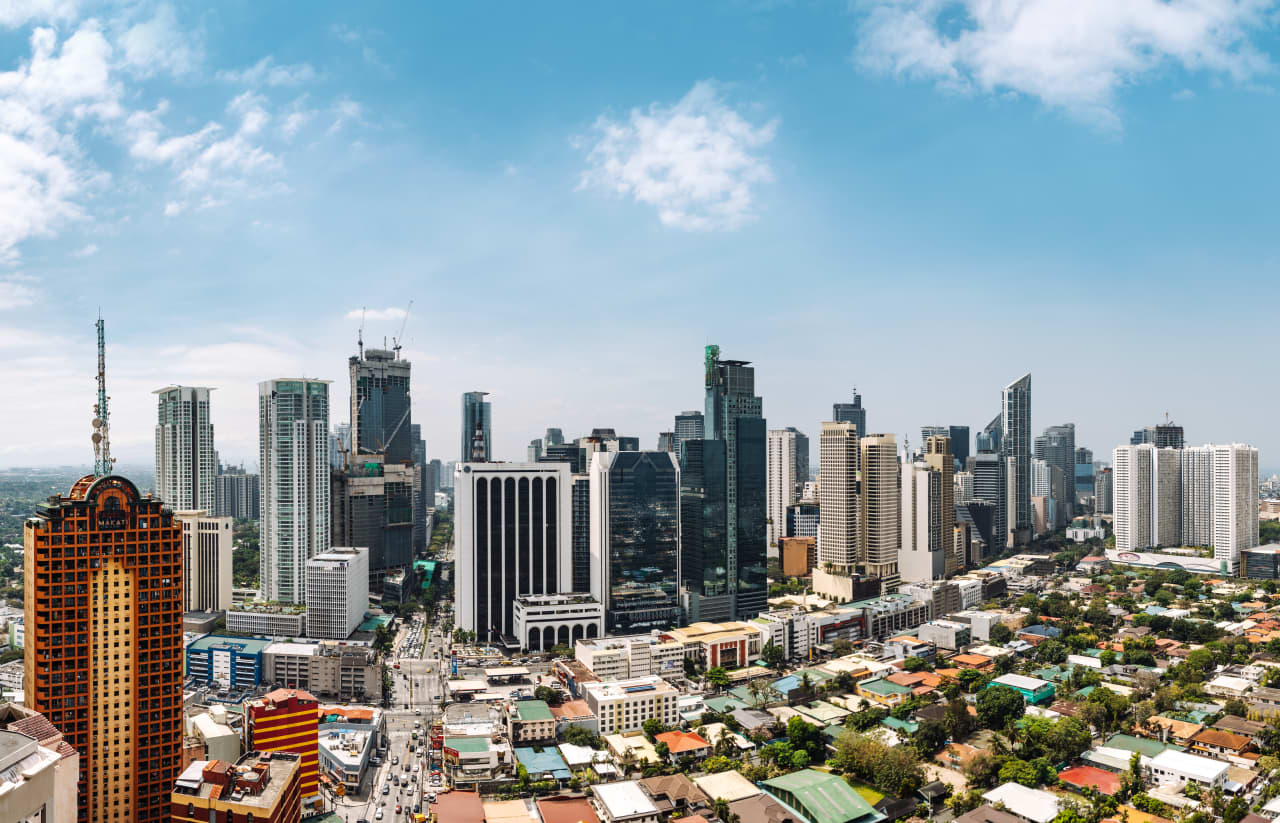
Makati, a major business district in the Philippines, has roots dating to the 17th century, but it wasn’t until the mid-1900s that the city began its rapid development.

Within that urban hub, the planned community of Bel-Air, once suburban housing requested by Philippine Airlines pilots (hence “Air” in the name) has matured into one of the most upmarket communities in Metro Manila. It’s now among the affluent pockets benefitting from a high-end housing boom in the Philippine capital, which led the world in luxury price growth last year, according to the latest Prime Global Cities Index from London-based property firm Knight Frank.

Manila’s luxury home prices remained the fastest rising in the world in the first quarter of this year as well.

“This increase is driven by rising housing demand, with agents reporting a surge in requirements from expatriates returning to manage local businesses as the economy shows strong performance,” Knight Frank wrote in the report.

The name Bel-Air refers to both the barangay—an administrative division of a larger city—and to Bel-Air Village, one of several exclusive gated housing communities developed in Makati. Bel-Air Village was developed in four phases during the 1950s and 1960s, identified by number.

With just over 36,000 residents according to the 2020 Philippine census, Barangay Bel-Air has the second-largest population of Makati’s 33 barangays. Makati, with a population of nearly 630,0000, is now a major Asian economic centre, home to leading local and multinational enterprises and known colloquially as the Wall Street of the Philippines.

Boundaries

The level, tree-lined streets of Bel-Air cover 171.2 hectares (more than 420 acres) in central Makati, southeast of Manila.

Barangay Bel-Air’s borders unevenly resemble a tobacco pipe and the borders touch several others. Poblacion and Guadalupe Viejo bound it to the north, Urandeta, San Lorenzo and Forbes Park to the south, Guadalupe Viejo and Pinagkaisahan to the east and Santa Cruz and San Antonio to the west.

While Bel-Air Village is only made up of residences, the wider barangay encompasses mixed-use areas like Salcedo Village. Barangay Bel-Air also includes the Ayala North office development, Ayala Triangle Gardens and the Buendia Avenue Extension.

Price

A survey of online real estate listings by financial company Digido indicated buyers can expect to spend between 135 million to 424 million pesos (US$2.35 million to US$7.39 million) when purchasing in Barangay Bel-Air.

At the price spectrum’s lower end, luxury buyers can purchase condos or Bel-Air Village homes with smaller living spaces or fewer amenities and updates.

A Knight Frank listing for a four-bedroom, two-bathroom, two-story home in Bel-Air 1, with a pool and parking for two cars costs 220 million pesos. Meanwhile, a five-bedroom, tri-level penthouse in Barangay Bel-Air’s Avignon Tower is selling for 230 million pesos.

A review of listings from the DotProperty multiple listing service show updated and newer build four- or five-bedroom homes in Bel Air Village priced between 350 million and 400 million pesos. A Luxe Realty listing for a two-story Bel-Air 4 house with a 698-square-meter lot is at the market’s higher end, 400 million pesos. It has four bedrooms, three baths, a swimming pool, gazebo, rooms for domestic staff and a three-car garage.

Housing Stock

Bel-Air Village has 950 lots and 32 streets, on which three- to five-bedroom homes are common. Homes frequently feature amenities like swimming pools, outdoor living spaces like lanais and multi-car garages. Original Bel-Air homes date from the 1950s and ’60s and borrow architectural cues taken from mid-century American suburban developments. Light-filled, recently constructed luxury homes are also available to buyers at a premium.

Luxury condominium options within Barangay Bel-Air include the 46-story, four-tower Jazz Residences and the 36-story Regency at Salcedo.

Amenities

Bel-Air residents live near some of the best high-end shopping in the Philippines. This includes the upmarket Glorietta and Greenbelt malls. The new One Ayala mixed-use development, which includes offices, retail, a four-star hotel and a public transport hub, is expected to fully open this year.

Bel-Air is located a short drive from the Manila Polo Club and the members-only Manila Golf and Country Club in neighbouring Forbes Park, the latter of which offers skyline views from the greens.

Bel-Air families are spoiled for choice regarding school options. Several faith-based and international schools are within the city of Makati. Bel-Air is also a 15-minute drive from two of Metro Manila’s most prestigious schools, both in Bonifacio Global City. International School Manila offers middle and high school education, while the British School Manila educates students from nursery school through high school graduation.

What Makes It Unique

Properties in the gated Bel-Air Village offer residents privacy, security and access to exclusive facilities like badminton and basketball courts, function rooms and a gym. Though metro Manila is known for having few green spaces, Bel-Air 2 and 3 have parks.

Bel-Air residents are within walking distance to Makati’s Ayala Triangle Gardens, a leafy two-hectare urban park. Residents can also shop for fresh food and other wares at the 100-plus vendor Salcedo Community Market, open every Saturday at Jamie C. Velasquez Park in Salcedo Village.

Who Lives There

Bel-Air households skew older and smaller than other parts of Metro Manila, but the barangay’s central location, cleanliness and security make it attractive to families with school-age children. Convenient access to Makati’s central business district makes Bel-Air appealing to executives who work there. Makati is also home to several embassies, with Bel-Air housing the Consulates General of Ireland and San Marino.

Notable Residents

Former Manila mayor Lito Atienza and his son, television host and former Manila city councilor Kim “Kuya Kim” Atienza, are among the residents who have lived in the barangay over the years. Actors Dominic Ochoa, Dingdong Dantes and Marian Rivera have also called Bel-Air home over the years

Outlook

Manila experienced a 26.2% year-over-year increase in the price of luxury homes in the first quarter, according to Knight Frank, the highest of the 45 major cities around the world ranked in its index released Friday.

Colliers International expects the ultra-luxury segment of Philippine real estate to remain resilient “amid the rising interest and mortgage rates.” The firm reported Makati central business district has seen improved rates of condominiums leased in 2023.

“Leasing demand continues to be driven by returning expatriates looking for bigger units that are also near offices and international schools,” the Colliers report said.

With luxury developments proliferating in other areas of Metro Manila, these factors may suggest future scarcity and price growth in elite barangays like Bel-Air.

Marriage Takes Work—Especially When Only One Spouse Retires

When one spouse retires but the other doesn’t, roles change and feelings get complicated.

David Buck, 60, stepped back from a long career in sales management just as his wife, Susan Rose, 58, an ordained minister, leaned in, working 40-plus hours a week.

They’ve had to rethink who does what at home. David now folds more of the laundry and takes on grocery duties. He also has freedom, which Susan sometimes longs for. He talks about going to visit their adult children, who live out of state. Their first grandchild is on the way.

“I do get jealous. I have a couple more years,” Susan says.

Most couples now retire at di’fferent times , research suggests.

Only 18% of retired households claimed Social Security at the same time, according to a review of Federal Reserve data conducted by the Center for Retirement Research at Boston College.

A separate poll found that just 11% of couples retire at the same time. Nearly two-thirds stagger their retirement by at least a year, according to a survey of 1,510 couples ages 45 to 70 commissioned by Ameriprise Financial, a financial services company.

Timing two retirements

The timing of retirement is often out of a couple’s hands. Nearly one-third of retirees surveyed left the workforce unexpectedly due to layoffs and early retirement packages. Health is also a factor.

Women, who often leave work to care for older parents or in-laws, retire at younger ages, averaging 62 compared with 65 for men, according to the Center for Retirement Research. A younger spouse may continue working to keep family health insurance until Medicare kicks in, or to delay having to tap retirement savings. They may want to hold off collecting  Social Security to get higher payments.

Some people simply want to  keep working  even if their partner doesn’t. Living on one paycheck can be scary for people used to having two, no matter how much money couples have.

When couples retire at different times, routines, schedules and expectations diverge, and tensions can surface. Assumptions arise over who should clean or make dinner. The still-working partner may feel a twinge of envy when the other one heads to the beach or visits grandchildren.

“There can be resentment. This is the time people have been dreaming about,” says Pepper Schwartz, emeritus professor of sociology at the University of Washington who focuses on relationships.

Other couples are wary of their partner retiring and being around all the time. “They dread too much togetherness,” says working filmmaker Sharon Hyman, 61, who  lives separately from her retired partner of 25 years.

Navigating new routines

David Brown, 70, and Beth Keenan-Brown, 64, planned to retire together. Last year, Beth left her nursing job and David retired from the Secret Service. They made plans to travel to Budapest and spend more time at their beach house.

Shortly after Beth retired, she received a dream job offer and returned to work full time, as director of clinical operations for a Maryland hospice agency. Now she spends the week in their Severna Park, Md., home, which is larger and has space for a home office, while David stays at their beach home in Delaware, where he bikes and volunteers with Meals on Wheels. They travel back and forth.

“It’s a challenge keeping our calendars straight,” says David.

Beth logs her meetings on a joint Google Calendar so David knows when not to call. Every morning, they FaceTime over coffee and talk about their plans. On Wednesdays they each get takeout from the same type of restaurant, recently Ethiopian, and eat together over a video call.

There are upsides, too. They have made two trips since she took her new job, one to Costa Rica and the other to the Netherlands, thanks to her added income. Beth has unlimited paid vacation with her new job.

She says it would be hard if they were still in the same house and she was working while he was retired. “I think I would drive you nuts,” says Beth, adding that she is younger and has more energy than David.

“I just can’t keep up with you,” says David, who had a stroke a few years ago and needed to slow down.

Tough choices, new roles

Jeni Mastin, 74, of Vancouver, British Columbia, retired a decade ago from a career in nonprofits and social work. Her partner, Cameron Hood, is still working as a musician, teaching music and performing jazz.

“I’m an artist. I imagine I will be working until I drop dead,” he says.

Their different schedules and responsibilities have led to some inconveniences. Earlier this year, Jeni planned a monthlong 65th birthday celebration for Cameron in Mexico. They cut it a week short because of his teaching job. Cameron’s work schedule also means that he can’t always go with Jeni to her doctor’s appointments. His substitute teaching job ends at 3:30 p.m. and there’s an hourlong commute.

David Buck and his wife, Susan Rose, the minister, are navigating the transition in Ponte Vedra Beach, Fla.

David, who describes himself as “semiretired,” continues to advise some clients of his time-management consulting business. Susan logs more than 40 hours a week doing two part-time jobs, one as transitional pastor at a local church and the other at a nonprofit she formed to mentor women in ministry.

David has picked up more responsibilities at home, taking on tasks that Susan did before she began working more and he semiretired. He takes their cars in for maintenance and balances the checkbook.

“If the dogs need to go to the vet, that’s me,” says David.

Susan says she has a hard time letting some things go. “I will say, ‘I can go to the grocery store on the way home,’ and Dave will say, ‘Stop. I can go to the grocery store. Tell me what we need,’ ” she says, although he tends to pick up snacks and cookies that she wouldn’t buy.

It has been an adjustment for David, too.

Being semiretired, he says he sometimes forgets about the demands of a job, especially one in ministry where congregation members have needs outside of 9 to 5. She might call and say her meeting went longer than expected. “Then I’m sitting there thinking, ‘I got dinner about ready. What am I going to do now?’ ” he says.

Australian Government Walks Fine Budget Line With RBA Primed to Hike

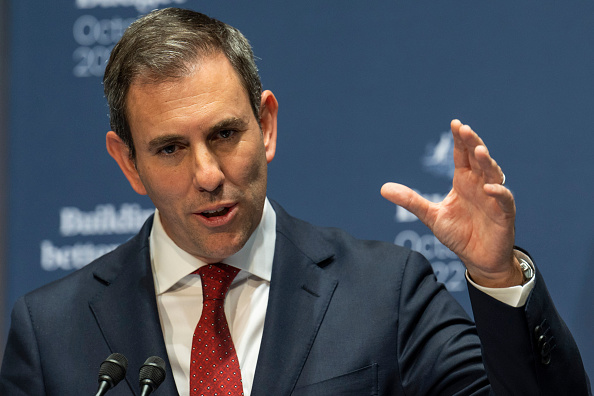
SYDNEY—Australian Treasurer Jim Chalmers will deliver the government’s 2024-2025 federal budget next Tuesday amid concerns that strong revenue growth will tempt him toward a jump in spending, stoking the case for higher interest rates.

Economists expect Chalmers to announce a budget surplus for 2023-2024, supported in part by high commodity prices and strength in the job market, with unemployment continuing to hover near its lowest level in half a century.

The question on the lips of the governor of the Reserve Bank of Australia, Michele Bullock , will be how much of that revenue will flow back into the economy by things like added measures aimed at easing a cost-of-living surge for consumers.

Bullock told reporters Tuesday that the RBA’s board had considered a further rise in interest rates, sending a shot across the bow of the center-left Labor government ahead of the budget.

The budget is being framed ahead of a federal election expected to be held in early 2025.

The public acknowledgment of the RBA board’s discussion of what would be a 14th interest-rate rise in two years signaled that the central bank has grown more concerned about the inflation outlook after first-quarter data came in above its own expectations.

Economists have warned that the RBA isn’t even close to a decision to cut interest rates, and the more likely outcome at the moment is that the central bank will need to tighten the policy screws further before the end of this year.

“The challenge fiscal policymakers face is that although they are flush with revenue, a cautious approach ought to be taken to additional spending because the economy is still operating at full employment, and inflation is still too high,” said Paul Bloxham, chief economist at HSBC Australia.

“Loosening fiscal policy settings at this point could mean that monetary policy would need to be tightened further yet—or that rates need to be higher for longer,” he added.

The RBA is conscious of the fact that significant income tax cuts will be delivered midyear and that they target low- and middle-income earners, who are more likely to spend added income than save it.

The government has already signalled its plans to spend in the area of subsidies for local manufacturing, including for the production of solar panels.

In addition, the budget will focus on business tax incentives, increased defence spending, funding for domestic violence support, changes to student debt policy and infrastructure.

Chalmers has played down the risk over the budget stoking the flames of inflation.

“It will be a responsible budget, a restrained budget, and it will maintain our focus on that inflation fight,” he said Thursday in a radio interview.

“There will be help for people with the cost of living, but we’ll make sure that that cost-of-living help is part of the solution and not part of the problem when it comes to inflation,” he added.

A risk that the RBA will also be alert to is the probability that the government will hold back some of its revenue gains to support added spending closer to the election.

Josh Williamson , chief economist at Citi Australia, said Chalmers will likely push new spending into the future to avoid overheating the economy now.

“The government does not want to be seen promoting policies that add to the risk of further policy tightening,” he said.

This suggests that new spending will be pushed into the government’s forward budgetary projections, while measures that directly reduce inflation could be announced virtually immediately, Williamson added.

New York City Reigns as the World’s Hub for Millionaires

More millionaires call New York City home than anywhere else in the world, according to a report from international wealth migration specialists Henley & Partners.

The Big Apple, which has seen its high-net-worth population jump by 48% over the past decade, is home to 349,500 millionaires, 744 centi-millionaires—those with liquid investable wealth of over US$100 million—and 60 billionaires, according to the firm, which collaborated with data intelligence firm New World Wealth for the analysis.

The city also ranked as the top spot for millionaires last year.

California’s Bay Area, encompassing San Francisco and the tech-mecca of Silicon Valley, ranked second. Wealth in the Bay Area has grown at one of the fastest rates in the world, increasing its number of wealthy citizens by a sizeable 82% over the past decade. It’s now home to 305,700 millionaires, 675 centi-millionaires, and 68 billionaires.

New York and the Bay Area were among 11 areas in the U.S. on the top 50 ranking, making the country the world’s foremost hub of moneyed residents.

Across the pond, London, which ranked as the wealthiest city in the world for many years, tumbled down the ranking, and now sits in fifth place with just 227,000 millionaires, 370 centi-millionaires, and 35 billionaires, a decline of 10% over the past decade, said the report, which was released earlier this week.

Cities with the fastest growing wealth, meanwhile, can be found in China.

Shenzhen’s wealthy population is snowballing most, with their numbers surging by 140% in the last 10 years, the report said.

“Hangzhou has also experienced a massive 125% increase in its [high-net-worth] residents, and Guangzhou’s millionaires have grown by 110% over the past decade,” said Andrew Amoils, head of research at New World Wealth, in the report.

Looking ahead, when it comes to wealth growth potential over the next decade, “cities to watch include Bengaluru, India; Scottsdale, Arizona; and Ho Chi Minh City in Vietnam,” he added. “All three have enjoyed exceptional growth rates of over 100% in their resident millionaire populations over the past 10 years.”

Underpinning the growth of the world’s wealthiest cities has been the robust performance of financial markets of late, from the S&P 500 to Bitcoin, according to Juerg Steffen, CEO of Henley & Partners.

Plus, “rapid advancements in artificial intelligence, robotics, and blockchain technology have provided new opportunities for wealth creation and accumulation,” Steffen said. “Yet, even as new opportunities emerge, old risks persist. The war in Ukraine, which has seen Moscow’s millionaire population plummet by 24% to 30,300, is a stark reminder of the fragility of wealth in an uncertain and unstable world.”

The Australian cities where working from home is still out of favour

The post-COVID return to CBD offices continues across Australia, with the average office occupancy rate climbing to 76 percent of pre-pandemic levels in the first quarter of 2024, according to new CBRE figures. Workers are gradually responding to their employers’ requests to attend their offices more regularly to enable greater collaboration with workmates. The occupancy rate has risen from 70 percent in the December quarter and 67 percent 12 months ago.

Occupancy rates improved across all capital cities during the March quarter, with Perth and Adelaide maintaining the strongest rates of 93 percent and 88 percent respectively. CBRE analysis suggests shorter commuting times and less structured working-from-home arrangements in these cities have contributed to higher rates of return. Brisbane’s occupancy rate is 86 percent of pre-COVID levels, weighed down by a slower return within the public sector, which represents 35 percent of the city’s office space. This same trend is being seen in Canberra, where the occupancy rate is just 66 percent.

In Sydney, the occupancy rate has risen to 77 percent, largely due to major banks and professional services firms pushing for more staff to return to the office this year. There has been a significant increase in workers returning to offices in Melbourne, with the occupancy rate up from 57 percent last quarter to 62 percent now. However, this is still the lowest attendance rate in the capital cities.

Businesses are increasingly pushing workers to return to the office because they are concerned working from home over multiple years will have a negative long-term impact on company-wide productivity. Part of the problem is new employees not having regular access to senior staff so they can learn and work more effectively and productively. CBRE says lower levels of collaboration and interaction reduce innovation, which is a particular concern for technology firms. They were quick to embrace remote working during COVID, but are now seeing dampened creativity among staff.

Tuesday is the peak day for attendance at CBD offices and Friday is the lowest day. Two-thirds of organisations that have moved their corporate headquarters since COVID have chosen to upgrade to premium office buildings, according to CBRE’s research. Premium blocks typically feature retail, restaurants, and recreational amenities on the ground floor, and command a higher rent. Companies are deciding it’s worth the cost to entice workers backand keep them feeling happy and engaged.

Jenny Liu, Director of Workplace Consulting at CBRE, said a vibrant workplace experience is essential.

“A workplace experience isn’t just environment, cool furniture and tech anymore,” she said. “It’s the culture, ways of working, leadership, and how vibrancy is created.”

Some companies are using apps that inform staff who will be in the office tomorrow. CBRE Research Manager Thomas Biglands said:

“It’s important that you achieve a critical mass of visitation so that employees come in and feel as though the office is vibrant and full,” he said.

Some firms are linking salary and promotions to office attendance to reward those workers providing higher contributions to corporate culture and mentoring younger staff.

The rate of return to offices in Australia is much higher than in the United States, where occupancy rates have remained at about 50 percent over the past year. CBRE analysis suggests this may be due to better public transport, shorter commutes and lower inner-city crime rates in Australia.

The Pricey-Yet-Chill Resort Town of Sitges Is Luring American Buyers

In their post pandemic search for a European second home, Florida’s Martin and Patricia Tantow had a lot of boxes to tick.

The couple, who confined their search to the mainland Mediterranean coast, wanted sea views, walkable beach and town access, and a unit that was easy to renovate—or, as they call it, a “liveable fixer-upper.”

They found what they were looking for in Sitges, a Spanish resort town that had been under the radar for U.S. buyers and vacationers.

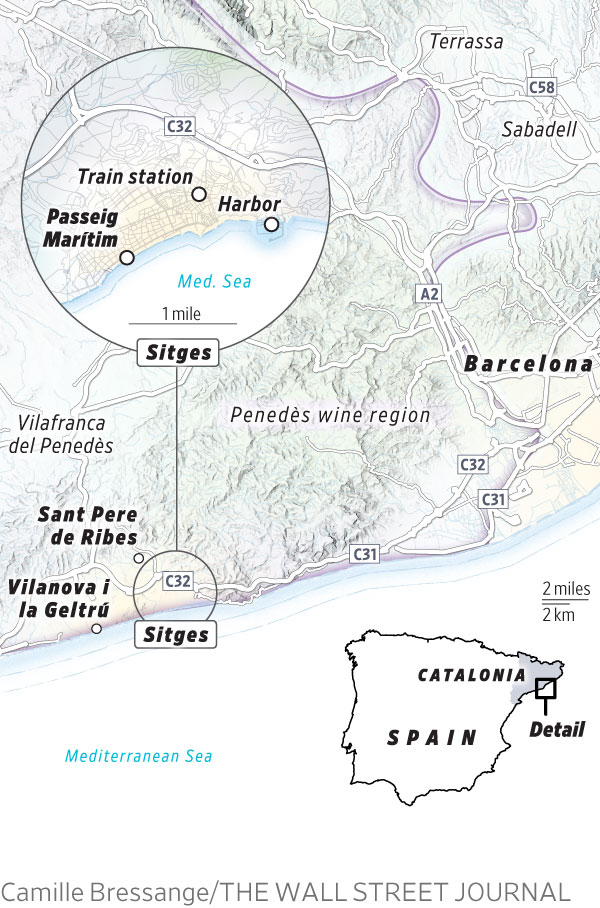
Sitges, with around 30,000 year-round residents, is known for its sandy beaches, 19th-century villas, 21st-century mansions, quaint historic centre and thriving residential real-estate market. Only a 25-minute drive from Barcelona’s international airport, the community is one of three select resorts that compete for the title of mainland Spain’s most expensive.

Home prices in Sitges average $457 per square foot, up 7.3% in the past year and 21% in the past five years, according to Idealista, a Spanish real estate website. Jesús Encinar, CEO and chairman of Idealista, says that Cadaqués, up the Catalan coast from Sitges and near France, is now at the top, with average prices in March reaching $575 per square foot. Málaga in the south of Spain is now at $458 per square foot, edging past Sitges.

Of the three, Sitges is the most convenient for trans-Atlantic air connections—and, local homeowners say, year-round charm. Smaller and less glitzy than Marbella, Sitges has temperate winters and hot summers, and it’s bigger and more accessible than remote whitewashed Cadaqués, where life dies down in the chillier offseason.

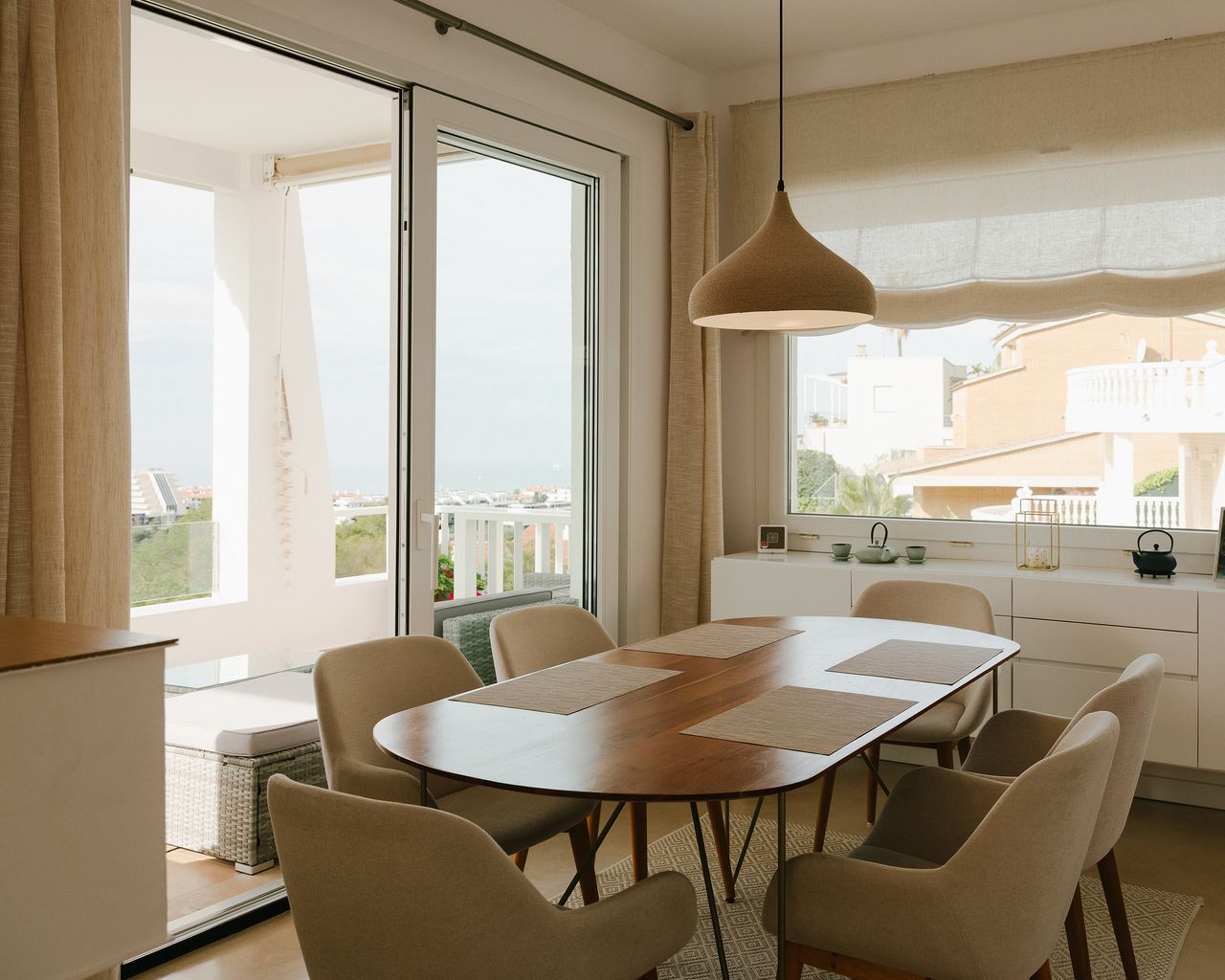
The Tantows’ dining room is on the second floor. PHOTO: ANTHONY PEREZ FOR THE WALL STREET JOURNAL
JOURNAL
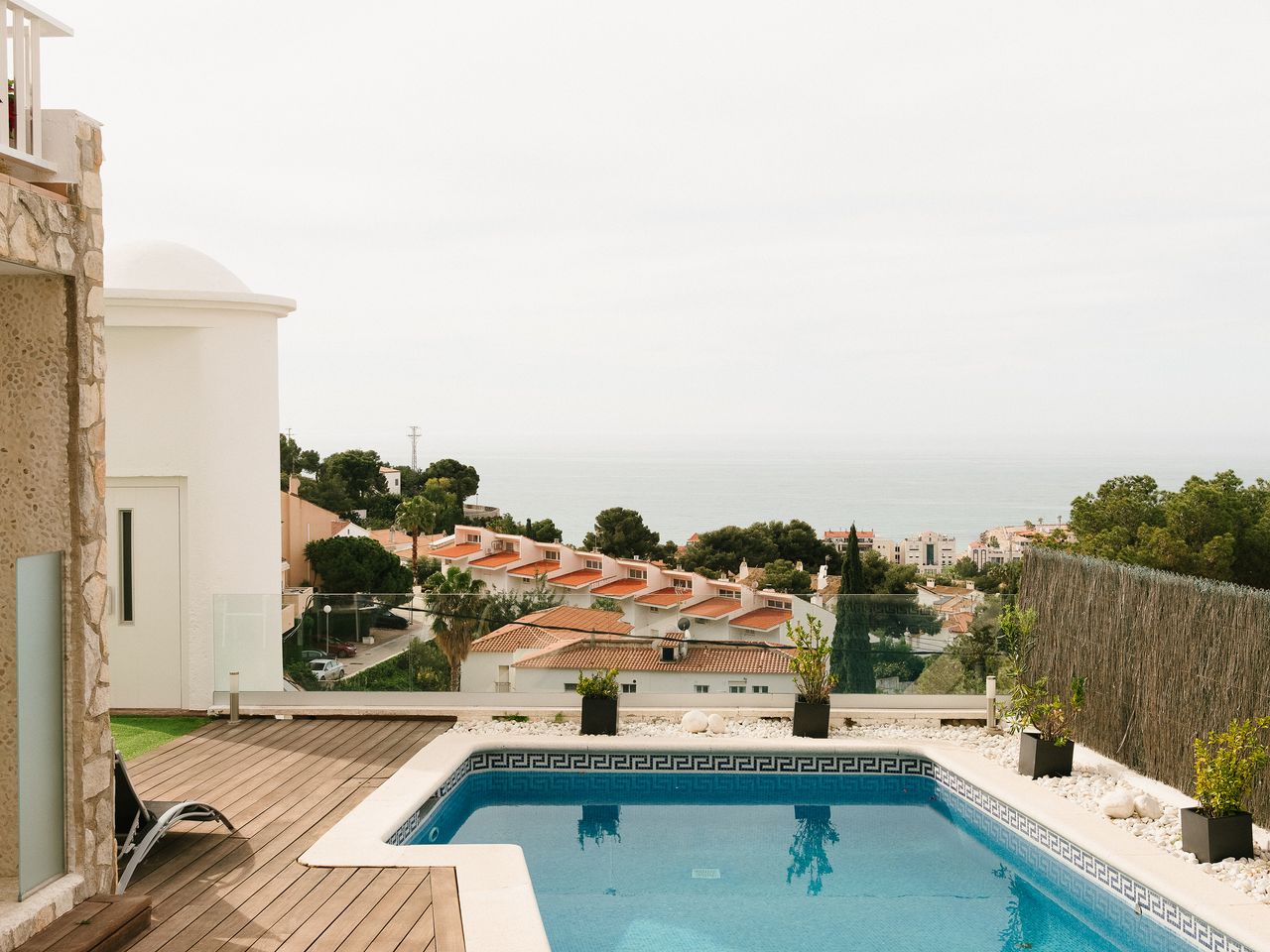
The Tantows renovated the deck area around the pool and redid the compact lot’s landscaping. PHOTO: ANTHONY PEREZ FOR THE WALL STREET JOURNAL

The Tantows paid 1.3 million euros (about $1.39 million) in July 2023 for a compact 2,300-square-foot Sitges home on a steep 1/5th-acre lot, offering prized southern exposures and expansive sea views. They plan to divide their time about equally between their primary Sarasota, Fla., home and Spain, where they can work remotely.

Able to live in the 1990s property while wrapping up the renovation, the couple has spent about $270,000 on refurbishments, and they plan to spend around $50,000 more on the four-bedroom home before they’re done.

“We painted inside and outside, and we opened things up a bit by breaking down some walls,” says Patricia Tantow, a marketing executive at an IT company. Other structural improvements included new solar panels, energy-efficient doors and windows, and insulation upgrades. They also decided to convert a lower-level gym into a home office and gaming area.

The couple, both 50, view the investment as a vacation home for now and a potential retirement home later. Patricia Tantow still seems a bit surprised at where they ended up.

“My dream was to buy in the south of France,” she recalls. “But then I came to Sitges and there was something special here. It’s very cute, but very diverse as well—you feel like you belong here. So I changed my mind about France and said, ‘Let’s try to make this happen.’”

Long popular with the LGBTQ community, Sitges traditionally attracts second-home buyers from Northern Europe, as well as elsewhere in Spain. Now the number of American buyers is rising, says the Tantows’ agency, Lucas Fox, where in-house sales to Americans doubled in 2023 compared with the year before. The rise of remote work and LGBTQ word-of-mouth are each helping to fuel interest, says the agency.

American visitors to the town are also increasing. Marina Norwell, of Oliver’s Travels, the U.K.-based villa-rental specialists, says inquiries from the U.S. quadrupled in 2023 from the year before.

Norwell says a top choice for villa-minded Americans is a 10-bedroom country house with a saltwater swimming pool, about 15 minutes from the centre of Sitges, with a high-season weekly rate of about $18,500. Norwell says it’s popular with larger groups.

Sitges is something of a paradox, say residents. Known for its freewheeling nightlife in high season, it becomes a quieter, family-friendly community the rest of the year. The Tantows, who relocated during the pandemic from San Francisco to Florida, said they have no qualms about letting their two children, 9 and 11, explore on their own—something they couldn’t imagine back in San Francisco.

A desirable setting to raise children was also on the minds of full-time Dutch residents Ben Aquina and his wife, Carmen Aquina. The couple moved to Sitges in 2015 from the Netherlands to give their two sons, then 12 and 13, an international experience, he says.

The family rented for two years “to make sure that everything would go well with the kids,” says Aquina, a 63-year-old retired businessman. Then he and his wife, now 57, paid about $2.8 million in 2017 for a 7,000-square-foot, four-bedroom house on a ½-acre lot in a gated community near the city’s premier golf course, Club de Golf Terramar.

They spent more than $3 million on a gut renovation of the three-level property, originally built in 2004, adding everything from a new kitchen and upstairs terrace to a new outdoor pool.

“We love Sitges,” says Ben Aquina. “Life is so nice; the climate is perfect.”

Now that their sons are attending universities in Amsterdam and Rotterdam, the couple has listed the home for $5.79 million, with Rachel Haslam of Lucas Fox handling the sale. They plan to downsize locally to an apartment, as well as spend more time back in Holland.

At their current asking price, the Aquinas would just about break even, but many Sitges lovers are willing to take a loss, says Jordi Carbonell, sales director for Barcelona’s surrounding areas at Engel & Völkers Spain.

Carmen Aquina, 57, and her husband, Ben Aquina, 63, plan to downsize to a Sitges apartment from their 7,000-square-foot home. PHOTO: ANTHONY PEREZ FOR THE WALL STREET JOURNAL

Catalonia led the way in the industrialisation of Spain in the 19th century, and Sitges became a spot for Catalan magnates to build lavish summer villas, often in a style associated with architect Antoni Gaudí up the coast in Barcelona. Still expensive to buy, and often very expensive to modernise, they typically need a new kitchen and new air-conditioning system, and even a new roof, requiring a total investment of almost $10 million to $11 million, says Carbonell. New owners may never resell for that price, he adds, “but some people just love these properties.”

Carbonell says the highest square-foot prices can now be found on Passeig Maritim, the palm-lined boulevard bordering the beach. In 2023, Lucas Fox sold a 1,930-square-foot contemporary apartment on the boulevard’s continuation, Passeig de la Ribera, for $1.6 million, or $831 per square foot, far exceeding the resort’s average.

Both the Tantows and the Aquinas were drawn to the community’s proximity to Barcelona—“Sitges wouldn’t be Sitges without Barcelona,” says venture capitalist Martin Tantow, who says the family relies on direct flights from Miami and California. But they also use it as a getaway to the nearby Penedès wine region, home to Catalonia’s sparkling Cava wines.

Carbonell says Sitges-bound buyers who want more land often head up to Penedès, where luxury properties can come with stables and tennis courts. Meanwhile, budget-minded international buyers who want access to Sitges but more space for their euro are increasingly heading a 15-minute drive away to nearby communities, Sant Pere de Ribes, closer to the vineyards, and Vilanova i la Geltrú, a small city down the coast, where “you can spend 450,000 euros on a home but still enjoy Sitges on the weekends,” he says.

Mary Anne Gibbons and Michael Healy, a couple in their early 70s from Washington, D.C., recently capped off an Iberian holiday with a first-time visit to Sitges, opting for an Oliver’s Travels villa near Sant Pere de Ribes, where they paid around $1,400 in total for four nights in a three-bedroom renovated stone house.

Intending to use the setting as a base for discovering Barcelona, Gibbons says they opted most days to hang out in Sitges instead.

“It’s a really cute town with a very relaxed atmosphere,” says the attorney, who enjoyed the seafront promenade and quaint shops and cafes. “Very chill.”

Questions Potential Business Partners Should Ask Themselves

You and a friend have a can’t-miss idea for a new business. You’ve got a great name, and the logo is perfect.

It is time to ask each other some hard questions.

Talking up front about tough subjects like how you work, how you deal with stress and your expectations for the business can save lots of headaches later. “Most issues are neutral when you discuss them ahead of time,” says Jane Brodsky , who ran a barre-and-spin studio with a partner for 10 years in Washington, D.C. “But in the heat of the moment, issues become personal and larger than they need to be.”

Here are crucial questions that should be settled at the start to help make the partnership succeed.

How did your family communicate?

Maybe you were raised in a family that talked through disagreements to find solutions. But maybe your partner grew up in a house where the loudest voice won. That could be a problem when issues arise in the business: Experts say that when people are under stress, they often fall back on behaviours that were imprinted at home—and different styles could clash.

At Happy Being, a company that sells nutritionally enhanced teas and drink powders, the three co-founders discussed communication style before they started the business. “We discovered that one partner gets triggered if he feels no one is listening,” says co-founder Dutch Buckley . “It goes back to an early fear of not being heard.” (For his part, co-founder Josemaria Silvestrini says that early on he “definitely needed the validation of being recognised and being right.”)

So, the three work at making sure everyone has a say in meetings, and they made a rule that no one’s work is ever belittled. On the flip side, when someone on the team accomplishes something, someone else on the team draws attention to it.

What does success look like to you? And failure?

While these may seem obvious—like, the business either succeeds or fails—everyone’s definition is different, and they are surprisingly specific. Certainly, monetary goals or anything that can be enumerated will help partners envision each other’s goals. Is one looking to grow slowly with customers and suppliers in the community and get to better than break even after three years, while the other wants to be cash-flow positive in year one and scale quickly to sell the business to a larger entity after 10 years? There’s a lot of success and failure in between those two outcomes, depending on your perspective.

Silvestrini of Happy Being recommends hashing it out together on the whiteboard until everyone agrees on an explicit definition of success for the company. “Hopefully, it’s an easy 10-minute conversation,” he says. “Because if founders have different objectives, the boat is going nowhere.”

What does everyone bring to the table?

It is crucial to discuss what each partner is contributing to the partnership in terms of expertise, experience, network and money. Kathryn Zambetti , an executive coach specialising in founder relationships, recommends taking an honest strengths-and-weaknesses inventory of yourself and your partner and then discussing what you both bring to the table. The exercise will help delineate which responsibilities naturally suit each partner, and it will highlight areas that will require additional work or outsourcing.

The clearer the roles can be defined, the better. If you are opening a bakery, you and your partner shouldn’t both be good at just making bread. Someone needs to handle marketing, suppliers, leases and licensing, financials and hiring and managing employees.

Why are you doing this?

You and your partner need to be in complete alignment on your motivations. Does this venture need to support your family or merely add to your vacation fund? Are you doing it to prove your father or your high-school econ teacher wrong? Any answer other than unfailing commitment to the mission or the product is a red flag.

“Your north star has to be something bigger than money to succeed,” says Buckley. “People will go through things that test them, but if money is the only motive, that won’t be enough.”

What pushes your buttons?

Just like in a marriage, you want to know best how to support and protect your business partner. Understanding what puts each of you in a fight-or-flight mode can be key to getting the best out of each other.

Do you need to be consulted on all decisions, or just major ones? Do you need to be recognized as the leader and sit at the head of the table? Do you fear having to downsize your home if the business fails?

What does your workday look like?

Does a day at the office mean working 9 to 5? Can the work be done remotely and on your own time? If you work well at night and need rapid responses to questions, is it a problem having a partner whose phone goes on “do not disturb” every evening at 7? Having the conversation and understanding expectations is key.

When Buckley started Happy Being, the team learned that one of the partners got up very early. “I had to tell him, ‘We don’t want 6 a.m. calls.’ ”

Do you like taking gambles?

A penchant for lottery tickets, Las Vegas gambling or high-adrenaline activities like skydiving shows a potential partner’s tolerance for risk and whether that aligns with your own. There will be countless decisions early on in a business concerning risk, and the partners need to be on the same page.

So ask about it. You go into the venture planning and hoping for success, but how much money or time is your partner willing to lose if it doesn’t succeed? How much of their parents’ or in-laws’ money would they bet on the partnership?

Is the business more important than the friendship?

Many business partners start as friends. But would you each be willing to give priority to making the right decision for the business, even if it means possibly hurting the friendship? Would you each be capable of letting the other one go if it was better for the company? Most advisers recommend choosing a partner who has a common business goal and letting the friendship build from that, rather than trying to build a partnership on top of a strong friendship.

“Your business partner will be one of your most intense relationships, but it shouldn’t fulfill every role in your life,” says Amy Jurkowitz, entrepreneur and co-founder of branding adviser Bread Ventures. “You need to be compatible in how much energy you will both put into the business.”

If the partnership doesn’t work out, how will it end?

A co-founder relationship is a binding agreement with financial and emotional repercussions, just like a marriage. But starting a business has the added stress of having the company—the baby—arrive on day one. If there is a divorce, who gets custody?

The more specific you can be about potential breakups, the better. If you are both putting capital in at the start, would you expect to get that out if you exited? What if, several years in, one partner can’t continue to struggle without a regular paycheck and leaves—and the next year the company finally turns a profit or is bought by another company? Would the partner who left get a share of the money?

These discussions should help make it clear that the survival of the company—and not the partnership or the friendship—is the ultimate goal. Those who have been through a business breakup recommend involving a third party to help sort through these issues at the outset.

How cost of living pressures are impacting the health of Australians

Worrying about the cost of living is causing accelerated ageing, household arguments and creating significant stress, according to new research. More than half of Australians say they have experienced personal setbacks due to financial strain over the past year. Almost 20 percent say that have suffered a stress-related illness, 33 percent have lost sleep and almost one in five are seeing signs of early ageing.

Household hostility is also rising, with 19 percent of Australians admitting they have argued with their partners about money, and a further one in 10 have argued with family and friends.

The Finder survey of 1,070 Australians reveals women are bearing the brunt of financial stress, with 62 percent reporting they have worried about money compared to 42 percent of men.

Younger Australians are struggling the most, with almost 7 in 10 Gen Z respondents reporting financial strain compared to 58 percent of Gen Xers and 24 percent of baby boomers.

The impact of cost-of-living pressures among different age groups and income levels is reflected in new data from the Australian Bureau of Statistics (ABS). The selected living cost indexes show employee households are under more strain from inflation, with the CPI measure for this population group at 6.5 percent today compared to the official overall CPI figure of just 3.6 percent.

The discrepancy is due to higher mortgage interest payments – which make up a higher proportion of expenditure for employee households — as well as an increase in primary and secondary school fees, and the indexation of tertiary education fees at the start of the year. The official CPI does not include mortgage payments, so the living cost indexes provide a more accurate picture of how rising interest rates are impacting households with mortgages today.

The inflation rate is much lower for older Australians, who have often paid off their mortgages. The inflation rate on living expenses for age pensioner households is below the official CPI level at 3.3 percent, and it’s only slightly higher at 3.4 percent for self-funded retirees.

Graham Cooke, head of consumer research at Finder, said that despite cooling inflation, Australians were still under significant financial pressure.

“This can be seen in Finder’s Cost of Living Pressure Gauge, which has been hovering in the extreme range for the past year and a half,” Mr Cooke said. The gauge returned a reading of 78 percent in March this year compared to 47 percent in March 2021, when inflation was 1.1 percent and the Reserve Bank’s official cash rate was 0.1 percent.

Interestingly, Australians’ cash savings are higher today than they were in 2021, likely reflecting stimulus payments received and saved during the pandemic. The Reserve Bank has cited pandemic savings as a factor in keeping mortgage arrears low despite much higher interest rates. The Finder research shows Australians have an average of $37,206 in cash savings today, up from $24,928 two years ago.

“Money concerns can cause problems in your everyday life and snowball quickly if you don’t get them under control,” Mr Cooke said. “Building financial resilience is as vital as ever as costs continue to rise. Pay close attention to where your money is going so you keep impulse spending to a minimum, and don’t overspend.”

Australians appear to be heeding this advice, with the latest ABS retail figures showing seven straight quarters of declining per capita spending. “Per capita volumes show retail turnover after the effects of inflation and population growth have been accounted for,” explained Ben Dorber, ABS head of retail statistics. “Following an unprecedented seven straight falls, it is very clear how much consumers have pulled back on spending in response to cost of living pressures over the past two years.”

Duolingo Shares Swoon Despite Strong Earnings

Something isn’t translating in Duolingo ’s first-quarter earnings report.

Shares of the language learning app provider are down nearly 14% in late trading to $210, after the company issued first-quarter financial results that topped Street estimates. Through Wednesday’s regular session close, the stock was 86% higher for the last 12 months.

For the quarter, Duolingo reported revenue of $167.6 million, up 45% from a year ago, inching past the Street consensus at $165.7 million. Profits were 57 cents a share, well ahead of consensus at 27 cents. Adjusted Ebitda, or earnings before interest, taxes, depreciation, and amortisation, were $44 million, up from $15.1 million a year earlier.

Bookings were $197.5 million, up 41%. Daily active users were 31.4 million, up 54% from a year ago, while monthly active users were 97.6 million, up 35%.

For the June quarter, Duolingo sees revenue of between $175 million and $177.5 million, with adjusted Ebitda ranging from $36.8 million to $39.1 million. Street consensus had called for revenue of $176.9 million, with adjusted Ebitda of $38.6 million.

Duolingo’s forecast for the full year calls for revenue of between $726.5 million and $735.5 million, with adjusted Ebitda ranging from $167.1 million to $176.5 million. Street consensus has been calling for $728.4 million in revenue and adjusted Ebitda of $167.2 million.

Drew Barrymore Selling Converted 1920s Barn in the Hamptons for $8.45 Million

Drew Barrymore is making an almost $8.5 million adjustment to her real estate portfolio with the listing of her home in the Hamptons.

The renovated barn, built in 1920, is asking $8.45 million and sits on 1.7 acres in the heart of Sagaponack, less than a mile from the ocean. It hit the market last week.

The actress and talk show host has owned the seven-bedroom home—which has appeared across her social media platforms—since 2019, when she paid $5.5 million for it using a limited liability company for the purchase, records in PropertyShark show.

Lena Yaramenko for Sotheby’s International Realty

Despite its transformation into a residence, the former barn still has plenty of period charm, from soaring ceilings and exposed beams to hardwood floors.

Lena Yaramenko for Sotheby’s International Realty

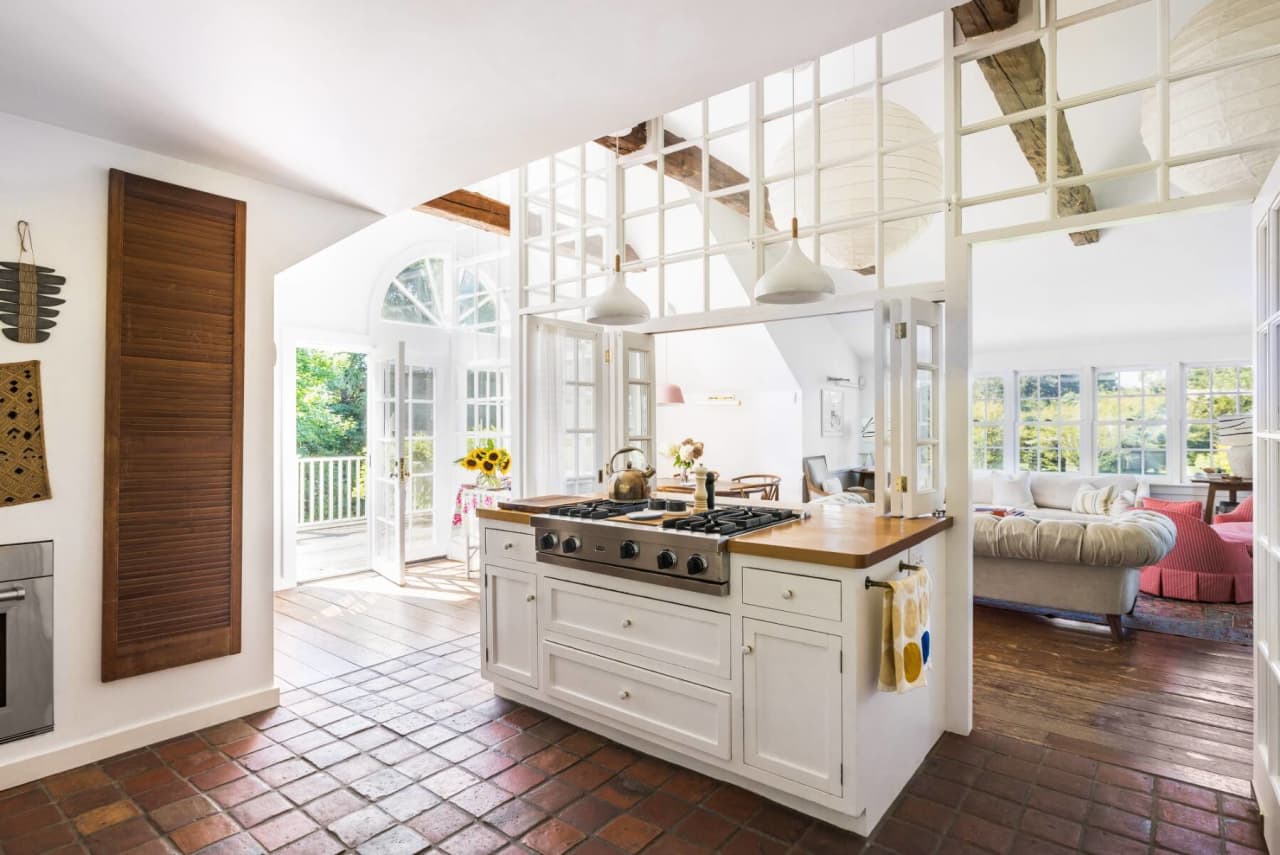
The hub of the 6,850-square-foot, light-filled home is the great room and adjacent breakfast nook and kitchen, the latter of which is separated from the rest of the space by a wall made from window frames. Glass doors open up from the great room onto a deck.

There’s also a living room with a brick fireplace, a pink-painted dining room with a sloping ceiling and a skylight, and a den. Plus a separate one-bedroom guest house with a living room and office area, according to the listing with Kathy Konzet of Sotheby’s International Realty – East Hampton Brokerage. Konzet wasn’t immediately available to comment.

Lena Yaramenko for Sotheby’s International Realty

The park-like grounds, complete with flowering gardens and rolling lawns, are home to a pool, pool house, a bocce court and plenty of areas for outside entertaining.

Barrymore, 49, began her career at just 11 months old when she appeared in a dog food commercial, and at 7, she starred in 1982’s “E.T. the Extra-Terrestrial.” As an adult she’s best known for roles in “Charlie’s Angels,” “Grey Gardens,” “The Wedding Singer,”and “50 First Dates.”

Her talk show, “The Drew Barrymore Show,” debuted in 2020. A representative for the star couldn’t be reached for comment.

A Texas-Built Hypercar, the 300 MPH Hennessey Venom, Is in the Running for the World’s Fastest Production Car

There are Corvette fans for whom the base US$68,300 car is plenty powerful enough. After all, it produces 495 horsepower and can reach 60 miles per hour in 2.9 seconds. But hold on, there’s also the approximately US$115,000 Z06—with 670 horsepower and able to reach 60 in 2.6 seconds. These split seconds are important for busy people—and for marketing claims. And if that’s not enough go power, there’s the even more formidable 900-horsepower ZR1 version of the Corvette, starting around US$150,000. The hybrid E-Ray, at US$104,900, is pretty potent, too.

But if they’re still too slow, fans of American-engineered muscle can consider the exclusive Texas-built Hennessey Venom F5, a limited-edition carbon-fibre hypercar. Ten years ago, the Hennessey became the world’s fastest production car, defeating the Bugatti Veyron Super Sport, with a top speed of 270.49 miles per hour.

That world title is much sought after, and is currently held by the Sweden-built 1,600-horsepower Koenigsegg Jesko Absolut, with a two-way average top speed of 277.8 mph. But Hennessey is still very much a contender. The company is hoping the 1,817-horsepower F5 (with 1,192 pound-feet of torque) can exceed 300 mph on the track this year.

The Hennessey Venom F5 coupe is sold out, despite a more than $2 million price tag.
Hennessey photo

Hennessey’s previous Venom GT model (introduced in 2010) was based on the Lotus Exige, with a GM LS-based engine, and was built by partner Delta Motorsport. Spokesman Jon Visscher tells Penta , “The new Venom F5, revealed in 2020, is a 100%bespoke creation—unique to Hennessey and featuring a Hennessey-designed 6.6-litre twin-turbo V8 engine boasting 1,817 horsepower, making it the world’s most powerful combustion-engine production car.” Leaps in performance like this tend to be pricey.

This is a very exclusive automobile, priced around US$2.5 million for the coupe, and US$3 million for the F5 Roadster announced in 2023. Only 30 Roadsters will be built, with a removable carbon-fiber roof. The 24 F5 coupes were spoken for in 2021, but if you really want one you could find a used example—or go topless. In a statement to Penta , company founder and CEO John Hennessey said that while the coupe “is now sold out, a handful of build slots remain for our Roadster and [track-focused] Revolution models.”

Only 24 Revolutions will be built in coupe form, priced at US$2.7 million. There’s also a rarefied roadster version of the Revolution, with just 12 to be built.

The Venom F5 Roadster has a removable carbon-fibre roof.
Hennessey photo

The Venom F5 coupe weighs only 3,000 pounds, and it’s not surprising that insane speeds are possible when combined with a hand-built motor (nicknamed “Fury”) created with power uppermost. The V8 in the F5, installed in a rear mid-engine configuration, has a custom engine block and lightweight forged aluminium pistons, billet-steel crankshaft, and forged-steel connecting rods. Twin turbochargers are featured. The F5 can reach 62 mph in less than three seconds, but top speed seems to be its claim to fame.

The driver shifts the rear-wheel-drive car via a seven-speed, single-clutch transmission with paddle shifters. The interior is not as spartan or as tight as in many other supercars, and is able to handle very tall people. The butterfly doors lift up for access.

“With 22 customer Venom F5 hypercars already delivered to customers around the world, and a newly expanded engineering team, we’re focusing the Venom F5 on delivering on its potential,” Hennessey says. “Breaking 300 mph in two directions is the goal we aim to achieve toward the end of this year to claim the ‘world’s fastest production car’ title.”

Hennessey says the car and team are ready. “Now the search is on for a runway or public road with a sufficiently long straight to allow our 1,817-horsepower, twin-turbo V8 monster to accelerate beyond 300 mph and return to zero safely.” The very competitive Hennessey said the track-focused Revolution version of the F5 set a fastest production car lap around Texas’ 3.41-mile Circuit of the Americas track in March, going almost seven seconds faster than a McLaren P1.

The Revolution features a roof-mounted central air scoop (to deliver cool air to the engine bay), a full-width rear carbon wing, larger front splitter and rear diffuser, tweaked suspension, and engine cooling. It’s got the same powertrain as the standard cars, but is enhanced to stay planted at otherworldly speeds.

World’s Biggest Construction Project Gets a Reality Check

The engineers saw a mountain-sized problem.

For weeks, thousands of trucks and diggers had worked 24 hours every day, scooping millions of cubic feet of sand at the world’s biggest construction project known as Neom in Saudi Arabia. But the workers had dumped the massive pile of dirt—now hundreds of feet wide—in the very spot where architects planned to dig a waterway out to the Red Sea.

So, the trucks and diggers went back to work, picking it all back up and making a new mountain of sand nearby in a costly hiccup that epitomises the Saudi project’s turbulent journey from an audacious concept to a sprawling operation that has faltered in its execution.

Defying skeptics, Saudi Arabia is barreling ahead with hundreds of billions of dollars in projects at Neom, a built-from-scratch region the size of Massachusetts, typified by sci-fi architecture, an arid ski resort and a laundry list of flashy projects meant to attract a population larger than New York City’s.

None is more brazen than a multi trillion-dollar pair of skyscrapers taller than the Empire State Building designed to run 105 miles long and house nine million people, the flagship development dubbed “The Line.” Its champion, Saudi Crown Prince and de facto ruler Mohammed bin Salman , has likened the project to Egypt’s Great Pyramids.

The kingdom in recent months downsized the Line’s first phase, facing the reality of costs at a time the country is spending far more than it is taking in. Now organisers plan to initially build around 1.5 miles of the structure by 2030, rather than the roughly 10-mile first chunk that had previously been envisioned, multiple people briefed on the plans said. Still, even that truncated section would be by far the world’s largest building, the equivalent of more than 60 Empire State Buildings of square footage.

Asked in a CNBC interview last month about a Bloomberg report on the scaled-back first phase, Saudi Minister of Economy and Planning Faisal Al Ibrahim signalled the long-term ambitions for the Line remain the same.

“There is no change in scale—it is a long-term project that is modular in design,” he said, adding that “today, the economy in the kingdom is growing faster, but we don’t want to overheat it.”

The stakes for Saudi Arabia are as outsized as Mohammed’s ambition. Neom is the ultimate symbol of his plans to transform the kingdom’s economy, reduce its dependence on oil revenue, and make it a magnet for money and talent from around the world. But he risks squandering much of the country’s cash on an unprecedented experiment in city building that could prove too difficult to deliver.

“Mohammed bin Salman is gambling here,” said Madawi al-Rasheed, a visiting fellow at the London School of Economics and a member of a group calling for democratic reform in Saudi Arabia, an absolute monarchy.

“Spending so much money should in theory generate a tangible leap in the Saudi economy,” she said, but much of the cash so far was spent on foreign consultants and architects.

A mountain of challenges lies ahead. More than 100,000 additional construction workers must be housed in a barren corner of the kingdom’s vast desert, two hour’s drive from any sizeable city. Neom’s needs for steel, exterior glass and other materials are so massive they may push up global prices and be difficult to source. Planners worry the unique central concept of the Line, a vertical city housed in twin skyscrapers the length of Delaware, could prove to be an unappealing place to live.

At the same time, the scaled-back plans for the Line put a spotlight on Neom’s enormous bill for what is now poised to be a midsize city. Neom executives now expect fewer than 200,000 residents in the project’s first phase—the population of Knoxville, Tenn.—a current and former employee familiar with the plans said. Yet Neom is spending on vast infrastructure intended for millions of people, including a giant airport, a high-speed train running through a 20-mile mountain tunnel, massive desalination plants and large civic features in the Line such as an opera house, the former executive said.

The price tag keeps rising. The projected cost of a ski resort in the region’s arid mountains has more than doubled over two years to $38 billion as of October, according to Neom documents reviewed by The Wall Street Journal. Real estate advisory Knight Frank estimates more than $237 billion of construction contracts have already been commissioned at Neom.

Even for one of the world’s largest exporters of crude oil, Neom might just be too expensive. Its official cost estimate is $500 billion, 50% more than the country’s entire federal budget for the year and more than half the value of its sovereign-wealth fund.

Executives working on the project dismiss that number as unrealistically low. The first 1.5 miles of the Line alone is estimated internally to cost more than $100 billion, two people familiar with the plans said.

If it were fully built, Neom employees expect the true price of the Line would be well in excess of $2 trillion. Construction costs per square foot are more than double what is standard on other Middle East towers, they said.

This makes it unlikely Neom will attract significant private investment to fund future phases of the Line, they say. It has been funded thus far by the Saudi government.

Neom is the centrepiece of an overhaul of Saudi Arabia’s economy and identity that Mohammed began in 2015 when his father ascended the throne. Then 29 years old, the son of King Salman outmanoeuvred potential heirs and rapidly consolidated power.

Hungry for change, Mohammed allowed more Western cultural norms and eliminated restrictions that forbade mixing of sexes, women drivers and cinemas. He also put even tighter limits on speech, crushing dissent over the rapid change.

The plan, Vision 2030, called for an array of new non-oil industries such as entertainment and technology and building mega-sized real-estate developments to help it become a global tourism hub.

Mohammed’s team sought proposals from the world’s top architects for ideas to design Neom. The avant-garde Los Angeles designer, Morphosis Architects, headed by Pritzker prize winner Thom Mayne, pitched a city that was 100 miles long and 1.2 miles—or two kilometers—wide, with buildings spread across the ground.

The prince had a different idea.

“I told the team, how about if we take that two kilo and we flip it to two towers to the whole line,” he said in a Discovery Channel documentary last year, clapping his hands together vertically like someone closing a book.

The idea of the skyscraper city was born.

Architects got to work designing a pair of parallel towers 650 feet apart, shrouded in a shimmering mirror glass coat that reflects red desert sand and azure blue sea. At their highest, the towers are slated to rise 1,640 feet above the desert floor, although they will be less tall in spots depending on the terrain they are traversing.

Internal documents from 2021 call for more than seven billion square feet of floor space—29% larger than all of the buildings in New York City put together and the size of more than 2,000 Empire State Buildings. Apartments, offices, schools, police stations, museums and a royal palace would be peppered inside.

Stunning—and costly—architecture is a priority. Mohammed told Neom executives he wants a sense of “zero gravity” with features appearing to defy physics and float, former executives said.

A linear city has long captivated urban planners. In 1882, Spanish architect Arturo Soria y Mata proposed an elongated urban development that inspired the “Ciudad Lineal” district of Madrid. The Line has been compared internally to Epcot Center, a former Neom executive said, the 1960s-era complex at Disney World that was intended to be a futuristic city dependent on high-speed rail. It was abandoned after Walt Disney ’s death. Epcot later became a theme park.

A linear city as big as the Line is at odds with how humans have developed cities for millennia: naturally building outward in a circular manner, typically around a core.

“It’s battling against the entire history of the way cities are founded and grow,” said John E. Fernandez, professor in the department of architecture at the Massachusetts Institute of Technology.

Even supporters say it is an experiment that could easily fail in practice.

In a planning document under a heading of “Key Concerns,” an employee said four different times that by fixating on building miles-long skyscrapers, Neom had turned the normal design process inside out. “USE would usually drive DESIGN. We are using DESIGN to drive USE,” the anonymous comment said.

The shape has added to challenges.

In 2020, before Mohammed unveiled the project, he asked employees to move the Line’s western end a few miles because he preferred the terrain, said people familiar with the request. Designs had to shift slightly across the entire 105 miles, causing months of extra work.

Architects have struggled to find the best ways to mix sunlight and open space in the interior. Internal documents show they wrestled with how to differentiate neighborhoods so as not to create a monolithic block—opting to build distinct half-mile sections with a different look and feel. They worried about drab living conditions at the base of the interior, given that the height of the towers would allow little light down low.

According to planning documents, designers proposed leaving gaps atop the modules to “bend” the structures around the curvature of the earth, which arches about 8 inches per mile.

Planners fretted over the billions of birds that fly on a migration route—a less-than-ideal location for a 1,600-foot-tall glass mirror.

“It is inevitable that a significant number of birds will perish,” designers wrote, with an illustration of a dead northern flicker, a woodpecker.

Looming over Neom is an inauspicious history of city-building projects, which typically die on the drawing board. Those that are built are usually scaled down, and often considered sterile.

One of modern history’s largest is Brasília, the Brazilian capital that strained the country’s finances when it was constructed in the late 1950s. After opening, residents complained of lifeless streets and a lack of neighbourhood feel in the curated modernist centre, which today holds less than half its expected population of 500,000. Instead, far more residents live in and around satellite towns initially built for its construction workers.

Scant progress

Seven years after launch, little has been completed other than Neom’s film studios and a sprawling new royal complex that boasts giant palaces, a golf course and at least 10 helipads, satellite images show.

Beyond the Line, Neom has a bevy of superlative-packed projects, all of them complex.

Neom is so big it has its own large-scale construction projects simply to prepare for bigger projects. A port is needed to receive materials, and Neom is spending more than $5 billion to build housing for construction workers, according to the Middle East business-trade publication MEED, which tracks Neom contracts.

Engineers and administrative workers live in a handful of Neom-built communities with schools, basketball courts, a Burger King, a Starbucks and a Hampton Inn where rooms run above $400. The first such camp already needs to be partially demolished: After a design change, the Line is now due to run right through the community, where housing is already at capacity, former employees said.

Despite being billed as zero emissions, Neom recently sought contractors to build two gas power plants totalling 800 megawatts to power the region until greener energy is sourced.

To demonstrate progress to the crown prince, engineers started putting in the foundations for the Line a couple of years ago even before architects had figured out what would go above—an unusual way to build such a massive development, engineering experts said.

Architects soon decided the first phase should be built somewhere else, leaving the Line’s initial foundations abandoned for now, said people familiar with the matter.

For over a year, the bulk of the work has been a digging operation—the world’s largest, Neom says. Four-lane makeshift construction roads are clogged with lines of dump trucks; diesel fumes from trucks and generators permeate the air.

Significant digging work has gone into swaths that even before the recent pullback weren’t scheduled to be completed for decades. Satellite images show a 60 mile gash through the desert.

The current focus is a seaside middle section, where Prince Mohammed wanted the building constructed atop a new marina that could hold the world’s biggest cruise ships. Workers are digging a hole 50 feet below sea level, over 450 acres in size. It was there that workers had excavated a small mountain of dirt, only to find it was in the wrong place.

Once foundations are laid, a key test will be if and when Neom awards the costly contracts to start vertical construction—a crucial milestone that makes it difficult to turn back.

Another question is height. Numerous executives working on Neom have questioned the need for a 1,600-foot-tall building—which carries extra engineering challenges, higher costs and makes evacuation difficult in an emergency.

Renowned British architect Peter Cook , who is involved in the Line, called the project’s height “a bit stupid and unreasonable,” according to comments published in the U.K.-based Architect’s Journal. In a later documentary, Cook, who is overall praiseful of the project, called the Line “puzzling even to those who are involved in designing it.”