We’re Spending Billions on This Work-From-Home Indulgence

Click. Scroll. Add to cart. Now toggle back to that Zoom meeting.

On our remote days, it turns out, we shop while we work. Researchers say it’s driving billions in online sales. There we all are, browsing everything from toothpaste to concert tickets while nodding along on a video call , keying in credit-card info in between dashing off emails to the boss.

Shopping away our entire workday is obviously a bad move. But indulging in a little isn’t going to tank productivity. We pause and procrastinate at the office, too, in ways that are acceptable there. At home, we gather around clothing reviews like we’re hanging out at the office water cooler, and tick errands off our list via Target.com.

With no one looking over our shoulders, we can puncture the monotony of another vanilla workday with the dopamine high of finding the perfect pair of shoes. Even if we might sometimes regret it.

“I wouldn’t have bought this stupid thing if it weren’t for All Hands,” Megan Morreale , a content marketer in New Jersey, thought to herself after purchasing an influencer’s branded candle during a companywide meeting. Bored or between calls, the 32-year-old scrolls Instagram, TikTok and YouTube. Days later, subpar art supplies or a viral dress that really doesn’t suit her land on her doorstep. Oh well.

“It’s a little bit of fun during the day,” she says, without the fear you’ll look like a slacker . At the office, she would never. “All the guilt is completely gone when you work from home.”

A $375 billion boost

Our collective retail therapy adds up. New research from Stanford University, Northwestern University and the Mastercard Economics Institute, the payments company’s research arm, finds the pandemic prompted a rise in online shopping that’s persisted. Last year, for example, we spent $375 billion more than we would have otherwise, the report estimates.

The brunt of that bump is being driven by people working hybrid or fully remote schedules, says Nick Bloom , a Stanford economist and co-author. County-level data shows that in areas where work-from-home jobs are prevalent, online shopping is up, while it’s back to pre pandemic levels in places where more folks work in-person.

Along with walking the dog and getting a jump on dinner, workday shopping is a way to make efficient use of our time, Bloom says, and take advantage of the fact that we have more control over it at home.

“People just can’t work continuously without taking a break,” he says.

Get away without leaving your desk

At home, there’s freedom and time, but also often inertia.

“There’s no coffee break, there’s no somebody’s birthday,” says Ace Bhattacharjya , chief executive of a company that helps folks access their medical records.

Instead, there’s perusing a limited-edition sneaker drop, or collectible figurines on eBay, Bhattacharjya says, recalling some of his recent scrolling. Everything in stores looks the same these days, he finds, but online he can jump down a rabbit hole into random micro communities and inspiration. Turning his attention from the work on his computer monitor to e-commerce on his iPad Pro gives him a jolt of creativity and energy.

Besides, the lines between work and everything else have grown hazy. Bhattacharjya’s hours bleed into the weekends. That can feel like permission to wedge some personal stuff into the workweek.

Ooh, a sale!

Weekly online spending peaks from 10 a.m. to 1 p.m. on Fridays , as the workweek slows to its languorous end, data from Adobe shows. More than a quarter of women surveyed last year by shopping portal Rakuten said they typically shop online during work hours. For Gen Z, the share was 41%.

Jenny Hirschey , who runs an Instagram jewellery shop from St. Paul, Minn., was surprised to find about 80% of her sales are made during the workday.

“I get comments all the time like, ‘I’m running to a meeting but this heart charm is mine! Sold! I’ll pay you in 30 minutes,’” she says.

Big retailers have noticed the trend, too, says Liza Amlani , a retail consultant and adviser based in Toronto who’s worked with companies like Under Armour and Lands’ End.

Some of her clients are timing things like product drops and marketing emails around noon or 3 p.m.

“We know that you’re on your computer,” captive and craving a pick-me-up, she says.

Retailers have also ramped up their investments in online tech, and are flooding their websites with more product, she adds. Algorithm-powered recommendations are getting so powerful it can feel like they know your subconscious desires before you do. Oh, and did you forget about that item you halfheartedly popped in your cart? Here’s 20% off.

“You’re getting so much more of that reminder and that call to buy,” says Nancy Wong , a consumer psychologist at University of Wisconsin-Madison.

The seduction of online shopping

Bricks-and-mortar browsing comes with unknowns and annoyances: traffic en route, long lines at the store, finding out what you want isn’t in stock.

In contrast, Wong says, clicking the buy button online brings a satisfying certainty, and a double hit of pleasure. There’s the immediate high of plucking the item from the virtual shelf—then, the anticipation of its arrival. Sure, that gadget might be a flop once it gets here. But it’s on its way.

“It’s so seductive,” says Michelle Drapkin , a therapist in New Jersey who works a hybrid schedule.

When she worked for a big healthcare company years back, she’d never dream of pulling up Amazon on her office computer.

On her work-from-home days now, she’ll sometimes flop on her bed with a laptop and check purchases off her to-do list. It’s relaxing, she says. “I can do something different than work that’s still productive.”

Some purchases, like groceries, keep her household running. Others, like a new dress for a Kentucky Derby party, feel like a treat.

By the time the purchase arrives, though, she’s usually forgotten what’s inside the box.

The Properties High Interest Rates Can’t Touch

Don’t expect any fashion bargains on Rodeo Drive in Beverly Hills, or New York’s Fifth Avenue. And property on these famous luxury shopping streets looks as overpriced as the clothes.

While the average commercial building is worth 20% less than in 2022, the world’s most exclusive shops have barely been touched by the highest U.S. and European interest rates in two decades.

Cartier’s Swiss owner, Compagnie Financière Richemont , recently bought a property on London’s Bond Street at a rock-bottom 2.2% rent yield. Similar to the way bonds work, the lower the rent yield, the richer the price paid. The Bank of England’s base rate is around double this level. Most investors these days wouldn’t buy real estate that generates less income than the cost of debt that might be used to purchase it.

Last month, Blackstone sold a luxury store on Milan’s Via Montenapoleone to Gucci owner Kering for a similarly eye-catching price. The building was part of a portfolio of 14 properties that Blackstone bought in 2021 for 1.1 billion euros, equivalent to roughly $1.2 billion. Kering coughed up €1.3 billion, or about $1.4 billion, for the Via Montenapoleone building alone, equivalent to a 2.5% rent yield.

The private-equity firm is understandably eager to do more deals like this, and has since bought another luxury store in London. It is a surprising focus for Blackstone, which for years steered clear of retail property.

Luxury rents are resilient, but they aren’t rising fast enough to justify such hefty price tags for the buildings. Last year, rents increased 3% on Rodeo Drive and were flat on Upper Fifth Avenue, according to data from Cushman & Wakefield .

What luxury retail properties do offer is scarcity. London’s Bond Street has 150 individual buildings, according to real-estate consulting firm CBRE . But because luxury brands are fussy about where they will open a flagship store, only around two-thirds of the street is considered posh enough, limiting their options.

Supply is even tighter on New York’s Fifth Avenue, where just four or five blocks of the six-mile avenue are ritzy enough to lure the world’s most expensive brands. The luxury shopping district of Rodeo Drive in Los Angeles has fewer than 50 individual buildings.

This creates intense competition for both space and ownership. The world’s biggest luxury company, LVMH , has more than 70 brands that need a foothold on prominent shopping streets. Increasingly, LVMH’s answer is to buy the best locations. The Paris-listed company owns at least six properties on Rodeo Drive and six on London’s Bond Street.

Luxury brands see their flagship stores as marketing tools. Counterintuitively, e-commerce has made its physical locations more important. Labels including Christian Dior have opened restaurants and mini museums in their boutiques to give shoppers an experience they can’t find online.

When they are investing this much money in refurbishments, it makes more sense to own than to rent . Luxury brands have spent more than $9 billion buying boutiques since the start of 2023, according to a Bernstein analysis, and they control increasingly larger tracts of major shopping districts. Back in 2009, brands owned 15% of the buildings on London’s Bond Street, says Phil Cann, an executive director at CBRE. Today, their share has jumped to 30%.

Luxury labels also need to avoid being kicked out of a property by a rival-turned-landlord, which is happening more often. British handbag maker Asprey was given its marching orders by Hermès on London’s Bond Street. The French brand bought the building that Asprey occupied since the 1840s and wants to convert it into an Hermès flagship. Rolex recently bought a store that is rented out to Patek Philippe, although its competitor doesn’t need to move out any time soon as there are still several years left on the lease.

Most luxury stores are still in the hands of sovereign-wealth funds or rich families who might have owned the buildings for decades. Given the enticing prices that brands are willing to pay despite high interest rates, more are considering cashing out.

Landlords from Hong Kong, who began parking their cash in luxury stores around 2010, are among those selling up. New York real-estate investor Wharton Properties also sold two Fifth Avenue buildings to Kering and Prada this year at very high prices that were equivalent to 2% rent yields. Wharton is experiencing some distress in other parts of its portfolio, so it might have needed to raise funds.

Luxury brands made huge amounts of money during the pandemic. Richemont currently has more than €7 billion of net cash sitting on its balance sheet. Merger and acquisition activity has been quiet, so real estate might be the next-best thing to pour their riches into.

Property deals on the world’s most expensive streets will continue to operate in their own twilight zone, no matter what central bankers do next.

Homes in Bath, England, Feature Heavily in ‘Bridgerton’—and Command Robust Demand in Real Life

Bath has long been known for its genteel pleasures and civility.

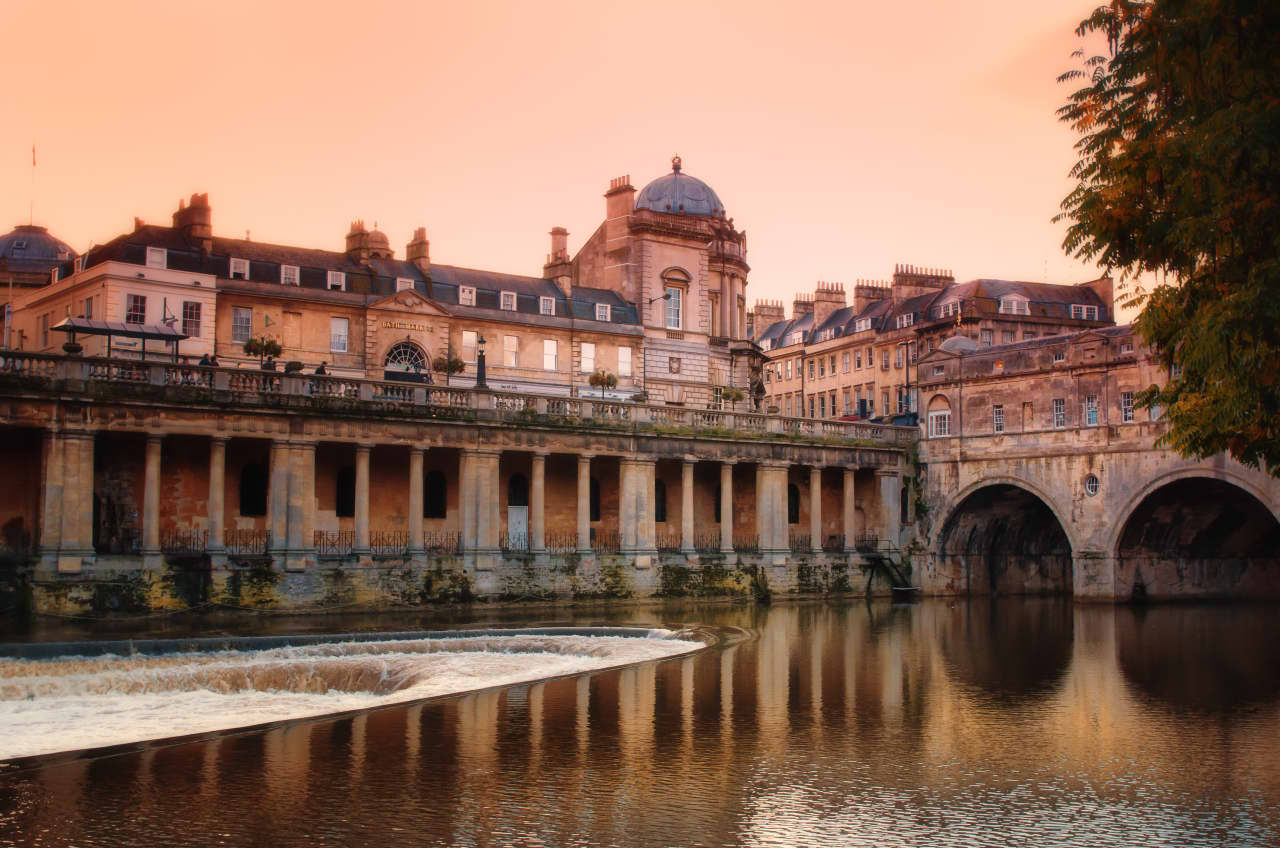
It came to prominence 2,000 years ago as a religious spa where people worshiped the Roman goddess Sulis Minerva and bathed in the natural thermal spring waters that still flow with hot water today. In the early 1700s it re-emerged as a spa resort, attracting fashionable society as resident Jane Austen observed in her novels.

The city has come to the fore yet again thanks to the Netflix series “Bridgerton,” since many of its well-preserved heritage sites, stone-flagged streets and wisteria-clad mansions form a glamorous backdrop to the show’s high-society Regency world.

For instance, the city’s Holburne Museum acts as Lady Danbury’s townhouse. No. 1 Royal Crescent was used as the Featheringtons’s London home, while the Abbey Deli on Abbey Street was transformed into the Modiste dress shop, and Bath Assembly Rooms served as the venue for Lady Danbury’s ball in the first season. Glimpses of Bath, particularly its City Centre neighbourhood, are back as the first part of season three was released on Thursday.

Boundaries

Bath lies in the River Avon valley 97 miles west of London, between the Cotswold Hills and the Mendips. To the north, the city centre is bounded by Lansdown Road, to the east by the A46 highway, and the south by the A36 and the end of the Lower Bristol Road to the A4 highway. The river runs through the city, dividing it north from south, and there are four main bridges. The Roman Baths lie at the heart of the city, close to the great medieval church, Bath Abbey. The most iconic streets—some of which featured in “Bridgerton”—are the Royal Crescent and the Circus, which are a short walk from the baths and feature sweeping classical facades.

Price Range

David Mackenzie, partner at broker Carter Jonas, said the typical house price is £900,000 to £1 million, reaching up to £6 million for more expensive properties.

One- and two-bedroom apartments fetch between £200,000 to £400,000.

Prime prices cost about £1,000 per square foot, said Savills property consultant Christine Penny.

Housing Stock

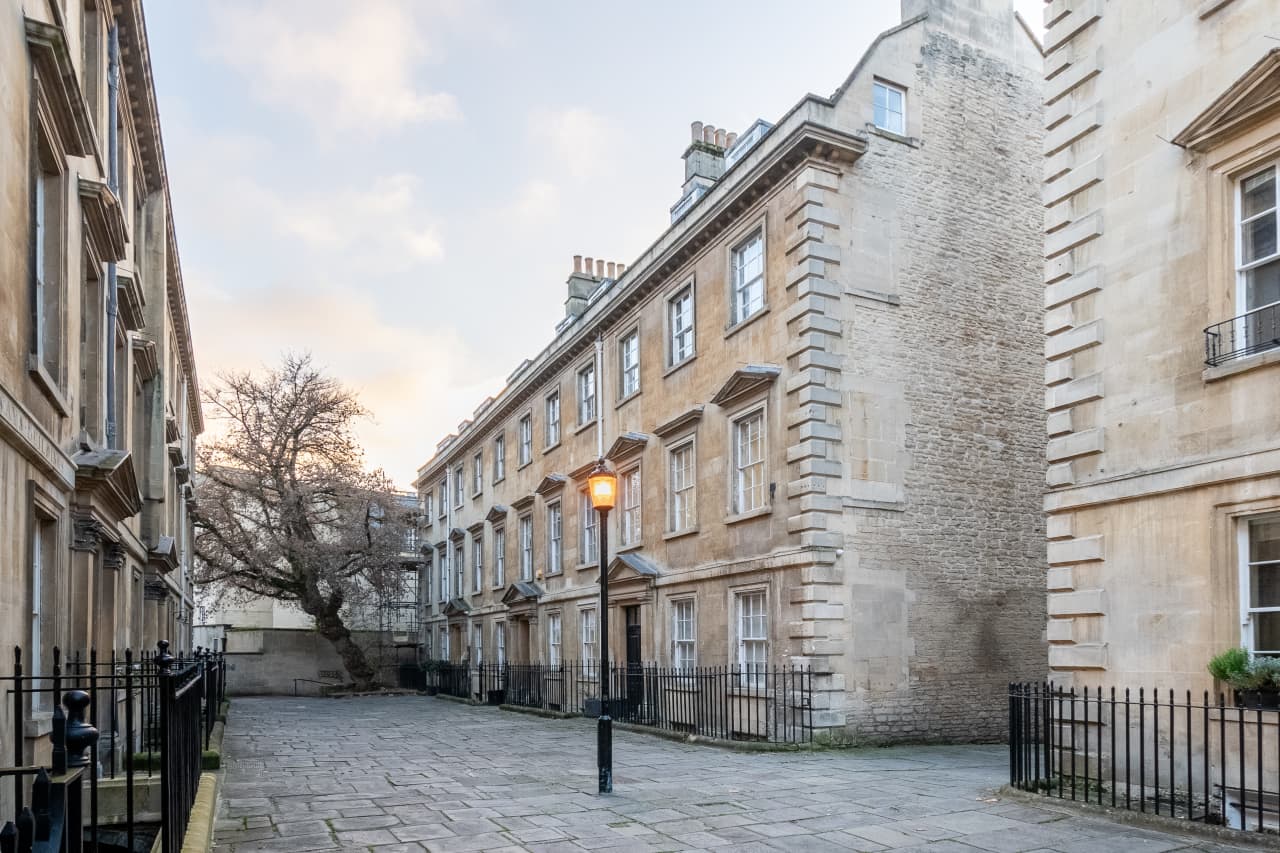
Since Bath is a Unesco World Heritage City, its historical environment is protected, so it does not expand. The centre contains tall Georgian townhouses, while there is more modern housing on the infill sites created when the city was bombed during World War II. A Georgian townhouse usually has five stories and 100 stairs.

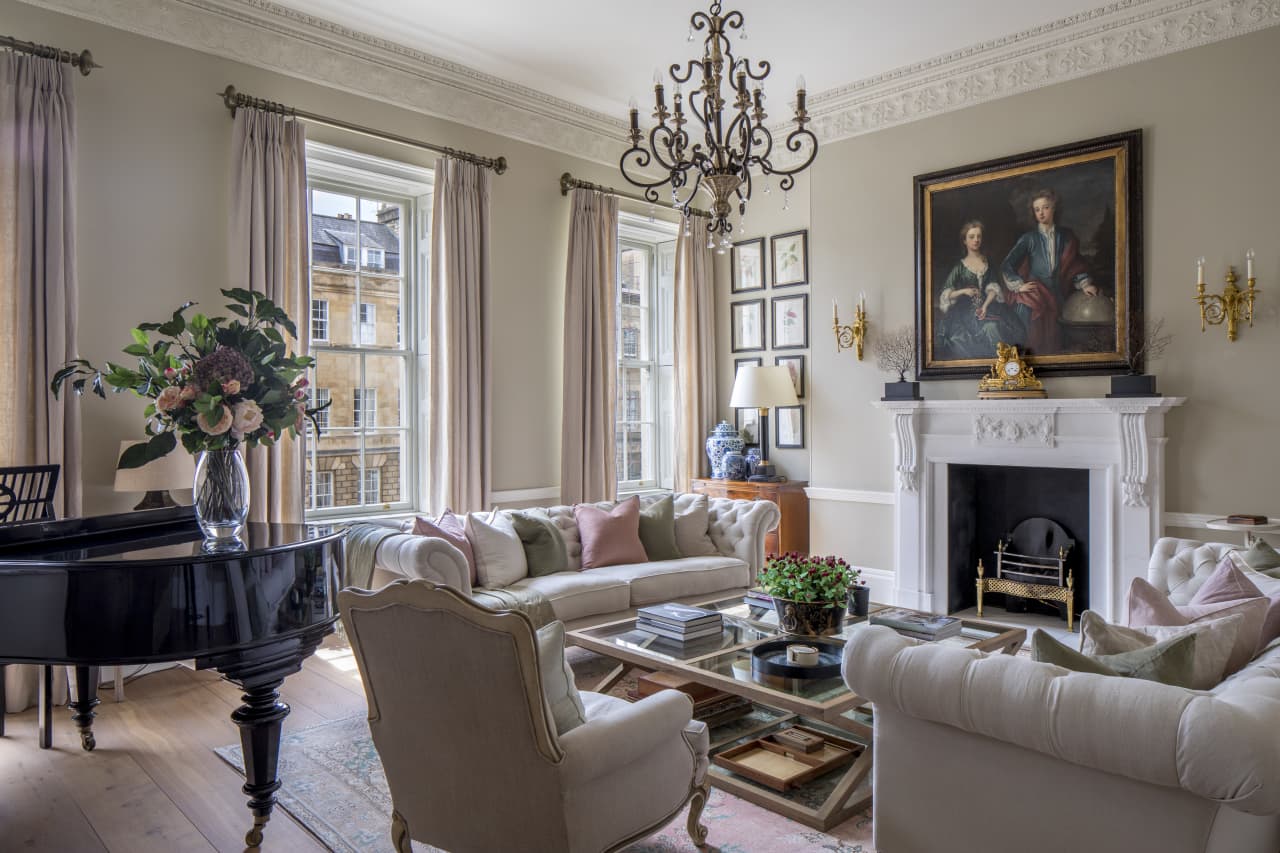
“They were built with entertaining in mind with large reception rooms, grand proportions, high ceilings, big windows and fireplaces. They have a doll’s-house look,” Mackenzie said. “Many have railings at the front and wrought-iron balconettes.”

The city is famous for its townhouses, like this one, on the market for £3.45 million with Carter Jonas.
Carter Jonas

Parking is at a premium; the Georgians built stables and coach houses at the back of properties but many have since been converted into residences. A garage can cost as much as £200,000 and a secure car-parking space £100,000.

Bathwick Hill and Weston Park also feature Regency villas that are individual in style, unlike the uniform feel of the monumental Georgian terraces.

“The Grand Tour of the day inspired the architects of that era because a lot of the houses will have beautiful pediments and columns that are almost Grecian in feel,” Penny said.

Villas are usually 5,000 to 6,000 square feet in size set within grounds of 0.5 to 1 acre. Such properties are rare, coming on the market once a year and can command between £3 million and £10 million.

What Makes It Unique

“Bath is a lovely mix of town and country life because it is such a small city, added to which it is very beautiful and very safe,” Mackenzie said, calling out the several bodies of water that cut through the city.“It’s very historic, but more recently what has attracted people to Bath is that it’s got very good schools and the University of Bath.”

This home in Bath is on the market for £4.895 million with Savills.
Savills

Former radio producer Penny Faux and her composer husband, Steven, moved to Bath from London with their young family. They were attracted by the city’s beautiful buildings, lack of urban sprawl and good schools. Faux also cited its vibrant arts scene as a draw.

“Bath punches above its weight, with good theatre and music festivals,” Faux said. “It’s also an international place, home to a university and many language schools.”

Bath also has good transport links, including an international airport and train connections into London in 90 minutes.

“It’s immensely attractive with period properties interspersed with lots of public space and parks,” Savills’s Penny said. “We have a university that attracts overseas students. We are a global destination.”

Luxury Amenities

Bath is a lively place with an excellent shopping centre and numerous restaurants, including the Michelin-starred Olive Tree. To relax, there is the Thermae Bath Spa with its natural springs, Royal Victoria Park and the Botanical Gardens on the edge of Royal Crescent. For sports, there are Tracy Park and Lansdown golf clubs to the north, and the Manor House Hotel golf club at Castle Combe.

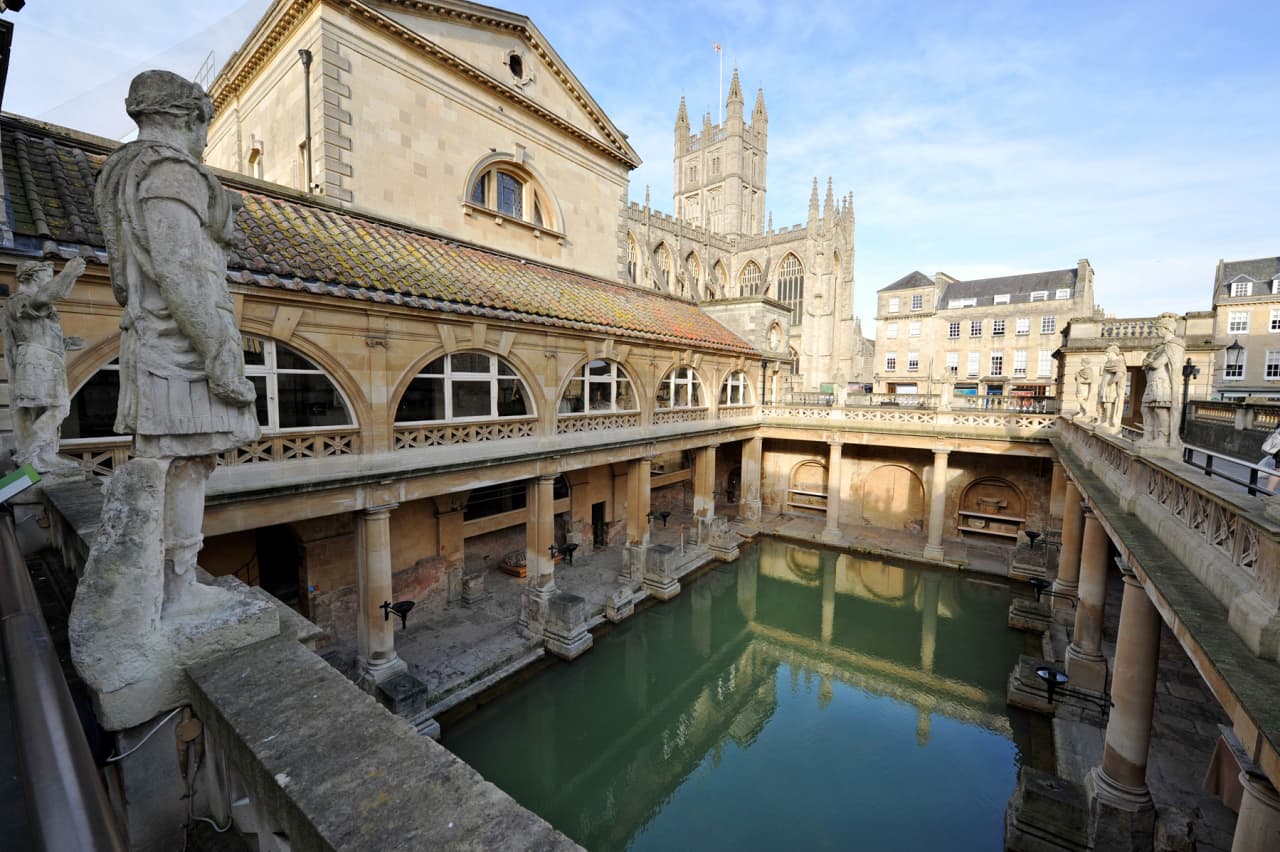
The Roman Baths are at the heart of the city.
Getty Images

Bath has much to offer culturally with numerous art galleries and museums, as well as music, literary and film festivals. The Theatre Royal stages shows pre and post runs in London’s West End.

Among the top-ranked private schools on the north side are two day and boarding schools that enroll students from pre-kindergarten through high school: the Royal High School Bath school for girls and the co-ed Kingswood.

On the south side, King Edward’s School is co-ed day school geared toward pupils from pre-K to 12th grade. The co-ed Paragon School is for children aged three to 11. Prior Park College is a mixed Catholic day and boarding school for children ages 11 to 18.

Who Lives There

“Bath attracts people with connections outside of the area; a lot of people who work in London. People who move to Bath with their children tend to stay here, so we do have retirees,” Penny said.

There’s also an arts crowd in Bath that goes back to residents like writers Austen and Mary Shelley, Mackenzie said. “It’s also got a lot of academics who love its history, as well as high-net-worth individuals who come for the schools and because it’s safe, yet can get into London very quickly by train.”

Notable Residents

Mackenzie said the city is a lure for the famous because “you can blend in in Bath.” It’s been home at one time or another to many actors, from Indira Varma of “Game of Thrones,” to John Cleese and Nicolas Cage , according to published reports.

Royal Victoria Park is one of many places to relax in Bath.
Getty Images

Also from the arts, designer Manolo Blahnik reportedly made Bath his home 43 years ago and lives in a Georgian townhouse on Camden Crescent by architect John Eveleigh.

Outlook

Mackenzie said prices have increased 15% to 20% over the past five years. At present, it takes on average six to eight weeks for a home to sell. But Mackenzie said that properties in locations such as the Circus, the Royal Crescent, St James’s Square, Lansdown Crescent and Widcombe along the canal sell quickly.

“Property in Bath always holds its value because housing stock never increases, there’s never a flood of properties that come to the market,” he said.

“Bath stands its ground,” said Penny. She said the first quarter of 2024 had been very busy and the value of prime property rose in value 0.6% compared to the previous year.

Mackenzie said prices will remain stable in what is an election year but if a new government reduces stamp duty that may nudge prices up 5%.

Futuristic Feng Shui-Designed Malibu Mansion Once Asking $57 Million Heads to Auction

A contemporary home designed with Feng Shui principles in Malibu that once asked $57.5 million will be auctioned in June.

The architectural home lies on the Pacific Coast Highway in Western Malibu, a surf spot known for its pristine beaches and celebrity owners. Concierge Auctions, which is handling the sale, expects bidding to open between $10 million and $19 million.

The long, narrow lot is about four-fifths of an acre and boasts 75 feet of private beachfront. Owner Wei-Tzuoh Chen, a California-based nephrologist, purchased the property in 2003 with his wife, Carrie Chen, for around $2.25 million. They originally intended to knock down the existing house and develop four condo units but then decided to keep the location for themselves as a vacation property.

Concierge Auctions

“I’ve lived in many beachfront houses in different parts of Southern California, but this is the finest sandy beach I’ve ever seen,” he said, distinguishing it from places where the water comes right up to the house during high tide.

The couple spent over six years building an 8,206-square-foot glass, steel and concrete residence with Malibu architect Ed Niles, who Chen said “spoke to his taste as a contemporary, not modern, architect.”

A native of Taiwan, Chen wanted to incorporate elements of Feng Shui into Niles’s signature futuristic design, inspired by the Guggenheim in New York City and the Broad in Los Angeles.

“I wanted a mini-museum in which to display my collection of Chinese antiques in a futuristic setting,” he said.

The property was previously listed in March 2023 at $57.5 million by Madison Hildebrand, president and CEO of the Malibu Life Team (and star of Bravo TV’s “Million Dollar Listing Los Angeles”), along with Jennifer Chrisman of Compass,  Wendy Wong of Treelane Realty Group and Katherine Quach of Treeline Realty & Investment. The agents are collaborating with Concierge Auctions, which will launch the auction on its online marketplace in mid-June. It is currently listed at $42 million.

Concierge Auctions

The residence juxtaposes organic with geometric shapes; curved and straight lines mingle inside and out.

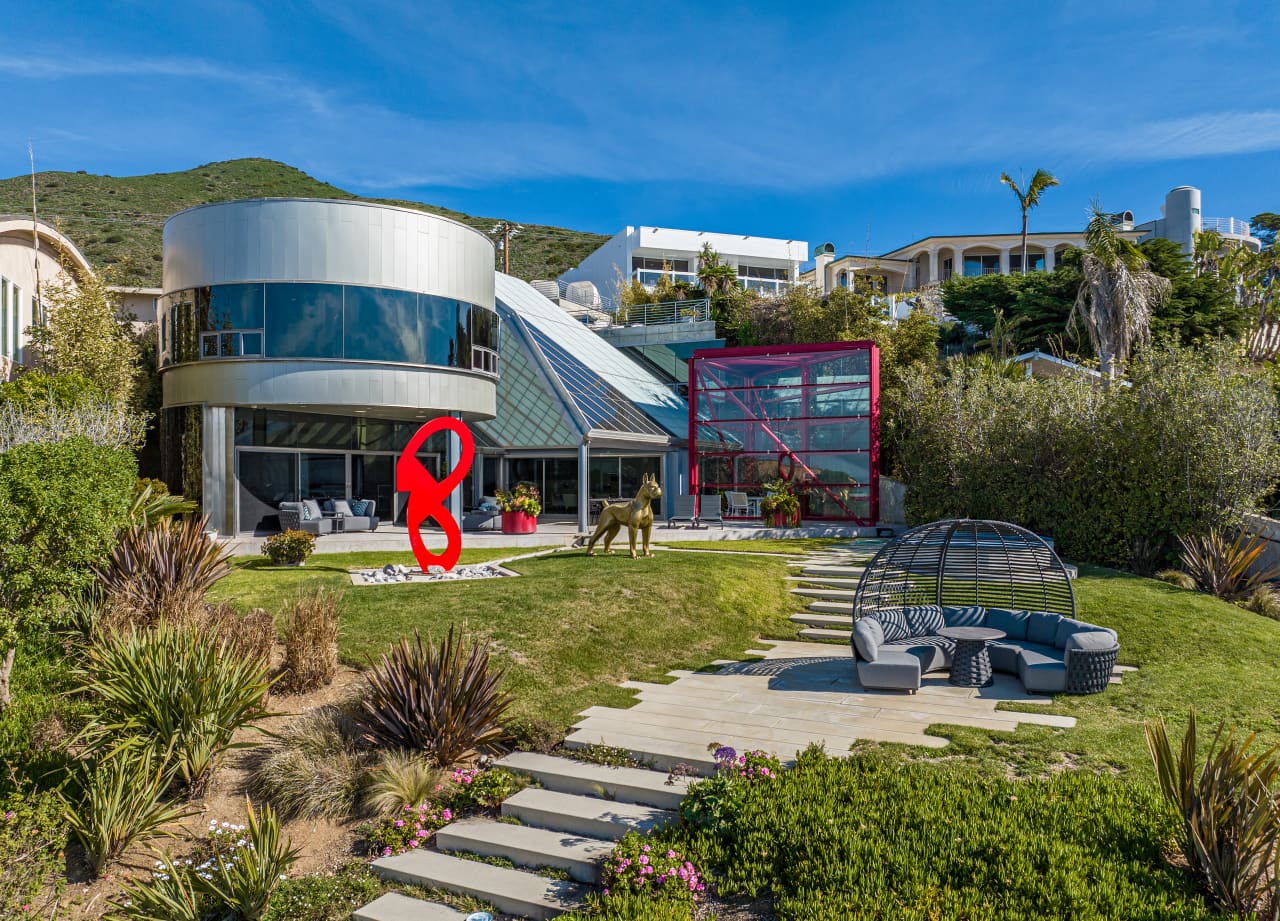
As shown in an aerial photo, it consists of a series of circles, semi-circles, triangles and rectangles. “There are basically eight different-shaped structures in a configuration,” Chen said, explaining that the number eight symbolises good fortune in Chinese numerology.

Integrating Feng Shui elements was accomplished in numerous ways.

“Feng means ‘wind,’ and the idea is to have air flowing throughout,” Chen said. “Based on a survey of the site, Niles designed it so that when you open the door on the ocean side, the breeze will circulate into every area of the house.”

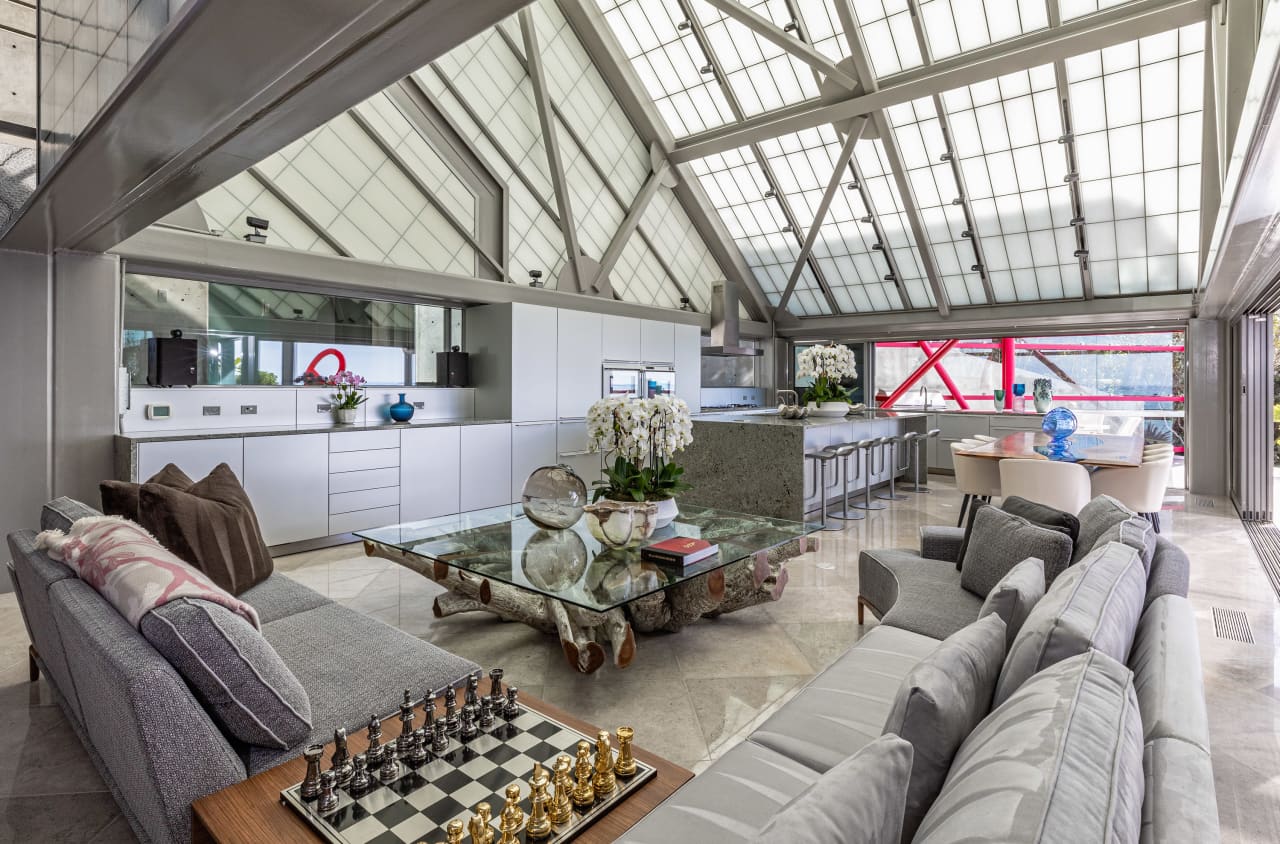
He added that the architect also designed the house around the sun’s movement, capturing the ever-changing light via over 45 custom skylights. “The architectural perspective of the house shifts every minute of the day.”

Feng Shui also refers to the flow of movement, which starts from the street-side security gate, where a short driveway descends to the house below. “The concept of the Chinese home is to be unassuming from the front and then to provide a wow factor when you walk inside,” he explained.

Concierge Auctions

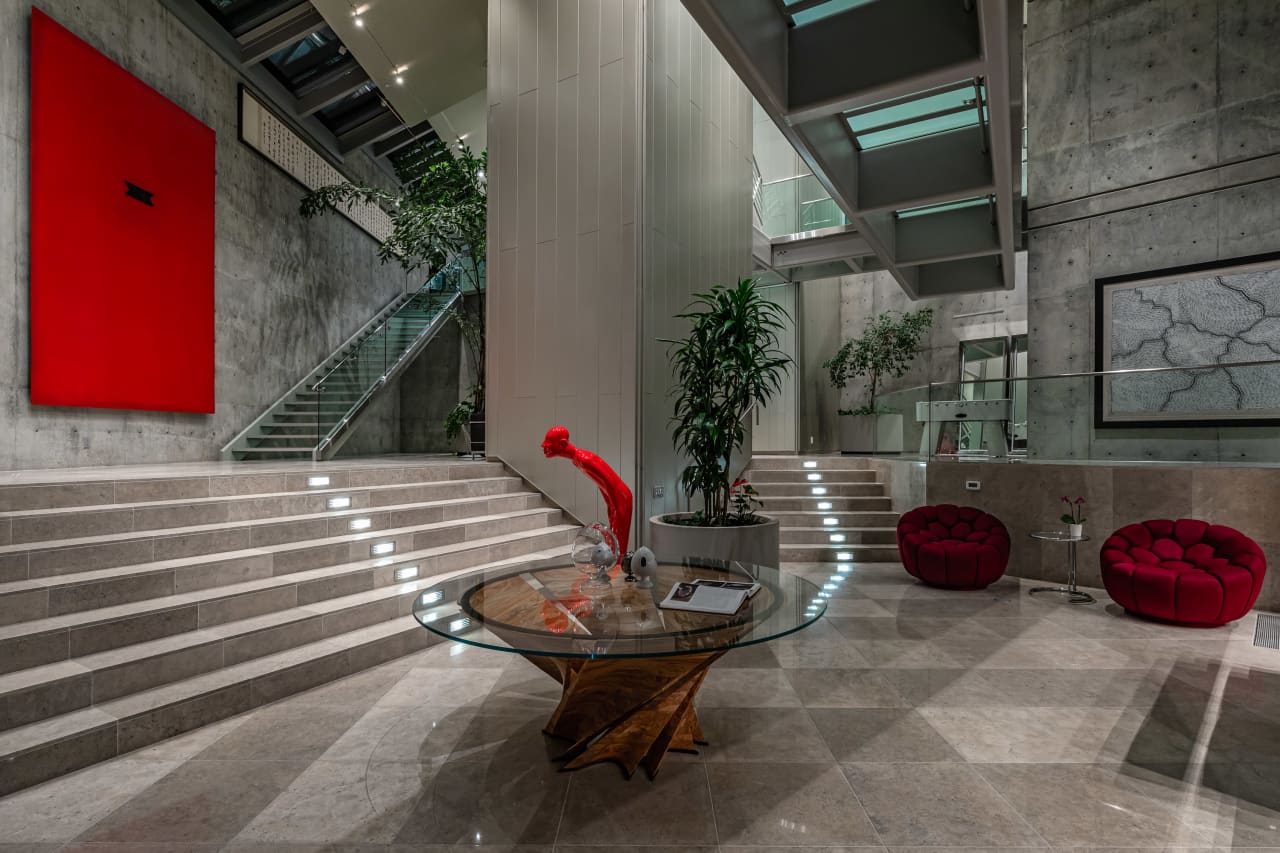
Steps lead down to the glass-walled entrance with a soaring steel-paned glass ceiling. This spills into a cavernous space framed by massive architectural concrete walls and a floating bridge overhead. Two expansive sets of built-in stairs lead in different directions—one connects with a floating staircase to an upper level. The other flows into the ground floor living area and kitchen, with views to the horizon on two sides. A wall of frameless glass doors opens onto the back patio and an outdoor dining area.

Concierge Auctions

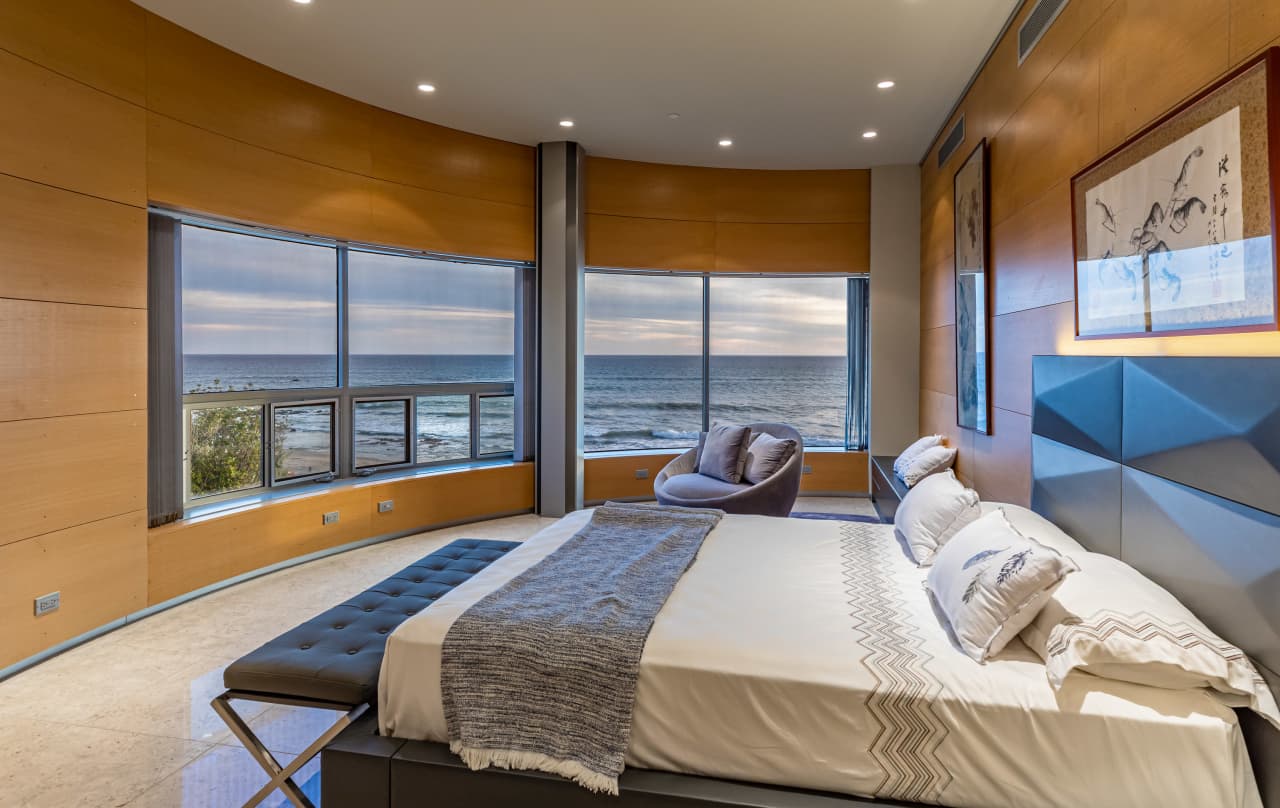
Two separate upper-level spaces—one rounded, the other a triangle—jut out over the patio, creating covered sitting areas below. The round space comprises the primary suite, featuring a wood-panelled sleeping area and a marble bathroom with a cylindrical Japanese stainless-steel tub overlooking the ocean. A 50-foot bridge and short flights of stairs lead to three more bedrooms with private decks.

“Every split level has its own wing with an en-suite bedroom, so they are private with no shared walls, and everyone gets to take advantage of the view,” Hildebrand said. “The guest house is separate with its own private outdoor space.”

Concierge Auctions

Two marine-coated red steel sculptures in the back play on the shapes and number themes. One is an immersive red triangular sculpture that doubles as an enclosure for a small dining table; the other is a humanistic red figure-eight piece. Chen confirmed that both are part of the sale, as is a larger-than-life green butterfly sculpture at the entrance.

Inlaid rectilinear stepping stones cut a diagonal across the lawn to the sandy beach, bordered by large rocks. Although it is technically open to the public, Hildebrand said it is not easily accessible or widely known.

Beyond the interiors, the outdoor entertaining spaces—counting an in-ground fire pit with stone crescent benches—can accommodate up to 100 guests. Six uncovered parking spaces are available in addition to a two-car garage.

“It also has a tide pool where you can see sea urchins, mussels and other marine life on the rocks in ankle-deep water at low tide, which is also very rare here,” Chen said. “That’s the reason I chose this lot over others. It’s such a unique location.”

The generational investment divide for Australians

Four in five Australians say they have changed their investment and savings goals over the past 12 months, with 44 percent doing so primarily to make ends meet during the cost–of–living crisis. A further 25 percent say they’ve switched strategies to protect their wealth against inflation, according to a new survey by financial advisory firm, Findex.
The Superannuation and Retirement Insights report shows Australians have also changed their goals to grow their wealth (31 percent), to create a regular income stream (29 percent) and to reduce taxes (17 percent). Transferring wealth to their children or other family members has motivated 10 percent of Australians to alter their investment plans, which is likely reflective of the increasing role played by the Bank of Mum and Dad in young people’s first home purchases.
The report found that traditional investment avenues, such as property and superannuation, remain the most popular choices, with more than eight out of 10 survey respondents ranking these asset classes highly. But there is also an increasing inclination towards investments that offer the potential for quicker returns, additional perceived safety, and better liquidity or accessibility to funds.

Eighty percent of survey respondents also nominated bank savings as among their top five investment choices right now, followed by shares (66 percent) and cash (51 percent).

“This shift reflects a broader strategy to mitigate current financial uncertainties, balancing the pursuit of long-term wealth accumulation with the need for immediate financial security,” the report says.

While superannuation is considered a cornerstone investment for retirement and long-term wealth accumulation, 85 percent of Australians are exploring investments outside superannuation. The most common investments outside super are bank savings (64 percent), property (38 percent), cash (35 percent) and shares (34 percent).

However, when the data is broken down by generation, stark differences are revealed in how each age cohort chooses to invest their spare income and why.

Most popular investments outsider super and the motivations to invest by generation

Baby Boomers (born 1965-1964)

Outside superannuation, Baby Boomers prefer to invest in bank savings (60 percent), property (50 percent) and shares (46 percent).

By far, their primary motivation for investing is planning for retirement (80 percent). They also want to build wealth (51 percent) and support their children or other family members (25 percent). Other motivations include preserving wealth to beat inflation (22 percent) and paying off a mortgage or other debt (20 percent). They are the least likely generation to be saving for an investment property.

Gen Xers (born 1965–1980)

Gex Xers prefer to invest in bank savings (57 percent), property (43 percent) and shares (36 percent).

They are motivated to invest for retirement (66 percent), to build wealth (50 percent), to save for emergencies (36 percent), and to pay off a mortgage or other debt (30 percent). Interestingly, Gen X is the generation most concerned with supporting their children or family members (33 percent). This may be because Gen Xers have grown up during Australia’s long-standing property boom that began in the late 1990s and continues today.

Millennials (born 1981-1996)

Millennials have the strongest interest in bank savings as an investment avenue (70 percent), followed by property at 41 percent. They also like cash (35 percent) and shares (33 percent). Millennials have the highest uptake of exchange-traded funds (ETFs) at 21 percent. ETFs are a relatively new type of asset class, with the first ones trading on the ASX in 2001. ETFs are a basket of shares that can be purchased in a single transaction for instant diversification. Millennials are also the generation most interested in cryptocurrencies, with 22 percent invested.

Their biggest motivations for investing are to build wealth (55 percent), save for emergencies (50 percent) and plan for retirement (49 percent). They also want to support their kids (32 percent) and pay off their mortgage (32 percent). Millennials are the generation most likely to be saving for an investment property (28 percent) rather than a first home (17 percent).

Gen Zs (born 1997-2009)

Gen Zs spread their money across more asset classes than their elders. They like investing in bank savings (66 percent), cash (42 percent), shares (22 percent), ETFs (17 percent), property (14 percent) and cryptocurrencies (13 percent).

While Gen Zs are the youngest age cohort within the survey, they also have long-term goals just like their elders. The biggest motivation to invest among Gen Zs is to build wealth (52 percent). More Gen Zs are saving for a first home than any other generation, with 42 percent pursuing this goal. They are also the generation most concerned with preserving wealth to beat inflation (29 percent). Gen Zs also want short-term security, with 46 percent saving for emergencies. They’re also the generation most likely to be saving for other major purchases like a car or holiday (41 percent) and investing just for enjoyment (26 percent).

The Power Move of Working the 5-to-9 Before the 9-to-5

As a competitive rower in my long-ago prime I sometimes used a racing strategy called fly and die. Sprinting to an early lead often yielded a fast overall time, even if I couldn’t hold my torrid pace through the finish line.

Some professionals take a similar approach to their desk jobs, starting their workdays with a 5 a.m. to 9 a.m. shift. They are up before the sun—and, more important, before their co-workers—to get a jump on the workday and impress the boss.

Nothing screams go-getter like a predawn email! Getting stuff done early allows them to clock out midafternoon and still look like stars, even if their routines require Ben Franklin-esque sleep schedules and vats of caffeine.

Melissa O’Blenis rises by 4:30 a.m. for prayer and Peloton time before starting her job at the digital consulting firm Argano.

“I just love checking things off my list,” she says. “I need that focus time away from Teams messages, email notifications and text alerts.”

A mother with two sets of twins, O’Blenis, 48, often breaks for her kids’ afternoon sports without feeling guilty or judged. Colleagues jokingly call her Granny because her 9 p.m. bedtime makes the early starts possible. But Granny got the last laugh when she was promoted to a director-level role in March.

More than 90% of knowledge workers want to flex their hours, according to surveys by Slack’s Future Forum . In the pandemic many of us got in the habit of handling personal commitments during standard business hours, then catching up on work tasks later .

Now that the office battle is largely over, fighting a return to rigid, 9 a.m. to 5 p.m. schedules might be workers’ last stand. But managers complain about afternoon dead zones when employees are out of pocket.

The solution for more workers is starting sooner instead of finishing later. Workflow software maker Asana reports that 21.4% of users are logging on between 5 a.m. and 9 a.m. this year, up from 19.8% in 2021. About 12% of work tasks are completed before 9 a.m., the company says, compared with 10% before the pandemic.

Early-bird bosses

Gibran Washington and his basketball teammates at Hofstra University used to run at 6 a.m. He maintained his early wakeups while climbing the ranks in food-and-beverage management.

By 9 a.m. meetings, he had already exercised, meditated and put in a couple of hours of work.

“I always found myself more prepared than my colleagues who hadn’t had their first cup of coffee yet,” says Washington, 40, who doesn’t drink coffee. Now he is chief executive of Ethos Cannabis, a chain of 12 dispensaries in three states, and rises as early as ever.

Waking and working ahead of the pack is a common CEO habit, from Apple ’s Tim Cook to General Motors ’ Mary Barra . Even if your ambitions are less grand than the corner office, starting early could help you stand out for one simple reason: The boss is probably up, too, and taking notice.

Matt Kiger says being the first one into the office helped him catch his manager’s eye and advance after changing careers from education to media sales. He would set his alarm for 5 a.m., hop a train from Connecticut to New York and be at his workstation before 7.

“I thought, ‘What is it going to take to break through?’” he recalls. “‘It’s going to take being there when my boss comes in, already at my desk making phone calls.’”

Now a senior vice president for digital sales at Townsquare Media , Kiger, 47, says much of the daily communication among company leaders happens by text and phone from 6 a.m. to 8 a.m. It’s possible to succeed as a night owl, he says, but people who sleep in risk missing a window when many executives are awake and accessible. While some working parents can’t swing early-morning meetings, others like Kiger say they are the key to being present at kids’ after-school activities.

Getting the worm

Matt Sunshine—whose surname surely predestined him to be a morning person—wakes at 5:30 a.m. to read the news. Then he cycles or takes a Pilates class and is on his computer by 7.

Sunshine is CEO of the Center for Sales Strategy in Tampa, Fla., which helps healthcare, media and professional-services companies generate leads. He doesn’t expect his 55 employees to follow his schedule but says it becomes progressively harder to get his attention as the day goes on and his calendar fills up with meetings. He also tries to log off by 5:30 p.m. for family time, so working after hours won’t necessarily make an impression.

“If you want to get my attention, a good time to get me is first thing in the morning,” Sunshine, 55, says. “Because people know I’m an early riser, I think that does influence other people to do the same.”

Elvi Caperonis’s morning routine is next-level organised. Her alarm rings at 6 a.m. She goes for a run at 6:30. At 7 she showers and eats breakfast. At 7:30 she opens her laptop and sets a timer for 25 minutes. That’s her first block to focus on the most important task of the day before a five-minute break. She repeats the on-off work pattern throughout the day.

Caperonis, a technical program manager at Amazon , makes a daily to-do list with nine items. She rates one critical, three medium-level and five lower-priority. This helps her work efficiently and in the right order.

The 41-year-old works from home in Florida and often picks her daughter up from school at 2:30 p.m., freedoms she has preserved partly by being highly productive early in the day, she says. Much of her job involves identifying potential risks to a project’s success, and when she sends an early-morning alert it arrives really early for company leaders in the Pacific time zone.

“They appreciate having that information first thing when they open their email,” she says. “In my experience, leaders are also early birds.”

Broken Chandeliers and Oven Fires: What Happens When a Real-Estate Pro Damages a Listing?

Have you ever accidentally damaged a client’s home?

Debby Belt, senior associate, Hammond Residential Real Estate, Chestnut Hill, Mass.

I was representing the seller of a four-bedroom Cape Cod-style home in Newton, Mass., just west of Boston. It was May 2016 and the house was listed for $929,000. It had a beautiful kitchen, with wood cabinets, granite countertops and stainless-steel appliances.

The house went under contract, and it was scheduled for a home inspection. I wanted the house to look pristine for the inspector and buyers, but the kitchen counters were cluttered, so I frantically threw things into drawers, and I put some glassware, baking tins and plates into the oven. When the inspector walked into the kitchen, he turned on the oven to test it without looking inside first. I was in another room at the time, but I smelled something burning, and then heard explosions as the glass shattered.

When I ran into the kitchen, I saw smoke and a small fire in the oven. There was broken glass all over the place, and the kitchen was smoky. Since it was a gas oven, it could have been much worse. The oven was damaged, and the seller wasn’t happy, so I gave her a $500 discount on the commission to offset any damage or credits she would have to give to the buyers. The buyers weren’t too upset, fortunately, because they were probably planning to update the appliances. The home ended up selling for $920,000 with the oven not functioning perfectly. Now, when I meet the inspector, we both still laugh about it.

Jeffrey Kahn, broker, Broker Associates Realty, The Villages, Fla.

In 1995, early in my real-estate career, I was representing the seller of a condominium in a luxury high-rise building on the ocean in Lauderdale-by-the-Sea, just north of Fort Lauderdale. My seller had the mistaken impression that the dining room chandelier was excluded from the sale, so she had it taken down just before closing and replaced it with a less-expensive fixture.

When we did the walk-through the day before closing, the buyer noticed that the original chandelier, which was about 3 feet wide and custom-made from oyster shells and glass on a wrought-iron frame, was missing and, since the contract said that the unit was being sold furnished with everything included in the sale we needed to rectify the situation. The buyer was refusing to close because she loved the chandelier, and my commission—about $30,000, which I was going to split with the other agent—was in jeopardy. The original chandelier was packed in a box on the dining room table, and to make the deal happen, I told the seller I would replace her chandelier with a comparable one if we would rehang the original.

It wasn’t a difficult chandelier, and I’ve done a lot of electrical work in my own homes, so I took down the one hanging from the ceiling. As I started to remove the oyster-glass chandelier from the box, a hairless Sphynx cat jumped on the glass dining room table and rubbed against me. I had never seen a cat in the apartment during the entire listing process, so it scared the heck out of me. I dropped the chandelier, which broke, and I ended up having to pay $8,000 for two new chandeliers and electrician fees. Thankfully, the unit sold for $978,000 and my commission was sufficient to cover the costs. I was just happy the glass dining-room table didn’t break because then my whole commission would have been gone.

Joshua Garner, real-estate agent, The Agency, New York City

In October 2022, I was representing the owner of a Classic Seven co-op on the Upper East Side that was listed for $3.1 million. It had three bedrooms and 2,575 square feet of classic prewar details, with 13 windows and high ceilings. It also had the most particular seller ever. She trusted no one but myself to open up and show the apartment, and it took no less than 30 minutes to prepare and close up each time. There was a written checklist I had to follow, in a specific order, that included the proper angle at which to pull the string for the blinds, how to pick up and strategically fold, stack and put away the series of white sheets she had laid out as runners to protect the bedroom carpets and wearing shoe covers and gloves. She would watch everything from Switzerland via her security cameras and would call me to correct the smallest details.

Prospective buyers were told not to touch anything and to stay on designated walking areas, which were placed a distance from the Ming vases. If they wanted to see the interior of a cupboard or closet, I would refer to myself as Vanna White and would respond to what they instructed. I always warned them ahead of time that she was probably watching and that anything they said or did would be recorded. Buyers would enter with their guard up, which made it difficult. One day, after a showing, I couldn’t get one of the blinds to lower properly. I panicked, but I notified her immediately, and she had a maintenance worker inspect it. The cord had come off the internal spool, and even though it was a quick fix, the seller was livid and ready to withdraw the exclusive.

The only thing that saved the listing was offering to pay $300 to fully replace the mechanism to restore it to new condition. Although there were incidents that upset her during other showings, thankfully, nothing else was ever broken. This co-op, which ended up closing for $2.95 million in October 2023, was the most high-stakes deal I ever worked on.

—Edited from interviews by Robyn A. Friedman 

What the experts say the Federal Government’s budget means for the Australian housing market

The $11.3 billion Homes for Australia plan unveiled in this week’s Federal Budget includes an additional $1 billion in funding – on top of $500 million previously pledged – to help the states and territories fast-track the building of ‘enabling infrastructure’ such as new roads, sewers and energy, water and community infrastructure to create more areas for buyers to build their new homes.

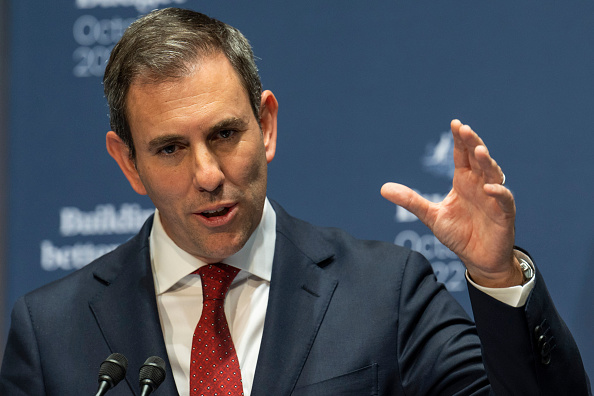
Treasurer Dr Jim Chalmers handed down his third budget this week (Photo by Martin Ollman/Getty Images)

To support this goal, the Federal Government has also committed $90.6 million to grow Australia’s construction workforce, including 20,000 new fee-free places at TAFE and VET vocational colleges, as well as more skilled migrant visas. CoreLogic research director Eliza Owen commented: “This could add to labour supply to the tune of 22,000 workers, representing 1.7 percent growth in an industry where employment had an average quarterly increase of 0.7 percent over the past decade.”

More construction workers are desperately needed not only to help the Federal Government reach its target of 1.2 million new homes within five years, but also to offset the impact of construction company insolvencies. Ray White economist Nerida Conisbee points out that construction insolvencies continue to rise, with the latest ASIC figures showing 2,758 construction companies entered external administration over the 12 months to 31 March 2024.

Ray White economist Nerida Conisbee says insolvencies remain high in the building industry

Prime Minister Anthony Albanese said the budget encouraged the states and territories to “kick start building”. He commented: “This Budget means more tradies, fewer barriers to construction, less talk and more homes. This isn’t about one suburb or one city or one state. It’s a challenge facing Australians everywhere and it needs action from every level of government.”

The Federal Government is also seeking to reduce demand in the private rental market following a 43.5 percent surge in the national median rent from $437 per week in August 2020 to $627 per week today, according to CoreLogic. The budget provides money for more social housing, plus a plan to make universities build more student accommodation, thereby removing some demand in the private rental market from low-income workers and domestic and international students.

Budget measures include an additional $423.1 million for the National Agreement on Social Housing and Homelessness, taking total funding to $9.3 billion over five years, under which more social housing will be built and existing housing repaired. REA senior economist Paul Ryan said: “All up, the government expects to support the building of 55,000 new social and affordable homes by 2029 – representing a 12 percent increase in the total number of available homes across the country.”

The plan to legislate new requirements for universities to build more accommodation follows a huge surge in immigration, with an almost 550,000 net increase in migrants over the 12 months to 30 September 2023, the bulk of which were international students and temporary workers.

Commonwealth Rent Assistance is being increased for the second year by 10 percent this time, following a 15 percent increase in last year’s budget. The two boosts represent about a $35 per week increase in assistance to almost one million Australians. The Budget also includes $1 billion for crisis and transitional accommodation for domestic violence victims and youth in distress.

AMP chief economist Dr Shane Oliver said the budget’s housing measures were unlikely enough to meet the goal of building 1.2 million new homes over five years. Dr Oliver said the supply shortfall was set to remain “unless immigration plunges”. Treasurer Jim Chalmers says net overseas migration next year is expected to be half what it was this year.

Dr Oliver said the budget’s housing measures were also unlikely to alter the outlook for home prices. He expects modest growth this year. Median dwelling values have already risen 2.2 percent between January 1 and April 30, following an 8.1 percent lift in 2023.

The Australian regions stepping up – and cashing in – when Hollywood comes calling

When the Sydney Harbour Bridge was shut down in early 2023 so Ryan Gosling could film a stunt on it for his latest movie, The Fall Guy, all eyes were on the handsome leading man – and why not? But did you stop to think of the Aussie company that provided his lunch that day, the makeup artist who got him looking just right, the supplier who provided portable loos for the day’s filming, or even the helicopter crew tasked with helping shoot the adventure scene?

Keen for more stories like this? Order the latest issue of Kanebridge Quarterly magazine here.

Australia has long been a popular choice for Hollywood to film their blockbusters – The Great Gatsby at Manly, The Pirates of the Caribbean on The Whitsundays and Gold Coast, The Matrix in Sydney and Wolverine in Parramatta, to name a few.  Most recently, Furiosa: A Mad Max Saga, directed by George Miller, was shot on location in Broken Hill. And behind the press conferences that congratulate the government for bringing such productions down under and the media snippets that catch glimpses of the leading man or lady caught walking our streets, it’s small businesses that benefit.

Since 2018, 39 international movie productions have been filmed in Australia – predominantly the east coast states of NSW, Victoria and Queensland – which has generated more than $3.3 billion in private investment and provided more than 24,100 jobs for local cast and crew, according to data from the Department of Infrastructure, Transport, Regional Development, Communications and the Arts.

A report titled Creative Industries Ripple Effect by UK-based consultancy Olsberg SPI found that 63 percent of the expenditure derived from making a movie or film went to businesses outside of the film industry – to the construction, catering, hair and makeup, real estate, tourism, hospitality and countless other businesses that benefit when an international film production company rolls into town.

The town of Hay in south western NSW was struggling last year after months of COVID state border lockdowns decimated their Sydney to Adelaide drive-through tourism. When a big budget Hollywood action film (that cannot be named) chose the Riverina town to film, it was a lifeline.

“The impact was immediate and tangible,” says the economic development officer for Hay Shire Council, Alison McLean. 

“There was $7 million in economic activity just from the cast and crew being in town. It was also incredible from a confidence-boosting point of view for our businesses; all of a sudden there were 400 extra people spending money in the region and the businesses really stepped up and took a lot of pride in providing excellent service.”

The regional town of Hay has seen a $7 million boost from being used as a film location.

She said the most obvious impact was on the accommodation sector which had suffered a 60 percent downturn in revenue and as a result of the filming in town, there was a 72 percent increase.

For The Whitsundays in Queensland, it is hoped the long term benefits of movies like Pirates of the Caribbean and, more recently, Ticket to Paradise starring Julia Roberts and George Clooney will translate to tourism dollars.

Julia Roberts and George Clooney starred in Ticket to Paradise, shot in The Whitsundays.

“After the movies are released, we reap the tourism rewards as our stunning region is up in lights,” says Tourism Whitsundays CEO Rick Hamilton. “If you Google Ticket to Paradise, you’ll find it was filmed at Palm Bay Resort and Hamilton Island, both island resorts that are bookable by visitors.

“The beauty of The Whitsundays is that it’s hard to disguise. Hollywood can change the location, but it still looks like The Whitsundays.”

Locations manager Jeremy Peek — who has worked on Mad Max: Fury Road (2015), Alien: Covenant (2017), Peter Rabbit 1 and 2 (2018 and 2021) and Three Thousand Years of Longing (2022) — says international film production is a growing sector. He says COVID shone a spotlight on Australia as an ideal filming location and the effects of that have continued beyond the opening of borders.

Jeremy Peek on location in Broken Hill

“Early on when COVID hit it was felt that we were just about the only country in the world who could keep going and the world looked to us as a safe haven to film in,” Peek says. “(Netflix series) Pieces of Her, for example, was due to start shooting in Vancouver when COVID hit, they’d built sets and everything, but they moved the shoot here. And Three Thousand Years of Longing, which was originally meant to be shot in Sydney, London and Turkey, was re-scouted to Sydney because there was confidence in Australia being a safe place to work.”

Peek says the government incentives and rebates are important now that the COVID scare has passed because they show Australia can compete on a world stage. 

It’s for this reason Ausfilm CEO, Kate Marks, believes the incentives the State and Federal Government offer to attract the likes of Disney, Universal, Marvel and Netflix to our shores need to be increased.

There is the Location Incentive grant, which is a merit-based offer that entitles an international production company to a grant worth 13.5 percent of their production expenditure. A secondary offer, the Location Offset Rebate, provides a 16.5 percent tax break. When used together, they result in a 30 percent carrot dangling in front of production companies. But only the Location Offset is permanently legislated.

“On its own the 16.5 percent Location Offset is not going to stay competitive for Australia on a world stage for too long,” she says. “Ideally, we would love to see a 30 percent Location Offset incentive as it’s the best option to provide ongoing certainty for companies. 

“There are studios who are coming back again and again; NBC/Universal have done 13 film and television projects here, and studios like Disney and Warner Bros also keep coming back.

“We need to see that continue.”

And it appears the Federal Government has listened, announcing an increase to the Location Offset from 16.5 per cent to 30 percent for eligible productions in the recent budget. 

It’s a move Peter Davey, co-CEO of law firm EMT, who specialise in entertainment, media, sport and technology advice, has welcomed.

“With the offset established, Australia will remain a highly attractive location for international productions and the investment in talent and jobs here will continue to grow,” Davey says.  “In the details of the Government’s announcement, there are also requirements for international companies to, for example, commit to training and to work with Australian digital, visual effects and post production companies.”

Film and television producer James Hoppe adds Australia needs to expand its studio space, evolve the foundation of film technology and increase the local labour force in order for international film production in Australia to grow.

“The labour force can only handle so much and when an international production comes in, they suck up all the labour pretty quickly,” the owner of Maker Films says. 

“There needs to be an implementation by local council so they can handle the influx of an international production. When Marvel took over Fox Studios and Elvis was being filmed on the Gold Coast and Robbie William’s Better Man was being filmed in Melbourne, it sucked up a lot of the labour force and production facilities and it was difficult for other international or local producers to access required resources.”

Aston Martin’s Muscular Vantage Is a Combination of Sophistication and Aggression

Aston Martin builds all of its cars with a peak blend of performance and luxury. Still, their six-figure creations can lean more aggressively into one side or the other of that simple recipe.

For example, the DBD707 SUV hides a 4-litre V8 engine capable of 697 horsepower, but its overall size and endless creature comforts nuzzle a little closer to luxury’s embrace. The small-batch Valour muscles up on the performance scale with its prized manual transmission and 5.2-litre, 705 horsepower V12 power plant. Meanwhile, the recently redesigned DB12 is the company’s best attempt at splitting the performance-luxury gambit right down the middle.

Amid all of those supercar machinations, the Aston Martin Vantage sneaks away to play as the most performance-centric car coming out of the Gaydon, England, factory. Redesigned for 2025, the US$191,000 coupe reasserts itself as the most dedicated “driver’s car” in a very driver-friendly line. Should this be in pounds first?

During a road drive and speed testing event at Spain’s Circuito Monteblanco about an hour outside of Seville, the new Vantage proved itself as Aston Martin’s most accessible track-day companion.

Aston Martin is the most accessible day-track companion. Aston Martin

A first look at the latest addition to its very elite Warwickshire family pulls the eyes right to the newly extended rear wells that jut out around 21-inch, forged alloy wheels. While widening the car’s haunches, the wheel positioning reduces unsparing weight and gives the new Vantage a much more athletic pose.

Beyond that muscular base, the Vantage continues the modern Aston Martin styling tradition of riding the razor’s edge between aggression and sophistication. While the car’s Italian and Swedish rivals opt for prominent fins and big scoops, Aston’s designers keep the lines low, wide, and balanced from the signature highlighted grille to the understated aerodynamic spoiler.

In the performance specs department, the Vantage now packs an AMG-built, 4.0-litre, V8 twin turbo, front-mid mounted engine, capable of 656 horsepower, and a top speed of 202 miles per house and a 0 to 60 mph time of 3.4 seconds.

According to James Owen, Aston Martin’s senior manager of Vehicle Engineering, if the DB12 is the automaker’s distinguished overachiever, the Vantage is its less responsible, but equally attractive pugnacious sibling.

“The DB12 is a sports tourer and is positioned in the market as a GT,” Owen says. “It’s important for us to differentiate between Vantage and the DB12—to make sure that difference is clear for buyers and enthusiasts”

Owen describes the larger, pricier DB12 (starting MSRP of US$245,000) as more refined, while he considers the 2025 Vantage as playful and passionate. He even uses the word “brutish,” if such a term can be used for a technology-stuffed, six-figure sports car.

“The word that we keep hearing when talking about the Vantage is ‘fun,’” Owen adds. “That’s what we wanted to hear. We wanted to create a car that pulls at the heartstrings because it’s so enjoyable to drive. But, we wanted it to have a challenging character to it.”

Previous versions of the Vantage fit that punkier image. While always built for speed and powerful acceleration, the last couple editions of the Vantage were a little more harsh. The steering seemed more aggressive—demanding more input from the driver. The suspension felt tighter, deliberately transmitting more of the road’s surfaces and imperfections into the driver’s backside. If any current car in the Aston Martin line is a direct descendant of the automaker’s racing pedigree at Le Mans or in F1, it’s the Vantage.

Still, amid all this talk of driving fun and racing performance, Owen is quick to remind drivers that the Vantage is still an Aston Martin— steeped in the company’s signature identity of sophistication as the grownup’s more dignified supercar.

“The Vantage also has that added feature in its wheelhouse,” Owen explains. “Yes, it will respond to a driver pushing it in a racing scenario, but—with the technology we built into the car to stabilise the body at its most comfortable driver mode settings – the Vantage is still a very pleasant place to be.”

In keeping with such pleasantness, the interior of 2025 Vantage bears no resemblance to any race car. Handmade and stitched Haircell Leather stretches in all directions in any colour the buyer prefers. The Sports Plus Seats are 8-way adjustable with heat or cooling on demand. The complete infotainment suite featuring the official Aston Martin Audio system from Bowers & Wilkins is a step up from the previous Vantage (and the current DB12).

The interior includes an infotainment suite featuring the official Aston Martin Audio system from Bowers & Wilkins. Aston Martin

Once the internal comforts and engineering feats come together, the experience behind the wheel is a sensual union of car and operator. Acceleration is smooth, yet immediate. The cornering is focused and nimble, and its rear-wheel drive allows for just enough play for the occasional drift at speed in turns.

A key piece of Aston Martin technology makes the Vantage’s elite performance potential accessible to more drivers. The ESP System (Electronic Stability Programme) debuted in the DB12, and the Vantage adopts the tech to its driver mode system. ESP takes information from multiple sensors around the vehicle, feeding the accelerometer data into a computerised concept of the car’s driving conditions and the ability of the operator.

Resulting algorithms react to those conditions, road surface issues, available grip, etc., tightening up the vehicle where necessary to aid the driver and offer as much feel and performance as the given operator can manage.

In its completed package, the 2025 Vantage is aimed at a specific buyer demographic—the driving enthusiast who puts thrills ahead of all-out creature comforts.

“For each project at Aston Martin, we have a customer profile in mind,” Owen says. “They have defined interests that highlight their demographic. For the Vantage, we consider a buyer who is perhaps new to the brand and looking into the ‘entry level’ Aston Martin. That’s a buyer who isn’t concerned with having a backseat or the DB nameplate. He or she thinks performance first and foremost.”

Two Former Military Forts Floating off the Coast of England Head to Auction as Lavishly Amenitised Properties

For buyers interested in taking their home security to the next level, this pair of historic forts floating off the coast of England might suit.

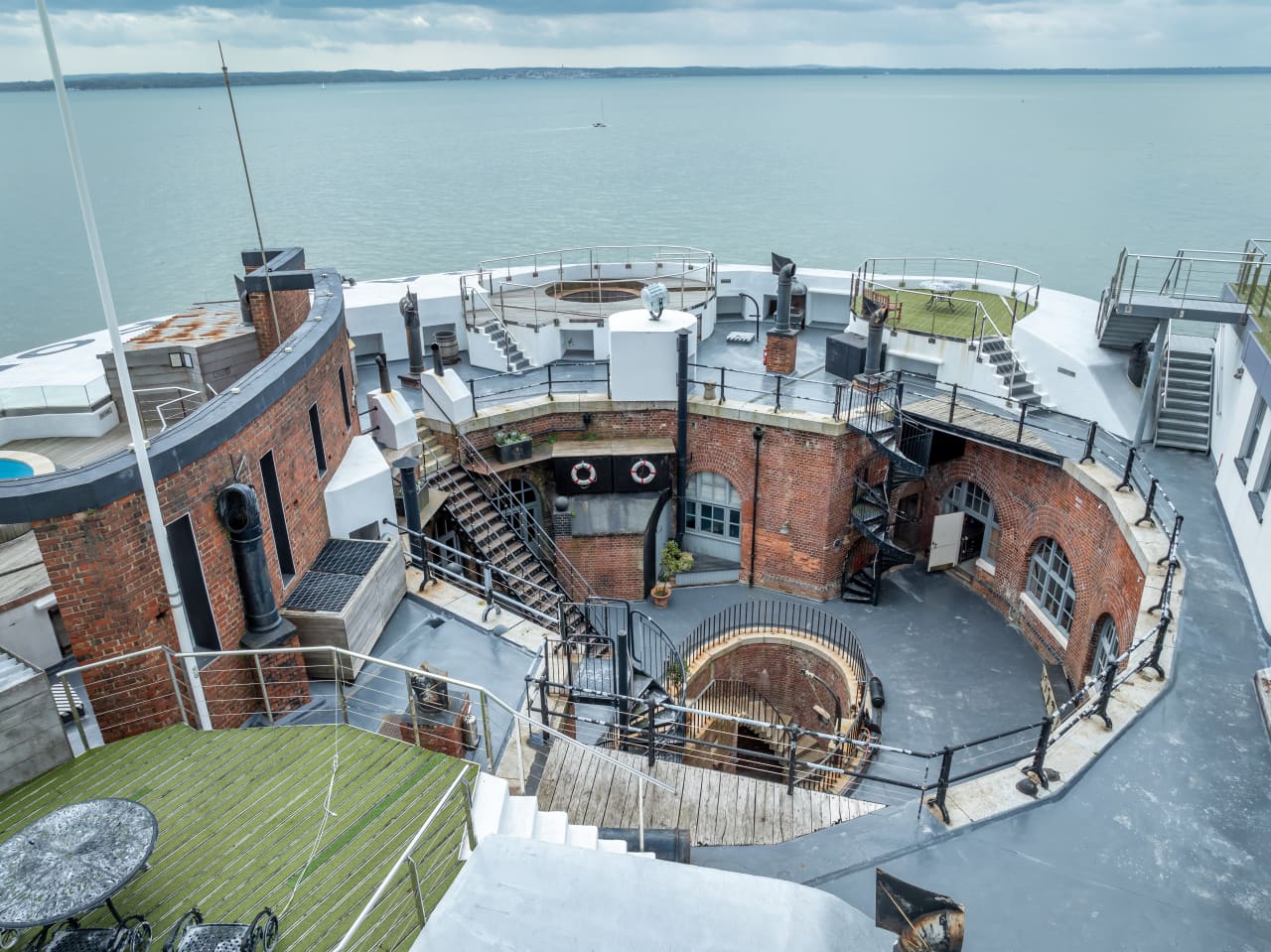
The duo, dubbed No Mans Fort and Spitbank Fort, are nestled in the sea between the Isle of Wight and Portsmouth on the mainland and they’re headed under the hammer with Savills on June 18 with a guide price of £1 million (US$1.26 million) each.

Though both are currently used as hotels, each has pre-existing permission to be converted into a residential property for a buyer or buyers looking for the ultimate private escape.

No Mans Fort is a 35-minute boat ride from the mainland.
Savills

Both forts, which have previously been on the market for £4.25 million and £4 million, respectively, “offer an opportunity like no other; a waterfront location, up to 99,000 square feet of space and a chance to champion the heritage and legacy of these iconic maritime structures,” said Robin Howeson, head of Savills Auctions, in a news release.

Mansion Global couldn’t identify the owners, but according to Savills, they’ve held both of the unique properties for 12 years.

No Mans Fort is roughly a 35-minute boat ride from the mainland. Over its four levels, it has 23 bedrooms, plus staff quarters, a restaurant, bars, a traditional English pub, a rooftop terrace and a nightclub.

Spitbank Fort is a little closer to land, sitting in the mouth of Portsmouth Harbour, and spans three floors with nine bedrooms, a restaurant, bars, a wine cave, a games room, a pool and spa facilities. There’s also a scenic rooftop terrace, a sun deck and a fire pit.

Spitbank Fort has a rooftop terrace.
Savills

“Throughout my career as an auctioneer I’ve seen several sea forts hit the market that have achieved impressive prices,” Howeson said, calling such forts trophy assets. “I anticipate there to be a global interest from multiple buyer types looking to take the forts into their next chapter, whether that’s as a new commercial venture or residential home.”

In 2022, Savills auctions sold the unmodernised Bull Sandfort in the Humber Estuary on the east coast of Northern England for £490,000, nearly 10 times its guide price after worldwide competition from bidders in 27 countries, the firm said.

The Art Market is Down. A Cyberattack at Christie’s May Make Things Worse.

Christie’s remained in the grip of an ongoing cyberattack on Tuesday, a crisis that has hobbled the auction house’s website and altered the way it can handle online bids. This could disrupt its sales of at least $578 million worth of art up for bid this week, starting tonight with a pair of contemporary art auctions amid New York’s major spring sales.

Christie’s said it has been grappling with the fallout of what it described as a technology security incident since Thursday morning—a breach or threat of some kind, though the auction house declined to discuss details because of its own security protocols. Christie’s also declined to say whether any of the private or financial data it collects on its well-heeled clientele had been breached or stolen, though it said it would inform customers if that proves to be the case.

“We’re still working on resolving the incident, but we want to make sure we’re continuing our sales and assuring our clients that it’s safe to bid,” said Chief Executive Guillaume Cerutti.

Sotheby’s and Phillips haven’t reported any similar attacks on their sites.

Christie’s crisis comes at a particularly fragile moment for the global art market. Heading into these benchmark spring auctions, market watchers were already wary, as broader economic fears about wars and inflation have chipped away at collectors’ confidence in art values. Christie’s sales fell to $6.2 billion last year, down 20% from the year before.

Doug Woodham, managing partner of Art Fiduciary Advisors and a former Christie’s president, said people don’t want to feel the spectre of scammers hovering over what’s intended to be an exciting pastime or serious investment: the act of buying art. “It’s supposed to be a pleasurable activity, so anything that creates an impediment to enjoying that experience is problematic because bidders have choices,” Woodham said.

Aware of this, Cerutti says the house has gone into overdrive to publicly show the world’s wealthiest collectors that they can shop without a glitch—even as privately the house has enlisted a team of internal and external technology experts to resolve the security situation. Currently, it’s sticking to its schedule for its New York slate of six auctions of impressionist, modern and contemporary art, plus two luxury sales, though one watch sale in Geneva scheduled for Monday was postponed to today.

The first big test for Christie’s comes tonight with the estimated $25 million estate sale of top Miami collector Rosa de la Cruz, who died in February and whose private foundation offerings include “Untitled” (America #3),” a string of lightbulbs by Félix González-Torres estimated to sell for at least $8 million.

Cerutti said no consignors to Christie’s have withdrawn their works from its sales this week as a result of the security incident. After the De la Cruz sale, Christie’s 21st Century sale on Tuesday will include a few pricier heavyweights, including a Brice Marden diptych, “Event,” and a Jean-Michel Basquiat from 1982, “The Italian Version of Popeye Has no Pork in his Diet,” each estimated to sell for at least $30 million.

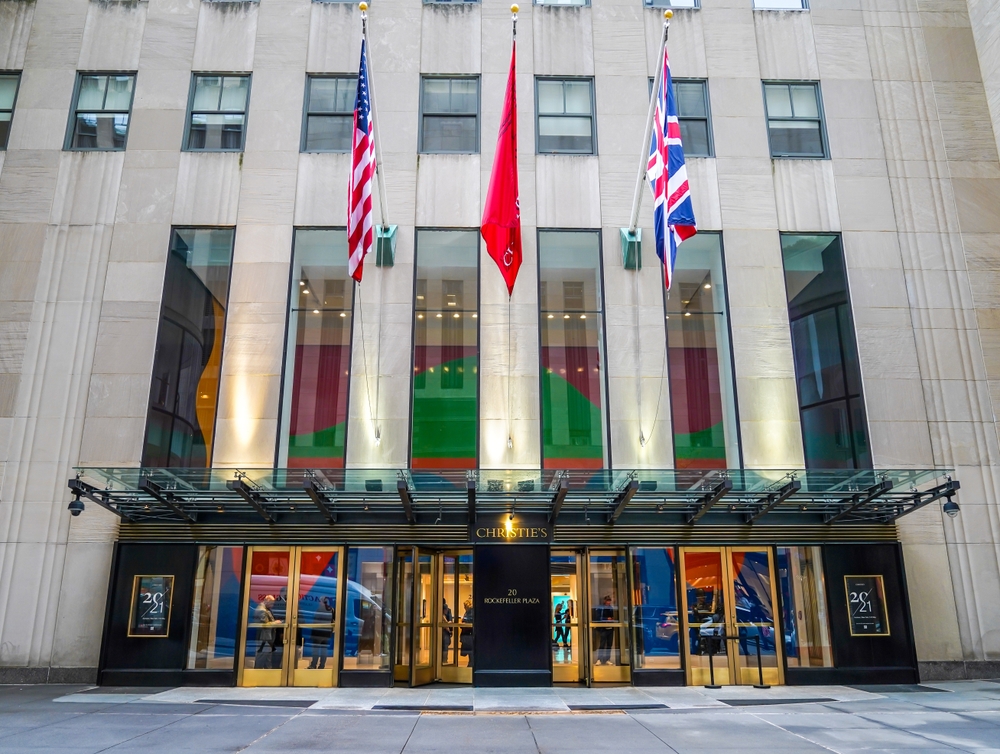
But the cyberattack has already altered the way some collectors might experience these bellwether auctions at Christie’s. Registered online bidders used to be able to log into the main website before clicking to bid in sales. This week, the house will email them a secure link redirecting them to a private Christie’s Live site where they can watch and bid in real time. Everyone else will be encouraged to call in or show up to bid at the house’s saleroom in Rockefeller Center in Midtown Manhattan.

If more bidders show up in person, the experience might prove to be a squeeze. During the pandemic, Christie’s reconfigured its main saleroom from a vast, well-lit space that could fit several hundred people into a spotlit set that more closely evokes a television studio, with far fewer seats and more roving cameras—all part of the auction industry’s broader effort to entice more collectors as well as everyday art lovers to tune in, online.

Once this smaller-capacity saleroom is filled, Christie’s said it will direct people into overflow rooms elsewhere in the building. Those who want to merely watch the sale can’t watch on Christie’s website like usual but can follow along via Christie’s YouTube channel.

Art adviser Anthony Grant said he typically shows up to bid on behalf of his clients in these major sales, though he said his collectors invariably watch the sales online as well so they can “read the room” in real time and text him updates. This week, Grant said a European collector who intends to vie for a work at Christie’s instead gave Grant a maximum amount to spend.

Grant said the cyberattack popped up in a lot of his conversations this past weekend. “There’s a lot of shenanigans going on, and people have grown so sensitive to their banks and hospitals getting hacked,” he said. “Now, their auction house is going through the same thing, and it’s irksome.”

Quirky Architectural Mansion Asking $7.69 Million in Palm Springs Puts a Spin on Old Hollywood Glamour

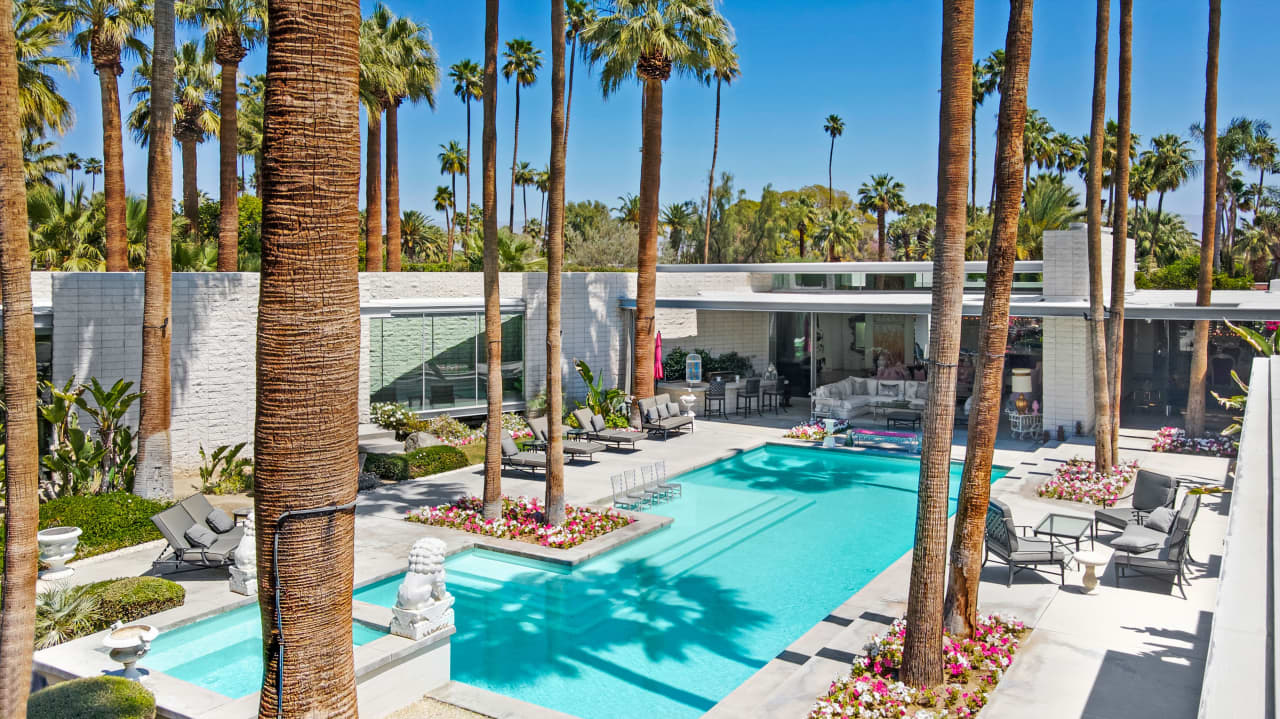
An architecturally impressive abode in Palm Springs, California, that combines mid-century style with Old Hollywood glamour has hit the market for $7.69 million.

Despite appearances, the desert getaway was actually built in 2012, by Sean Lockyer of Studio AR&D. This marks the first time the home has been on the market since its creation.

Desert Views Photography

“The goal with this project was to blend modern elegance and iconic mid-century architectural techniques,” Lockyer said.

By implementing “classic mid-century nods like floor-to-ceiling expanses of glass, aggregate block construction and a cantilevered steel roofline, the residence is unable to be dated and could easily be misjudged in age,” he added.

The heart of the 7,000-square-foot home is its glass-encased great room, complete with a recessed living area and a double-sided fireplace that extends through the glass walls and to the adjacent covered outdoor living space, according to the listing with Todd Monaghan and Keith Markovitz of TTK Represents of Compass, who brought the home to the market earlier this month.

The owners, who couldn’t be reached for comment, paid $700,000 for the underlying property in 2009, records with PropertyShark show.

The single-storey house also boasts an office that appears to hover over the ground, a media room, a wine room and an open kitchen that swaps the traditional backsplash with glass.

Desert Views Photography

There are four bedrooms, including a primary suite that occupies an entire wing of the house, and the pool sits in the centre of the home, visible from nearly all angels.

Desert Views Photography

The interior design, meanwhile, takes inspiration from Hollywood Regency decor.

The property is “among the best homes I have experienced in Palm Springs,” said Markovitz.

The house design where you won’t need a heater in winter

There’s much talk about Passive House Design—or ‘Passivhaus’ as it was known in Germany where it originated —in 2024 and the energy-saving efficiencies it offers homeowners. From the exterior, you wouldn’t know whether a home has incorporated passive house design or not. But journey inside, and you’ll find a different experience home awaits. 

The first thing you’ll notice from a passive home is it’s incredibly quiet; the outside noise is reduced thanks to exceptional sound insulation. You’ll then come to notice a comfortable temperature range — never too hot, never too cold — with fresh air filtrating each and every room. For those that detest dust, you’re likely to find fewer cleaning tasks each month.

Passive House Design is changing the way people live, the energy they save, and the comfort they’ll come to cherish. Chief Creative Officer of Melbourne Design Studios Felicity Bernstein says it’s only a matter of time until Passivhaus is the go-to for every home — the definition of modern luxury living.

“In Passivhaus, we are a lot less reliant on solar heat gains than in a traditional Aussie home. Passive Houses stay warm through the increased insulation and the continuous airtightness throughout; all rooms of the entire house are equally warm, and there are basically no hotspots or unconditioned spaces,” said Ms Bernstein. 

“You can imagine a Passivhaus a little bit like an esky: the temperature you have inside will be generally kept inside, and is kind of independent from the outside. Humans give off heat and so do appliances and that really is all that is needed if you have a well built Passivhaus. That is why you can hardly imagine to ever live in a non Passivhaus ever again once you experience the level of natural comfort a Passivhaus can offer.”

Below, Ms Bernstein explains the principles around Passivhaus and the key factors to its design throughout homes.

Marnie Hawson
—

What is passive house design? 

Coined by physicists Bo Adamson and Wolfgang Feist in the 1970s, the leading principles around Passive House Design describe an approach to building design that focuses on passive strategies for achieving optimal energy efficiency and comfort. This is done through such design techniques like utilising sunlight through large windows or skylights, or allowing optimal ventilation throughout designated areas to provide both heating and cooling. Through passive design, the indoor environment of a home is incredibly comfortable, and that translates to other areas like noise and aesthetics, too.

“In Passivhaus, the surface temperature of materials is not much different to the room temperature due to incredible advanced construction detailing and built methods. That means that you have a lot more design freedom in what materials you can use,” said Ms Bernstein.
“You basically can have anything on the inside, as the continuous insulation layer is disconnecting any inside material from the temperature condition of the outside.”

Marnie Hawson


Consider the geometry of your home 

It’s essential to design your home’s layout and orientation in a way that maximises solar gain during the winter months, while minimising solar heat gain during the summer.

“From a design point of view, we try to keep the geometry of the home relatively compact as it will help the home to perform — that would apply to both a Passivhaus or a more traditional home based on passive solar design,” said Ms Bernstein.

“Active shading is important in Passivhaus, especially in summer. While in a Passivhaus you can trust having a warm home throughout winter and don’t have to hope for sunshine to heat your home, a more traditional home working with passive solar design would benefit substantially from lots of north facing glazing in combination with thermal mass underfoot, like a concrete slab that can store that solar heat gain.”

Marnie Hawson


Think about natural insulation

Using high-performance insulating materials throughout main areas throughout your home—like floors, roofs and in walls—will help to minimise the heat transfer between the interior and exterior of your home. It’s also important to ensure that the installation of insulation is continuous across materials to eliminate thermal bridging, which can lead to energy loss.

A great starting point for insulation is incorporating engineered timber flooring throughout your home, which insulates and increases the energy efficiency of your home.

“We [Melbourne Design Studios] are personally big fans of FSC-certified timbers or recycled timber surfaces, as we as humans have an innate connection to timber. It is warm and soft to touch, enhances biophilic connection, is supporting better acoustics and indoor air quality,” said Ms Bernstein.

“And topping all this, it sequesters carbon which hugely helps to remove carbon from the atmosphere and is our number one material to achieve carbon zero constructions.”

Marnie Hawson


Airtight construction is
pivotal

Implementing airtight construction techniques ensure that there is no way for air leakage or drafts to occur, which can significantly reduce heating and cooling expenditure. One key way of factoring this in is through the Mechanical Heat Recovery Ventilation (MHVR) system, which is crucial for maintaining indoor air quality and comfort (with minimal energy consumption).

“In Passivhaus, a mechanical heat recovery ventilation system supplies fresh at the indoor temperature all the way through your home,” said Ms Bernsstein.

“This, combined with the airtightness and continuous insulation, completely cuts out the feeling of drafts which brings an unknown comfort to the inhabitants.”

Marnie Hawson


You don’t need traditional design methods to warm your home

Unlike traditional homes, in Passivhaus, the use of temperature control elements, like a fireplace, curtains, or specialised windows, aren’t necessary in heating and cooling your home. In fact, in Passivhaus, there really is no need for a heat source of this kind at all.

There is, however, a way to merge both worlds of Passivhaus and a more traditional home to create a warm and welcoming look and feel.

“Ethanol fireplaces don’t give up too much heat and don’t need a flue – they are clean and easy to maintain and you have a lot of design freedom too,” said Ms Bernstein.  

“Otherwise we find that natural materials like timber, marble, clay render, and lime wash paint vibrate some warm hues into any space. Combined with some cushions, rugs, and throws this can feel very warm. And the best thing is, in Passivhaus, it is always nice and warm – no cold feet anymore!”

—

The top suburbs where population growth is driving up property values

Australia’s population growth hot spots are mostly affordable property markets on the outskirts of major cities and in regional areas, according to an analysis by PropTrack. But homes may not remain affordable for long, with most of these areas recording above-average price growth over the past five years.

Australia’s population grew by 2.5 percent to 26.8 million people over the 12 months ending 30 September, according to the latest figures from the Australian Bureau of Statistics (ABS). This was an annual increase of 659,800 people, with migrants making up 83 percent of the increase.

REA economist Megan Lieu said home prices in Australia’s population growth hot spots are growing at an above-average pace due to strong buyer demand. However, median prices in the SA3 regions she analysed are still more affordable than their nearest capital cities or major regional cities.

Wyndham, on the western edge of Melbourne, recorded the strongest population growth over the past five years with almost 41,000 more people living there today compared to June 2018. In NSW,  Blacktown–North in western Sydney had the highest growth with almost 36,000 new residents. In Queensland, Ormeau–Oxenford in the Gold Coast’s northern suburbs gained almost 28,000 new residents, with Ms Lieu noting it was a popular market with interstate and international migrants.

Ms Lieu said the worst housing affordability in three decades may be driving population growth in areas with lower median values.

“A potential factor contributing to this trend is that homes in a majority of these regions are generally priced lower than their broader greater capital city area (GCCSA),” Ms Lieu said. “This is evident when we look at the current median sale price of homes in these SA3s. Over 60 percent of them sold for less than the median in their respective city or regional area.”

Ms Lieu said other drivers of these areas’ strong population growth could be local councils zoning large swathes of land for home development.

“They tend to be in peripheries of cities where more new homes are being built relative to other areas. The increase in the supply of homes could be contributing to more competitive pricing.”

However, these competitive prices are attracting more demand than supply, leading to strong price growth. “All except four of the SA3 regions have experienced larger price growth in the past five years compared to their corresponding city or regional area,” Ms Lieu said.

The price growth differential is more than 20 percent in some regions, such as Rouse Hill-McGraths Hill in Sydney, Ormeau-Oxenford in Queensland and Fleurieu-Kangaroo Island in South Australia.

Median house prices have moved up dramatically in many of the individual suburbs within the SA3 population hot spots. For example, the median house price in the suburb of Ormeau on the Gold Coast in Queensland is $830,500, according to PropTrack data. It has risen 7.9 percent over the past 12 months and skyrocketed 68 percent over the past five years. The median house price in the suburb of Rouse Hill in north-west Sydney is $977,500, down 2.5 percent over the past year but up 30 percent over five years. The median price in the Melbourne outskirts suburb of Wyndham Vale is $585,000, up 2.5 percent over the past year and 26 percent over five years.

Another factor driving strong price growth may be the increasing lifestyle appeal of these particular areas over the past five years. For example, Ormeau is close to Westfield Coomera, which opened in 2018, and has benefitted from numerous M1 road upgrades between Brisbane and the Gold Coast. Rouse Hill has its own station on the Sydney Metro Northwest rail line, which began running in 2019.

Ms Lieu said it was likely that more Australians would seek cheaper homes in city outskirts areas and the regions as property values continue to grow amid a continued forecast housing undersupply.

“With supply unable to meet continued strong housing demand, home prices may experience further upward pressure,” Ms Lieu said.

Top 3 areas for highest population growth over 5 years

NSW

Blacktown–North, Sydney 36,233 (new residents since 2018)

Bringelly-Green Valley, Sydney 27,741

Rouse Hill-McGraths Hill, Sydney 21,821

VICTORIA

Wyndham, Melbourne 40,833

Melton-Bacchus Marsh, Melbourne 35,818

Casey-South, Melbourne 33,191

QUEENSLAND

Ormeau-Oxenford, Gold Coast 27,719

Brisbane Inner, Brisbane 16,465

Springfield-Redbank, Ipswich 15,326

SOUTH AUSTRALIA

Playford, Adelaide 6,997

Charles Sturt, Adelaide 6,410

Fleurieu-Kangaroo Island, regional South Australia 5,504

WESTERN AUSTRALIA

Swan, Perth 16,959

Wanneroo, Perth 14,885

Mandurah, regional Western Australia 11,156

TASMANIA

Hobart-North East, Hobart 2,723

Devonport, regional Tasmania 1,926

North East, Launceston-North East 1,728

Source: PropTrack, SA3 regions with highest population growth over 5 years